
Turn recordings into transcripts and summaries in minutes
Upload audio or video for multilingual transcription, AI notes, and action items
Apple's iOS 18.1 finally introduces the long-awaited native call recording feature, but the system-mandated, non-disablable 'This call will be recorded' prompt makes many business communications, customer service calls, and interview scenarios extremely awkward. Coupled with the native feature's limitations in Chinese transcription and meeting summaries, many users still face difficulties organizing recordings after capturing them.
This article will fully detail the practical steps, pros, and cons of iOS 18's built-in call recording, and deeply compare 4 common call recording and documentation solutions from two dimensions: avoiding the recording prompt and efficient transcription. We'll also provide specific step-by-step instructions and answers to frequently asked questions.
Quick Navigation Conclusions:
- Want completely free and don't mind the prompt 👉 Upgrade and use iOS 18 native call recording.
- Want to avoid the prompt 👉 Consider using a MagSafe physical recording accessory or speakerphone recording.
- Want quickly transcribe recordings into high-quality transcripts and to-do items 👉 Import the audio file into an AI speech-to-text tool like Tinrec for post-processing.
Review Disclaimer and Test Criteria
To provide an objective tool selection guide, this review is based on real-world scenarios such as daily business calls and online meetings. Test audio includes a 30-minute Chinese business conversation with simulated low background noise.
Evaluation Dimensions:
- Recording Prompt Mechanism: Whether the other party is forcibly notified.
- Language Support: Chinese recognition accuracy and multilingual support.
- Real-time Transcription: Transcription time and timestamp accuracy.
- Summary and Action Items: AI summary quality and to-do extraction capability.
- Pricing and Free Tier: Upfront cost and subscription fees.
How to Use iOS 18.1 Native Apple Call Recording? Pros, Cons, and Test Results
According to official information and testing, iOS 18.1 officially opens built-in call recording, eliminating the need for third-party paid apps.
Step-by-Step Instructions
- Start Recording: After upgrading to iOS 18.1, when making or receiving a call, a 'Call Recording' icon appears in the upper left corner. Tap it, then tap 'Continue' to enable.
- Voice Prompt: The system counts down for 3 seconds, then both parties hear 'This call will be recorded' voice prompt. This prompt is mandatory and cannot be disabled through settings.
- Stop and Save: The call interface shows recording duration. Tap the stop button or simply hang up to end. The file is automatically saved to the iPhone's built-in Voice Memos app, with the filename showing the other party's name, and supports iCloud sync and sharing.
Test Results Summary
- Advantages: System-level integration, completely free, most intuitive operation, stable recording quality.
- Limitations: The unavoidable prompt is the biggest downside; surreptitious recording without consent may violate Taiwan's 'Offense Against Privacy' or Communications Protection Law. Apple's approach aims to avoid legal disputes but significantly reduces practicality in real-world use. Additionally, the native system lacks robust 'key point extraction' and 'action item organization' for long conversations.
2026 Comparison of 4 Major iPhone Call Recording & Transcription Tools
If the native feature doesn't meet your need for 'no prompt' or 'deep text processing,' here's a comparison of the 4 current mainstream solutions:
| Dimension | iOS 18 Native Recording | Physical MagSafe Recording Card | Traditional Third-Party Call App | Tinrec AI Assistant |
|---|---|---|---|---|
| Recording Prompt | Forced announcement, both can hear | No prompt | Some have prompts / require three-way calling | None (recommend speakerphone or import audio) |
| Language Support | Depends on Apple's support schedule | Depends on paired software | No transcription | Supports 10 languages including Chinese, English, Japanese, Taiwanese, Cantonese |
| Real-time Transcription | Supports specific languages | Requires recording then transfer to phone | Not available | Supports real-time transcription during recording |
| Summary & Action Items | Only basic text | Depends on subscription software | None | Auto-generates meeting notes and to-dos |
| AI Query | None | Depends on software support | None | Supports semantic-based conversational query |
| Pricing / Free Tier | Completely free | Hardware purchase ~$3000 + subscription fee | Subscription based on app | 100 minutes free per month |
Stop organizing recordings by hand
Upload audio or video and automatically get a transcript, summary, and action items
Breaking Limitations: Efficient Post-Processing of Call Recordings
Since iOS 18 native recording solves 'capturing the audio,' the next challenge is 'using it well.' AI tools can transform low-information-density audio into searchable text. Using Tinrec as an example, here are 4 common processing workflows:
1. Audio File to Text (Perfect Pairing with iOS 18 Voice Memos)
If you recorded a call with iOS 18 and want a quick transcript:
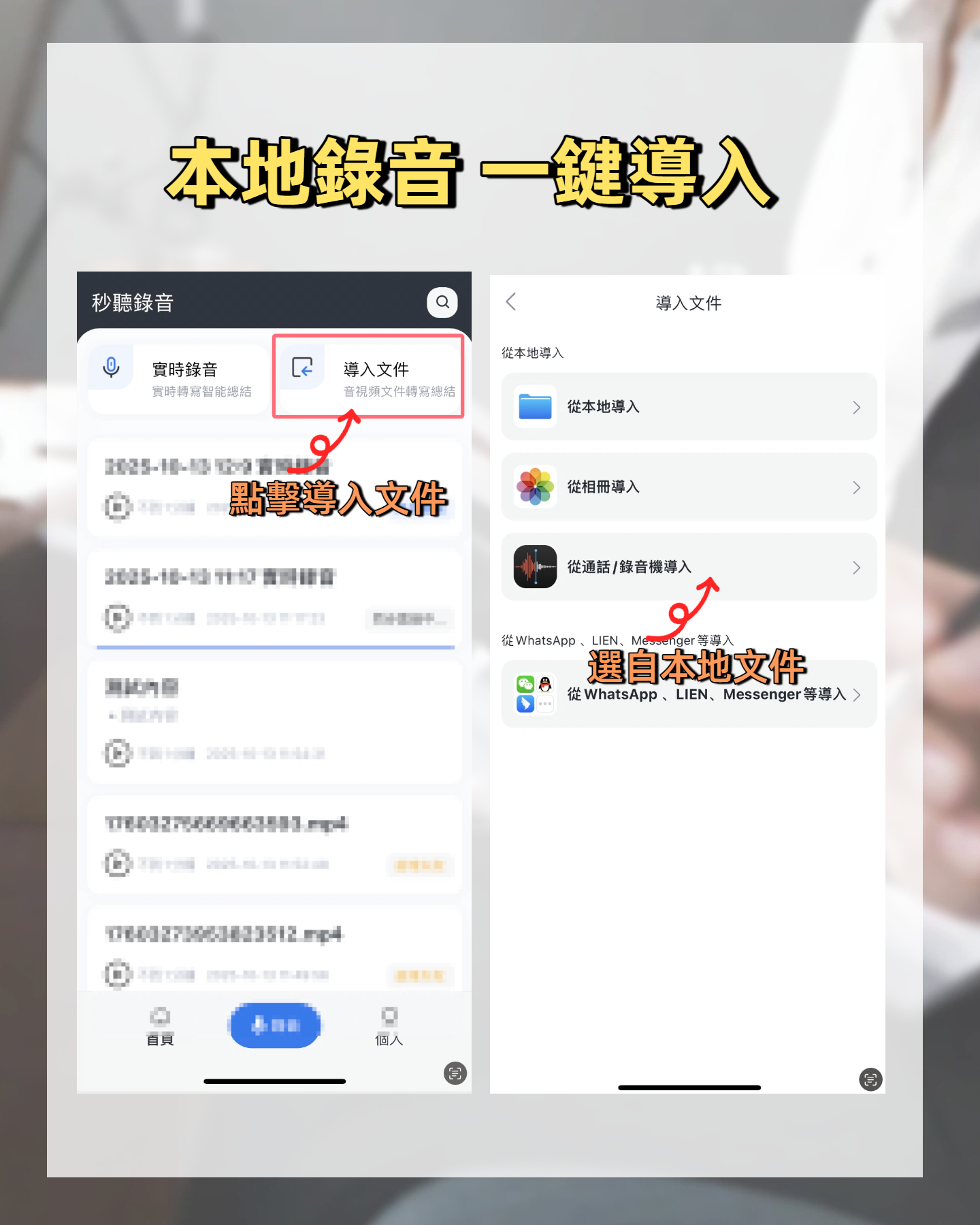
- Open iPhone's Voice Memos, find the recording.
- Tap share, export the file.
- Go to Tinrec Audio File to Text, supports multiple audio formats.
- The system quickly processes, automatically separates speakers, and generates a complete summary including decisions and to-dos.
2. Real-time Recording Transcription (Ideal for Speakerphone Calls or Physical Meetings)
If you want to avoid iOS 18's built-in function and the prompt, use speakerphone in a quiet environment:
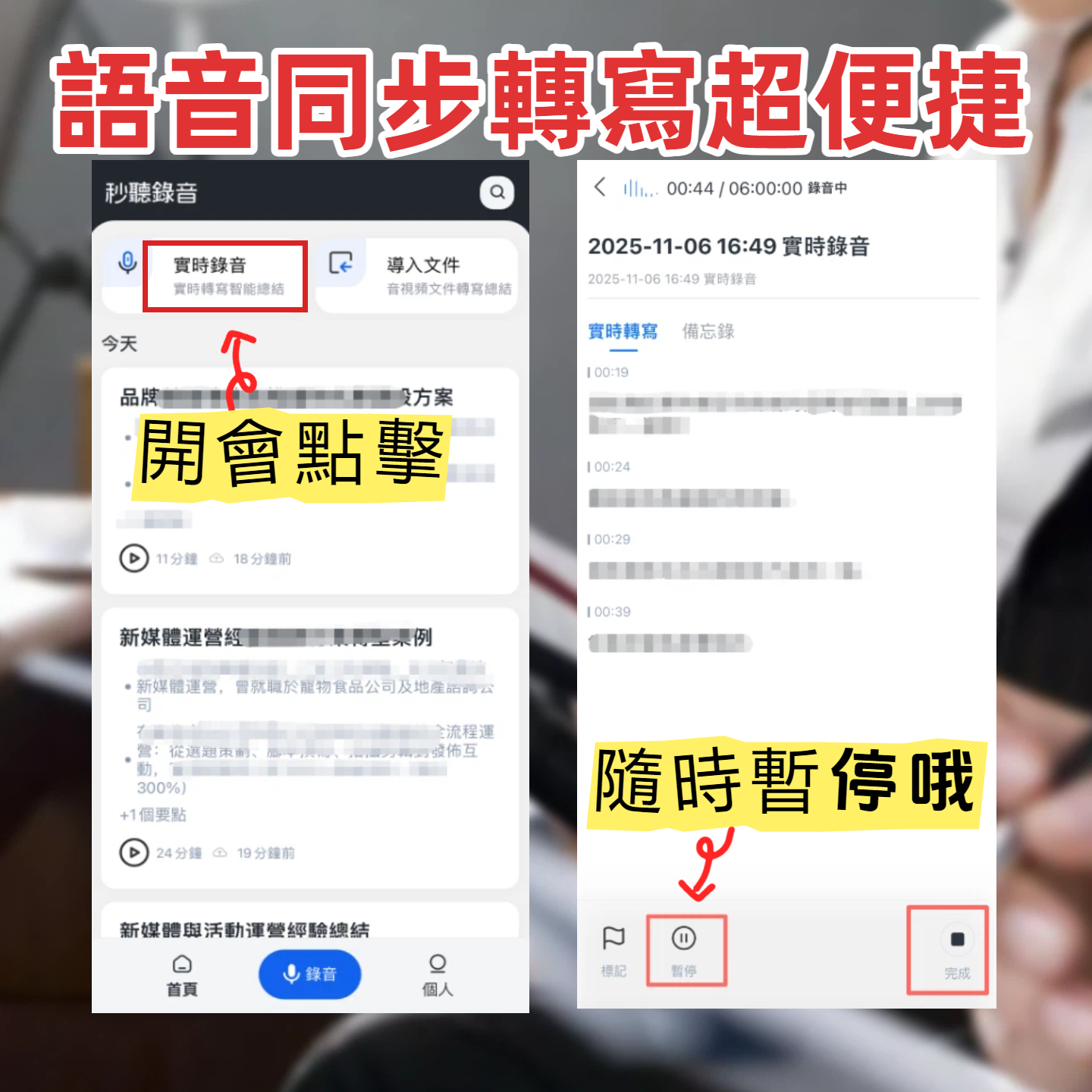
- Open Tinrec Real-time Recording Transcription on web or mobile.
- Turn on speakerphone for the call, then tap Tinrec's record button.
- The screen displays real-time text transcription of both sides, allowing you to grasp key points without waiting, ideal for journalist interviews or customer service notes.
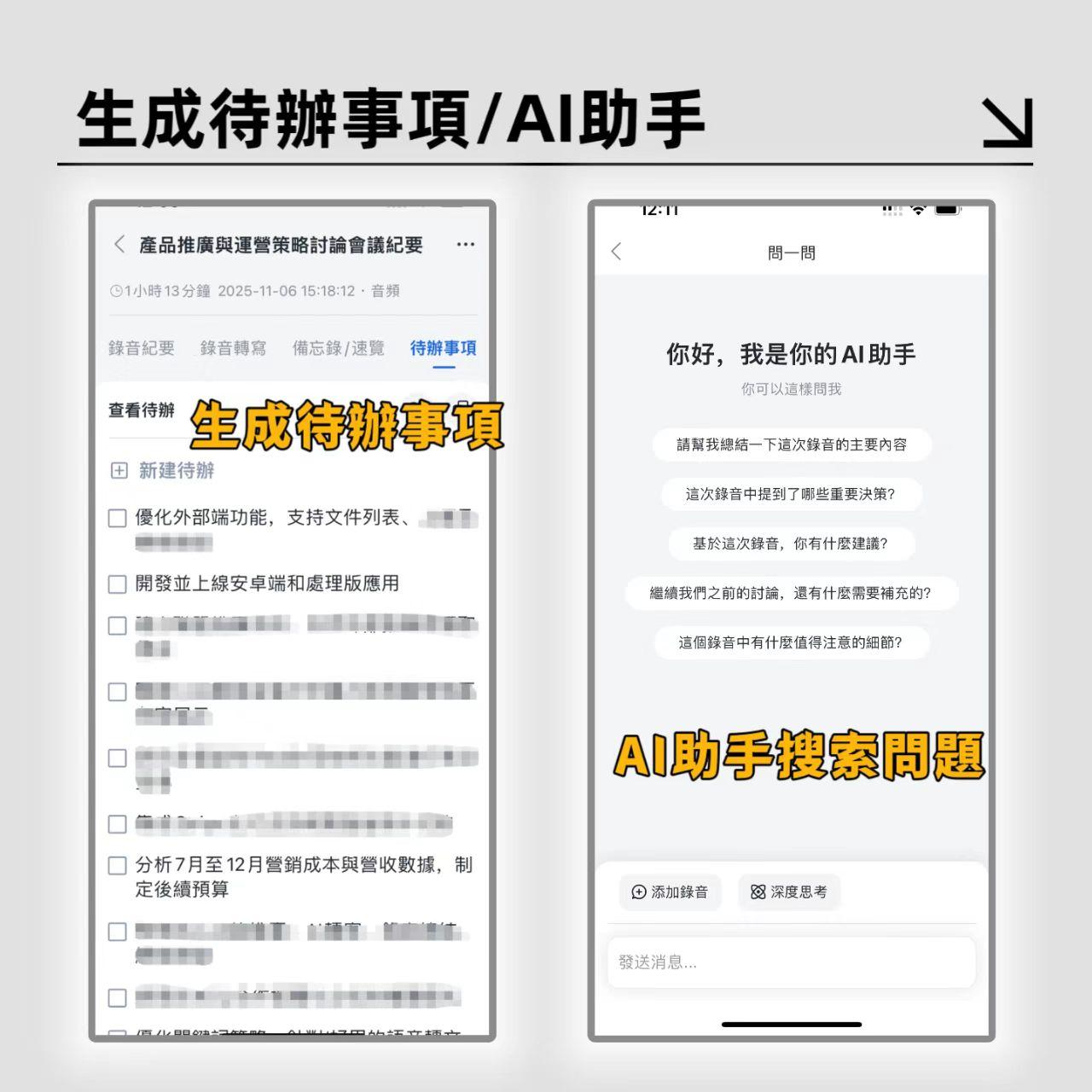
3. AI Conversational Query (Ask Like an Assistant to Find Key Points)
One-hour call recordings traditionally require Ctrl+F to search for keywords. AI changes that:
- Go to Tinrec AI Conversational Query interface.
- Ask questions about the transcribed call, e.g., 'What was the budget the client mentioned?' or 'What day next week did we agree to meet?'
- AI intelligently retrieves based on recording content and directly answers, saving re-listening time.
4. Video Link to Text (Ideal for Teams/Meet Video Call Recordings)
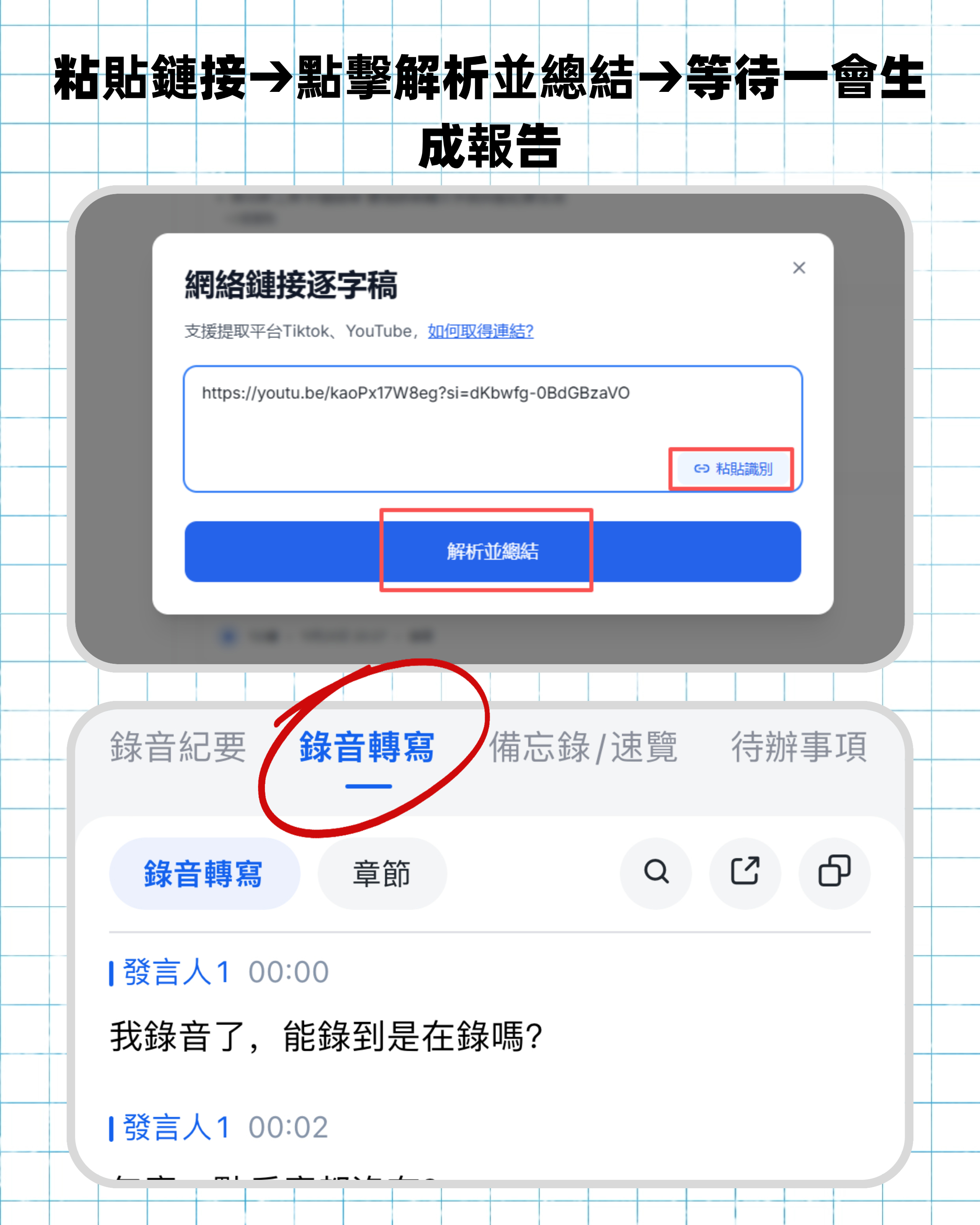
If your call was on an online meeting platform and recorded as video:
- Upload the video to a cloud service or YouTube (set to unlisted).
- Copy the link and paste into Tinrec Video to Text.
- The system automatically parses the audio track, producing a timestamped transcript and key point summary.
Scenario Recap and Tinrec Value Boundaries
During the review, we must also clarify the tool's applicable boundaries.
Tinrec's strengths lie not just in transcription, but in providing a complete workflow from recording to understanding to action. Its high recognition accuracy for mixed Chinese, Taiwanese, and English, along with automatic to-do extraction, makes it ideal for office workers, freelancers, and business users to organize remote meetings and project discussions.

Objective limitations and boundaries: Due to Apple's strict sandbox privacy restrictions on iOS, no third-party software (including Tinrec) can directly 'record' internal calls in the background without speakerphone. Therefore, for regular phone calls, Tinrec's best use cases are 'importing native iOS 18 recordings' or 'recording with speakerphone on during the call.' For Teams, Google Meet, or desktop meetings, there is no such limitation, and Tinrec can deliver its full real-time transcription value.
iPhone Call Recording FAQ
1. Will the other party know if I record a call on iPhone?
Yes. When using iOS 18.1's native call recording, after a 3-second countdown, both parties hear the voice prompt 'This call will be recorded,' so the other party will definitely know.
2. Can I turn off the iOS 18 recording prompt?
No. Based on privacy laws in various countries (e.g., Taiwan's Offense Against Privacy and Communications Protection Law), Apple mandates the prompt. Users cannot disable or mute it through any settings.
3. Can I use the native recording feature for LINE calls, Teams, or Google Meet?
Currently, iOS 18 call recording mainly works for regular cellular calls and FaceTime. For third-party VoIP apps like LINE or Teams, it's recommended to use the desktop app's built-in recording or an external recording device, then import the audio file into a transcription tool.
4. Is there a free tool for converting recordings to transcripts?
Yes. Many AI transcription tools offer free tiers. For example, Tinrec provides 100 minutes of free transcription per month, sufficient for light users such as students or individuals handling daily calls and study notes.
5. Transcripts are too long; how to turn call recordings into useful meeting minutes?
In the past, manual extraction was necessary. Now, tools with large language models can handle this. After uploading the recording to an AI platform, besides generating a transcript, it automatically segments topics and lists 'conclusions' and 'next action items,' turning lengthy text into actionable records.
6. Is recording a call without consent illegal?
Under Taiwan law, if you are one party to the call, it generally does not constitute illegal wiretapping under the Communications Protection Law. However, if recorded without consent and leaked, you may face civil privacy infringement or criminal 'offense against privacy' charges. It's advisable to verbally inform the other party before business recordings.
Summary and Selection Guide
Choosing the right tool minimizes your decision cost:
- First choice: Native solution. If the other party doesn't mind the 'recording prompt' and you only need voice backup, iOS 18's built-in feature is the safest choice.
- Hardware backup: For high-frequency need of silent recording, purchasing a MagSafe recording accessory is the only physical way to bypass system limitations.
- Performance upgrade: If your goal is to 'produce meeting minutes' or 'extract key points,' a recording alone is insufficient. Pair the recording with Tintrec-like workflow tools that offer real-time transcription and AI summaries to transform time-based content into actionable text, truly boosting work and study efficiency.
Turn every recording into actionable outcomes
Get 60 free transcription minutes when you sign in. No credit card required.
Related Reading
You might also like

Tinrec vs Otter.ai in 2026: A 5-Dimension Comparison for Chinese Meeting Notes
We tested Tinrec and Otter.ai across 5 key dimensions—Chinese transcription, bot-free recording, AI Q&A, team collaboration, and more—and provided meeting note examples and a pitfall guide to help you choose the right tool.

2026 Hands-On Comparison of 2 Smart Meeting Recorders: For Chinese Meetings and Team Collaboration, Tinrec Is the More Practical Choice
We tested Tinrec and Otter.ai hands-on, comparing them across five key dimensions: bot-free recording, Chinese language experience, file import, post-meeting workflow, and team governance—to help Taiwanese office workers find the best AI meeting notes tool.

2026 Hands-On Comparison of 4 AI Meeting Recorders: Which One Turns Meetings into Actionable Data?
We tested Tinrec, Otter, Notta, and Granola—four AI meeting note tools—covering bot-free recording, Chinese language experience, AI Q&A, and team spaces to help you find a real time-saver.

2026 Review: 5 Smart Meeting Note Tools Compared – Tinrec (Miao Ting Lu Yin) Saves the Most Time with Bot-Free Recording and AI Q&A
Hong Kong professionals tested 5 AI meeting note tools. Tinrec (Miao Ting Lu Yin) stands out with bot-free recording, AI Q&A, and team spaces, helping you save post-meeting time. Find out which one suits you best.

2026 Smart Meeting Recorder Tools Compared: Tinrec vs Plaud Note – Which Is Better for Office Workers?
This article compares Tinrec and Plaud Note across five dimensions: hardware requirements, online meeting recording, file import, AI summaries, and team collaboration, to help you decide which is more suitable for the average office worker.

2026 Smart Meeting Notes Comparison: Why Tinrec Is the Best Choice for Hong Kong Workers?
Hong Kong workers attend meetings daily, then have to work overtime to organize meeting notes? We tested 4 smart meeting note tools and ended up keeping Tinrec. It supports Cantonese, doesn't require adding a bot to record online meetings, and has team spaces, truly helping you leave work on time.

2026 Tinrec Smart Meeting Minutes: Bot-Free Recording + AI Auto Summary & To-Dos
How to choose a smart meeting minutes app in 2026? This article focuses on Tinrec, teaching you how to record online meetings without bots, auto-generate summaries and to-dos, and compares Otter, Notta, Granola, etc., to help you quickly find the right meeting notes solution.

2026 Smart Meeting Minutes Tools Compared: Tinrec's 3 Key Features + Team Collaboration Tested
Spending two hours in a meeting and another two organizing the notes? This article starts with common pitfalls, helps you understand what to look for in smart meeting minutes tools, tests Tinrec's bot-free recording, AI Q&A, and team spaces, and compares Otter and PLAUD to help you avoid selection traps.
Tinrec Meeting Recorder 2026 Tutorial: Record Meetings Without Bots + AI Q&A to Find Key Points
Spending two hours in a meeting and another two hours writing up notes? This article tests Tinrec's meeting recorder, showing you how to record online meetings without bots and use AI Q&A to quickly find key points. We also compare Granola, PLAUD Note, and Notta to help you choose the right tool.