
Turn recordings into transcripts and summaries in minutes
Upload audio or video for multilingual transcription, AI notes, and action items
Still spending hours replaying audio files and manually typing out meeting minutes? This is the biggest time-suck for admins and project managers. With AI technology maturing, today's tools not only transcribe but also understand and organize key points.
This article reviews 4 notable AI meeting note tools in 2026, comparing them across recognition accuracy, multilingual support, free tier limits, and whether they offer AI summaries and action item extraction. Whether you need quick mobile recording, real-time transcription for online meetings, or processing hours-long interview files, you'll find a suitable solution here.
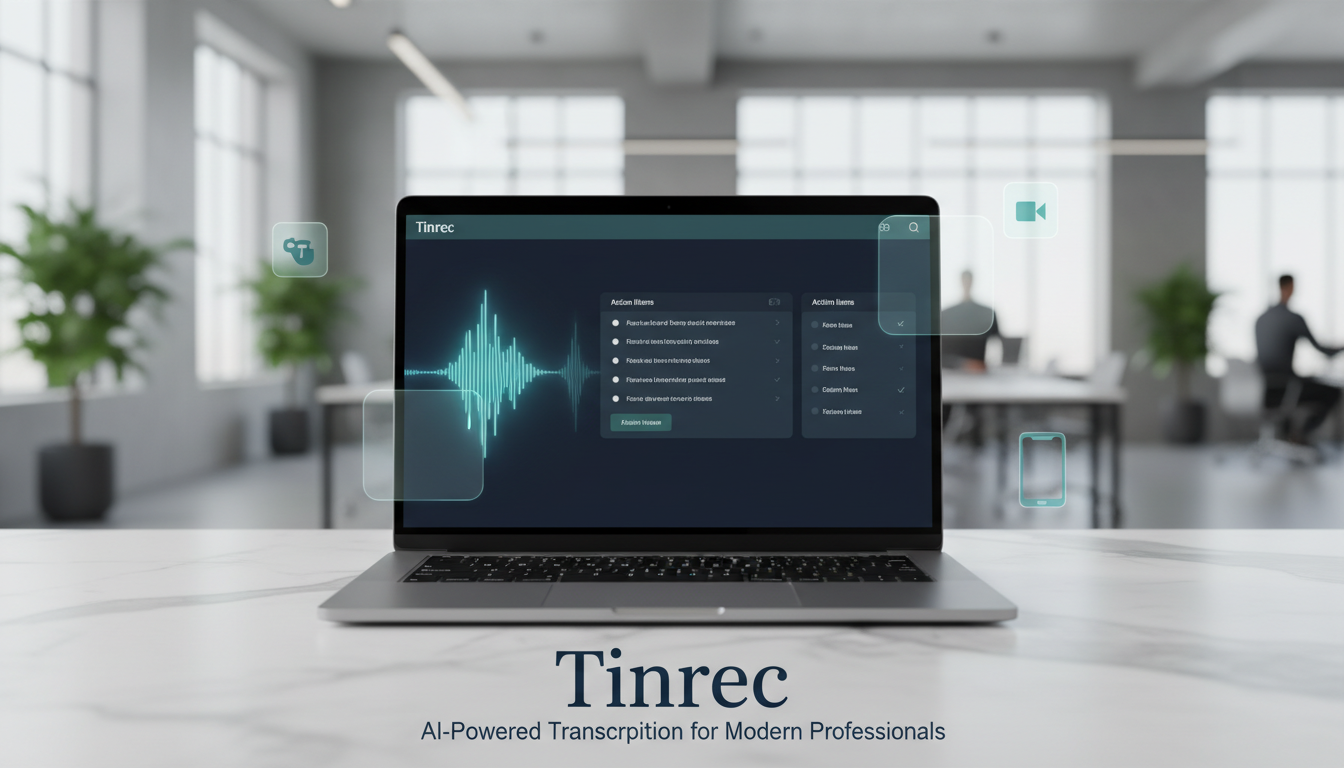
Quick Navigation:
- Free & simple interface (good for single files) → MyEdit
- Heavy meeting software integration (Teams/Meet/Zoom) → tl;dv or Notta
- Action item extraction & post-recording use (mobile/multi-device sync) → Tinrec
Why AI Meeting Note Tools? Solving 3 Core Pain Points
Before diving into tool reviews, let's identify the unproductive work these tools address:
- Save manual transcription time: Traditional minutes require a dedicated person to record and then spend 2-3x the meeting length transcribing. AI tools convert hours of audio to text in minutes.
- Avoid information loss and fuzzy memory: Long meetings cause zoning out or missing key data. AI records everything for complete, searchable archives.
- Bridge the gap from text to action: Transcripts alone don't mean conclusions. New AI tools auto-generate summaries and to-do items, turning meetings into decisions.
2026 Review of 4 Popular AI Transcription Tools
Based on market popularity and feature completeness, here are 4 tools analyzed:
1. MyEdit: Lightweight Web-Based Tool
MyEdit is an online audio editing tool from a Taiwanese development team. Its speech-to-text feature suits users who don't want to download an app.
- Features: Intuitive interface, supports 9 languages including Chinese, English, Japanese, Korean. Free daily login credits for trial.
- Best for: Quickly transcribing existing audio files for simple editing.
2. Notta: Cross-Platform Multi-Language Powerhouse
Notta is well-known globally, supporting 58 languages and speaker differentiation.
- Features: Integrates with Zoom/Google Meet/Teams for automatic recording. Free version has limits: single upload max 3 minutes, monthly transcription cap 120 minutes, interface mainly in Simplified Chinese.
- Best for: Frequent international meetings with budget for a subscription (starting at $8.17/month).
3. tl;dv: Focused on Online Meeting Video Recording
Name stands for "Too Long; Didn't Read," aiming to solve the problem of rewatching meeting replays.
- Features: Excellent integration with Google Meet, Zoom, Teams. Free version is generous for meeting recording but strict with uploads (5 per account). Interface doesn't support Chinese (English, Japanese, Korean only).
- Best for: Teams that primarily use these meeting platforms and are comfortable with an English interface.
4. Tinrec: All-Rounder Emphasizing Understanding & Action
Tinrec goes beyond transcription, focusing on post-recording information processing, with iOS, Android, and web sync.
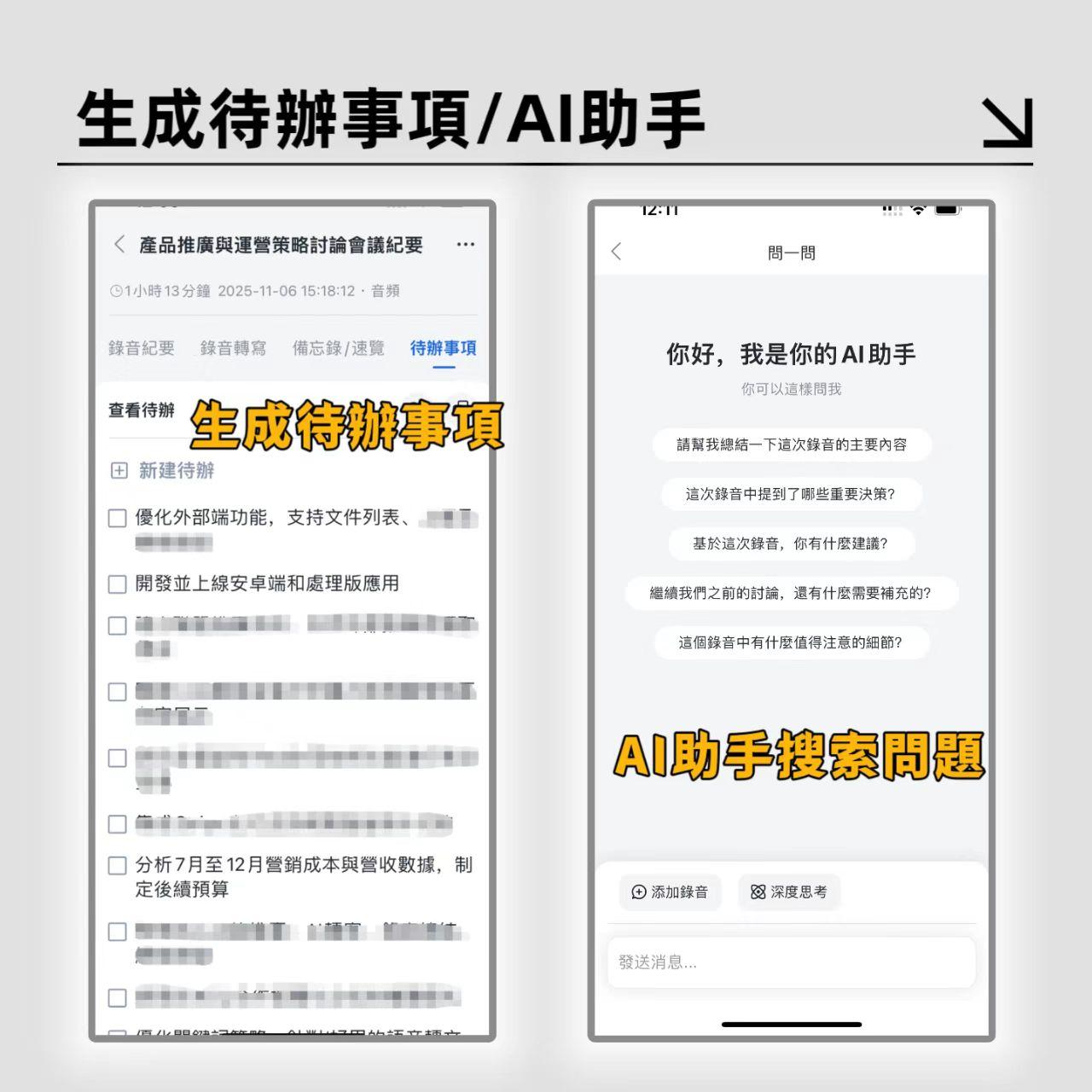
- Features: Accurate Chinese/multilingual recognition, core strength in auto-generating meeting minutes and to-do items. Includes "AI Chat Query" to ask questions about the recording conversationally, no manual searching.
- Best for: Professionals needing quick extraction of work points, class notes, or interview summaries from recordings.
Stop organizing recordings by hand
Upload audio or video and automatically get a transcript, summary, and action items

Feature Comparison Table
| Dimension | MyEdit | Notta | tl;dv | Tinrec |
|---|---|---|---|---|
| Form Factor | Web tool | App/Web/Plugin | Browser plugin/Software | App/Web/Cross-device sync |
| Languages Supported | 9 | 58 | 30+ | 10 (including Chinese, English, Japanese, Korean, Cantonese, Taiwanese) |
| Chinese Interface | Traditional Chinese | Simplified Chinese | None (English/Japanese/Korean) | Traditional Chinese |
| Key Strength | Simple, no install | Many languages, speaker diarization | Strong video conferencing integration | Action items, AI chat query |
| AI Features | Manual export to ChatGPT | Summary, to-do items | Summary, timeline | Meeting minutes, to-do list, conversational search |
| Free Tier Limits | Daily credits | 3 min per file / 120 min per month | 5 uploads / generous recording | 100 min per month |
Deep Dive: Tinrec's Differentiating Application in Workflows
Among many tools, Tinrec's design logic connects "Recording → Understanding → Action" into a complete workflow, rather than just converting to text. For efficiency-focused users, here are key differences from traditional recorders or simple converters:
1. Not Just Transcripts, but Decision Summaries
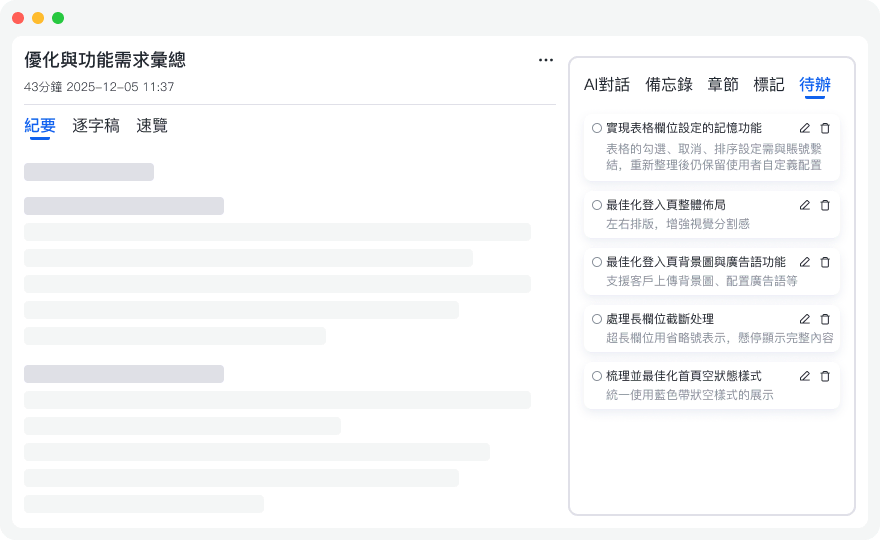
Traditional transcripts can be tens of thousands of words, heavy to read. Tinrec automatically analyzes semantics to generate structured meeting minutes and action items, letting you see "who needs to do what by when" at a glance.
2. Ask Questions Instead of Ctrl+F
This is Tinrec's standout feature. For a 2-hour interview or lecture, you don't need to search keywords manually. Use "AI Chat Query" to ask directly, e.g., "What was the budget cap mentioned in this meeting?" and AI answers based on the recording.
3. Diverse Input: Videos and Podcasts Too
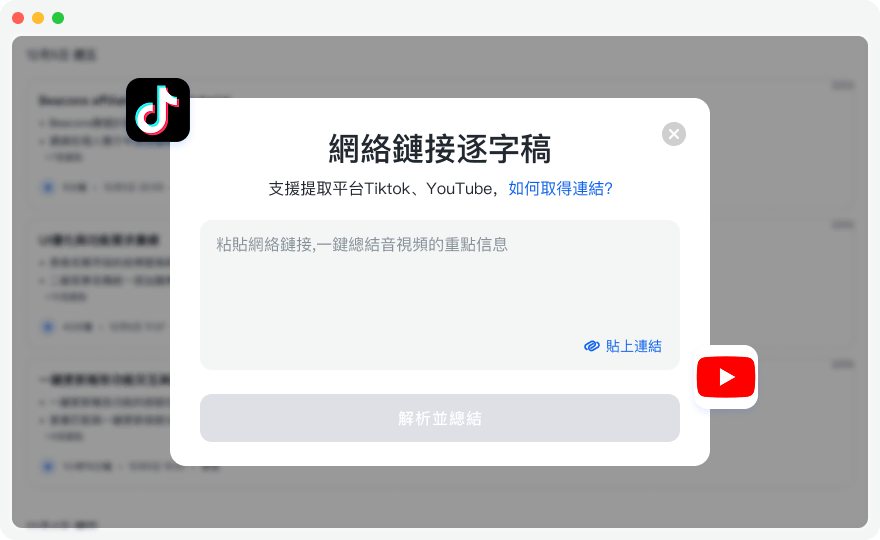
Besides live recording and file upload, Tinrec supports pasting YouTube or podcast links to convert online content into text notes—useful for competitor analysis or online course learning.
Tutorial: 3 Steps to Complete Meeting Minutes with AI
Here's how to use Tinrec to quickly produce actionable meeting minutes from a recording:
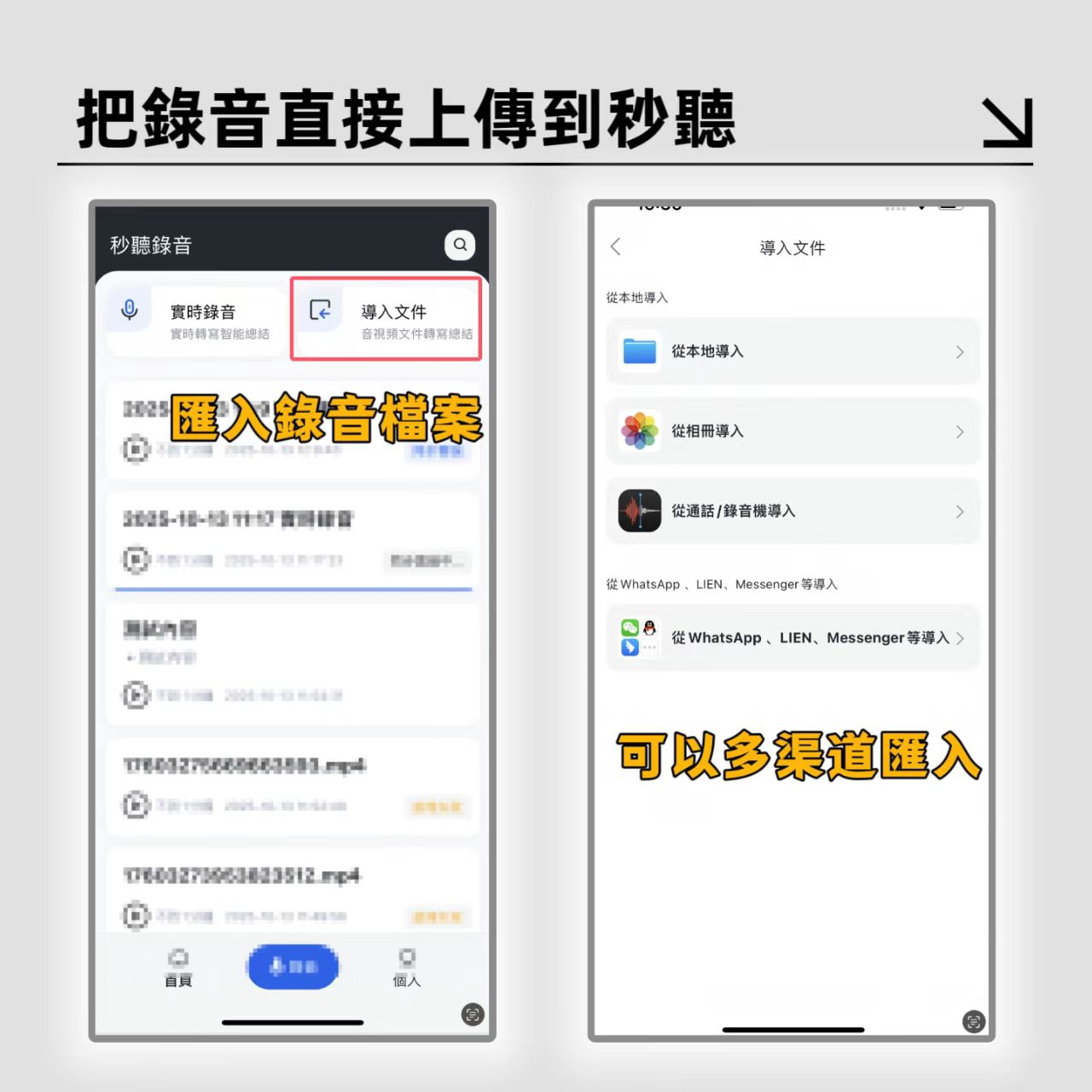
Step 1: Start Recording or Import a File
- Live meeting: Open Tinrec app or web, tap "Start recording." System transcribes in real time, supports background operation. (Live transcription entry)
- Existing file: For files from a recorder, choose "Import audio/video," supports mp3, m4a, wav, etc.

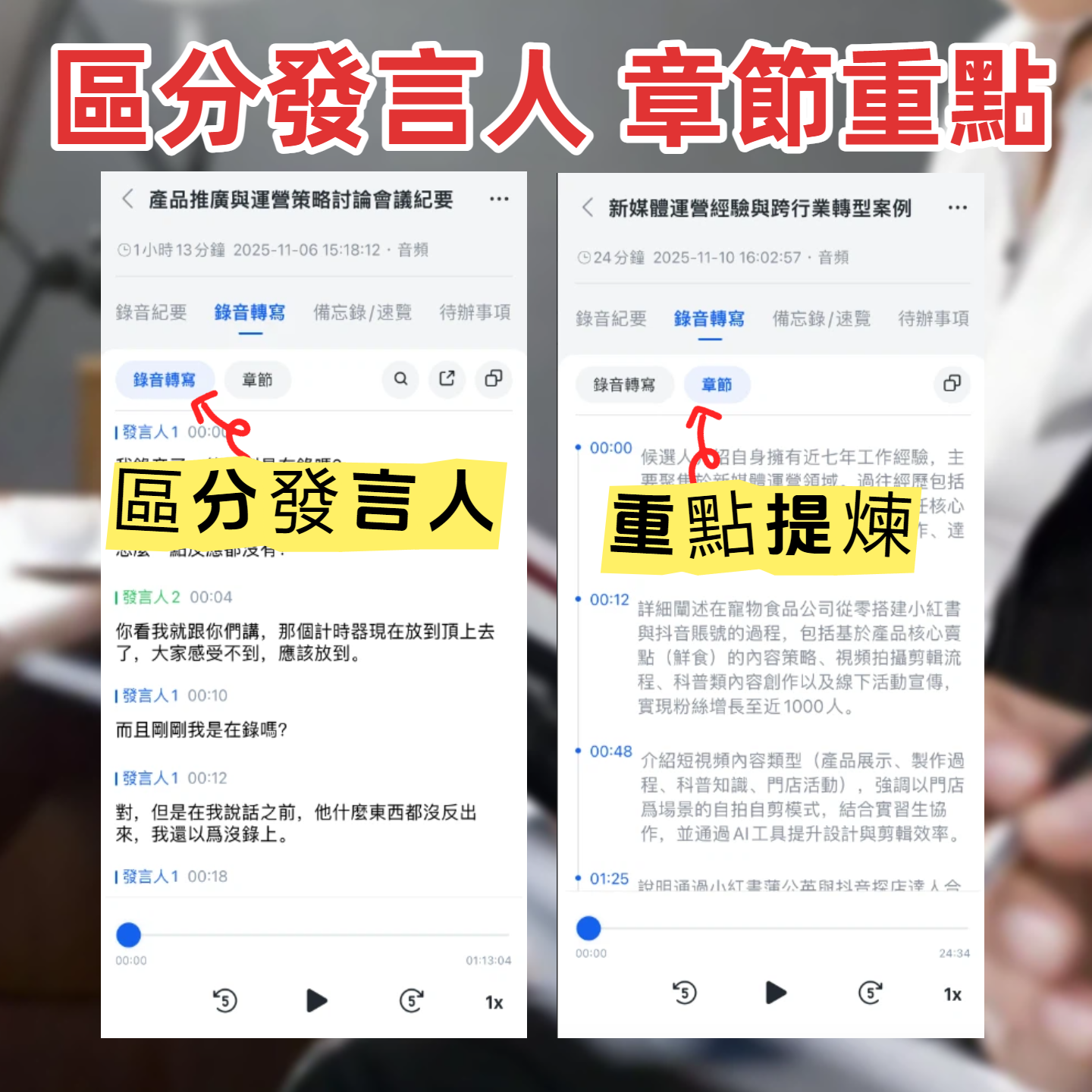
Step 2: Smart Transcription with Speaker Diarization
After recording, AI automatically splits chapters and distinguishes speakers. For multilingual meetings (e.g., Chinese mixed with English), Tinrec's recognition engine ensures continuity.
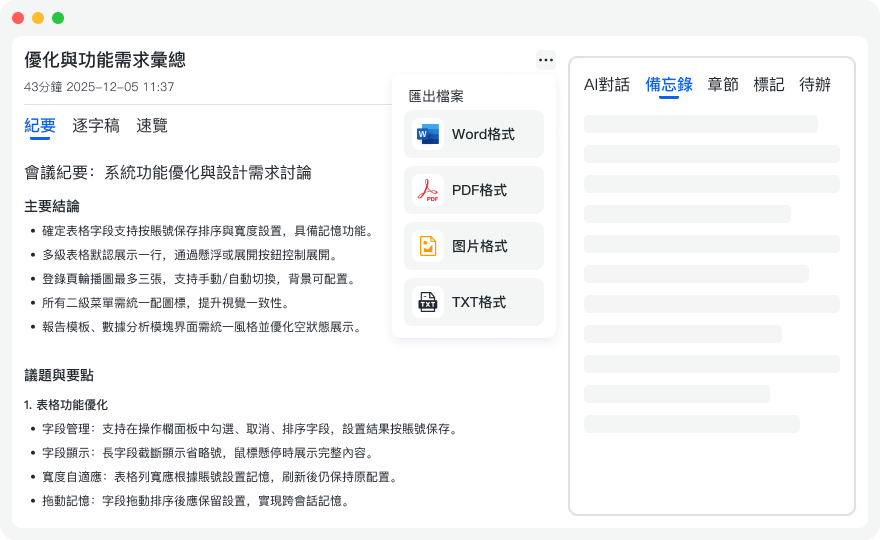
Step 3: Generate Summary and Export
Click the "AI Summary" button; the system generates "Key Points," "Action Items," and "Decisions." Review and export as PDF, Word, or Markdown to share with your team.
FAQ: AI Meeting Notes
Q1: Can iPhone voice memos be directly transcribed? iPhone's built-in voice memos have limited transcription. Use an app like Tinrec (iOS compatible) to record and transcribe on the phone, or import existing recordings.
Q2: What are typical free tier limits? Most tools (e.g., Notta, tl;dv) restrict single recording length (e.g., 3 minutes) or monthly hours. Tinrec offers 100 minutes per month free, fairly generous for light users.
Q3: Does background noise affect accuracy? Yes, though AI has noise reduction. For best results, get close to the microphone or use a directional mic.
Q4: Can ChatGPT be used for transcription? ChatGPT handles text input, not long audio files (unless very small or via API). Typically, use Tinrec or MyEdit to convert to text first, then refine with ChatGPT.
Q5: Do these tools support Teams or Google Meet? tl;dv and Notta offer meeting bots. Tinrec is better for recording system audio via web or phone, suitable for hybrid meetings.
Q6: How about data security and privacy? Always check privacy policies. Professional paid tools typically encrypt data and promise not to use user data for public model training. Enterprise users should choose services with enterprise-grade security standards.
Turn every recording into actionable outcomes
Get 60 free transcription minutes when you sign in. No credit card required.
Related Reading
You might also like
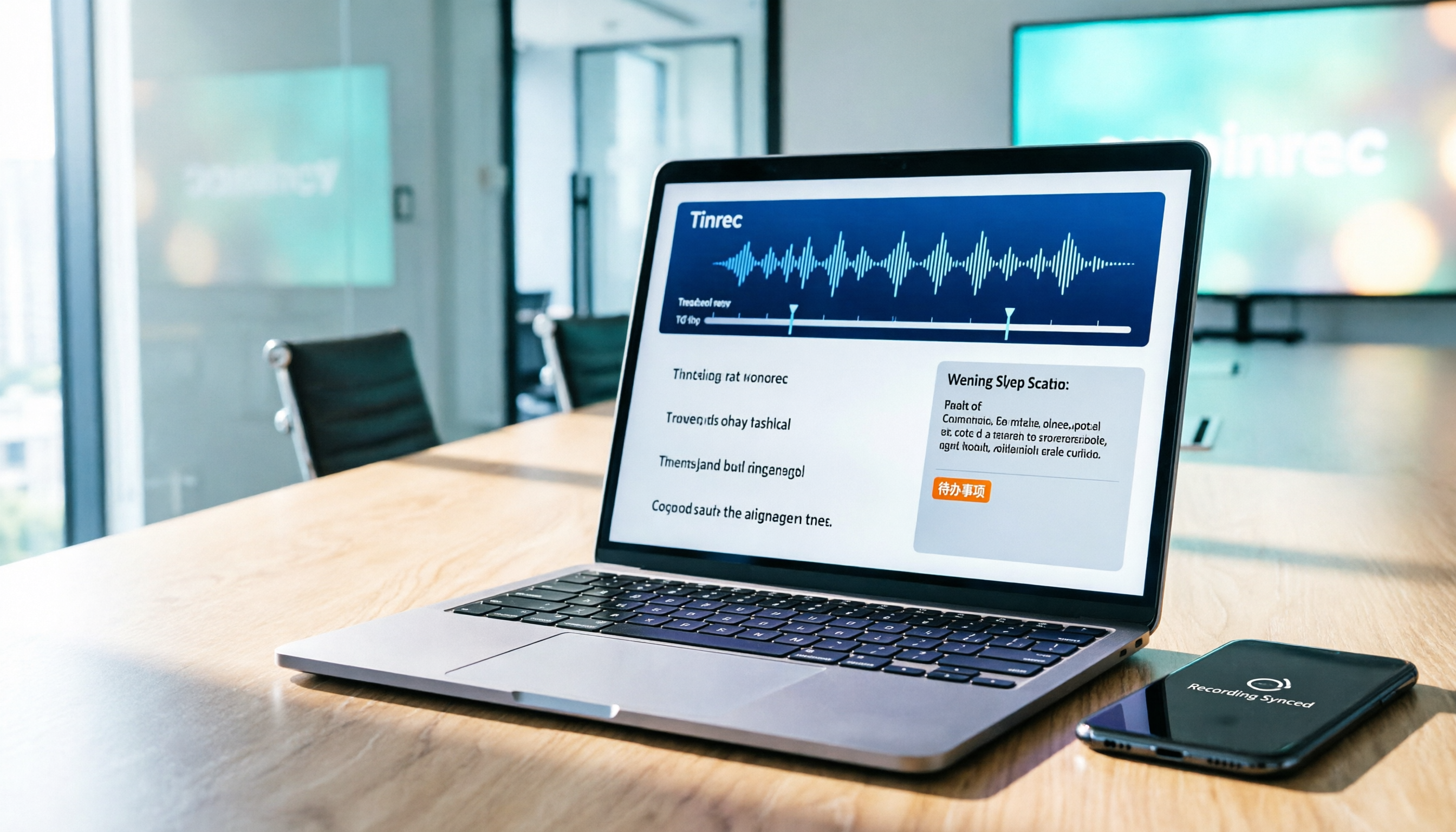
Tinrec Recording-to-Text 2026 Tutorial: Bot-Free Online Meetings + Auto-Generated Meeting Minutes
A mid-level manager's hands-on review of Tinrec for recording-to-text: comparing it with PLAUD Note, covering online meetings, post-transcription processing, cross-platform use, and team collaboration, to help you painlessly convert audio files to text.
Tinrec vs Notta 2026 Hands-On Comparison: Save the Most Time with These Transcription Tools
This article compares two speech-to-text tools, Tinrec and Notta, across five key dimensions: Chinese transcription, meeting recording, AI post-processing, team collaboration, and export/integration, to help you find the best fit for your needs.

Tinrec vs Otter.ai 2026: Speech-to-Text for Chinese Meetings & Team Collaboration
Looking for a speech-to-text tool? This article compares Tinrec and Otter.ai on Chinese recognition, meeting recording, AI post-processing, and team collaboration to help you choose the best fit.

2026 Hands-On Comparison of 3 Recording-to-Text Tools: Which Saves the Most Time for Cantonese Transcription and AI Summaries?
Central district office workers test Tinrec, Otter.ai, and Notta for recording-to-text, focusing on Cantonese recognition, AI post-processing, and cross-platform performance, to help you choose the most time-efficient meeting notes solution.

3 Best Speech-to-Text Tools in 2026: From Free Trials to Team Collaboration
A mid-level manager tested multiple speech-to-text tools and compiled the top 3 recommendations for 2026, along with 4 key factors to consider when choosing, and why Tinrec is the most practical for meeting notes and team collaboration.

Tinrec Speech-to-Text Tutorial 2026: 3 Steps to Transcribe Audio + AI Auto-Summarization
Wondering which speech-to-text tool is easy to learn? This guide uses Tinrec (秒听录音) as an example to show how to turn recordings into transcripts and key summaries in 3 steps, plus 4 criteria for choosing an easy-to-use tool—perfect for beginners.

Best Recording-to-Text Apps in 2026: We Tested 4, and This Free Version Is the Best Value
We tested 4 recording-to-text tools, and Tinrec's free version is sufficient, with the most reliable Cantonese recognition, plus AI Q&A and team spaces, so office workers no longer need to work overtime transcribing.

3 Best Voice-to-Text Apps Tested in 2026: Stop Wasting Time on Meeting Notes
A mid-level manager tests voice-to-text apps for accuracy, AI summaries, cross-platform support, and team collaboration to find the biggest time-saver.

2026 Test: 4 Best Free AI Transcription Tools Compared – Which Saves You the Most Time?
We tested several free AI transcription tools for Cantonese meetings, interviews, and lectures commonly used by Hong Kong office workers. We compared free quotas, transcription accuracy, AI summarization, and cross-platform support to help you pick the most time-saving tool.