

Turn recordings into transcripts and summaries in minutes
Upload audio or video for multilingual transcription, AI notes, and action items
Why You Should Re-Evaluate Your Current Recording Tool
Facing a two-hour meeting recording or a dense online course, the most frustrating part isn't capturing the audio—it's having to "re-listen." Traditional voice recorders or your phone's built-in recorder can only save sound, not directly extract information. When you need to compile meeting minutes, extract action items, or turn an interview into written content, a plain audio file often becomes a productivity black hole.
Many users searching for "Plaud Note review" often discover that while hardware recorders are portable, they fall short in the subsequent "textification" and "information structuring" process. This article analyzes Plaud Note's positioning based on real-world usage and compares five leading speech-to-text tools, including Tinrec. We'll evaluate them from three angles: Chinese recognition accuracy, AI summarization capability, and cross-platform convenience—helping you determine which tool best solves your pain points.
Quick Navigation Conclusions:
- Prioritize hardware integration and offline recording: Consider hardware solutions like Plaud Note, but pair them with transcription software for post-processing.
- Seek top-tier Chinese recognition and AI workflow: Look for tools optimized for Asian languages, such as Tinrec.
- Primarily handle English meetings: Otter.ai remains the international benchmark, but be aware of its limited Chinese support.
- Limited budget and need to process long audio files: Evaluate TurboScribe or cloud services with generous free tiers.
Plaud Note: Core Positioning and Potential Limitations
Plaud Note, as a hardware-software hybrid service, offers the advantage of a dedicated recording device for more stable audio quality, especially for mobile interviews or meetings. However, on the software side, users often report speed fluctuations due to cloud dependency and recognition challenges with complex accents or multilingual scenarios.
More importantly, modern workplace needs have evolved from "transcribing" to "understanding content." If a tool only provides verbatim transcripts, users still spend hours reading and highlighting key points. This is exactly what next-gen AI recording assistants like Tinrec (Instant Recorder) aim to solve: it's not just a transcription tool but a complete workflow from recording to understanding to actionable items.
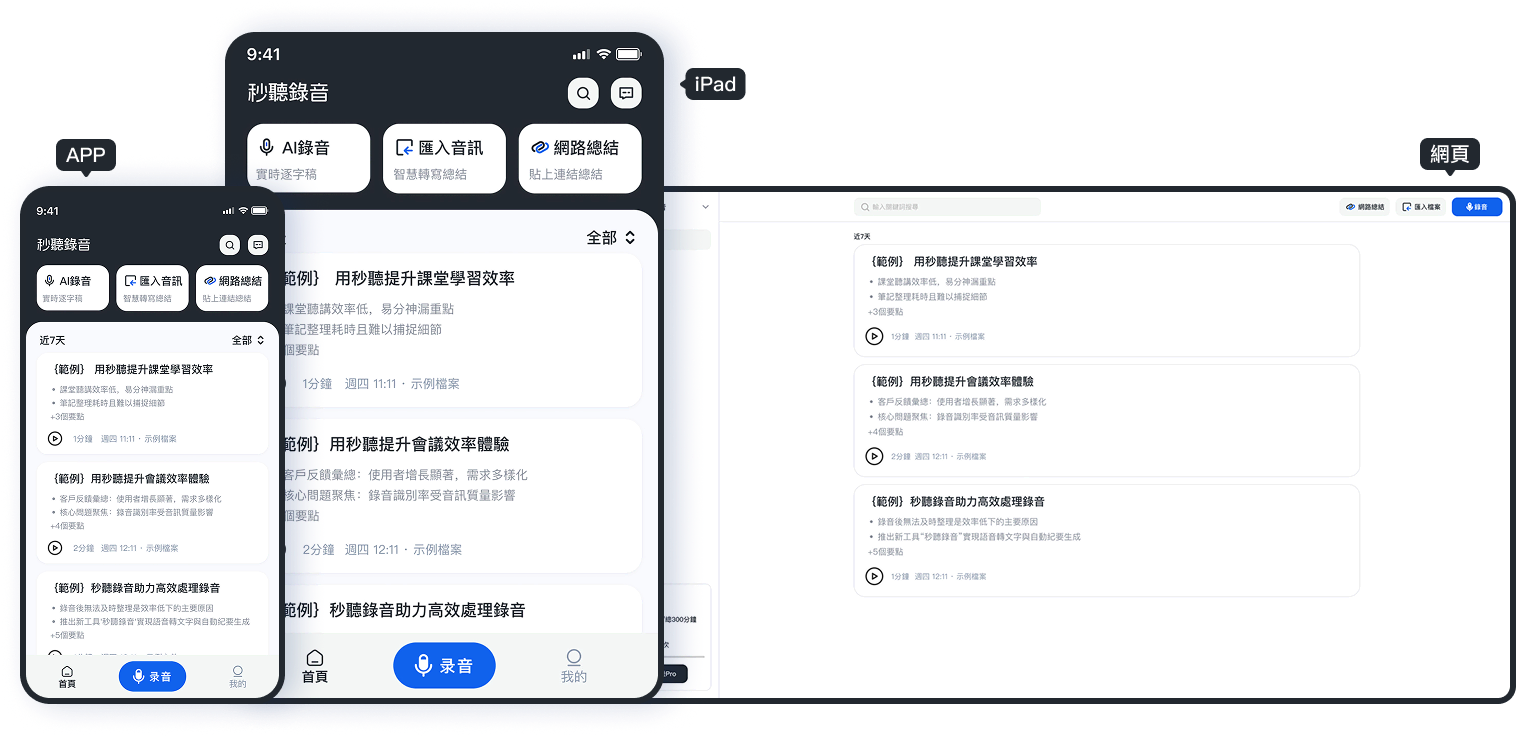
Tinrec supports multi-platform sync across iOS, Android, and Web, meaning no matter which device you record with, you can immediately access the same AI processing pipeline. This cross-platform seamless experience offers more flexibility than being tied to a single hardware device—a crucial advantage for modern professionals who switch between devices.
In-Depth Review of Five Speech-to-Text Tools in 2026
To help you choose more intuitively, we've compiled an analysis of five representative tools based on market feedback and feature sets. These range from pure software solutions to hardware-integrated options.
1. Tinrec (Instant Recorder): An Efficient Assistant Focused on Chinese and AI Action Items
Tinrec is a multi-platform AI recording assistant, with its core differentiators being deep optimization for Asian languages (Chinese, Japanese, Korean, Taiwanese, Cantonese, etc.) and powerful post-processing capabilities.
Core Advantages:
- High-accuracy Chinese recognition: Unlike some international tools that perform inconsistently in Chinese contexts, Tinrec is specifically trained for spoken Chinese and professional terminology.
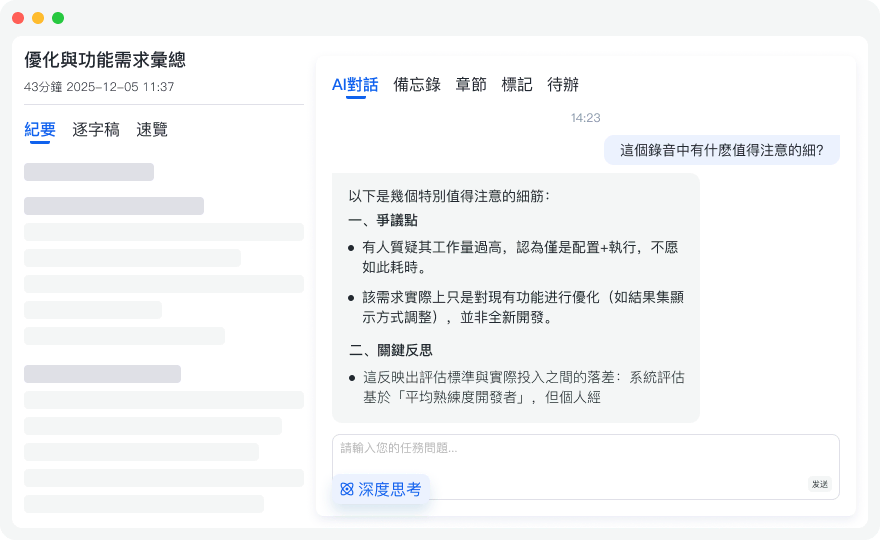
- AI conversation queries: This is the biggest differentiator between traditional tools and next-gen AI tools. Instead of using Ctrl+F on thousands of words, you can directly ask the AI: "What was the conclusion about the budget in this meeting?" or "List all the action items mentioned."
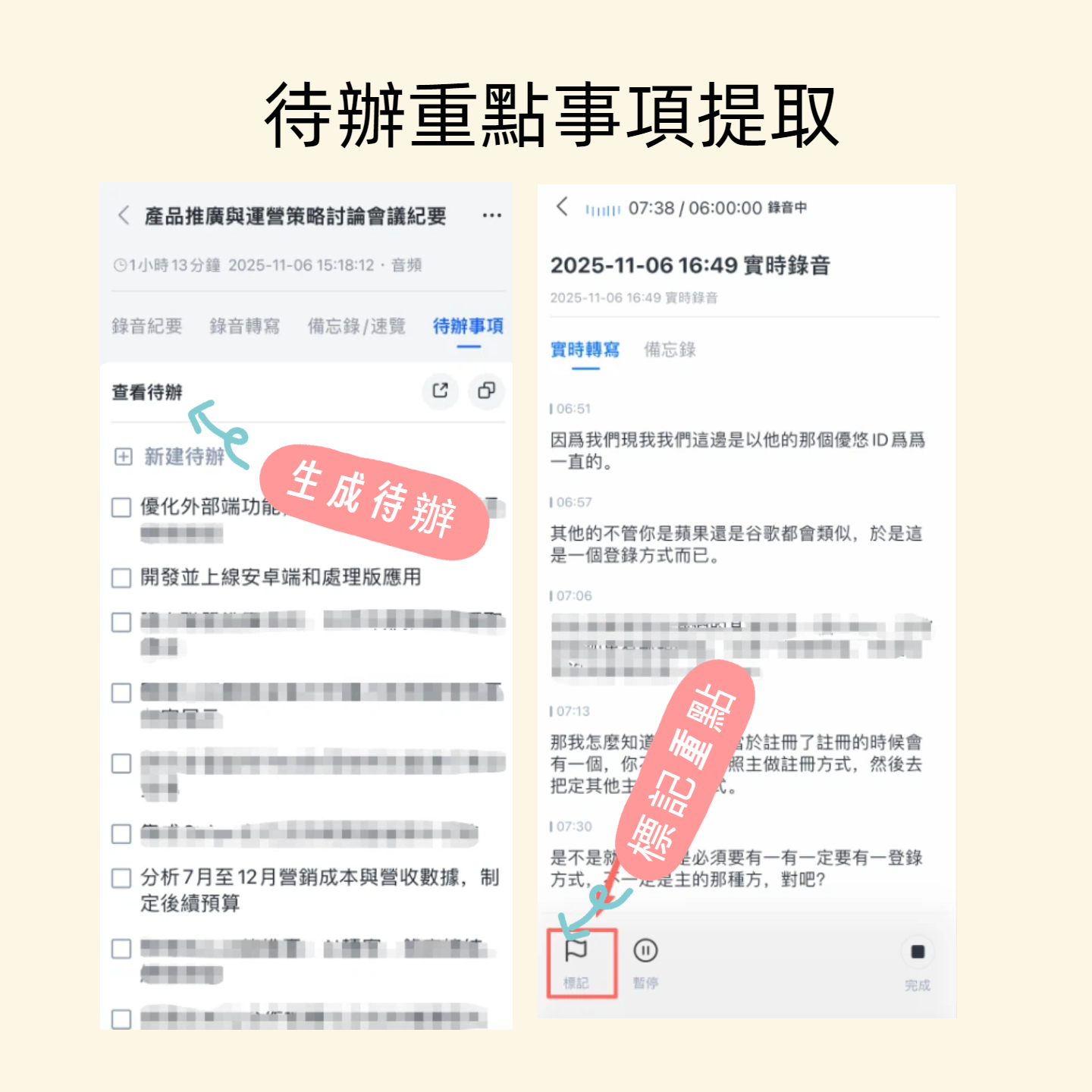
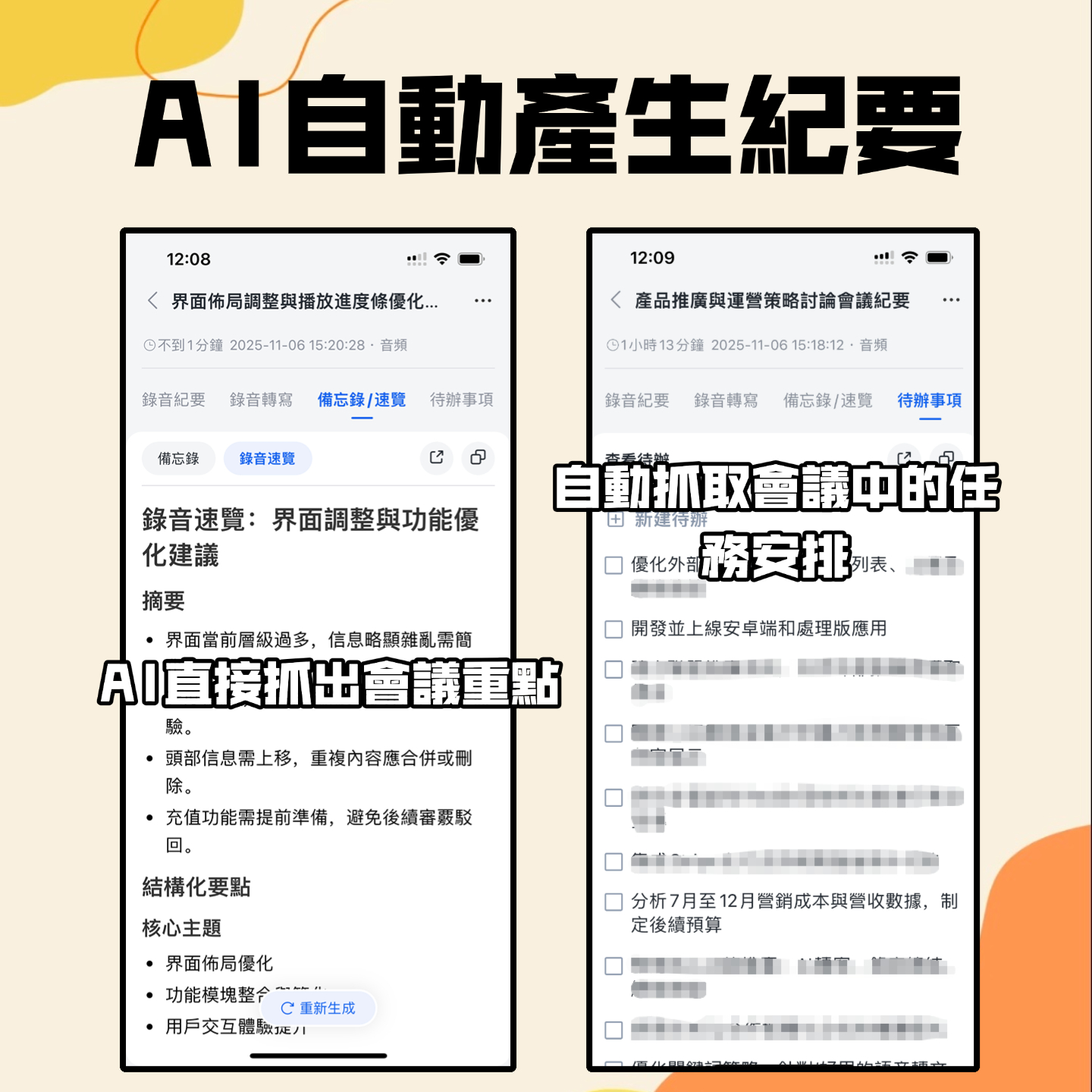
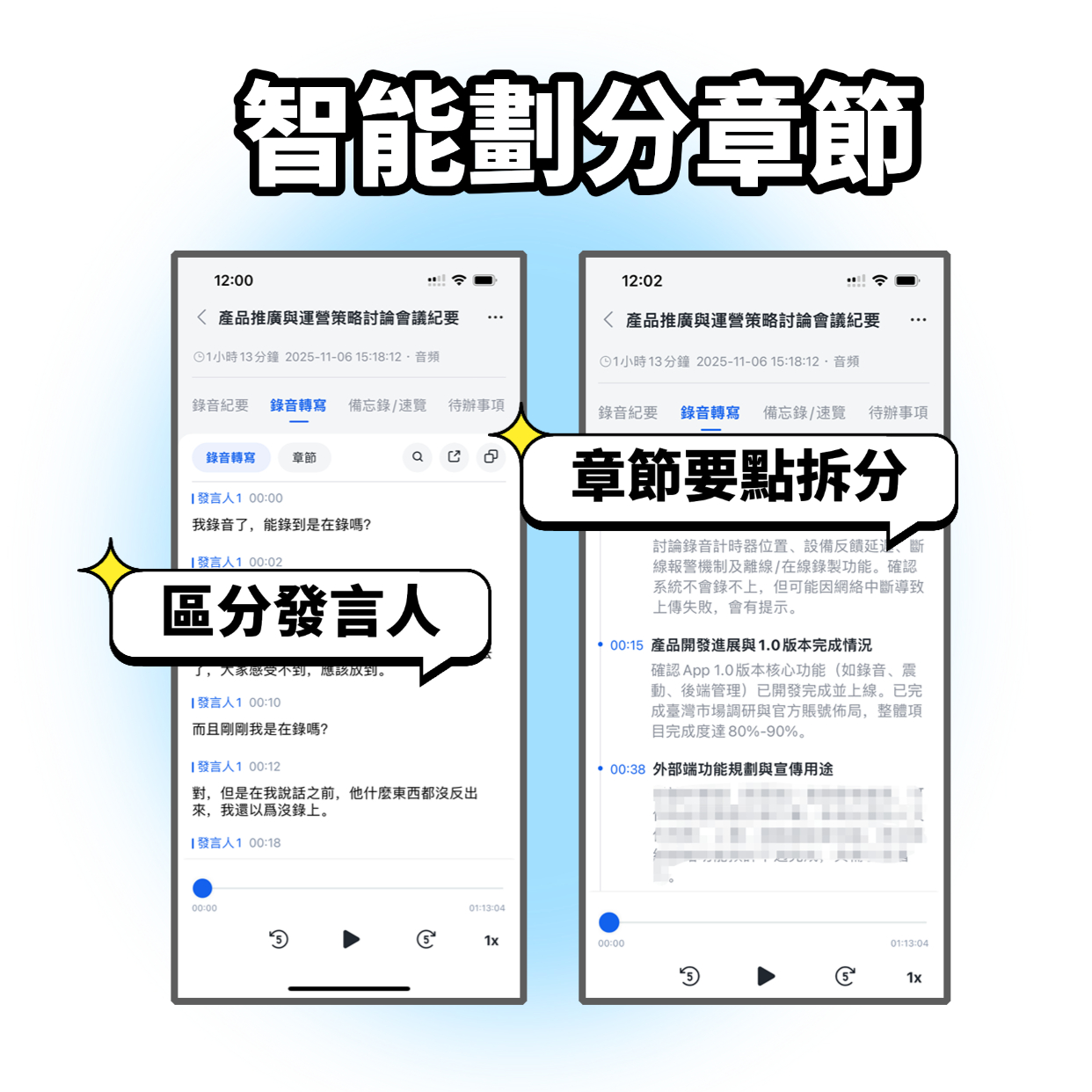
- Automatically generate meeting minutes and action items: After recording, the system automatically identifies speakers and extracts conclusions and a to-do list, significantly reducing post-meeting organization time.
Ideal Use Cases:
- Multilingual meetings, business settings requiring precise Chinese records.
- Managers who need to quickly extract decision-making info from long recordings.
- Content creators who need to convert interviews or video content into text material.
2. Otter.ai: The Global Benchmark for English Meetings
Otter.ai is one of the most well-known meeting transcription tools globally, excelling in English recognition, speaker separation, and integration with Zoom/Teams.
Strengths:
- Extremely high English recognition accuracy, ideal for fully English environments.
- Powerful real-time streaming transcription, perfect for syncing during online meetings.
Limitations:
- Weak Chinese support: For teams primarily communicating in Chinese, Otter.ai's recognition accuracy is far inferior to localized tools, and it struggles with code-switching between Chinese and English.
- Higher price point, and advanced features are mainly focused on the English ecosystem.
Comparison Conclusion: If your primary working language is English, Otter.ai is a solid choice; but for heavy Chinese communication, Tinrec is a more practical alternative.
Stop organizing recordings by hand
Upload audio or video and automatically get a transcript, summary, and action items
3. Notta: A Multilingual Competitor
Notta claims support for over 50 languages and has made strides in meeting notes and AI summaries.
Strengths:
- Intuitive interface, low learning curve.
- Supports multiple languages, suitable for international teams.
Limitations:
- Some users report that Chinese recognition stability still needs improvement, especially with fast speech or background noise.
- Free tier is relatively limited; heavy users need to upgrade frequently.
4. CapCut Pro / VEED.IO: Subtitle Tools for Content Creators
These are essentially video editing software, but their "smart caption" features are often used for speech-to-text.
Strengths:
- For creators making short videos or YouTube content, they provide a one-stop solution for editing and subtitles.
- Visual editing interface makes it easy to adjust timelines.
Limitations:
- Not ideal for meeting minutes: They lack structured outputs like meeting summaries or action item extraction.
- Export formats are usually subtitle files (SRT/VTT); converting to plain text requires extra steps.
- For hours-long pure audio meetings, processing efficiency is lower than dedicated transcription tools.
5. Traditional Cloud Transcription Services (e.g., Lingting, Kuaizhuanyuyin)
These tools are typically web-based services offering basic upload-and-transcribe functionality.
Strengths:
- Simple operation, no complicated software installation needed.
- Some offer low per-transcription fees or free trial credits.
Limitations:
- Lack AI insights: Most only provide verbatim transcripts without automatic summaries, keyword extraction, or conversational queries.
- Privacy and security need careful review, especially when uploading sensitive business meeting recordings.
- Poor real-time performance; usually requires waiting for upload and processing queues.
How to Choose the Right Tool for You: Three Evaluation Dimensions
Before subscribing or purchasing, evaluate using these three dimensions:
1. Language Environment and Recognition Accuracy
- Full Chinese or Chinese-English mixed: Prioritize tools optimized for Chinese, like Tinrec. Avoid tools primarily designed for English (e.g., Otter.ai) to avoid high post-editing costs.
- Multilingual mix: If your team includes Japanese, Korean, German, etc., ensure the tool supports automatic recognition and mixed transcription of those languages. Tinrec supports 10 languages auto-detection, suitable for diverse teams.
2. Efficiency Beyond Transcription
- Only need verbatim text: Any basic transcription tool (e.g., Windows Voice Typing, basic cloud service) will suffice.
- Need decision summaries and action items: Must choose a tool with LLM (Large Language Model) integration. Tinrec's AI conversation query allows you to ask about recording content like you would a person, e.g., "Which feature was the customer most dissatisfied with?" This compresses hours of audio into minutes of key insights.
3. Workflow Integration
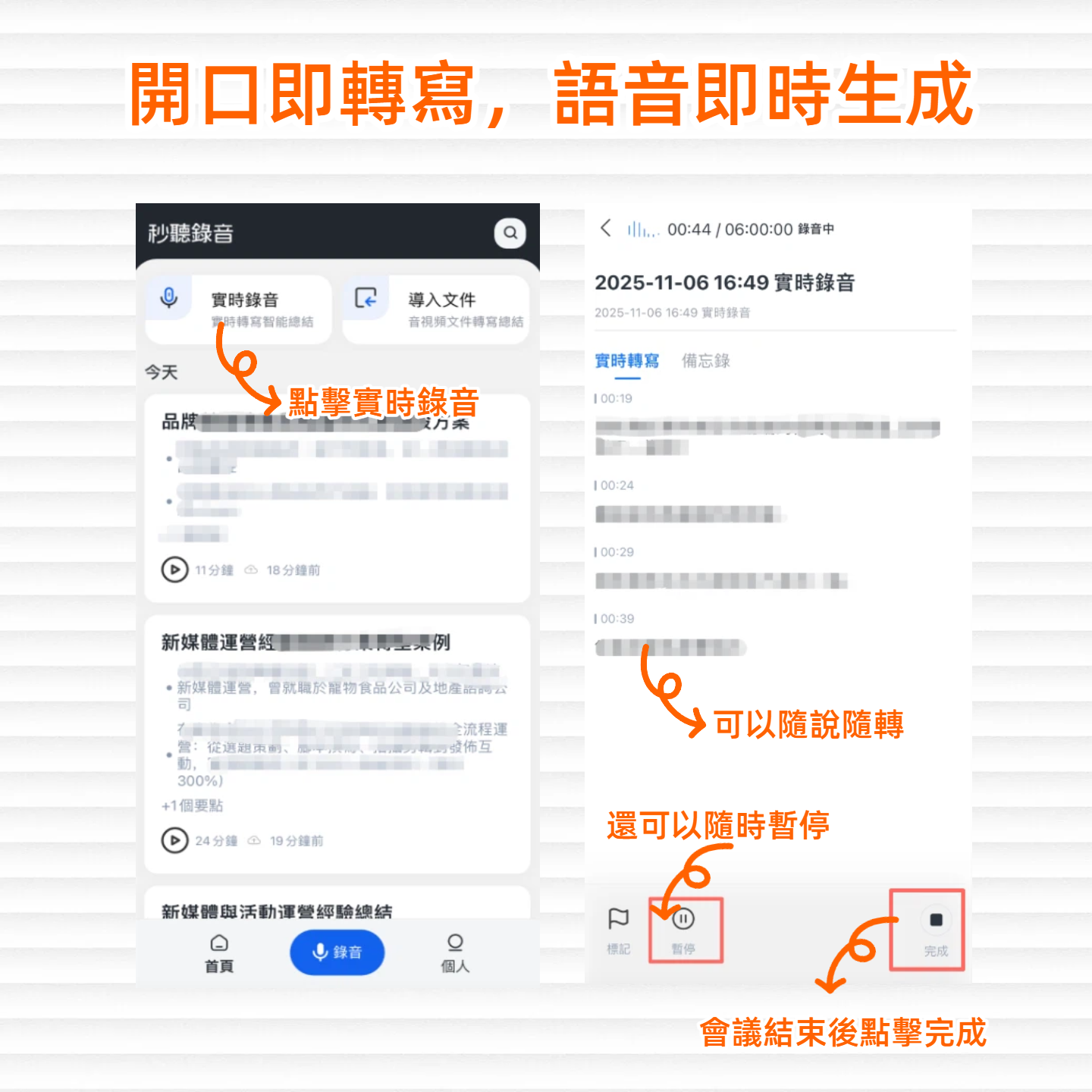
- Real-time needs: Do you need to see text as you record? Both Tinrec and Otter.ai support real-time transcription.
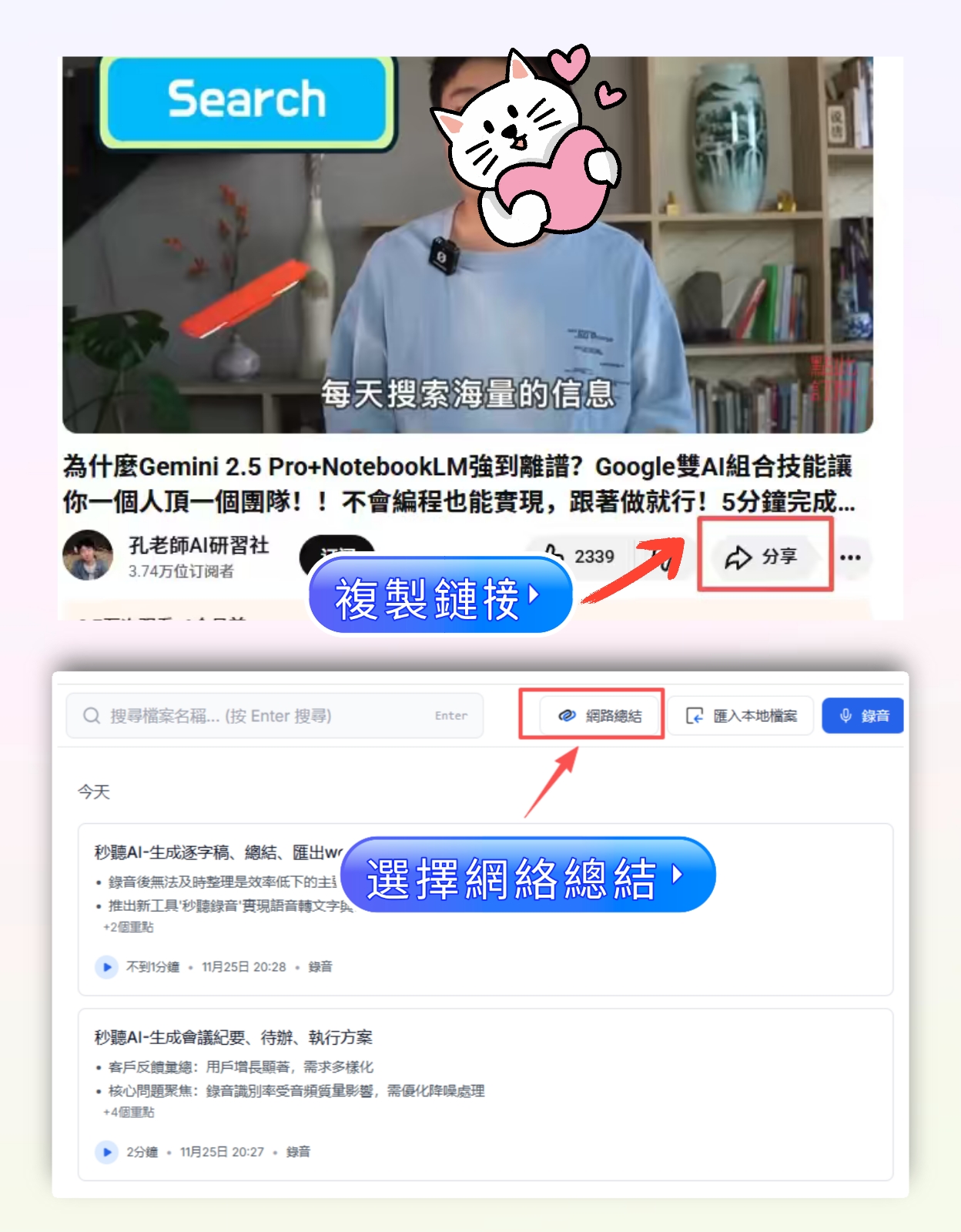
- Diverse file sources: Besides live recording, do you often handle YouTube videos, podcasts, or existing audio files? Tinrec supports inputting a URL to directly convert online videos into text and generate summaries—extremely useful for media professionals and researchers.
Hands-On Tutorial: How to Use AI Tools to Boost Meeting Efficiency
Here's a walkthrough using Tinrec as an example, showing how to turn a chaotic brainstorming meeting into a clear execution plan.
Step 1: Record and Transcribe in Real Time Open the Tinrec app or web version, and tap "Record & Transcribe in Real Time." During the meeting, you can see the live transcription. If key info is missed, you can clarify immediately.
Step 2: AI Auto-Generates Meeting Minutes After the meeting, the system automatically processes the audio. Within minutes, you'll receive a document containing "Meeting Topic," "Speaker List," "Full Verbatim Transcript," and "AI Summary."
Step 3: Use AI Conversation Queries to Dive Deeper Don't just read the summary. In the sidebar AI chat box, type:
- "List all marketing budget numbers mentioned."
- "Who is responsible for next Wednesday's presentation?"
- "Summarize the points of disagreement on product pricing."
The system uses semantic search to retrieve recording content, providing precise answers with timestamps. This is tens of times faster than manually scanning the transcript.
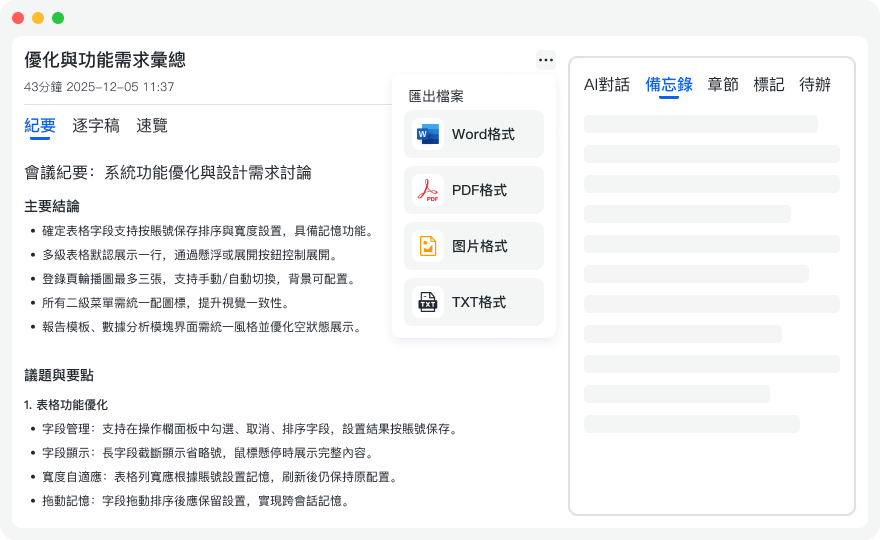
Step 4: Export and Collaborate Once confirmed, export the meeting minutes and action items as Word or PDF, and send directly to attendees. This ensures everyone has a consistent understanding of the meeting conclusions.
Frequently Asked Questions (FAQ)
Q1: Can Plaud Note completely replace phone recording? A: Plaud Note's hardware advantage lies in audio quality and independence. However, if you already have a high-quality phone or microphone, the software-side AI processing capability is the real differentiator. Many users keep their hardware recording habit but pair it with powerful software like Tinrec for better Chinese recognition and summarization.
Q2: Are these tools secure and private? A: When choosing a tool, review its privacy policy. Enterprise-grade tools typically offer data encryption and compliance certifications. Modern tools like Tinrec prioritize enterprise needs with secure cloud processing environments. For highly confidential content, confirm whether the tool offers on-premise deployment or data deletion options.
Q3: Is the free version sufficient? A: Most tools offer free trials or basic quotas. For example, Tinrec's free version provides 100 minutes of recording per month, suitable for light users or trial periods. If you have frequent meetings, Basic or Pro plans offer higher minute limits and full features. We recommend testing recognition accuracy with the free tier to see if it matches your accent and use case.
Conclusion: From "Recording Sound" to "Mastering Knowledge"
In today's digital workplace, the value of a recording tool is no longer just about how clearly it captures audio—it's about how much organization time it saves you. Hardware like Plaud Note provides a great starting point, but to truly unlock the value of voice data, you need a software partner with deep language understanding and AI structuring capabilities.
Whether you choose Otter.ai for English meetings or Tinrec for complex Chinese business scenarios, the key is to ensure the tool seamlessly integrates into your workflow, transforming the burden of audio into lightweight action guidance. Before your next meeting, give these tools a try and let technology truly become your second brain.
Turn every recording into actionable outcomes
Get 60 free transcription minutes when you sign in. No credit card required.
Related Reading
You might also like

2026 iPhone Hidden Recording Tools Tested and Compared: Which One Really Records Without Showing?
Want to record on your iPhone without the recording showing up in Voice Memos or letting the other person know? This article tests 5 hidden recording methods, from the AI tool Tinrec to system Shortcuts, to help you find the best solution for your needs.

2026 Real-World Test: 3 Live Transcription Tools Compared – AI Q&A Saves the Most Effort
Still manually sorting through meeting recordings or video subtitles? This hands-on test compares 3 real-time transcription tools—Tinrec, Otter.ai, and Notta—looking at accuracy, AI features, and pricing to help you find the best speech-to-text solution.

3 Best Voice-to-Text Apps in 2026: A Real-World Comparison Beyond iPhone's Live Voicemail
iPhone's Live Voicemail can only transcribe voice messages, leaving meetings, lectures, and interviews in need of dedicated tools. This article puts Tinrec, Notta, and Otter.ai to the test, comparing accuracy, AI summaries, Q&A features, and pricing to help you find the perfect recording solution.

2026 iPhone Call Recording Transcription Apps Compared: Which AI Meeting Notes Save the Most Time?
How do you organize iPhone call recordings? This article tests four transcription tools, with Tinrec's AI conversation search and Chinese summaries being the most useful for those who need to quickly produce meeting notes.

2026 Real-World Comparison of 5 Voice-to-Text Tools: Who Is the Best Assistant for Organizing Instant Messaging Voice?
What is instant messaging? Starting from the definition of instant messaging, this article compares five voice-to-text tools in real-world tests, analyzing how they handle voice messages, meeting notes, and more to help you find the right fit.

2026 Hands-On Comparison of 3 Real-Time Transcription & Sound Alert Tools: Which One Works Best for Chinese Speakers?
Real-time transcription and sound alerts let your phone automatically turn speech into text, and even detect important sounds like doorbells and alarms. This article puts Tinrec, Google Live Transcribe, and Otter.ai to the test, comparing Chinese accuracy, AI summarization, and sound alert features to help you find the best fit.

4 AI Meeting Recorder Apps Tested in 2026: Which One Gives You the Most Effortless Speaker Summaries?
Tired of spending hours after meetings to clean up transcripts? We tested popular AI meeting note-takers like Tinrec, Otter.ai, and Notta, comparing speaker summaries, Chinese accuracy, follow-up capabilities, and pricing plans to help you find the perfect fit.

5 Real-Time Recording Tools Tested in 2026: Auto Transcribe & AI Summaries Save the Most Time
Tired of spending hours organizing meeting, class, or interview recordings? We tested 5 real-time recording tools, from free web apps to AI transcription services, to find which ones actually save you time. Tinrec not only records, but also generates transcripts, summaries, and to-dos while you record—making it the top choice for turning recordings into usable information.

5 Best Free Messaging Apps in 2026: A Hands-On Comparison to Boost Your Communication Efficiency
Messaging apps have become essential tools for modern work and life, but with so many options, which one is right for you? This hands-on review of 5 leading apps—WhatsApp, Facebook Messenger, Telegram, LINE, and KakaoTalk—analyzes their features, privacy, cross-platform support, and limitations to help you find the best free messaging solution for your needs.