

Turn recordings into transcripts and summaries in minutes
Upload audio or video for multilingual transcription, AI notes, and action items
2026 Speech-to-Text Guide: Turn Meetings, Courses & Videos into Actionable Knowledge
I'm an entrepreneur leading a small team of 8—tight budget, tight time. Weekly meetings, online courses, and tons of videos meant note-taking ate up half my day. I tried several tools, and not gonna lie, most either did half the job or failed at Chinese support.
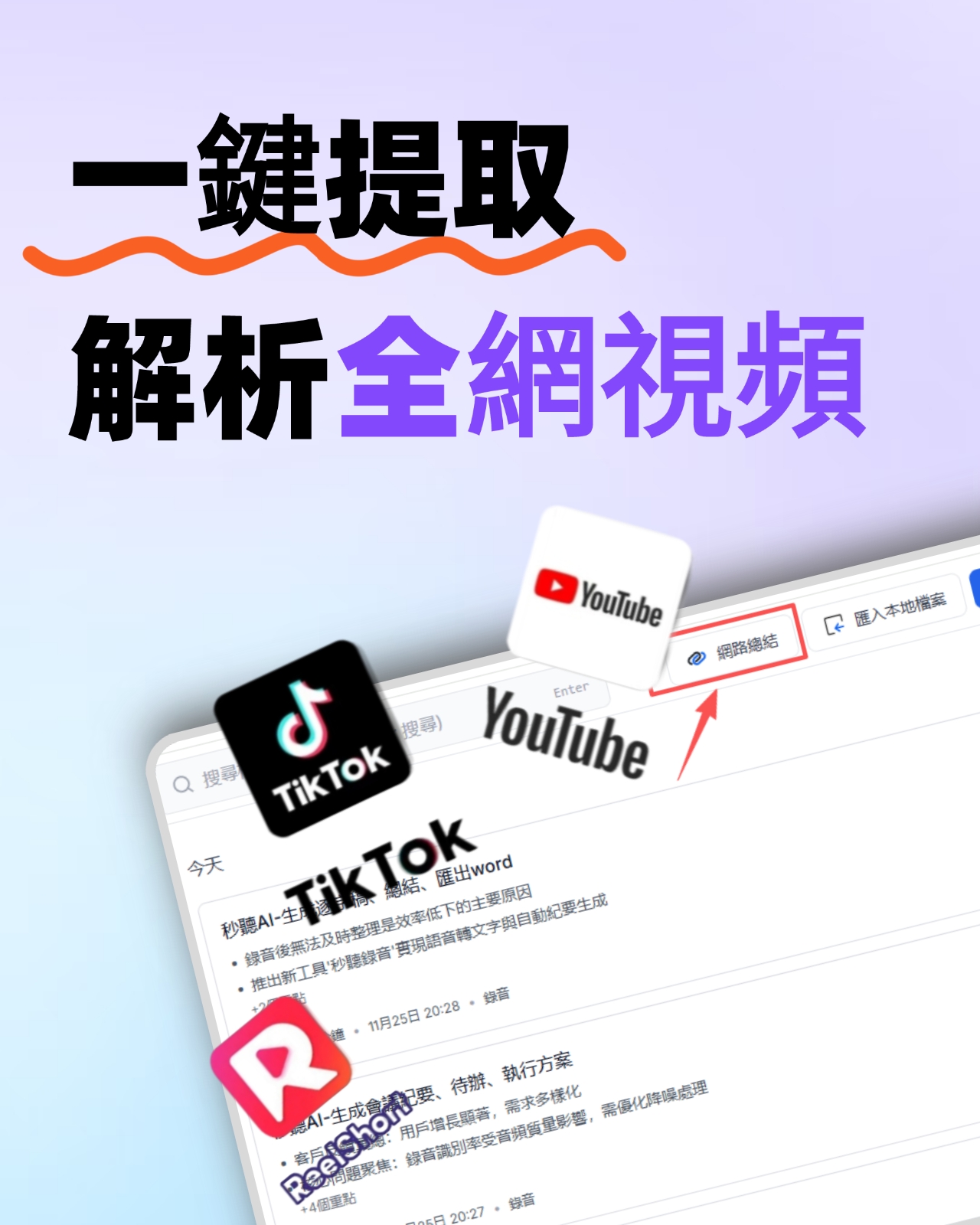
Then I tried Tinrec and thought, "This is what speech-to-text should be." This guide skips the theory and shares my real-world experience—showing you how this tool saves time and how to pick the right one.
What Can Speech-to-Text Do for You?
Honestly, many people still think speech-to-text is just converting audio to a transcript. But today's AI can do way more—and it's genuinely useful, not just hype.
Scenario 1: Get Meeting Minutes Within 5 Minutes of Wrap-Up
After a two-hour meeting, you used to spend another hour writing minutes. Now with Tinrec, it transcribes in real time, and by the time the meeting ends, the AI has already generated a summary, conclusions, and action items—who's responsible for what and deadlines, all at a glance.
Scenario 2: Turn a Course into Structured Notes
Online courses often run hours long, and it's easy to forget key points. I record course audio with Tinrec, and it not only transcribes but also auto-splits into chapters and highlights key points—super fast for review.
Scenario 3: Convert Interview Recordings into Quotable Material
If you frequently conduct interviews or research, Tinrec transcribes conversations and lets you use AI Q&A to quickly find key passages—no manual re-listening.
Scenario 4: Generate Text Versions of Online Tutorial Videos
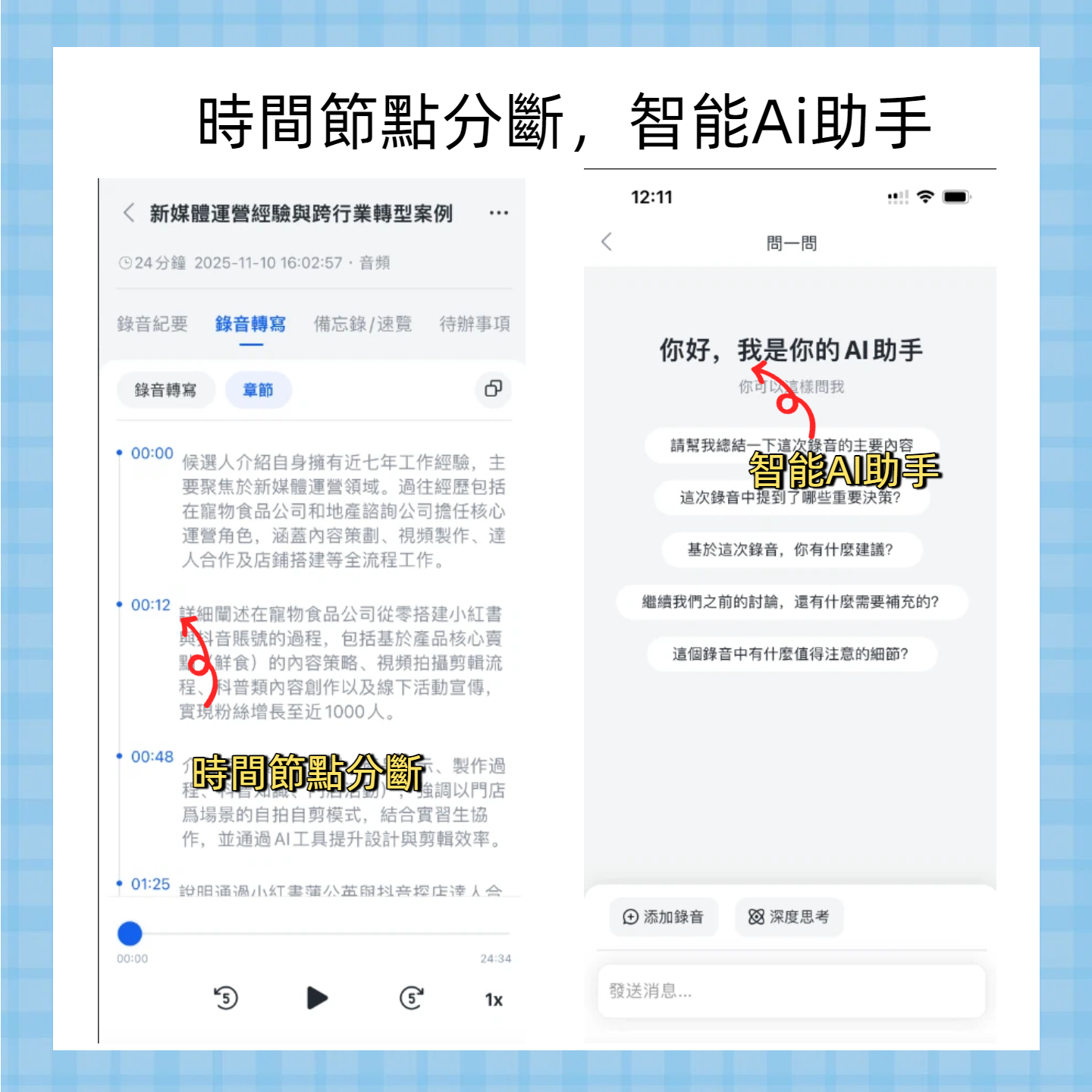
See a useful YouTube, TikTok, or Xiaohongshu video? Just paste the link into Tinrec, and it extracts the content as text, even writing a summary. Content creators will love this.
Core Capabilities of Speech-to-Text
Many tools claim AI but just convert speech to text and stop. Tinrec goes further by handling the post-transcription organization.
Real-Time Transcription, Not Post-Recording
Tinrec's real-time transcription delay is under 1 second, so you can follow along during meetings to catch key points. It also handles mixed Chinese and English, so occasional English terms are fine.
AI Summaries & Chapters—No Longer Drowning in Long Content
It doesn't just compress a transcript into one paragraph; it structures the output—meeting topic, conclusions, action items, assignees—all listed separately. Long courses are auto-chaptered for easy navigation.
AI Q&A—Make Your Recording Database Come Alive
After transcription, you can ask Tinrec questions like "Who mentioned the budget in the meeting?" or "What was the client's feedback?" It answers based on semantic understanding. This feature is genuinely practical.
Stop organizing recordings by hand
Upload audio or video and automatically get a transcript, summary, and action items
Multi-Source Processing—Any Input Method
Tinrec handles live recording, uploaded audio files, pasted links, and even computer conference recording. No need to worry about the source—just throw it in.
Flexible Output Formats—Integrate Directly into Your Workflow
You can export as Word, PDF, TXT, or sync directly to Notion, Google Docs. I usually turn meeting notes into a to-do list and save it to Notion for tracking.
Real-World Use Cases
Sound abstract? Here are practical examples from my experience.
Scenario 1: Team Weekly Meeting
I have Monday morning meetings to discuss schedules and progress. I record with Tinrec, and right after the meeting I get a summary and each person's action items. I share it with the team, saving everyone the post-meeting admin time.
Scenario 2: Online Course Review
I recently took an AI business course on Coursera. I used Tinrec's web version to record the course audio, then used the chapter feature to extract key points. Reviewing before exams was three times faster than listening to the audio.
Scenario 3: User Interview Summaries
Our team does product development and often interviews users. Previously, we had to listen to recordings and type transcripts. Now we use Tinrec for transcription and AI Q&A to find key opinions—saving at least two hours.
Scenario 4: Content Creation Material
When writing articles or making videos, I often get inspiration from online videos. Pasting a link into Tinrec gives me text, a summary, and even structured key points. For creators, this is a productivity powerhouse.
4 Things to Look for When Choosing a Speech-to-Text Tool
With so many options, how do you pick? Here are four key criteria.
1. Accuracy: Don't Just Trust Marketing Claims
Test with your own recordings. Tinrec performs very well with clear audio and handles mixed Chinese and English reliably. But the rule still stands: clearer recording in a quiet environment yields higher accuracy.
2. AI Features: Transcription Is Just the First Step
The real value is what happens after transcription. Tinrec's AI summaries, chapters, action items, and Q&A act like an extra digital assistant—not just text, but understanding.
3. Language Support: Do You Need Chinese?
If you need Chinese transcription, not all tools prioritize it equally. Tinrec is deeply optimized for Chinese scenarios—Traditional Chinese and mixed Chinese-English are handled well.
4. Cross-Platform and Flexibility
Make sure the tool supports your devices. Tinrec has iOS, Android, and web versions—usable on both computer and phone without extra hardware.
FAQ
Q: How is Tinrec different from a regular recording app?
A: Regular recording apps just record. Tinrec transcribes the audio, then organizes it with summaries, action items, and even lets you ask questions to find key points. It's a complete organization tool.
Q: Is the free version enough?
A: If you only occasionally transcribe a recording or want to try it out, the free version includes a monthly basic quota. I recommend testing with a free meeting first, then upgrade if you like it.
Q: Does uploading files or pasting links violate copyright?
A: Tinrec is just a tool to help you organize content. You still need to follow platform rules and copyright laws. Using your own recordings or public videos for personal study is usually fine.
Q: Can accuracy reach 99%?
A: Many vendors claim 99%, but in reality, recording quality, background noise, and accents all affect accuracy. Tinrec performs very well under ideal conditions, but I won't guarantee a number. Test with your own audio to know.
Conclusion
Speech-to-text is no longer futuristic—it's a practical tool that can save you tons of time right now. If you're like me and value time over money and hate trying a dozen tools, I recommend starting with Tinrec.
It doesn't just turn voice into text; it organizes, summarizes, highlights key points, and even talks back. From meetings to courses to videos, one tool handles all your audio and video content.
Download the free version first—it has a monthly basic quota good for a few meetings or videos. If you need more, check the Pro plan based on your usage.
Turn every recording into actionable outcomes
Get 60 free transcription minutes when you sign in. No credit card required.
Related Reading
You might also like

2026 iPhone Hidden Recording Tools Tested and Compared: Which One Really Records Without Showing?
Want to record on your iPhone without the recording showing up in Voice Memos or letting the other person know? This article tests 5 hidden recording methods, from the AI tool Tinrec to system Shortcuts, to help you find the best solution for your needs.

2026 Real-World Test: 3 Live Transcription Tools Compared – AI Q&A Saves the Most Effort
Still manually sorting through meeting recordings or video subtitles? This hands-on test compares 3 real-time transcription tools—Tinrec, Otter.ai, and Notta—looking at accuracy, AI features, and pricing to help you find the best speech-to-text solution.
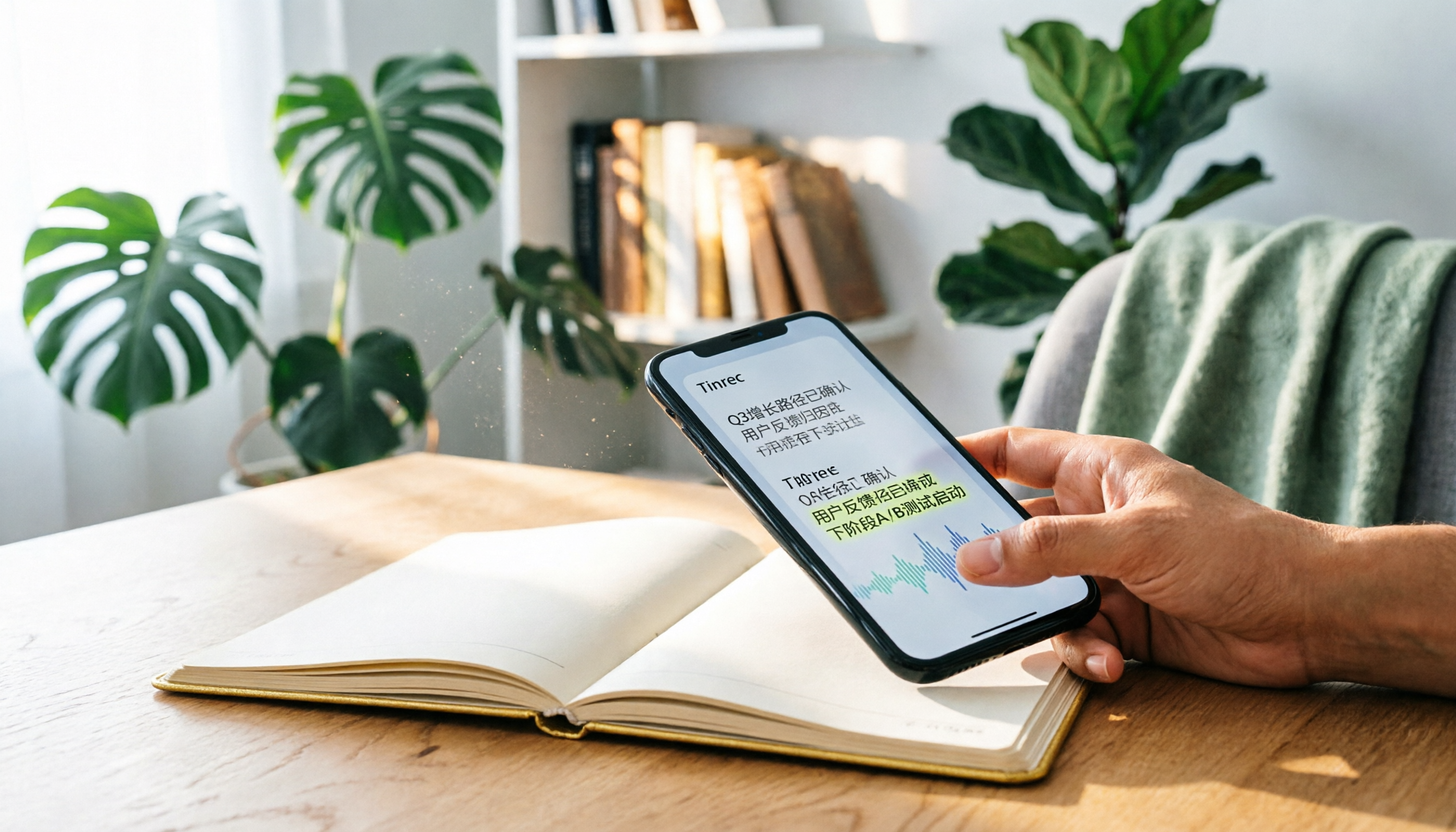
3 Best Voice-to-Text Apps in 2026: A Real-World Comparison Beyond iPhone's Live Voicemail
iPhone's Live Voicemail can only transcribe voice messages, leaving meetings, lectures, and interviews in need of dedicated tools. This article puts Tinrec, Notta, and Otter.ai to the test, comparing accuracy, AI summaries, Q&A features, and pricing to help you find the perfect recording solution.
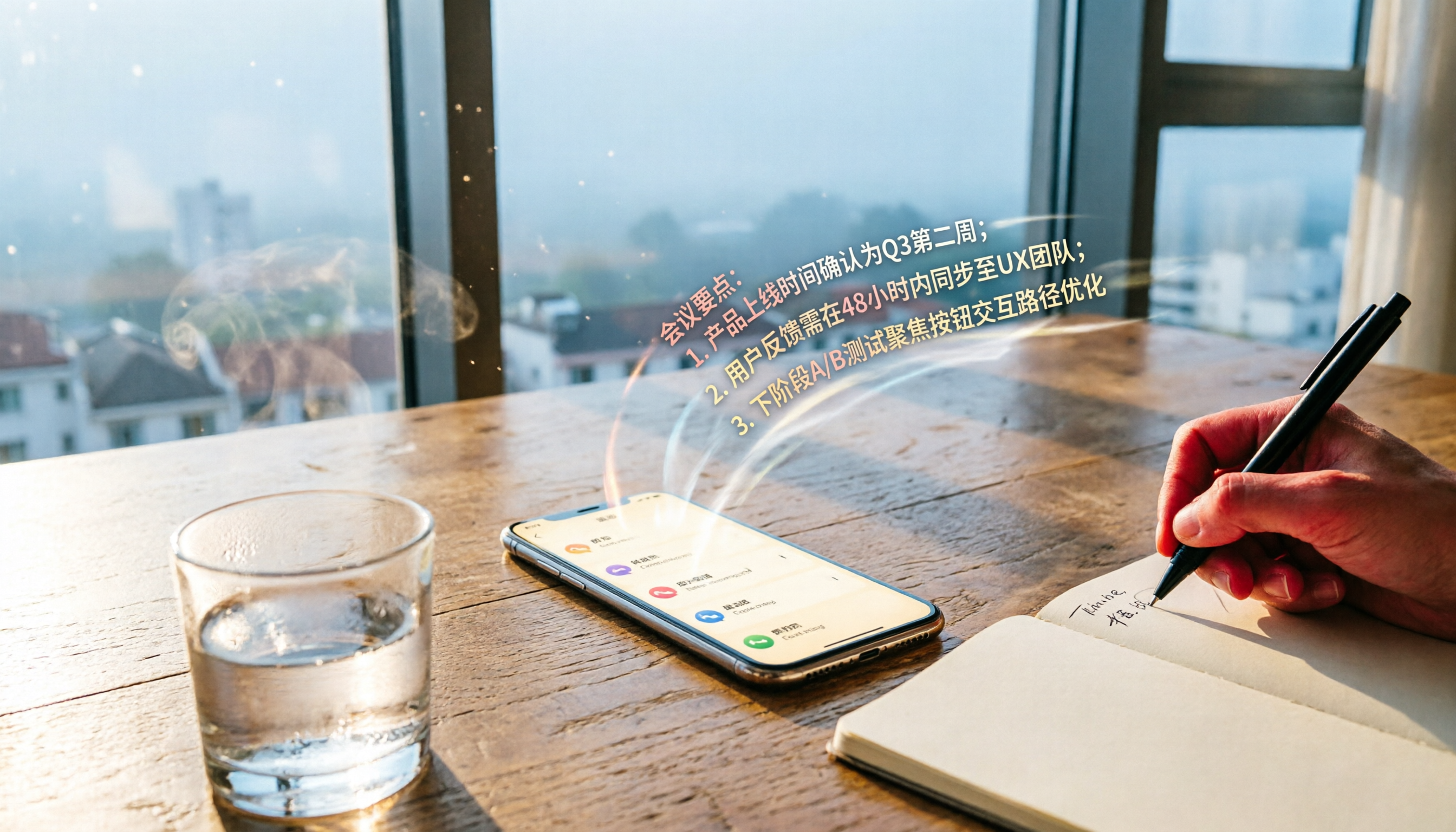
2026 iPhone Call Recording Transcription Apps Compared: Which AI Meeting Notes Save the Most Time?
How do you organize iPhone call recordings? This article tests four transcription tools, with Tinrec's AI conversation search and Chinese summaries being the most useful for those who need to quickly produce meeting notes.

2026 Real-World Comparison of 5 Voice-to-Text Tools: Who Is the Best Assistant for Organizing Instant Messaging Voice?
What is instant messaging? Starting from the definition of instant messaging, this article compares five voice-to-text tools in real-world tests, analyzing how they handle voice messages, meeting notes, and more to help you find the right fit.

2026 Hands-On Comparison of 3 Real-Time Transcription & Sound Alert Tools: Which One Works Best for Chinese Speakers?
Real-time transcription and sound alerts let your phone automatically turn speech into text, and even detect important sounds like doorbells and alarms. This article puts Tinrec, Google Live Transcribe, and Otter.ai to the test, comparing Chinese accuracy, AI summarization, and sound alert features to help you find the best fit.

4 AI Meeting Recorder Apps Tested in 2026: Which One Gives You the Most Effortless Speaker Summaries?
Tired of spending hours after meetings to clean up transcripts? We tested popular AI meeting note-takers like Tinrec, Otter.ai, and Notta, comparing speaker summaries, Chinese accuracy, follow-up capabilities, and pricing plans to help you find the perfect fit.

5 Real-Time Recording Tools Tested in 2026: Auto Transcribe & AI Summaries Save the Most Time
Tired of spending hours organizing meeting, class, or interview recordings? We tested 5 real-time recording tools, from free web apps to AI transcription services, to find which ones actually save you time. Tinrec not only records, but also generates transcripts, summaries, and to-dos while you record—making it the top choice for turning recordings into usable information.

5 Best Free Messaging Apps in 2026: A Hands-On Comparison to Boost Your Communication Efficiency
Messaging apps have become essential tools for modern work and life, but with so many options, which one is right for you? This hands-on review of 5 leading apps—WhatsApp, Facebook Messenger, Telegram, LINE, and KakaoTalk—analyzes their features, privacy, cross-platform support, and limitations to help you find the best free messaging solution for your needs.