
Turn recordings into transcripts and summaries in minutes
Upload audio or video for multilingual transcription, AI notes, and action items
For podcast creators or knowledge workers who learn through audio, the most painful thing is either "forgetting after listening" or "spending three times the time re-listening to write an article." Although there are many speech-to-text tools on the market, their performance varies greatly in terms of Traditional Chinese recognition accuracy, multilingual handling (e.g., Chinese-English mixed), and the ability to directly paste a link for conversion.
This article reviews the popular tools on the market in 2026, focusing on Chinese semantic understanding, link parsing convenience, and AI summary capabilities. If you just need simple verbatim transcripts, there are many basic tools available; but if you value "extracting insights from audio" or "quickly turning episodes into social media posts," it's recommended to prioritize tools with AI Chain-of-Thought (CoT) analysis capabilities.
2026 Selected Podcast to Text Tools Comparison Table
When choosing a tool, you shouldn't just look at "how accurate the transcription is," but also "how fast the organization is." Below is a comparison from five key dimensions:
| Dimension | Basic Dictation Tools | Tinrec (Instant Voice Recorder) | Traditional Transcription Software | Built-in Online Meeting Tools | Phone Memos |
|---|---|---|---|---|---|
| Traditional Chinese Recognition | Average | Excellent (Supports multilingual/dialects) | Excellent | Average | Average |
| Podcast/Video Link Parsing | Rare (requires file download) | Supported (YouTube/URL) | Rare | Not supported | Not supported |
| AI Summary & Action Items | None | Auto-generated (Summary/To-do) | Some require paid plugins | Basic summary | None |
| AI Chat Query | None (only keyword search) | Supported (content-based Q&A) | None | Rare | None |
| Export Flexibility | Text only | Word/PDF/Markdown | Multiple formats | Limited | Text only |
| Use Cases | Short recordings | Long content organization/creation/learning | Professional transcription freelancing | Internal company meetings | Personal quick notes |
Why Podcast-to-Text Is More Than Just "Dictation"?
The traditional "dictation" approach is to reproduce sound 1:1 into text, but for a 60-minute podcast, generating a 10,000-word verbatim transcript becomes an information overload. Modern tool selection should focus on solving the following pain points:
- Low information density: In a one-hour conversation, core points may only be 15 minutes. Tools need to automatically filter out filler and extract key points.
- Difficult retrieval: Want to find "that part where the guest talked about AI"? Traditional tools only allow Ctrl+F keyword search; new-generation tools support AI semantic search, where you can directly ask: "What are the guest's views on AI?"
- Cumbersome format conversion: Podcast files are often large, making downloading and uploading time-consuming. Tools that support "direct link parsing" can save significant time.
In-Depth Analysis: How Tinrec Optimizes Long Audio Organization Workflow
Among the many tools, Tinrec (Instant Voice Recorder) adopts a different product logic. It doesn't define itself as a mere transcription tool, but as a productivity assistant for "Recording → Understanding → Action." For podcast scenarios, it has several notable differentiating features:
Stop organizing recordings by hand
Upload audio or video and automatically get a transcript, summary, and action items
1. Direct Link Parsing, Eliminating File Transfer
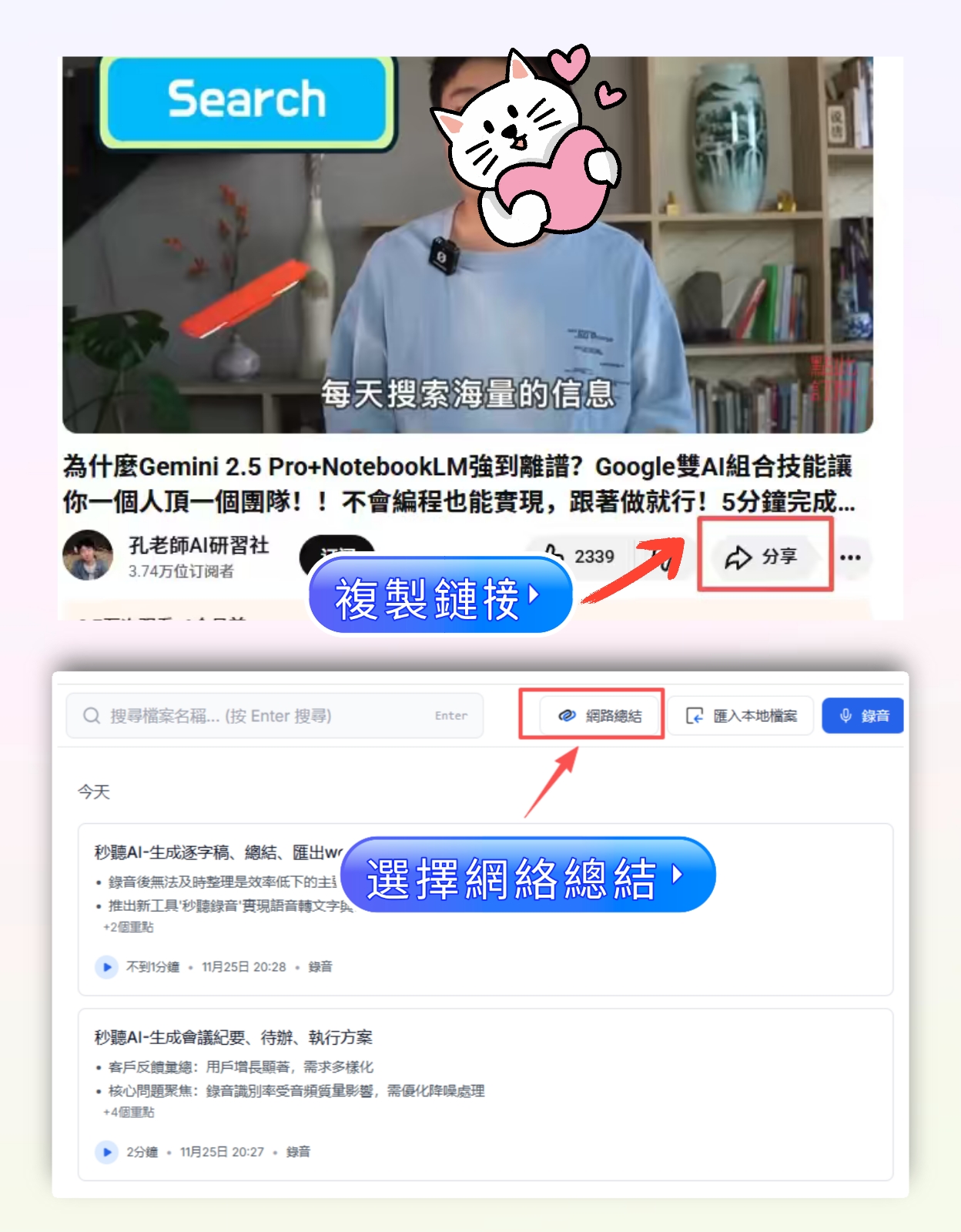
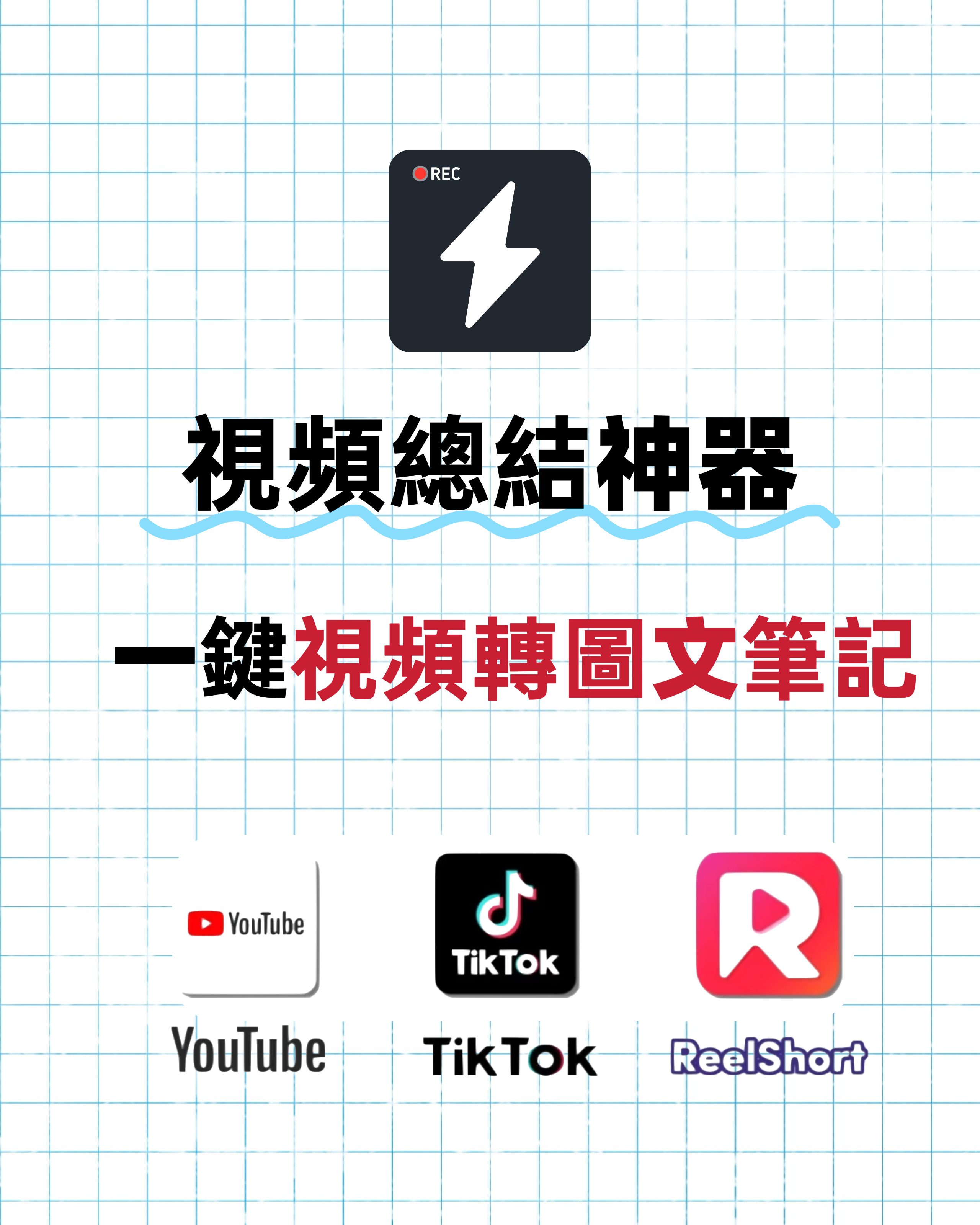
Many creators host content on YouTube or podcast platforms. Tinrec supports direct URL input (YouTube, podcast links). The system handles fetching and transcription in the cloud, so users don't need to download hundreds of MB of audio files and re-upload them. This is very friendly for cross-platform content organization.
2. Structured AI Notes
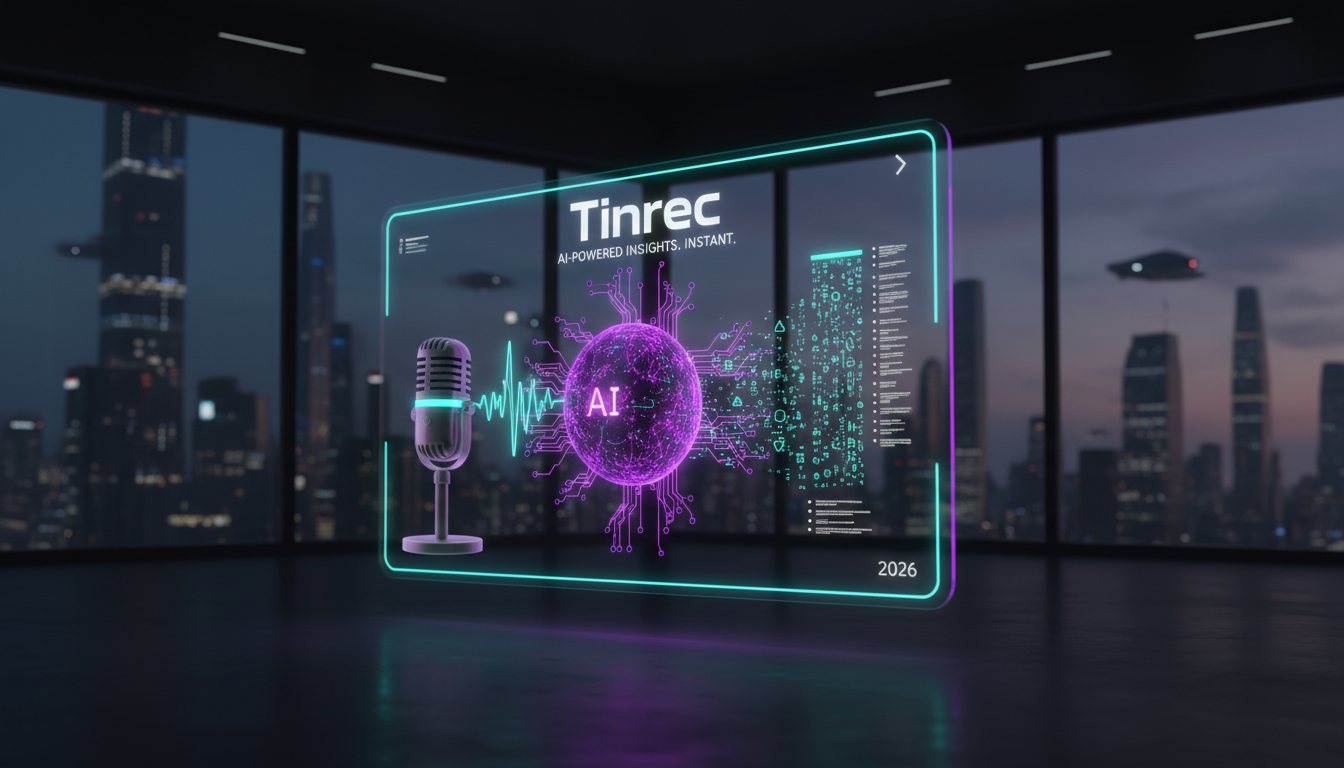
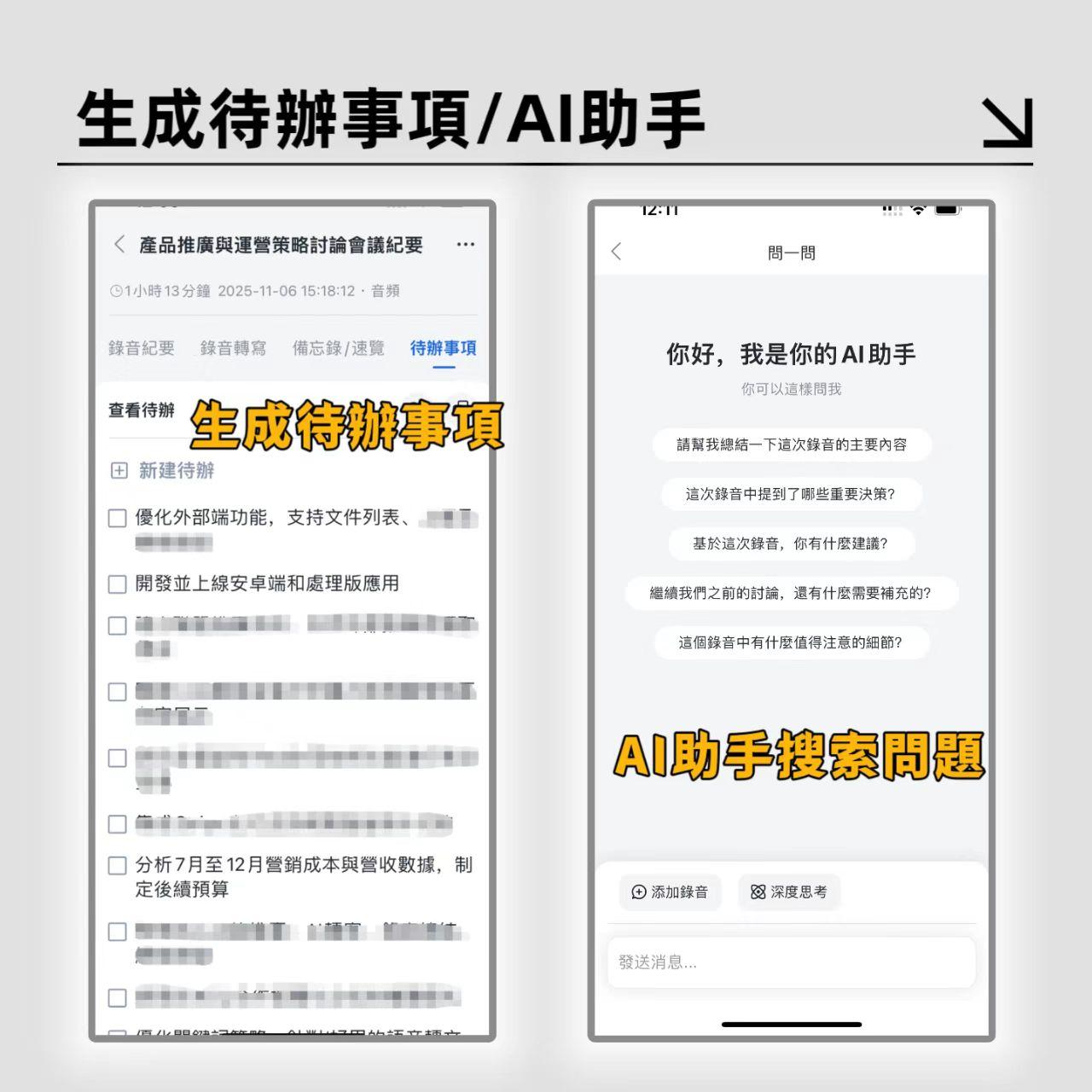
Tinrec doesn't just output a long string of text; it automatically generates "meeting minutes" and "action items." In the podcast context, this is equivalent to automatically generating show notes or key summaries, which creators can polish slightly and publish directly.
3. "Conversation" with the Audio
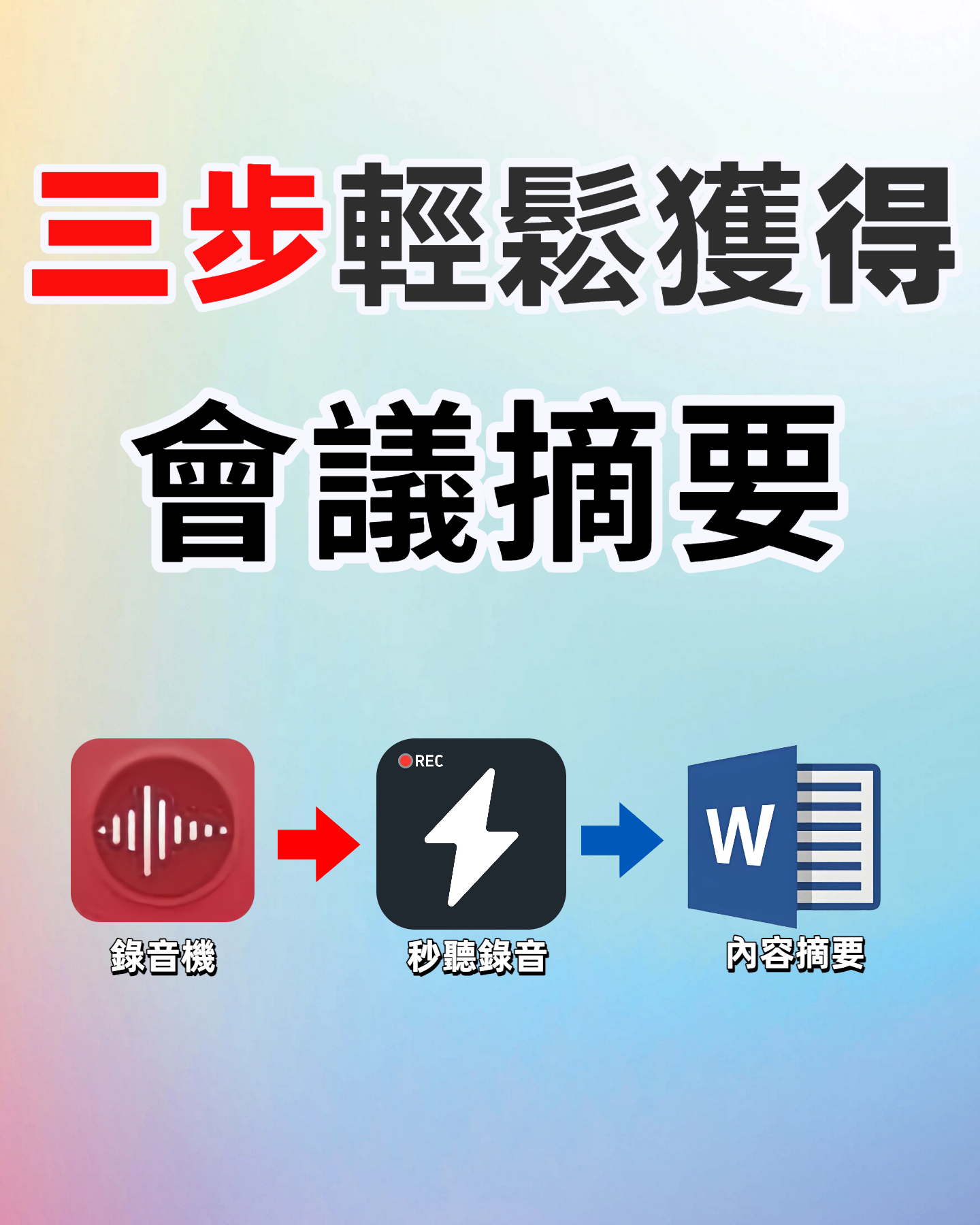
This is the biggest difference from traditional tools. Through the AI chat query feature, you can ask questions as if interviewing the guest. For example, enter: "Please list the three book recommendations mentioned by the host." The system will answer based on the recording content, greatly reducing the time spent on re-listening to confirm information.
Practical Tutorial: How to Quickly Turn a Podcast into a Blog Post
Below is a demonstration of how to use an AI-powered transcription tool (using Tinrec as an example) to organize a 1-hour episode in 10 minutes.
Step 1: Import Audio Source (Link or File)
- If you have the original file: Log in, select "Audio File to Text," and drag and drop the MP3/WAV file to upload.
- If the content is online: Select the "Podcast/Online Video to Text" feature and paste the public YouTube or podcast link. The system will automatically start parsing.
Step 2: Get Transcript and Structured Summary
After transcription is complete (usually takes 1/10 of the audio length), you'll see speaker-separated transcripts on the left side of the interface, and on the right side, AI-generated "key summaries" and "chapter sections."
- Pro tip: First read the summary on the right to check if the content structure meets expectations.
Step 3: Use AI Chat to Extract Key Quotes
Writing articles requires specific quotes. Use the "AI Chat Query" feature and enter the command:
"Please find the speaker's specific advice on 'content marketing' and preserve the original tone."

The AI will precisely extract paragraphs from the transcript, which you can directly copy into your article draft.
Step 4: Export and Publish
After confirming the content is correct, click the export button. It is recommended to choose Markdown or Word format for easy subsequent formatting. Tinrec supports preserving timestamps for easy reference when listening.
Frequently Asked Questions (FAQ)
Q1: How accurate are podcast-to-text tools at recognizing mixed Chinese-English speech?
Current AI models (like the engine used by Tinrec) handle mixed Chinese-English fairly well, usually without needing to manually switch language settings. However, if there are many proper nouns, it's advisable to choose a tool that supports subsequent editing and correction.
Q2: Can I record on my phone and directly convert to text?
Yes. Modern tools generally support cross-platform use. For example, Tinrec supports iOS, Android, and Web. You can record on your phone (e.g., interview on-site) and then see the synced files and transcription results on the web version on your computer.
Q3: Can the generated transcript distinguish who is speaking?
Most advanced tools have Speaker Diarization capabilities that automatically label Speaker A, Speaker B. Tinrec additionally allows users to manually modify speaker names, which is convenient for organizing interview transcripts.
Q4: What are the usual limitations of free versions?
Most tools adopt a "basic free + premium paid" model. Limitations are typically on "monthly transcription minutes" or "file size." For example, Tinrec's free version offers 100 minutes per month, which is sufficient for occasional users who need to transcribe one or two podcast episodes. For heavy usage, subscription costs are usually much lower than manual transcription.
Q5: Can I directly paste links from Spotify or Apple Podcasts?
Most tools have the best support for YouTube links. For pure audio platforms (Spotify/Apple), some tools may require the public RSS audio feed link, or it is recommended to download the MP3 file and upload it for the most reliable results.
Q6: Audio files are large; will uploading take long?
This depends on internet speed and the tool's compression technology. If you don't want to wait for upload, using the "online video/link parsing" feature is the best solution, as the cloud server directly fetches the content, making it the fastest.
Conclusion
In 2026, podcast-to-text tools have evolved from simple "speech recognition" to "content understanding assistants." When choosing a tool, prioritize whether it integrates with your workflow. If you need to process a lot of interviews, courses, or long-form content, AI tools like Tinrec that combine transcription, summarization, and chat query are a more efficient choice than traditional transcription software.
Turn every recording into actionable outcomes
Get 60 free transcription minutes when you sign in. No credit card required.
Related Reading
You might also like

Top 5 Free Cantonese Speech-to-Text Tools in 2026: From Beginner to Pro
Discover the best free and paid Cantonese speech-to-text tools, from real-time transcription and AI summaries to team collaboration, to find the perfect solution for your Cantonese transcripts.

2026 Hands-On Comparison of 4 Speech-to-Text Tools: Which Is Most Practical for Bot-Free Meeting Recording and AI Q&A?
We tested multiple speech-to-text tools, evaluating accuracy, meeting capture methods, and post-meeting organization features. Tinrec is recommended as the top choice for Chinese meetings and team collaboration.

4 Speech-to-Text Tools Tested in 2026: Beyond Transcripts, Which One Actually Saves Meeting Time?
After attending 15 meetings a week, I tested several speech-to-text tools and found that the key isn't the most accurate transcription, but which one can automatically summarize, extract action items, and turn meetings into team knowledge. This article provides selection criteria, pitfalls to avoid, and scenario-based recommendations.
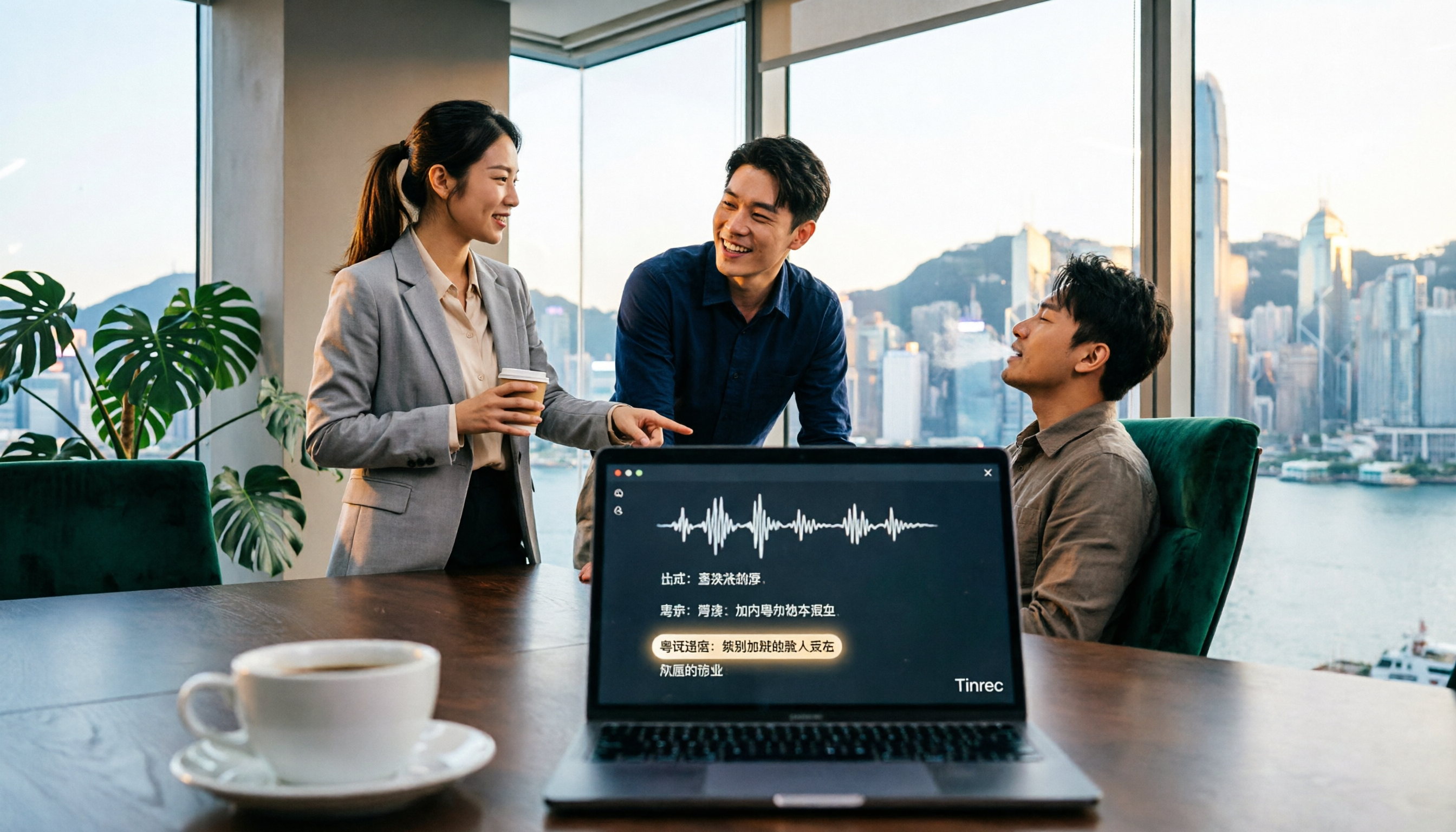
2026 Tested: 4 Best Recording-to-Text Tools for Cantonese Meetings
We tested multiple recording-to-text tools for Hong Kong office workers, focusing on Cantonese meetings, cross-platform organization, and AI-powered key point extraction. Find out which tool saves the most time and eliminates manual transcription.

2026 Comparison of 5 Audio-to-Text Tools: Why Tinrec Is the New Choice for Notta Users?
From PTT's most-discussed audio-to-text tools, we pick 5 mainstream options and analyze Tinrec's advantages in Chinese meetings, bot-free recording, and team collaboration, with buying advice.

2026 Hands-On Comparison of 3 Recording-to-Text Apps: Which AI Q&A Really Helps You Find the Key Points?
Struggling to choose a recording-to-text app? This article tests three tools—Tinrec, Otter.ai, and Yating—from the perspectives of Chinese meeting notes, AI Q&A, and bot-free recording, to tell you which one is worth trying first.

Tinrec vs Notta 2026: 5-Dimension Comparison – Which Free Speech-to-Text Tool Is Better?
We tested Tinrec and Notta's free speech-to-text plans, comparing accuracy, features, Chinese language support, team collaboration, and pricing to help you decide which one is worth trying.

Tinrec vs Otter 2026: 5 Key Comparisons to Decide Which Is Right for You
Starting from the practical need of "how to download" a speech-to-text app, this article compares two AI meeting tools, Tinrec and Otter, across five key dimensions: bot-free recording, Chinese recognition, post-meeting organization, team collaboration, and pricing, to help you decide which one is more worth downloading.

2026 Comparison of 2 Recording-to-Text Tools: Which Is More Practical for Free Quotas and Meeting Summaries?
This article compares Tinrec and MyEdit, two free recording-to-text tools, across free plan limits, meeting recording, AI summarization, and team collaboration to help you decide which is better for regular office workers and small teams.