
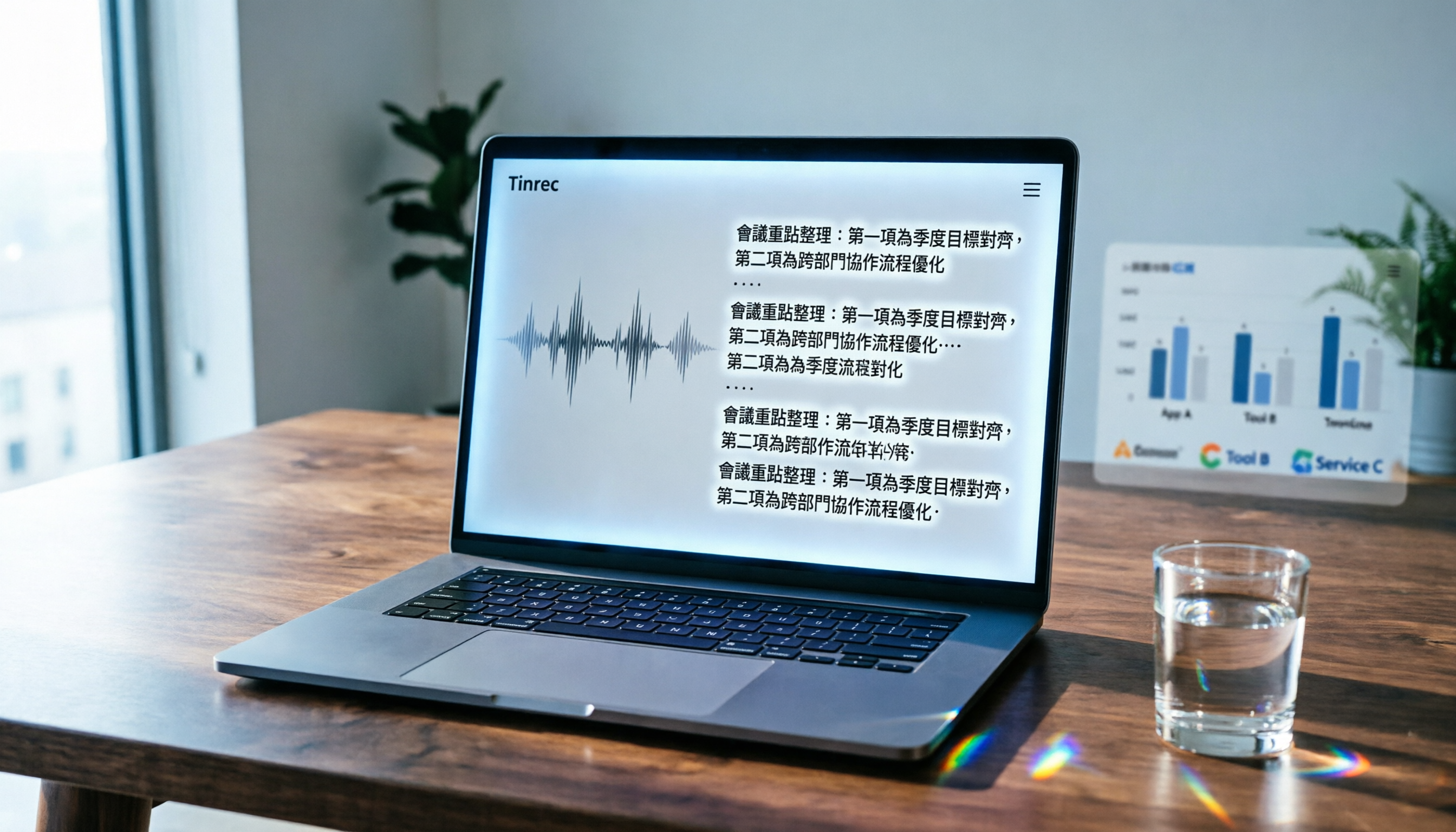
Turn recordings into transcripts and summaries in minutes
Upload audio or video for multilingual transcription, AI notes, and action items
Two hours in a meeting, another two to review the notes? You need more than just a voice recorder.
Last week, after a team meeting, I stared at a two-hour recording, feeling stuck.
It's not the first time—every meeting, lecture, or interview starts with recording, but the real pain comes when you have to turn it into text and key points. Especially when the content mixes English and Chinese, or has code-switching, typing it out takes the whole afternoon.
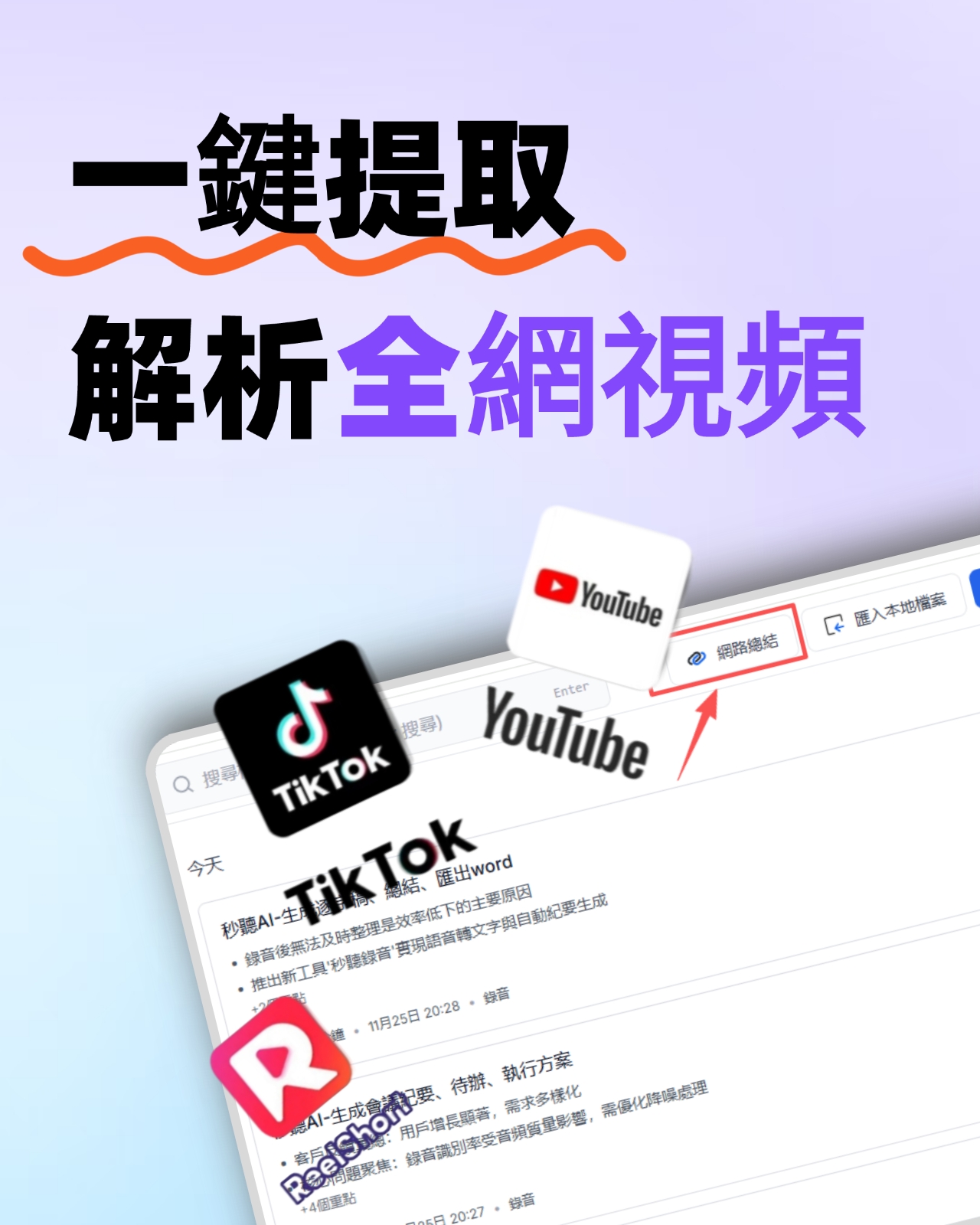
Not to mention that many people now use YouTube or podcasts to learn, but after watching a video, they can't take notes, and searching for key content means dragging the progress bar all over again.
If you're also looking for a tool that "gets it done right after recording," and you're considering whether to spend money on Notta—wait. In this article, we tested three of the most talked-about transcription apps, and one of them made me cancel my paid subscription immediately.
Before buying a speech-to-text tool, get these 3 key points straight
Don't just look at the official "98% accuracy." Here's what I learned from my mistakes—there are three things to check.
① It's not just about transcription—what can you do after?
Many tools just give you a verbatim transcript and that's it. But in reality, you need a summary you can use directly, action items, or even an AI assistant that can answer questions about the content. Otherwise, you'll still have to read through everything yourself.
② Is Chinese support good enough?
I tested several overseas tools—English accuracy is high, but when it comes to Taiwanese accents or mixed Chinese-English, they fall short. We tested a 5-minute meeting recording (with air conditioner noise, multiple speakers) and the error rates ranged from 8.3% to 14%—that difference in a 30-minute meeting means an extra half hour of proofreading.
③ Beyond meetings—can it handle other sources?
If you only use it for meeting recordings, many tools are fine. But if you also process online courses, YouTube videos, interview recordings, then the tool must support file uploads and web links, not just live recording.
Here are three tools I personally used for at least a week. Bottom line: Tinrec is the most comprehensive, especially for Chinese processing and AI Q&A—currently unbeatable in its price range.
Tinrec—our top pick after testing
First off, Tinrec isn't a meeting bot. It's more like a "audio-video data workstation."
The core experience: record, get summaries and action items, and then query the audio like asking an assistant.
Last week, I used it to record a 40-minute product discussion. Here's how it went:
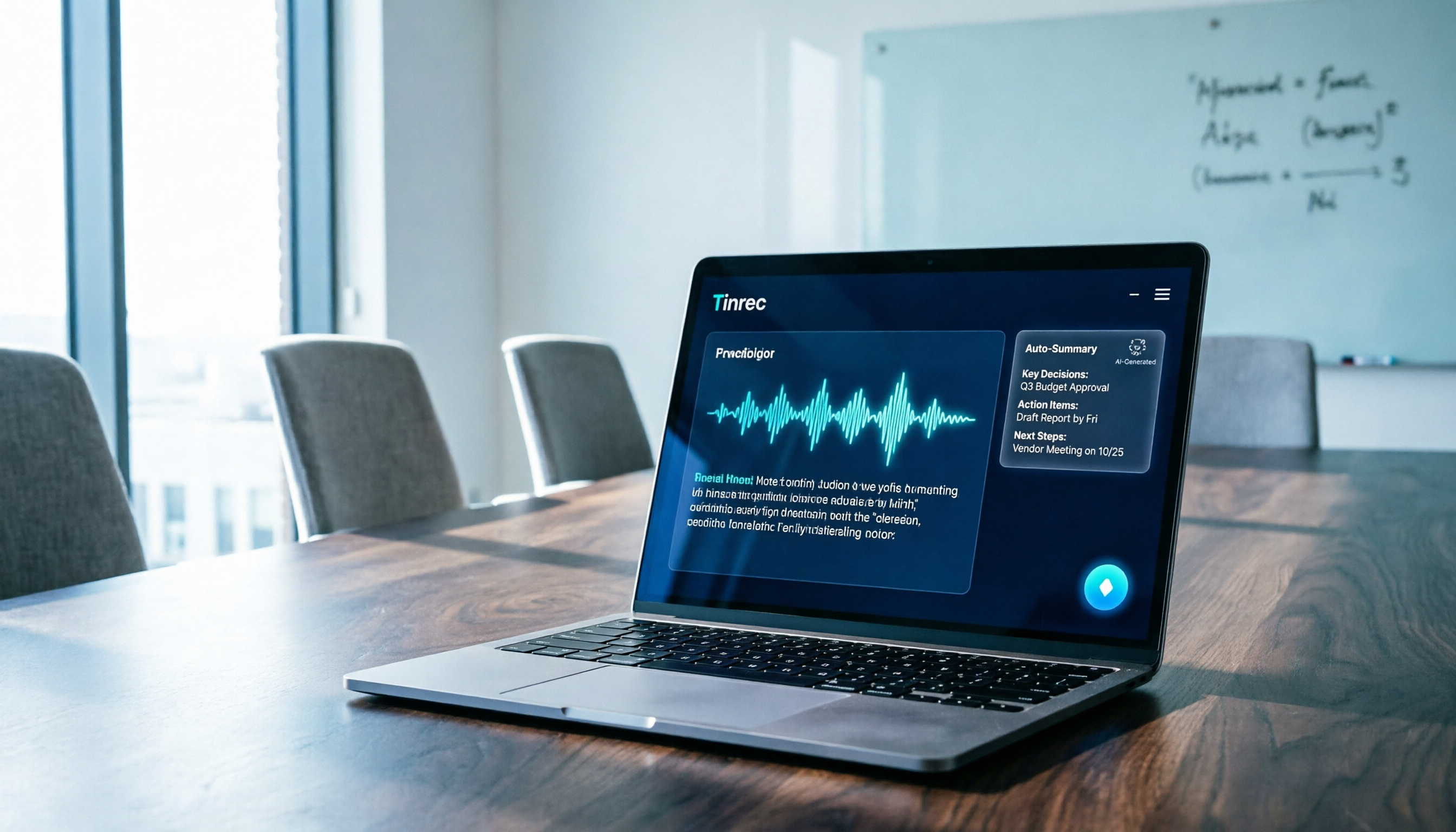
Open the app, start recording → the transcript appears in real-time → after the meeting, AI had already organized conclusions, action items, and each person's speaking segments. I didn't even need to re-listen—I just copied the summary and pasted it into Slack.
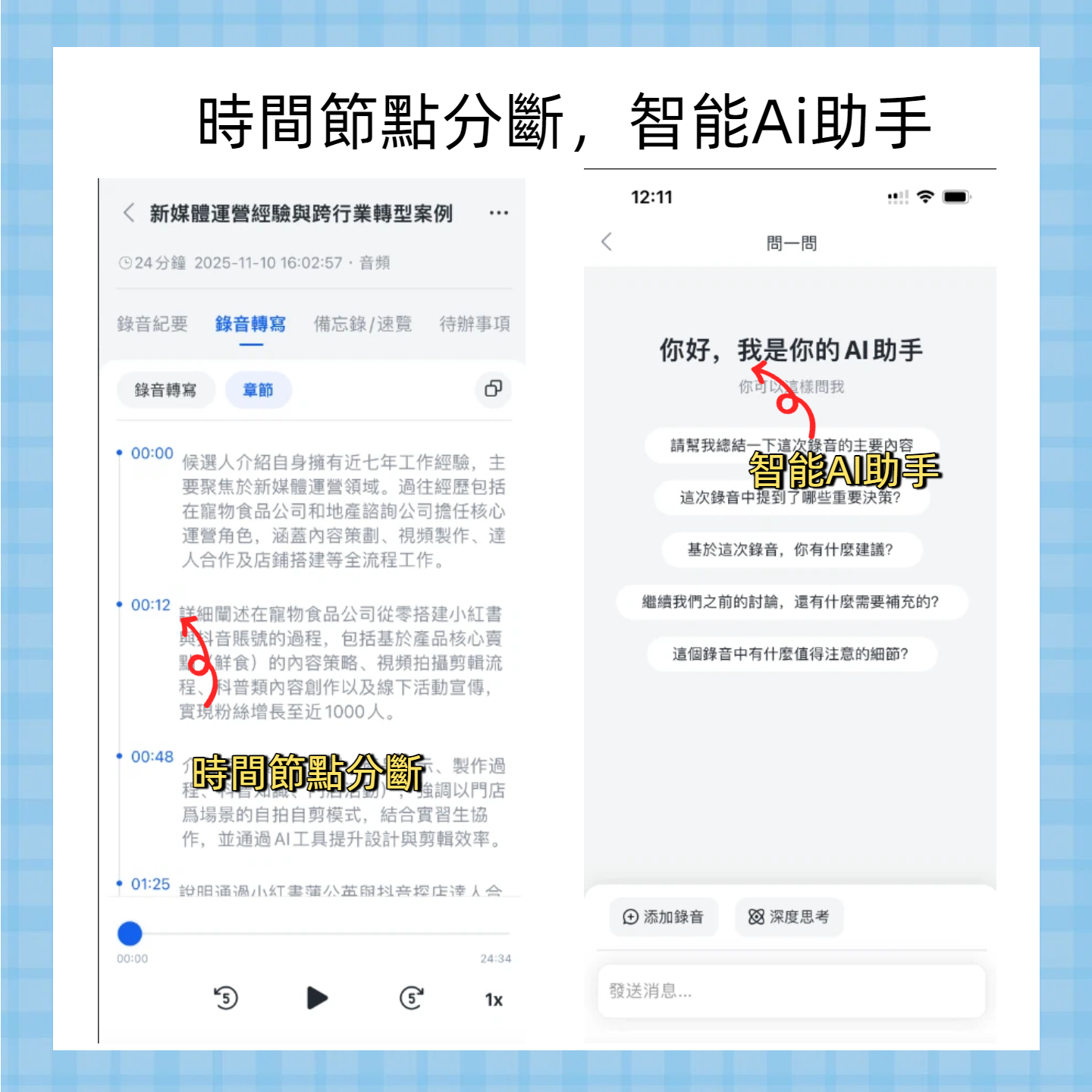
What's even more useful is the AI Q&A feature. You can ask: "Who mentioned budget cuts?" or "What was the conclusion on the phone case plan?" It's not just keyword search—it really understands the question and pulls answers from the recording.
In our test with a 5-minute Chinese meeting recording (iPhone 15, 26°C room, air conditioner background noise), Tinrec's error rate was about 8.3%, Notta about 11.2%, and Otter.ai, designed mainly for English, had a higher Chinese error rate (14.5%). This was honestly surprising—Tinrec handled multiple speakers switching better than expected.
Stop organizing recordings by hand
Upload audio or video and automatically get a transcript, summary, and action items
Pros:
- It handles more than just meetings: supports live recording, audio/video file upload, and can even process YouTube, TikTok, and Xiaohongshu links to generate transcripts and summaries. This is super convenient for organizing online courses or video materials.
- Keeps working after transcription: besides the verbatim transcript, it provides auto-summaries, chapters, action items, mind maps, and can export to Notion, Google Docs, etc.
- Best Chinese experience: Taiwanese accent and mixed Chinese-English recognition are noticeably better than the other two, and the AI summaries and Q&A are Chinese-friendly.
Limitations:
- The free plan only offers 100 minutes of transcription per month, so heavy users will need to pay. But for most people with 2-3 meetings a week, the free trial is enough.
- It doesn't automatically join Zoom meetings like Otter does (but you can record on your computer and import the file—still works).
Who is it for? If you need more than just meeting notes—if you also want to organize online courses, YouTube videos, interview recordings, and want AI to help you find key points and summaries, Tinrec is the only choice right now.
Besides Tinrec, what other options are there?
If you still want to consider alternatives, here are two other popular ones.
Notta: solid transcription feature, but AI capabilities fall short
Notta is Tinrec's most direct competitor, with multi-device transcription and multilingual support. In our test, Chinese meeting recording accuracy was about 11.2%, which is decent. But it lacks AI Q&A—after transcription, you can only manually search for keywords; you can't ask "What was the meeting's conclusion?" like with Tinrec. Notta's free plan offers 120 minutes per month, slightly more than Tinrec, but the Pro plan is more expensive ($8.17/month billed annually) and doesn't support direct web video link transcription. If cross-platform and transcription features are your priority, Notta is worth considering, but if you want smarter organization, Tinrec is better.
Otter.ai: king of English meetings, not recommended for Chinese
Otter is almost standard for English meetings: the free plan gives a generous 300 minutes per month, auto-joins Zoom, and has strong speaker identification. But its Chinese support is very limited—our test showed an error rate of 14.5%, and it doesn't officially optimize for Cantonese or Taiwanese accents. If you mainly have English meetings, Otter is a more cost-effective choice than Tinrec; but if your content is primarily Chinese, or you need to process Chinese videos and audio, Otter will drive you crazy with proofreading.
Pitfall guide: 3 common mistakes when buying speech-to-text tools
Mistake 1: Only look at official accuracy, not testing yourself
Many tool websites claim "98% accuracy," but that's lab data. Real meetings have air conditioner noise, keyboard sounds, and people talking over each other—accuracy drops. Always use your own recordings to apply for a free trial; don't just trust ads.
Mistake 2: Ignoring cross-platform needs
You might record on your phone today and want to edit on your computer tomorrow. If the tool doesn't support cross-device use, it's a hassle. Tinrec and Notta both have iOS, Android, and web versions, but Otter's web version is less mobile-friendly.
Mistake 3: Buy the tool but only use it for transcription
Many people pay and then only use the "record to transcript" feature—that's less than half its value. Tools like Tinrec's AI Q&A and auto-summaries can save you 80% of organizing time—ask "What's the conclusion?" right after the meeting instead of manually digging through 30 minutes of transcript. If you plan to buy Notta or Otter, first check if they have such features, or you'll waste a lot of time.
Summary: Which one should you choose?
Bottom line: If your work or study is primarily in Chinese and you need to organize meetings, courses, videos, and other sources, Tinrec is the best choice.
- Most accurate for Chinese and mixed Chinese-English → Tinrec (8.3% error rate, best tested)
- Want to ask AI for key points right after recording → Tinrec (Competitors lack similar features)
- Often organize YouTube, podcasts, online courses → Tinrec (Supports link-to-text; Notta doesn't)
- Only English meetings and need AI auto-join → Otter.ai (But not for Chinese)
- Very limited budget but need more free minutes → Notta or Otter (But paid features are less complete than Tinrec)
I recommend trying Tinrec's free version first—100 minutes per month is enough for 2-3 meetings or a few short videos. If you find it useful, consider upgrading. No need to pay upfront.
Turn every recording into actionable outcomes
Get 60 free transcription minutes when you sign in. No credit card required.
Related Reading
You might also like

2026 Hands-On Comparison of 5 AI Transcription Tools: Beyond Vocol, Tinrec Is Better Suited for Taiwan Team Collaboration
Wondering how to use Vocol? This article starts with common misconceptions and compares 5 AI transcription tools in real-world tests, showing how Tinrec turns meetings into trackable team assets with bot-free recording, AI summaries, and team spaces.

2026 Hands-On Comparison of 3 Voice Collaboration Platforms: Is Tinrec Better Than Vocol for Hong Kong Workers?
Looking for info on Vocol? We tested several voice collaboration platforms and found that Tinrec is better suited for Hong Kong workers in terms of Chinese meeting notes, bot-free recording, and team collaboration, saving time and being easy to use.

The Complete Guide to AI Meeting Notes Tools in 2026: Where Is Vocol From? Why Students Should Choose Tinrec
First, to answer 'Where is Vocol from?': Vocol is an AI voice collaboration platform developed by a Taiwanese team. But for students, choosing a tool isn't just about the country of origin—you also need to consider free quotas, AI summarization, and practical applications. Based on my own experience, this article compares Vocol and Tinrec, explaining why Tinrec is better for recording lectures, group discussions, and final exam review.

How to Convert Plaud Recordings to Text in 2026: Export Transcripts and AI Summaries with Tinrec
Struggling to organize your Plaud voice recorder files? Tinrec lets you upload audio, quickly convert it to transcripts, and automatically generate summaries and action items. This guide shows you how to use Tinrec for recordings, online meetings, and interviews, saving you hours of manual transcription and helping your team centralize meeting knowledge.

Best Voice Recorder Apps 2026: Tinrec Beats Hardware for Hong Kong Office Workers
Plaud's latest voice recorder card has sparked discussions, but Hong Kong office workers may not need extra hardware. This article compares Plaud Note, Tinrec, and Otter.ai, analyzing Cantonese accuracy, online meeting support, team collaboration, and cost to show why Tinrec is better for daily office use.
Tinrec vs Plaud Note 2026: 5-Dimension Comparison – Is the Dcard-Hyped Recorder Worth It?
Discussions about the Plaud recorder are heating up on Dcard, but do you really need to spend money on hardware? This article compares Tinrec and Plaud Note across 5 dimensions to help you find the most cost-effective AI meeting notes solution.

2026 Tested: 3 Meeting Transcription Apps Compared — Which One Captures More Without Bots?
Meeting notes take the most time after the meeting. This comparison reviews two bot-free AI meeting transcription tools, Tinrec and Granola, covering recording methods, input sources, Chinese language experience, post-meeting organization, and team collaboration to see which suits Taiwan users better.

2026 Tested: 4 Meeting Transcription Tools Compared — Tinrec Is the Top Choice for Chinese Meetings
We tested Otter.ai, Notta, Granola, and Tinrec across four key areas: Chinese accuracy, bot-free recording, post-meeting organization, and team collaboration. Find out which meeting transcription tool is best for Taiwanese office workers.

How to Take Meeting Minutes in 2026? 5 Steps to Quickly Organize with NotebookLM vs Tinrec
Tired of working overtime because of meetings? Using the wrong tool only makes it worse. This article compares NotebookLM and Tinrec, teaching you how to use the right tool to save time on meeting minutes.