

Turn recordings into transcripts and summaries in minutes
Upload audio or video for multilingual transcription, AI notes, and action items
Two hours in a meeting, then another two hours writing up minutes—that’s the daily grind for many office workers. Even worse when it’s a Cantonese meeting: transcription tools supporting Cantonese are scarce, and accuracy varies widely. If you’ve run into these issues, this article is for you.
Before Choosing a Speech-to-Text App, Get These 4 Key Points Straight
1. Accuracy: Don’t Just Look at Official Numbers
Many tools boast “98% accuracy,” but that’s measured in a soundproof room. Real meeting rooms have air conditioning noise, keyboard clatter, and overlapping speakers—accuracy can drop significantly. We used real-world scenarios: a 5-minute Cantonese news recording with background noise to really test the chops.
2. AI Features: What Else Can You Do After Transcription?
If an app just gives you a raw transcript, how is it different from a voice recorder? New-generation tools can auto-generate summaries, action items, and even let you ask questions like “Who mentioned the budget in the last meeting?” These features are the real time-savers.
3. Cross-Platform: Can You View It on Computer After Recording on Phone?
Many people record on an iPhone and then edit on a Windows computer at the office. If the app doesn’t support cross-platform use, you’re stuck with one device, which is inconvenient.
4. Free Tier: Enough for a Trial?
Most apps have a free version, but the allowances can vary widely. If you only record a meeting occasionally, the free tier might suffice; but if you have meetings daily, you need to check Pro pricing and features.
Tinrec—Our Top Pick After Testing
Tinrec is an AI voice assistant supporting 14 languages, available on iOS, Android, and web. It doesn’t just convert recordings to text—it organizes them into a searchable, summarizable, and queryable database.
Real-World Experience: Handles Meetings, Lectures, and Videos
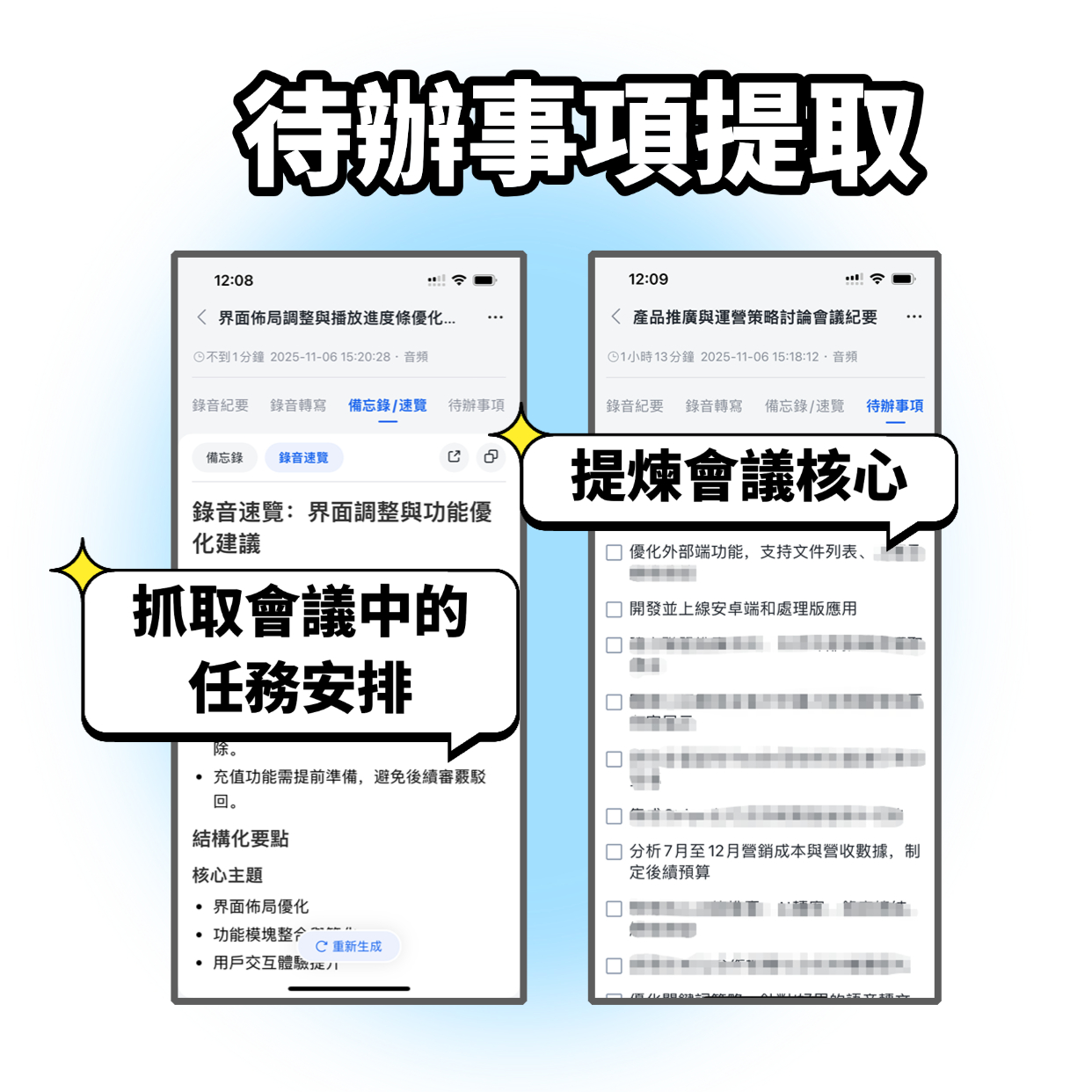
Open Tinrec during a meeting, and it generates a live transcript. Once the meeting ends, the AI has already produced a summary and action items—who is responsible for what, deadlines at a glance. The standout feature is its AI conversational query: after recording, you can ask “Who mentioned the budget in the last meeting?” It doesn’t just return keyword search results; it gives direct answers based on semantic understanding. Competitors in the same price range almost all lack this feature.
Beyond meetings, you can paste a YouTube or Xiaohongshu video link, and Tinrec will transcribe and summarize it. This is very useful for content creators or students tracking online videos.
Test Data
We used a 5-minute Cantonese news recording (iPhone 15, indoor 26°C, June 2026). Tinrec’s word error rate was about 8.3%—among the best in its price range. Naturally, if the recording environment is very noisy or there are multiple overlapping voices, accuracy may suffer, but it’s more than adequate for typical meetings.
Stop organizing recordings by hand
Upload audio or video and automatically get a transcript, summary, and action items
Pros
- AI Conversational Query: The only app that lets you ask direct questions about the recording content, saving tons of time finding key points.
- Multi-Source Input: Supports live recording, audio/video file uploads, and web video links—not limited to meetings.
- Cross-Platform Sync: Works on iPhone, Android, and web with real-time sync, so you can switch devices seamlessly.
Cons
- Free tier only gives 100 minutes per month; heavy users may need to upgrade to Pro. However, for the average worker with 2-3 meetings a week, this allowance is enough to try it out.
- Does not yet support direct integration with Zoom/Teams for automatic recording; you have to manually open the app to record.
Who Is It For?
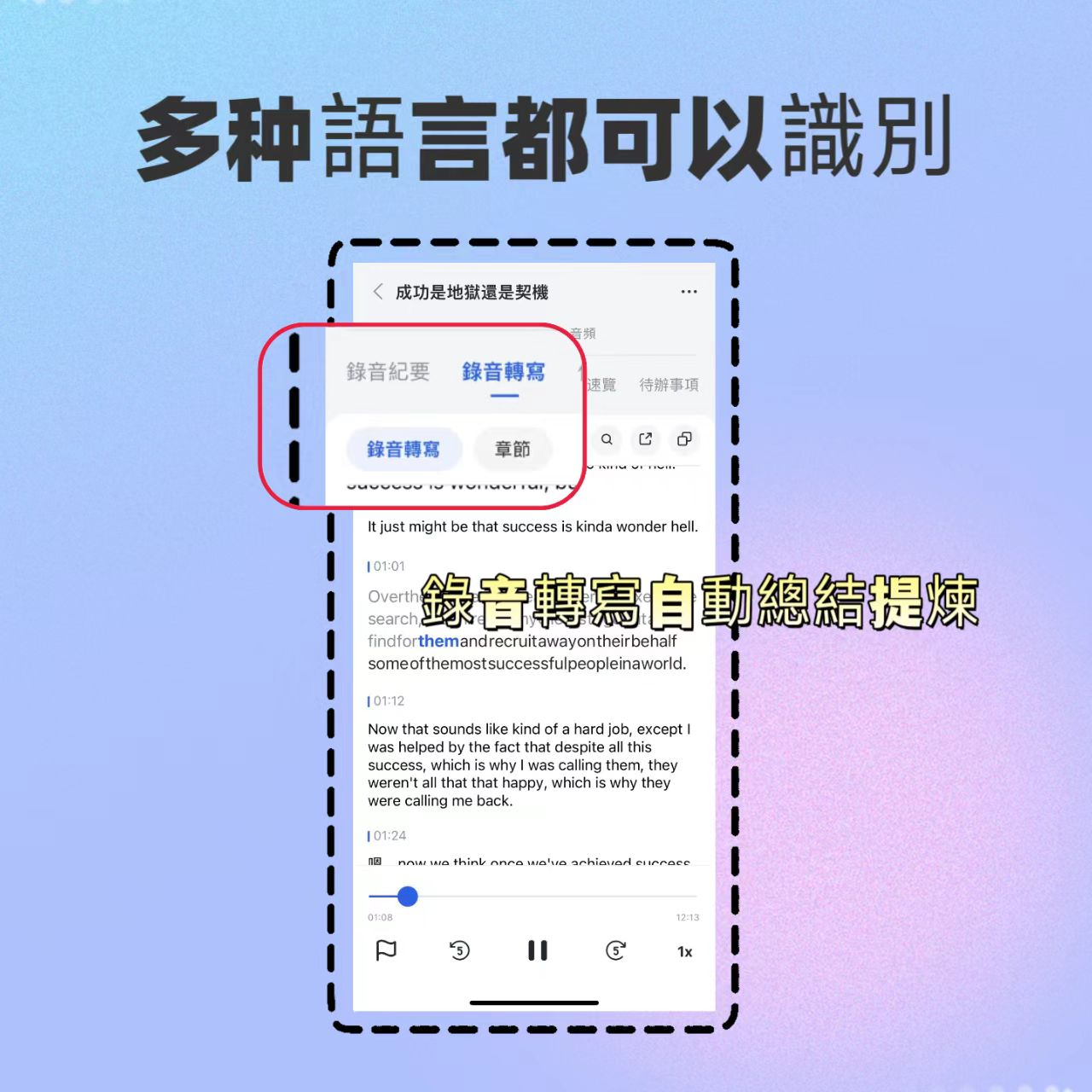
If you frequently record Cantonese content, want to ask AI for key points after recording, or switch between iPhone and Android—Tinrec is currently the most comprehensive choice.
Beyond Tinrec: Other Options
Otter.ai: Best for English Meetings, but No Cantonese
Otter.ai is the king of English meetings, with a generous free tier of 300 minutes per month. However, it does not support Cantonese transcription. If you primarily record English content, Otter.ai may be more cost-effective than Tinrec. But if you need AI conversational query, Otter has something similar (Ask Otter), though Tinrec understands Chinese contexts more naturally.
Notta: Strong Multi-Language Transcription, but Basic AI
Notta’s feature set overlaps quite a bit with Tinrec—both offer live transcription and multi-language support. Its Pro plan costs about HK$65 per month and includes 1,800 minutes, which is very attractive. However, Notta’s AI features are mainly limited to summaries and translations; it lacks the deep conversational query that Tinrec offers. If you want to “ask the recording,” Tinrec is more convenient.
TurboScribe: Best for Batch Transcribing Long Files
TurboScribe focuses on file upload transcription—free tier gets 3 transcriptions per day with a 30-minute limit per file. Its strength is handling long recordings and batch jobs, but for daily meeting notes and AI summarization, it’s somewhat basic. If you just need to quickly transcribe a long recording, TurboScribe works; but if you want to build a searchable recording database, Tinrec is better.
Pitfall Guide: 3 Common Traps When Choosing a Speech-to-Text App
Pitfall 1: Only Look at Official Accuracy, Don’t Test in Real Environments
Many tools claim “98% accuracy,” but that’s lab data. In real meetings with voices and background noise, accuracy takes a hit. Always test the free version with your own recordings; don’t just trust the ads.
Pitfall 2: Ignoring Cross-Platform Needs
If you record on an iPhone today and want to organize on your office computer tomorrow, you’ll regret it if the app has no web version or multi-device support. Tinrec covers iOS, Android, and web, so you’re covered.
Pitfall 3: Buying a Tool but Only Using Basic Transcription
Many people treat speech-to-text apps as a “voice recorder + transcript,” but the real value lies in AI features. For example, Tinrec’s AI conversational query lets you ask “What was the conclusion of the meeting?” directly—much faster than manually scrolling through 30 minutes of transcript. Not using AI means wasting half your money.
Conclusion: Which One Should You Choose?
Bottom line: If you need to process Cantonese content, save time with AI, and use across platforms, Tinrec is the most balanced choice.
Scenario Recommendations
- Need Cantonese + Mandarin bilingual transcription → Tinrec (high accuracy, supports 14 languages)
- Want to use AI to find key points after recording → Tinrec (only one with deep AI conversational query)
- Cross-platform use (phone + computer) → Tinrec (iOS + Android + web)
- Budget $0, English only → Otter.ai (free 300 minutes, the exception)
- Need to batch transcribe long files → TurboScribe (but AI features are basic)
We recommend downloading Tinrec’s free version to try—100 minutes per month is enough for 2-3 meetings to experience the results. Upgrade only if you find it useful; no need to pay upfront.
Turn every recording into actionable outcomes
Get 60 free transcription minutes when you sign in. No credit card required.
Related Reading
You might also like
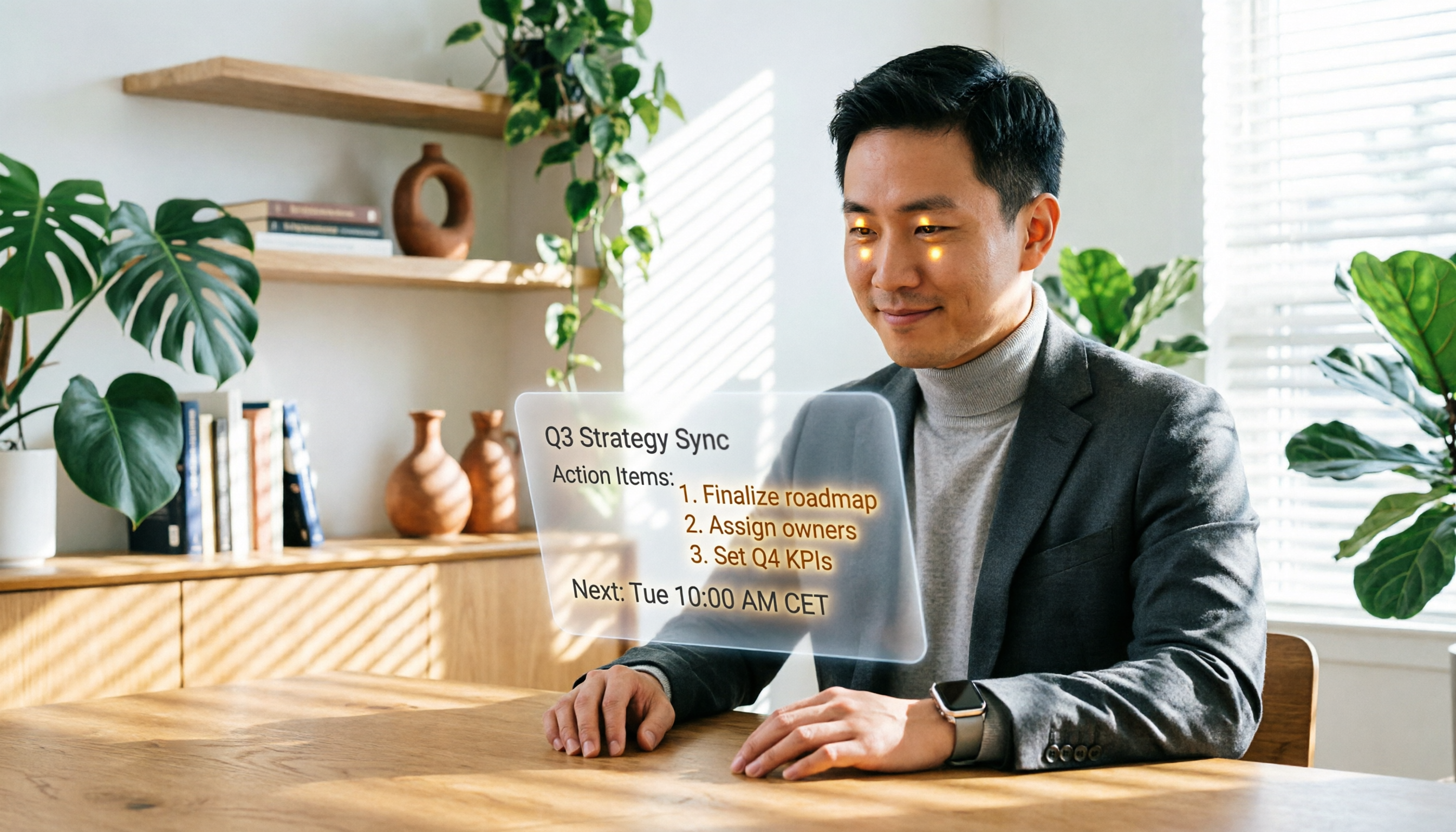
2026 Comparison of 5 AI Meeting Minutes Tools: Which AI Agent Best Automates Key Points?
Suffering from meeting marathon? I tested 5 AI meeting minutes tools and found only a few truly act as AI agents to summarize key points and action items. This article tells you how to choose and why Tinrec is currently the closest to an AI Agent.

2026 Comparison of 3 Audio-to-Excel Tools: Which One Gets You Reports Fastest?
Two hours of meeting recording, another two hours organizing Excel? We tested Tinrec, Notta, and Otter.ai to show you how to use AI to quickly convert meeting recordings into Excel reports, saving overtime hours. Perfect for Hong Kong office workers.

2026 AI Work Assistant Review: Tinrec – Instant Recording with AI Summarization, Free Tier Included
This article reviews Tinrec, an AI tool that transcribes audio/video from multiple sources, provides AI summaries and Q&A, with a free plan offering basic credits—great for meetings, studying, and content creation.

Best AI Meeting Note Apps 2026? We Tested 4 Tools: Tinrec vs Otter – Top Pick for Hong Kong Workers
Tired of overtime from endless meetings? We tested 4 AI meeting note tools – Otter.ai, Fireflies, Notta, and Tinrec – to see which one helps most. Result: Tinrec excels in multi-source audio/video processing, Cantonese recognition, and AI Q&A, especially suited for Hong Kong workers, with a free trial available.
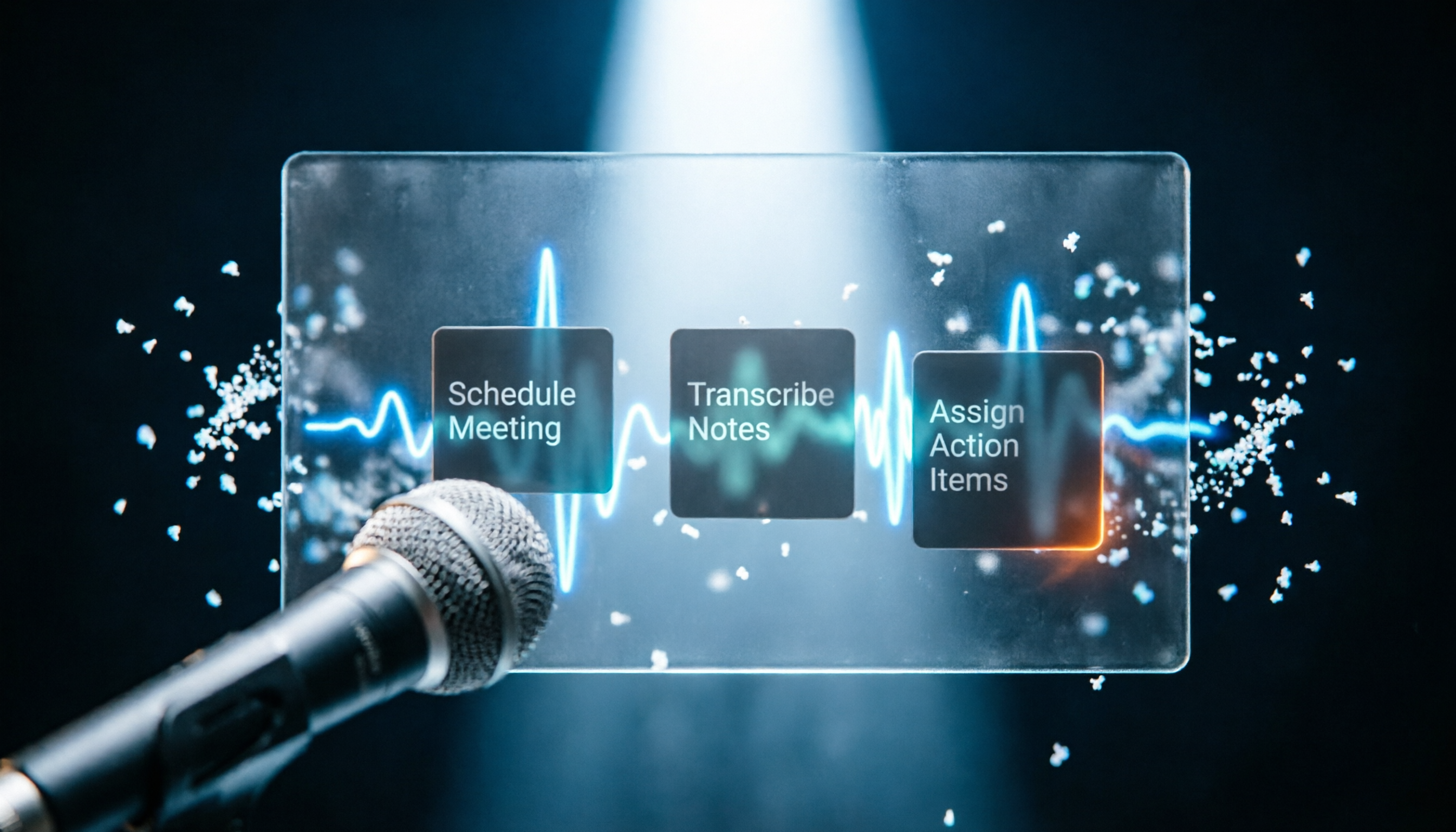
2026 Hands-on Comparison of 2 Automatic Task Generation Tools: Which One Automatically Extracts Action Items from Meeting Recordings?
This article compares Tinrec and Plaud Note across five dimensions: automatic task generation, recording sources, output formats, cost-effectiveness, and AI Q&A, helping meeting-goers choose the best automatic action item extraction tool.
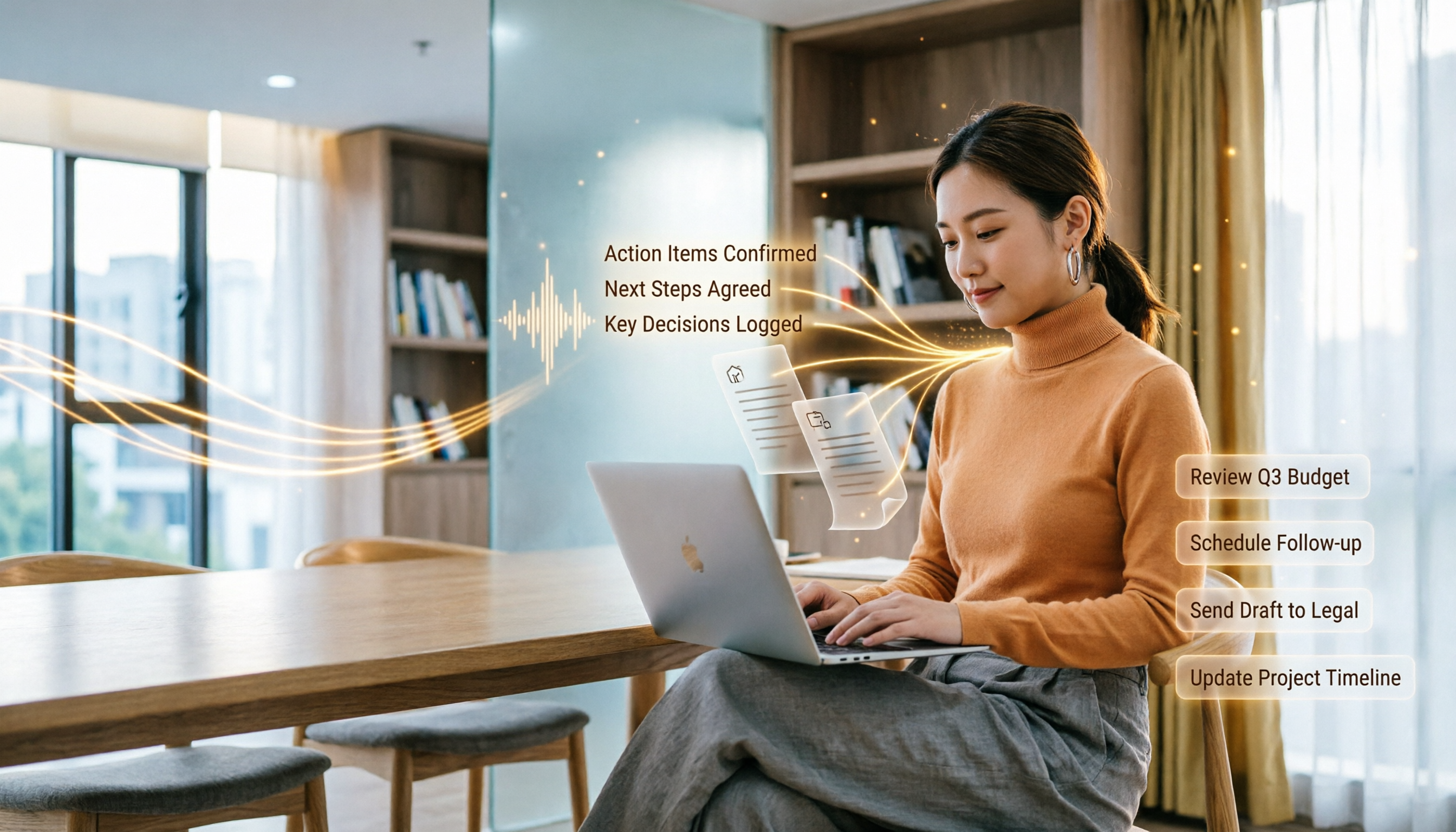
Which Meeting Closure AI Tool Is Best? 2026 Hands-on Test of 3 Tools – Free Version Sufficient for Most
Meeting notes always scattered? We tested 3 AI tools and show you how Tinrec closes the loop from recording, transcription, minutes to to-do list – the free plan is enough for daily use.

2026 Hands-On Comparison of 4 Speech-to-Text Tools: Which AI Meeting Minutes Really Save Time?
We tested 4 speech-to-text tools, comparing accuracy, AI summaries, cross-platform support, and free tiers. Tinrec stands out for Chinese language scenarios and AI querying, making it ideal for meetings, learning, and content creation. This article helps you avoid common pitfalls and find the best tool for your needs.
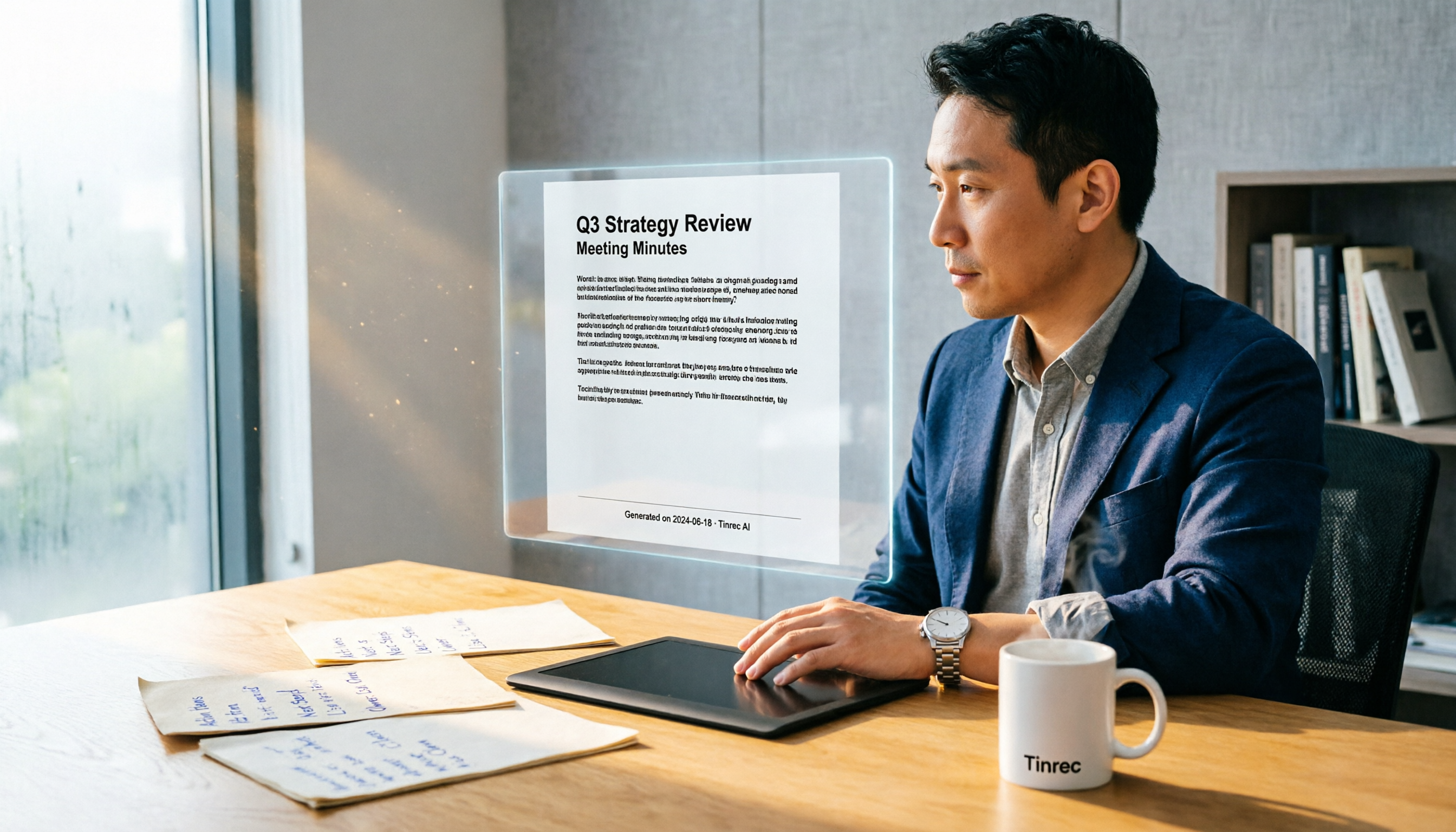
2026 Meeting Minutes Tool Comparison: Which AI Tool Exports Word Reports Your Boss Will Love?
A mid-level manager tests 4 AI meeting minutes tools, from recording to Word report export. Find out which saves the most time and produces the most complete summaries—real experience and buying tips inside.
Tinrec vs Notta 2026: A 5-Dimension Showdown for Chinese Audio/Video Transcription
Struggling with meeting recordings, course audio, or online videos? This real-world comparison pits two AI transcription tools against each other on accuracy, AI features, cross-platform support, input sources, and pricing, with a practical buying guide and pitfalls to avoid.