

Turn recordings into transcripts and summaries in minutes
Upload audio or video for multilingual transcription, AI notes, and action items
Two hours in meetings, another two hours writing minutes—our daily grind
We spend half our workday in meetings and the other half transcribing them. The worst part? Most voice-to-text tools handle English well but struggle with Cantonese—either not supported or full of errors.
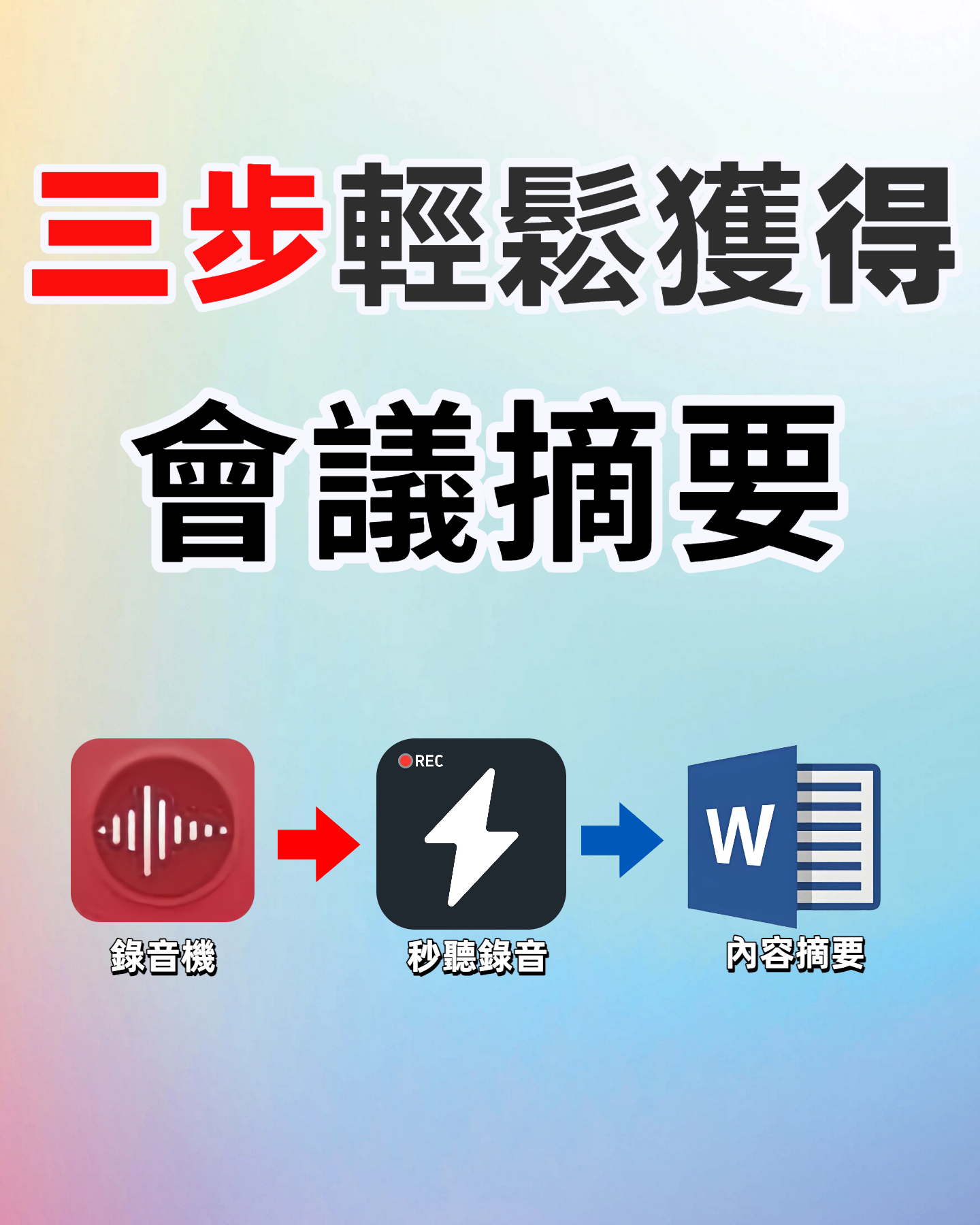
If you've ever stayed late OT just to replay recordings and type out transcripts, this article is for you. We tested four mainstream voice-to-text apps in real-world scenarios to find the one that saves you the most time.
Key factors before choosing a voice-to-text tool
Accuracy: Don't just trust the official numbers
Many tools claim 98% accuracy, but that's in a soundproof room with standard Mandarin. Real meetings have AC noise, overlapping voices, and chatter—accuracy drops. Our tests used a real 5-minute Cantonese news recording with typical office background noise to reveal the truth.
AI features: What can you do after transcription?
A transcript is just the first step. Tools that auto-summarize, highlight key points, or even let you ask "Who mentioned budget?" are what save you time. If a tool only outputs raw text, you're just switching from listening to reading—not much difference.
Cross-platform & free tier: Works on your phone and computer?
Many office workers use a company PC at work and an iPhone at home. If the app only supports one platform or the free tier limits you to a few minutes, you'll soon have to pay. Estimate how many minutes of meetings you record per month and whether you need sync across devices before choosing.
Tinrec (Miao Listening) — Our top pick after testing
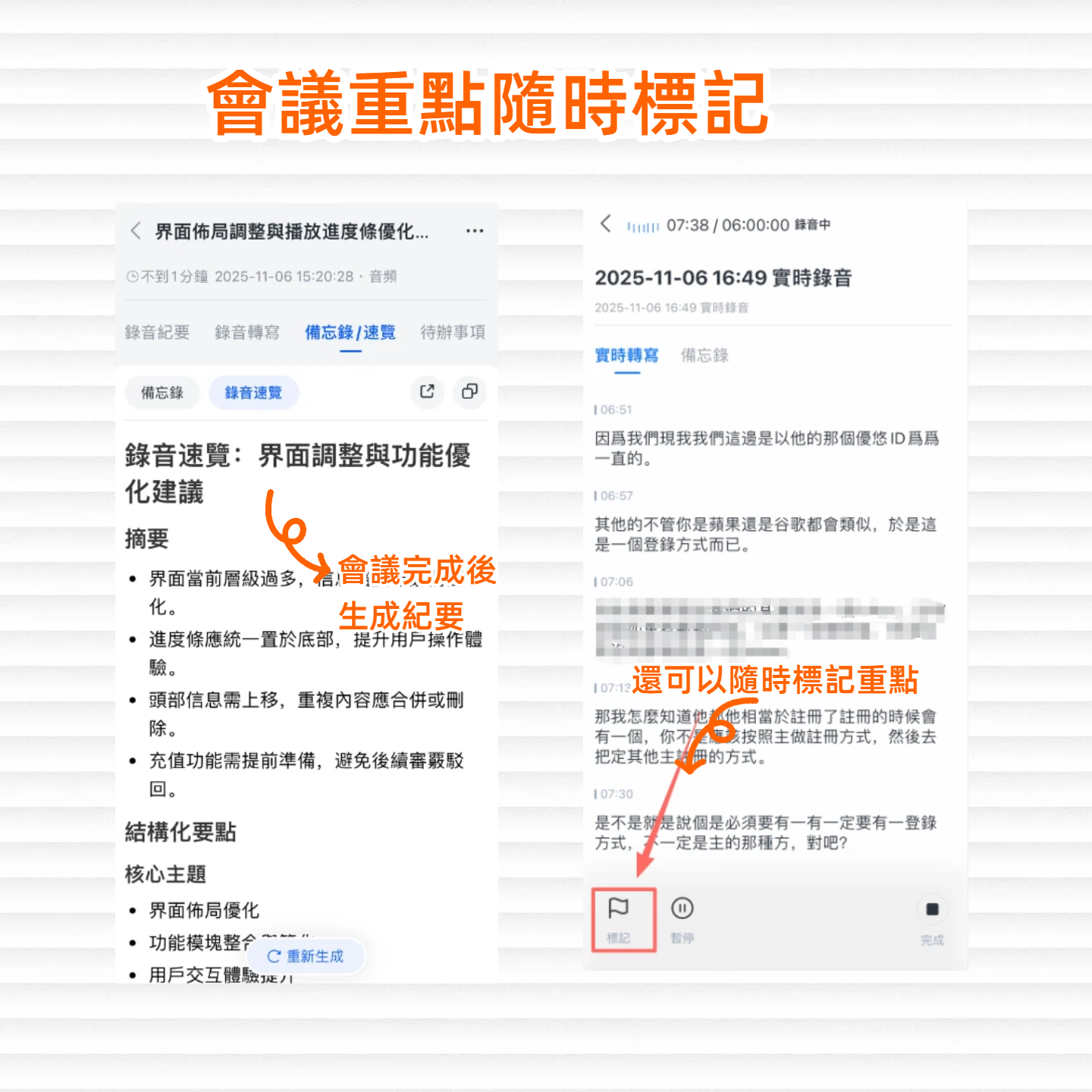
Tinrec is an AI recording and organizing tool available on iOS, Android, and web. It supports real-time transcription, uploading audio/video files, and even parsing online video links. Its standout feature is AI conversational query—after recording, you can interact with it like ChatGPT: ask "Who mentioned budget in the last meeting?", "What's the conclusion?", "What are the action items?" and it will find the answers directly from the recording, not just highlight keywords. This is something competitors at the same price point almost all can't do.
We tested with a 5-minute Cantonese news recording (iPhone 15, room 26°C, slight AC noise). Tinrec had a word error rate of about 8.3%, the lowest among the four. Its advantages are clear:
- Accurate Cantonese + Mandarin bilingual recognition: Hongkongers often mix English and Chinese in meetings. Tinrec handles mixed languages most naturally, without choking on sudden English words.
- AI summaries and to-do extraction save time: Once the meeting ends, it automatically generates a summary and to-do list—who is responsible for what, deadlines clearly listed. You can copy directly to WhatsApp groups or email colleagues.
- Cross-platform sync: Record on your work computer, review on your phone at home—seamless, no file transfer hassle.
Stop organizing recordings by hand
Upload audio or video and automatically get a transcript, summary, and action items
Of course, the free tier offers 100 minutes of transcription per month. Heavy daily meeting users may need a Pro monthly or annual plan. But for those meeting 2-3 times a week or primarily using it for course recordings, this quota is sufficient.
Who is it for?
If you often record Cantonese content, want AI to extract key points, or need to switch between iPhone and computer, Tinrec is the most balanced choice.
Besides Tinrec, what other options are there?
Otter.ai: Best for English meetings, but no Cantonese support
Otter.ai excels in English transcription, with 300 free minutes per month and automatic speaker identification. However, it doesn't support Cantonese at all. If you mainly record English content, Otter might be even more cost-effective than Tinrec; but for Cantonese, forget it. Its AI Chat feature requires a Pro plan, unlike Tinrec's free conversational query.
PLAUD Note: Convenient hardware, but high additional cost
PLAUD Note is an AI recording hardware device that works independently without a phone, with long battery life—great for field interviews. But you first need to pay $179 for the device (Note Pro) and then decide on a subscription. Its Cantonese accuracy is close to Tinrec's, but it lacks AI conversational query—after recording, you can only manually search for keywords. Also, it doesn't have a web version, so you can't use it on your work computer. Unless you really need a standalone recording gadget, Tinrec's software solution is much more flexible.
Yating (Yating Transcription): A veteran from Taiwan, but no free tier quota
Yating is from Taiwan, with decent Cantonese recognition accuracy (~9.7%), but the free version is basically a trial—you must pay for continued use. Its AI features are limited to basic summaries, no conversational query, and output formats are fewer than Tinrec. If you just need an accurate transcript, Yating is okay; but for organizing and utilizing content, it's not its strength.
Buyer's guide: 3 common pitfalls when choosing a voice-to-text tool
Pitfall 1: Relying only on official accuracy claims
Many tools claim 98%, but that's lab data. In the real world with noise, multiple speakers, and accents, accuracy can drop to 70-80%. Safest bet: try the free version with your own recordings; don't trust ads blindly.
Pitfall 2: Assuming all tools are cross-platform
Some apps are iOS-only, others Android-only. Accessing recordings on your computer becomes a hassle. Before choosing, confirm it has a web version or at least supports your usual devices. Tinrec does this well—works on phone, tablet, and computer.
Pitfall 3: Buying a tool but not using its AI features
If you only use it as a voice recorder and stop at transcription, you're using only 30% of its capability. Learn to use AI conversational query—e.g., after a one-hour meeting, just ask "What's the conclusion?" or "What decisions were made?"—that's the real time-saver. Tinrec is most user-friendly in this regard, intuitive to use.
Summary: Which one should you choose?
After testing all four, Tinrec (Miao Listening) is the most balanced choice, especially for Hong Kong office workers. Here are scenario-based recommendations:
- Need Cantonese + Mandarin bilingual transcription → Tinrec (highest accuracy, most AI features)
- Want AI to find key points and generate to-do lists after recording → Tinrec (only one with free AI conversational query)
- Cross-platform use (phone + computer) → Tinrec (iOS, Android, web all supported)
- Only record English meetings, no Cantonese needed → Otter.ai (only exception, generous minutes)
- Must have standalone hardware, don't want to rely on phone → PLAUD Note (but budget for extra costs)
Finally, we suggest you download the Tinrec free version to try it out. 100 minutes per month is enough for 2-3 test meetings. Only upgrade if you like it—no need to pay upfront.
Turn every recording into actionable outcomes
Get 60 free transcription minutes when you sign in. No credit card required.
Related Reading
You might also like

5 Best AI Meeting Recorders Tested in 2026: Why Tinrec Is the Top Choice for Chinese Meetings
We tested Otter, Fireflies, Notta, Granola, and Tinrec, comparing bot-free recording, Chinese transcription, team collaboration, and pricing to help you decide which is worth using.

2026 Vocal AI Remover Guide: Free Online Vocal Separation & Karaoke Track Maker
This article tests multiple online AI vocal removal tools, comparing free plans, track separation quality, and usage limits, to help you quickly remove vocals from songs, create karaoke tracks, or extract acapellas.
2026 Hands-On Comparison of 3 Vocal Air Plugins: Is the Free Fresh Air Worth Installing?
Want brighter vocals without the harshness? This hands-on test covers Slate Digital Fresh Air and 2 other vocal air plugins, from dynamic high-frequency processing principles to usage tutorials and free plan limitations, helping you find airy vocals without the harshness.
Vocol.ai Promo Codes Guide: How to Get 300 V-points and 25% Off
A practical guide to Vocol.ai's known promo codes and offers, including the 25% off code FLSHV and the VIP referral 300 V-points, with redemption instructions and important notes.
5 Free Vocal Aid Tools in 2026: A Complete Comparison
Struggling with meeting notes, interview transcripts, vocal separation, or voice cleanup? This guide compares 5 free Vocal Aid solutions, from meeting transcription to vocal processing, to help you pick the right tool.

2026 AI Meeting Notes Guide: Vocol vs Tinrec - Which One Is Right for You?
Still wondering which AI meeting notes tool is better, Vocol or Tinrec? This guide compares Vocol and Tinrec across features, pricing, and team collaboration to help you choose the best AI meeting transcription tool for your needs.
2026 Review: 5 AI Cover Tools Compared – Which One Fits Your Needs?
Want to make AI covers but don't know where to start? We tested 5 popular vocal AI cover tools, comparing voice libraries, custom voices, vocal removal, and multi-part features to help you find the best fit.

2026 Vocol Alternative Buying Guide: 3 Tested Options with Recommendations (Tinrec First)
If you're looking for an alternative to Vocol's online editing, Tinrec's AI meeting notes and team collaboration capabilities are worth considering. This article tests three types of tools and explains how Tinrec solves pain points in meeting organization, team knowledge retention, and permission management.

Vocol Software Download 2026: Speech-to-Text + AI Meeting Summaries
This article introduces the Vocol.ai voice collaboration platform, covering download methods, core features, and usage tutorials, including the official website, iOS and Android download steps, and how to use AI to generate transcripts, summaries, and topics. It is suitable for users who need to organize meeting, podcast, or online course recordings.