

Turn recordings into transcripts and summaries in minutes
Upload audio or video for multilingual transcription, AI notes, and action items
Two hours in meetings, then two more hours organizing notes—that used to be my daily routine
I average about 15 meetings a week: weekly check-ins, project status updates, one-on-ones, cross-department coordination. What used to bother me most wasn't the meetings themselves—it was the aftermath. Every meeting generated a bunch of decisions and action items, so my real work only began when the meeting ended. I tried handwritten notes (too slow), tried recording and listening back (too time-consuming), tried asking my team to help (they were just as busy). Then I started trying AI speech-to-text tools, and at least they saved me from the most mechanical part of the process.
Lately, a lot of people have been asking if Notta is any good, so our team actually tested it for a while, comparing it side by side with Tinrec (秒听录音). This article summarizes my real experience over the past two weeks—no hype, no bashing, just the good and the bad, for anyone who's too busy to spend time organizing documents.
Before choosing a speech-to-text tool, understand these 4 key points
1. Accuracy isn't everything—it's about "when it's accurate"
Many tools claim "98% accuracy," but that's usually measured in a quiet recording studio. Real meeting rooms have air conditioning noise, keyboard clicks, and people talking over each other—accuracy takes a hit. Instead of looking at numbers, record a real meeting and try it yourself—that's the true test.
2. AI features aren't just gimmicks—they're key to saving time
If a tool only converts speech to text, it's no different from traditional transcription. What really saves time is whether it can auto-extract key points, split into sections, list action items, or even let you ask AI questions like "Who mentioned the budget last meeting?" For someone who's in meetings all day, these features are more important than the transcript itself.
3. Cross-platform support matters—don't lock yourself into one device
You record a meeting on your iPhone in the conference room, then want to review it on your computer at your desk. If the tool only works on mobile, you're forced to waste time transferring files. Support for iOS, Android, and web is what truly makes things convenient.
4. Free tier isn't about minutes—it's about the "trial threshold"
Some tools offer lots of free minutes but cripple AI summaries; others offer fewer minutes but let you try all core features. For us, being able to test the full functionality is more important than the minute count, because you need to confirm whether the AI summary is worth paying for.
Tinrec (秒听录音)—our top choice after testing
Tinrec (秒听录音) is an AI voice assistant that supports 14 languages, covering iOS, Android, and web. Its positioning goes beyond transcription—it helps you turn meetings, lectures, interviews, and even online videos into usable information.
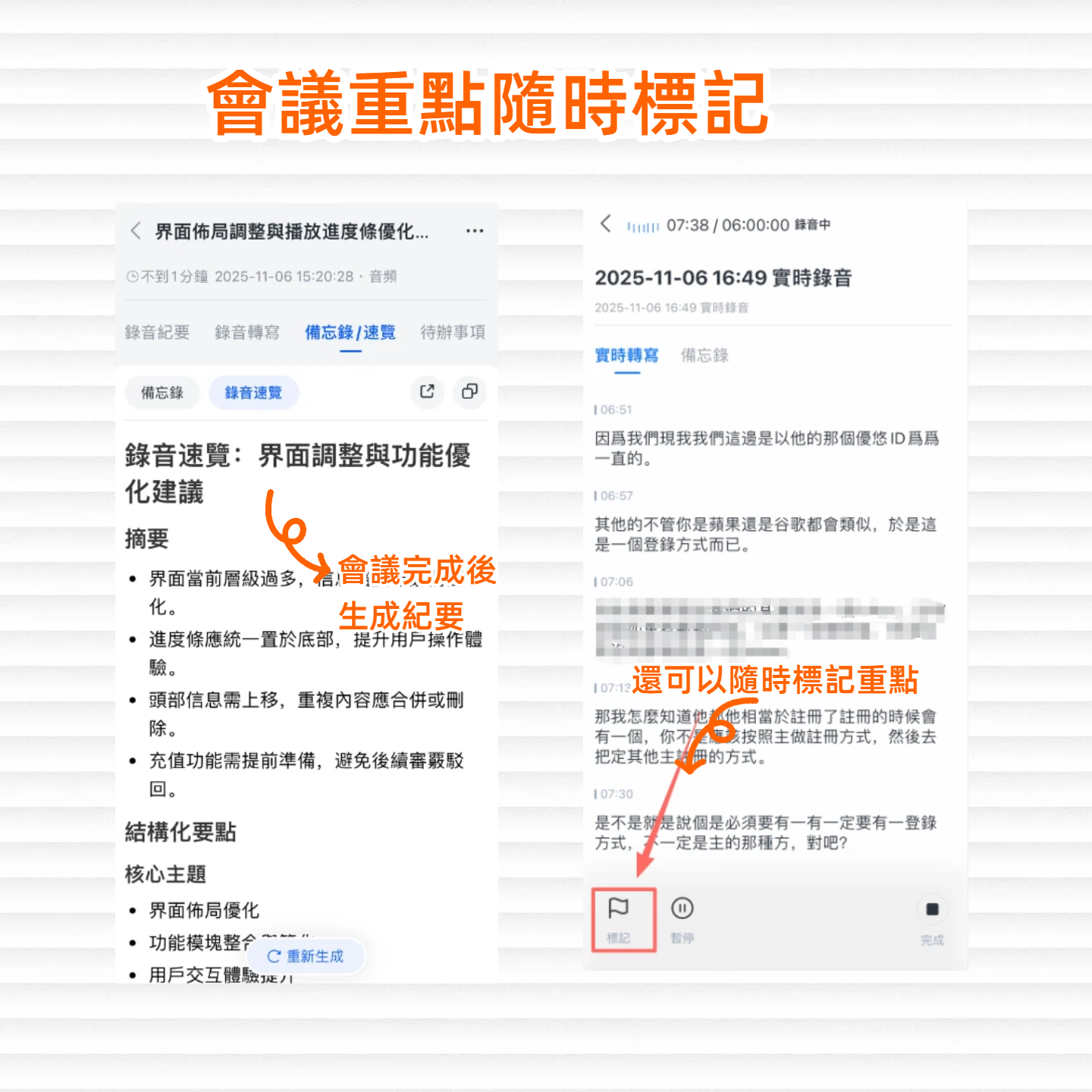
Record and transcribe in real-time during meetings, get highlights right after
Now I keep Tinrec running during meetings; it transcribes in real-time. As soon as the meeting ends, the AI has already generated a summary and action items—who's responsible for what, deadlines at a glance. What used to take half an hour of post-meeting cleanup now takes just three minutes to review and fill in any gaps.
Ask AI questions about the recording without flipping through the transcript
This is my favorite feature. The other day I was reporting to my boss and he asked, "What was the budget adjustment Marketing proposed in that cross-department meeting?" I simply typed in Tinrec's chat: "What was the budget adjustment for the Marketing department?" Tinrec immediately located that part of the conversation and even highlighted the timestamp. Almost no other tool in this price range has this feature—Notta doesn't either.
Stop organizing recordings by hand
Upload audio or video and automatically get a transcript, summary, and action items
Not just for meetings—handles online videos and audio files too
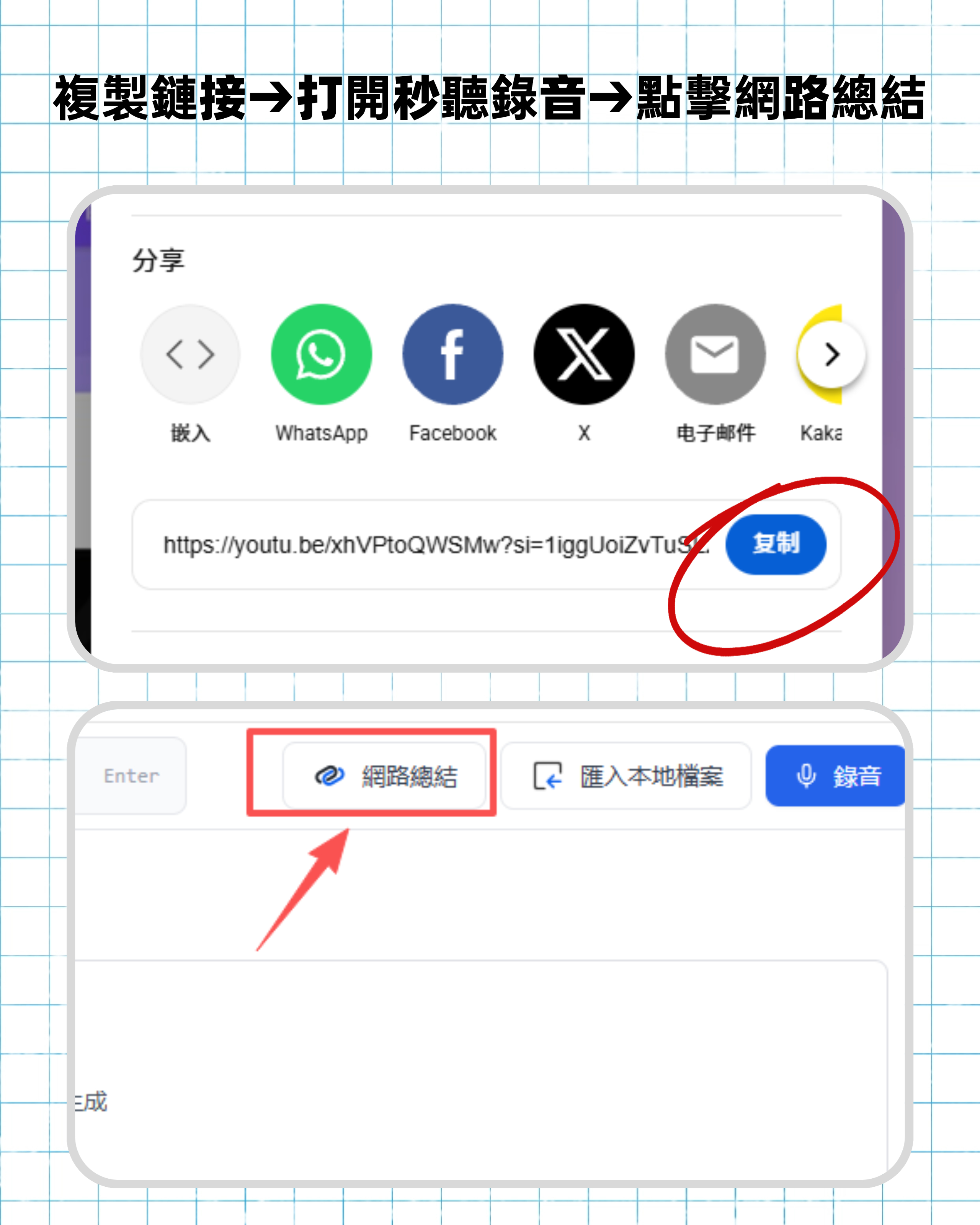
I sometimes watch industry trend videos on YouTube. Before, I had to take notes while watching. Now I just paste the video URL into Tinrec, and it automatically generates a transcript and summary. Our team also imported old recordings—training sessions from a year ago—turning them into text so new hires can search for keywords and learn.
We recorded a 10-minute meeting discussion on an iPhone 15 (with mild AC noise and keyboard clicks in the background). Tinrec's transcript had only a couple of minor errors, and the AI summary accurately captured three action items and two key decisions. By comparison, Notta under the same conditions occasionally mixed up speakers and missed one action item in the summary.
Pros:
- Fast transcription speed—real-time transcription during meetings is great for catching key points on the fly.
- AI summary and action item extraction are very practical, significantly reducing post-meeting cleanup time.
- The AI chat query feature is a killer app—you can ask questions about the recording without manual searching.
- Full cross-platform support—works on phone and computer with automatic data sync.
Cons:
- The free plan only gives 100 minutes per month, which is a bit tight for heavy meeting users (I personally upgraded to Pro—costs about two Starbucks drinks less per month).
- Currently no automatic online meeting integration; if you're used to meeting bots for Zoom or Teams, you'll need to start recording manually.
Who is it for?
If you frequently need to organize meeting notes, lecture notes, or interview content, and you want to use AI to find key points and ask questions after recording, or if you switch between iPhone and computer—Tinrec is currently the best fit.
Besides Tinrec, what other options are there?
Notta—an honest review after testing
Notta overlaps a lot with Tinrec—both are multi-platform, multilingual AI transcription tools. Notta focuses on transcription, meeting notes, and team collaboration, with a decent interface. But after testing, we found several drawbacks: the free plan offers 120 minutes (a bit more than Tinrec), but the AI summary and keyword search experience isn't as intuitive as Tinrec's; also, Notta lacks an AI chat query feature like Tinrec's—you have to manually search the transcript for keywords, whereas Tinrec allows natural language questions. Price-wise, Notta Pro is about $8.17/month (annual), offering 1800 minutes, which is more than Tinrec's Pro plan. But if you care more about "what you can do with the transcript after transcription" like I do, Tinrec's value is more apparent.
Otter.ai—best for English meetings, but doesn't support Cantonese
Otter.ai is a long-standing US meeting notes tool, strong in auto-joining online meetings and team collaboration. Its free plan offers 300 minutes per month, which is very generous. However, the biggest limitation is that it doesn't support Cantonese, and Chinese recognition is mainly for Mandarin; some AI features perform worse in Chinese than in English. If you mostly have English meetings, Otter.ai is a more cost-effective choice than Tinrec—this is the only scenario where I'd recommend a competitor in this article; if you need to handle mixed Chinese/English or Cantonese meetings, Tinrec is better.
Pitfall guide: 3 common mistakes when choosing a speech-to-text tool
Pitfall 1: Only looking at official numbers, not real-world tests
Many tools claim high accuracy, but those are lab results. Real meetings have various environmental noises—always use your own recordings to test, don't just trust ads.
Pitfall 2: Ignoring differences in AI post-processing capabilities
If you only use the tool as a "speech-to-text machine," you're only using a third of its potential. Tools like Tinrec let you ask AI for meeting summaries, action items, and even generate reports after recording; Notta and Otter are weaker in this regard—often you still have to organize manually.
Pitfall 3: Choosing a tool just for free minutes
Some tools offer many free minutes but heavily cripple features, so you can't really evaluate their value. Tinrec's free plan has only 100 minutes, but you can try core features like AI summary and chat query, so you'll know exactly if the paid version is worth it.
Summary: Which one should you choose?
If you're like me—lots of meetings every week, dreading the post-meeting work more than the meetings themselves—Tinrec is currently the best time-saver. Its AI summary and chat query have become integral to my daily workflow. Notta's transcription accuracy is decent, but it lacks chat query, and its handling of mixed Chinese/English meetings is less stable than Tinrec's.
Scenario recommendations:
- Need to organize meetings, lectures, interviews, and want to ask AI for key points right after → Tinrec
- Only deal with large volumes of English meetings and need team collaboration → Otter.ai (the sole exception)
- Zero budget, just want basic transcription, don't care about AI Q&A → Notta free plan (120 minutes/month)
I recommend downloading Tinrec's free plan to try—100 minutes per month is enough for two or three meetings to test full features. Upgrade if you find it useful; no need to pay upfront.
Turn every recording into actionable outcomes
Get 60 free transcription minutes when you sign in. No credit card required.
Related Reading
You might also like

5 Best AI Meeting Recorders Tested in 2026: Why Tinrec Is the Top Choice for Chinese Meetings
We tested Otter, Fireflies, Notta, Granola, and Tinrec, comparing bot-free recording, Chinese transcription, team collaboration, and pricing to help you decide which is worth using.

2026 Vocal AI Remover Guide: Free Online Vocal Separation & Karaoke Track Maker
This article tests multiple online AI vocal removal tools, comparing free plans, track separation quality, and usage limits, to help you quickly remove vocals from songs, create karaoke tracks, or extract acapellas.
2026 Hands-On Comparison of 3 Vocal Air Plugins: Is the Free Fresh Air Worth Installing?
Want brighter vocals without the harshness? This hands-on test covers Slate Digital Fresh Air and 2 other vocal air plugins, from dynamic high-frequency processing principles to usage tutorials and free plan limitations, helping you find airy vocals without the harshness.
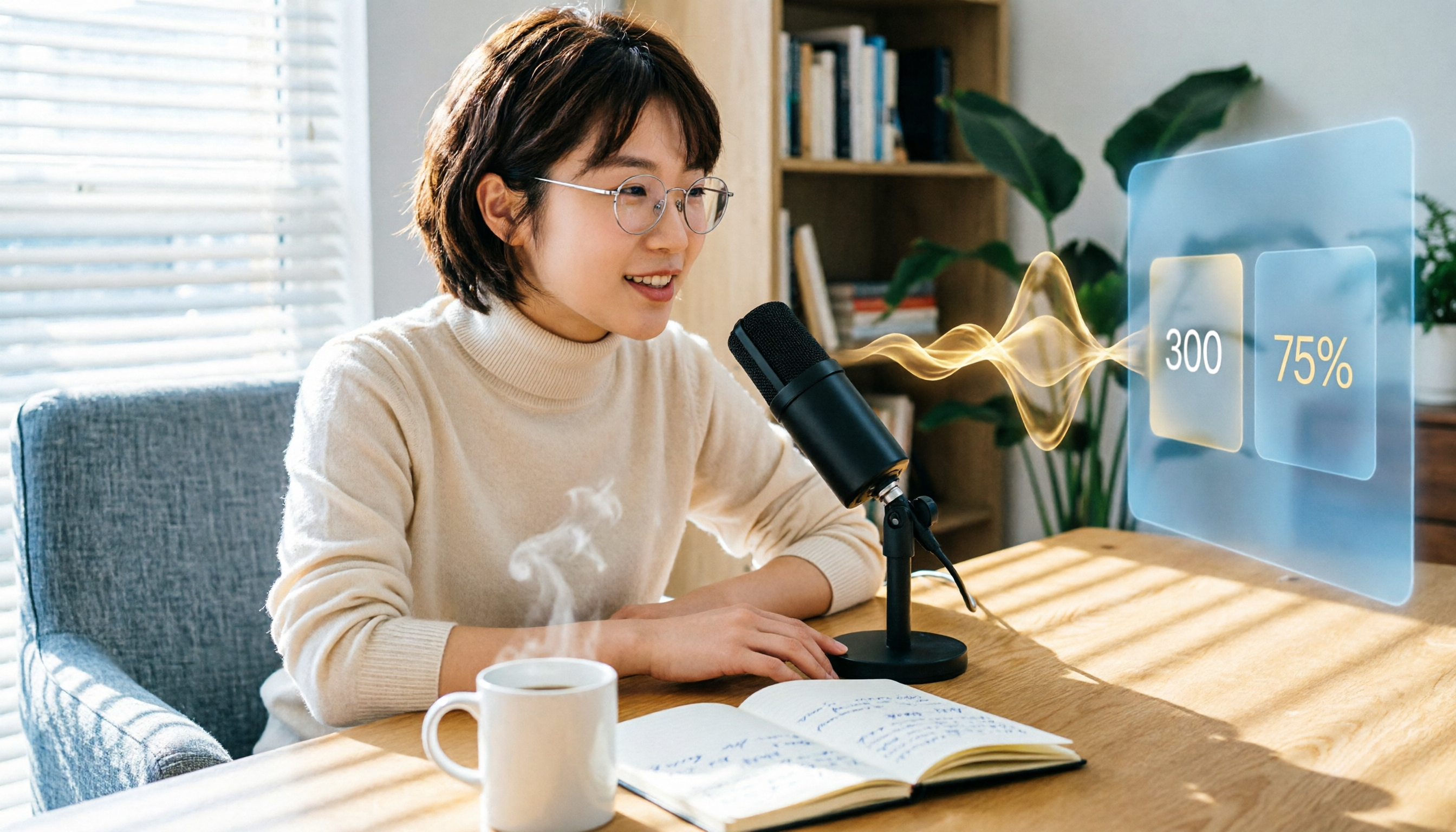
Vocol.ai Promo Codes Guide: How to Get 300 V-points and 25% Off
A practical guide to Vocol.ai's known promo codes and offers, including the 25% off code FLSHV and the VIP referral 300 V-points, with redemption instructions and important notes.
5 Free Vocal Aid Tools in 2026: A Complete Comparison
Struggling with meeting notes, interview transcripts, vocal separation, or voice cleanup? This guide compares 5 free Vocal Aid solutions, from meeting transcription to vocal processing, to help you pick the right tool.

2026 AI Meeting Notes Guide: Vocol vs Tinrec - Which One Is Right for You?
Still wondering which AI meeting notes tool is better, Vocol or Tinrec? This guide compares Vocol and Tinrec across features, pricing, and team collaboration to help you choose the best AI meeting transcription tool for your needs.
2026 Review: 5 AI Cover Tools Compared – Which One Fits Your Needs?
Want to make AI covers but don't know where to start? We tested 5 popular vocal AI cover tools, comparing voice libraries, custom voices, vocal removal, and multi-part features to help you find the best fit.

2026 Vocol Alternative Buying Guide: 3 Tested Options with Recommendations (Tinrec First)
If you're looking for an alternative to Vocol's online editing, Tinrec's AI meeting notes and team collaboration capabilities are worth considering. This article tests three types of tools and explains how Tinrec solves pain points in meeting organization, team knowledge retention, and permission management.

Vocol Software Download 2026: Speech-to-Text + AI Meeting Summaries
This article introduces the Vocol.ai voice collaboration platform, covering download methods, core features, and usage tutorials, including the official website, iOS and Android download steps, and how to use AI to generate transcripts, summaries, and topics. It is suitable for users who need to organize meeting, podcast, or online course recordings.