

Turn recordings into transcripts and summaries in minutes
Upload audio or video for multilingual transcription, AI notes, and action items
Two hours in a meeting, another two organizing the notes—is this really what you want?
Lately, I've seen lots of discussion about the Plaud Note recorder on Dcard and PTT. Some say it's super convenient to carry around—just place it on the desk during meetings or lectures. But others complain that after spending almost $200 on the hardware, the AI features require an additional subscription. This reminds me of a team I once coached. They had three meetings every week, always recording with a voice recorder, but after three months, no one had listened to a single one. Why? Because recording just means "having a record," but you still need to organize and find the key points yourself. If you're facing the same issue, this article is for you.
Before choosing a speech-to-text tool, understand these 4 key points
I often tell my trainees that a tool isn't something you just buy and shelve—it needs to fit into your workflow.
First, don't just look at "recording"—look at "organization."
Many times, we think we're safe once we've recorded a meeting. But if you can't quickly extract conclusions, the recording is just digital clutter. So I first check whether the tool can auto-summarize and extract action items.
Second, identify your use case.
Is it only for meetings? Or do you also need to organize interviews, lectures, or even YouTube video notes? For a single use case, a hardware recorder might suffice. But if your sources are diverse, a software solution usually offers more flexibility.
Third, cross-device support is crucial.
You might record on your phone in the meeting room but want to review on your computer at your desk. If the tool doesn't support cross-platform sync, you'll waste time transferring files—and this step often kills motivation.
Fourth, AI Q&A is the new efficiency frontier.
Traditional transcription tools let you Ctrl+F to search keywords. But the new generation of AI tools lets you ask directly, "Who was responsible for what in the last project meeting?" It gives you the answer instead of dumping a 30-page transcript. This capability will be the deciding factor when choosing a tool this year.
Tinrec (Secai Recording) — My Top Pick After Real-World Testing
(Screenshot: Tinrec's AI chat query interface, arrow pointing to the input box where I typed "What was the conclusion of this meeting?" and it instantly summarized the key points)
Let me explain its positioning. Tinrec is an AI recording and audio/video organization tool. It's not a standalone hardware device but an app and web service available on phones, tablets, and computers. This is a key difference: you don't need to buy an extra recorder—you can start with your existing devices.
Many people ask me after I recommend Tinrec, "What's the difference between this and a regular recording app?" The answer is: it doesn't just record; it turns your audio into actionable data.
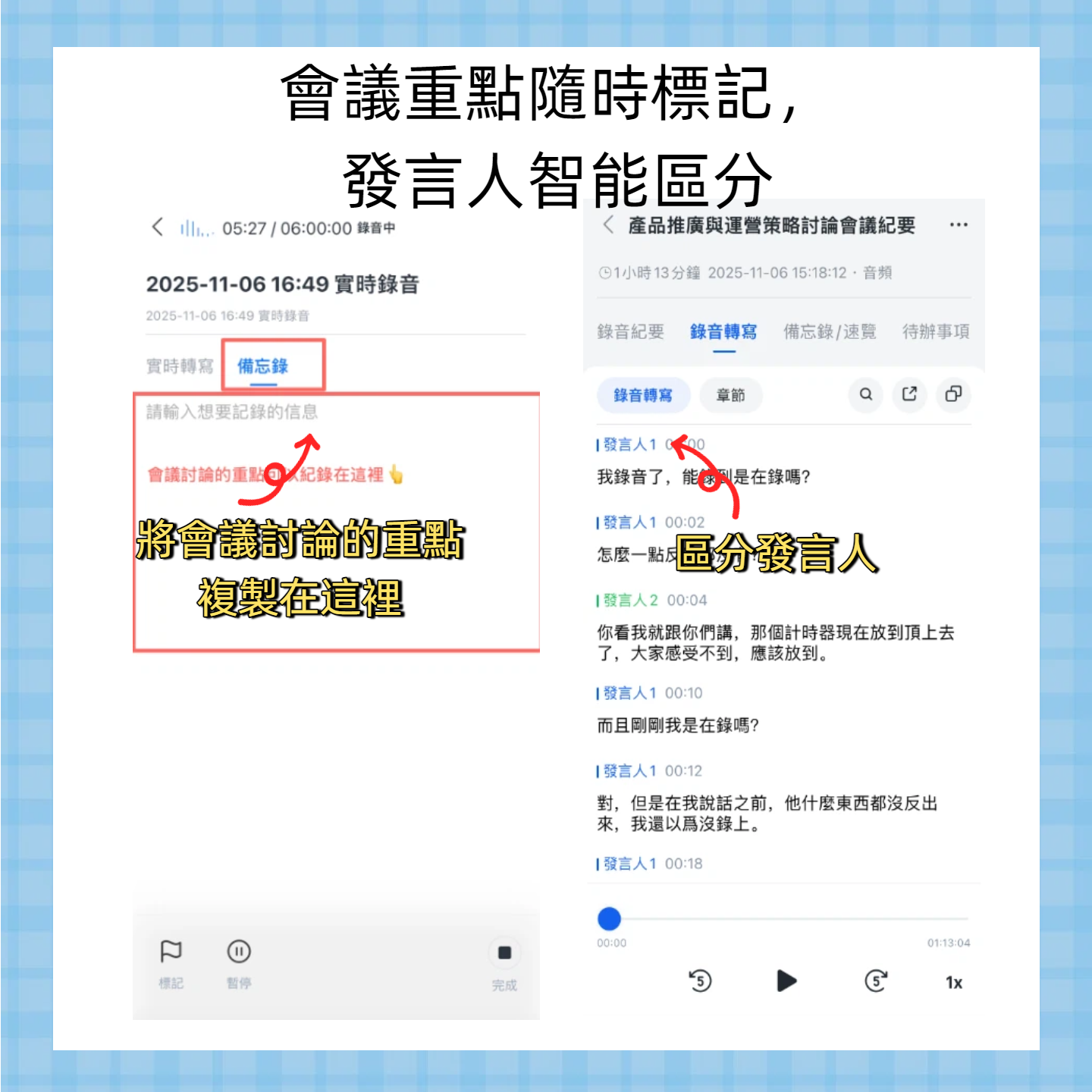
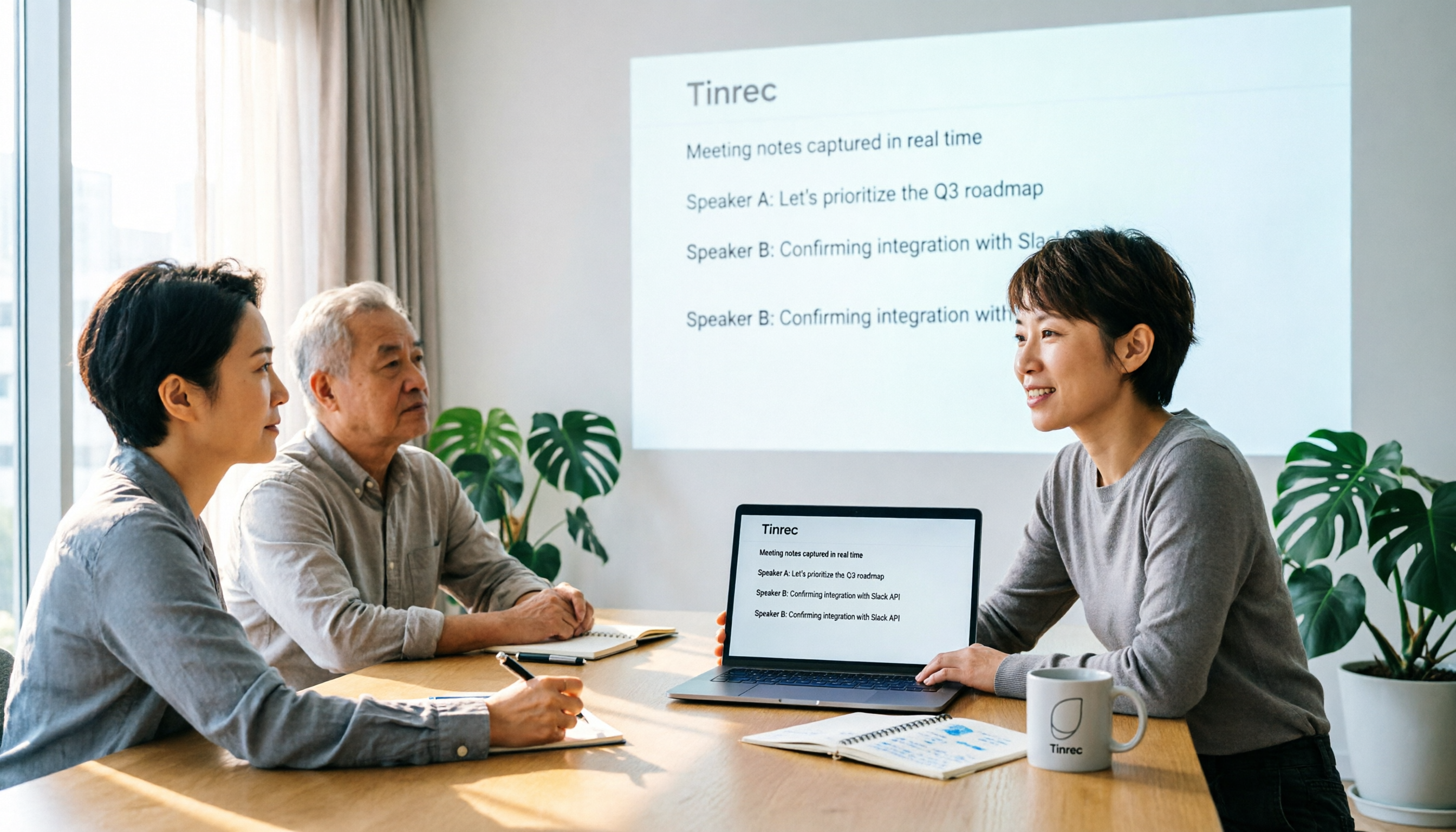
Here's a real scenario: Last week, I recorded a 40-minute product discussion on my phone. Tinrec generated a transcript in real time, with speaker separation. As soon as the meeting ended, the summary and action items were ready—like who was responsible for design and which feature needed confirmation by next Tuesday. Then I opened the same recording on my laptop's web version without transferring any files. This cross-device sync saves me a lot of time since I frequently lecture outside and need to organize notes back at the office.
Another feature worth highlighting is the AI chat query.
(Screenshot: After recording, I type in Tinrec's chat box, "Which scenes in the script discussion for the iPhone 16 Pro short video need to be reshot?" and it lists three points based on the recording.)
Stop organizing recordings by hand
Upload audio or video and automatically get a transcript, summary, and action items
After recording, you can ask it like a colleague: "What were the interviewee's complaints about the new feature in the last session?" It doesn't just show keyword search results; it understands the semantics and directly gives you the answer, along with timestamps. This is especially useful for interview research or legal consultation recordings.
Currently, few competitors at the same price point offer such deep follow‑up query capabilities.
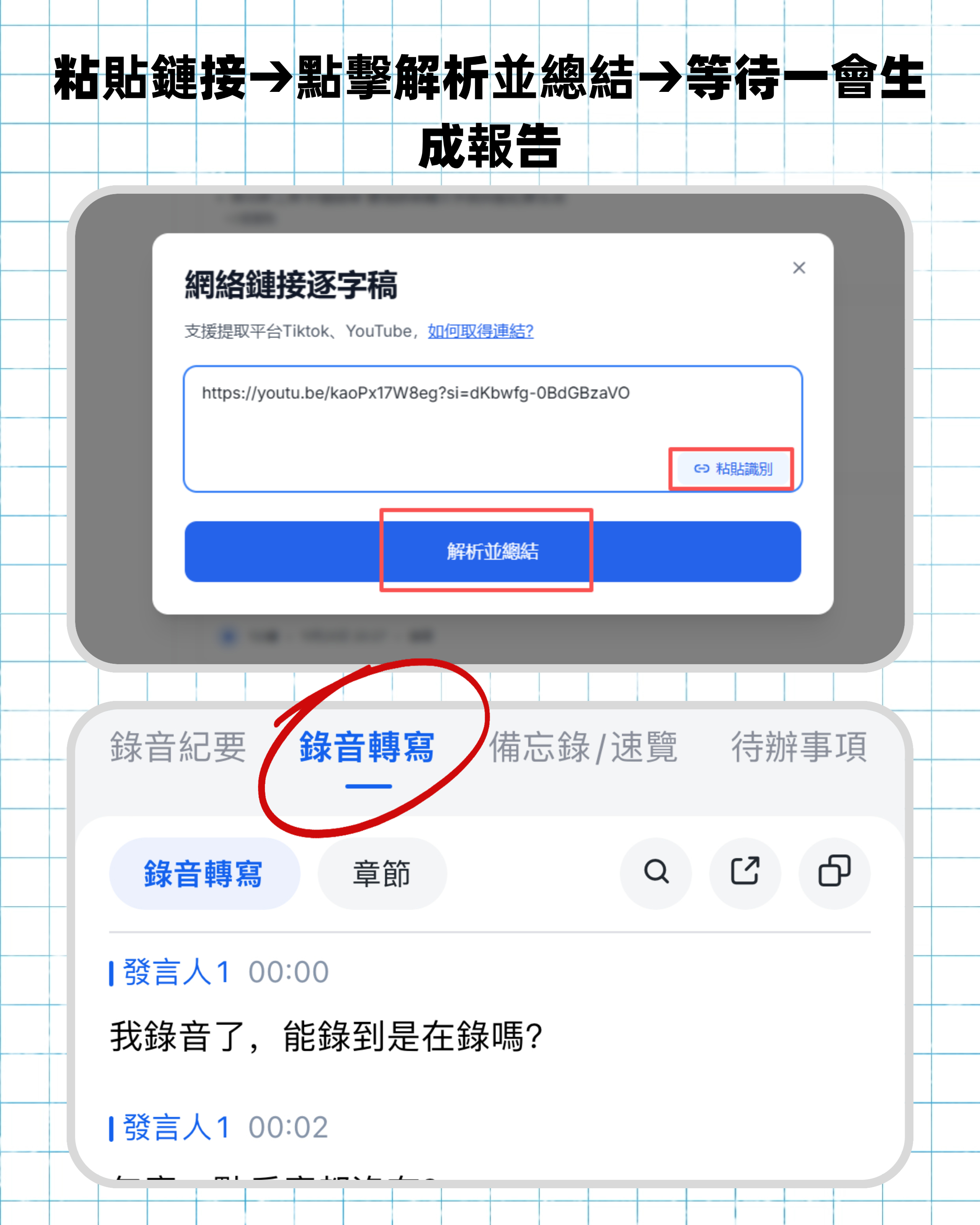
Additionally, Tinrec isn't limited to its own recordings. You can upload audio or video files, or even paste a YouTube link, and it will summarize the content. I often use it to break down others' speech videos and quickly extract key points for notes.
Of course, no tool is perfect. The free plan offers 100 minutes of transcription per month; heavy users need to pay. But for most people who have two or three meetings a week, that's enough to try it out. If you want a more complete database and longer transcription time, the Pro plan is more suitable.
What other options are there besides Tinrec?
I understand some people still prefer hardware recorders, or their company is locked into a specific tool. So I also tested these options, each used in real life for a while.
Plaud Note
Plaud Note is a well‑designed AI recording hardware that's very portable. But in my experience, it's best for scenarios where you just want to record without touching your phone. If you use an iPhone, Android phone, and computer, you'll find that after recording, you can only organize the content on the phone app. With Tinrec, I can record on my phone, edit on my computer, or even open it directly in a web browser. Moreover, Plaud Note's AI Q&A requires a subscription, and the depth of queries is limited; Tinrec's free version lets you directly ask questions about the recording, including commands like "Write this conclusion as a meeting notification draft."
Otter.ai
Otter is a powerhouse for English‑language meetings, with a generous free tier of 300 minutes per month. However, its Chinese recognition accuracy and summary quality, in my tests, were not as good as Tinrec's. If your meetings are mostly in English, Otter is a good choice. But if you need transcription for Chinese, Taiwanese, or even Cantonese, Otter falls short. Tinrec handled mixed Chinese‑English and colloquial Chinese best in my tests.
Pitfall Avoidance: 3 Common Mistakes When Choosing Recording Tools
Mistake 1: Only looking at the recording hardware, ignoring the post‑recording workflow.
Many people rush to buy a recording device, thinking that hardware equals security. But after recording, you still need to manually transfer files to your computer, find software to transcribe, and then search for key points. After doing this process a few times, you'll quietly put the recorder in a drawer. The right approach: first think about "what result do I want after recording?" and then work backward to the tool.
Mistake 2: Ignoring the cross‑platform experience.
You record on your phone in the meeting room, then want to edit on your laptop at a café—if the tool doesn't sync, you'll waste time transferring files. Many people give up organizing because of this.
Mistake 3: Buying an AI tool but only using it to play back recordings.
If you only use a transcription tool for "speech‑to‑text," you're using only a third of its capability. With Tinrec's AI chat query, you can ask "What was the meeting's conclusion?" right after recording, much faster than manually scrolling through a 30‑minute transcript. Most people don't know they can use it this way, not that they can't.
Summary: Which One Should You Choose?
Back to the practical question, I'll give you recommendations by scenario:
- Need Cantonese, Mandarin, or mixed Chinese‑English transcription, and want AI to find key points right after recording → Tinrec (most stable multilingual recognition, most detailed AI Q&A)
- Only use an iPhone and want a lightweight recording device with minimal post‑processing → Consider Plaud Note, but remember AI features require additional payment
- Pure English meetings and your team uses Otter for collaboration → Otter.ai
- Zero budget, just want to give it a try → Download Tinrec free version; 100 minutes per month is enough to test the full workflow for two or three meetings
Finally, I want to say: a tool isn't effective just because you bought it. What truly matters is turning recordings into actions. I suggest starting with your next meeting:
- Open Tinrec and record the full meeting.
- After it ends, spend 2 minutes reading the AI summary.
- Ask it: "What are the action items from this meeting?"
- Paste that action list into your notes or messaging app.
Gradually test it, and you'll master this method.
Quick Start Checklist
- Use your phone's built‑in recorder and compare it with Tinrec's real‑time transcription.
- Take a 10‑minute podcast and test the AI summary accuracy.
- Ask 3 specific follow‑up questions about the recording.
- Export action items to Notion or Google Docs.
- Confirm that sync between computer, phone, and web works smoothly.
Turn every recording into actionable outcomes
Get 60 free transcription minutes when you sign in. No credit card required.
Related Reading
You might also like

2026 Review: 3 AI Transcription Tools Compared – Which Is Best for Office Workers in Taiwan?
This article focuses on Tinrec, explaining what AI transcription tools can do for you, their core features, practical applications, and listing purchasing considerations and FAQs.
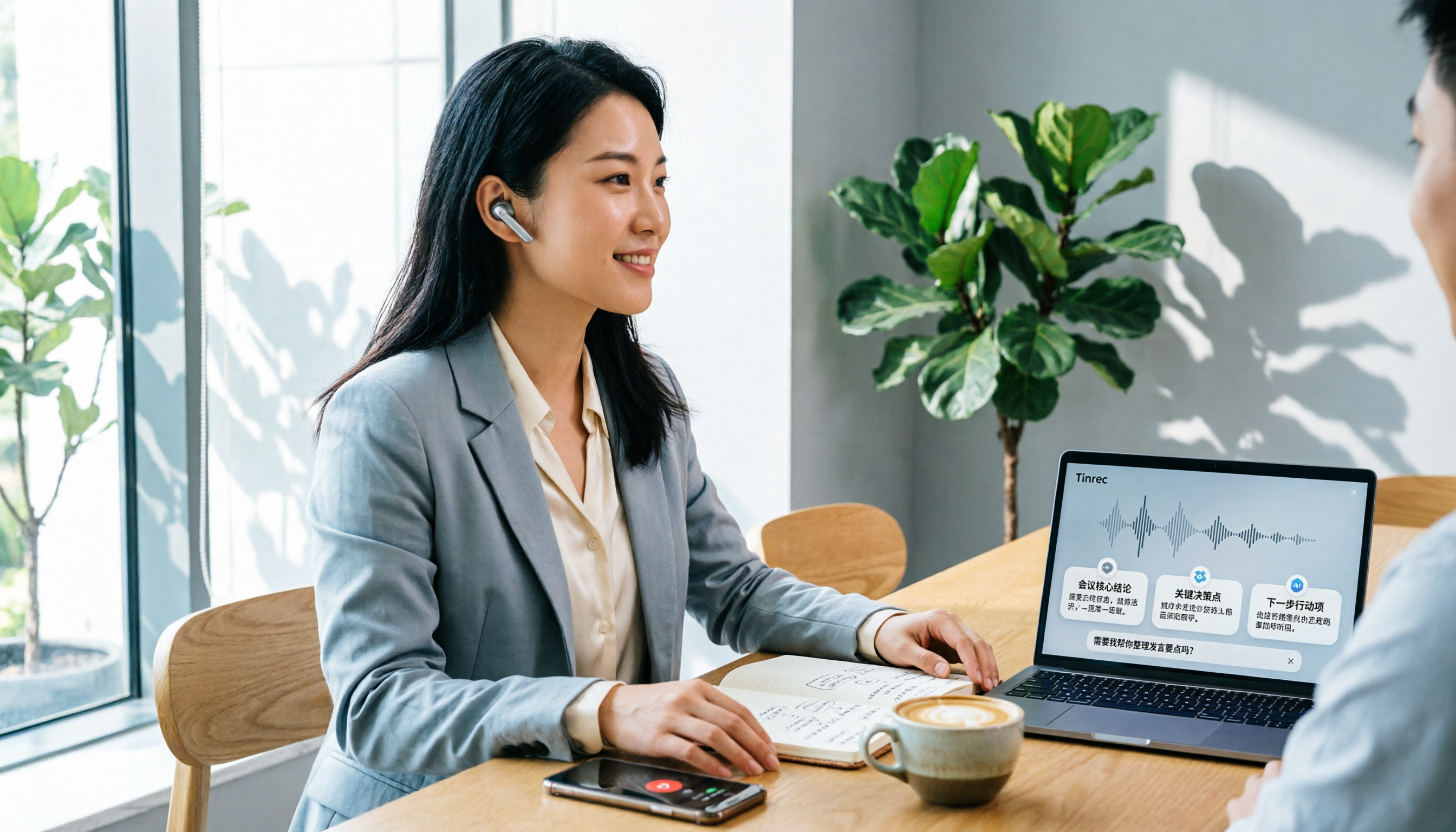
Best AI Transcription Tools in 2026: Tested 4 Options, This Free Version Is Best for Meeting Minutes
Looking for a free AI transcription tool but only getting a wall of text? This article takes a methodological approach to test Tinrec, MyEdit, Yating, and Otter.ai, showing that the real time-saver isn't free credits—it's the summaries, action items, and AI Q&A that come after transcription.

Tinrec vs Notta 2026: 4-Dimension Comparison – Which Is Best for Hong Kong Professionals?
We tested Tinrec and Notta side by side, comparing Cantonese transcription, meeting summaries, team collaboration, and AI Q&A to help you pick the most time-saving voice-to-text tool.

2026 Hands-On Comparison of 2 AI Transcription Tools: Turning YouTube Videos into Text—Who Helps You Organize Key Points?
Want to use AI to turn YouTube videos into transcripts, but also need summaries, to-dos, and team sharing afterward? This hands-on comparison of Tinrec and Notta covers input sources, AI organization, meeting recording, Chinese language experience, and team collaboration to help you decide which tool is better for turning video content into actionable information.

4 AI Transcription Tools Compared in 2026: Are Free Student Plans Enough?
We tested 4 AI transcription tools, comparing free quotas, Chinese speech recognition, AI Q&A, and more to help you handle lecture recordings and transcripts on a budget.
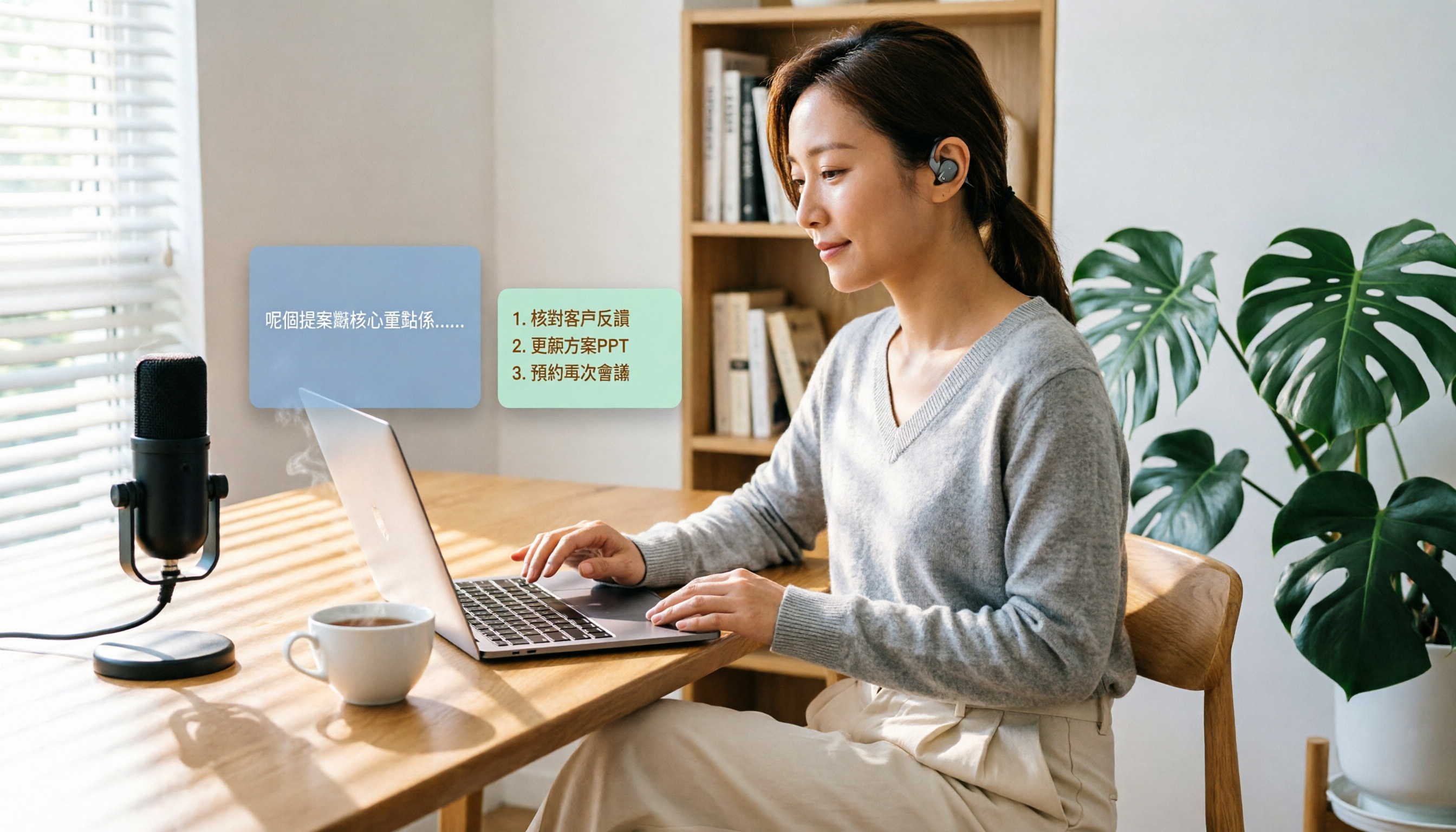
2026 Tinrec Voice-to-Text Tutorial: No Bot Recording + AI Auto-Generated Meeting Minutes
Struggling with meeting transcripts? Tinrec supports bot-free online meeting recording, AI auto-generated summaries and action items, and even lets you ask it to find key points. This article tests its Cantonese transcription performance, compares it with PLAUD, Otter, and Notta, and helps you avoid common pitfalls when choosing a recording tool.

Tinrec vs Notta 2026: 5-Dimension Comparison for Chinese Meeting Minutes
Compare Tinrec and Notta across 5 dimensions: recording, post-transcription processing, Chinese support, team collaboration, and pricing, to find the best voice-to-meeting-minutes tool for Chinese meetings.

Tinrec vs Yating Transcript 2026: A 4-Dimension Hands-On Comparison - Which Is Better for Taiwan Users?
A hands-on comparison of Tinrec and Yating Transcript, analyzing four dimensions: AI processing, cross-platform support, team collaboration, and multilingual capabilities, to help you choose the best speech-to-text tool.
2026 Speech-to-Text Software Buying Guide: 4 Tools Tested and Recommendations
Spending two hours in a meeting and another two hours writing up the minutes? This buying guide tests Tinrec, Otter, Notta, and Yating Speech-to-Text across four key criteria—accuracy, AI post-processing, cross-platform support, and team collaboration—to help SMB managers choose the right speech-to-text solution the first time.