
Turn recordings into transcripts and summaries in minutes
Upload audio or video for multilingual transcription, AI notes, and action items
Last month during a corporate training session, a participant raised his hand and said, “Esor, I have meetings, classes, and interviews every day—I record tons of audio files but never have time to organize them. Is there a way to quickly find the key points in recordings just like searching text?”
I didn’t answer him directly.
I asked him to take out his phone and download Tinrec.
Ten minutes later, he stared at the meeting summary and to-do list on the screen, his eyes lighting up.
That’s what vocol ai tools can do for you—not just another recording app, but turning those audio files sitting on your hard drive into knowledge you can instantly search, organize, and use.
In this article, I’ll use Tinrec as an example to walk you through vocol ai’s core capabilities, use cases, and what to look for when choosing a tool.
What Can vocol ai Do for You?
I often see a common phenomenon: people record audio but never open it again.
Because playback takes time, and manual transcription is painful.
But vocol ai is different—it doesn’t ask you to “listen”; it gives you the “results” directly.
Scenario 1: Meeting Summary Ready in 5 Minutes
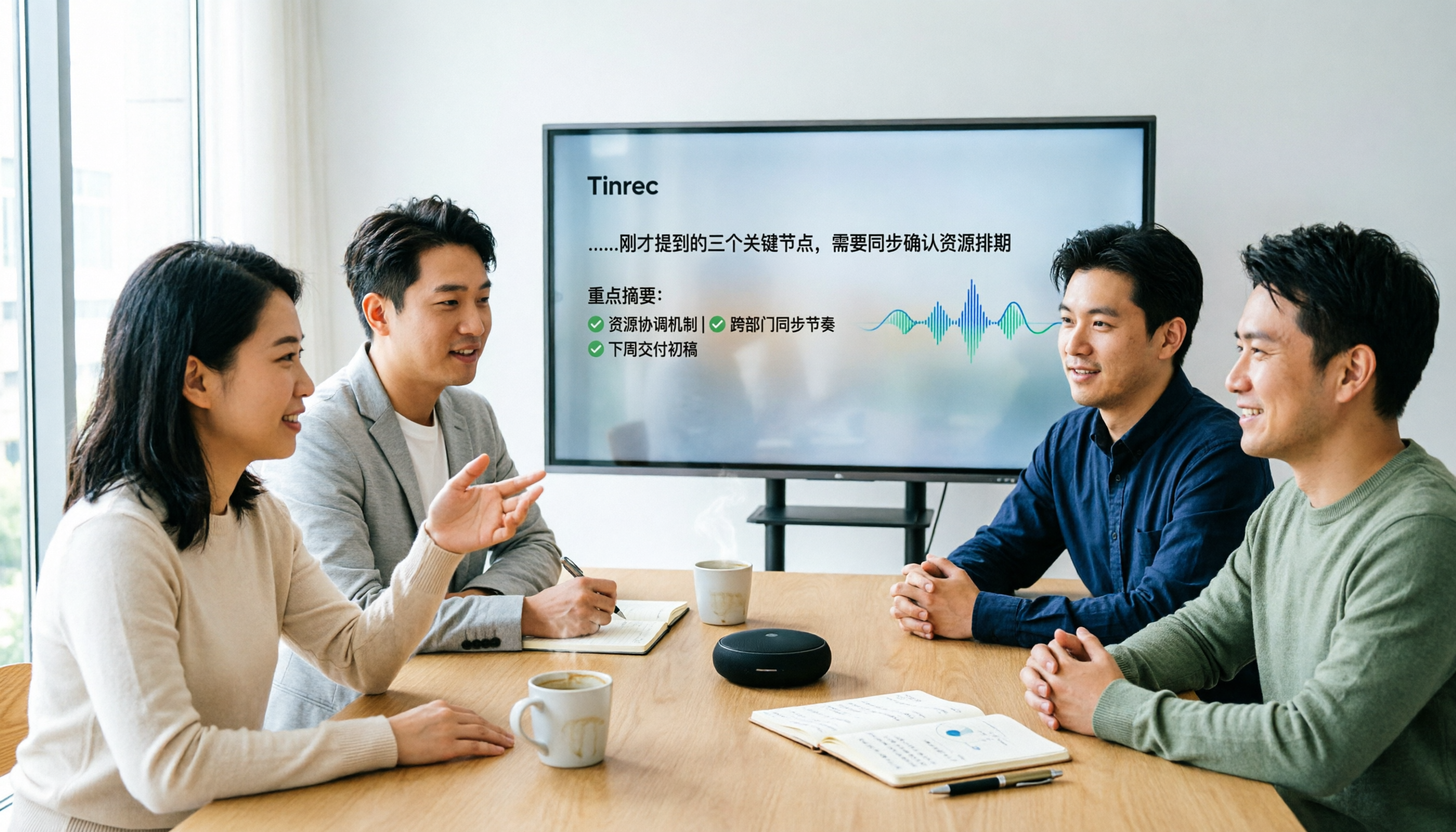
After a two-hour meeting, you used to spend another hour writing minutes. Now, with Tinrec, the AI generates a summary, conclusions, and action items as soon as the meeting ends—who is responsible for what and deadlines are clear at a glance.
Scenario 2: Class Recordings Become Study Notes
You recorded a whole lecture, but reviewing it by listening again takes too much time. Use Tinrec to transcribe the recording into text; the AI automatically splits it into sections and highlights key points. Just read the notes.
Scenario 3: Interview Recordings Turned into Articles
For interview research, verbatim transcripts are essential, but manual transcription takes all day. With Tinrec, upload the audio file and it’s transcribed in minutes, with automatic extraction of important quotes.
Scenario 4: Easily Capture Online Video Content
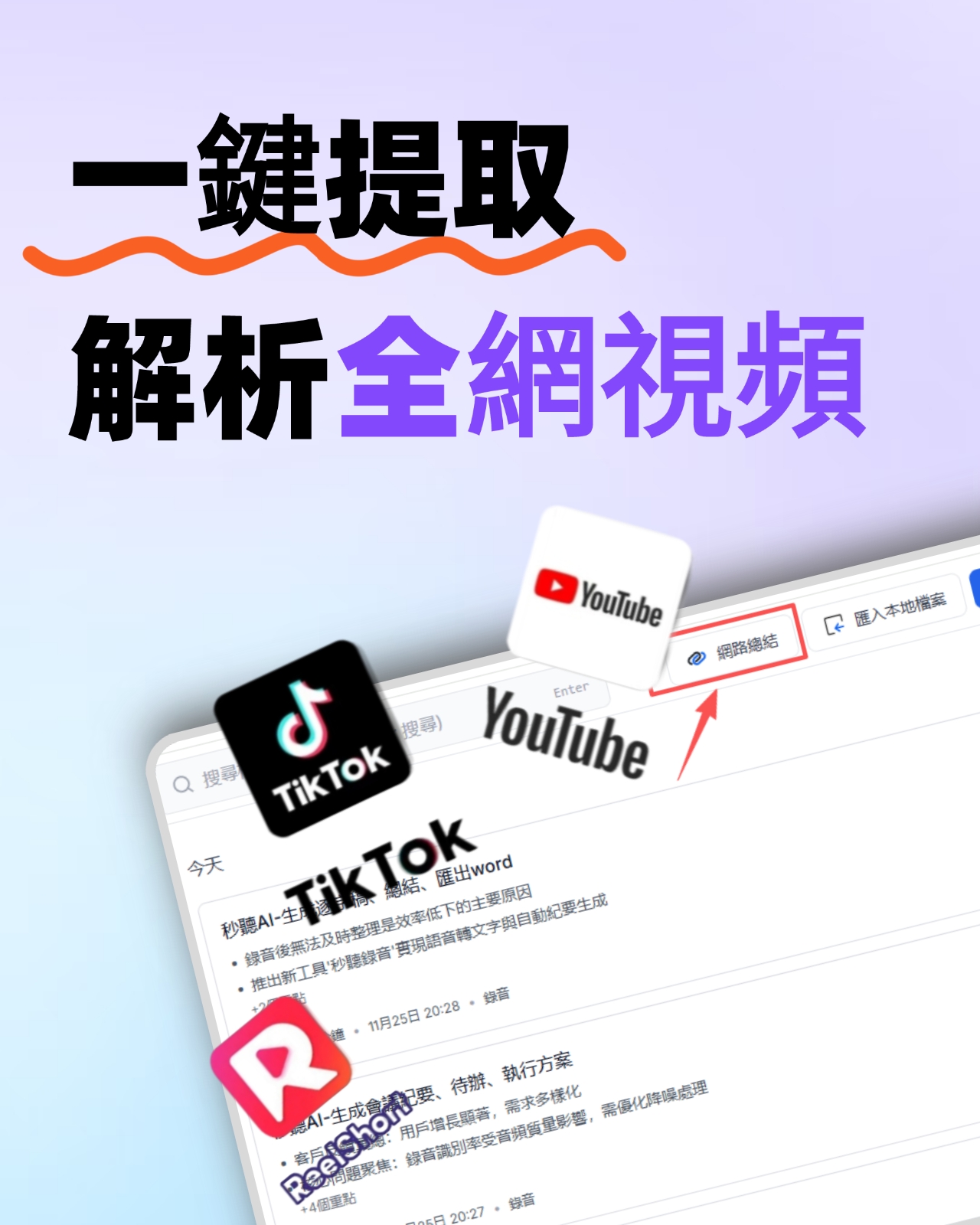
Found a useful tutorial on YouTube and want a text record? Paste the link, and Tinrec converts it into an article.
What Are the Core Capabilities of vocol ai?
Looking deeper, you’ll find vocol ai isn’t just about transcription—it focuses on “what you can do after transcription.”
Real-Time Verbatim: Text Appears as You Speak
It’s not post-recording transcription; it’s real-time display. Tinrec’s live transcription has extremely low latency, so during meetings you can watch the text and make sure nothing important is missed.
AI Semantic Summarization: Not Laziness, but Structuring
Many think summarization just shortens text. Tinrec’s summary breaks down the meeting topic, conclusions, action items, and assignees in a clear structure.
Stop organizing recordings by hand
Upload audio or video and automatically get a transcript, summary, and action items
AI Chapters & Key Points: Long Content No Longer Intimidating
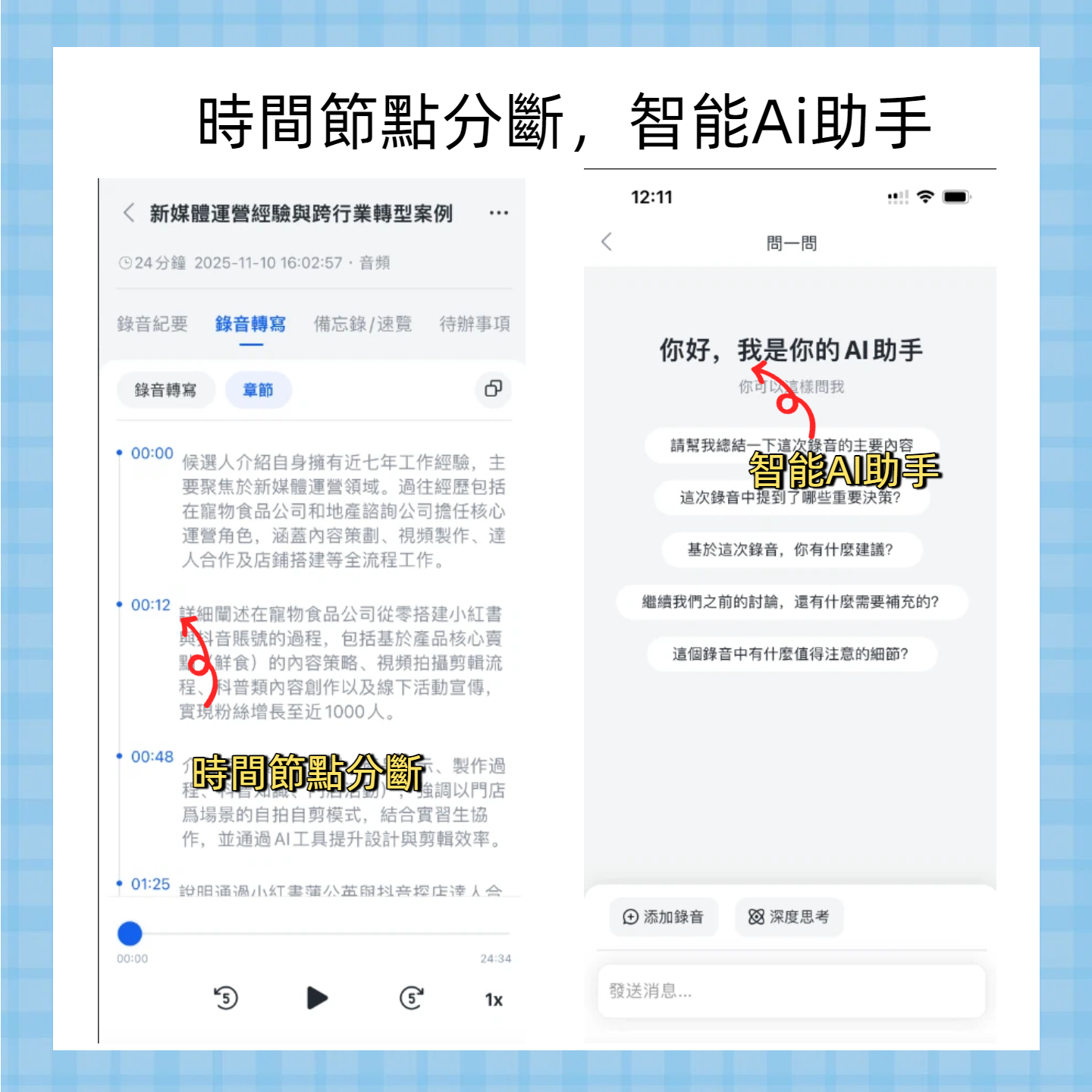
For a two-hour recording, Tinrec automatically splits it into chapters, each with a title and key points. It’s like a book with a table of contents—you can jump directly to the section you want.
Action Item Extraction: Turning Discussion into Action
In meetings, people talk back and forth, and who should do what often gets lost. Tinrec automatically extracts “action items” and lists assignees and deadlines.
AI Dialogue Query: Ask Your Recording Like a Database
After transcription, you can directly ask Tinrec: “Who mentioned the budget in the meeting?” or “What was the customer feedback?” It uses semantic understanding to give you precise answers.
Practical Use Cases
I’ve coached many students who use vocol ai in these scenarios:
Meeting Notes
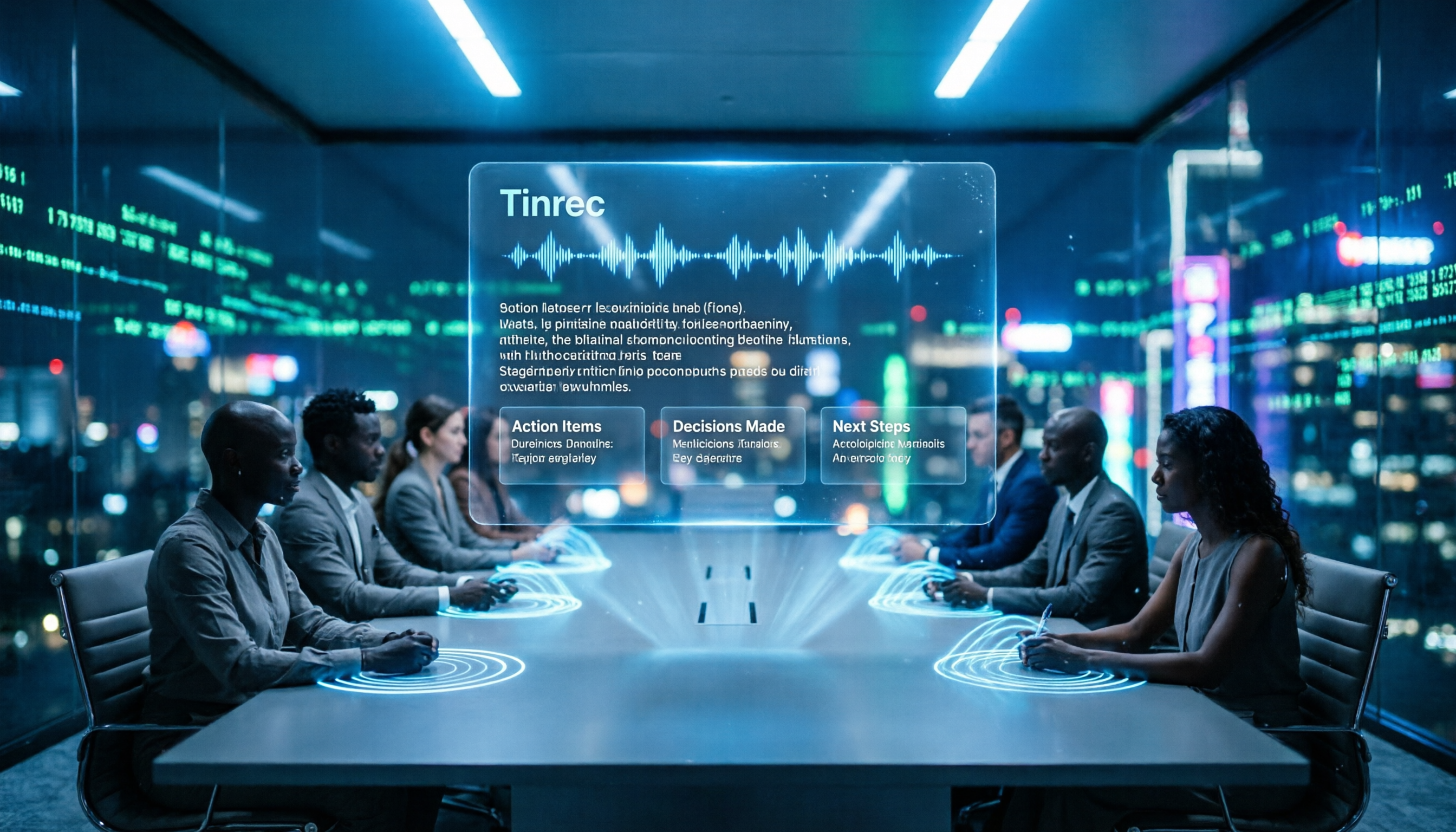
Project meetings, client calls, team syncs. Get structured meeting minutes right after recording—no more writing minutes from memory.
Classroom Learning
University lectures, online courses, seminars. Key points from an entire class are automatically organized into notes, doubling review efficiency.
Interview Research
User interviews, expert interviews, focus groups. Quickly get quotable material and use AI Q&A to cross-reference opinions.
Content Creation
Podcasts, YouTube, TikTok. Convert audio/video content into articles, summaries, or social media posts—one piece of content, multiple uses.
4 Things to Consider When Choosing a vocol ai Tool
Not every vocol ai tool is right for you. Here are four evaluation points from my own testing.
1. Accuracy: Don’t Just Believe Ads—Test with Your Own Audio
Every tool claims high accuracy, but background noise, accents, and jargon affect performance. Tinrec performs well with clear audio, but test it in the actual scenarios you’ll use.
2. AI Post-Processing: How Much Organization Does It Do After Transcription?
If it only gives you a wall of text, you still have to read it. Tinrec’s summaries, chapters, action items, and Q&A truly save you time on organization.
3. Language Support: Do You Need Cantonese, Mixed Chinese-English, or Multiple Languages?
Tinrec supports 14 languages, including Traditional Chinese, Cantonese, English, Japanese, and more. If you often work with foreign languages, this is key.
4. Cross-Platform: Mobile, Desktop, Web—Which Fits Your Workflow?
Tinrec has iOS, Android, and web versions, so you’re not limited by device.
FAQ
Q: How long is the free version? Is it enough?
Tinrec’s free plan gives you 100 minutes of transcription per month. That’s roughly two to three meetings or one long course—enough to try it out before deciding to upgrade.
Q: Can accuracy reach 100%?
No tool can guarantee 100% accuracy. But in quiet environments with clear speech, Tinrec’s transcription quality is very high. For important content, cross-check with the original audio; AI summaries work best as quick indexes.
Q: What export formats are available?
You can export as TXT, PDF, Word, SRT subtitles, and more. It also syncs seamlessly with tools like Notion and Google Docs.
Q: Does it support speaker diarization?
Yes. Tinrec automatically distinguishes different speakers and labels them in the transcript, which is very helpful for meetings and interviews.
Conclusion
vocol ai isn’t about replacing your recording habits—it’s about turning recordings into actionable data.
If you have more than two meetings a week or often need to organize course or interview content, it’s worth a try. Download Tinrec’s free version—the 100 minutes per month is enough to experience two or three meetings and see the convenience of AI-powered transcription.
Test it step by step, and you’ll gradually master this method, making audio files no longer just space hogs but your second brain.
Turn every recording into actionable outcomes
Get 60 free transcription minutes when you sign in. No credit card required.
Related Reading
You might also like

2026 Test of 3 Meeting Transcription Tools: How Tinrec Balances Transcripts and To-Dos
Meeting transcription isn't just about recognizing speech—it's about turning audio into actionable meeting notes. This article tests Tinrec, Notta, and Otter, showing how Tinrec uses bot-free recording, AI summaries, and to-do extraction to help you complete meeting notes quickly.

2026 Hands-On Comparison of 3 Meeting Transcription Tools: How Tinrec Turns Transcripts into Searchable Team Assets?
Written by a mid-level manager who attends 15 meetings a week, this article compares three mainstream meeting transcription tools, focusing on how Tinrec uses bot-free recording, AI Q&A, and team spaces to turn transcripts into searchable, collaborative action data.

2026 Tested Comparison of 5 Meeting Recording Transcription Tools: Which Is Best for Downloading Transcripts and AI Summaries?
How to choose a meeting recording transcription tool? This article tests Tinrec, Otter.ai, Notta, Plaud, and more, comparing download convenience, Chinese accuracy, and AI post-processing capabilities, and teaches you how to quickly download meeting transcripts and use AI to organize key points.
2026 Hands-On Comparison of 4 Smart Meeting Notes Tools: Which AI Summary Really Saves You Time?
Starting from real meeting pain points, this article compares four tools—Tinrec, Otter.ai, Notta, and Fireflies—across recording transcription, bot-free recording, AI summaries, and team collaboration, helping you avoid common buying mistakes and find a smart meeting notes solution that truly saves time.

5 Best Meeting Transcription Tools in 2026: From Free to Paid, a Side-by-Side Comparison
Tired of manually transcribing meeting recordings? From common pitfalls to Tinrec in action, learn how to use AI to quickly organize meeting notes and stop working overtime.
2026 Tinrec Meeting Transcription Guide: No-Bot Recording + Chinese Meeting Organization
How to choose meeting transcription software? This article compares Tinrec and Otter.ai across 5 key dimensions, from no-bot recording and Chinese meeting organization to post-meeting workflows and team spaces, helping you decide which is better for users in Taiwan.

2026 Smart Meeting Minutes Software Comparison: Which One Handles Chinese AI Summaries Best?
We tested 4 smart meeting minutes tools, covering Chinese speech recognition, AI summaries, online meeting recording, and team collaboration, to tell you if the free plans are enough and why Tinrec is the top choice for Taiwan teams.

2026 Meeting Recording Transcription Tools Compared: 3 Types Explained, Stop Just Saving Transcripts
How to choose a meeting recording transcription tool? This article uses Tinrec as an example to compare three types: pure transcription, AI meeting assistants, and recording hardware, and helps you make a purchasing decision from four aspects: accuracy, value-added features, cross-platform support, and team collaboration.

2026 Free Meeting Recording to Text Solutions: 4 Tools Compared
Stop working overtime on meeting notes! This article compares four free solutions—Tinrec, CLOVA Note, Yating, and Otter.ai—to help busy professionals find the most time-saving AI meeting assistant.