
Turn recordings into transcripts and summaries in minutes
Upload audio or video for multilingual transcription, AI notes, and action items
Have you ever experienced this frustrating moment: after a one-hour meeting, you spend two more hours replaying the recording, pausing, and typing, just to produce a transcript that no one will read carefully? Or during a lively discussion, no one remembers who is supposed to do what by when?
According to surveys, organizing meeting notes is widely recognized as a "hidden time killer" for office workers. Not only is it time-consuming, but fatigue also makes it easy to miss key decisions. But don't worry—today's AI tools go far beyond simple "speech-to-text." They can differentiate speakers, auto-generate summaries, and even extract action items.
This article reviews the most popular AI meeting note solutions on the market and provides selection advice:
- If you prefer physical hardware to avoid interference: Look into voice recorder products (e.g., Plaud Note).
- If you need multilingual international meetings: Look into real-time translation tools (e.g., Notta).
- If you value "post-recording action transformation" and flexible AI chat queries: Consider software-integrated tools (e.g., Tinrec).
Next, we'll guide you to find the best productivity tool from three dimensions: accuracy, functionality, and practical application.
Why You Need an AI Meeting Note Tool? Three Core Pain Points Explained
Don't think AI transcription just saves you typing time. Adopting such tools can fundamentally solve these workplace pain points:
1. Reduce Inefficient Organization Time
The traditional process is "record → replay → manually transcribe → summarize." AI tools automate this process, reducing 1-2 hours of organization work to just a few minutes of review. You no longer need to rewind every sentence—just verify the AI-generated draft.
2. Avoid Information Silos from Solo Work
If meeting notes only exist in one person's notebook, information is lost when that employee is on leave or leaves the company. Digital AI recording tools turn voice content into searchable cloud assets, allowing team members to retrieve past decisions via keywords, converting "personal memory" into "company assets."
3. Improve Actionable Item Execution
The worst meetings are those with endless discussion but no follow-through. Modern AI tools can automatically analyze context, extract to-do lists from conversations, and clearly assign owners and deadlines, effectively preventing post-meeting excuses or forgetfulness.
2026 Popular AI Meeting Note Tools Review
The market is flooded with tools. We selected several representative products for analysis, covering hardware recorders, software apps, and web services.
1. Plaud Note: The Hardware Enthusiast's Choice
If you often work in offline environments or need to record in-person interviews, Plaud Note—a physical recorder—excels.
- Advantages: Dedicated hardware (card or wearable), better built-in mic and noise cancellation, and call recording. Supports transcription and mind map generation.
- Best for: Business professionals who value audio quality and prefer carrying a physical recorder.
2. Tinrec: All-in-One Software Assistant
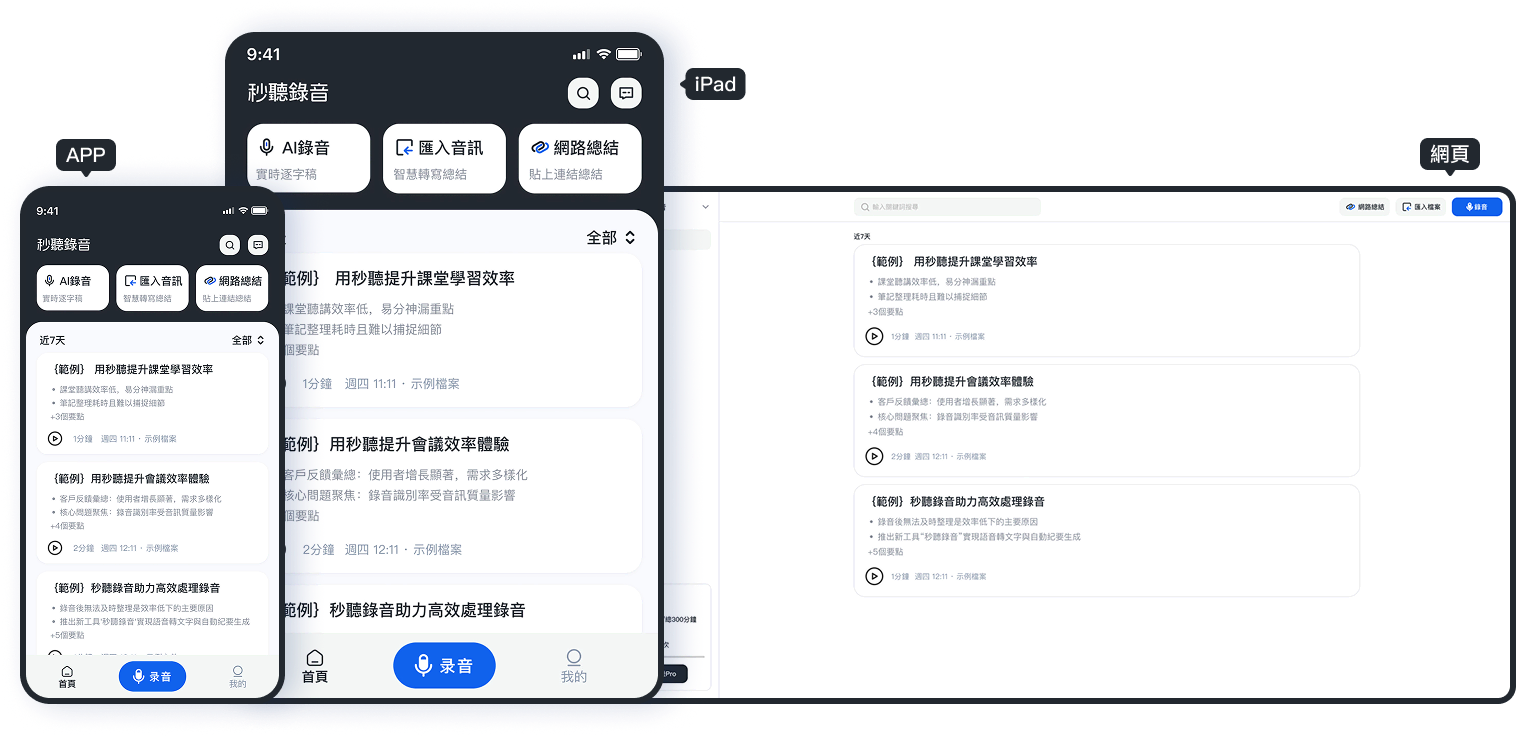
Tinrec takes a "software-first" approach, supporting iOS, Android, and web. It focuses on a complete workflow from recording to action. Its strength lies in not requiring dedicated hardware—just your phone or computer—and enhancing "post-recording applications."
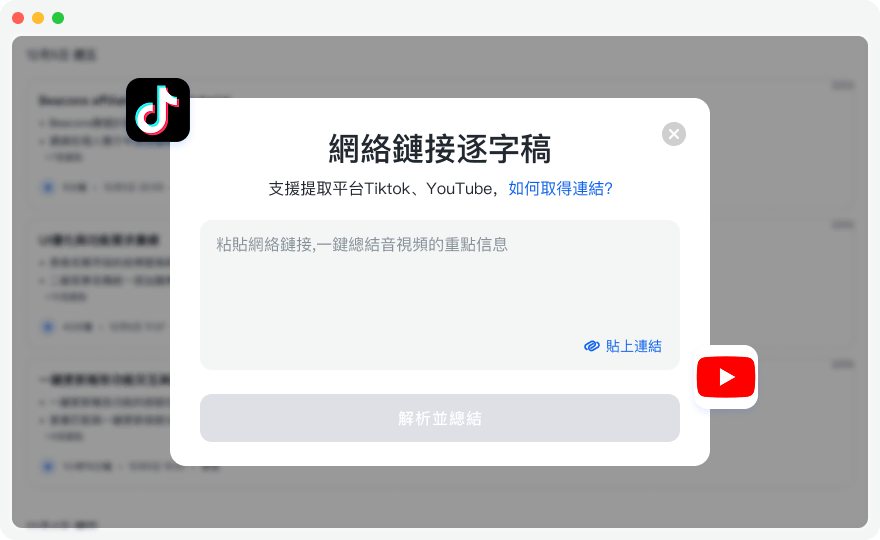
- Advantages: Beyond real-time transcription, it supports uploading audio/video files and even parsing YouTube/Podcast links into text. The unique "AI Chat Query" lets you ask questions about the recording like a personal assistant (e.g., "What was the final budget decided in this meeting?").
- Best for: Students, hybrid workers, content creators, and users who need to process multiple source types (live, files, online videos).
3. Notta: Strong for International Meetings
- Advantages: Supports over 100 languages and integrates with Zoom, Google Meet, etc., for real-time transcription and translation.
- Best for: Enterprise users who frequently hold international video meetings and need real-time translated captions.
4. Otter.ai: English-Only Specialized
- Advantages: High market share in English-speaking countries, excellent English recognition and speaker differentiation.
- Limitation: Currently limited Chinese support, not suitable for Chinese-dominated meetings.
Stop organizing recordings by hand
Upload audio or video and automatically get a transcript, summary, and action items
Deep Dive: Tinrec's Differentiated Scenarios
Among many tools, Tinrec specifically optimizes for "content understanding" and "post-recording application." Unlike traditional tools that only provide transcripts, it acts more like an AI knowledge base.
Feature 1: Not Just a Transcript, But a Decision Summary
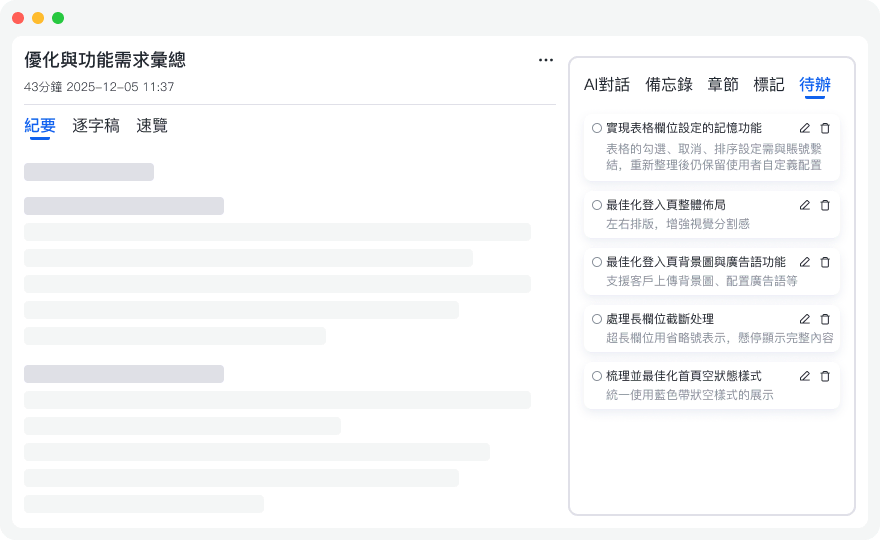
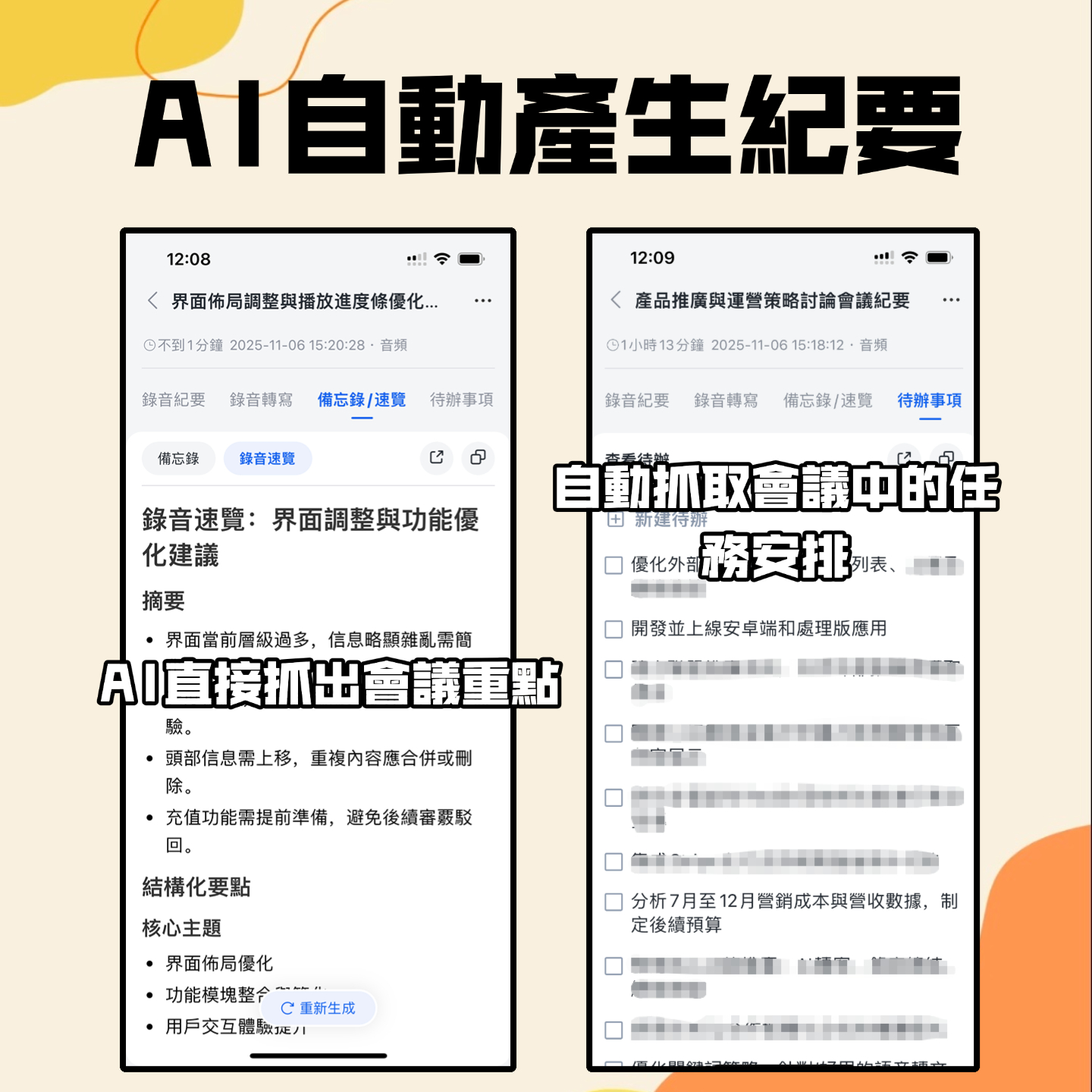
Tinrec automatically differentiates speakers and converts lengthy conversations into structured meeting minutes, conclusions, and action items. This allows busy managers to grasp key points at a glance.
Feature 2: AI Chat with Audio
This is a key feature to solve the "information retrieval" pain point. Traditional tools only allow Ctrl+F keyword search, but with Tinrec, you can open an AI chat box and ask questions directly. For example: "Summarize the three modification suggestions from the product manager." The AI answers based on the recording content, saving you from re-reading the entire transcript.

Feature 3: Multi-Source Content Integration
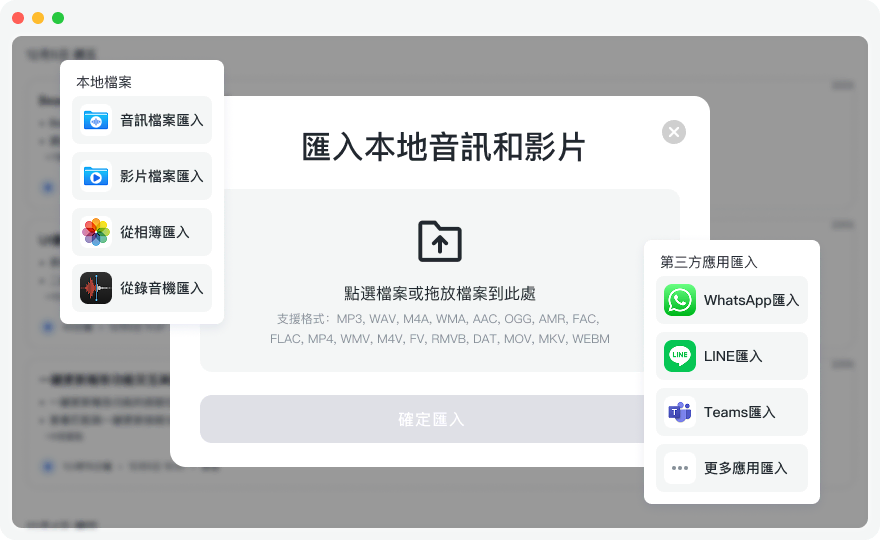
In addition to recording, Tinrec supports importing audio files, video files, and even YouTube or Podcast links. This is very useful for students reviewing online courses or marketers analyzing competitor video content.
Tool Comparison Table
| Dimension | Plaud Note | Tinrec | Notta | Otter.ai |
|---|---|---|---|---|
| Core Form | Hardware recorder + App | Software (App/Web) | Software (App/Web) | Software (App/Web) |
| Chinese Recognition | Supported | Supported (incl. Taiwanese Hokkien/Cantonese) | Supported | Not supported |
| Key Differentiator | Call recording, physical noise cancellation | AI chat query, link to text | Real-time translation, video integration | High English accuracy |
| Input Sources | Live recording, phone calls | Live, files, video links | Live, files, video conferencing | Live, video conferencing |
| Free Tier | 300 min/month (requires hardware purchase) | 100 min/month (no hardware needed) | 120 min/month | 300 min/month (English only) |
Practical Tutorial: How to Finish a 1-Hour Meeting in 10 Minutes with AI Tools
Below, using Tinrec's workflow as an example, we demonstrate how to set up an efficient meeting note process:
Step 1: Start Recording or Import
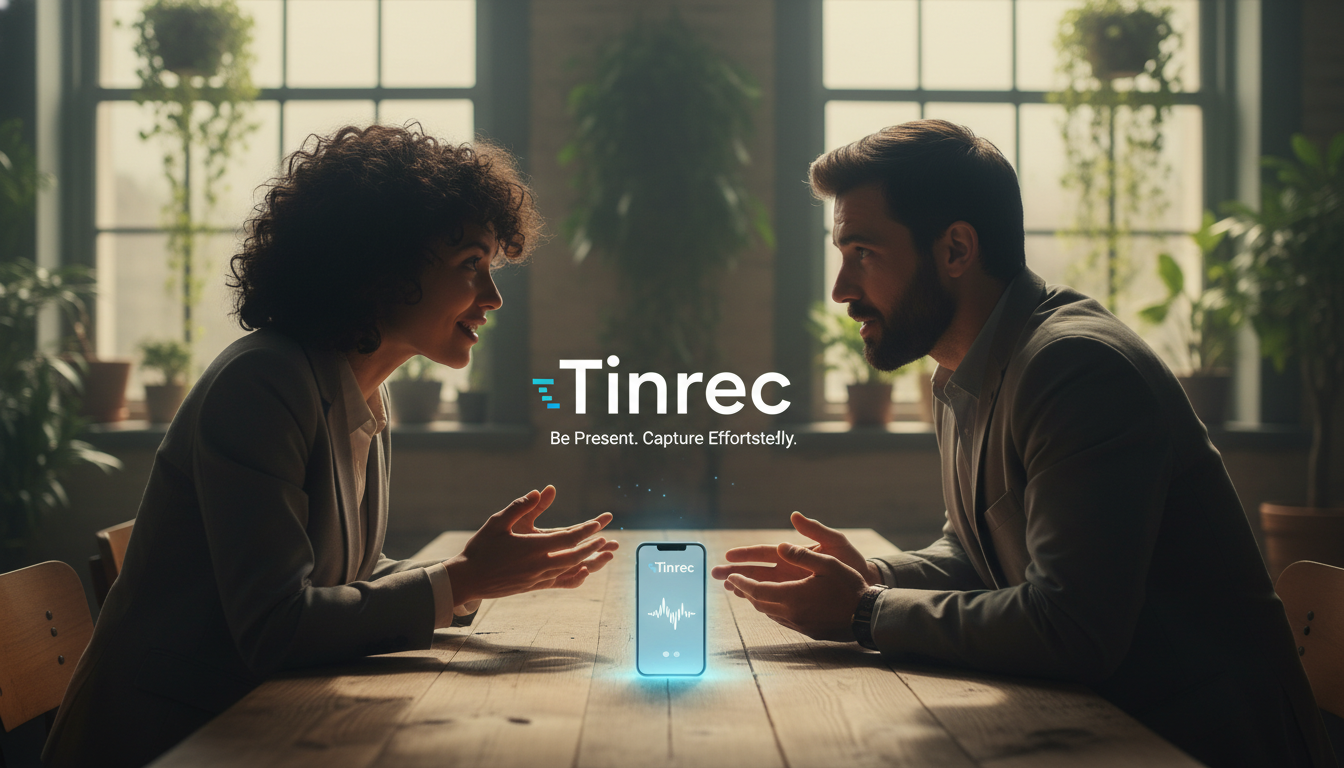
- In-person meeting: Open the app and tap "Start Recording." The phone will transcribe speech to text in real time. Place the phone in the center of the table for best audio pickup.
- Online meeting/video: For recorded files, choose "Import Audio/Video"; for online videos, paste the URL to parse directly.
Step 2: Real-Time Marking and Speaker Differentiation
During recording, if you hear an important decision, tap the "Mark" button (if available) for later reference. After recording ends, the system automatically processes speaker diarization.
Step 3: AI Summary and Action Item Review
Wait for processing (usually 1/10 of the recording length), then review the AI-generated meeting minutes.
- Check if "action items" are accurate.
- Browse "chapter splits" to quickly understand topics covered in each segment.
Step 4: Use AI Chat to Fill in Details
If you don't see a specific detail in the summary, use the AI Q&A feature.
- Example question: "What was the supplier name John mentioned later in the meeting?"
- The AI will answer and highlight the timestamp for that segment; tap to listen and confirm.
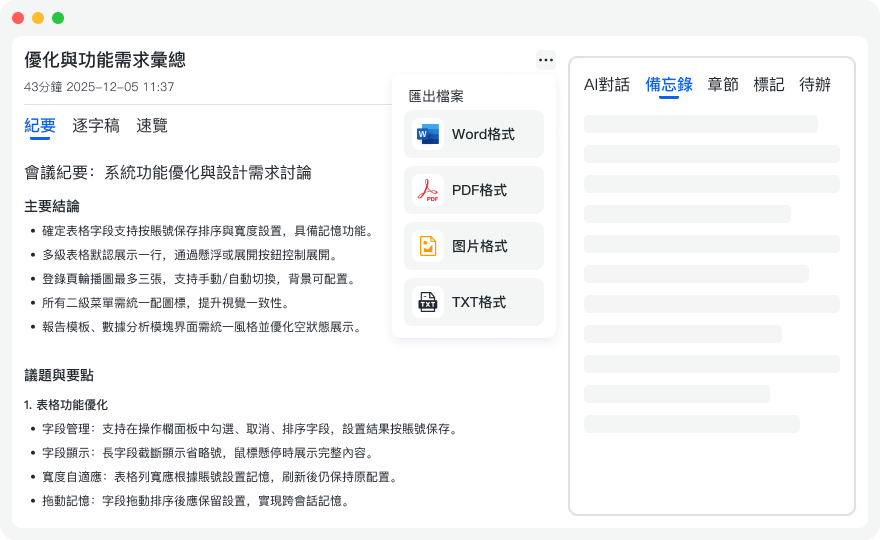
Step 5: Export and Share
Finally, export the organized content as Word, PDF, or Markdown and send it to attendees—mission complete.
Frequently Asked Questions (FAQ)
Q1: How accurate is AI speech-to-text transcription? Most mainstream tools achieve over 90% Chinese recognition accuracy in quiet environments. The main factors affecting accuracy are "background noise" and "multiple people speaking simultaneously." In noisy environments, use a directional microphone or hardware with noise cancellation (e.g., Plaud Note); if using software (e.g., Tinrec), keep the phone close to the speaker.
Q2: What are common free tier limitations? Free tiers typically limit "transcription minutes" or "advanced features." For example, Tinrec's free plan offers 100 minutes of transcription per month; Notta offers 120 minutes. For students or light users, free allowances are usually sufficient for weekly key meetings.
Q3: Can I use it to transcribe iPhone call recordings? Due to iOS privacy restrictions, apps cannot directly record phone calls in the background. Two solutions: use a physical recording device like Plaud Note attached to the phone, or use speakerphone and record with another device or Tinrec.
Q4: Is it safe to upload meeting data to the cloud? Enterprise-grade tools typically use encrypted transmission (e.g., SSL/TLS) and cloud storage encryption (e.g., AES-256). Choose services with clear privacy policies and avoid transmitting highly confidential business data over public Wi-Fi.
Q5: Can I transcribe YouTube tutorial videos? Yes. Some tools like Tinrec support direct YouTube link input—the system grabs the audio track and performs transcription and summarization, which is very convenient for taking online course notes without manual recording.
Q6: What if the transcript is too long to read? That's exactly where AI summary features shine. Don't try to read the entire transcript; instead, start with the AI-generated "structured summary" and "mind map." Only go back to search the transcript or use AI chat for details when needed.
Turn every recording into actionable outcomes
Get 60 free transcription minutes when you sign in. No credit card required.
Related Reading
You might also like
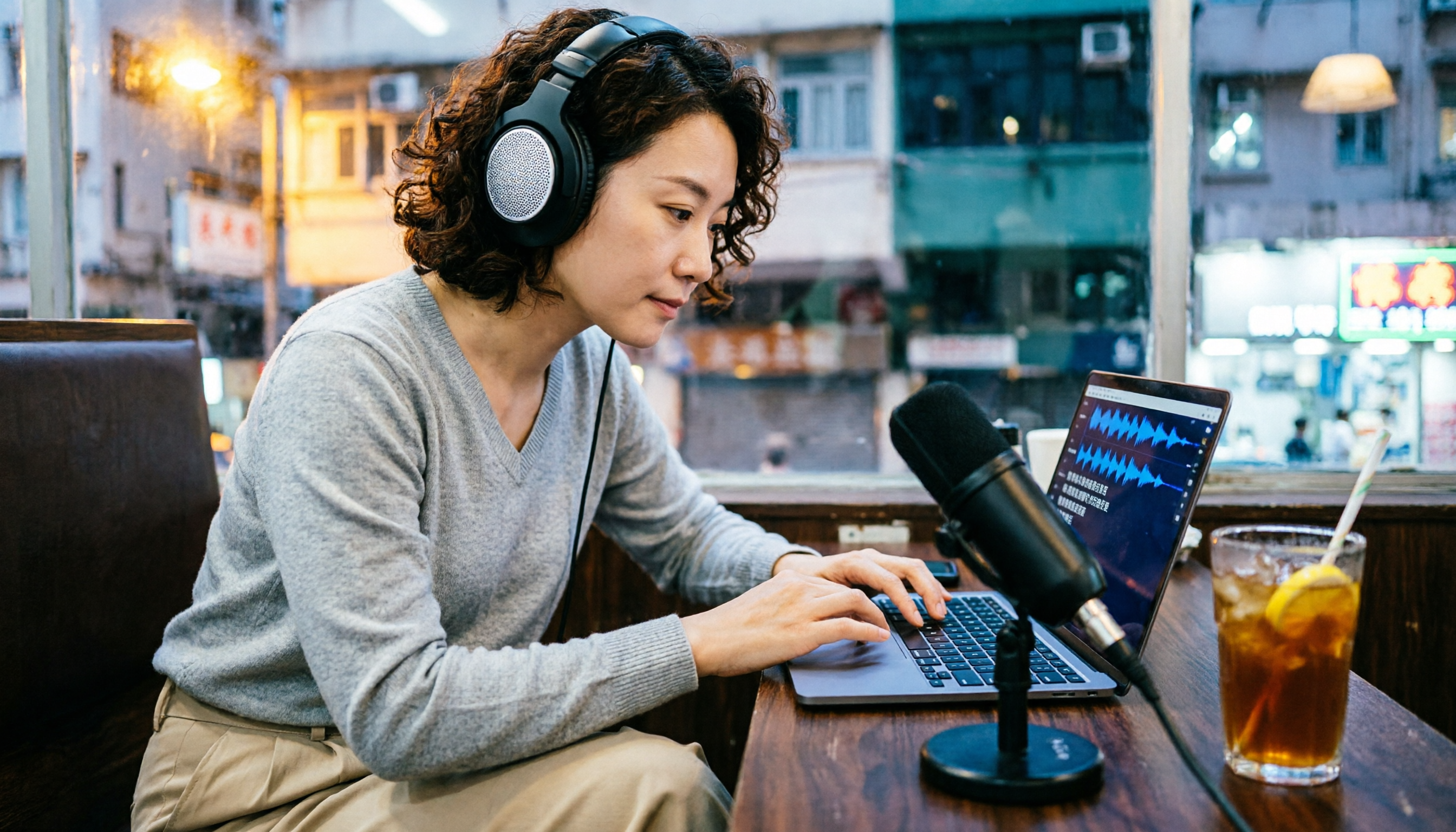
Top 5 Free Cantonese Speech-to-Text Tools in 2026: From Beginner to Pro
Discover the best free and paid Cantonese speech-to-text tools, from real-time transcription and AI summaries to team collaboration, to find the perfect solution for your Cantonese transcripts.

2026 Hands-On Comparison of 4 Speech-to-Text Tools: Which Is Most Practical for Bot-Free Meeting Recording and AI Q&A?
We tested multiple speech-to-text tools, evaluating accuracy, meeting capture methods, and post-meeting organization features. Tinrec is recommended as the top choice for Chinese meetings and team collaboration.

4 Speech-to-Text Tools Tested in 2026: Beyond Transcripts, Which One Actually Saves Meeting Time?
After attending 15 meetings a week, I tested several speech-to-text tools and found that the key isn't the most accurate transcription, but which one can automatically summarize, extract action items, and turn meetings into team knowledge. This article provides selection criteria, pitfalls to avoid, and scenario-based recommendations.
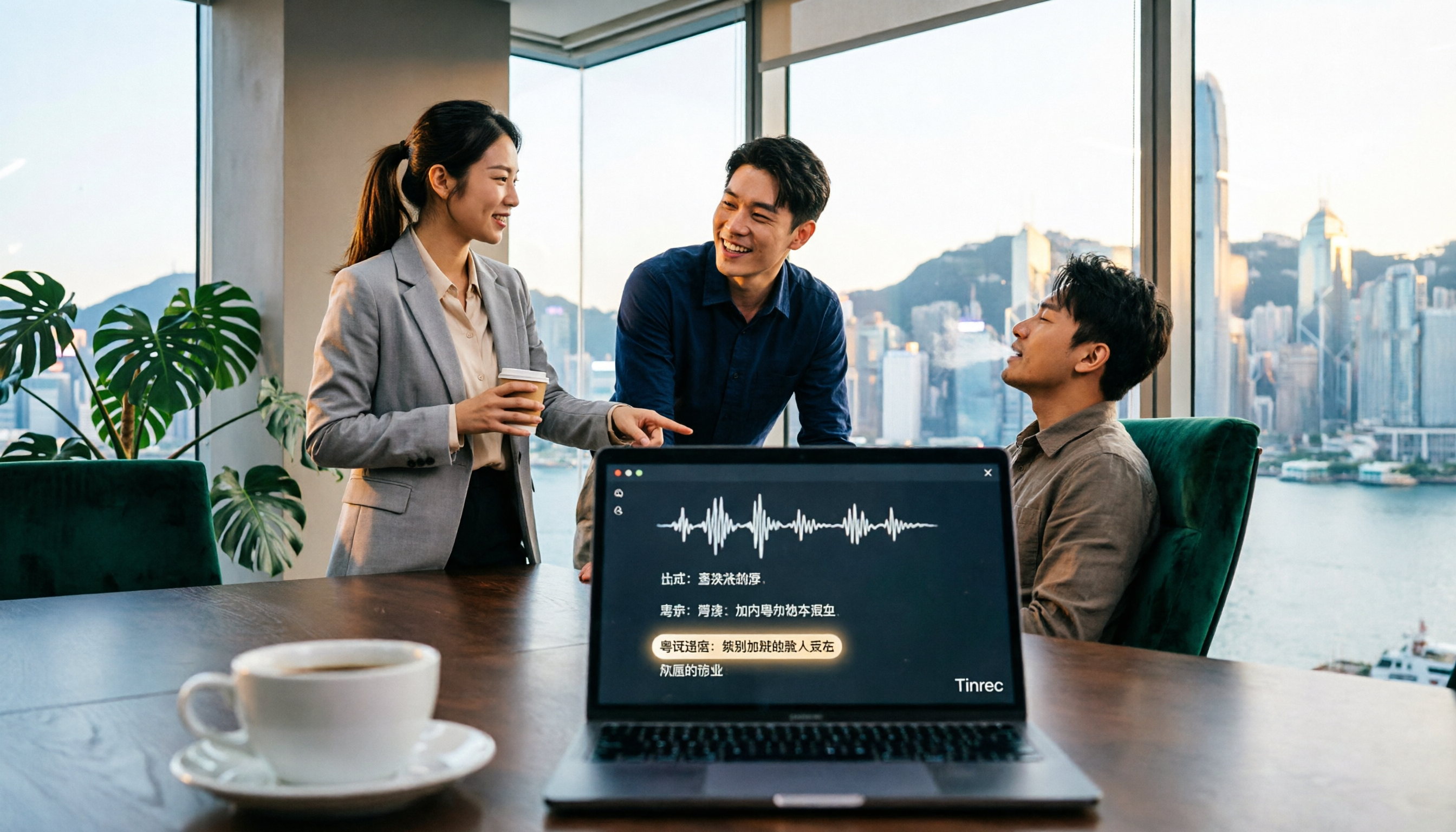
2026 Tested: 4 Best Recording-to-Text Tools for Cantonese Meetings
We tested multiple recording-to-text tools for Hong Kong office workers, focusing on Cantonese meetings, cross-platform organization, and AI-powered key point extraction. Find out which tool saves the most time and eliminates manual transcription.

2026 Comparison of 5 Audio-to-Text Tools: Why Tinrec Is the New Choice for Notta Users?
From PTT's most-discussed audio-to-text tools, we pick 5 mainstream options and analyze Tinrec's advantages in Chinese meetings, bot-free recording, and team collaboration, with buying advice.

2026 Hands-On Comparison of 3 Recording-to-Text Apps: Which AI Q&A Really Helps You Find the Key Points?
Struggling to choose a recording-to-text app? This article tests three tools—Tinrec, Otter.ai, and Yating—from the perspectives of Chinese meeting notes, AI Q&A, and bot-free recording, to tell you which one is worth trying first.

Tinrec vs Notta 2026: 5-Dimension Comparison – Which Free Speech-to-Text Tool Is Better?
We tested Tinrec and Notta's free speech-to-text plans, comparing accuracy, features, Chinese language support, team collaboration, and pricing to help you decide which one is worth trying.

Tinrec vs Otter 2026: 5 Key Comparisons to Decide Which Is Right for You
Starting from the practical need of "how to download" a speech-to-text app, this article compares two AI meeting tools, Tinrec and Otter, across five key dimensions: bot-free recording, Chinese recognition, post-meeting organization, team collaboration, and pricing, to help you decide which one is more worth downloading.

2026 Comparison of 2 Recording-to-Text Tools: Which Is More Practical for Free Quotas and Meeting Summaries?
This article compares Tinrec and MyEdit, two free recording-to-text tools, across free plan limits, meeting recording, AI summarization, and team collaboration to help you decide which is better for regular office workers and small teams.