

Turn recordings into transcripts and summaries in minutes
Upload audio or video for multilingual transcription, AI notes, and action items
2026 Head-to-Head: Tinrec vs Notta for Audio-to-Text - Which Handles Chinese Content Better?
Tinrec vs Notta|Quick Overview
When choosing an audio-to-text tool, many people hesitate between Tinrec and Notta: one emphasizes "turning audio and video into actionable knowledge," while the other is a popular choice for multilingual transcription and meeting notes. We tested both tools with meeting recordings, course audio, and online videos to highlight key differences.
| Comparison Item | Tinrec | Notta |
|---|---|---|
| Best For | Meetings, learning, interviews, public videos, historical data organization | Meeting notes, document transcription, subtitles, translation |
| Input Sources | Live recording, file upload, online video links, computer meeting recording | Live recording, file upload, some meeting integrations |
| Post-Processing | Summary, chapters, tasks, AI Q&A, mind map, Agent-generated reports | Summary, translation, highlights |
| Chinese Content Optimization | Optimized for Chinese, Traditional Chinese, and Chinese-English mixed content | Multilingual support, but no special Chinese optimization |
| Export Options | Word, PDF, TXT, SRT; can sync to Notion, Google Docs, etc. | Text, subtitles, some third-party integrations |
| Pricing | Free trial, weekly card, Pro monthly/yearly | Free, Pro, Business |
Next, we dive deeper into five key dimensions to see which tool suits your daily workflow.
Dimension 1|Input Source Richness: Which Handles More Types of Audio/Video?
Notta's main input sources are live recording and uploading audio/video files, sufficient for meetings and interviews. However, if you need to process public videos from YouTube, Bilibili, Xiaohongshu, or TikTok, Notta cannot handle them directly—you must first download the video and then upload the file, adding an extra step.
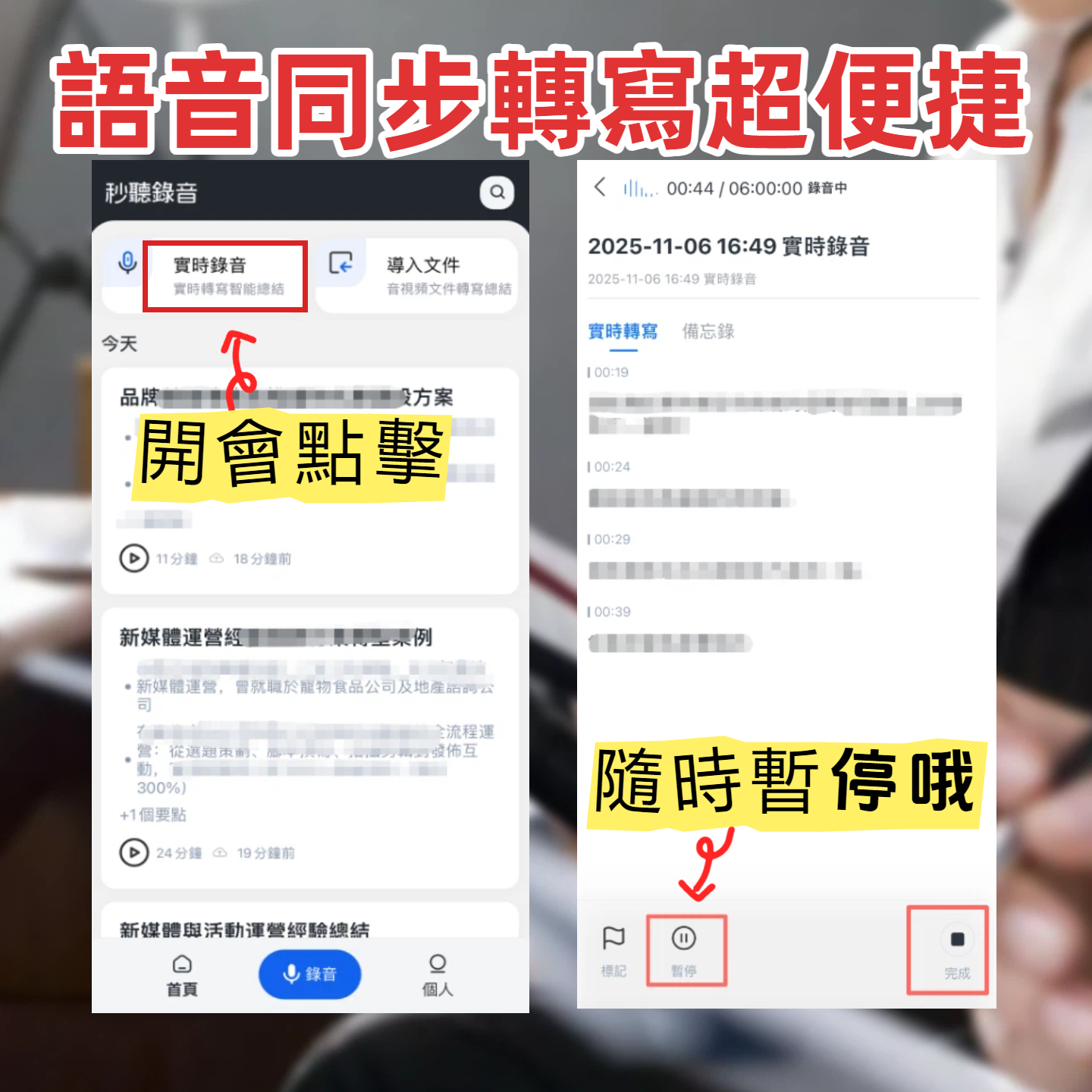
Tinrec supports live recording and file upload as well, but also features built-in "online video link parsing." Simply paste a public video URL, and it automatically generates transcripts, summaries, and even chapters. For content creators, researchers, or anyone who frequently collects online material, this saves considerable time. We tested both with the same Chinese YouTube tutorial: Tinrec produced full results in minutes after pasting the link, while Notta required downloading and manual uploading, a much longer process.
→ This dimension: Tinrec clearly wins for diverse content sources, especially for users who need to process online video material.
Dimension 2|Post-Transcription Processing: More Than Just a Transcript?
Getting a transcript is just the beginning. Notta automatically generates a summary and supports translation, which helps quickly grasp key points. But its organization capabilities stop there; if you need more structured output, you must do it manually.
Tinrec is designed more like an "audio/video workstation." In addition to summaries, it automatically splits chapters, extracts tasks, and even creates mind maps. Most useful is the "Agent post-processing": you specify the desired deliverable type (e.g., meeting minutes, report, table), and AI produces an editable document based on the recording. For those with multiple meetings, courses, or interviews each week, this automates the organization process.
→ This dimension: Tinrec's post-processing depth is far superior, turning recordings directly into usable materials rather than just text files.
Stop organizing recordings by hand
Upload audio or video and automatically get a transcript, summary, and action items
Dimension 3|AI Chat Query: Can You Ask Questions About Recordings?
After accumulating dozens or hundreds of hours of recordings, the biggest pain point is often "I know I recorded it, but I can't find that part." Notta's search is keyword-based, highlighting occurrences, but it cannot answer questions like "What was decided in the last meeting?" or "What three key points did the teacher emphasize in this lecture?"
Tinrec features built-in AI chat query, allowing you to ask natural language questions about historical recordings. For example, we asked "What was the final budget figure agreed upon in this project meeting?" The AI not only provided the answer but also cited the original source with timestamps for verification. This feature transforms recordings from "static files" into "conversational knowledge bases," especially valuable for work that requires referencing old data.
→ This dimension: Tinrec's AI query capability makes historical recordings truly reusable, while Notta remains primarily passive search—a clear generational gap.
Dimension 4|Multi-Format Export & Integration: Seamless Workflow?
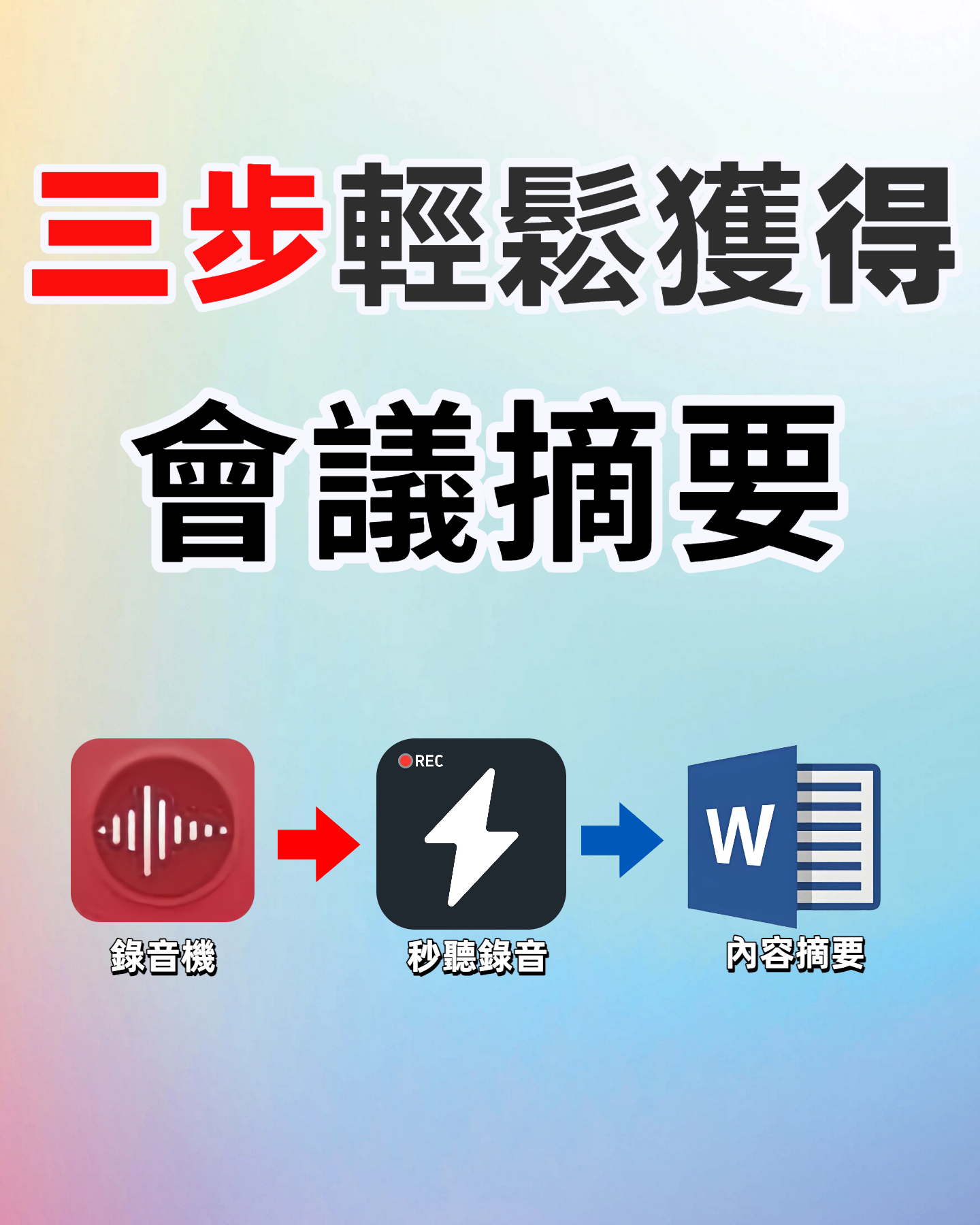
Organized data must eventually enter your existing workflow. Notta supports exporting plain text and subtitle files, and integrates with some third-party services, adequate for simple archiving. But if you use Notion for projects, Google Docs for reports, or OneNote for study notes, you'll need to manually transfer.
Tinrec offers comprehensive export and sync options: Word, PDF, TXT, SRT subtitle formats, and one-click sync to Notion, Google Docs, OneNote, Dropbox, and other common tools. This puts meeting minutes, course highlights, and interview excerpts directly into your preferred note-taking app without copy-pasting.
→ This dimension: Tinrec's export flexibility and third-party integrations better match real workflows, effectively reducing repetitive tasks.
Dimension 5|Chinese Content Experience: Which Understands Chinese Users Better?
Notta's strength is multilingual support, including Chinese recognition. However, in our tests with Chinese-English mixed meetings, courses with specialized terminology, or accented interviews, its performance was merely "usable" rather than "accurate." Its interface and default summaries are primarily English-oriented, requiring some adaptation for Chinese users.
Tinrec is clearly designed with Chinese and Traditional Chinese users in mind. Its interface, summaries, and task extraction are optimized for the Chinese context, and it handles Chinese-English mixed content more reliably. We tested the same Chinese meeting recording (with some English terms) and found Tinrec's transcript had lower error rates, and summaries were closer to the original meaning, saving post-editing time. For users in Taiwan and Hong Kong who frequently process Chinese content, this is a crucial difference.
→ This dimension: Tinrec wins overall in Chinese content processing, better suited for users whose primary work language is Chinese.
What Are Their Unique Strengths?
Tinrec's Unique Strengths
- One-stop multi-source organization: Live recording, files, and online videos all supported—no need to switch tools for different audio/video content.
- End-to-end from transcription to deliverables: Not just transcripts, but summaries, chapters, tasks, AI Q&A, and Agent report generation, truly turning recordings into work output.
- Deep Chinese optimization: Interface, summaries, and mind maps designed for Chinese context; more stable Chinese-English mixed recognition, ideal for Chinese users.
- Recordings as knowledge base: AI chat query lets you repeatedly ask questions and reference historical recordings without scouring for snippets.
Notta's Unique Strengths
- Mature team plan: Business plan offers unlimited transcription hours and solid collaboration features, suitable for teams with high transcription needs.
- Multilingual translation: Direct translation after transcription into multiple languages, convenient for cross-border communication.
Objectively, Notta has its market in pure transcription and team plans, but for individuals or small teams needing to "turn audio/video into complete work results," Tinrec offers higher completeness.
Summary: Which Should You Choose?
• If you need to organize online videos, courses, or interviews, and want summaries, tasks, and reports directly after transcription → Tinrec (adds online link parsing and Agent post-processing over Notta)
• If you have accumulated many meeting recordings and want to ask questions like searching a database to find key points → Tinrec (AI chat query is a unique advantage)
• If you use Notion, Google Docs, etc. for data organization and want seamless sync → Tinrec (one-click export to multiple note-taking tools)
• If you mainly handle English meetings and need large amounts of unlimited transcription hours and team collaboration → Notta's Business plan may be worth considering
• If you only occasionally record a simple meeting and need just a transcript without further processing → Notta's free version is sufficient; but if you want comprehensive organization from start to finish, Tinrec is worth a try
In a nutshell: For most Chinese users who need "more than just text transcription, but content turned into usable data," Tinrec is the more complete choice. Start with the free version and test its capabilities with your own recordings.
Turn every recording into actionable outcomes
Get 60 free transcription minutes when you sign in. No credit card required.
Related Reading
You might also like

2026 Comparison of 5 Audio-to-Text Tools: From Free to Paid, Which One Is Worth Trying?
Looking for a reliable audio-to-text tool in 2026? I tested 5 popular apps including Tinrec, Notta, Otter, etc., comparing features, pricing, Chinese support, and multi-scenario usability. A must-read for small team leaders and solopreneurs.
2026 AI Recording Tools Comparison: Tinrec vs PLAUD Note – Which Is Better for Organizing Your Audio Files?
Thinking of buying a recording-to-text tool but torn between software and hardware? This article deeply compares Tinrec and PLAUD Note across five dimensions: input sources, AI organization, pricing, platform support, and use-case coverage, helping you find the best solution on any budget.

2026 Comparison of 3 Speech-to-Text Tools: Which Is Best for Chinese Users?
A hands-on comparison of three leading speech-to-text tools, evaluating language support, cross-platform compatibility, AI features, and pricing to determine the best fit for Chinese users.

2026 Side-by-Side Comparison of 2 Speech-to-Text Tools: Good Tape vs. Tinrec - Which Free Plan Is the Best Deal?
Looking for a Good Tape coupon? Check out Tinrec's free plan instead. This article tests two speech-to-text tools head-to-head, comparing free credits, Chinese recognition, multi-source support, and AI Q&A to help small teams decide.

2026 Recording Tool Comparison: Which One Saves You More Money?
Looking for a recording tool but don't want to spend big money? This article compares Tinrec and PLAUD NOTE across price, input sources, post-processing, cross-platform support, and Chinese language support to help you find the best value.

2026 AI Recording Tool Shootout: Plaud Note vs Tinrec – Which Saves You More Money and Delivers More?
Compare Plaud Note and Tinrec recording transcription solutions, and find out why you can efficiently organize audio and video content without extra hardware – saving money and covering more scenarios.

2026 Comparison of 5 Speech-to-Text Apps: Which One Is Best for Hong Kong Office Workers?
Struggling with meeting minutes? We tested Otter, Notta, Fireflies, TurboScribe, and Tinrec. Compare Cantonese recognition, AI features, cross-platform support, and pricing to find the most time-saving tool for Hong Kong professionals.

2026 Comparison of 4 Speech-to-Text Tools: From Free to Paid at a Glance
Tested 4 leading speech-to-text tools, analyzing how Tinrec stands out with multi-source support, AI organization, and cross-platform advantages, making it the best choice for meetings, learning, and content creation.
2026 Head-to-Head Comparison of 2 Speech-to-Text Tools: Why Good Tape Users Are Switching to Tinrec?
Looking for a Good Tape alternative? This article compares Good Tape and Tinrec across cross-platform support, AI features, multi-source coverage, and organization capabilities to help you decide which one is better for meetings, classes, and content creation.