
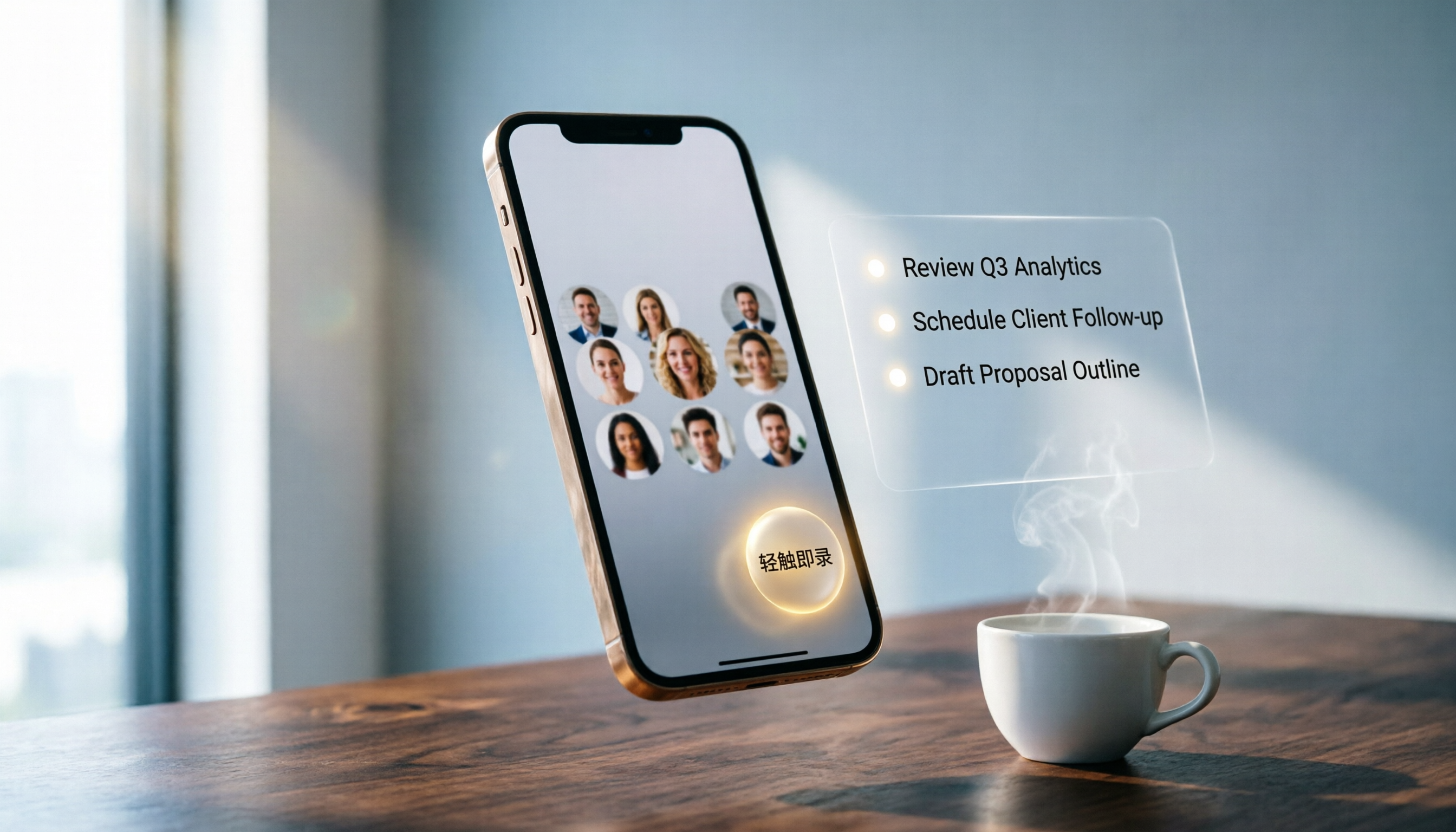
Turn recordings into transcripts and summaries in minutes
Upload audio or video for multilingual transcription, AI notes, and action items
I attend about 15 meetings a week, over half of which are on Google Meet. Previously, there were two things I dreaded most when joining meetings on my phone: first, being on the subway when a client suddenly drops a meeting link, and my iPhone doesn't have the Google Meet app installed, so just logging in takes 5 minutes; second, after the meeting ends, I have to rack my brain and type up to-do items, which means the meeting is just the start of overtime.
If you often run into the same awkward situations, the three methods below — all tested by my team over the past two months — let you record Google Meet meetings on your iPhone without any app. The last one saved us the most time and has now become our department's standard setup.
Why Do People Look for Alternatives to Google Meet's Built-in Recording?
Google Meet has a built-in meeting recording feature, but it's only available for paid Workspace accounts. The recorded video is saved to Google Drive, and if you want text meeting minutes, you need a separate transcription tool. What's worse, the mobile web version of Google Meet doesn't support recording at all — so if you, like me, often join meetings on the go, the built-in feature is useless.
Lately, many managers around me have been looking for alternatives because they need a tool that can "record across devices, transcribe on the fly, and even summarize key points." If you have the same pain point, Tinrec is the closest option I've tried so far.
Tinrec vs. Google Meet Built-in Recording: Key Experience Differences
Cross-Platform & No Installation Required
Google Meet recording is tied to the desktop app; on mobile, you can only watch replays in the app. Tinrec lets you start recording directly through Safari on iPhone while transcribing meeting content in real time — no app download needed. When you need to join a meeting on the fly, just tap the link to start recording and taking notes, without even logging in.
Flexibility in Audio Sources
Built-in recording only records the current meeting and outputs a video file. Tinrec can not only record Google Meet but also handle local audio files, online video links, or even audio shared from other apps for transcription. Our department now uses it for one-on-one meetings because afterward we can ask the AI "What were the performance goals discussed with Xiao Chen last time?" without manually digging through notes.
AI Summaries & Task Extraction
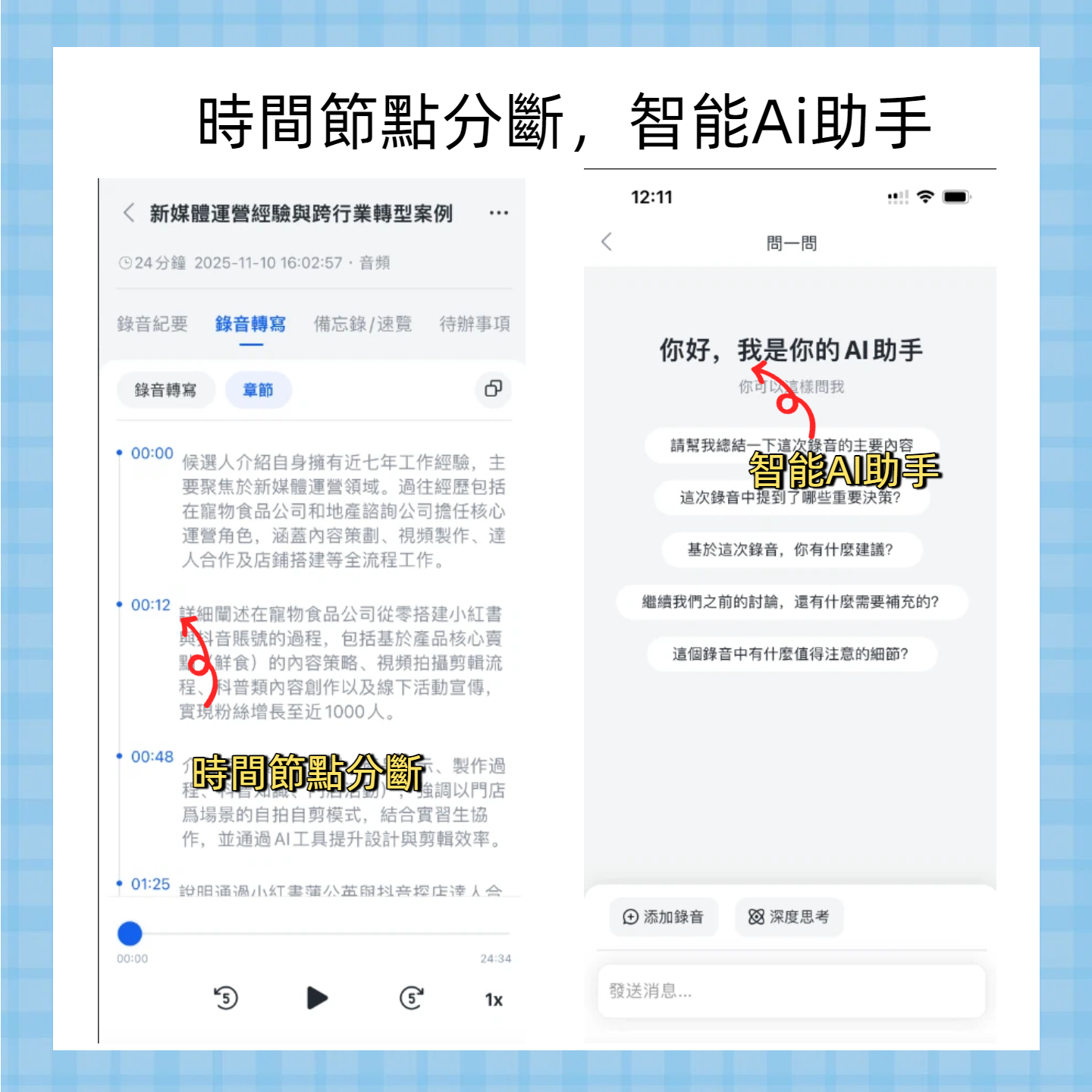
This is the key reason I abandoned built-in recording. After a Google Meet recording, you have to watch and extract key points yourself. Tinrec, after a one-hour meeting, automatically generates a summary, chapters, and a to-do list in under 30 seconds. Now when I report progress to my boss, I directly paste the meeting conclusions generated by Tinrec, saving at least half an hour of paperwork.
Accuracy with Chinese Content
Our team includes colleagues from Hong Kong, so meetings often mix Chinese and English. Built-in recording followed by transcription has a high error rate for Chinese. Tinrec delivers stable Chinese transcription quality under clear audio, and its AI summary can understand mixed-language content — a big plus for cross-border teams.
Stop organizing recordings by hand
Upload audio or video and automatically get a transcript, summary, and action items
Cost & Free Tier
Google Meet recording requires a paid Workspace account starting at $12/month. Tinrec's free plan offers 100 minutes of transcription per month, which is plenty if you only occasionally join meetings on your phone. For managers like us who have meetings daily, the Pro plan costs less than two Starbucks drinks per month but doubles the team's post-meeting efficiency.
Tinrec Core Features at a Glance
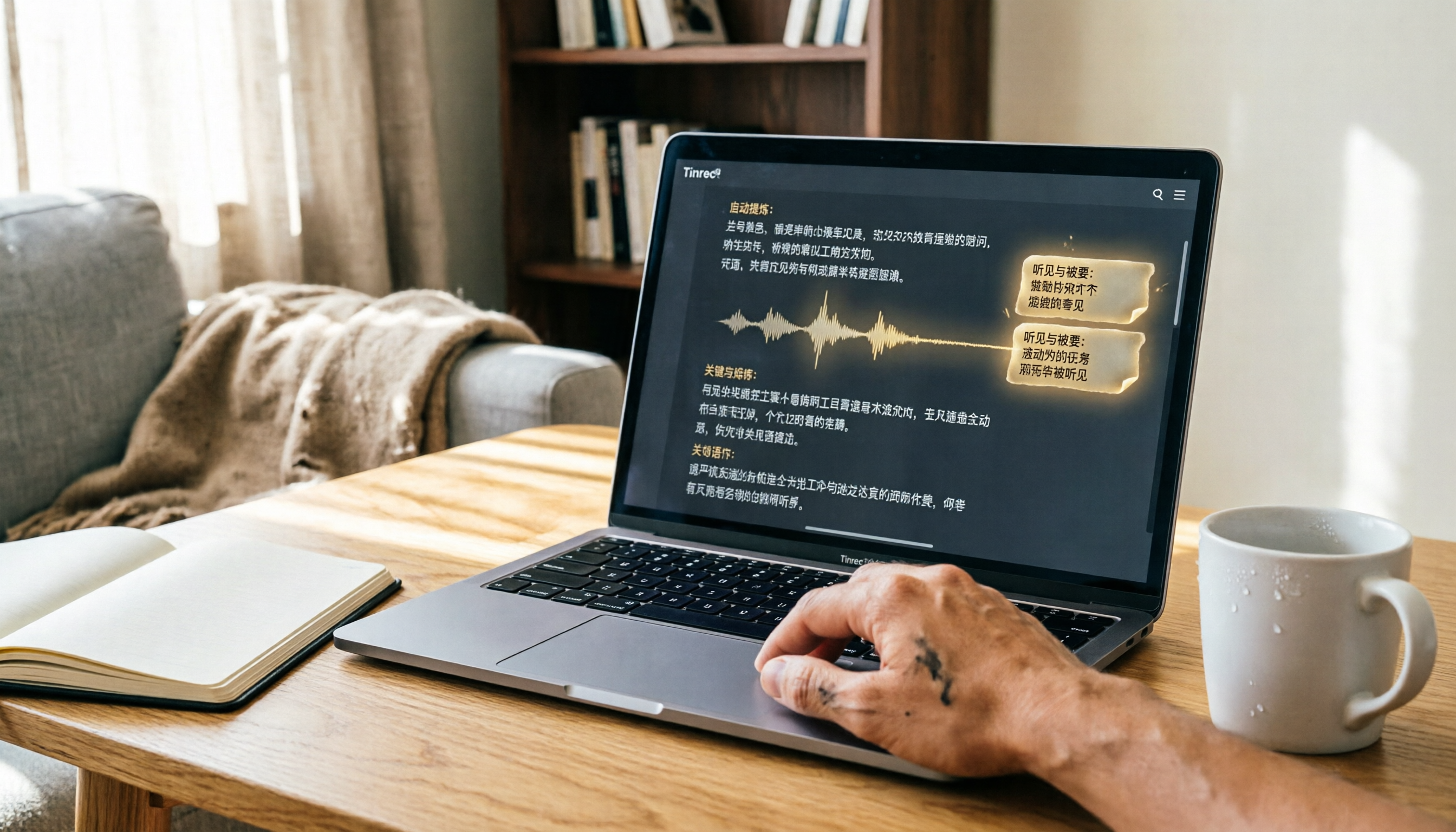
Real-time Recording & Transcription: Open the Tinrec web page, and text appears as you record with a delay of less than 1 second. During meetings, I usually leave my phone on the table, listen, and glance at the text to make sure I catch key numbers or commitments.
AI Conversation Search: This is my most-used feature. After recording a meeting, directly ask Tinrec — "What was the decision last time?" or "Who is responsible for the budget?" — and it answers based on the recording content, much faster than sifting through verbatim transcripts.
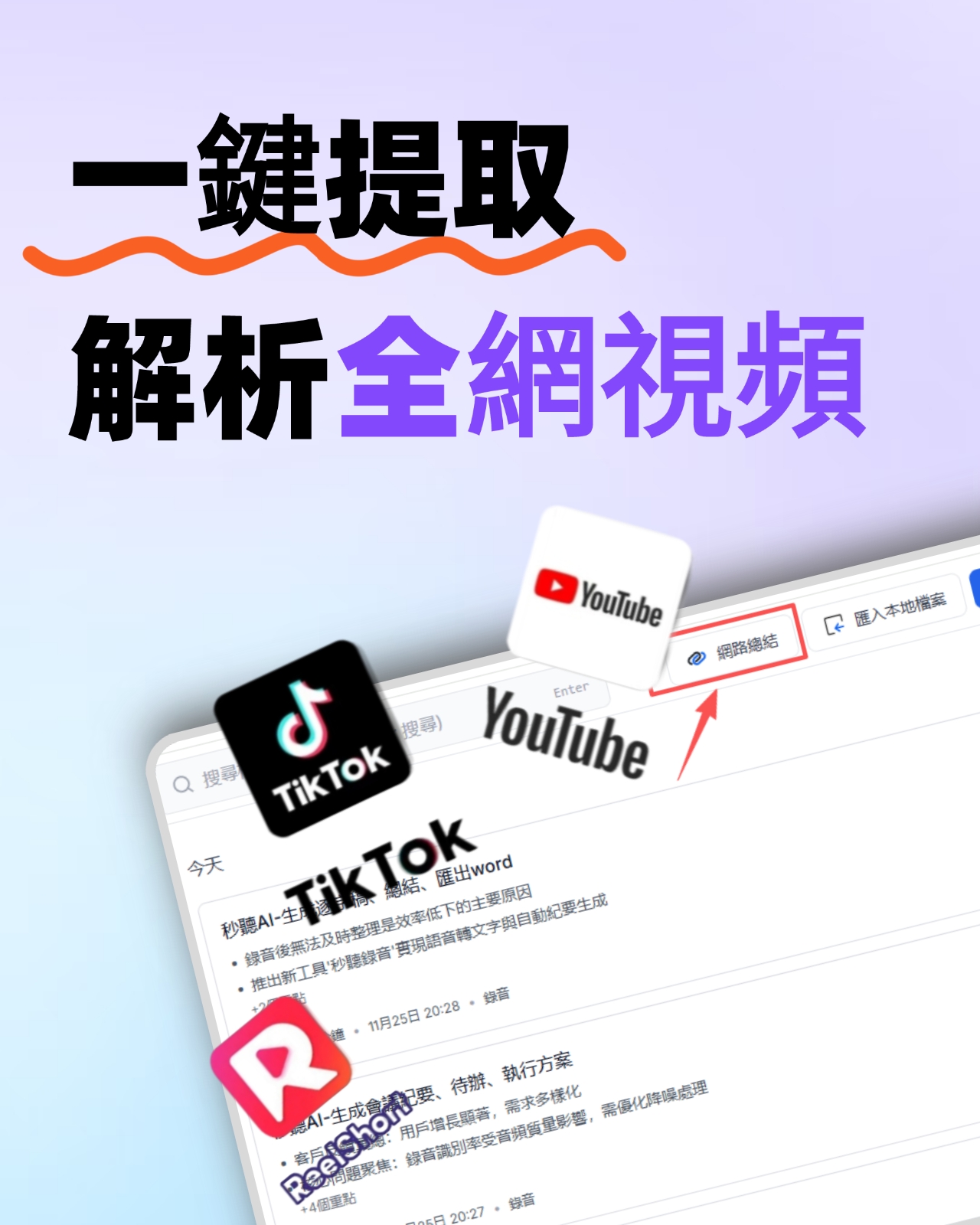
Online Video Transcription: Our marketing team uses it to summarize competitor launch videos. Paste a YouTube link, and in a few minutes, the transcript, summary, and chapter breakdown are ready — perfect as internal training material.
Multi-Platform Sync & Export: Whether you record on your phone or computer, all recordings sync to the same account. Meeting minutes can be exported as PDF, Word, or sent directly to Notion, seamlessly integrating with your existing workflow.
Real-World Use Cases
Joining Google Meet on the Go
Last Friday, I received an urgent meeting link while on the high-speed train. I opened Tinrec's web version in Safari and simultaneously opened the Google Meet meeting URL. After the meeting, the summary and to-do list were already in Tinrec, and I immediately forwarded them to the team — all done on my iPhone without even turning on my laptop.
One-on-One Meeting Notes
For weekly one-on-ones with team members, I used to type notes while talking, which often meant sacrificing eye contact. Now I put my phone on the desk and record with Tinrec, focus on the conversation, review key points from the AI summary 5 minutes after the meeting, and use the task feature to track follow-ups — covering both professionalism and detailed records.
Cross-Department Project Meetings
The worst part of cross-department meetings is unclear conclusions and ambiguous responsibilities. Recording the entire meeting with Tinrec automatically extracts to-do items, listing each task and responsible person (if you mark speakers). Before the next meeting, you can review the list and see who's falling behind at a glance.
Online Courses & Lectures
Sometimes I attend online management courses. Previously, I'd just listen and forget everything later. Now I record them with Tinrec, and the AI generates chapters and key notes. When reviewing, I jump directly to the parts I want to hear again — learning efficiency has improved dramatically.
Key Considerations When Choosing a Transcription Tool
Cross-Device Support: Unless you only ever attend meetings at your desk, mobile web support or iOS shortcut integration is essential. Tinrec's web experience on iPhone is smooth, which is one reason I eliminated other tools.
AI Summary Quality: Many tools only convert audio to text but don't help you understand the content. Tinrec's summary and conversation search features can condense long meetings into actionable plans — a real time-saver for mid-level managers.
Free Tier Design: Try before you commit. Tinrec offers 100 minutes per month for free, enough to test on one real meeting. If you have more than 3 meetings per week, upgrade to the Pro plan — the per-minute cost is very low.
Privacy & Security: Check how recording files and transcripts are stored. Tinrec encrypts data transmission, and you can delete recordings at any time — important when handling sensitive meetings.
Conclusion: Is Tinrec Worth a Try?
If you, like me, often face last-minute Google Meet meetings on your iPhone and don't want to spend extra time organizing notes afterward, Tinrec is one of the few tools that simultaneously offers "no-app recording, real-time transcription, AI summarization, and Q&A." Especially for on-the-go meetings, it completely solves the pain point of mobile Google Meet not supporting recording.
Honestly, if the meeting involves formal remote whiteboard discussions with many participants and background noise, the verbatim transcript may still have some errors, but the AI summary's accuracy in capturing key points is over 90% in my experience. I suggest you try the free plan and test it on your next Google Meet meeting — your own experience is more real than any review.
Turn every recording into actionable outcomes
Get 60 free transcription minutes when you sign in. No credit card required.
Related Reading
You might also like
2026 Mac Recording-to-Text App Comparison: Which AI Meeting Notes Really Save Time?
Apple's built-in Voice Memos makes recording easy, but it can't transcribe audio. This article hands-on tests Tinrec, Otter.ai, and Notta, covering accuracy, AI summaries, cross-platform support, and free plans, to help you find the best fit for meetings, classes, and interview notes.
iPhone Voice-to-Text Test in 2026: Built-in Dictation vs. Apps Compared, This AI Q&A App Made Note-Taking 3x Faster
A college senior tested iPhone voice-to-text methods, from built-in dictation to third-party apps. See how Tinrec’s free plan saved 3 hours of note-taking time per week, plus a pitfall guide and student-focused buying advice.

iPhone 17 Screen Recording Free Options in 2026: 5 Tools Reviewed
How to screen record on iPhone 17? This article covers built-in screen recording, Dual Capture tips, and recommends tools like Tinrec to transcribe audio from recordings, from free to paid options.

Best AI Meeting Recorder Tools in 2026: Automatic Summaries, Action Items, and Multi-Source Organization
Looking for an AI meeting note tool but not sure where to start? This article reviews 6 top solutions—from automatic summaries and action items to cross-platform collaboration—and shows you how to save up to 80% of your meeting note time with the right tool.
2026 Free AI Meeting Notes Tools Buyer's Guide: 2 Hands-On Reviews and Practical Tips
Don't want to spend money on hardware but still want to use AI to organize meeting recordings? I actually compared Tinrec, a pure software tool that provides instant recording, with Plaud Note, which integrates hardware. From free plans, recording sources, post-processing capabilities, to cross-platform flexibility, this guide helps you find the best free AI meeting notes solution for your needs.
iPhone Call Recording in 2026: Do You Still Need Tinrec? 3 Reasons to Convince You
iPhone's built-in call recording in iOS 18.1 is handy, but organizing recordings still takes time. This article shows how Tinrec turns call recordings into searchable notes, summaries, and to-dos to boost learning and work efficiency.

2026 Hands-On Comparison of 4 Computer Recording Tools: More Than Just Recording, They Help You Organize Key Points
Struggling to organize your computer recordings after capturing them? This test of 4 computer recording tools — from free options to AI-powered organization — helps you find the most suitable solution.

2026 Complete Guide to AI Meeting Minutes: Auto-Generated Transcripts and Action Items to Double Meeting Efficiency
Still wasting time on meeting minutes? This article shows how to use AI recording tools to auto-generate transcripts, summaries, and action items, with hands-on comparisons of Tinrec, Notta, Otter.ai and more to help you pick the best solution.

2026 iPhone Screen Recording with Audio: 2 Methods Compared — Is the Built-in Feature Good Enough?
Can iPhone screen recording capture audio? This hands-on comparison tests the built-in screen recorder against two third-party apps, showing how to record system sounds and ambient sound, and explains the common causes of no-audio issues and how to fix them.