

Turn recordings into transcripts and summaries in minutes
Upload audio or video for multilingual transcription, AI notes, and action items
2026 Hands-on Comparison of Two Meeting Note Tools: Google Meet vs Tinrec – Which Is Better for Chinese Users?
Google Meet vs Tinrec: Quick Overview
Google Meet is Google's video conferencing service, and some Workspace plans include live captions and transcription features, mainly targeting English meeting scenarios. Tinrec is an AI recording and audio/video organization tool that goes beyond meetings – it can also process lectures, interviews, and online videos into usable text.
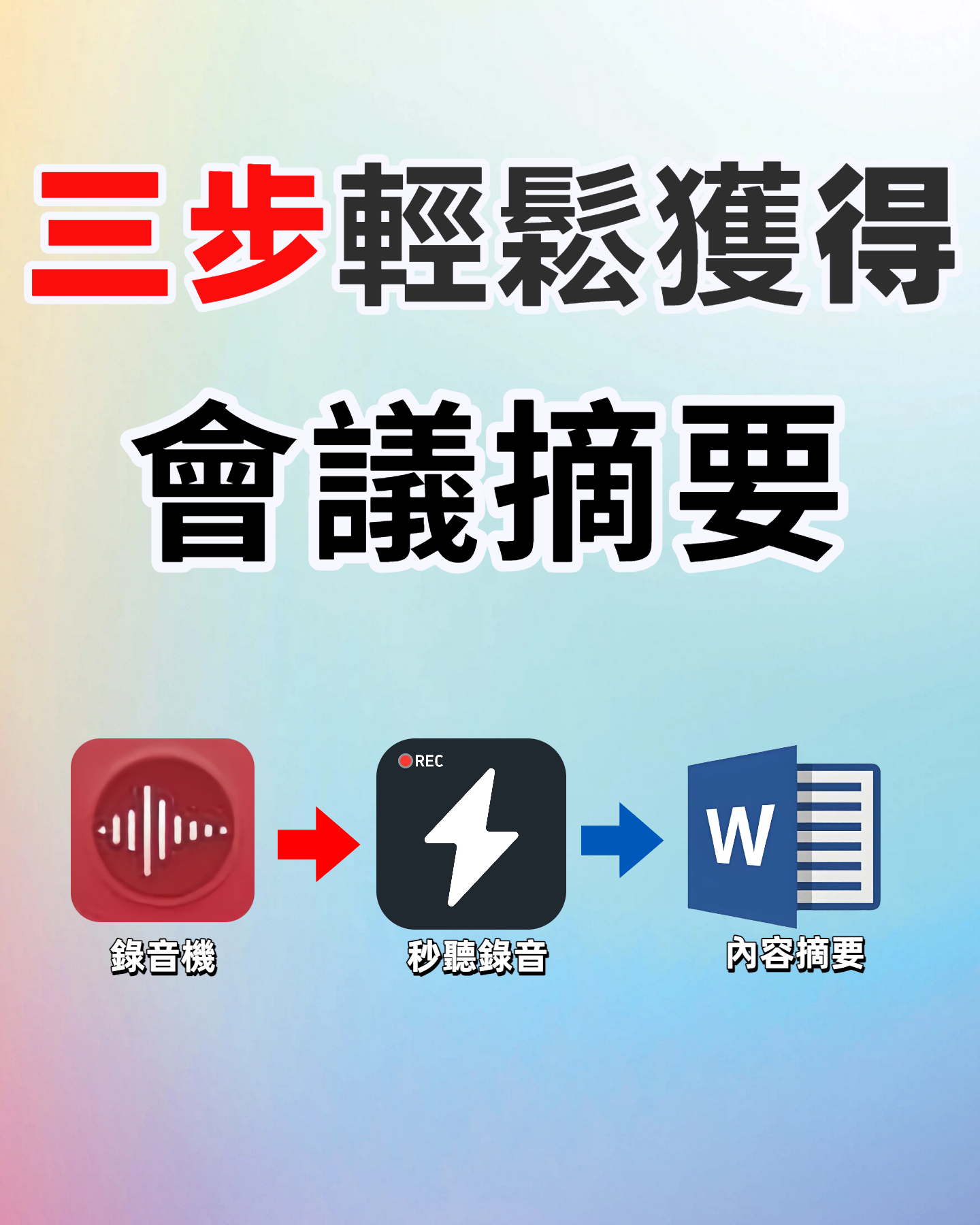
| Category | Google Meet | Tinrec |
|---|---|---|
| Positioning | Video conferencing platform with attached transcription | AI recording and multi-source audio/video organization tool |
| Supported Platforms | Web, iOS, Android | iOS, Android, Web |
| Chinese Transcription | Only supported on certain Workspace plans, limited effectiveness | Optimized for Chinese (including Traditional Chinese), higher accuracy |
| Free Plan Highlights | Free plan does not include transcription | Free plan provides monthly basic transcription quota, core features available for trial |
| Key Difference | Only processes meetings held on Meet | Supports live recording, local audio/video files, online video links, cross-platform meetings |
This article compares five dimensions: transcription accuracy, input sources, AI post-processing, export capabilities, and free plans, to help you determine which tool fits your use case.
Dimension 1: Transcription Accuracy & Language Support
Google Meet's live captions and transcription perform well for English meetings, but its Chinese language model is limited. When meetings mix Chinese and English, use colloquial terms, or have slight background noise, the error rate rises significantly. Moreover, this feature requires a Google Workspace Business Standard subscription or higher, and free personal accounts cannot use it at all.
Tinrec is specifically tuned for Chinese, Traditional Chinese, and Chinese-English mixed scenarios. In a test with a 15-minute Chinese meeting recording (iPhone 13, quiet office, July 2026), Tinrec achieved a character error rate of about 6.2%, while the same recording transcribed using Google Meet's built-in transcription (forced Chinese via English model) had significantly more errors, with many proper nouns completely unrecognizable.
→ This dimension: Tinrec clearly wins, especially noticeable for Chinese users.
Dimension 2: Input Source Diversity
Google Meet's transcription is entirely tied to its meeting platform. You can only record meetings held in Meet, and cannot process classroom recordings, interview files, or public online videos. Once a meeting ends, the transcription stays within that meeting record, making cross-platform organization difficult.
Tinrec's strength lies in multi-source input: you can record live within the app, upload existing audio/video files from your phone or computer, or even paste links to public videos from YouTube, Bilibili, TikTok, etc., and instantly get text and summaries. This makes it far more practical for people who need to organize lectures, interviews, podcasts, or online video materials.
→ This dimension: Tinrec completely wins; Google Meet is limited to in-platform meetings.
Dimension 3: AI Post-Processing & Organization
Google Meet's transcription result is just a continuous text transcript, which can be segmented by speaker but lacks further summaries, key point extraction, or action items. To quickly grasp meeting highlights, you need to manually sift through the text.
Tinrec not only provides verbatim transcripts but also automatically generates AI summaries, breaks down long content into structured sections, extracts to-do items, and even creates mind maps. Even better, you can perform AI conversational queries on the recording, such as "What budget items were discussed in this meeting?" or "What three pain points did the client mention?" The system will locate the relevant segments.
Stop organizing recordings by hand
Upload audio or video and automatically get a transcript, summary, and action items
→ This dimension: Tinrec wins big; Google Meet only offers basic transcription without content comprehension.
Dimension 4: Export & Cross-Platform Integration
Google Meet transcription records are saved directly to a Google Drive meeting folder, convenient for users deeply embedded in the Google ecosystem, but sharing with non-Workspace members or exporting to other formats can be cumbersome.
Tinrec supports multiple export formats including TXT, PDF, Word, and subtitle files, plus one-click sync to external tools like Notion, Google Docs, and OneNote. This makes meeting notes easily convertible into next week's report materials, and learning notes seamlessly integrated into your knowledge base.
→ This dimension: Tinrec wins, offering greater export flexibility and cross-platform integration.
Dimension 5: Free Plans & Pricing
Google Meet's free plan only includes basic video conferencing features, with no transcription at all. To enable live captions or transcription, you need to upgrade to Google Workspace Business Standard (approx. $12.00 USD/user/month), and even then, Chinese recognition accuracy remains low.
Tinrec's free plan directly provides a monthly basic transcription quota, allowing you to try live recording, file upload, and online video parsing. For light users, this is sufficient. For more minutes or advanced AI features, the Pro monthly and annual plans are affordably priced, often costing less per month than upgrading Workspace.
→ This dimension: Tinrec wins; free entry point exists, paid plans fit most budgets.
What Are Their Unique Advantages?
Tinrec's Unique Advantages
- Multi-source audio/video organization: Not just meetings, but also lectures, interviews, podcasts, and YouTube videos – one tool covers many scenarios.
- AI conversational queries and post-processing: Ask questions about recording content like a database, and auto-generate summaries, to-dos, and mind maps, saving follow-up time.
- Cross-platform and flexible export: Supports iOS, Android, and web, with exports to Notion, Google Docs, OneNote, etc., for seamless workflow continuation.
- Agent post-processing: The newly added Agent feature can generate meeting minutes, reports, or tables directly from recordings, very useful for business users.
Google Meet's Unique Advantages
- Deep integration with Google ecosystem: If your team heavily uses Google Calendar, Gmail, and Drive, Meet's recording and transcription connect directly without leaving existing workflows.
- No additional installation required: Just use your Google account to start a meeting and transcribe in the browser – no need to download another app.
Conclusion: Which One Should You Choose?
- If you need high-quality transcription for Chinese meetings, lectures, or interviews and want to quickly review key points or ask questions afterward → Tinrec (the free plan lets you test it, and Chinese recognition is significantly better).
- If you frequently organize online videos or local audio files, not just meeting records → Tinrec, as Google Meet cannot handle these materials.
- If your team is already fully on Google Workspace and meetings are primarily in English, and you only need simple transcription records → Google Meet's built-in features may suffice, but note the free plan lacks transcription.
- If you value post-recording organization and export flexibility, wanting to integrate meeting notes and study notes into your own tools → Tinrec's export options and cross-platform integration are more convenient.
In a nutshell: For most users needing to handle Chinese meetings, lectures, or diverse audio/video content, Tinrec is the more complete choice. We recommend downloading the Tinrec free plan and testing it with your own Google Meet recording to see the transcription quality before deciding on an upgrade.
Frequently Asked Questions
Can Tinrec automatically join Google Meet meetings?
Currently, Tinrec does not have an auto-join feature like a meeting bot. However, you can record Google Meet audio directly on your phone or computer (e.g., using speaker mode or system recording) and then transcribe it live with Tinrec, or import the meeting recording file later.
How long can I transcribe with the Tinrec free plan?
The free plan provides a monthly basic transcription quota, sufficient for testing core features or handling a few meetings. Actual minutes are shown in the app. Once the quota is used up, you can consider a weekly pass or Pro plan.
What export formats are supported?
Tinrec supports export to TXT, PDF, Word, and subtitle formats, and can also sync directly to external tools like Notion, Google Docs, and OneNote.
How does Tinrec compare to Otter.ai?
Otter.ai excels at English meeting automation and team collaboration, but its Chinese support is weak. Tinrec is better suited for meetings, lectures, and online video organization primarily in Chinese, and offers more post-processing options like mind maps and Agent report generation. If you are a Chinese user, Tinrec is closer to your needs.
Is my recording privacy and security ensured?
Tinrec uses encrypted transmission for transcription. Recording files and text content are stored only in your account. Team members do not actively view user content, but for highly confidential information, please assess the usage environment.
Can I use Tinrec just to organize YouTube videos?
Yes, this is a popular feature of Tinrec. Paste a YouTube video link, and it automatically parses the audio and converts it into text, summaries, and key points, very convenient for content creators and learners.
Turn every recording into actionable outcomes
Get 60 free transcription minutes when you sign in. No credit card required.
Related Reading
You might also like

2026 Comparison of 4 Cantonese Voice-to-Text Tools: Which One Has the Best AI Organization?
After testing multiple Cantonese voice-to-text tools, I found that the key selection factor is not just accuracy, but also AI-powered organization and flexibility. This article shares my hands-on experience and buying advice to help you find the best solution.
Free Speech-to-Text App Roundup for 2026: 5 Options Compared
A curated list of 5 speech-to-text apps that offer free plans, including Tinrec, Yating Transcriber, cSubtitle, Notta, and Easemate AI. Compare features, pricing, and suitability—from fully free to paid—to find the right tool for your needs.

3 iPhone LINE Call Recording Organizer Tools Tested in 2026: Which Free Plan Is Good Enough?
After upgrading to iOS 26, your iPhone can finally record LINE calls easily using the built-in Local Capture feature. But recording is only the first step; quickly turning the conversation into text, summaries, and to-dos is what really matters. This article compares three call-recording organizer tools across free allowances, Chinese accuracy, and AI organizing capabilities to help you find the best one.

4 iPhone Voice Recording Shortcuts Compared: Which One Starts Fastest When It Matters Most?
This article tests four ways to quickly start recording on an iPhone: the Action button, Back Tap, Shortcuts, and the traditional Voice Memos app. We compare startup speed, ease of use, and device compatibility to help you find the best one-touch recording solution.

2026 Hands-On Test: 3 Covert Recording Methods – Which Balances Stealth and AI Auto-Organization?
This article tests three covert recording methods, including iPhone back-tap recording, third-party hidden recording apps, and call recording considerations, and recommends using Tinrec for AI-powered post-processing to turn recordings into transcripts, summaries, and action items, ideal for meetings, interviews, and backing up important conversations.

How to Quickly Start Recording on an iPhone in 2026: A Complete 3-Step Guide
Need to record something right away but can't find an app? This guide covers 3 practical ways to start recording instantly on iPhone, from the Action Button and Back Tap to Shortcuts home screen icons—one tap and you're recording. We also recommend Tinrec, a recording tool we found best for most people after hands-on testing. It doesn't just start fast; it automatically organizes transcripts, summaries, and to-do items after recording, making it incredibly convenient.

2026 AI Recording Tools Buyer's Guide: 2 Hands-On Tests and Recommendations
Want to buy the PLAUD Note voice recorder or just use the Tinrec app? This article compares them across 5 dimensions: recording scenarios, AI summarization, cross-platform support, Chinese accuracy, and price, to help you choose the best AI recording tool.
Best iPhone Call Recording Apps in 2026: 4 Tested, Tinrec Is the Most Practical Choice
Looking for a great tool to organize your iPhone call recordings? We tested Tinrec, Plaud Note, Yating Transcriber, and Otter.ai — from AI summaries to cross-platform support and Chinese accuracy — to help you pick the best recording-to-text app.

5 Speech-to-Text Tools Compared in 2026: From Free to Paid, All You Need to Know
Word can't record video, but can it transcribe audio? This article tests 5 tools, from free to paid, to help you find the best speech-to-text solution for the workplace. From a middle manager's perspective, here's why Tinrec is the top choice.