
Turn recordings into transcripts and summaries in minutes
Upload audio or video for multilingual transcription, AI notes, and action items
Have you ever been in a Google Meet meeting when your camera suddenly goes black? Or your laptop camera driver fails and no matter what you try, it won't work? For office workers and students, a camera malfunction is not only awkward but also risks missing important discussions or lecture content. The truth is, even if video is lost, as long as audio is still going, you can fully capture the meeting—the key is choosing the right recording tool. This article compares three common approaches: Google Meet's built-in transcription, a general phone recording app, and Tinrec audio recording, and explains why the latter is not just a backup but a more convenient way to organize than traditional recording.
Google Meet Built-in Transcription vs. General Recording App vs. Tinrec|Quick Overview
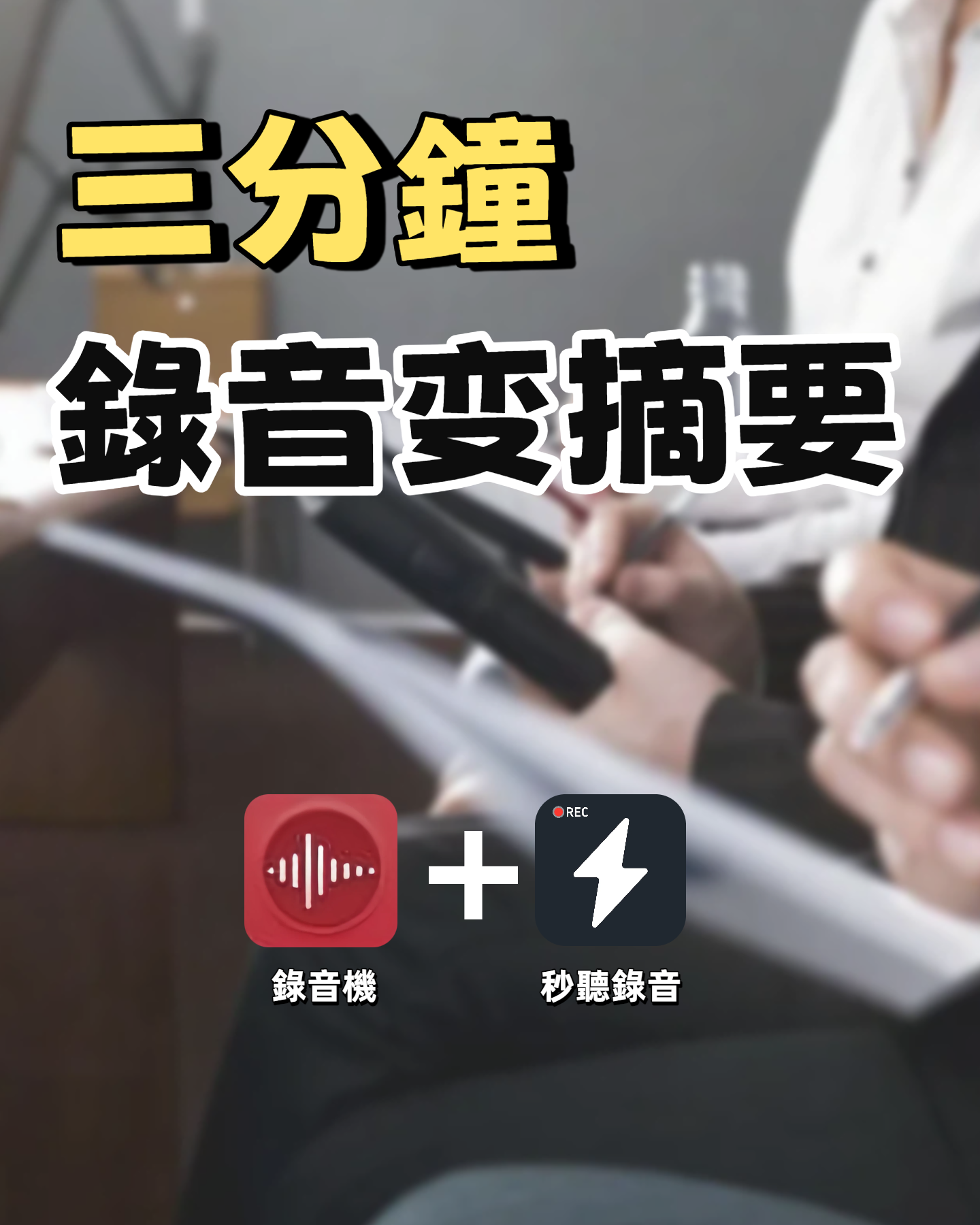
Here's a quick summary of each option:
- Google Meet built-in transcription: Turn on captions during the meeting and save a text record afterward. However, it's only available on the desktop version, and you only get a plain text transcript.
- General recording app: Use your phone or computer's built-in recorder to capture the entire audio, then manually listen and transcribe later.
- Tinrec: An AI-powered audio/video organization tool designed for meetings, classes, and interviews. It supports real-time recording-to-text, importing audio files, analyzing online videos, and automatically generating summaries and to-do lists. You can even ask questions about the recording.
Here's a comparison of price, platform, and core features:
| Option | Price | Supported Platforms | Core Capabilities |
|---|---|---|---|
| Google Meet built-in transcription | Free (requires Google Workspace subscription) | Desktop web app | Live captions, post-meeting text record |
| General recording app | Free | Phone, computer | Pure audio recording |
| Tinrec | Free version with monthly basic credits; Pro monthly/yearly subscription | iOS, Android, web | Recording-to-text, AI summaries, to-do extraction, multi-format export, AI chat queries |
This article compares them across four dimensions: recording convenience, post-meeting organization, export and integration, and pricing.
Dimension 1|Recording and Transcription Convenience
Google Meet's built-in transcription doesn't require any additional installation, but you have to manually enable it during the meeting, and only the host can activate it. If you get disconnected or forget to turn it on, there's no way to go back. General recording apps are readily available, but after recording, you're left with an audio file that you have to listen to and type up yourself—a one-hour meeting might take three hours to transcribe.
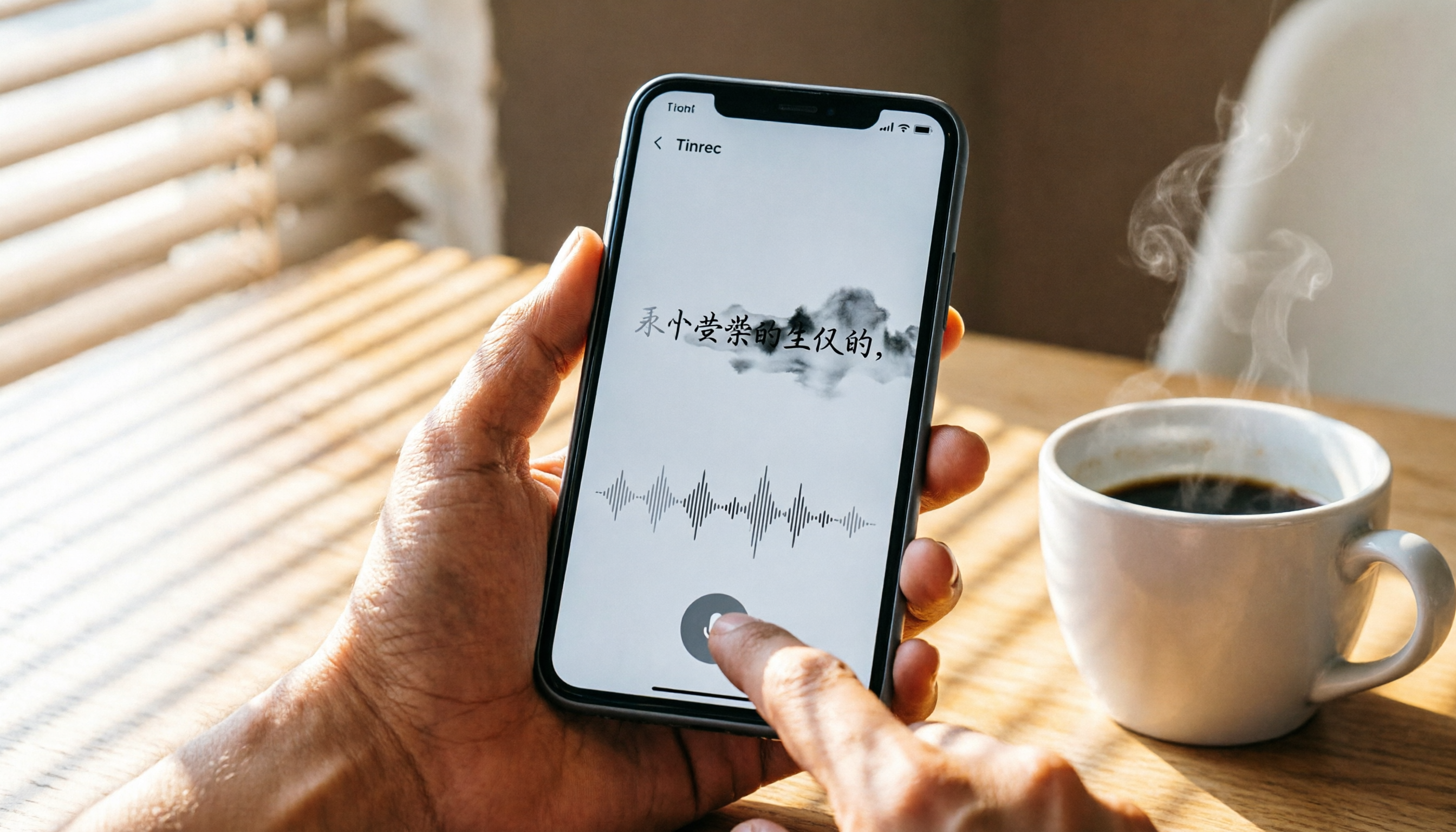
Tinrec's advantage is "record and transcribe simultaneously." With the app or web version, one tap starts recording, and the audio is transcribed in real-time on screen. Even during a Google Meet, you can open Tinrec on your phone or computer and place it nearby to capture the audio. When finished, the transcript is ready—no need for manual playback.
→ Winner: Tinrec.
Stop organizing recordings by hand
Upload audio or video and automatically get a transcript, summary, and action items
Dimension 2|Post-Meeting Organization and AI Features
Google Meet's text record is just a plain script with no sections or highlights—reading a long meeting is tedious. General recording apps have no organizational features at all.
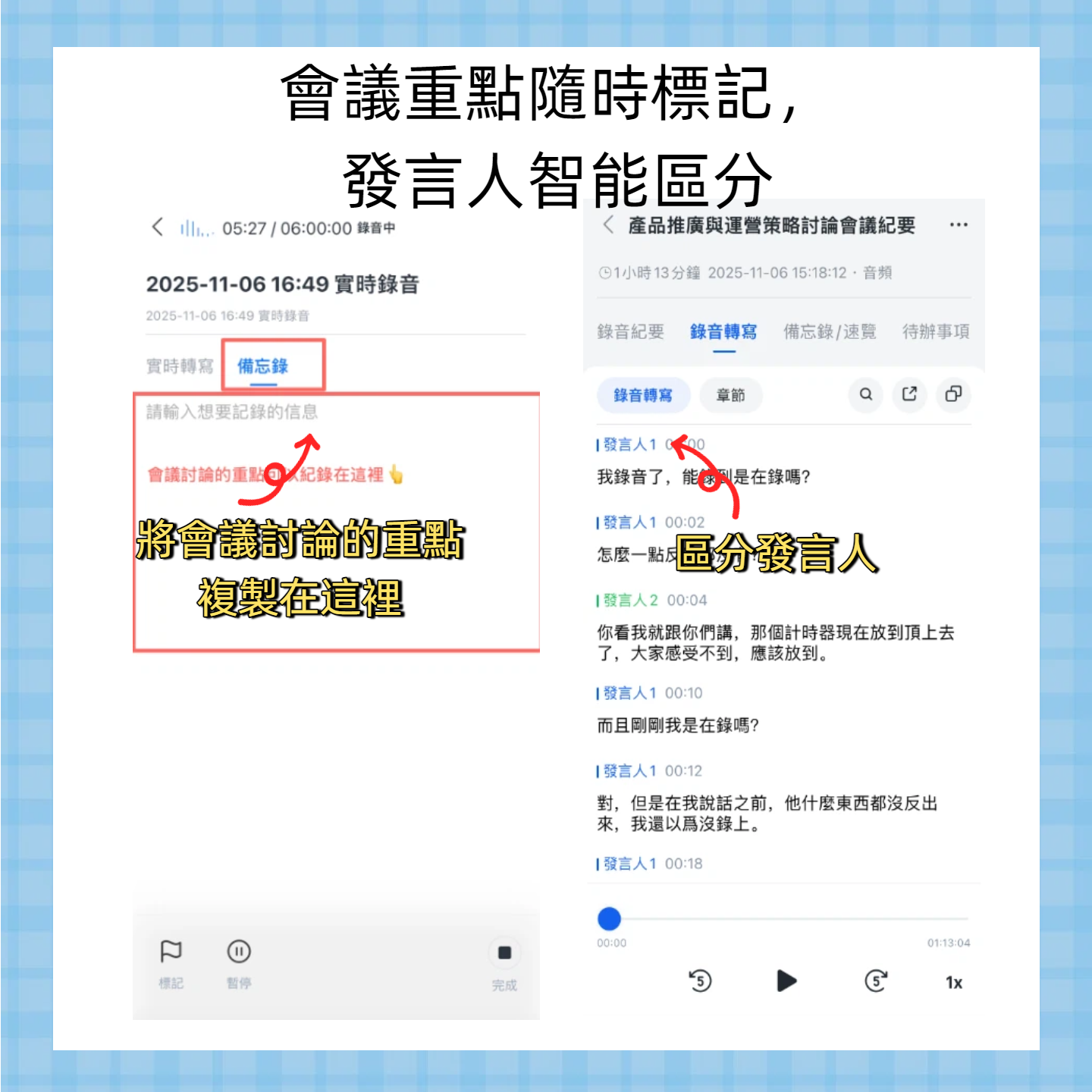
Tinrec comes with full AI organization capabilities. After recording, the system automatically generates a summary, chapter breaks, and to-do items, and can extract key points with one tap. Even better, you can ask AI questions about the recording—for example, "What were the three key points mentioned in the meeting?" or "What changes did the client request?" Tinrec automatically finds answers from the transcript, saving you hours of searching.
→ Winner: Tinrec.
Dimension 3|Export and Integration
Google Meet's text record can be copied and pasted into a document, but formatting often gets messy. General recording apps can only share the audio file, leaving you to do the rest.
Tinrec supports multiple export formats, including TXT, Word, PDF, and SRT subtitles. It can also sync directly to popular tools like Notion, Google Docs, OneNote, and Dropbox. This means you can seamlessly integrate meeting notes into your existing workflow, making it easy to create reports or share with your team.
→ Winner: Tinrec offers the most complete features.
Dimension 4|Pricing and Free Plan
Google Meet's built-in transcription is free but extremely basic. General recording apps are also free, but they offer no organizational features, costing you significant time later.
Tinrec's free version provides a monthly basic transcription allowance, enough for occasional meetings or classes. If you have weekly meetings, the Pro monthly or yearly subscription (costing less than a cup of coffee per month) gives you full organization and export features. Compared to manual transcription, the paid plan is actually more cost-effective.
→ Winner: Tinrec's free version is sufficient for light use; the paid plan offers great value.
What Are the Unique Advantages of Each?
Tinrec's unique advantages:
- Not just for meetings—it can also organize lectures, interviews, YouTube videos, and other audio sources. All you need is your phone.
- Auto summary, to-do extraction, and AI Q&A turn recordings into a searchable knowledge base, not just files that take up space on your phone.
- Cross-platform support: works on computer, phone, and tablet, with cloud sync.
- Excellent Chinese recognition, suitable for users handling daily meetings and learning content.
Unique advantages of Google Meet built-in transcription and general recording apps:
- Google Meet's built-in transcription is the most direct—no need to leave the meeting window.
- General recording apps can work offline, handy in emergencies.
But neither offers the level of organization and reuse that Tinrec provides.
Summary: Which One Should You Choose?
- If you just need a quick fix when your camera fails and don't plan to organize the meeting afterward → Google Meet's built-in transcription or a phone recording app will suffice, but be prepared for inefficient manual processing later.
- If you want to turn meeting content into usable notes, to-do lists, or even search for it later → Tinrec is the more complete choice.
- If you also need to organize lectures, interviews, or online videos → Tinrec's cross-scenario integration is the strongest.
Bottom line: Instead of letting a camera glitch disrupt your flow, use it as an opportunity to upgrade your meeting documentation. We recommend downloading Tinrec's free version and using your phone to record your next meeting to see if the transcription and organization meet your needs.
Frequently Asked Questions
Q1: Does Tinrec automatically join a Google Meet meeting? Currently, Tinrec is not a meeting bot and cannot automatically join. However, you can play the meeting audio on your phone or computer next to the device running Tinrec, and it will capture the audio in real-time.
Q2: How much transcription time does the free version offer? The free version provides a basic monthly amount of transcription minutes, enough for several meetings. See the official website for details.
Q3: Where are recordings stored? Are they secure? All recordings and transcriptions are encrypted and stored in the cloud, accessible only to you, and can be deleted at any time.
Q4: What languages are supported? Multiple languages including Chinese, English, and Japanese. Traditional Chinese recognition is excellent.
Q5: Does the screen need to stay on during recording? No, Tinrec can record in the background, even with the screen locked.
Turn every recording into actionable outcomes
Get 60 free transcription minutes when you sign in. No credit card required.
Related Reading
You might also like

2026 AI Speech-to-Text Tools: Speaker Diarization & AI Q&A in One
Struggling to turn meeting recordings and lecture audio into text? This article highlights 5 AI speech-to-text tools, from speaker diarization to AI-powered Q&A, to help you find the best solution and boost your productivity.

Tinrec vs Otter.ai 2026 Hands-On Comparison: Which Is the Ultimate Tool for Online Meeting Notes?
Essential for remote work! This article dives deep into the differences between Tinrec and Otter.ai in Chinese recognition, audio/video sources, AI Q&A, and free plans, helping you choose the best tool for organizing meetings and course content.

How to Choose an Interview Recording Review Tool in 2026? 5 Steps Comparing Tinrec vs PLAUD Note
Recording your interviews is a powerful way to grow, but choosing the right analysis tool is key. This article compares software solution Tinrec with hardware solution PLAUD Note across five dimensions: recording method, Chinese speech recognition, AI analysis, output formats, and long-term cost, to help you find the best AI tool for interview review.

2026 Google AI Studio Alternatives for Audio-to-Text: Chinese Transcription + AI Summaries
Wondering if Google AI Studio supports Chinese? This article answers that and tests 3 audio-to-text tools, recommending Tinrec as the best solution for Traditional Chinese users.
How to Solve Cross-Device Sync for Voice-to-Text in 2026? 5 Steps to Pick the Right Tool
Tired of meeting recordings stuck on your phone and unable to organize them on your computer? This article tests multiple tools and teaches you 5 steps to choose the best cross-device voice-to-text solution, with detailed reviews of Tinrec (Miao Ting Lu Yin) and other popular options.

Tinrec vs Otter.ai 2026: 5-Dimension Comparison for Secure Chinese Speech-to-Text
With more speech-to-text tools available, is yours truly secure? This article compares Tinrec and Otter.ai across five dimensions: accuracy, AI features, input sources, cross-platform support, and data security. It also explains why AES encryption is key to protecting your recordings, helping you choose the most reliable tool.

2026 Hands-On Comparison of 2 Recording-to-Text Tools: Tinrec App vs Plaud Note – Which Should You Choose?
A hands-on comparison of Tinrec App and Plaud Note recording hardware, covering input sources, Cantonese accuracy, post-processing features, and pricing to help you pick the best recording-to-text tool for Hong Kong users.
How to Use iPhone Voice Typing in 2026: A 5-Step Complete Guide
From iPhone's built-in dictation to professional recording-to-text tools, this guide provides hands-on comparisons to help you find the best voice input solution for your needs.

Tinrec vs Otter.ai in 2026: AI Speech Recognition Custom Vocabulary Showdown – Who Understands Your Industry Terms Better?
How do AI speech recognition tools handle industry-specific terminology? This article compares five tools—Tinrec, Otter.ai, Notta, Google Cloud Speech-to-Text, and Vocol.ai—based on the practical need for custom vocabularies, helping you find the best speech-to-text solution for professional scenarios.