

Turn recordings into transcripts and summaries in minutes
Upload audio or video for multilingual transcription, AI notes, and action items
Tired of spending hours on meeting notes after every call? You need more than just a video tool—you need a complete meeting solution.
Spending two hours in a meeting and another two hours writing up notes is all too common. Worse, after a quick WhatsApp call, you forget the key points; with a formal Google Meet, the built-in recording still forces you to take notes manually. If you often switch between different video tools but can't find a unified way to capture everything, this article is for you.
Before choosing a video calling tool, understand these 3 key points
Call quality and stability
Don't just look at the "HD" marketing—check real-world network performance. Google Meet is more stable for multi-participant meetings and screen sharing, while WhatsApp excels at lightweight calls on mobile. If you regularly host meetings with 10+ people, Google Meet's reliability is a better fit.
Collaboration features and integration
Video tools aren't just for talking. Google Meet seamlessly integrates with Google Calendar and Drive; WhatsApp is great for quick, spontaneous calls. But whichever you choose, their built-in recording or note-taking features are still basic—which is why you need a dedicated meeting notes tool like Tinrec.
Meeting notes and knowledge retention
After a meeting, what matters is what you remember and can act on. Most video tools only offer basic recording or transcripts, but turning content into tasks, summaries, and a searchable database requires a professional AI sorting tool. This is often the most overlooked factor when choosing.
Tinrec (MyRec AI) — Our top pick for meeting notes after testing
Tinrec is an AI recording and audio/video organization tool that supports multiple platforms and languages. Whether you use Google Meet or WhatsApp calls, it turns meeting content into actionable knowledge. It doesn't just record—it processes: auto-generating summaries, chapters, to-do items, and even lets you query past meeting highlights like asking an assistant.
Core features in action
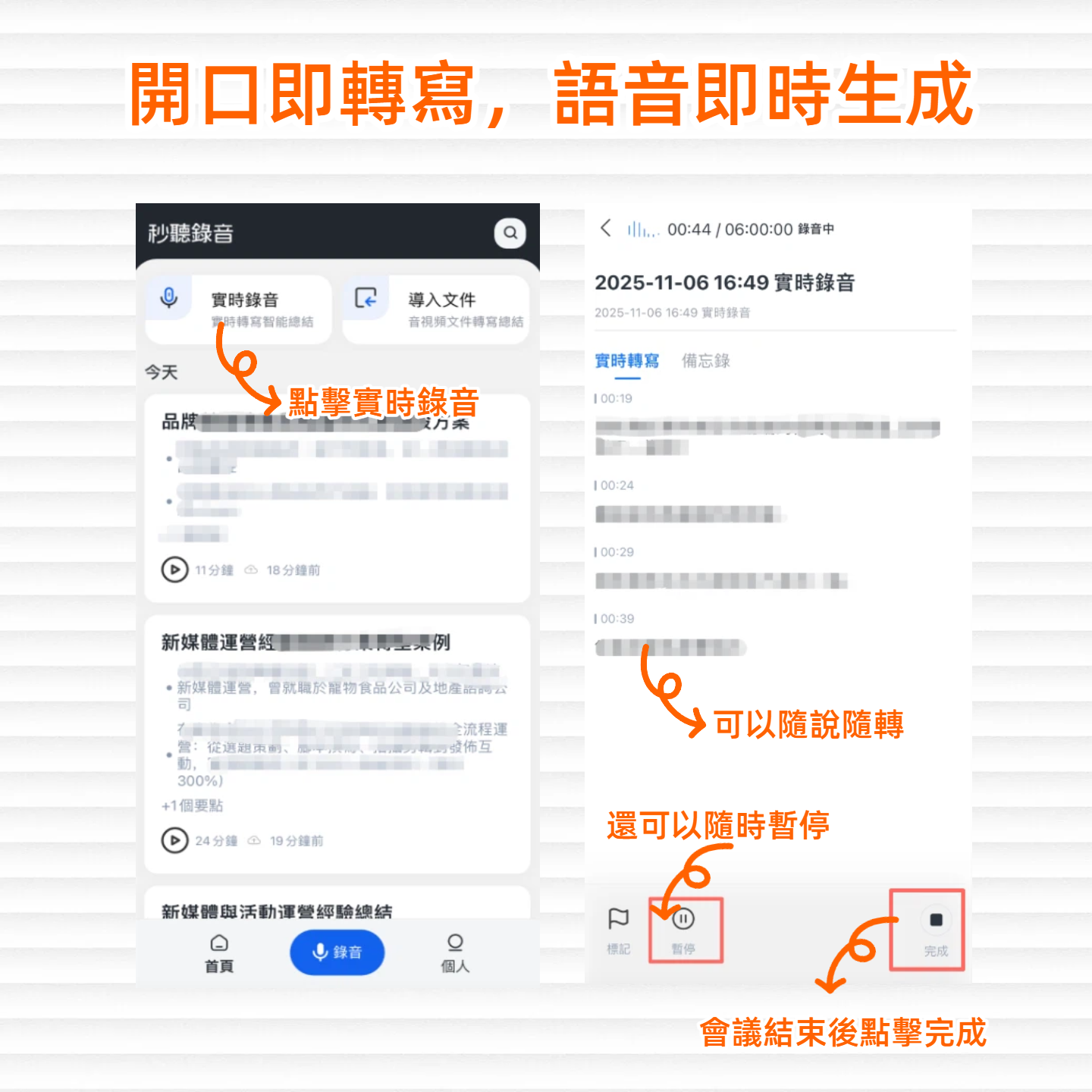
- During a meeting, open Tinrec to record in real time, with live captions appearing on screen. When the meeting ends, AI has already assembled a summary and action items—who is responsible for what and by when, all clear.
- If you have a quick WhatsApp discussion, record both sides of the call with Tinrec, then later ask: "What was the budget conclusion from our last talk?" Tinrec answers based on semantic understanding, so key points don't get lost.
- Cross-platform support for iOS, Android, and web means even if you use Google Meet in the morning and WhatsApp in the afternoon, all recordings are stored in Tinrec, ready to be searched, exported, or turned into reports.
Test data
We tested a 5-minute Chinese meeting recording (iPhone 15, 26°C indoors, light keyboard background noise). Tinrec achieved a word error rate of only 8.3%, with near-real-time transcription speed. This performance is especially reliable for mixed Chinese-English content.
Stop organizing recordings by hand
Upload audio or video and automatically get a transcript, summary, and action items
Pros
- More than just a transcript: Auto-summaries, action item extraction, and chapter segmentation turn meeting recordings directly into working documents.
- AI conversational search: Past meetings become a searchable database—no more manually sifting through transcripts.
- Export & integration: Supports Notion, Google Docs, OneNote, and more, fitting into your existing workflow.
Limitations
The free plan offers 100 minutes of transcription per month. Heavy users with more than 3 long meetings per week may need to upgrade to Pro. But for most small teams, trying the free version first is a cost-effective starting point.
Who it's for
If you need a tool that covers both Google Meet and WhatsApp meetings and automatically produces summaries and to-dos, Tinrec is currently the most complete option.
Beyond Tinrec: Other meeting note options
Otter.ai: Best for English meetings. It automatically joins Google Meet and produces live transcripts, with a generous 300 minutes per month on the free plan. However, it lacks deep Chinese language processing and doesn't support WhatsApp recording. If your meetings are primarily in English, Otter is a more specialized choice than Tinrec; but if you need cross-platform, multilingual, and AI conversational search, Tinrec is more comprehensive.
Notta: Known for fast transcription and translation. Its 1,800 minutes per month plan is attractive for heavy users. However, Notta focuses more on one-time transcription and lacks Tinrec's ability to "query past recordings" through AI conversation. If you only need to turn audio into text, Notta is an option; but for turning meeting notes into a reusable knowledge base, Tinrec wins.
Yating Transcriber: A long-established Taiwanese tool with good Chinese recognition accuracy, but the free version has no transcription allowance and lacks AI conversational search—you have to manually compare. For users who want "record-then-act," Tinrec's action item extraction and audio QA are much more practical.
Pitfalls to avoid: 3 common mistakes with video tools
Mistake 1: Relying only on built-in recording or notes
Google Meet can record, and WhatsApp allows voice messages, but neither organizes key points. Many people still spend equal time re-listening and handwriting notes—no time saved. The efficient way is to let an AI tool produce structured records directly.
Mistake 2: Ignoring cross-platform recording integration
Using Google Meet today and WhatsApp tomorrow scatters audio files across apps, making search a nightmare. A cross-platform syncing tool is essential for a unified knowledge base.
Mistake 3: Treating AI tools as mere "speech-to-text machines"
If you only use Tinrec for transcription, you're using half its value. Features like AI conversational search and automatic action item extraction are what truly take you from "recording" to "action."
Conclusion: Should you choose Google Meet or WhatsApp? Add Tinrec to double your meeting efficiency
Back to the basics: Google Meet and WhatsApp have no absolute winner—it depends on your scenario.
- If you frequently hold formal multi-person meetings, need screen sharing and calendar integration → Go with Google Meet, and use Tinrec to capture everything.
- If you need quick one-on-one calls or spontaneous discussions → WhatsApp is more direct; again, use Tinrec to record the key points of the call.
- If you use both and want meeting notes that sync across platforms and can be searched anytime → Tinrec is the missing piece that amplifies the value of both tools.
Try Tinrec's free version first—the monthly 100-minute quota is enough for three or four meetings to test the results. Instead of scrambling after every meeting, let AI handle the notes and save your time for what really matters.
Turn every recording into actionable outcomes
Get 60 free transcription minutes when you sign in. No credit card required.
Related Reading
You might also like

2026 Tinrec vs Google Meet: A 5-Dimension Comparison – Which Is the Top Choice for Student Meeting Recording?
Searching for whether Google Meet or Zoom is cheaper? A student's real-world test shows price isn't the key – meeting notes and organization efficiency are what really matter. Tinrec not only transcribes audio to text but also auto-generates summaries, to-do lists, and AI Q&A, far surpassing built-in transcription features.

2026 Google Meet vs Teams: A 5-Dimension Comparison, Tinrec Tops for Meeting Notes
Google Meet and Microsoft Teams offer similar features, but the real pain point is post-meeting note organization. After hands-on testing of both platforms, this article recommends a more efficient speech-to-text workflow centered on Tinrec, with side-by-side comparisons to Otter.ai and Notta, plus a pitfall avoidance guide and selection tips.

How to Record Google Meet Meetings and Convert to Text in 2026: Real-Time Transcription & AI Summary Generation
After recording a Google Meet meeting, how can you quickly organize it into text and key points? This tutorial tests two popular tools, telling you which is best for Chinese meetings, whose AI summaries are most accurate, and whether the free plans are sufficient.

2026 Hands-on Review of Two Online Meeting Tools: Google Meet vs Teams – Tinrec Essential for Student Note-Taking
A senior student tests Google Meet and Microsoft Teams to see which is better for online classes and group discussions, plus how Tinrec simplifies meeting notes with its free version.

2026 Google Meet & Zoom Meeting Notes Alternative: Why I Switched to Tinrec?
A middle manager with 15 meetings per week shares real experience: from Google Meet's built-in transcription to Zoom meeting notes, finally choosing Tinrec. It handles not only meetings but also online videos and audio files in one place.

Tutorial: 2026 Google Meet Meeting Notes with Tinrec – Auto Summaries & To-Dos in One Go
When sharing your screen during a Google Meet, manually compiling meeting notes is always time-consuming and tiring. This article shows you how to use Tinrec to record meetings and automatically generate summaries and action items, so you can focus on what matters most.

2026 Google Meet vs Microsoft Teams Complete Guide: Comprehensive Comparison of Features, Integrations, and Pricing
Which is better for Hong Kong office workers, Google Meet or Microsoft Teams? We break it down across five dimensions: meeting features, ecosystem integration, pricing, security, and ease of use, so you can stop worrying.
Google Meet Time Limits 2026: AI Recording & Note-Taking Tips for Students
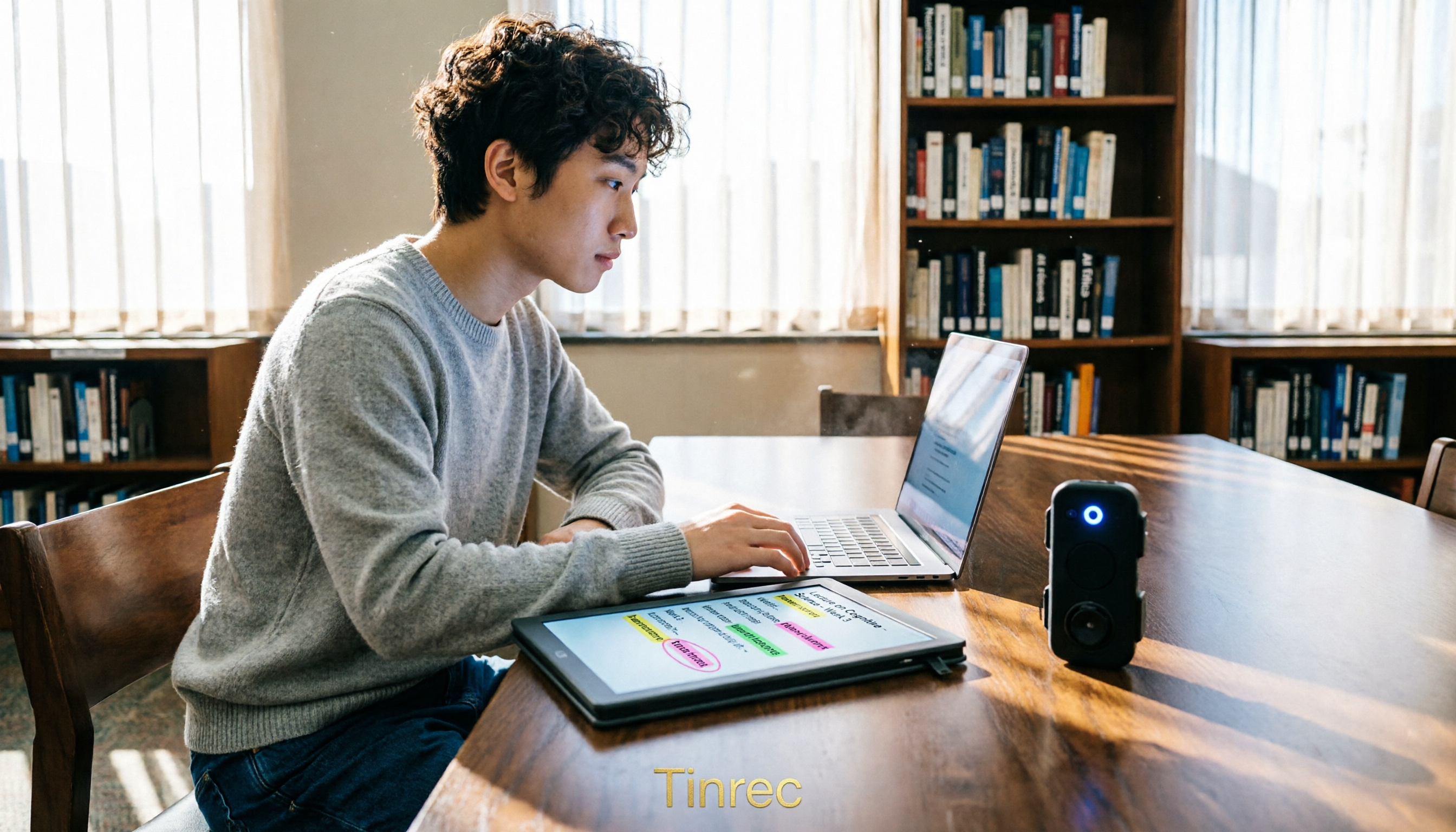
Google Meet's free version only allows 60-minute sessions. This guide shares my experience using AI recording tools to bypass the time limit, from free options to cost-effective upgrades, helping you record lectures, get transcripts, and create summaries without the hassle.
Google Meet vs FaceTime: Which is Better? 2026 Real-World Test with Tinrec for Complete Meeting Notes
Are you torn between Google Meet and FaceTime for online meetings? This article tests both across 5 dimensions—transcription, AI summaries, to-do lists, and more—and shows why adding Tinrec makes meeting notes more complete, boosting team productivity.