

Turn recordings into transcripts and summaries in minutes
Upload audio or video for multilingual transcription, AI notes, and action items
What is the Google Meet Recording Feature?
Google Meet is a video conferencing service provided by Google Workspace (formerly G Suite) with built-in meeting recording that saves the entire session as a video file. This feature is primarily available to Google Workspace users, including Business, Enterprise, and Education editions; free personal accounts are not supported. After recording, the file is automatically saved to the meeting organizer's Google Drive for playback, sharing, or downloading.
Key Features and Highlights
- Automatic Cloud Storage: After recording, the video is saved directly to Google Drive without needing to download or transfer manually.
- Permission Management: Organizers can set sharing permissions to allow team members or external people to view the recording.
- Caption Support: The recording file automatically generates speech recognition captions for easy searching of key meeting points.
- Cross-Platform Access: View recordings on Google Drive from your computer, phone, or tablet.
Pricing Plans
The Google Meet recording feature is not billed separately but is included in Google Workspace paid plans:
- Free Google Account: Recording not supported.
- Google Workspace Individual: Approximately NT$300 per month (may vary by region), recording supported.
- Business Starter / Standard / Plus: Starting at NT$200 per user per month, all plans support recording.
- Enterprise and Education: Recording enabled by default.
Please note that recording files consume your Google Drive storage. It is recommended to regularly clean up or upgrade your storage plan.
Stop organizing recordings by hand
Upload audio or video and automatically get a transcript, summary, and action items
Tutorial: 3 Steps to Find Google Meet Recording Location
Step 1: Confirm You Are the Meeting Organizer
Recording files are only saved to the meeting organizer's Google Drive. If you are an invited participant, you must ask the organizer to share the recording link. Log in to your Google account and verify that the recorded meeting was created by you.
(Caption: Log in to Google Calendar and check the organizer field in the meeting details.)
Step 2: Go to Google Drive and Find the "Meet Recordings" Folder
After recording, the system automatically creates a "Meet Recordings" folder in the organizer's Google Drive (the Chinese version may show as "Meet 錄製內容"). Go to drive.google.com, click "My Drive" in the left sidebar, and you'll see the folder; you can also use the search bar to quickly locate it by entering "Meet Recordings".
(Caption: Google Drive interface with the Meet Recordings folder in the left sidebar)
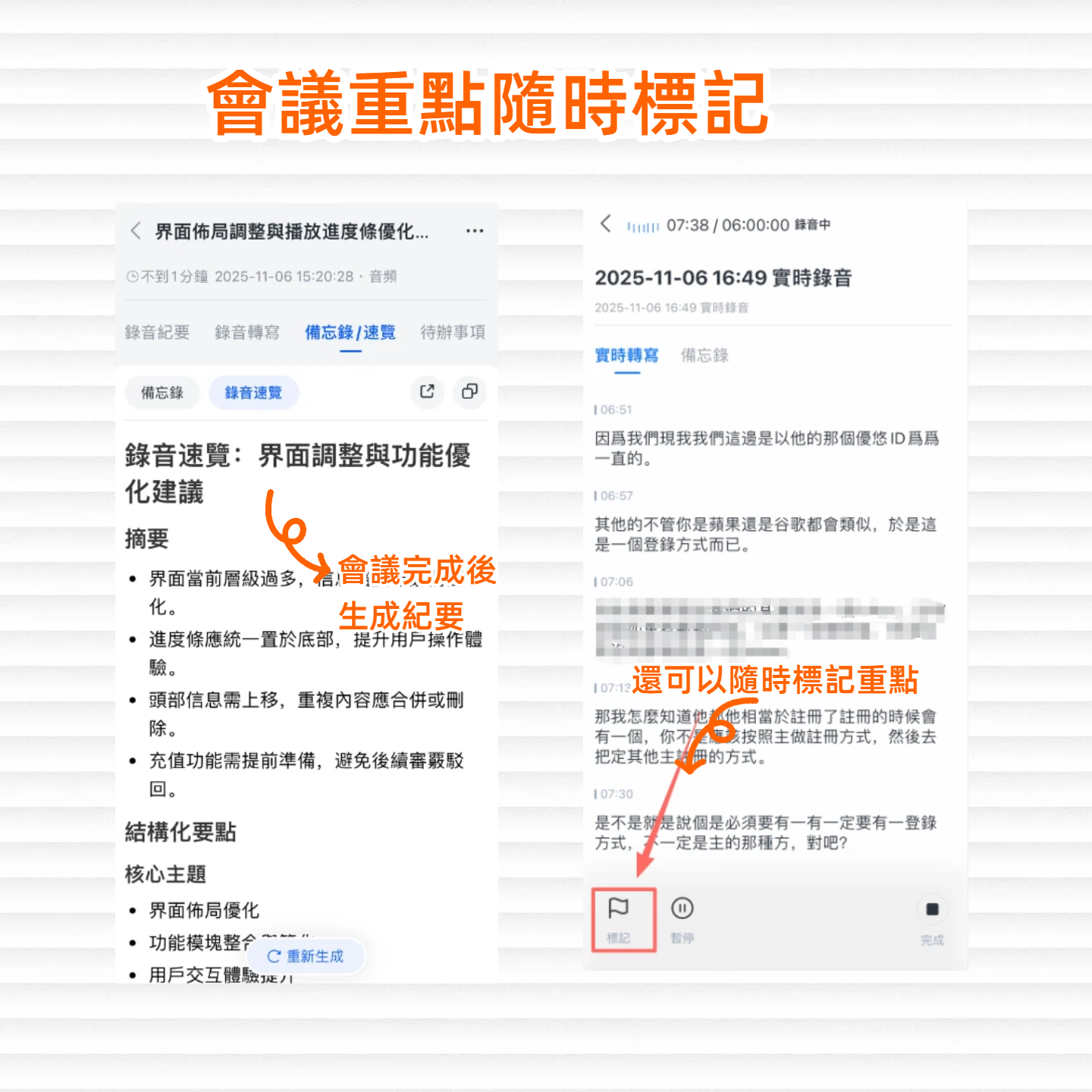
Step 3: Open the Recording File and Manage Access
Once inside the folder, recording files are named after the meeting in MP4 format. Click the file to play it online, or use the "Share" button in the top right to set viewing permissions. You can also download it to your computer or move the file to another folder.
(Caption: Preview of an MP4 file in Google Drive with sharing options.)
Frequently Asked Questions
Why don't I see the recording option in Meet?
Only meeting organizers with a paid Google Workspace account will see the recording button. If you are using a free Gmail account or you are simply a participant, the option will not appear. Ask the meeting host to start recording and share the link with you afterward.
How much storage space do recording files take up?
The file size depends on the meeting length and quality. Typically, a 1-hour meeting takes about 500 MB to 1 GB. Google Workspace plans usually offer 30 GB to unlimited storage (depending on the plan). If you run out of space, consider cleaning up old recordings or upgrading your plan.
Can I save recordings to other cloud storage?
Yes, after downloading the MP4 file from Google Drive, you can manually upload it to Dropbox, OneDrive, or your own server. However, Meet currently does not have a built-in feature to automatically transfer recordings to other cloud storage.
If I delete the Meet Recordings folder, will the recordings be lost?
Yes, if you delete the recording file or the entire folder from Google Drive, it will be moved to the trash. Unless restored within 30 days, it will be permanently deleted. It's recommended to backup important meeting recordings to another location.
Can I record only a specific speaker's video?
Meet recordings capture the entire meeting screen, including all participants' video and shared content. It is not possible to record only a single speaker. If you need a clip of a specific speaker, you can edit it later with video editing software.
Turn every recording into actionable outcomes
Get 60 free transcription minutes when you sign in. No credit card required.
Related Reading
You might also like

2026 Google Meet Transcription Tools Comparison: Which Free Plan Is Best for Students?
A must-read for students! We test Google Meet's built-in transcription vs. Tinrec voice recorder, comparing accuracy, post-meeting organization, export convenience, and free plans to find the ultimate study buddy.

2026 Comparison of 3 Google Meet Note-Taking Tools: No More Time-Consuming Post-Meeting Organization
Still manually organizing Google Meet notes? This article compares multiple tools based on real-world experience and shares how to use Tinrec to automatically convert meeting recordings into summaries, action items, and searchable data, saving you time after meetings.

The Complete Guide to Google Meet Meeting Management in 2026: Auto Transcription and Meeting Minutes Generation
Tired of organizing Google Meet content? This guide uses Tinrec (Quick Voice Recorder) as an example to walk you through recording meetings, transcribing, proofreading, generating meeting minutes, and exporting, turning every online meeting into actionable knowledge.

2026 Google Meet Recording Alternative: Tinrec Centralizes All Your Meeting Notes
Google Meet recordings automatically save to Google Drive, but finding key points and organizing meeting notes can be a headache. Tinrec instantly transcribes and centralizes all your recordings, with AI-generated summaries and action items, so you can finish work earlier.
5 Google Meet Recording Management Tools Tested in 2026: Auto Transcription with AI Q&A
Where do Google Meet recordings go? Just archiving isn't enough. This article compares 5 AI transcription tools that turn meeting recordings into searchable, answerable, and organized work assets. From free to paid, find the best fit for you.

2026 Tinrec Instant Recording Tutorial: Google Meet Meeting Organization, Auto Summaries & To-Dos All in One
Is Google Meet's built-in transcription enough? A hands-on comparison between Google Meet and Tinrec on Chinese transcription accuracy, post-meeting organization, cross-platform support, and export capabilities to see if you need to install Tinrec.

Best Google Meet Alternatives? 3 Tested in 2026, Tinrec Excels for Multi-Scenario Organization
Google Meet's built-in transcription only records meetings, often stumbling with Chinese, cross-platform, and multi-audio/video organization. This article tests 3 alternatives and explains why more Chinese users are switching to Tinrec to handle meetings, courses, interviews, and online videos in one go.

2026 Tinrec vs Google Meet Built-in Transcription: 4-Dimension Showdown, Which is Better for Organizing Meeting Content?
Google Meet has built-in transcription, but what happens after transcription? This article compares Tinrec and Meet's built-in transcription across four dimensions: post-meeting organization, cross-platform search, AI Q&A, and multi-source integration, to see which one is better at turning meeting recordings into usable knowledge.

2026 Comparative Review of 2 Google Meet Recording Alternatives: Which Is Better for Chinese Meeting Summaries?
Looking for an alternative to Google Meet recording? This article compares Google Meet's built-in recording with Tinrec, covering AI summaries, multi-source organization, and Chinese optimization to help you choose the best meeting note-taking tool.