
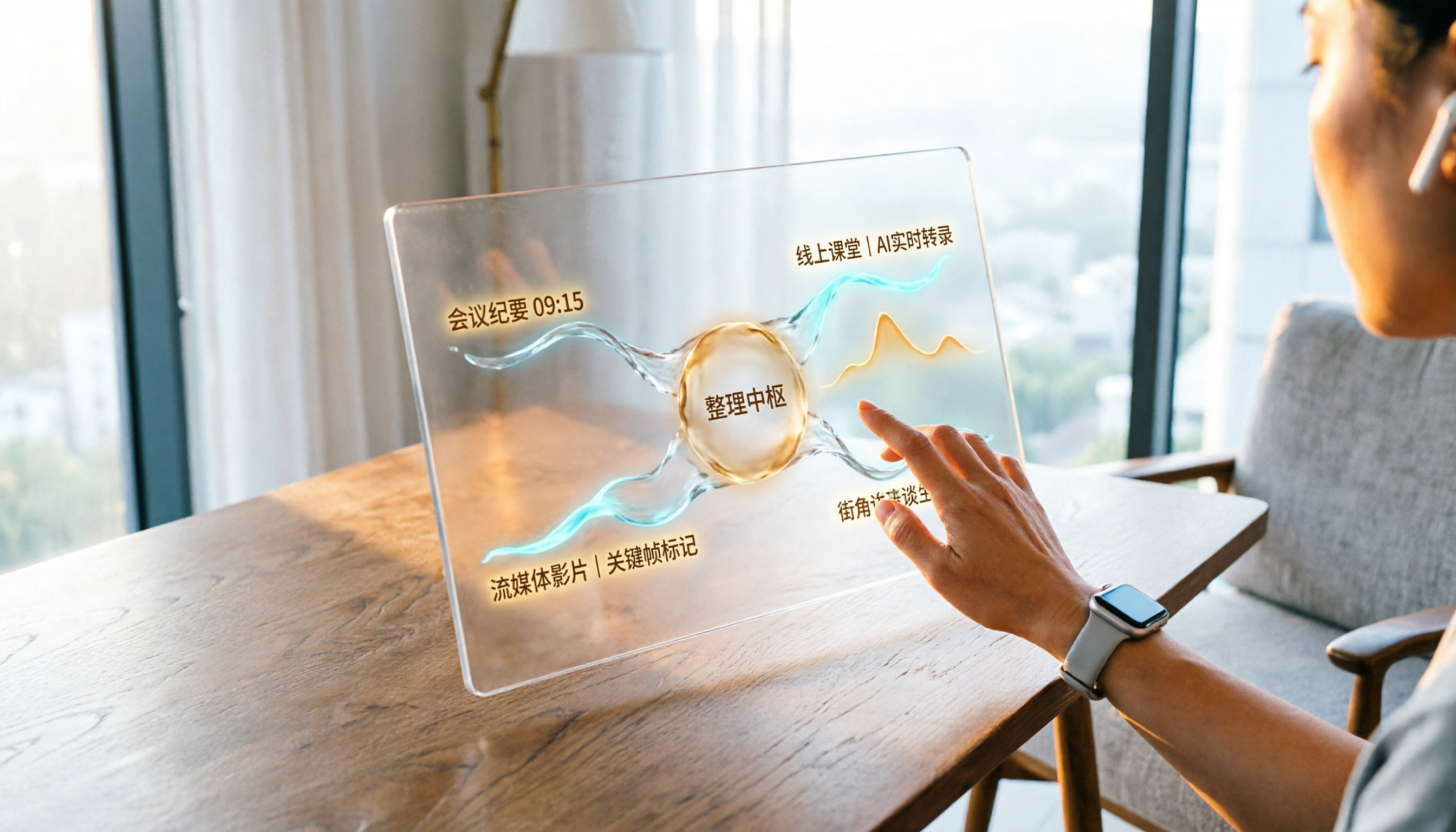
Turn recordings into transcripts and summaries in minutes
Upload audio or video for multilingual transcription, AI notes, and action items
Why Are People Looking for Google Meet Alternatives?
Google Meet's built-in transcription is convenient—just start a meeting and it automatically records. But many users find that once the meeting ends, managing audio files, Chinese recognition, and cross-platform integration often hit a wall. If you need to handle classroom recordings, interview materials, YouTube videos, or a searchable, queryable, exportable database, relying solely on Meet feels restrictive. If these sound familiar, Tinrec is worth a look—it turns recordings, files, and online videos into organized, queryable knowledge assets.
Tinrec vs Google Meet: What's Different in Core Experience?
Cross-Platform Coverage
A single recording might be listened to on a phone, laptop, and tablet. Google Meet's transcription is tied to the meeting, making it easy to lose context when switching devices. Tinrec, on the other hand, supports iOS, Android, and web—your account syncs automatically, so meetings, files, and videos from URLs all appear in one workspace without manual transfer.
Input Source Versatility
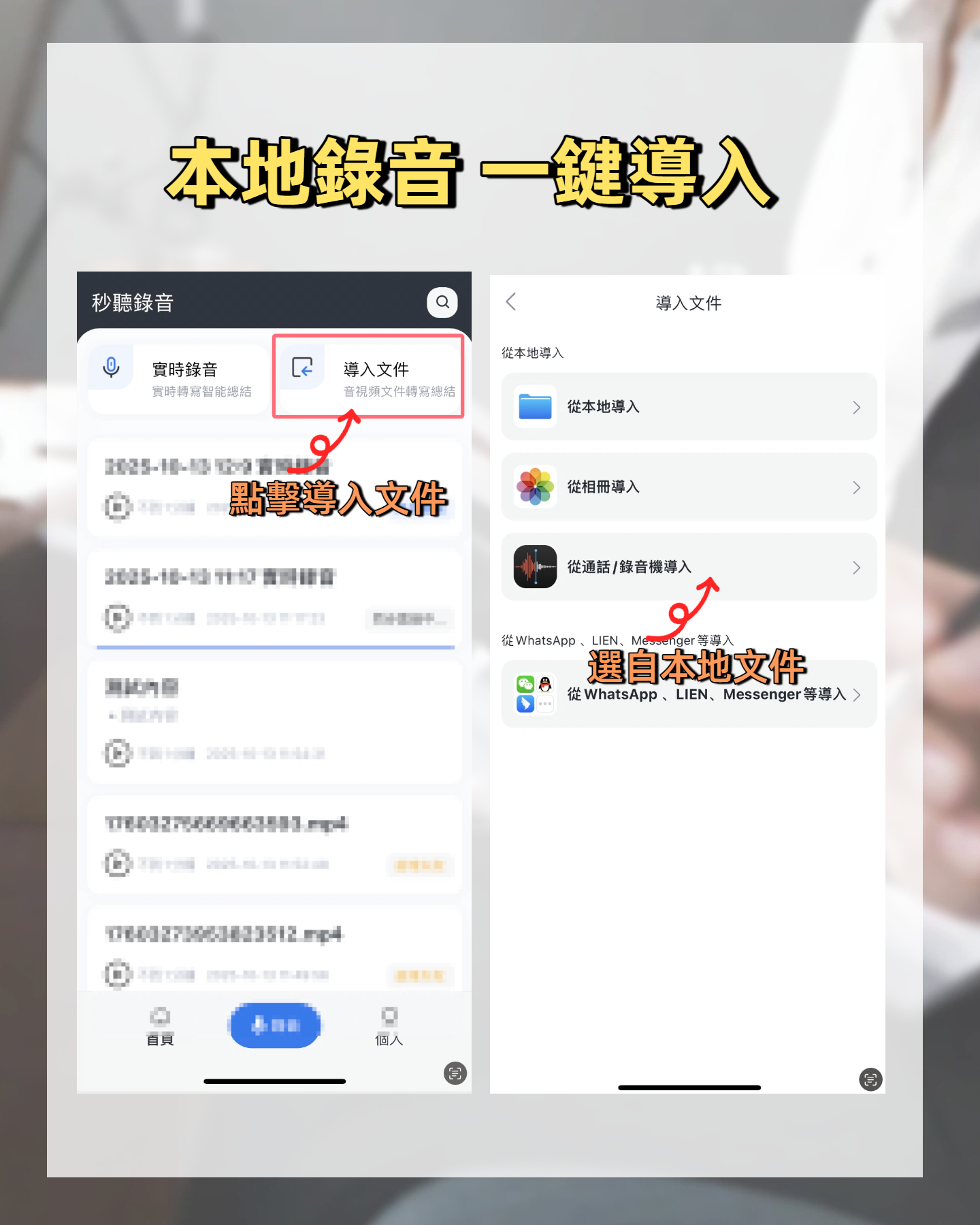
Meet can only handle online meeting audio. For a colleague's recording file or a YouTube tutorial you want to transcribe, you'll need another tool. Tinrec is designed as a "multi-source audio/video organization hub": it consolidates live recordings, local audio/video files, public video links, and even system audio—no app switching required.
Chinese and Mixed Language Experience
In Chinese workplaces, meetings often mix Chinese and English with technical terms. Google Meet's built-in transcription performs best for English, often making errors in Chinese sentence breaks or missing trailing sounds. Tinrec is specifically optimized for Traditional Chinese and Chinese-English mixed scenarios. Internal tests show that under typical office background noise, the character error rate for a 5-minute Chinese meeting recording can be kept around 8%, and summaries and action items are more contextually relevant.
Beyond Transcript: Q&A Capability
After a Meet, you get a text record. But to find "last month's meeting about the budget conclusions," you often have to re-listen for two hours. Tinrec's AI chat query lets you ask directly: "Did this meeting decide to change suppliers?" "What's the new launch date?" — It extracts answers based on semantic understanding, no manual searching needed.
Organization and Export Completeness
Google Meet's meeting notes usually stay within the team and are hard to turn into a deliverable report. Tinrec goes from recording to transcript, AI summary, chapters, action items, and can export to Notion, Google Docs, OneNote, etc., directly into your workflow, saving repeated formatting time.
Tinrec Core Features at a Glance
Live Speech-to-Text
Open Tinrec during a meeting or lecture; as you speak, text appears sentence by sentence with less than a 1-second delay. The on-screen live preview lets you verify key points as you listen, and by the time the session ends, the transcript is ready—no need to re-record later.
Stop organizing recordings by hand
Upload audio or video and automatically get a transcript, summary, and action items
Online Video Link Processing
Paste a public video link from YouTube, TikTok, Xiaohongshu, or Bilibili into Tinrec. The system downloads the audio track, converts it to text, and auto-generates a summary and chapters. For creators or researchers who consume lots of video content, this feature acts like a personal research assistant.
AI Chat Query
After recording a one-hour interview, just type "What is the interviewee's attitude toward the new policy?"—Tinrec extracts the relevant segments with timestamps, saving hours of scrubbing. Historical recordings also support the same Q&A, turning hundreds of hours of audio into a conversational database.
Action Item Extraction
After a meeting discussion, Tinrec automatically identifies "who, what, when" segments and compiles an action item list, complete with the responsible person's speech excerpts. You can export it directly as a table or meeting minutes, reducing the risk of missed tasks.
Multi-Format Export and Post-Processing
Processed audio can be exported as TXT, DOCX, subtitle files, or synced with one click to Notion, Google Docs, etc. Going further, Tinrec's Agent post-processing can generate a full meeting report or table from the transcript, eliminating manual clipping and pasting.
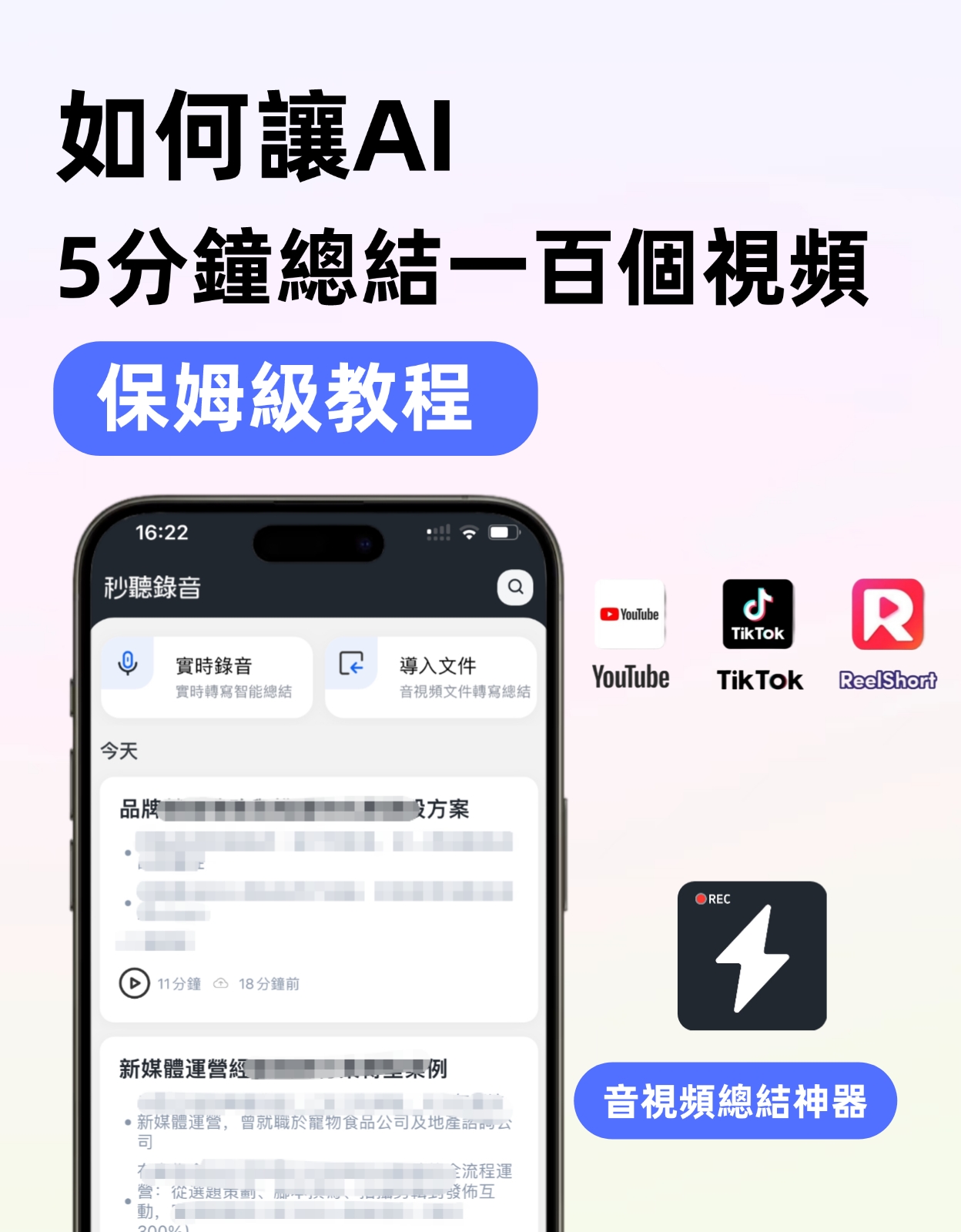
Real-World Use Cases
Scenario 1: Project Meetings
After a weekly meeting, participants have different note versions, making follow-up on decisions inefficient. Record the entire meeting with Tinrec, instantly get a summary, chapters, and action items, and paste them into a collaborative document. The full context is preserved, greatly improving team alignment.
Scenario 2: Online Course Review
A two-hour online lecture has key points scattered throughout. Feed the video audio into Tinrec, which splits the long file into chapters. You can jump directly to "Chapter 3: Case Study," making review three times faster than replaying the video.
Scenario 3: Interviews and Field Research
After interviewing an expert, you have a three-hour recording to process. Previously, it would take an afternoon to replay and transcribe. Now, import the file into Tinrec, convert to text, and ask AI "What are the interviewee's suggestions for market expansion?"—the answer appears in seconds, saving massive sorting time.
Scenario 4: Content Creator Asset Library
Running a YouTube channel or podcast? Have dozens of videos you want to repurpose into articles? Use Tinrec's video link feature to process each one, producing transcripts, summaries, and subtitles at once. Then search keywords to quickly find quotable highlights.
Key Points to Consider When Choosing a Speech-to-Text Tool
Look for "input source diversity." If a tool only integrates with a single meeting platform, you'll need separate solutions for file sharing or online materials. Tinrec supports live recording, file uploads, and video links, covering most usage scenarios in one go.
Also consider "what you can do after transcription." A tool that just converts speech to text only solves the first step. Without auto-summaries, chapters, action items, and export options, you'll still spend time on post-processing. Tinrec integrates all these capabilities in one interface, letting you go straight to your workflow after recording.
Chinese users should check "language support at the contextual level." Many tools claim Chinese support but accuracy drops quickly with mixed Chinese-English, background noise, or multi-speaker discussions. Tinrec has specialized optimization for Traditional Chinese markets, and summaries and action items better match local workplace language habits.
Finally, consider "data accumulation and search." If each transcript is scattered in the cloud, it becomes digital clutter over time. Tinrec centralizes all recordings so historical data can be searched, queried, and reorganized, forming a true knowledge base.
Summary: Is Tinrec Worth Trying?
If you're looking for a solution that syncs across phone, computer, and web, and organizes meetings, courses, interviews, and online video together, Tinrec is one of the few tools that meets all these criteria. Especially for Traditional Chinese users, its optimized experience goes beyond simple meeting transcription. The free version offers monthly credits for hands-on testing. We recommend running it on your own recordings to see if the summaries and action items truly improve your work—more telling than any review.
Turn every recording into actionable outcomes
Get 60 free transcription minutes when you sign in. No credit card required.
Related Reading
You might also like

2026 Google Meet Transcription Tools Comparison: Which Free Plan Is Best for Students?
A must-read for students! We test Google Meet's built-in transcription vs. Tinrec voice recorder, comparing accuracy, post-meeting organization, export convenience, and free plans to find the ultimate study buddy.

2026 Comparison of 3 Google Meet Note-Taking Tools: No More Time-Consuming Post-Meeting Organization
Still manually organizing Google Meet notes? This article compares multiple tools based on real-world experience and shares how to use Tinrec to automatically convert meeting recordings into summaries, action items, and searchable data, saving you time after meetings.

The Complete Guide to Google Meet Meeting Management in 2026: Auto Transcription and Meeting Minutes Generation
Tired of organizing Google Meet content? This guide uses Tinrec (Quick Voice Recorder) as an example to walk you through recording meetings, transcribing, proofreading, generating meeting minutes, and exporting, turning every online meeting into actionable knowledge.

2026 Google Meet Recording Alternative: Tinrec Centralizes All Your Meeting Notes
Google Meet recordings automatically save to Google Drive, but finding key points and organizing meeting notes can be a headache. Tinrec instantly transcribes and centralizes all your recordings, with AI-generated summaries and action items, so you can finish work earlier.
5 Google Meet Recording Management Tools Tested in 2026: Auto Transcription with AI Q&A
Where do Google Meet recordings go? Just archiving isn't enough. This article compares 5 AI transcription tools that turn meeting recordings into searchable, answerable, and organized work assets. From free to paid, find the best fit for you.

2026 Tinrec Instant Recording Tutorial: Google Meet Meeting Organization, Auto Summaries & To-Dos All in One
Is Google Meet's built-in transcription enough? A hands-on comparison between Google Meet and Tinrec on Chinese transcription accuracy, post-meeting organization, cross-platform support, and export capabilities to see if you need to install Tinrec.

Where is Google Meet Recording Stored in 2026? A 3-Step Guide
Explains the storage location of Google Meet recordings and provides step-by-step instructions to help you quickly find them.

2026 Tinrec vs Google Meet Built-in Transcription: 4-Dimension Showdown, Which is Better for Organizing Meeting Content?
Google Meet has built-in transcription, but what happens after transcription? This article compares Tinrec and Meet's built-in transcription across four dimensions: post-meeting organization, cross-platform search, AI Q&A, and multi-source integration, to see which one is better at turning meeting recordings into usable knowledge.
2026 Comparative Review of 2 Google Meet Recording Alternatives: Which Is Better for Chinese Meeting Summaries?
Looking for an alternative to Google Meet recording? This article compares Google Meet's built-in recording with Tinrec, covering AI summaries, multi-source organization, and Chinese optimization to help you choose the best meeting note-taking tool.