
Turn recordings into transcripts and summaries in minutes
Upload audio or video for multilingual transcription, AI notes, and action items
Why Your Recordings Become "Digital Clutter"?
Have you ever been in this situation: afraid of missing important points during a meeting or class, you record the entire session with a voice recorder or phone, only to find that a month later, you've never opened those recordings even once?
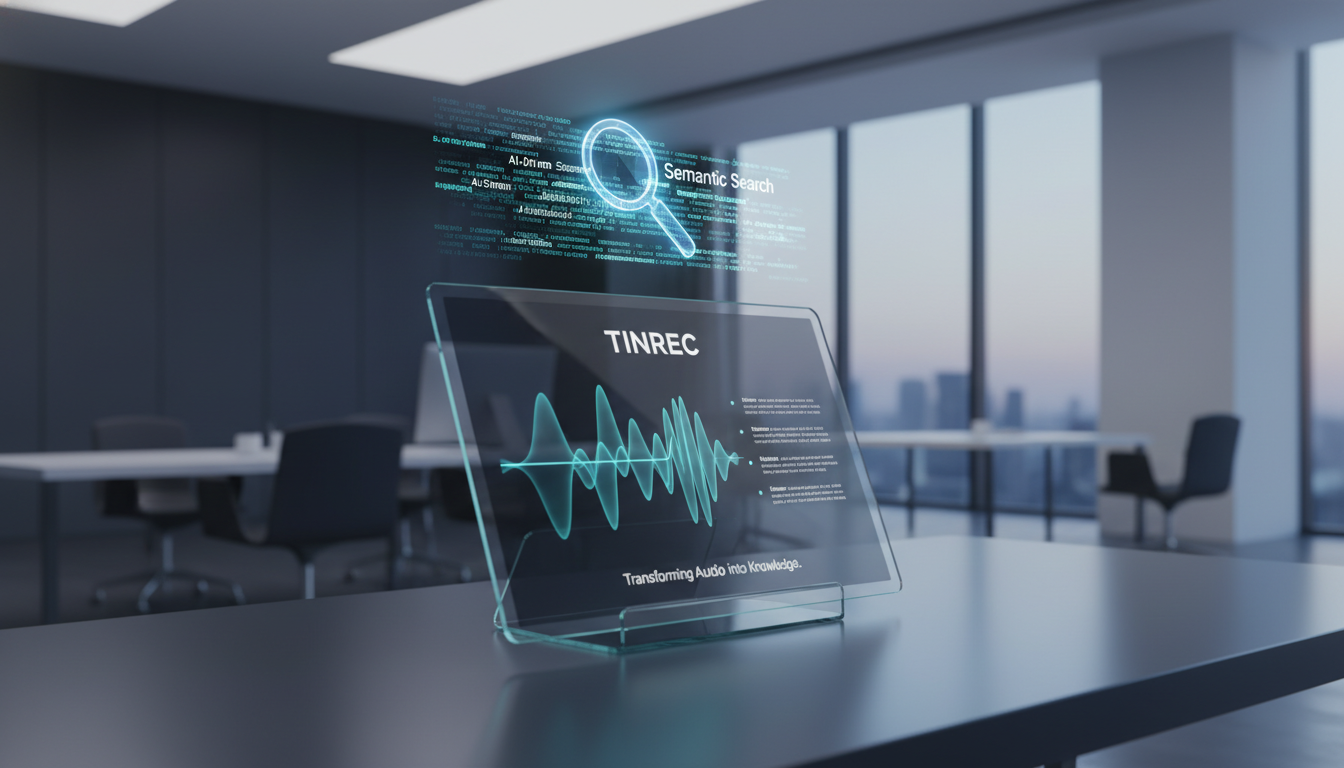
"If you record but never listen, you might as well not have recorded." This is a pain point for many professionals and students. The biggest problem with traditional recording is the high cost of linear retrieval—to find a specific point, you have to drag the progress bar back and forth across a 60-minute track. By 2026, if your tool can only simply "convert to transcripts," that's far from enough. Today's AI voice note tools add value by converting unstructured audio into semantically searchable structured knowledge.
This article will review 5 mainstream AI voice note tools, evaluating them on Chinese recognition, summary logic, and semantic search capability to help you find the best "second brain."
Quick Navigation: How to Choose?
- If you are a heavy English meeting user → Otter.ai
- If you are already dependent on the Notion ecosystem → Notion AI
- If you need mixed Chinese-English recognition + all-in-one recording/video/conversation → Tinrec (MiaoTing Recorder)
- If you only need simple personal memos → iPhone Voice Memos + Apple Intelligence
In-Depth Review of 5 Best AI Voice Note Tools in 2026
When choosing a tool, we recommend focusing on whether it supports semantic search (being able to find answers by asking questions) and action item extraction (not just transcripts, but also to-do lists).
1. Otter.ai: The King of English Meetings
Otter is one of the earliest AI meeting tools, with extremely high English recognition accuracy. It can automatically join Zoom/Teams meetings and generate summaries.
- Pros: Precise English recognition, automatic speaker identification, automatic meeting slide capture.
- Cons: Relatively weak support for Chinese (especially Traditional Chinese and dialects); free tier has significant limitations.
2. Notion AI: An Extension for Note Takers
Notion integrates AI into its note-taking software, suitable for users who prefer to manage everything with text.
- Pros: Seamless integration with existing note library; organized content can be dragged directly into project management pages.
- Cons: It is primarily a "text-processing AI" and lacks the convenience of dedicated apps for long audio processing and real-time recording.
3. Tinrec (MiaoTing Recorder): All-in-One Recording and Knowledge Management Assistant
In the 2026 tool landscape, Tinrec positions itself as a complete workflow "from recording to action." It doesn't just handle meetings; it also processes podcasts, YouTube videos, and especially strengthens semantic search (AI Chat).
- Pros: Supports multiple languages including Chinese, Japanese, Korean, English (including Taiwanese/Hokkien and Cantonese); features an "AI query" function where you can directly ask things like "What did the boss say about the budget?"; supports converting web videos to text.
- Cons: Compared to dedicated hardware recorders, it relies on a mobile or web interface.
4. Google Pixel Recorder / iPhone Voice Memos
Built-in features of the two major smartphone ecosystems.
- Pros: Completely free, always available for quick recording.
- Cons: Feature-limited; while they have transcription, they are less powerful than professional third-party tools in summary generation and cross-platform management.
5. Fireflies.ai: Automated Meeting Bot
Specializes in automatically joining meeting rooms to record.
- Pros: Strong integration with various CRMs (e.g., Salesforce), suitable for sales teams.
- Cons: The meeting bot joining can sometimes pressure participants; occasional errors in Chinese semantic understanding.
Stop organizing recordings by hand
Upload audio or video and automatically get a transcript, summary, and action items
Comparison Table
| Comparison Dimension | Otter.ai | Tinrec (MiaoTing Recorder) | Notion AI | Built-in Phone Recorder |
|---|---|---|---|---|
| Chinese/Multi-language Support | Weak | Excellent (Supports Taiwanese/Cantonese/Chinese/Japanese/Korean) | Moderate | Moderate |
| Real-time Transcription | Supported | Supported | Not supported (requires post-processing) | Supported |
| Summary & Action Items | Auto-generated | Auto-generated meeting minutes/tasks | Manual trigger required | Transcription only |
| AI Semantic Query | Keyword-based | Supports AI conversational Q&A | Supported | Not supported |
| Video/Link to Text | Not supported | Supported (YouTube/TikTok) | Not supported | Not supported |
| Free Tier | 300 minutes/month | 100 minutes/month (paid plans available) | None (requires subscription) | Unlimited (limited features) |
Why Tinrec is Ideal for "Knowledge Workers" and "Learners"?
Among many tools, Tinrec offers a differentiated value: It doesn't assume you're only "in a meeting."
Many tools are designed for "meeting minutes," but Tinrec's use cases cover learning (lecture recording), content creation (video to text), and personal thinking (idea notes). The core pain point it solves is not just "turning audio into text," but turning information into action.
For example, when you record a 2-hour interview, Tinrec's workflow is:
- Record/Import: Real-time conversion to high-accuracy Traditional Chinese transcript.
- Understand: AI automatically extracts key summaries and action items; you don't need to read everything from scratch.
- Engage: This is the most powerful feature. Instead of Ctrl+F to search for keywords, you directly ask the AI in a chat box: "What are the three market trends the interviewee mentioned?" Tinrec answers directly based on the recording content.
This is the key difference between passive storage and active retrieval.
Step-by-Step Tutorial: How to Use AI Tools to Organize 1 Hour of Recording in 5 Minutes
Below, we use Tinrec as an example to demonstrate a highly efficient voice note organization workflow. This logic also applies to other advanced AI tools.

Step 1: Get Audio Material
You can start with Tinrec in three ways:
- Live Recording: Open the app or web version, click Record and Transcribe in Real Time, ideal for meetings or classroom sessions.
- File Upload: If you have files from a voice recorder, use the Audio File to Text feature to upload.
- Video Link: Want to organize a YouTube tutorial? Simply paste the link into Podcast/Web Video to Text.
Step 2: Generate Structured Notes
Wait for the transcription to complete (typically takes only a few minutes for 1 hour of audio). The system automatically generates a speaker-separated transcript. Then, click the "AI Summary" button to have the system produce:
- One-sentence summary: Quickly grasp the main idea of the recording.
- Chapter outline: Topic points segmented by timeline.
- Action items: This is the most crucial part; copy them directly into your Todoist or Notion.
Step 3: Use AI Chat for "Semantic Retrieval"
Don't rush to archive! If it's a complex strategy meeting, use the AI Chat Query feature at the bottom right:
- Query: "List all discussion points about the Q3 marketing budget."
- Query: "Did David commit to completing anything by next Friday?"
Through this step, you can confirm details without relistening, ensuring zero information gaps.
Frequently Asked Questions (FAQ)
Q1: Can these AI tools understand mixed Chinese-English conversations? A: This is a major pain point for Chinese users. Most Western tools (e.g., Otter) struggle with mixed Chinese-English recognition. We recommend choosing Tinrec or tools specifically supporting multilingual mixing, as they can more accurately switch language recognition to avoid garbled text or pinyin.
Q2: Is my recording data private and secure? A: Legitimate AI services (like the ones recommended in this article) use encrypted transmission and storage. For highly confidential business negotiations, confirm whether the tool supports on-device processing or review its privacy policy. Tools like Tinrec offer account deletion and data export features, giving users control.
Q3: Does speech-to-text require payment? A: Most tools use a "freemium" model. For example, Tinrec offers a free tier with 100 minutes per month, which is usually sufficient for occasional meetings or recording ideas. If you need to process many long meetings, upgrading to Basic or Pro (about the cost of a cup of coffee) is a high-ROI investment.
Q4: Can I convert Zoom or Google Meet meetings into notes directly? A: Yes. Some tools use a "bot joining the meeting" approach (e.g., Fireflies), while Tinrec supports recording system audio or uploading recordings/video links afterward, which is more friendly for scenarios where you don't want a bot intruding on the meeting.
Q5: How do I import iPhone recordings into AI tools? A: You can tap "Share" in the iPhone Voice Memos app, choose Save to Files, then log in to Tinrec's web or app version to upload the file, and you'll get more detailed AI summaries and analysis than the built-in features.
Q6: Are these tools suitable for students? A: Absolutely. Especially for foreign language courses or fast-talking professors. Using the "AI Chat Query" feature, before exams you can directly ask the AI: "What are the key exam points the teacher emphasized this semester?"—far more efficient than relistening to dozens of hours of recordings.
Turn every recording into actionable outcomes
Get 60 free transcription minutes when you sign in. No credit card required.
Related Reading
You might also like

2026 Comparison of 4 Speech-to-Text Apps: Which Free Plan Suits Hong Kong Office Workers Best?
Tired of meetings and typing up recordings afterward? This article tests Tinrec's free plan and breaks down how to choose a speech-to-text app without getting scammed, helping you save overtime hours.

2026 iPhone Voice-to-Text: Free Built-in Features vs Tinrec Premium Choice
Want to transcribe iPhone recordings for free? Is the built-in Voice Memos app enough? Our tests show free options fall short in noisy environments, Cantonese recognition, and post-processing. This article compares iOS built-in features, free apps, and Tinrec to help you find the best solution.
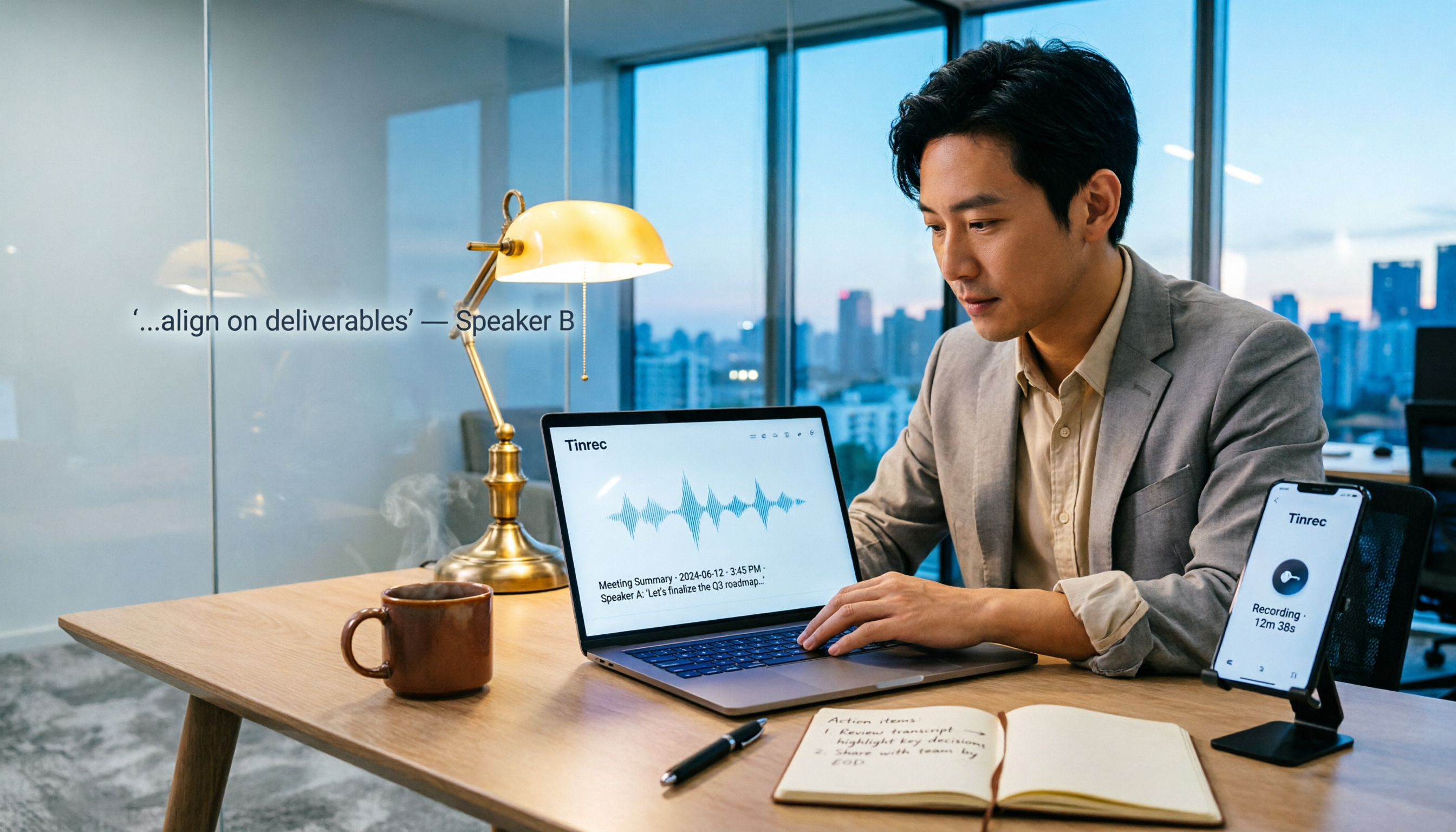
2026 Speech-to-Text Tool Review: Is Tinrec's Free Plan Really Enough?
A mid-level manager tests online speech-to-text tools, from free quotas to transcription accuracy and post-meeting organization, to tell you whether Tinrec's free plan is sufficient and when you should upgrade.

4 Best Online Speech-to-Text Tools in 2026: Free Plans and AI Features Compared
This article tests four online speech-to-text tools—Tinrec, Otter.ai, Notta, and Granola—and provides buying advice based on free allowances, bot-free meeting recording, AI Q&A, and team collaboration features.

2026 iPhone Voice-to-Text App Tutorial: Tinrec 3-Step Automatic Transcription + AI Summary
A student's hands-on review of Tinrec, an iPhone voice-to-text app that automatically generates transcripts, AI summaries, and to-do lists for classes, meetings, and interviews. The free version is enough to get started, saving more time than built-in features.

Best Speech-to-Text Tools in 2026: Notta vs. Tinrec and 3 Others—Tinrec Wins for Meeting Notes
A mid-level manager tested 4 speech-to-text tools for meeting notes, comparing Notta and Tinrec on bot-free recording, Chinese language support, post-meeting organization, and team collaboration, and explains why Tinrec came out on top.

2026 Free Cantonese Audio-to-Text Solutions: 3 Options Compared
Looking for a free Cantonese audio-to-text tool? Tinrec's free plan might be the most efficient choice. This article reviews 3 free options, with a focus on Tinrec, showing how it can save you overtime hours.

4 Best Online Audio-to-Text Tools in 2026: Free Plans, AI Features, and Team Collaboration Compared
How to choose an online audio-to-text tool? This article compares Tinrec, Otter.ai, Notta, and TurboScribe, focusing on free quotas, AI post-processing, cross-platform support, and team collaboration to help you find the best fit.

The Complete Guide to Online Speech-to-Text in 2026: From Meeting Minutes to Team Collaboration
Tired of manually transcribing recordings? This article tests multiple online speech-to-text tools, comparing features, accuracy, free tiers, and team collaboration to help you choose the best AI meeting notes solution.