
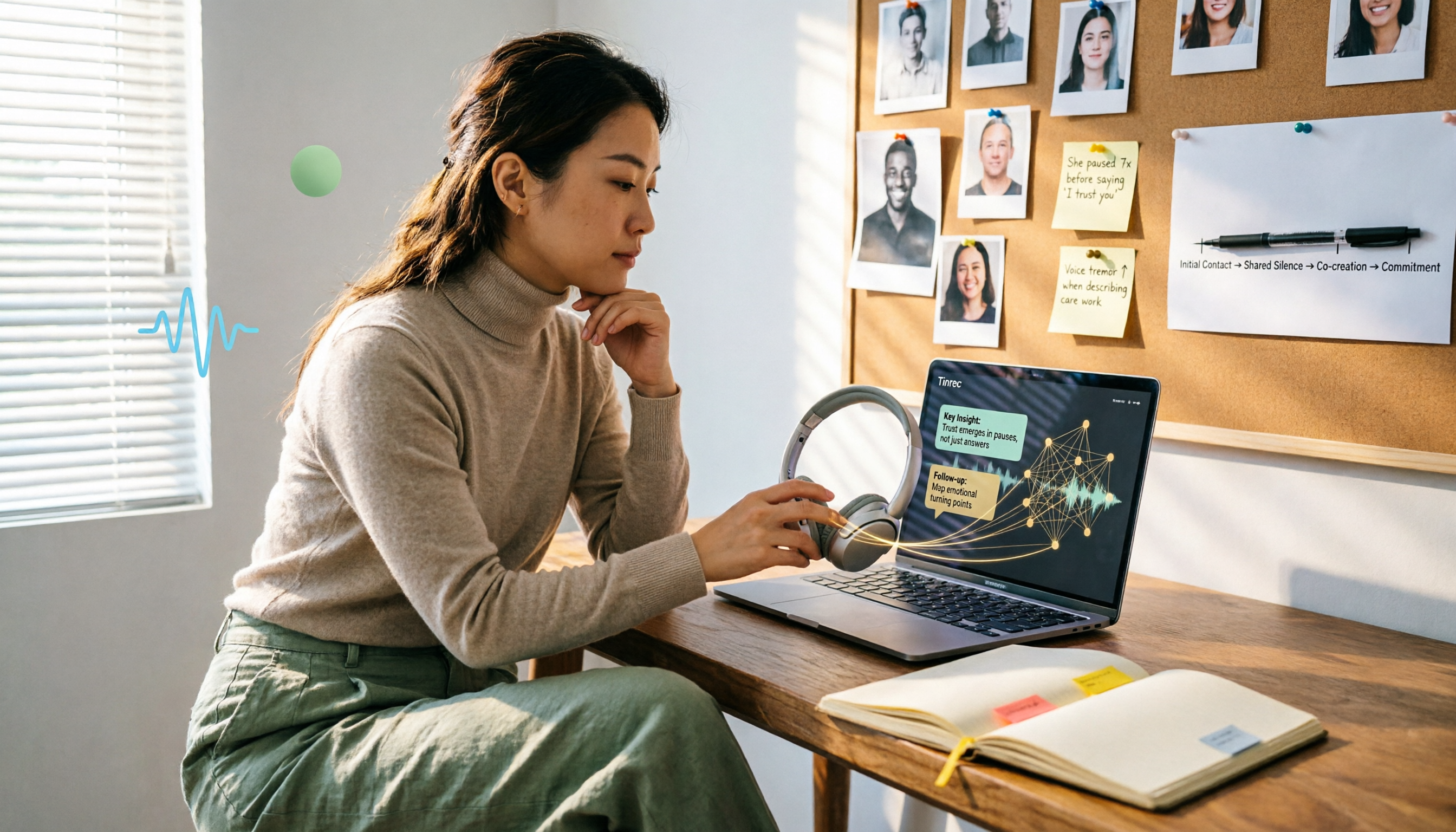
Turn recordings into transcripts and summaries in minutes
Upload audio or video for multilingual transcription, AI notes, and action items
2026 Hands-On Comparison of 2 AI Transcription Tools: Which Has More Complete Automated Delivery?
The other day, I was organizing meeting recordings from the past three months.
Just listening to over 20 hours of audio took up the whole weekend.
Not to mention extracting decisions, action items from each meeting and writing up proper minutes.
That's when I thought: why can't there be a tool that automatically generates these "deliverables" right after I finish recording?
Later I realized many people share the same struggle—recording is only the first step; the real bottleneck is "going from recording to usable output."
This process is what I call "automated delivery" capability.
I took two highly discussed tools for a spin: Tinrec and Otter.ai.
Next, I'll compare them across 5 real-world scenarios to see which one truly automates the delivery workflow.
Tinrec vs Otter.ai | Quick Overview
Otter.ai is a veteran in AI meeting notes, strong at auto-joining online meetings, real-time transcription, and team collaboration.
Tinrec leans more toward being an "audio/video data processing workbench," handling not only meetings but also lectures, interviews, and online videos in one unified workflow.
Here's a quick comparison of basics:
- Core positioning: Otter → Meeting bot; Tinrec → Multi-source audio/video processing
- Supported platforms: Otter → iOS, Android, Web; Tinrec → iOS, Android, Web, plus a more complete desktop experience
- Free plan: Otter offers 300 minutes per month; Tinrec provides basic transcription credits, suitable for trying full features
What I'm comparing is whether the tool can turn recordings into ready-to-use, editable, searchable assets—not just a word-for-word transcript.
Dimension 1 | Completeness of Automatically Generated Meeting Minutes
Otter auto-generates meeting summaries and keywords, but in my experience, it's more like "bullet points"—you still need to reorganize them into a formal document.
Tinrec's strength is that it "understands the content and directly gives you different formats of deliverables."
(Screenshot here: Tinrec meeting minutes generation interface, arrows pointing to sections like summary, chapters, to-dos)
For the same meeting, when I asked Tinrec to output meeting minutes, it directly generated a well-structured document covering discussion context, decisions, and next steps.
→ This dimension: Tinrec's output is closer to a "deliverable."
Dimension 2 | Action Item Extraction and Follow-up
Otter has an Action Items feature, but it only highlights sentences; it doesn't compile them into a list or link back to the original context.
Tinrec, on the other hand, extracts action items into an independent list, and each item can be clicked to go back to the original conversation segment.
(Screenshot here: Tinrec action item list, arrow pointing to "jump to original segment" button)
More importantly, you can further ask: "Who proposed this action item?" and the AI will answer based on the recording.
→ This dimension: Tinrec not only extracts action items but also allows further processing.
Stop organizing recordings by hand
Upload audio or video and automatically get a transcript, summary, and action items
Dimension 3 | AI Chat Queries: Turning Recordings into a Database
Otter also offers AI Chat, but it's mainly for querying within a single meeting.
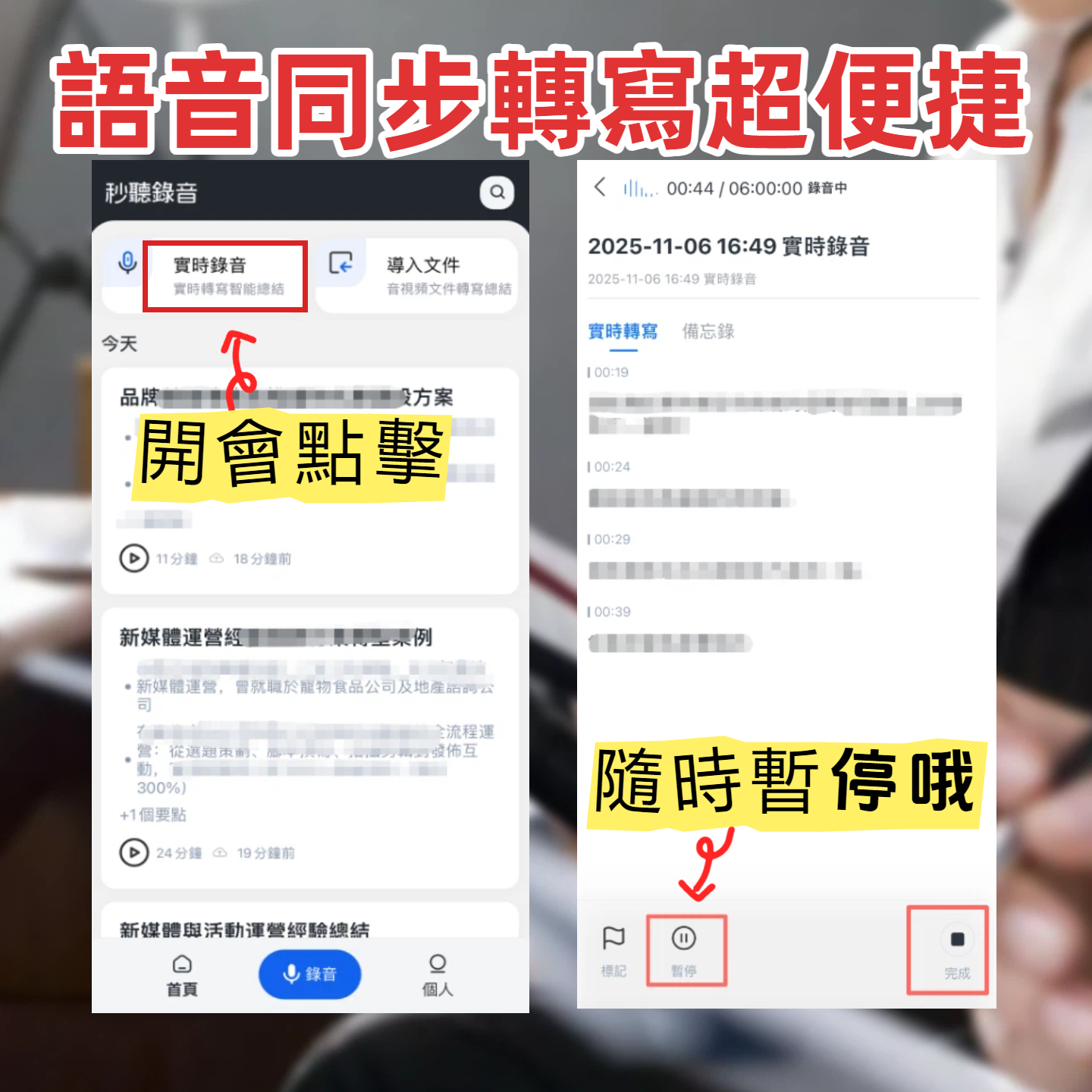
Tinrec's AI Q&A is cross-recording—you can ask, "How many times was pricing discussed in all product meetings this quarter?"
(Screenshot here: Tinrec AI conversation query interface, input for cross-recording query)
For someone like me who wants to use historical recordings as a knowledge base, this is like turning a stack of audio files into a conversational database.
→ This dimension: Tinrec's AI Q&A is closer to the level of "knowledge management."
Dimension 4 | Multi-Source Input: The World Beyond Meetings
Otter's core territory is online meetings; its support for local files and online videos is relatively weak.
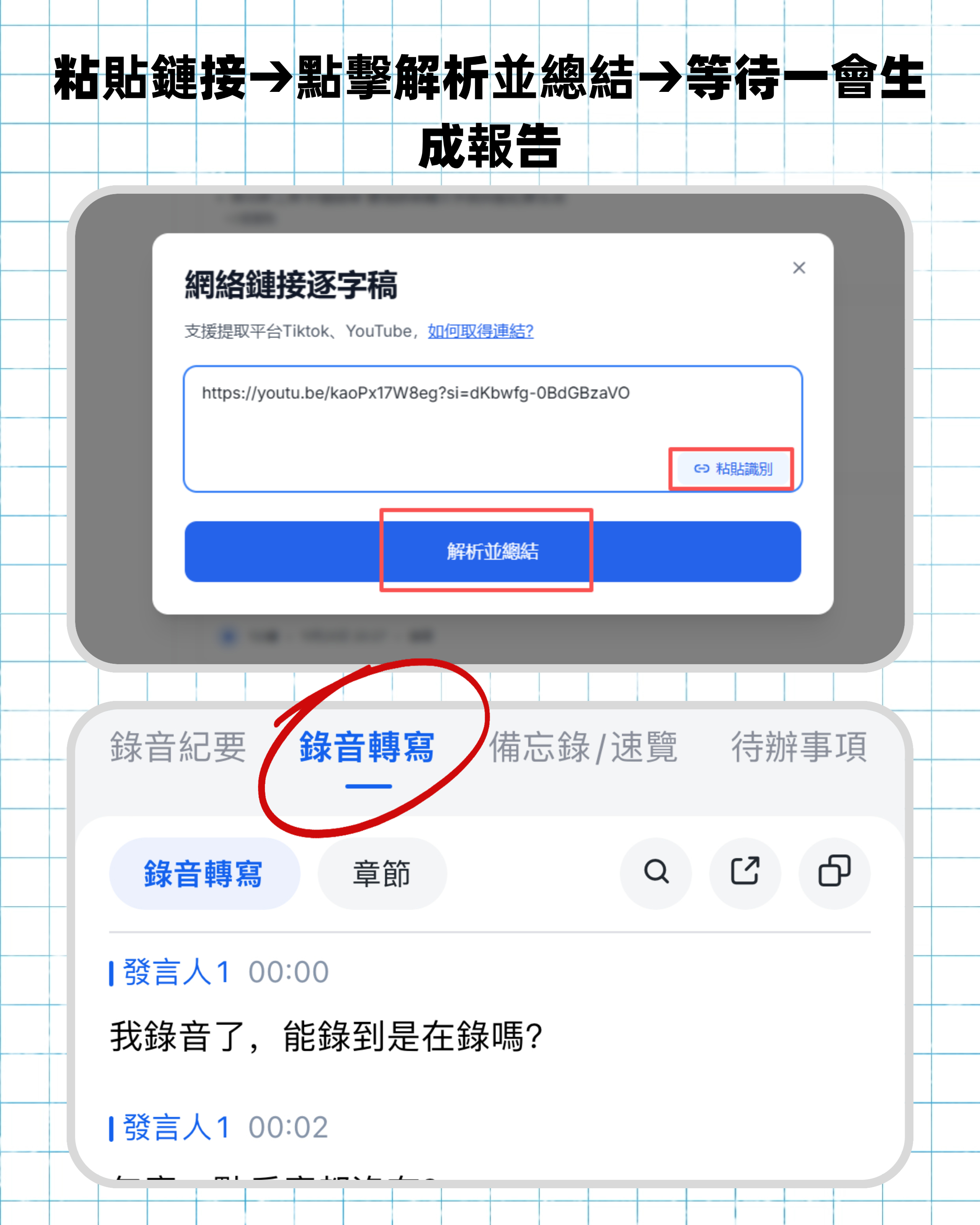
Tinrec, besides meetings, allows you to directly paste YouTube, Xiaohongshu, or TikTok links, turning public videos into text and summaries.
(Screenshot here: Tinrec online video link parsing interface, arrow pointing to the input field)
This is particularly useful for content creators and researchers—no more manual transcription.
→ This dimension: Tinrec's input sources are more diverse, not limited to meeting scenarios.
Dimension 5 | Cross-Platform Support and Export Flexibility
Otter has web and mobile versions, but export options are relatively simple—mostly text files or share links.
Tinrec supports exporting in multiple formats and can sync the results directly to Notion, Google Docs, and other tools.
(Screenshot here: Tinrec multi-format export menu, arrows pointing to Notion and Google Docs icons)
This integration into the "subsequent workflow" is the last mile of automated delivery.
→ This dimension: Tinrec is more flexible in export and integration.
What Are Their Unique Strengths?
Tinrec's Unique Strengths
- Complete workflow from recording to deliverable: Not just transcription, but generates meeting minutes, reports, tables, and other formats—directly usable as deliverables.
- Cross-recording knowledge base Q&A: Turns all past audio files into a searchable, interrogable database—perfect for long-term projects or researchers.
- Multi-source input: Meetings, lectures, interviews, online videos all go through the same processing workflow, no need to switch tools.
- Agent post-processing capability: Built-in AI Agent that can continue to generate derivative content based on instructions after transcription—e.g., turning discussion content into a proposal outline.
Otter's Unique Strengths
- Immersive team collaboration: Allows multiple people to comment and edit on meeting notes simultaneously—good for meeting-centric teams.
- Auto-join meeting bot: Can be set to automatically join scheduled online meetings without manual intervention.
Summary: Which One Should You Choose?
- If you want a well-structured, deliverable meeting minutes automatically after recording → Tinrec.
- If you want to turn historical audio files into a knowledge base for cross-recording queries → Tinrec.
- If you need to process not just meetings but also lectures, interviews, or online videos → Tinrec.
- If you need to seamlessly integrate outputs into Notion, Google Docs, or continue generating more content with AI → Tinrec.
- If you only use iPhone, need simple meeting transcripts and basic summaries, and don't require much post-processing → Otter.ai is sufficient.
One sentence summary: For most people who want to turn audio content into truly usable data, Tinrec offers a more complete "automated delivery" experience.
I suggest you download the free version of Tinrec and try it with your most common recording scenarios.
Quick Start Checklist
- At your next meeting or lecture, open Tinrec and start recording.
- After recording, click "Generate Summary and Action Items."
- Check the automatically extracted action items list, click any item to jump back to the original audio.
- Try using AI Q&A to ask about key decisions in this recording.
- Export the result to your note-taking tool.
- If you have historical audio, upload a file and try cross-recording search to see its power.
Testing step by step, you'll gradually master this method of turning recordings into knowledge.
Turn every recording into actionable outcomes
Get 60 free transcription minutes when you sign in. No credit card required.
Related Reading
You might also like
Best AI Meeting Assistant in 2026? We Tested 5 and Found the Most Complete One
I attend 15 meetings a week, and the worst part is the post-meeting cleanup. After testing 5 AI meeting tools on transcription quality, AI summaries, action item extraction, and cross-platform support, here's the one that truly turns recordings into usable data.
How to Automatically Organize Meeting Notes with AI in 2026: A 5-Step Guide
Spending two hours in a meeting and another two hours writing meeting notes? This guide teaches you how to use AI speech-to-text tools to auto-generate summaries and to-do lists. We tested Tinrec, Otter.ai, and 5 other services, covering everything from selection to pitfalls.

Tinrec vs Otter.ai 2026: In-Depth Comparison Across 4 Dimensions – Which Is Best for Cantonese-Speaking Users for Meeting Reviews?
Hong Kong professionals have meetings every day and need AI to help with reviews? We tested Tinrec and Otter.ai head-to-head, comparing Cantonese accuracy, multi-source support, AI Q&A, and export features. Find out which tool saves time and prevents overtime for Central office workers.
2026 AI Administrative Assistant Tools: No Hardware Needed + Cross-Platform Audio Transcription
Administrative work often gets buried under meeting recordings, interviews, online videos, and more. This article compares two AI administrative assistant tools: the software-based Tinrec and the hardware-based PLAUD Note. We analyze cost, input sources, post-processing capabilities, and cross-platform support across four dimensions to help you find the best solution for organizing audio notes and tasks.

Free AI Meeting Efficiency Tools in 2026: A Look at 3 Options
Tired of transcribing meeting recordings after hours? We tested free plans of Otter, Notta, and Tinrec——three AI meeting tools——to see which one truly saves time for Hong Kong workers, focusing on Cantonese recognition, multi-source input, and AI summarization.

2026 Comparison of 2 AI Meeting Efficiency Assistants: From Free to Hardware, Which One Fits You Best?
This article provides an in-depth four-dimensional comparison of two major AI meeting efficiency solutions—the software-based Tinrec and the hardware-based PLAUD Note—from input sources, AI features, pricing, and cross-platform flexibility, helping you find the option that best fits your workflow.

Free AI Agent Smart Organization Solutions in 2026: 3 Tools to Check Out
Want to use AI to automatically organize meeting notes, course notes, or interview transcripts? This article rounds up 3 AI Agent smart organization tools that offer free plans in 2026, using Tinrec as an example to show how you can turn audio/video into searchable, summarizable, actionable data with free credits.
Tinrec vs Otter.ai 2026: 5-Dimension Showdown – Which AI Generates Excel More Efficiently?
AI Agent generating Excel is no longer a dream! This article puts Tinrec and Otter.ai to the test for meeting notes, task extraction, and table creation, showing you how to automatically convert audio recordings into editable Excel reports using AI. A must-read for office workers.

2026 Comparison of 4 AI Recording and Transcription Tools: Which One Has the Best AI Context Understanding Like a Real Assistant?
With so many voice-to-text tools on the market, which one offers true AI context understanding—not just keyword search, but answering your questions and generating reports? This hands-on review compares Tinrec, Otter.ai, Notta, and Fireflies.ai across AI Q&A, Chinese support, and post-processing capabilities to help you pick the one that feels like a real human assistant.