

Turn recordings into transcripts and summaries in minutes
Upload audio or video for multilingual transcription, AI notes, and action items
Tinrec vs PLAUD Note | Quick Overview
Tinrec is an AI recording and audio/video organization software that supports iOS, Android, and web versions, and is free to use; PLAUD Note, on the other hand, is an AI recording hardware that you need to purchase separately and use via Bluetooth connected to a mobile app.
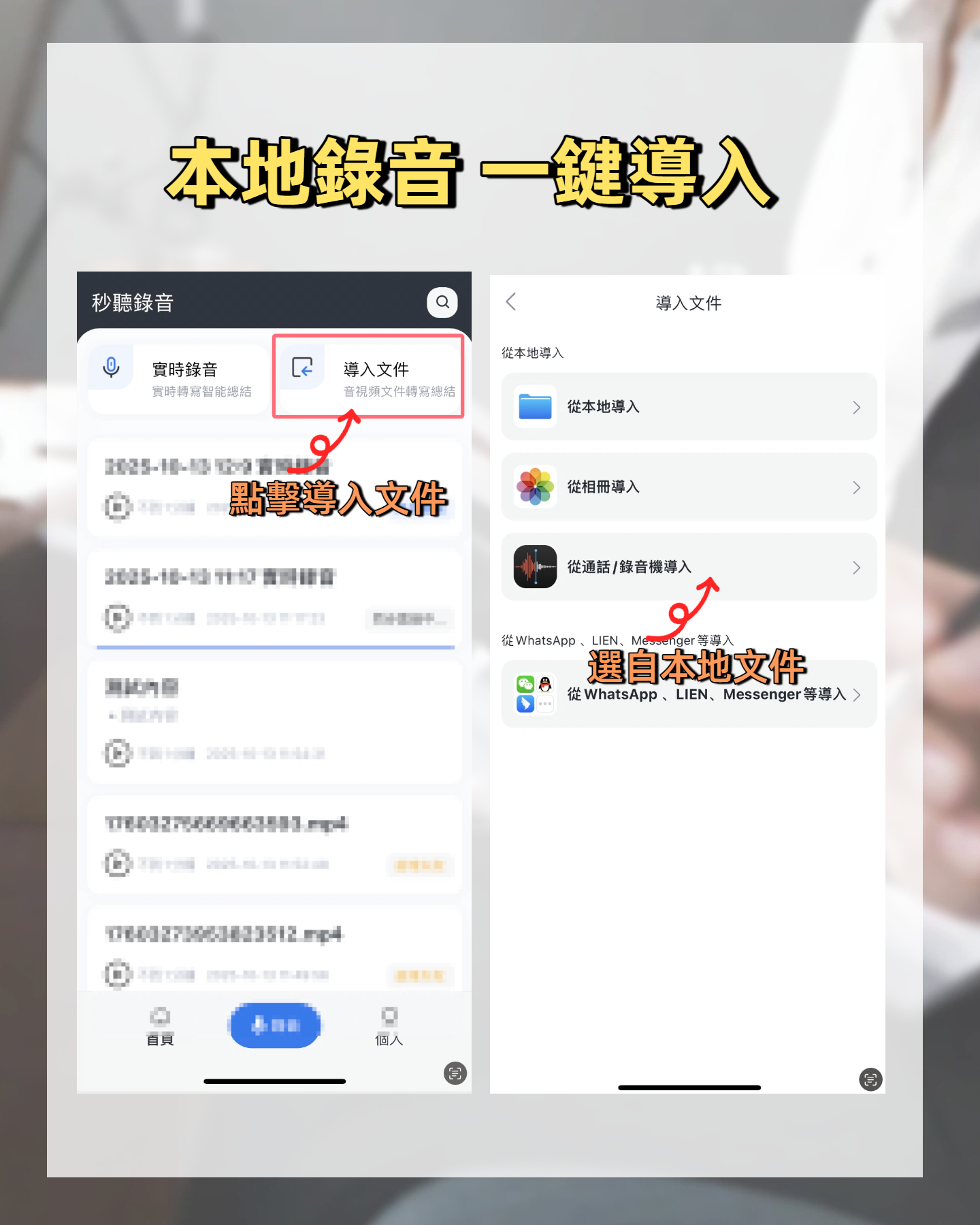
- Price: Tinrec has a free version, with Pro monthly/annual subscriptions based on usage; PLAUD Note hardware itself costs around NT$5,000 (approx. $160) and up, with transcription minutes charged separately via subscription.
- Supported Platforms: Tinrec works across mobile, computer, and web; PLAUD only operates through its mobile app.
- Key Difference: Tinrec can handle real-time recording, file uploads, and online video links; PLAUD focuses on hardware recording, requiring you to record first and then upload for transcription.
This article will compare in detail from four dimensions: "Input Sources and Recording Convenience," "AI Features and Transcription Quality," "Price and Long-Term Cost," and "Cross-Platform and Export Flexibility." After reading, you'll know which one better suits your work style.
Dimension 1 | Input Sources and Recording Convenience
PLAUD Note's strength is its portable voice recorder; a simple press starts recording, making it suitable for occasions where you don't want to pull out your phone. However, it can only record external sounds and cannot directly capture system audio from a computer. To record online meetings, you need to be near the speakers, and ambient noise can easily interfere.
Tinrec, besides real-time recording on mobile, can also record system audio directly from the computer web version, or paste a YouTube video link to transcribe it directly. Even better, it can import previously saved audio and video files for transcription, something PLAUD cannot do at all.
→ Winner: Tinrec clearly excels in the flexibility of recording sources.
Dimension 2 | AI Features and Transcription Quality
PLAUD Note offers transcription, summarization, and AI Q&A, and supports multiple templates, making it a decent AI integration among hardware recorders. However, its post-transcription editing features are limited, mainly outputting verbatim transcripts or short summaries.
Tinrec not only transcribes but also automatically organizes chapters, extracts action items, generates mind maps, and can even have AI generate meeting minutes, reports, or tables based on the recording content. AI Q&A can also directly query all past recordings, like searching your own database.
→ Winner: Tinrec offers deeper AI post-processing and data organization, with more comprehensive features.
Dimension 3 | Price and Long-Term Cost
PLAUD Note requires an upfront hardware cost, with the cheapest model around NT$5,000 (approx. $160). It also comes with limited free monthly transcription minutes (about 300 minutes), and once those are used up, you need a subscription, with an annual fee starting at least NT$3,000 (approx. $100) for sufficient usage. Over the long term, the hardware plus subscription can be a significant expense.
Stop organizing recordings by hand
Upload audio or video and automatically get a transcript, summary, and action items
Tinrec, on the other hand, can be used on your phone or computer. The free version comes with basic transcription credits, and if you need more, you can choose a weekly or Pro plan based on your needs. No additional hardware purchase required, making long-term costs flexible and controllable.
→ Winner: Tinrec offers a lower entry barrier and more advantageous long-term costs.
Dimension 4 | Cross-Platform and Export Flexibility
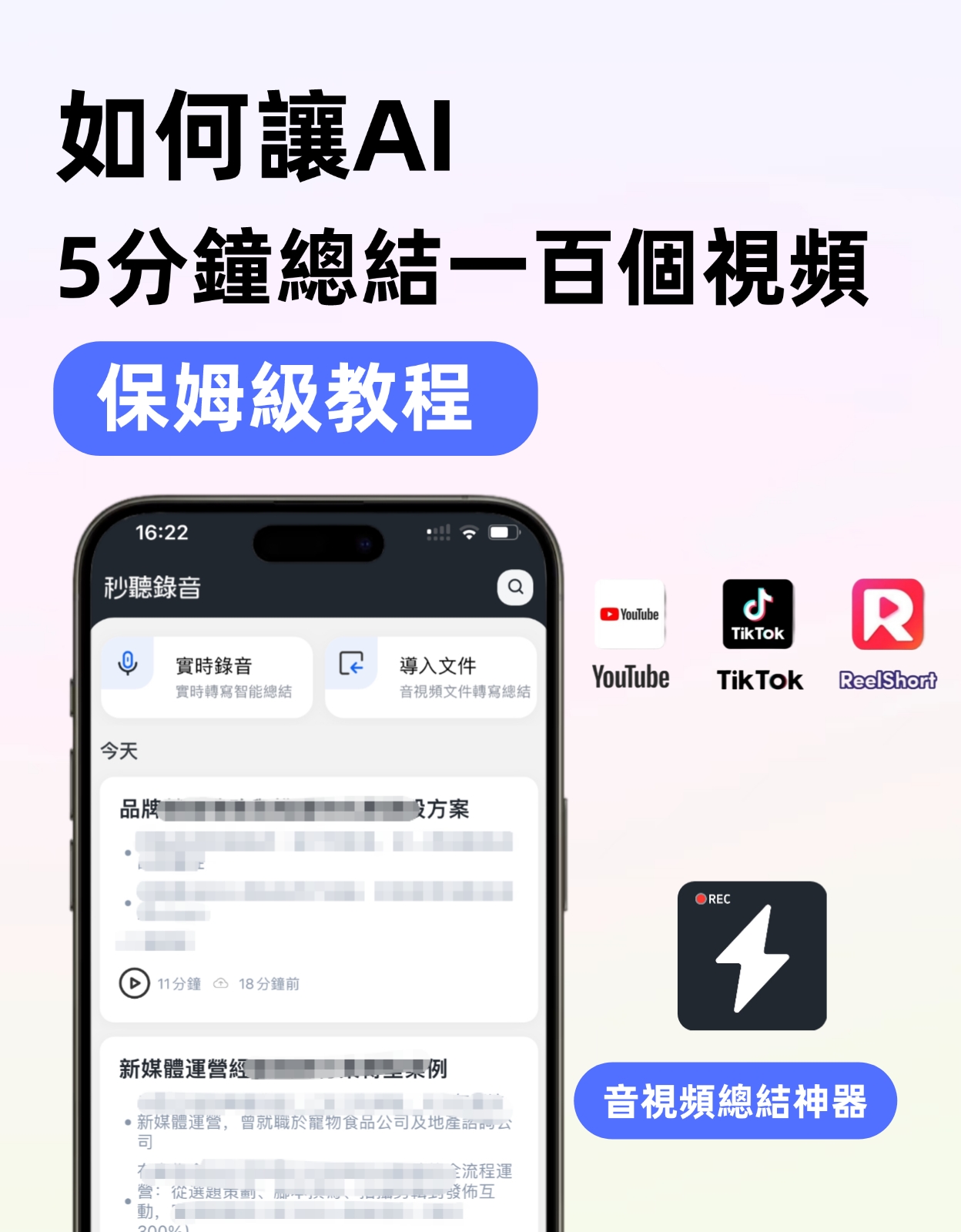
PLAUD Note requires its dedicated app. After recording, processing is done within the app, and export options are mainly text or audio files, with limited choices. If you want to work on your computer, you have to share from your phone first.
Tinrec offers iOS, Android, and web versions with data synchronization, and you can operate directly on a computer. Export formats include verbatim transcript, summary, Word, PDF, plain text, and even one-click sending to cloud tools like Notion and Google Docs, seamlessly integrating with your workflow.
→ Winner: Tinrec vastly outperforms in cross-device usage and export flexibility.
What Are Their Unique Strengths?
Tinrec's Unique Strengths:
- All-in-One Integration: Combines recorder, transcription, summary, action items, Q&A, and report generation in one software, saving hardware costs and eliminating switching hassles.
- Online Video Parsing: Paste links to public videos from YouTube, Bilibili, Xiaohongshu, etc., to directly extract text and key points—something hardware cannot do.
- Historical Database: All recordings and transcriptions are stored in the cloud, searchable and queryable at any time, turning audio files into a reusable knowledge base.
PLAUD Note's Unique Strengths:
- Portable Recording Experience: Physical button, press to record, ideal for meetings, interviews, etc. Long recordings without worrying about phone battery or storage.
- Hardware Battery Life: Independent battery can record for hours continuously, suitable for business trips or all-day meetings.
Summary: Who Should You Choose?
- If you want to start recording and transcribing with just your phone or computer without spending on hardware, and need follow-up organization like action items and summaries → Tinrec is better
- If you often need to organize YouTube or online course videos → Tinrec (paste link directly to parse)
- If you prefer physical buttons, seek an ultimate portable recording experience, and don't mind buying an extra recorder → PLAUD Note is worth considering
- If your workflow requires cross-device and multi-format exports → Tinrec is more versatile
In a nutshell: For most users, Tinrec offers a more complete AI meeting efficiency solution, handling everything from recording and transcription to follow-up organization in one software, without the need for extra hardware. We recommend downloading the free version of Tinrec and trying it with your own meeting recordings.
Frequently Asked Questions
Q: Is the free version of Tinrec sufficient? A: The free version comes with a basic monthly transcription allowance, suitable for light meeting users or occasional transcription needs. If you have several meetings per week, consider the Pro plan.
Q: Is PLAUD Note's transcription accuracy higher than software? A: Transcription accuracy mainly depends on audio quality and AI engine. PLAUD's hardware recording is indeed good, but Tinrec's transcription quality is also excellent with clear audio. PLAUD may have a slight edge in noisy environments, but for typical meeting room scenarios, the difference is not significant.
Q: I already have a voice recorder. Do I still need Tinrec? A: You can use them together. Tinrec can import your recorded audio for transcription and help organize summaries and action items—something ordinary recorders cannot do.
Q: Can Tinrec record online meetings? A: Yes, you can record system audio through the computer web version, compatible with Zoom, Google Meet, etc.
Q: Who is PLAUD Note suitable for? A: It is suitable for those who highly value a portable recording experience, are not used to recording with their phone, or are particular about hardware buttons.
Turn every recording into actionable outcomes
Get 60 free transcription minutes when you sign in. No credit card required.
Related Reading
You might also like

2026 AI Voice-to-Word Tool Buying Guide: 3 Tested & Recommended
This review tests 3 popular AI voice-to-Word tools, from free plans to paid options, to find which one best helps you turn meeting and lecture recordings into structured Word documents quickly, with complete buying advice.

2026 4 AI Agent Context Understanding Tools Horizontal Comparison: AI Assistants That Understand Conversations Better
Want to know which tools truly understand your conversation context? This article compares AI Agent context understanding capabilities and uses Tinrec as an example to show how AI Q&A can improve meeting efficiency.

2026 Comparison of 5 AI-Powered Recording Tools with Multi-Round Dialogue: Which One Can Really Help You Extract Key Information from Recordings?
AI recording tools do more than just transcribe speech; multi-round dialogue queries are the key. This article tests 5 audio/video transcription tools with AI Q&A features, including Tinrec, Otter.ai, Fireflies.ai, Granola, and PLAUD, showing how to use conversations to deeply mine recording content, with ready-to-use prompt templates.

Free AI Meeting Note Solutions for 2026: A Look at 5 Tools
Can't keep up with notes in class? Group discussions where no one remembers the conclusions? This article tests 5 AI meeting note tools from a student's perspective, telling you how to choose free plans and which one is best for recording lectures and reviewing for finals.
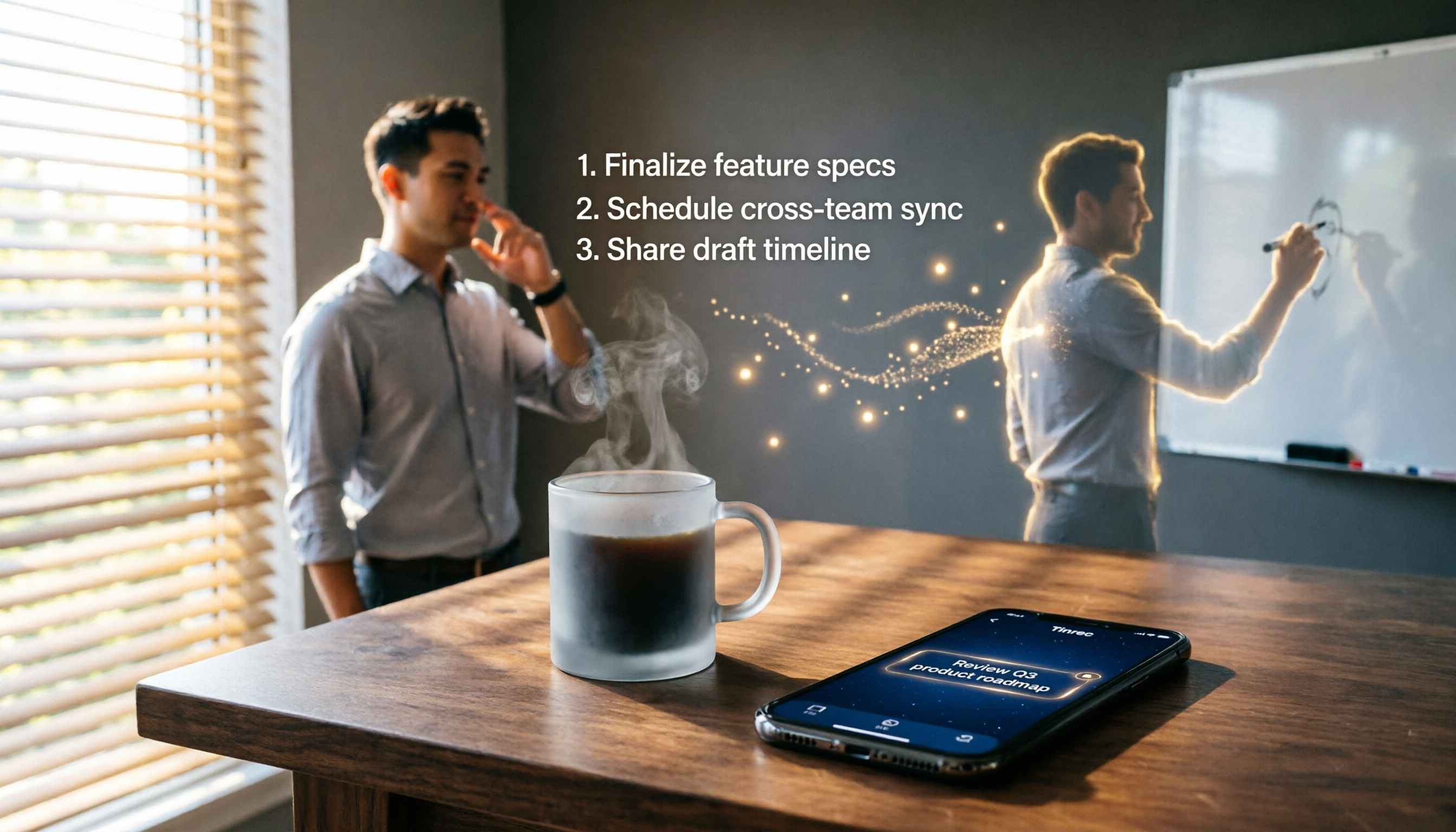
2026 Complete Guide to AI Agent Task Extraction: Automatically Capture To-Dos from Meetings with Tinrec
This article introduces Tinrec's AI Agent task extraction feature that automatically captures action items from meetings, interviews, or lectures, eliminating the need for manual note-taking.

Best AI Meeting Assistant in 2026? We Tested 5 and Found the Most Complete One
I attend 15 meetings a week, and the worst part is the post-meeting cleanup. After testing 5 AI meeting tools on transcription quality, AI summaries, action item extraction, and cross-platform support, here's the one that truly turns recordings into usable data.
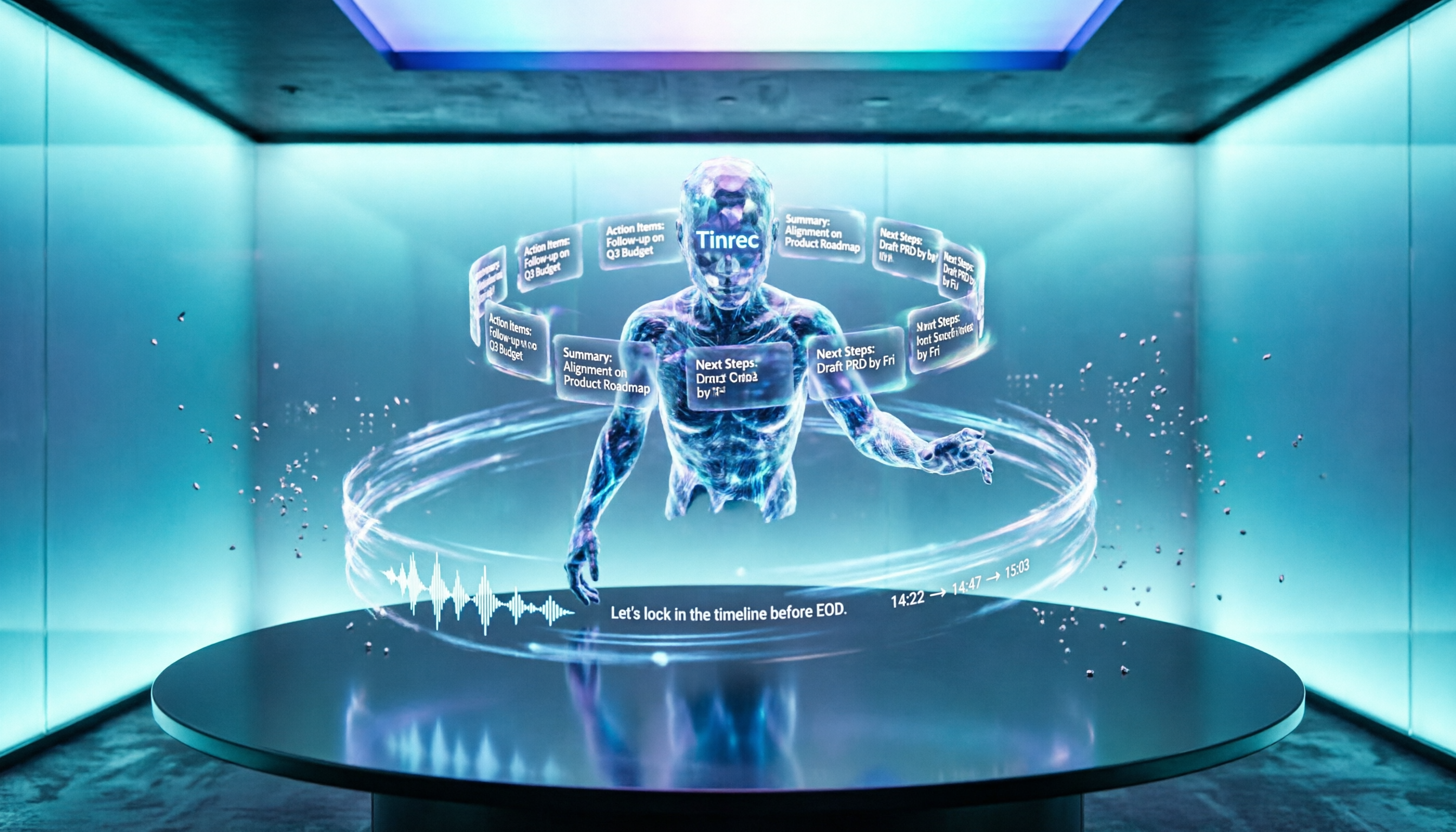
How to Automatically Organize Meeting Notes with AI in 2026: A 5-Step Guide
Spending two hours in a meeting and another two hours writing meeting notes? This guide teaches you how to use AI speech-to-text tools to auto-generate summaries and to-do lists. We tested Tinrec, Otter.ai, and 5 other services, covering everything from selection to pitfalls.

Tinrec vs Otter.ai 2026: In-Depth Comparison Across 4 Dimensions – Which Is Best for Cantonese-Speaking Users for Meeting Reviews?
Hong Kong professionals have meetings every day and need AI to help with reviews? We tested Tinrec and Otter.ai head-to-head, comparing Cantonese accuracy, multi-source support, AI Q&A, and export features. Find out which tool saves time and prevents overtime for Central office workers.
2026 AI Administrative Assistant Tools: No Hardware Needed + Cross-Platform Audio Transcription
Administrative work often gets buried under meeting recordings, interviews, online videos, and more. This article compares two AI administrative assistant tools: the software-based Tinrec and the hardware-based PLAUD Note. We analyze cost, input sources, post-processing capabilities, and cross-platform support across four dimensions to help you find the best solution for organizing audio notes and tasks.