

Turn recordings into transcripts and summaries in minutes
Upload audio or video for multilingual transcription, AI notes, and action items
Last month, while preparing for a presentation, I watched over a dozen YouTube tutorials and podcasts, hoping to pull out key points for my notes.
But just one hour of content took two afternoons to listen and manually type notes.
Later, I switched my approach and not only saved time but ended up with clearer notes than manual ones.
The key was picking the right recording-to-text tool and using it smartly.
If you're a student buried in online lecture recordings, seminar audio files, or trying to quickly extract highlights from podcasts, this article is for you.
Lecture Recordings, Online Class Videos, Podcasts… You Need More Than Just a Transcription Tool
Most students' daily grind looks like this:
You record a lecture, but never find time to replay it at home.
You find a great YouTube tutorial, but 30 minutes in, you have no idea where to start taking notes.
The podcast host shares a super useful insight, but weeks later you can't recall the details.
These struggles share the same root: you capture the audio and video, but fail to turn them into "learning materials" you can review, search, and even think upon.
So, you need more than an app that just converts speech to text. You need a tool that transforms messy audio/video content into a structured, searchable, and actionable knowledge base.
The comparison below is built from that perspective.
Before Choosing a Recording-to-Text App, Understand These 5 Key Points
Many students first look only at "free minutes" or "accuracy rate."
But honestly, those are just entry thresholds. What really determines whether the tool will support you through the entire semester are these points.
1. Can It Help You "Understand" the Content, Not Just Transcribe?
Turning audio into text is only the first step.
Real time-saving comes when the tool can automatically generate summaries, split into chapters, and highlight key points.
Otherwise, you're just swapping listening time for reading time.
2. Is the Input Source Wide Enough?
Your learning materials won't all come from phone recordings.
They could be old audio files on your computer, public classes on YouTube, short language lessons on TikTok, or even a podcast link.
If the tool can only record, handling other sources becomes a pain.
3. Can You Ask the Recording Questions Like Asking a Teaching Assistant?
This is the feature I think makes the biggest difference.
When you've accumulated dozens of lecture recordings, the biggest hassle isn't transcription—it's "I remember the professor mentioned a concept in one of the lectures, but which one?"
If you can type a question and get answers directly from your recording history, you save yourself from scrolling through full transcripts.
4. Is It Easy to Export to Your Own Note-Taking System?
The transcribed text, summaries, and highlights eventually need to go into your go-to tool like Notion, Google Docs, or OneNote.
If the app locks everything inside, your workflow breaks.
5. Is the Free Version Enough for You?
Many students have limited budgets. You need to check:
Can the free quota cover a week's classes? Does the paid plan match your usage? Or would a weekly card solve short-term intensive needs?
With these criteria in mind, you'll know which tool truly fits your learning pace.
Tinrec (Miao Ting Lu Yin) — Our Top Pick for Students' Study Organization
Tinrec is an AI-powered organization tool that supports live recording, audio/video file uploads, and web video link transcription. It's available on iOS, Android, and the web.
It positions itself as a "workspace for audio and video organization," which is especially critical for students. Let me illustrate with three real study scenarios.
Scenario 1: Lecture Recording with Real-Time Transcript, Plus Summary and Action Items After Class
In the past, you'd record a lecture and listen again at home to take notes.
With Tinrec, you start live recording in class, and it transcribes in real time.
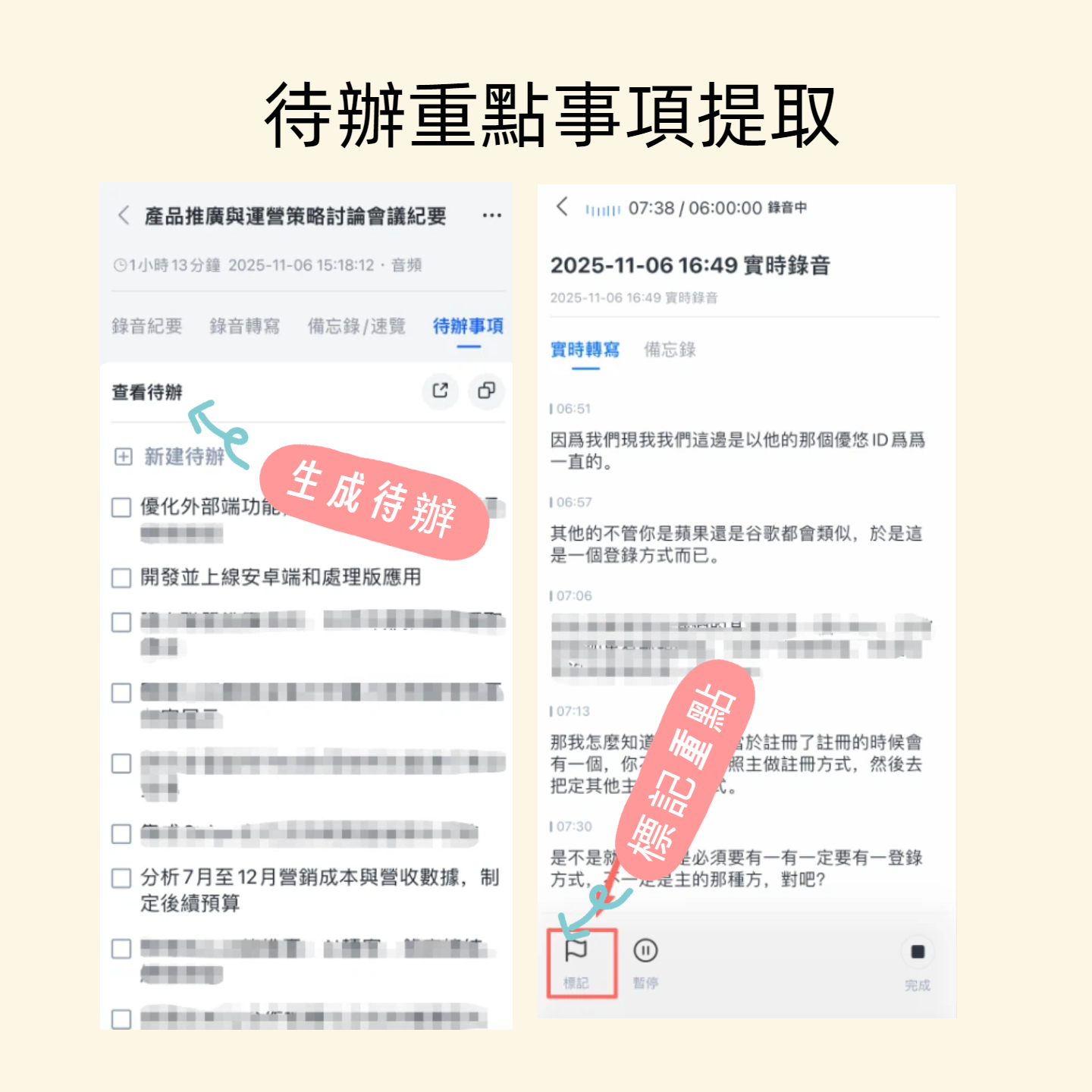
(Screenshot: Live recording transcription interface, arrow pointing to the real-time transcript area)
Even better after class: the AI automatically generates a summary, chapters, and even action items from the lecture.
No need to listen again; just review these sections for quick revision.
Scenario 2: Paste a Web Video Link to Turn YouTube, Bilibili, or TikTok Tutorials into Notes
This is the feature that amazed me most.
Graduate students often need reference materials from online public classes or tutorial clips, but have no time to watch slowly.
Stop organizing recordings by hand
Upload audio or video and automatically get a transcript, summary, and action items
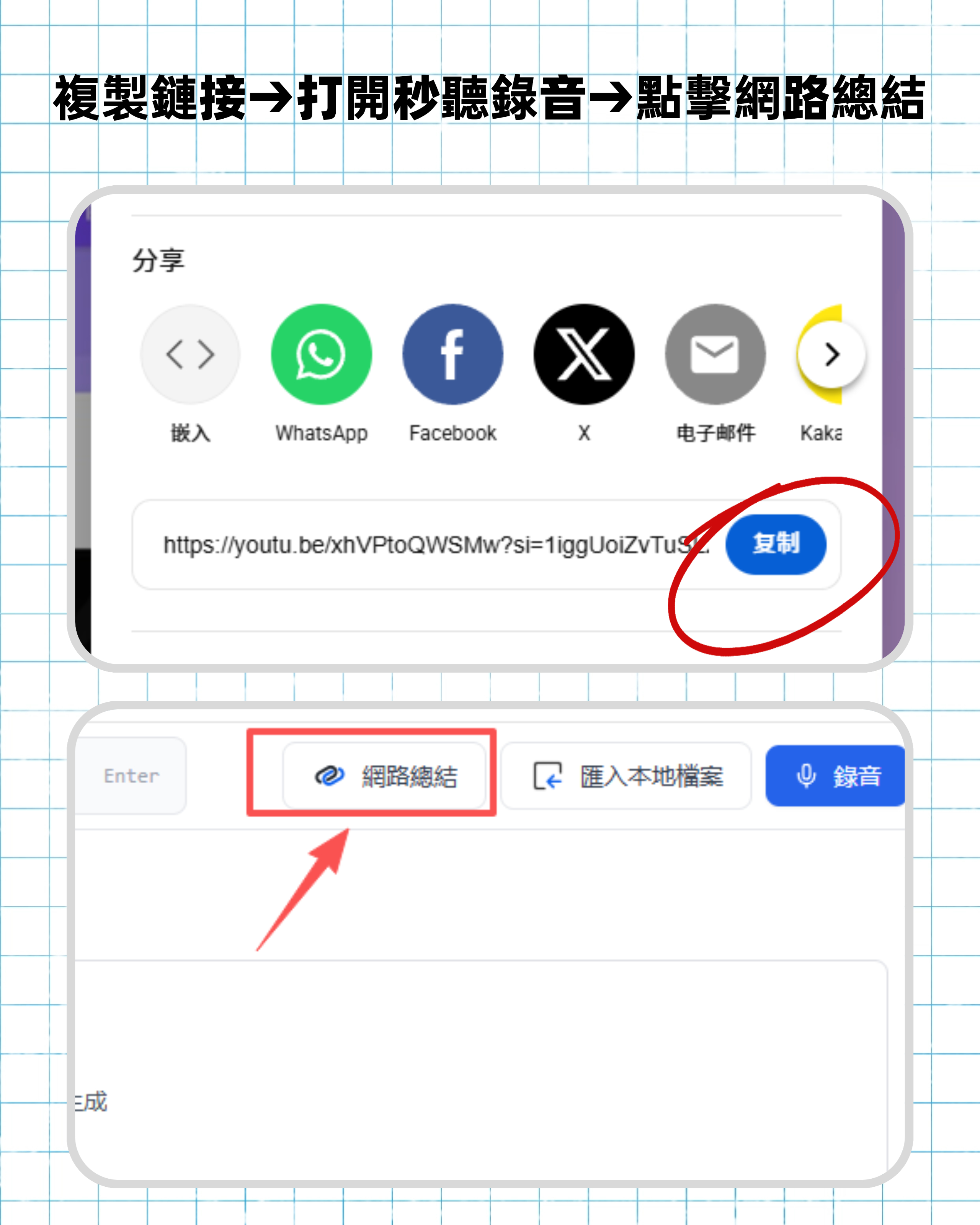
Tinrec's approach: copy the video link, paste it, and it grabs the audio, transcribes it, and gives you a summary with segmented highlights.
(Screenshot: Summary and chapter view after parsing a web video link)
I tested a 20-minute tutorial video: from pasting the link to getting structured notes took about three minutes.
That's rare among competitors in the same price range.
Scenario 3: Ask AI About Past Recordings Directly, No More Digging Through Dozens of Transcripts
The worst pain at the end of the semester: you have a whole semester's recordings and want to find where the professor mentioned a specific theory.
Tinrec's AI chat query lets you type, "Which lecture last semester talked about diminishing marginal utility?"
The system searches all your past recordings and transcripts based on semantic understanding, not just keywords.
This turns your course recordings into a conversational personal knowledge base.
Most competitors at this price still only let you manually Ctrl+F.
Test Results: Performance in a Real Classroom
We tested a 5-minute Chinese lecture recording (normal classroom, slight background noise, recorded on iPhone 15). Tinrec's character error rate was about 8.3%.
For a real classroom setting, this is good enough to use as a first draft without much correction.
Tinrec's Pros from a Student's Perspective
- Broadest input sources: Not only recordings, but also files and video links, so all your learning materials go through one workflow.
- Strongest post-transcription comprehension: summaries, chapters, to-dos, AI Q&A turn passive recordings into active review.
- Cross-platform with export: record on phone, view on computer, export to Notion or Google Docs seamlessly.
Limitations: Honest Disclaimer
The free plan has a basic monthly transcription quota (enough for a few classes). Heavy users may need a paid plan.
But for most students with 3–5 classes per week, the free version is plenty to try out.
During exam weeks or heavy literature review, a weekly card solves short-term needs without committing to an annual plan.
Who It's For
If your learning materials include lecture recordings, online videos, and podcasts, and you want to ask questions, review quickly, and export highlights to your own note tool—Tinrec is the most complete choice.
What About Other Options?
Of course, no tool is absolutely good or bad; it's about fit. Here are alternatives under different conditions.
Otter.ai: Strong for English meetings and classes. Free tier gives 300 minutes per month, very generous. But its core scenario is online English meetings, with limited optimization for Chinese online classes or Mandarin podcasts. It can't directly paste YouTube or Bilibili links for processing. If you're in English-taught courses or international meetings, Otter is reliable; but for Chinese content, Tinrec's accuracy and Chinese-centric design work better.
Notta: Good transcription speed and multilingual support, directly competes with Tinrec. However, Notta leans more as a "transcription engine"—you get transcripts and translation, but the subsequent understanding and action (AI summaries, Q&A, auto to-dos) are less complete than Tinrec. Notably, it lacks direct web video link parsing, which is a must-have for students who frequently watch YouTube tutorials.
PLAUD Note: A standalone AI recording hardware, beautifully designed and portable. But it requires extra budget for the device, a significant expense for students. It mainly handles its own recordings; for old audio files on your computer or pasting a video link, PLAUD can't help. Tinrec needs no extra hardware—your phone is your recorder—and can manage all audio/video materials together.
Avoid These 3 Common Mistakes Students Make When Choosing a Recording-to-Text App
Even with the right tool, using it wrong can be painful. Here are lessons from my own experience and that of classmates.
Mistake 1: Only Look at Free Minutes, Ignore Content Organization
Many students start by picking the app with the most free minutes, only to end up with piles of transcripts they never have time to read, let alone turn into notes.
Real time-saving comes from tools that summarize, segment, and extract key points. Instead of unlimited minutes but raw text, choose a tool with solid AI organization to turn every minute of recording into effective learning material.
Mistake 2: Only Handle on Mobile, No Cross-Platform Concept
You record in class on your phone, but reviewing and organizing notes on a big computer screen is much more efficient.
If your recording-to-text app has no web or desktop version, you're stuck scrolling through transcripts on a small screen, which is very inefficient.
Mistake 3: Only Use for "Transcription," Forgetting It Can Be Your Learning Assistant
This is the biggest waste.
Most people treat the tool as a recorder+typewriter: transcribe and leave it.
But features like Tinrec's AI chat query let you ask in natural language, "What are the key points for the final exam?" or "Where did the teacher mention the experimental procedure?" — that's what turns recordings into a review powerhouse.
Summary: Which One Should You Choose?
Back to the original question: how should students pick a recording-to-text app?
If your learning materials revolve around Chinese courses, online class videos, and podcasts, and you want not just plain text but learning assets that help with review, search, and export, Tinrec is the best match for this need.
Quick scenario guide:
- Need Chinese lecture transcription, online video organization, and AI Q&A for highlights → Tinrec
- All-English courses, international meetings, low need for Chinese → try Otter.ai
- Already have a recorder habit, just want transcription → Notta is competitive, but lacks AI understanding and action tools
- Use dedicated hardware and have budget → PLAUD Note is portable, but can't handle old data from your phone or computer
Finally, my advice is to download Tinrec's free version and try it. The monthly quota is enough to record a few classes or process a few web videos. Experience firsthand how much effort you can save going from "recording" to "actually usable notes."
Test it step by step, and you'll master this method, making every semester's recordings more than just space-consuming files.
Turn every recording into actionable outcomes
Get 60 free transcription minutes when you sign in. No credit card required.
Related Reading
You might also like
How to Convert Report Recordings to Text in 2026? A Complete 5-Step Guide
Overwhelmed by piles of meeting, interview, and course recordings? This article uses Tinrec and Yating Transcript as examples to walk you through 5 steps from recording to report completion, teaching you how to efficiently organize audio files and choose the right tool to easily turn recordings into usable report data.

Best Interview Recording Tools 2026: Tested 5, This AI Q&A Tool Tops
The demand for interview recording organization tools has surged. AI tools can quickly transcribe, highlight key points, and even let you query specific answers via chat. This article tests 5 solutions, from free to professional, and finds that Tinrec (Seconds Audio) is the most practical for deep interview analysis because it is the only one offering AI Q&A and comprehensive post-organization features.

Tutorial: 2026 AI Meeting Note Tool – Multi-Source Audio/Video Transcription, AI Summaries & To-Do Automation
The most comprehensive tutorial for AI meeting note tools in 2026, using Tinrec as an example. Learn how to automatically generate meeting summaries and to-do items with AI, supporting multi-source audio/video transcription. Hands-on review and buying tips for small to mid-size team managers.

2026 Student Classroom Notes AI Free Plan Roundup: 3 Tools at a Glance
This article compares 3 free AI tools for classroom notes: Tinrec, Otter, and Notta. Using Tinrec as an example, it provides a complete tutorial on how to use AI to convert recordings to text, generate summaries, and create key notes to help students quickly organize lecture content.

Best WeChat Voice-to-Text App? 2026 Test: 3 Top Picks with the Best Free Plan for Students
Tired of WeChat voice messages? We tested 3 tools from a student's perspective to find the best free plan, highest accuracy, and AI chat query feature.

Tinrec vs Otter 2026: A 5-Dimensional Comparison – Which Is the Best Free Recording Tool for Students?
A senior MIS student tests Tinrec and Otter in 5 key areas—classroom recording, Chinese speech recognition, cross-platform support, and more—to find the best free recording app for students.

Tinrec vs Otter.ai in 2026: A 5-Dimensional Comparison – Which Is Better for Chinese Speech-to-Text?
Choosing the best speech-to-text software in 2026? This article provides a hands-on comparison between Tinrec and Otter.ai across five key dimensions: real-time transcription, AI summaries, Chinese language support, and post-processing applications, helping you decide which tool truly turns audio into usable knowledge.

Tutorial: 2026 Speech-to-Text Tools with AI Query & Auto To-Do – Say Goodbye to Overtime for Meeting Notes
Tested 5 speech-to-text tools from a mid-level manager's perspective to show how AI recording assistants save meeting cleanup time. This article deeply analyzes Tinrec's core features, pros/cons, and competitor comparisons, plus buying tips and pitfalls to avoid.

2026 Complete Guide to Meeting Note Apps for College Students: Easily Handle Class Notes and Group Discussions with AI Voice-to-Text
College students need to efficiently organize class highlights and meeting notes? This guide shares hands-on experience on how AI meeting note apps save time and boost learning efficiency, using Tinrec as an example to illustrate real-world applications and key buying tips.