

Turn recordings into transcripts and summaries in minutes
Upload audio or video for multilingual transcription, AI notes, and action items
Are you constantly interviewing candidates for your company or going to job interviews yourself, then having to listen back to recordings and type up transcripts? Always staying late for overtime? We tested 4 tools on the market and found the most convenient one is Tinrec (Instant Playback). Not only does it transcribe quickly, but it also automatically generates summaries, highlights key points, and even creates a to-do list. Below we guide you step by step on how to use Tinrec for interview recordings, so you never have to stay up late typing transcripts again.
Before You Start | What You Need to Prepare
- A smartphone or computer: Works on iPhone, Android, and web version. Tinrec's multi-platform sync is very convenient.
- Download the Tinrec App: Free download from App Store / Google Play. Login with Google or Apple ID, no complicated registration needed.
- Prepare your interview recording: Can be recorded live on the spot, or a pre-recorded audio file (supports mp3, m4a, wav, etc.).
- Stable internet connection: Real-time transcription requires internet; if interviewing in a basement, it's best to record first and upload later.
Step 1 | Record the Interview
The goal here is to get a clear recording—everything else depends on it.
If you are interviewing in person, open Tinrec and press the red record button, place your phone in the middle of the table, no more than one meter from the speakers. The clearer the audio, the more accurate the transcription, saving you a lot of proofreading time. If it's a video interview (Zoom / Google Meet), use the desktop version of Tinrec to directly record system audio, even filtering out background noise.
Why do this? Because the limit of AI transcription is determined by audio quality. If you record messy audio, no engine can salvage it. Rather than regret later, spend an extra ten seconds positioning the device during recording.
Once done, the main screen will show a new recording with duration and file size.
(Illustration: Candidate and HR sitting across from each other, phone on table recording, screen showing real-time dialogue text)
Step 2 | Let AI Generate a Transcript
After recording, tap the recording file and Tinrec will automatically start transcribing. Typically, for a few minutes of recording, it produces text in about ten seconds. It automatically separates speakers (Speaker 1, Speaker 2) and skips irrelevant filler words.
If you are importing an old recording, go to the "Import" section and select the file. It supports audio and video, even YouTube interview clips (must be public videos). This feature is not available in many tools; Otter only has it in Pro, and Notta limits formats.
(Illustration: A person in a cafe with a laptop, viewing the transcribed transcript on screen, clean and tidy)
Step 3 | Quick Proofreading of the Transcript
AI is not perfect, especially Cantonese sometimes gets it wrong (e.g., '唔該' (thank you) becomes '唔乖'). But Tinrec has a killer feature: it highlights low-confidence words so you can focus check them.
You can listen to the recording while editing the text. Best of all, it supports a "Notes" feature, allowing you to mark key points as you go, such as the candidate's expected salary, notice period, etc.
Stop organizing recordings by hand
Upload audio or video and automatically get a transcript, summary, and action items
Proofreading doesn't require going through the whole thing; use the AI summary feature (next step) to find key parts and check those.
(Illustration: Highlighted key points in the transcript with a notes pop-up)
Step 4 | Let AI Generate an Interview Summary
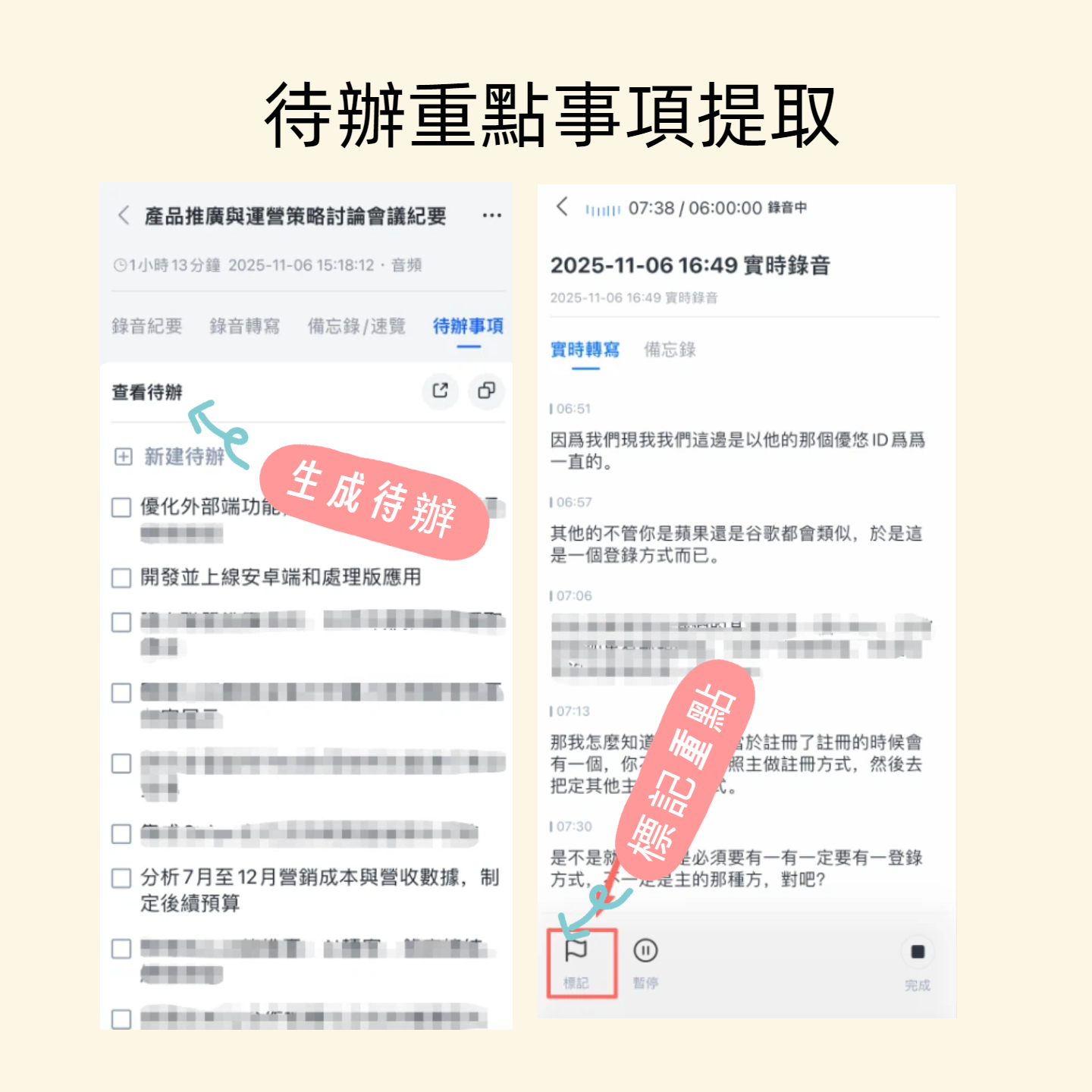
This step is where Tinrec leaves competitors behind. It doesn't just produce a transcript; it can generate a structured interview report:
- Press the "AI Summary" button, and it will automatically summarize the key points of the interview, e.g., "The candidate has 5 years of Java experience but limited management experience."
- Use "Task Extraction," and it will output a checklist, e.g., "Prepare the technical test needed before the second round next week."
- Most impressively, "AI Chat Query" lets you directly ask: "Did this candidate mention why they left their previous job?" It will instantly find the answer in the transcript.
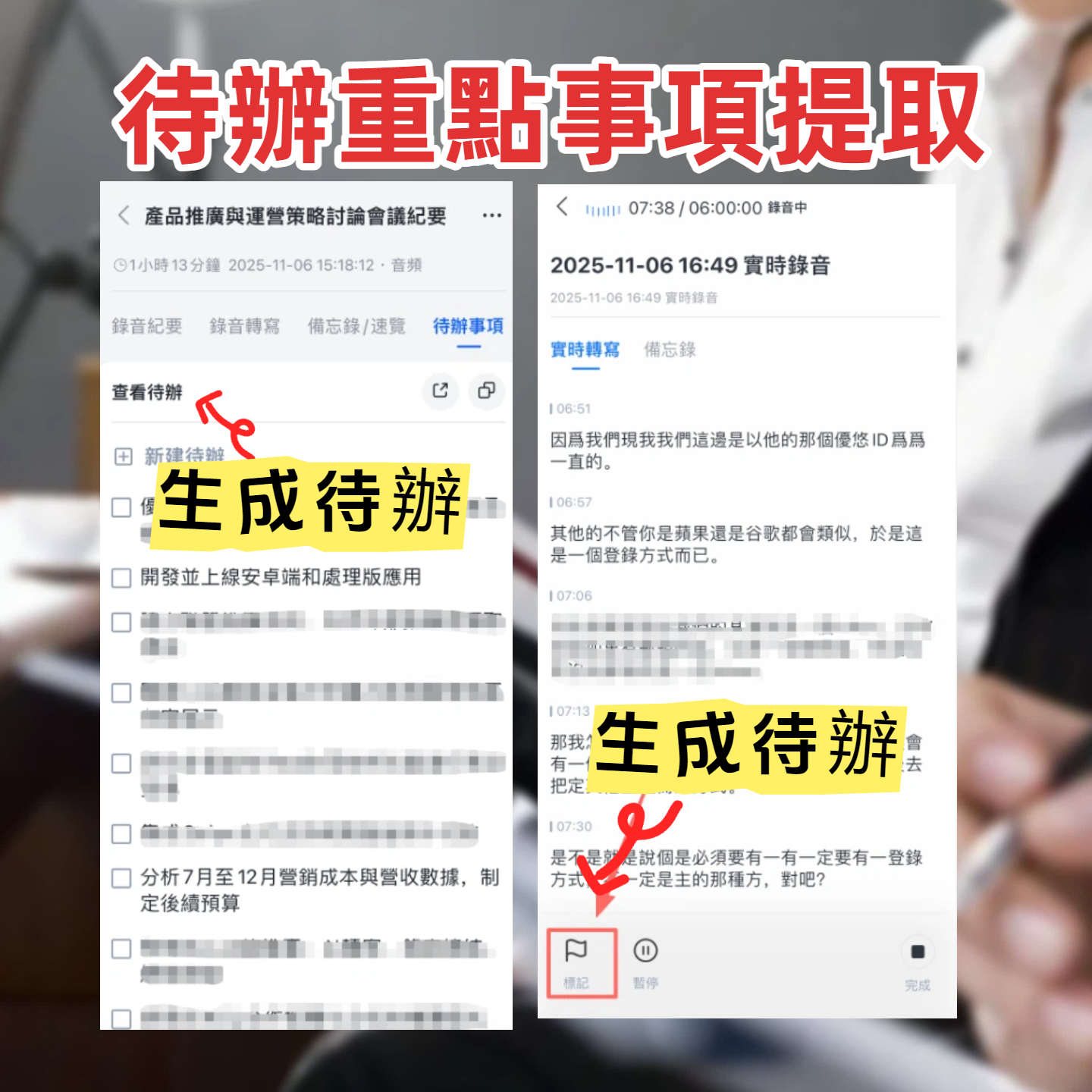
(Illustration: A person smiling at a computer, screen showing AI-generated interview summary with strengths, weaknesses, and recommendations)
Step 5 | Export and Share
After organizing, you can export as PDF, Word, TXT, or even share a link directly with HR colleagues. No more back-and-forth via messaging apps.
If you use Notion or Google Docs, Tinrec can output directly, streamlining the process. This is better than hardware like PLAUD—they require export and then manual copy.
(Illustration: Phone screen showing various export formats including PDF, Word, and a share link)
Common Questions and Troubleshooting
Q: The recording has a lot of noise, and the transcription is full of errors. What should I do? Usually, the environment is too noisy. Tinrec has built-in smart noise reduction; turn it on in settings before recording. If you are using a pre-recorded file, you can select the "High Noise Environment" mode after import. Most transcription tools on the market don't have this option; they just use the default mode.
Q: Multiple people talking, and it can't tell who is who? Tinrec's speaker separation works well, especially for in-person meetings, as long as people don't talk over each other. If overlapping is severe, you can manually merge or split paragraphs later. Fireflies and Otter are stronger in English environments, but for Cantonese speaker separation, Tinrec is still the most reliable.
Q: If the interview is in Mandarin or English, can Tinrec handle it? Yes. It supports over 50 languages, including mixed Chinese and English. You can set it to "Auto Detect Language" in settings, and after transcription, you can even translate it with one click.
(Illustration: Phone interface showing language selection with options like Cantonese, Mandarin, English, etc.)
Advanced Tips | 3 Ways to Double Your Efficiency with Tinrec
1. Use AI Chat to Find Key Points Directly No need to scroll around. Just ask the AI: "What salary is the candidate asking for?" or "Do they have management experience?" Tinrec will find relevant sentences in the transcript and highlight them for you. Competitors like Notta and Otter have AI chat, but most are limited to English; Tinrec is one of the few that supports natural language queries in Cantonese.
2. Build an Interview Database Keep recordings and summaries after each interview. Months later, you can search past candidates. For example, search for "applicants who know Python," and Tinrec will search across recordings. This feature is not even possible with PLAUD—they have a hardware mindset and lack cloud-based long-term storage.
3. Cross-Platform Handoff Record on phone, organize on computer. Tinrec automatically syncs everything; you can mark key points on your phone during the commute, and when you open your computer at the office, it's already updated. Unlike some tools that require manual export and import.
If You Don't Use Tinrec, Here Are Other Options
- Otter.ai: Strong in English, but Cantonese transcription has many errors, and the free version only has 300 minutes. Suitable for companies with all-English interviews.
- Notta: More minutes, but the AI summary after interviews is basic, lacking AI chat query. Suitable for users who only need cheap transcription.
However, if you need a one-stop solution for recording, transcription, report generation, and searching past records, Tinrec remains the most comprehensive choice.
Summary
By mastering these 5 steps, you can turn any interview recording into text, automatically generate summaries and to-do lists, and even use AI to ask for key points. No more overtime listening to recordings, and you can build your own talent database. Next step: Download the free version of Tinrec, try it with an old recording. The monthly allowance is enough for several interviews. Getting off work early is the real win!
Turn every recording into actionable outcomes
Get 60 free transcription minutes when you sign in. No credit card required.
Related Reading
You might also like
2026 Tinrec vs Otter.ai: 5-Dimension Comparison – Which One Is Better for Auto Note-Taking in Online Classes?
Looking for an automatic note-taking tool for online classes? This article compares Tinrec and Otter.ai across 5 key dimensions including transcription accuracy, AI summarization, and cross-platform support to help you choose the best solution for recording and organizing lecture notes.
2026 Online Course AI Notes Complete Guide: A Full Tutorial on Automatic Summary and Key Point Generation
Tired of spending hours transcribing online course recordings? This guide teaches you how to use AI recording tools to turn course audio into structured notes, covering everything from purchase tips to real-world recommendations and pitfalls to avoid.

Best Online Class Captioning Tools in 2026: Tested 3, This AI Transcription is Perfect for Students
Tired of scrambling to take notes during online classes? We tested 3 popular captioning tools, comparing Cantonese recognition, AI summary features, and cross-platform support. Here's our top pick for students and professionals—no more staying up late to catch up on transcripts.

How to Transcribe Interview Recordings for Graduate Students in 2026: A 5-Step Complete Guide
Graduate students conducting interview research often find transcription time-consuming and error-prone? This article explains how to use Tinrec to transcribe audio in seconds, completing interview transcription, summarization, and key point marking in 5 steps, allowing you to focus on research analysis rather than typing.
How to Convert Report Recordings to Text in 2026? A Complete 5-Step Guide
Overwhelmed by piles of meeting, interview, and course recordings? This article uses Tinrec and Yating Transcript as examples to walk you through 5 steps from recording to report completion, teaching you how to efficiently organize audio files and choose the right tool to easily turn recordings into usable report data.

Best Interview Recording Tools 2026: Tested 5, This AI Q&A Tool Tops
The demand for interview recording organization tools has surged. AI tools can quickly transcribe, highlight key points, and even let you query specific answers via chat. This article tests 5 solutions, from free to professional, and finds that Tinrec (Seconds Audio) is the most practical for deep interview analysis because it is the only one offering AI Q&A and comprehensive post-organization features.

Tutorial: 2026 AI Meeting Note Tool – Multi-Source Audio/Video Transcription, AI Summaries & To-Do Automation
The most comprehensive tutorial for AI meeting note tools in 2026, using Tinrec as an example. Learn how to automatically generate meeting summaries and to-do items with AI, supporting multi-source audio/video transcription. Hands-on review and buying tips for small to mid-size team managers.

2026 Student Classroom Notes AI Free Plan Roundup: 3 Tools at a Glance
This article compares 3 free AI tools for classroom notes: Tinrec, Otter, and Notta. Using Tinrec as an example, it provides a complete tutorial on how to use AI to convert recordings to text, generate summaries, and create key notes to help students quickly organize lecture content.

Best WeChat Voice-to-Text App? 2026 Test: 3 Top Picks with the Best Free Plan for Students
Tired of WeChat voice messages? We tested 3 tools from a student's perspective to find the best free plan, highest accuracy, and AI chat query feature.