

Turn recordings into transcripts and summaries in minutes
Upload audio or video for multilingual transcription, AI notes, and action items
Why Do You Need a Meeting Note App?
I attend about 15 meetings per week—weekly meetings, project status meetings, one-on-ones, cross-department coordination. My biggest headache used to be not the meetings themselves, but what came after. Every meeting generates a pile of decisions and to-dos, and my real work only started when the meeting ended. Handwritten notes are too slow; listening back to recordings takes too much time; asking my assistant to sort things out—she's busy too.
According to surveys, office workers spend an average of 5 hours per week organizing meeting notes, equating to 20 wasted hours each month. In this article, I take a mid-level manager's perspective to test 5 of the most discussed meeting note solutions on the market—from free to paid, from pure recording to AI-powered organization—so you can see at a glance which one best fits your workflow.
Option 1: Tinrec (also referred to as Miaoting Recording) – The Most Complete AI Recording Assistant
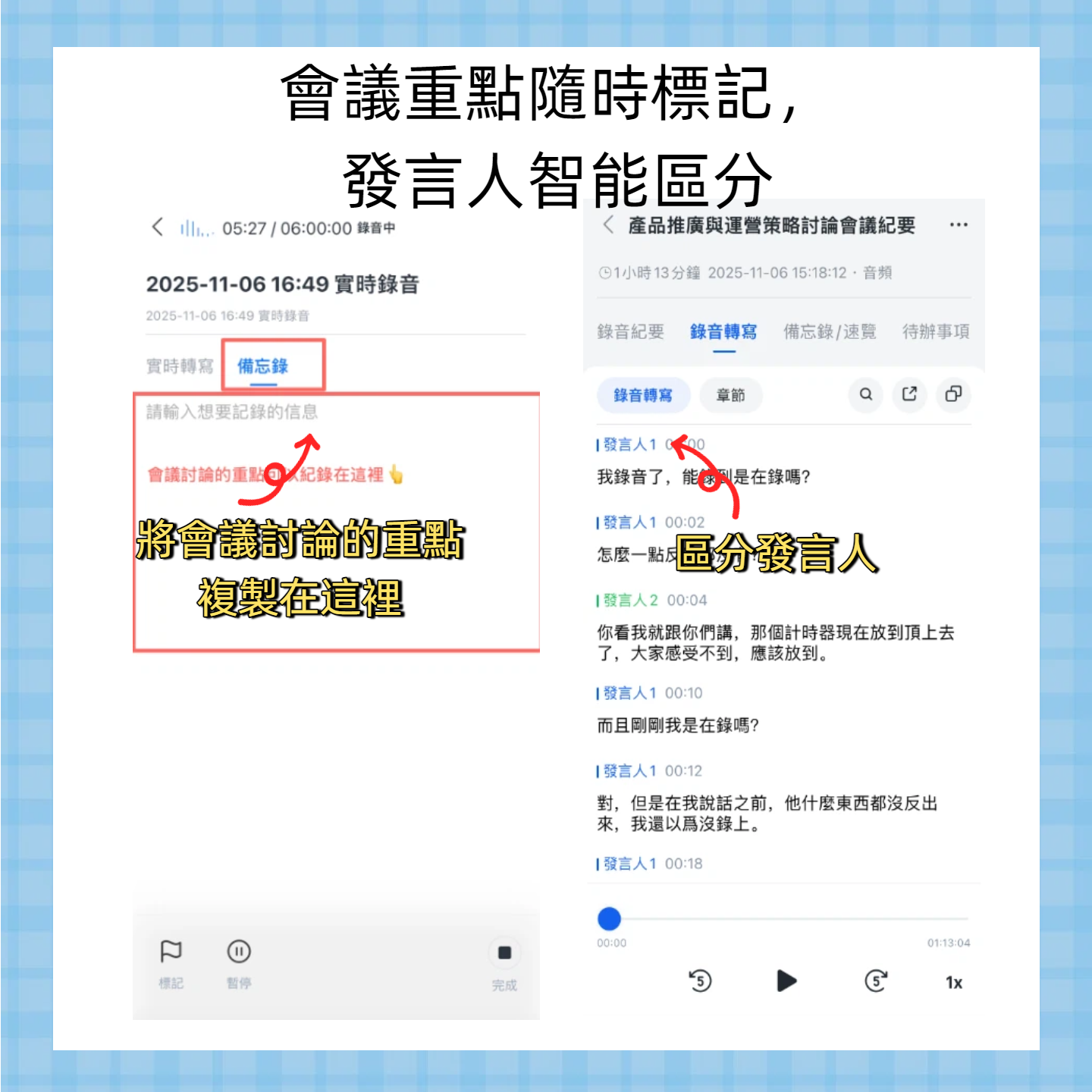
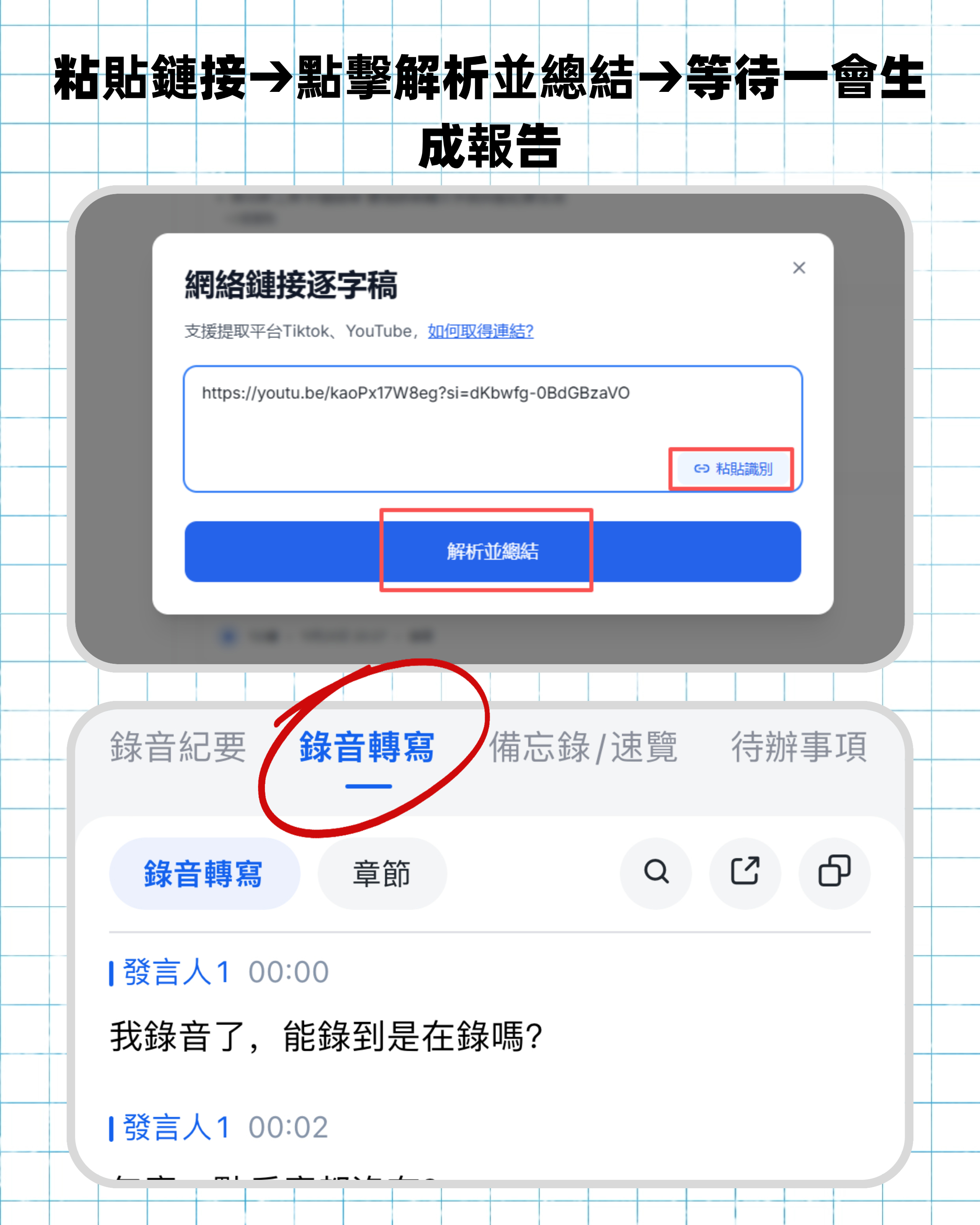
Tinrec is currently my go-to tool. It's more than just a voice-to-text app; it's a workstation that turns audio and video into actionable knowledge. You can record live, upload audio files, or paste links to online videos like YouTube and TikTok, and it will automatically transcribe them, generating summaries, chapters, to-do items, and even allowing you to ask AI questions about the content.
My three most common use cases: auto-generating meeting minutes after weekly meetings and sending them directly to the team and boss; dropping recordings from cross-department coordination meetings and asking AI, "What was the deadline discussed last time?" to get the answer in seconds; converting training video links into text notes for easy search by new hires.
It supports iOS, Android, and web versions, so you can use it on mobile or desktop. Its Chinese recognition accuracy is high. The free version provides a basic monthly quota, enough for people who attend about 3 meetings per week. For someone like me who has meetings daily, I directly opted for the Pro annual plan—just skip a few Starbucks drinks a month.
Best for: Professionals who need to handle meetings, courses, interviews, and online video materials simultaneously, especially mid-level managers who hate manually organizing recordings.
Option 2: Otter.ai – The Best Bot for Online Meetings
Otter.ai is a veteran in AI meeting notes. Its strength lies in automatically joining online meetings like Zoom and Google Meet, providing real-time transcription with speaker identification, and generating meeting summaries. The free version offers 300 minutes per month, plenty for light users; the Pro plan costs about US$8.33 per month when billed annually, including 1,200 minutes and 10 file uploads.
Compared to Tinrec, Otter is more focused on pure meeting scenarios, lacking online video analysis and diverse post-processing features. If over 90% of your meetings are conducted online and your team communicates primarily in English, Otter is a competent assistant.
Best for: Cross-border team members who rely heavily on online meetings and use English extensively.
Option 3: Notta – A Multi-Language Transcription & Collaboration Tool
Notta excels in transcription and translation, supporting over 40 languages. After meetings, it can quickly generate bilingual subtitles or translated documents. The free version offers 120 minutes per month; the Pro plan costs about US$8.17 per month when billed annually, providing 1,800 minutes and enhanced team sharing and permission management.
Stop organizing recordings by hand
Upload audio or video and automatically get a transcript, summary, and action items
It offers stable pure-text transcription, but lacks Tinrec's AI dialogue query and cross-source integration (online videos, local files). If your work involves a lot of multilingual interviews or requires bilingual meeting minutes, Notta is worth a try.
Best for: Project managers or researchers who need bilingual transcription and cross-border collaboration.
Option 4: Fireflies.ai – The Top Choice for Team Meeting Automation
Fireflies.ai specializes in automatically joining meetings, recording them, and tracking action items. It integrates with tools like Slack and CRM, pushing meeting highlights directly to team channels. The free version offers unlimited transcription but limited storage; the Pro plan costs about US$10 per month when billed annually, adding more storage, search, and AI summary features.
Its strength lies in sales teams and customer success departments that prioritize meeting follow-ups. However, it is less robust in scenarios involving mixed Chinese and offline/online settings. Compared to Tinrec, Tinrec is better suited for individual workers who don’t want to be tied to a single meeting ecosystem.
Best for: Sales teams that already use CRM and need to automatically track every sales meeting.
Option 5: Free Alternative – Phone Voice Memos + Manual Organization
If your meeting frequency is very low (less than 5 per month) and your budget is zero, the most basic method is to use your phone’s built-in voice memos, then manually transcribe key points using Google Docs or Notion.
The biggest cost of this method is your time. I tried it on a 1-hour meeting, and it took nearly 2 hours just to transcribe the key points, and I still easily missed details. However, as a temporary emergency solution or for pure recording, it is free.
Best for: Ultra-light users with very few meetings who don’t mind spending time on manual organization.
With So Many Options, How Do You Choose?
- Want the most complete AI features (transcription + AI dialogue query + auto summary & to-dos)? → Tinrec, the only option that does all three.
- Need to handle Chinese meetings, courses, and even online videos? → Tinrec, with the most diverse input sources.
- Exclusively online English meetings with minimal post-meeting organization? → Otter.ai
- Strong translation needs or collaborative editing of meeting minutes? → Notta
- Company already uses Salesforce and Slack, want automatic CRM archiving? → Fireflies.ai
- Zero budget and willing to manually organize? → Phone voice memos + Google Docs
For over 80% of office workers, meetings aren’t just about the meeting itself—the real battle is post-meeting organization, follow-up, and reporting. That’s where Tinrec shines: it doesn’t give you a rigid transcript; it turns messy audio into actionable assets.
Things to Know Before Using a Meeting Note App
- Recording quality is everything: No matter which app you use, if you take a meeting in a coffee shop or near a construction site, recognition rates will drop. Tinrec performs well in clear human speech, but in noisy environments, consider using a lapel microphone.
- AI is a helper, not a substitute: Auto summaries may miss details you consider important. For key decisions, always cross-check with the original text or timeline. I personally use Tinrec’s AI Q&A to quickly verify critical conversations before sending them out.
- Be mindful of privacy and copyright: Before uploading meeting recordings, ensure all participants are aware. When transcribing online videos, comply with platform policies and copyright laws. Most apps (including Tinrec) have privacy protection mechanisms, but it’s always good to be cautious.
- Habit matters more than features: No matter how good the tool, it won’t add value if you don’t form the habit of opening it before meetings and organizing right after. I eventually placed Tinrec’s shortcut on my phone’s home screen and made it a routine to start recording at the beginning of every meeting—that’s when I truly started saving time.
Summary
As a mid-level manager attending 15 meetings a week, I’ve tried various meeting note methods. In the end, Tinrec freed me from being chased by audio files. It doesn’t just help me quickly generate meeting minutes; it turns my past meeting archives into a searchable, queryable knowledge base. If you, like me, hate replaying recordings and frantically organizing notes, start with Tinrec’s free version, experience the joy of one-click organization, and then decide if you want to upgrade.
Turn every recording into actionable outcomes
Get 60 free transcription minutes when you sign in. No credit card required.
Related Reading
You might also like

2026 Hands-on Comparison of Two Business Meeting Speech-to-Text Tools: Which AI Summarization Saves You the Most Effort?
How to choose a speech-to-text tool for business meetings? This article hands-on compares Notta and Tinrec, from input sources, AI summarization depth, Chinese language experience to downstream applications, guiding you step by step to find a truly time-saving workflow, and provides a quick-start checklist.

Tinrec vs Yating Transcript 2026: 4-Dimension Comparison – Which Free Phone Transcription Tool Is Better?
Looking for a free way to turn phone recordings into text? This article compares Tinrec and Yating Transcript across four dimensions: free credits, AI organization, cross-platform support, and Chinese accuracy. Find out which tool truly boosts your productivity.

2026 Comparison of 2 Speech-to-Text Apps: Which Free Plan is Best for Workers?
In-depth comparison of two AI recording tools, Tinrec and PLAUD NOTE, across 5 dimensions: core features, input sources, post-processing, pricing, and cross-platform experience. Discover which app offers the best free plan for productivity.

2026 Comparison Test of 4 Speech-to-Text Apps: Which AI Meeting Notes Actually Saves You Time?
We tested 4 popular speech-to-text apps for the workplace, comparing accuracy, AI summaries, cross-platform support, and free tiers. Tinrec stands out with AI chat query and multi-source support, especially for Mandarin and Cantonese meetings. This review helps you avoid buying mistakes and find the most time-saving solution.
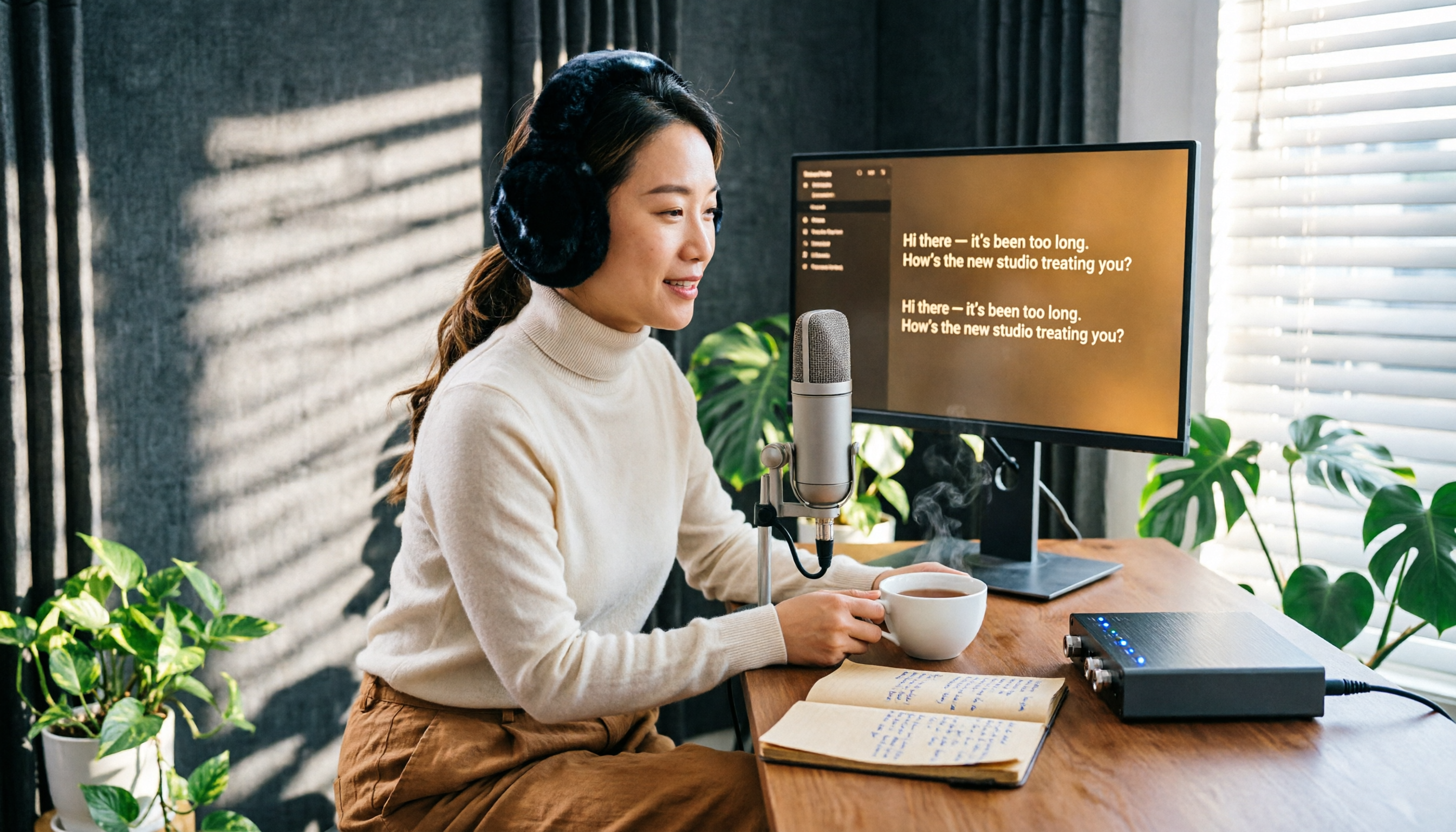
The Complete Guide to Podcast Transcription in 2026: Features, Use Cases, and Tool Recommendations
This guide is tailored for podcasters, covering the most practical transcription features of Tinrec—from interview transcripts, key summaries, to note exports—helping you save hours of post-production time, and providing key points for choosing a transcription tool.

2026 Comparison of 4 Remote Work Meeting Note Tools: Which AI Summary Saves the Most Time?
The biggest fear in remote work is losing meeting notes. We tested four mainstream meeting note tools, comparing Chinese accuracy, AI summary quality, and cross-platform support to help you find the best choice for your remote team.

4 Transcription Tools Comparison in 2026: Find the Best Solution for Organizing Performance Review Recordings
Organizing performance review recordings doesn't require manual transcription. We compare four transcription tools—Tinrec, Notta, Otter.ai, and Fireflies.ai—focusing on Chinese accuracy, AI summarization, and pricing to help you choose the best tool.
4 Transcription Tools Comparison in 2026: Find the Best Solution for Organizing Performance Review Recordings
Organizing performance review recordings doesn't require manual transcription. We compare four transcription tools—Tinrec, Notta, Otter.ai, and Fireflies.ai—focusing on Chinese accuracy, AI summarization, and pricing to help you choose the best tool.

2026 Real-World Test: 4 Speech-to-Text Apps Compared – Which Saves the Most Time for Remote Work?
A middle manager tests 4 AI speech-to-text tools for remote work meetings, interviews, and data organization. Deep dive into Tinrec vs Otter.ai across 4 key dimensions: recording sources, AI summarization, Chinese support, and cross-platform compatibility—helping you choose the most efficient assistant for complex workflows.