
Turn recordings into transcripts and summaries in minutes
Upload audio or video for multilingual transcription, AI notes, and action items
Why Podcasters Need Better Transcription Tools
If you've ever hosted an interview-style show, you know the pain: a 40-minute interview can take half a day to manually transcribe, not to mention extracting quotable highlights for promos, writing show notes, or listing post-production tasks. Many podcasters skip structured content altogether and just release the raw interview to save time, but that makes it harder for new listeners to quickly grasp key points.
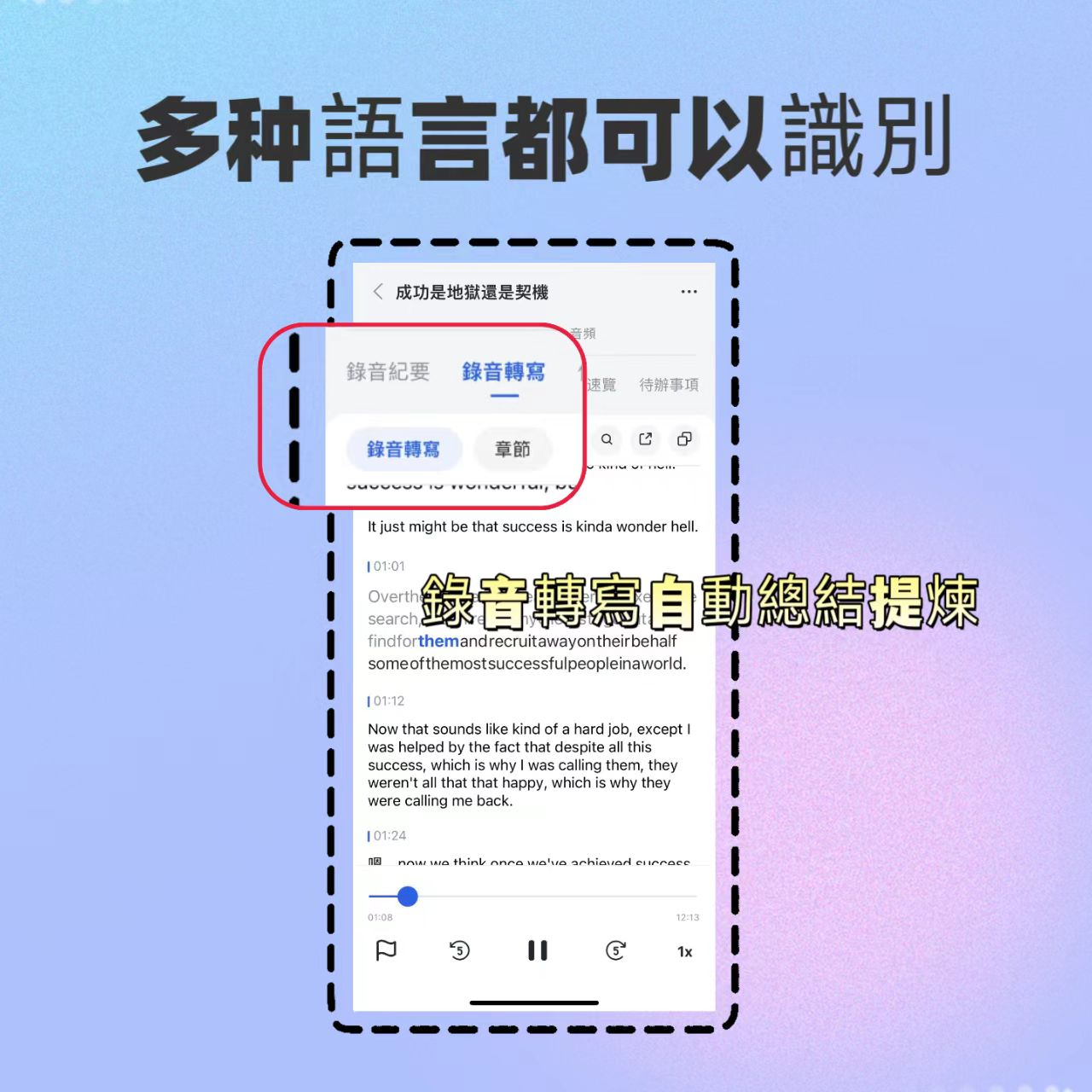
Traditional recorders only capture audio, and basic transcription services turn speech into text but still require manual cleanup. Tinrec thinks differently: it combines recording, understanding, organizing, and exporting into a single workflow. Once your interview is done, the transcript, key takeaways, chapter markers, and even to-do items are ready—so you can focus on creating your show.
How Tinrec Solves Podcasters' Recording Challenges
Tinrec is an AI-powered audio and video organizer, but it's much more than just "speech-to-text." Under the hood, it offers a workflow that goes from capture to comprehension to action—perfect for podcasters who handle lots of interviews and recordings.
- Multiple input sources: Whether it's live recording, importing old audio/video files, or pasting a YouTube link, Tinrec can turn it into usable material.
- More than just a transcript: After transcription, AI automatically generates summaries, chapters, and highlight markers—saving you manual effort.
- AI chat queries: You can ask Tinrec like an assistant: "What was the most interesting experience the guest mentioned?" or "Where is the section about marketing strategy?"
- Multi-format export: Transcripts, notes, and to-do lists can be exported directly to Notion, Google Docs, or downloaded as files, seamlessly integrating into your post-production workflow.
Top 5 Tinrec Features Every Podcaster Should Use
1. Live Transcription for Instant Show Scripts
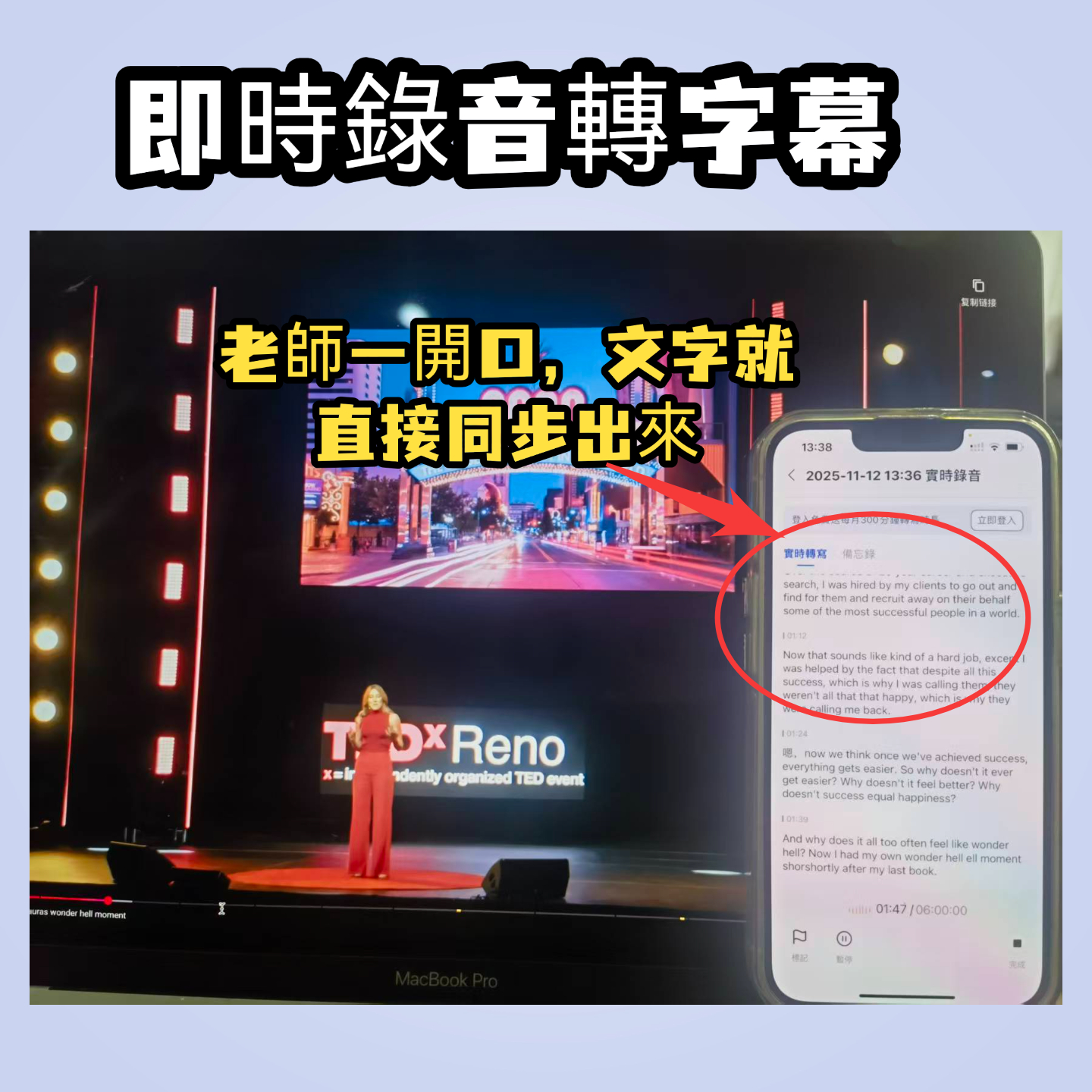
Start recording in Tinrec, and text appears almost in real time, with less than a second delay. This is a game-changer for capturing guest quotes exactly—you can see the text flow during the interview, check if any keywords are missed, and when the interview ends, the transcript is already done. In a quiet studio, accuracy for mixed Chinese-English content is solid, and even slight accents can be easily corrected using the chapter breakdown later.
Stop organizing recordings by hand
Upload audio or video and automatically get a transcript, summary, and action items
2. Import Old Recordings to Build a Searchable Archive
Many podcasters have hundreds of episodes but never had time to transcribe them. Tinrec supports importing audio and video files—you can batch upload past shows and get all transcripts at once. After transcription, you can use AI chat to query the entire archive, search for specific topics discussed by guests, or find past quotes to use in new episodes or social media posts.
3. Use Online Video Links to Expand Your Research
Suppose you want to reference an expert interview on YouTube or analyze a competitor's show structure—no more manual transcribing. Just paste the public video link, and Tinrec extracts the audio and generates a transcript with chapter summaries, letting you quickly skim key points. For podcasters producing high volumes of content weekly, this is like having an extra research assistant.
4. AI Summaries and Chapters: Show Notes in 10 Minutes
Long interviews often leave you forgetting where key points were. Tinrec automatically splits recordings into titled chapters and produces an overall episode summary. You can copy the summary as shownotes or turn chapter titles into timestamps for listeners to jump to interesting parts. In testing, a 30-minute interview goes from recording to complete notes in under 10 minutes.
5. Extract To-Dos and Export to Multiple Formats to Streamline Post-Production
After an interview, you usually have a list of to-dos: editing, adding subtitles, writing social posts, sending thank-you emails to guests. Tinrec can automatically extract action items from the conversation and supports exporting as Txt, Word, Notion, Google Docs, etc. You can drop the to-do list directly into your team's collaboration tool or import the transcript into editing software as a subtitle base—reducing rework.
3 Key Criteria for Choosing a Transcription Tool
Before picking a tool, evaluate it on these three aspects:
- Range of input sources: Your material may come from live recordings, old files, or online shows you want to analyze. Tinrec supports real-time recording, audio/video file imports, and online video links—covering the three most common source types for podcasters, so you don't need to switch tools for different scenarios.
- Post-transcription intelligence: A raw transcript isn't enough. You need summaries, chapters, highlights, and searchability. Tinrec's AI summary and chat query features let you quickly locate specific parts—like "the segment where the guest talked about startup failures" or "three books the guest recommended"—dramatically cutting post-production time.
- Export compatibility with your workflow: The tool must integrate into your production pipeline. Tinrec's multi-format exports and third-party integrations let transcripts, notes, and to-do lists flow directly into Notion, Google Docs, or your editing software, rather than being locked in a closed app.
Conclusion: Is Tinrec Worth Trying for Podcasters?
If you spend hours after every interview transcribing and organizing notes, Tinrec can likely save you 70% or more of post-production time. It's not just a transcription tool—it's a digital production assistant that understands content, extracts key points, and delivers actionable exports. Especially for Chinese-language podcasts, Tinrec handles mixed Chinese-English content more naturally than many foreign tools, and its chapter and summary features are far more useful than just a raw transcript.
Start with the free version—it includes a basic monthly transcription quota. Run your own interview through the whole workflow, from recording to getting complete notes. That experience is more convincing than any review. Let technology handle the busywork so you can focus on telling your stories.
Turn every recording into actionable outcomes
Get 60 free transcription minutes when you sign in. No credit card required.
Related Reading
You might also like

2026 Hands-on Comparison of Two Business Meeting Speech-to-Text Tools: Which AI Summarization Saves You the Most Effort?
How to choose a speech-to-text tool for business meetings? This article hands-on compares Notta and Tinrec, from input sources, AI summarization depth, Chinese language experience to downstream applications, guiding you step by step to find a truly time-saving workflow, and provides a quick-start checklist.

Tinrec vs Yating Transcript 2026: 4-Dimension Comparison – Which Free Phone Transcription Tool Is Better?
Looking for a free way to turn phone recordings into text? This article compares Tinrec and Yating Transcript across four dimensions: free credits, AI organization, cross-platform support, and Chinese accuracy. Find out which tool truly boosts your productivity.

2026 Comparison of 2 Speech-to-Text Apps: Which Free Plan is Best for Workers?
In-depth comparison of two AI recording tools, Tinrec and PLAUD NOTE, across 5 dimensions: core features, input sources, post-processing, pricing, and cross-platform experience. Discover which app offers the best free plan for productivity.

2026 Comparison Test of 4 Speech-to-Text Apps: Which AI Meeting Notes Actually Saves You Time?
We tested 4 popular speech-to-text apps for the workplace, comparing accuracy, AI summaries, cross-platform support, and free tiers. Tinrec stands out with AI chat query and multi-source support, especially for Mandarin and Cantonese meetings. This review helps you avoid buying mistakes and find the most time-saving solution.

2026 Hands-On Comparison of 5 Meeting Note Apps: Which AI Assistant Really Saves Office Workers Time?
A mid-level manager who attends 15 meetings per week personally tests 5 meeting note apps—from voice-to-text transcription, AI summarization, to-do lists, to cross-device sync—to find out which one saves you the most time on meeting minutes so you can focus on what truly matters.

2026 Comparison of 4 Remote Work Meeting Note Tools: Which AI Summary Saves the Most Time?
The biggest fear in remote work is losing meeting notes. We tested four mainstream meeting note tools, comparing Chinese accuracy, AI summary quality, and cross-platform support to help you find the best choice for your remote team.

4 Transcription Tools Comparison in 2026: Find the Best Solution for Organizing Performance Review Recordings
Organizing performance review recordings doesn't require manual transcription. We compare four transcription tools—Tinrec, Notta, Otter.ai, and Fireflies.ai—focusing on Chinese accuracy, AI summarization, and pricing to help you choose the best tool.
4 Transcription Tools Comparison in 2026: Find the Best Solution for Organizing Performance Review Recordings
Organizing performance review recordings doesn't require manual transcription. We compare four transcription tools—Tinrec, Notta, Otter.ai, and Fireflies.ai—focusing on Chinese accuracy, AI summarization, and pricing to help you choose the best tool.

2026 Real-World Test: 4 Speech-to-Text Apps Compared – Which Saves the Most Time for Remote Work?
A middle manager tests 4 AI speech-to-text tools for remote work meetings, interviews, and data organization. Deep dive into Tinrec vs Otter.ai across 4 key dimensions: recording sources, AI summarization, Chinese support, and cross-platform compatibility—helping you choose the most efficient assistant for complex workflows.