

Turn recordings into transcripts and summaries in minutes
Upload audio or video for multilingual transcription, AI notes, and action items
If you're a writer, producing thousands of words daily, typing until your wrists ache, voice input is definitely a solution worth trying. Today, let's discuss the choice between two voice input tools in 2026: a comprehensive guide to see how writers can boost efficiency with voice input and why Tinrec is a top choice for many wordsmiths.
What Can Voice Input Do for You?
Scenario 1: Capture Inspiration on the Go
Inspiration often strikes at odd times—while walking, showering, or before bed. Pull out your phone, open Tinrec, and speak to convert to text instantly, so you never forget.
Scenario 2: Instant Transcripts After Interviews
After interviewing a guest, it used to take hours to relisten to the recording and type everything out. Now, simply import the audio file into Tinrec and get a complete transcript and AI summary within minutes.
Scenario 3: Turn Online Videos into Text Material
See an inspiring talk or tutorial on YouTube? Instead of manually transcribing, paste the link into Tinrec, and it automatically extracts text and key points to use as writing material.
What Are the Core Capabilities of Voice Input Tools?
Real-Time Speech-to-Text
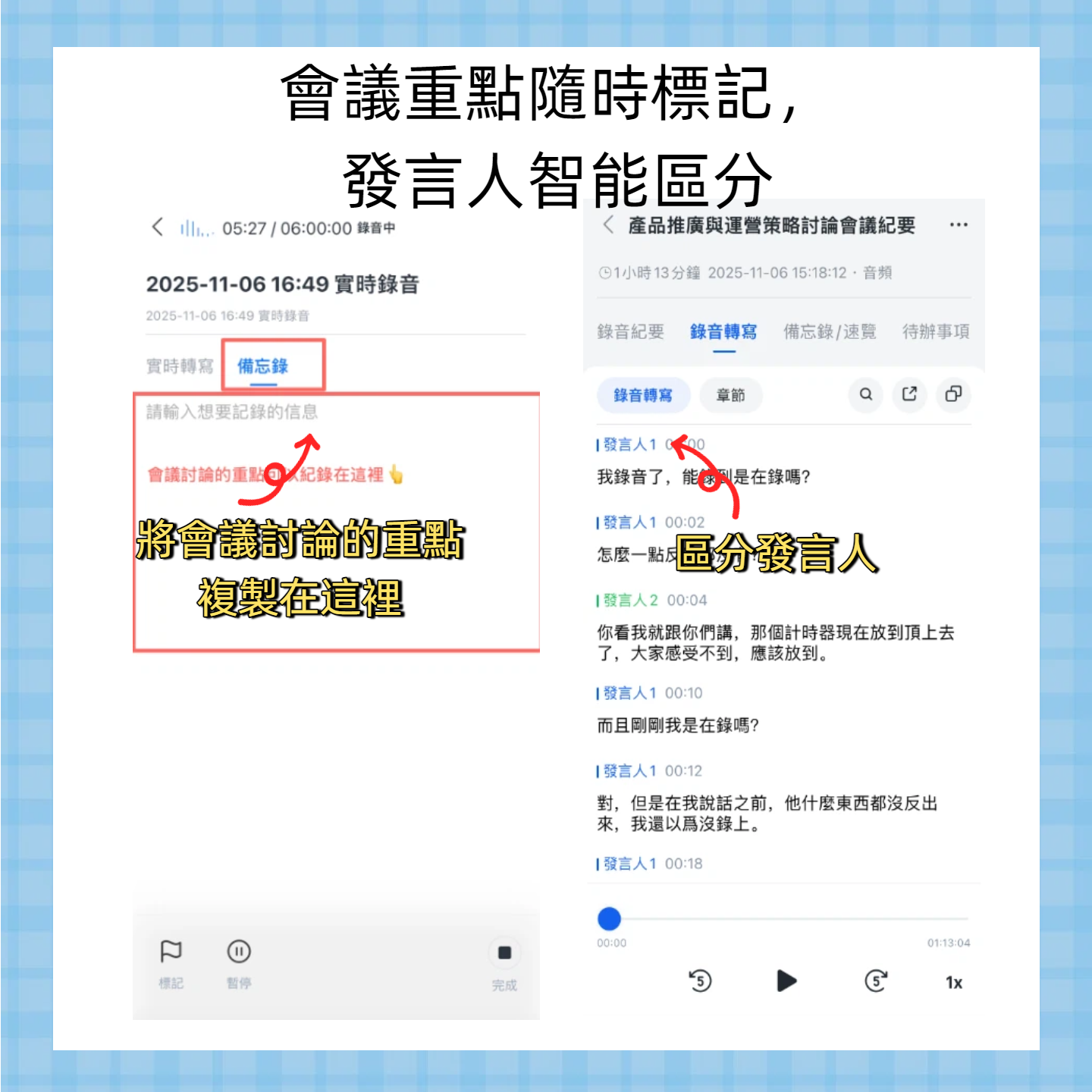
As you speak, Tinrec instantly converts your voice to text on the screen with less than a second delay. You can see and edit as you go.
Audio/Video File to Text
Not just live recording—you can also upload past audio or video files from your phone or computer and convert them into editable text. Supports a wide range of formats.
AI Summaries and Key Points
After transcription, Tinrec automatically generates summaries, chapters, and action items. No need to read through lengthy interviews or meeting notes.
AI Chat Query
This is my favorite feature. After transcription, you can ask Tinrec questions like, 'What was the interviewee's stance on X topic?' and it extracts answers directly from the content.
Multi-format Export
Export your text as TXT, DOCX, PDF, or sync directly to Notion, Google Docs. Very convenient for writers who use specific writing software.
Practical Use Cases
Scenario 1: Novelist's Inspiration Logging
Come up with a brilliant dialogue or scene? Record it with Tinrec on your phone. Later, open the web version to find it already transcribed, ready to edit into your manuscript.
Scenario 2: Columnist's Interview Organization
Stop organizing recordings by hand
Upload audio or video and automatically get a transcript, summary, and action items
If you interview multiple guests each week, record interviews with Tinrec. Upload and get automatic transcripts and summaries. Write articles by directly quoting, drastically cutting down sorting time.
Scenario 3: Student's Thesis Data Collection
Listen to lectures or watch online courses? Record with Tinrec and convert to text. Later, use AI Q&A to quickly find key arguments and create literature notes.
Scenario 4: Content Creators
Record the script for your video by speaking, then convert to text for polishing. Or parse another creator's video link into text for inspiration.
5 Things to Consider When Choosing a Voice Input Tool
1. Chinese Recognition Accuracy
This is most important for writers. Don't just look at official numbers; test it yourself. Among the tools I've used, Tinrec has impressive Chinese recognition, especially for clear speech.
2. Editing Ease After Transcription
Transcription is just the first step. Being able to quickly edit and highlight key points is crucial. Tinrec allows you to edit transcripts directly in the app and sync to the cloud for desktop access.
3. Export Formats
Do you prefer Word, Google Docs, or plain text? Make sure the tool supports your common formats. Tinrec supports TXT, DOCX, PDF, and integrates with Notion.
4. Pricing Plans
If you use it occasionally, the free version is sufficient. Tinrec's free plan offers a basic monthly allowance. For heavy users, the Pro monthly or annual plan is more cost-effective.
5. AI Assistance Features
Some tools only provide transcripts. Tinrec adds summaries, action items, Q&A, and report generation. For those writing large volumes, these features save even more time.
Frequently Asked Questions
Q: Is voice input faster than typing?
A: For most people, speaking is 3-4 times faster than typing. Especially for long texts or when you need to flow naturally, speaking then editing is often more efficient.
Q: Is Tinrec's free plan sufficient?
A: If you only occasionally record inspiration or short interviews, the free monthly allowance is plenty. But for long-term, heavy writing needs, consider a paid plan.
Q: Do I need internet for recording?
A: Real-time transcription requires internet, but recording itself does not. You can record offline and upload later for transcription.
Q: Is voice input private and secure?
A: Tinrec uses encrypted connections for transmission; your recordings and text are only accessible by you. For sensitive content, you can record offline and decide later whether to upload.
Q: What is Tinrec's biggest advantage over other tools?
A: It's not just a transcription tool; it's a workstation for recording, transcribing, organizing, exporting, and re-creating. For writers who frequently process large amounts of audio, it's much smoother.
Conclusion
Voice input is no longer just an aid; it can truly change your writing workflow. Whether you're a novelist, journalist, student, or content creator, use it to accelerate inspiration capture, interview organization, and material collection.
I recommend starting with Tinrec's free plan to see how it feels to write by speaking. If you have a regular writing workload, the Pro plan is a worthwhile investment.
Turn every recording into actionable outcomes
Get 60 free transcription minutes when you sign in. No credit card required.
Related Reading
You might also like

2026 Free Lawyer Meeting Notes Plans: One Tool to See It All
A lawyer's work involves meetings, client discussions, and various recordings. This article introduces Tinrec, a free and easy-to-use AI recording and meeting notes tool that supports real-time transcription, AI summaries, and action item extraction, saving you hours of organizing time.

2026 Tinrec vs PLAUD Note: 5-Dimension Showdown – Can Software Beat Hardware?
2026 AI voice recorder comparison: Compare popular hardware PLAUD Note with software tool Tinrec across features, use cases, and cost. Find the best audio and video transcription solution for your needs.

Best English Speech-to-Text App for International Students? 2026 Review of 3 Apps, Found the Perfect One for Class
Can't keep up with fast English in class? We tested multiple speech-to-text apps and show how Tinrec can easily convert lecture recordings, online courses, and group discussions into text notes. AI automatically organizes key points and to-dos, and you can ask questions anytime to review. Save time and study easier.

How to Convert Legal Recordings to Text in 2026: A 5-Step Guide
Essential for lawyers and legal professionals! This guide shows you how to use Tinrec to quickly transcribe legal recordings, meeting discussions, and interview content into transcripts, with automatic summaries and task extraction to save you hours of paperwork.

2026 Free Therapy Recording Solutions: One Tool at a Glance
How to make therapy recordings safe and efficient? This article covers one free solution—from real-time transcription, AI summaries, to task extraction—showing you step by step how to turn session recordings into searchable, actionable knowledge with Tinrec.

5 Subtitle Generation Tools for Content Creators Compared (2026): Free vs. AI Automation – Which Saves the Most Time?
Adding subtitles is the most time-consuming part of video creation for content creators. This comparison reviews 5 mainstream subtitle generation tools, including free editing software, online AI platforms, and professional transcription services, to help you choose the best solution for accuracy, multilingual support, and editing efficiency.

2026 Comparison of 4 Conference Call Transcription Tools: Which One Handles Cantonese Best?
Tired of spending hours after meetings transcribing recordings? We tested 4 transcription apps, and Tinrec's Cantonese transcription and AI features stood out, helping you save overtime.

2026 Free Audio-to-Text Solutions for Content Creators: 3 Methods at a Glance
Starting from practical methodologies, this article outlines three free speech-to-text solutions for content creators, using Tinrec as an example to demonstrate how to turn interviews and videos into searchable, summarizable, and exportable content assets, complete with copy-paste AI prompt templates.

2026 Training Recording to Text Tool Buyer's Guide: Tinrec vs Plaud Note Hands-On Comparison
Training recordings piling up and you don't know how to organize them? This article compares Tinrec and Plaud Note in five dimensions: source diversity, Chinese transcription accuracy, AI organization, cross-platform support, and price. Find out which tool can turn your training recordings into usable knowledge.