

Turn recordings into transcripts and summaries in minutes
Upload audio or video for multilingual transcription, AI notes, and action items
Are you still using a voice recorder for meetings? That little device lasts a dozen hours on a charge, but when you get back to the office, you have to plug it into your computer, listen through all the recordings, and type up meeting notes word by word? I tried that and gave up after a month. Now I use Tinrec—one phone does everything: real-time recording to text, and AI automatically generates summaries and to-do lists. I can deliver my work five minutes before I clock out.
Why Are People Looking for Alternatives to Voice Recorders?
Voice recorder hardware itself isn't bad—long battery life, one-button recording is convenient. But using it has a few pain points:
- Carrying extra gear: You already have your phone, headphones, and laptop. Add a voice recorder and your bag gets heavier.
- Re-listening after recording: After a two-hour meeting, you go back to the office and have to listen from the beginning just to write up minutes—that's an extra hour of overtime.
- Audio only, no text: Traditional recorders give you an audio file, not text. Want to find one key point? Good luck scrubbing through the timeline.
- No AI help for organization: Once recorded, that's it. No automatic summaries, to-do lists, or categorization.
If any of this sounds familiar, see how Tinrec replaces a voice recorder with just your phone—and does much more.
Tinrec vs. Voice Recorder: How Does the Core Experience Differ?
Battery Life: Phone + Power Bank vs. Built-in Recorder Battery Voice recorders claim up to 20 hours, but in practice they last a day of meetings. Tinrec's battery life depends on your phone—modern smartphones easily last a day of moderate use, and adding a power bank gives you unlimited runtime. The key is you don't need to carry an extra dedicated device just for recording.
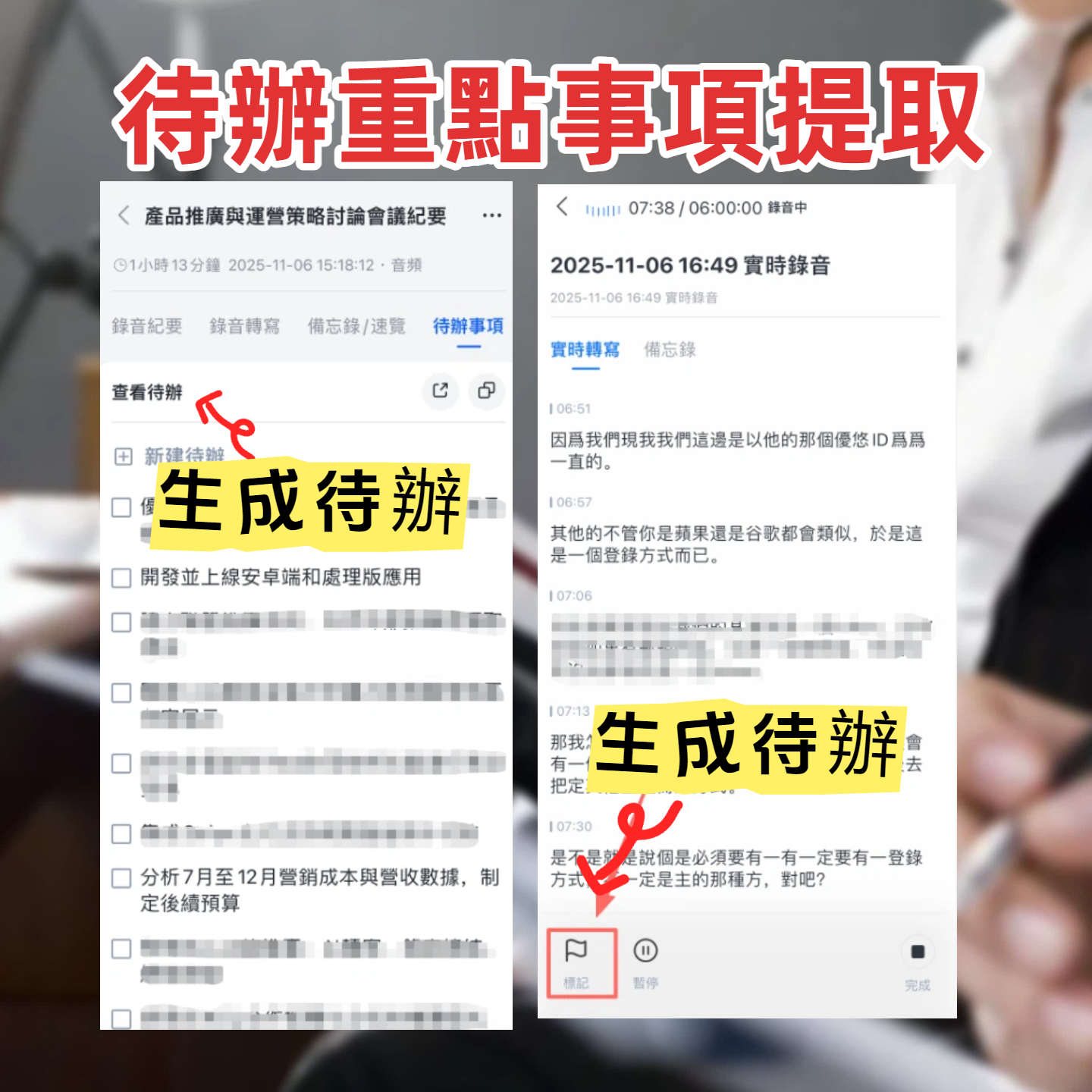
Real-Time Transcription, No Waiting Voice recorders require you to transfer files to a computer and use software to transcribe. Tinrec transcribes as you record, with less than a second delay. During meetings, you can watch the text in real time to catch every important point, and the transcript is ready the moment the meeting ends.
AI Organization Features That Deliver Meeting Notes Directly This is something a voice recorder can never do. Tinrec doesn't just give you text—it automatically generates a summary, breaks the content into sections, and extracts action items. You can ask it directly: "What was the meeting's conclusion?" or "Who is responsible for what?" and get an answer in seconds without scanning through dozens of pages of transcripts.
Not Just Live Recording – Online Videos and Old Files Welcome A voice recorder only captures live audio. Tinrec supports not only real-time recording but also importing audio/video files, and even pasting a YouTube or Bilibili link to parse the content. Perfect for organizing online lectures, interview recordings, or podcasts.
Stop organizing recordings by hand
Upload audio or video and automatically get a transcript, summary, and action items
Cost: One-Time Hardware vs. Free Usage A voice recorder can easily cost hundreds or even over a thousand dollars. Tinrec has a free tier with a monthly basic transcription quota, fine for light users. For heavy users, the Pro monthly/annual plan works out to just tens of dollars per month, including all AI features—a much better value than buying hardware alone.
Tinrec's Core Features at a Glance
Real-Time Recording to Text: Open Tinrec, record and get text in sync—meetings, classes, interviews become text records instantly. You can mark key points anytime, so you never miss anything.
Import Files to Text: Old recordings, downloaded videos, podcast audio—drag them into Tinrec, and it will transcribe and generate a summary. Those dusty old meeting recordings become useful again.
Online Video Link Parsing: Paste a YouTube, Bilibili, or Xiaohongshu link, and Tinrec automatically extracts the audio, transcribes it, and produces a summary. Great for watching online courses or listening to talks.
AI Conversational Queries: After recording, just ask Tinrec—"What requirements did the client mention?" or "What are the key points of this lesson?" It answers based on the content, so you don't have to review everything from the start.
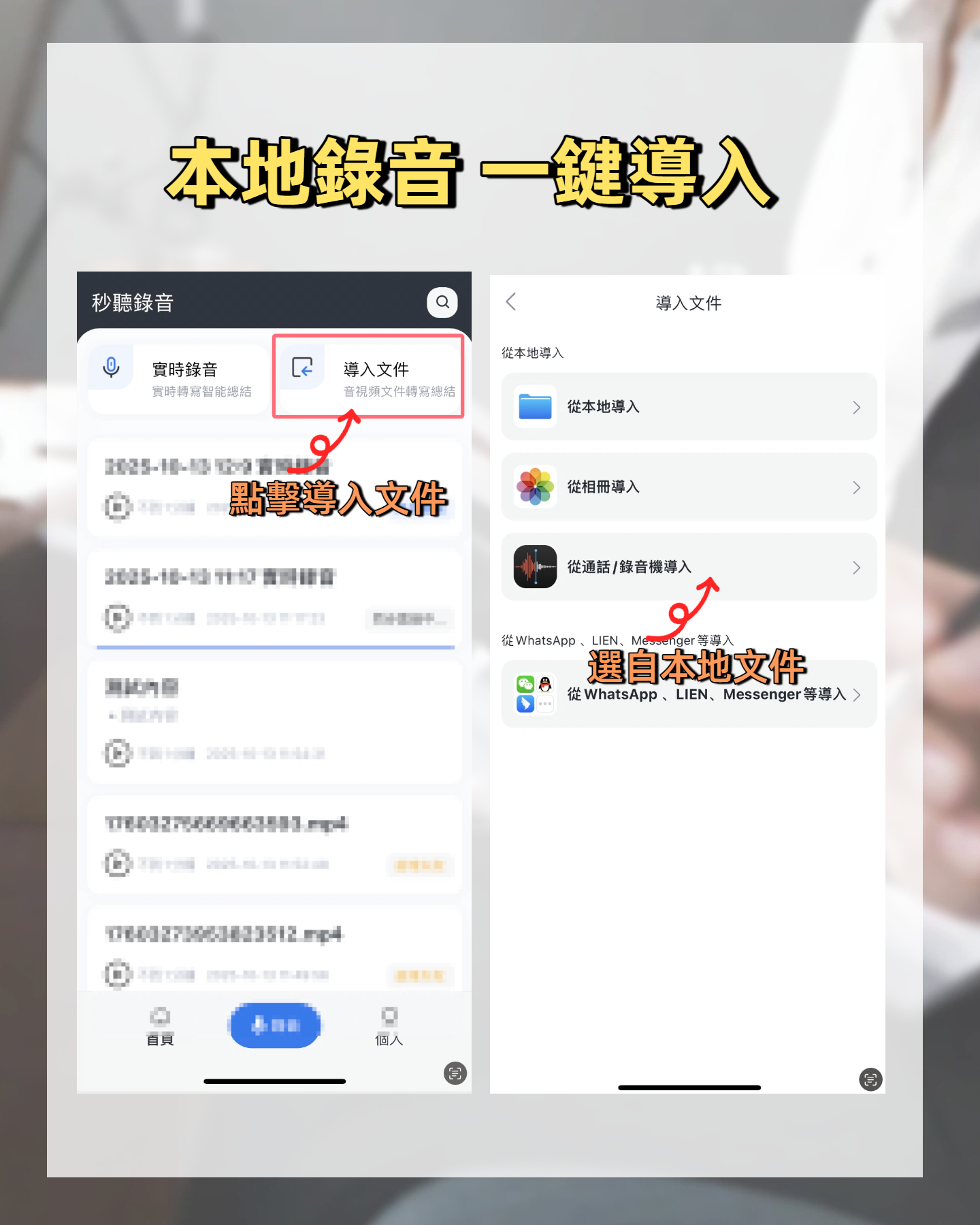
Auto Summaries & To-Do Lists: Long recordings are automatically turned into short summaries, and action items are extracted. After a meeting, you get a to-do list immediately, clearly showing who does what.
Practical Use Cases
A Day of Meetings in Central: Three meetings in the morning – Tinrec records and transcribes in real time. Before lunch, you have all three sets of meeting notes and to-do lists, no overtime needed to listen back.
University Lectures: Record the professor's lecture. Tinrec automatically splits it into chapters and highlights key points. Before exams, just ask Tinrec for the essentials – study efficiency doubles.
Journalist Interviews: Interview recording is transcribed instantly. Back at the newsroom, you can start writing immediately. The AI even highlights quotes, so you find material quickly.
Content Creators: Want to turn a YouTube video or podcast into text? Just paste the link. Tinrec also provides a summary to help plan your next topic.
What to Look for When Choosing a Recording-to-Text Tool
1. Do you need extra hardware? If your phone can do it, you don't need to buy a voice recorder. Tinrec works on iOS, Android, and the web – zero barrier.
2. How fast and accurate is the transcription? Real-time vs. post-processing makes a big difference. Tinrec transcribes on the fly, handling Cantonese mixed with English – no waiting.
3. Does it have AI organization? Simple transcription isn't enough anymore; AI summaries and Q&A are the real time-savers. Tinrec's conversational AI queries are a killer feature.
4. How many input sources does it support? Besides live recording, can it upload files and paste links? Tinrec covers all of them.
5. Does the pricing fit your usage? The free tier is enough to try it out. Heavy users can choose the Pro monthly/annual plan, which works out cheaper per month than buying a voice recorder.
Conclusion: Is Tinrec Worth a Try?
If your daily routine involves handling lots of recordings—meetings, classes, interviews, video processing—instead of buying another voice recorder, just use Tinrec to turn your phone into the ultimate recording-to-text workstation. It saves you both hardware costs and tons of organization time, thanks to AI. Especially for professionals dealing with Cantonese meetings, Tinrec's Cantonese recognition and real-time transcription are a real help.
We recommend downloading the free version of Tinrec first and testing it with your own recordings. The monthly basic quota is enough for a trial, and you can upgrade later if it suits you. Who knows, soon your colleagues will be asking, "Hey, what's that app that automatically generates meeting notes?"
Turn every recording into actionable outcomes
Get 60 free transcription minutes when you sign in. No credit card required.
Related Reading
You might also like

2026 Free Hokkien Speech Recognition Solutions: 1 App Tested Perfect for Hong Kong Users
Looking for a free Hokkien speech recognition app? Tested Tinrec for instant transcription, real-time text conversion, AI summaries, and task management. Free 100 minutes per month. Essential for Hong Kong professionals in cross-strait meetings and learning Taiwanese.

2026 Tinrec vs Traditional Voice Recorder: A 5-Dimension Comparison – Which Should Professionals Choose?
A guide for professionals comparing recording tools across 5 dimensions: recording convenience, transcription speed, organization capabilities, and more. Compares Tinrec with traditional voice recorders, provides real-world scenarios, and highlights key purchase considerations to help you make the best decision.

Tinrec vs Plaud Note 2026: 5-Dimensional Comparison for High-Capacity Recording
A mid-level manager's real-world test compares AI recording software Tinrec and voice recorder Plaud Note in high-capacity recording scenarios. Analyzed from five dimensions: recording quality, transcription accuracy, organization efficiency, cross-platform, and cost, to help you find the best high-capacity recording solution for professionals.

2026 Cantonese Translation Free Plan Roundup: 1 Tool to See at a Glance
Student-tested! A complete breakdown of Tinrec’s free Cantonese translation features, suitable for lectures, watching Cantonese YouTube videos, and understanding Hong Kong coworkers. Includes 100 minutes of free credit to save note-taking time without spending a dime.

2026 Cantonese Speech to Text Complete Guide: Free Tools, Features & Tested Picks
A mid-level manager tests multiple Cantonese-to-text tools, from free quotas, Cantonese recognition accuracy, AI organization, to cross-platform support, helping you find the best free solutions for meetings, interviews, and learning.

Which Voice Recorder Offers the Best Value? 2026 Real-World Test of 3 Solutions – Skip the Recorder and Use Tinrec for Even Better Deals
A real-world comparison of traditional voice recorders, AI recording hardware, and the Tinrec app reveals that Tinrec, which requires no extra equipment, offers the best value with AI-powered summarization features – a must-have for professionals.

2026 Voice Recorder Buying Guide: 2 Products Tested and Recommendations
Still hesitating between buying a traditional voice recorder or just using an app? This article takes you through a complete hands-on comparison of PLAUD Note and Tinrec Instant Recording, covering core positioning, recording sources, transcription, AI features, and pricing. You'll see why software solutions are actually more suitable for most people's meeting, learning, and creative needs.
2026 Voice Recorder vs Tinrec: 5-Dimension Showdown – Which is Smarter for Mobile Recording?
Which is better for your needs: a voice recorder or a recording app? This article compares traditional voice recorders with AI-powered recording app Tinrec across five dimensions—features, cost, convenience, organization ability, and scalability—to help you quickly decide which tool truly boosts your recording and note-taking efficiency.
How to Choose a Voice Recorder in 2026: A 5-Step Complete Comparison Guide from Hardware to Software
With many voice recorder brands and features, the key isn't just hardware or software—it's your use case. This article uses five steps to compare PLAUD Note and Tinrec across input sources, organization capabilities, cost, Chinese language experience, and long-term expenses, helping you find the best recording solution for your needs.