

Turn recordings into transcripts and summaries in minutes
Upload audio or video for multilingual transcription, AI notes, and action items
As someone who spends every day in Central for meetings, recording and then organizing those meetings is a nightmare. I used to use a traditional voice recorder – after recording, I had to listen to everything again and type up minutes, wasting so much overtime. Then I started using Tinrec, an app that lets me ditch the recorder entirely. Just open it on my phone, and it even auto-generates summaries and to-dos. The value is unbeatable. Here’s my real-world test comparing traditional voice recorders, AI recording hardware, and Tinrec to see which one is the best deal.
Are Voice Recorders Obsolete? Why Tinrec Offers Better Value
Traditional voice recorders have a single function – after recording, you still have to listen back and transcribe everything yourself. There are AI recording hardware devices like PLAUD NOTE, but they require an extra purchase starting at around $130. Tinrec is different: it’s an app you install on your phone, supporting iOS, Android, and web. No need to carry an extra device. Plus, the free version already includes a monthly basic transcription allowance, enough for a test run. If you’re a heavy user, the Pro monthly plan is only a few dozen HKD, far cheaper than buying a voice recorder.
Tinrec’s Core Capabilities: Voice to Text Plus Auto-Organization
Tinrec does more than just convert voice to text. It has several killer features that save you tons of time:
Real-Time Voice to Text: Converts as you record with less than a 1-second delay. During meetings, you can watch the screen to confirm nothing is missed, no need to process afterward. I use it for client meetings – speech converts instantly with good accuracy, especially for Cantonese.
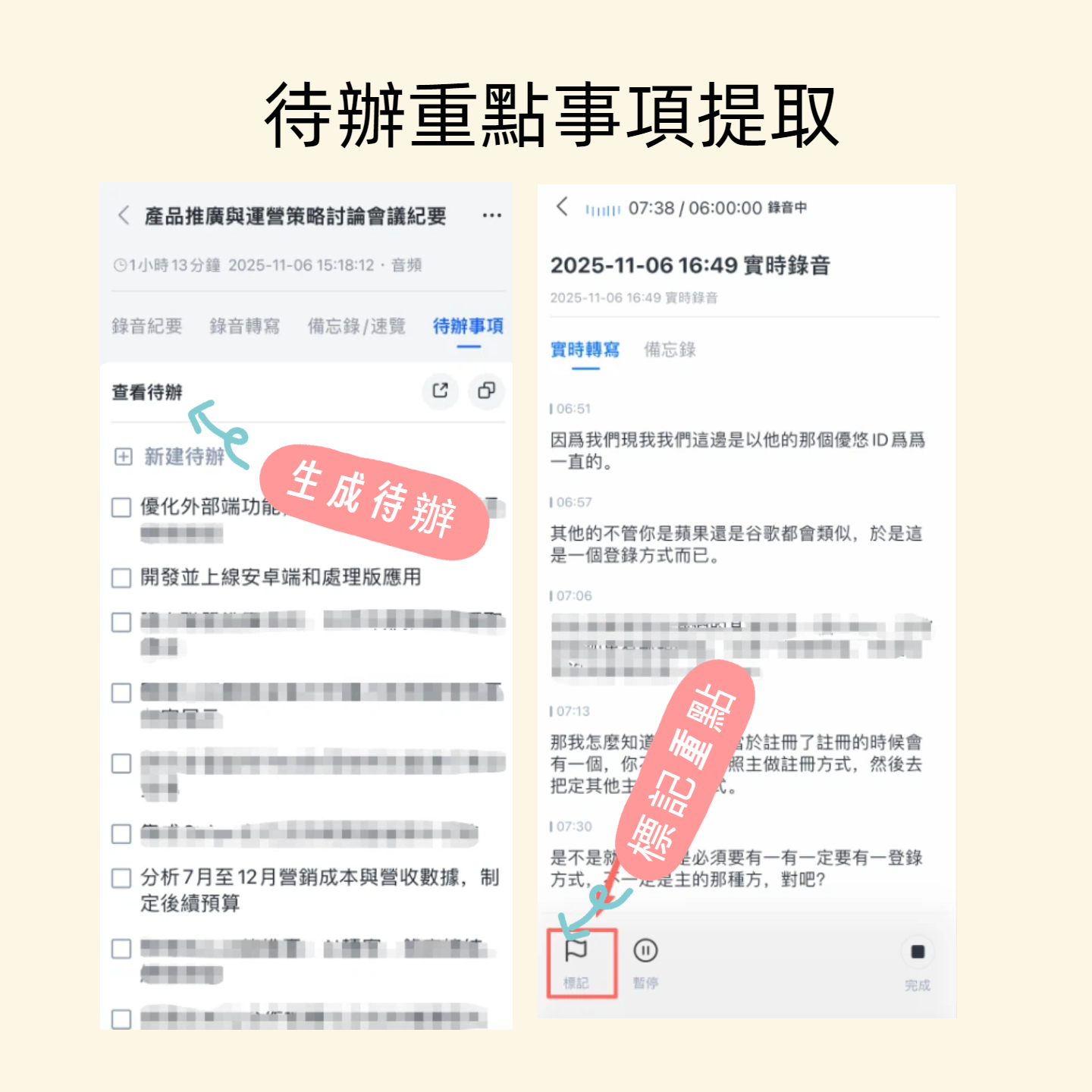
AI Summaries and Chapter Organization: No need to listen through long recordings from start to finish. Tinrec automatically generates summaries and splits them into chapters. For example, a two-hour meeting gets labeled with topics, conclusions, and key points, letting you jump straight to relevant parts. It also extracts to-dos with assignees and deadlines at a glance.
AI Conversation Query: After transcription, you can ask Tinrec questions like “Who mentioned the budget in the meeting?” or “What was the client feedback?” It gives answers based on semantic understanding. This feature is great – finding info is much faster than scrolling through full transcripts.
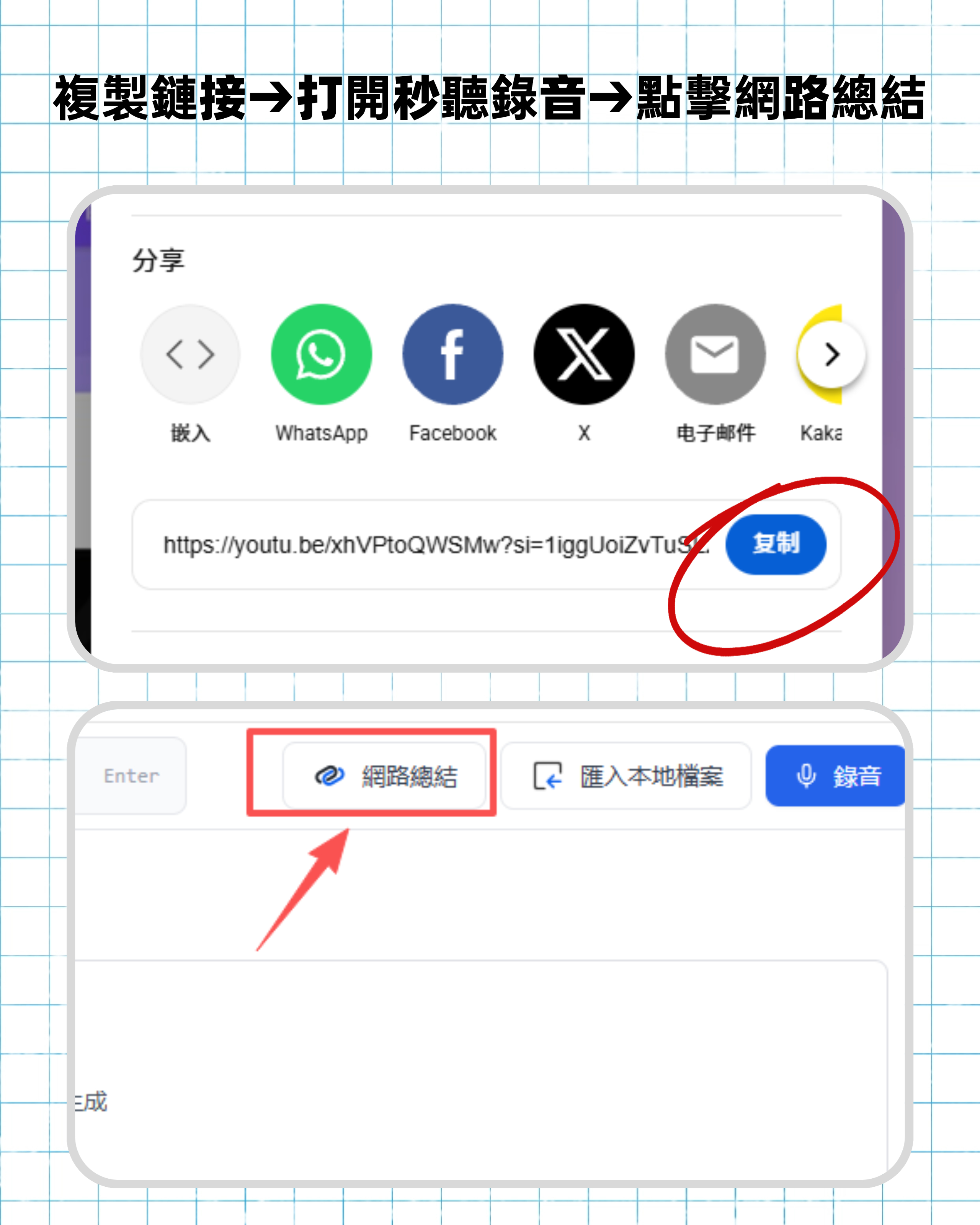
Multi-Source Input: Not just live recording – you can also import audio/video files or paste links from YouTube, Xiaohongshu, or TikTok. Tinrec converts them to text and summaries. This is super useful for content creators, saving tons of transcribing time.
Stop organizing recordings by hand
Upload audio or video and automatically get a transcript, summary, and action items
Real-World Use Cases: Meetings, Classes, Interviews, and Content Creation
Work Meetings: Office workers in Central average 2-3 meetings daily. With Tinrec’s real-time transcription, meeting minutes are ready minutes after the meeting ends – no need to stay late listening back. Combine with AI summaries and to-dos, share directly with colleagues, boosting efficiency.
Lectures and Studying: Students record lectures with Tinrec, auto-transcribe into notes, and get chapter splits. When studying, quickly locate key points. Supports Cantonese, Mandarin, and English, perfect for local university students.
Interview Transcription: Journalists or researchers record interviews with Tinrec, get verbatim transcripts, then use AI Q&A to extract key quotes without re-listening to the whole hour. Export results to Google Docs or Notion for easy organization.
Content Creation: YouTubers or bloggers can convert online videos into text scripts with Tinrec, extract key points for topic inspiration, or generate captions. It supports multiple platform links, even Xiaohongshu and TikTok – very convenient.
4 Things to Consider When Choosing a Voice Recording & Organization Tool
Accuracy and Language Support: Don’t just rely on official claims – try it yourself. Tinrec performs well with Cantonese in clear recordings and supports 14 languages, including mixed Chinese-English. Traditional recorders lack these AI features.
AI Post-Processing Ability: Transcription is just the first step. What matters is whether the tool organizes the content afterward. Tinrec’s AI summaries, to-do extraction, and Q&A features turn recordings from static data into an interactive knowledge base.
Cross-Platform and Convenience: Carrying an extra recorder is inconvenient. Tinrec has iOS, Android, and web versions – your phone is the recorder, always available. Cloud sync means you never lose your device.
Price and Value: Traditional recorders cost hundreds to over a thousand HKD; AI hardware is even more expensive. Tinrec’s free version gives basic monthly allowance, and Pro monthly is just a few dozen HKD, with monthly subscription flexibility – no big upfront investment. For most professionals, the value is the best.
Frequently Asked Questions
Q: I currently use a voice recorder. What are the benefits of switching to Tinrec? A: The biggest benefit is not needing to carry an extra device. Plus, real-time transcription, auto-summaries, and to-dos mean you never have to listen back and manually type meeting minutes again – huge time savings.
Q: Is the free version of Tinrec sufficient? A: The free version includes a monthly basic transcription allowance. If you only record short meetings occasionally, it should be enough. If you have many meetings weekly, consider the Pro monthly plan – just a few dozen HKD, great value.
Q: Does audio quality affect accuracy? A: Yes. Try to record close to the source with minimal background noise. Tinrec performs stably in typical office environments, but very noisy surroundings can impact it.
Q: I often search for info on YouTube and Xiaohongshu. Can Tinrec help? A: Yes! Tinrec supports pasting public video links, converts to text and summaries, and you can ask AI questions to quickly digest content.
Conclusion
If you’re still wondering whether to buy a voice recorder, my advice is: don’t. Just use Tinrec. It not only saves you the hardware cost but also offers powerful AI organization features that turn your recordings into truly usable information. Whether for meetings, classes, or content creation, the value outperforms everything. The free version is enough for a trial, and if you like it, upgrade to Pro – no money wasted. Once you try it, you’ll see why so many people are ditching recorders for apps.
Turn every recording into actionable outcomes
Get 60 free transcription minutes when you sign in. No credit card required.
Related Reading
You might also like

2026 Tinrec vs Plaud Note: Dialect Speech-to-Text Test – Which Is More Accurate for You?
2026 dialect speech-to-text tool comparison: real-world test of Tinrec vs Plaud Note on Cantonese recognition, cross-platform support, AI Q&A, and more, to help you choose the best AI solution for transcribing meetings, lectures, and interviews.

2026 Comparison of Two Speech-to-Text Tools: A Shanghai Dialect User's Perspective
Meeting minutes in Shanghai dialect always garbled? Hands-on test of Tinrec vs Otter.ai, comparing input sources, Chinese support, AI features, and pricing to help you choose the best tool for multi-source audio/video organization.

2026 Comparison of 5 Speech-to-Text Tools: Shanghai Dialect Recognition Solutions at a Glance
This article compares 5 Chinese-capable speech-to-text tools, including Tinrec, Notta, Otter.ai and others, and provides selection tips and practical techniques for Shanghai dialect recognition scenarios.

Top 5 Speech-to-Text Tools in 2026: Which One Excels at Recognizing the Northeastern Chinese Dialect?
Can you easily convert Northeastern Chinese dialect to text? This article compares several speech-to-text tools on the market for their performance in recognizing the Northeastern Chinese dialect, covering free and paid options, so you can quickly see which one suits you best.

Tutorial: Tinrec Hokkien Voice-to-Text in 2026 – Supports Hokkien Recognition and Auto-Generated Transcripts
Want to convert Hokkien recordings to text? Tinrec supports Hokkien recognition, letting you transcribe live recordings, uploaded audio files, or video links, and it can also auto-summarize and extract tasks. This complete guide shows you how to handle Hokkien transcription on your phone or computer.

2026 Free Hokkien Speech Recognition Solutions: 1 App Tested Perfect for Hong Kong Users
Looking for a free Hokkien speech recognition app? Tested Tinrec for instant transcription, real-time text conversion, AI summaries, and task management. Free 100 minutes per month. Essential for Hong Kong professionals in cross-strait meetings and learning Taiwanese.

2026 Tinrec vs Traditional Voice Recorder: A 5-Dimension Comparison – Which Should Professionals Choose?
A guide for professionals comparing recording tools across 5 dimensions: recording convenience, transcription speed, organization capabilities, and more. Compares Tinrec with traditional voice recorders, provides real-world scenarios, and highlights key purchase considerations to help you make the best decision.

Tinrec vs Plaud Note 2026: 5-Dimensional Comparison for High-Capacity Recording
A mid-level manager's real-world test compares AI recording software Tinrec and voice recorder Plaud Note in high-capacity recording scenarios. Analyzed from five dimensions: recording quality, transcription accuracy, organization efficiency, cross-platform, and cost, to help you find the best high-capacity recording solution for professionals.

2026 Cantonese Translation Free Plan Roundup: 1 Tool to See at a Glance
Student-tested! A complete breakdown of Tinrec’s free Cantonese translation features, suitable for lectures, watching Cantonese YouTube videos, and understanding Hong Kong coworkers. Includes 100 minutes of free credit to save note-taking time without spending a dime.