

Turn recordings into transcripts and summaries in minutes
Upload audio or video for multilingual transcription, AI notes, and action items
2026 Free Hokkien Speech Recognition Solutions: 1 App Tested Perfect for Hong Kong Users
Hong Kong professionals often meet with Taiwanese clients or enjoy Taiwanese dramas and YouTube videos to learn Hokkien, but after listening to long recordings, finding key points manually is time-consuming. We tested Tinrec, and it turns out it supports not only Cantonese and Mandarin but also Hokkien recordings for transcription and summarization. Plus, it offers 100 free minutes per month, enough for several meetings or videos.
What Can Hokkien Speech Recognition Do for You?
You might think Hokkien speech recognition is only for language learning, but Hong Kong users can benefit in many scenarios:
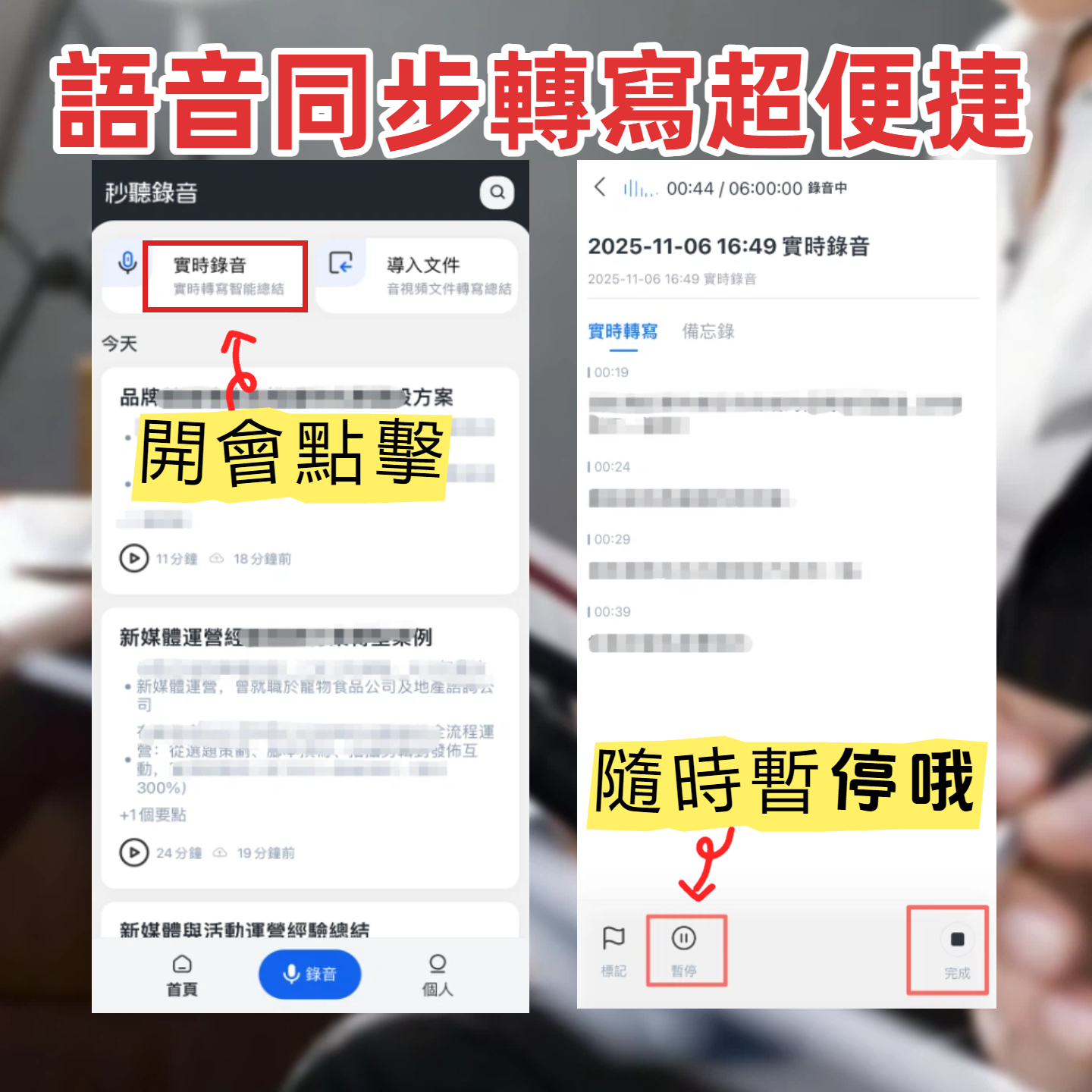
- No more tedious meeting reviews: During online meetings with Taiwanese colleagues or clients, Tinrec can instantly transcribe Hokkien conversations, automatically identify speakers, and generate meeting notes and to-do lists immediately after the meeting ends.
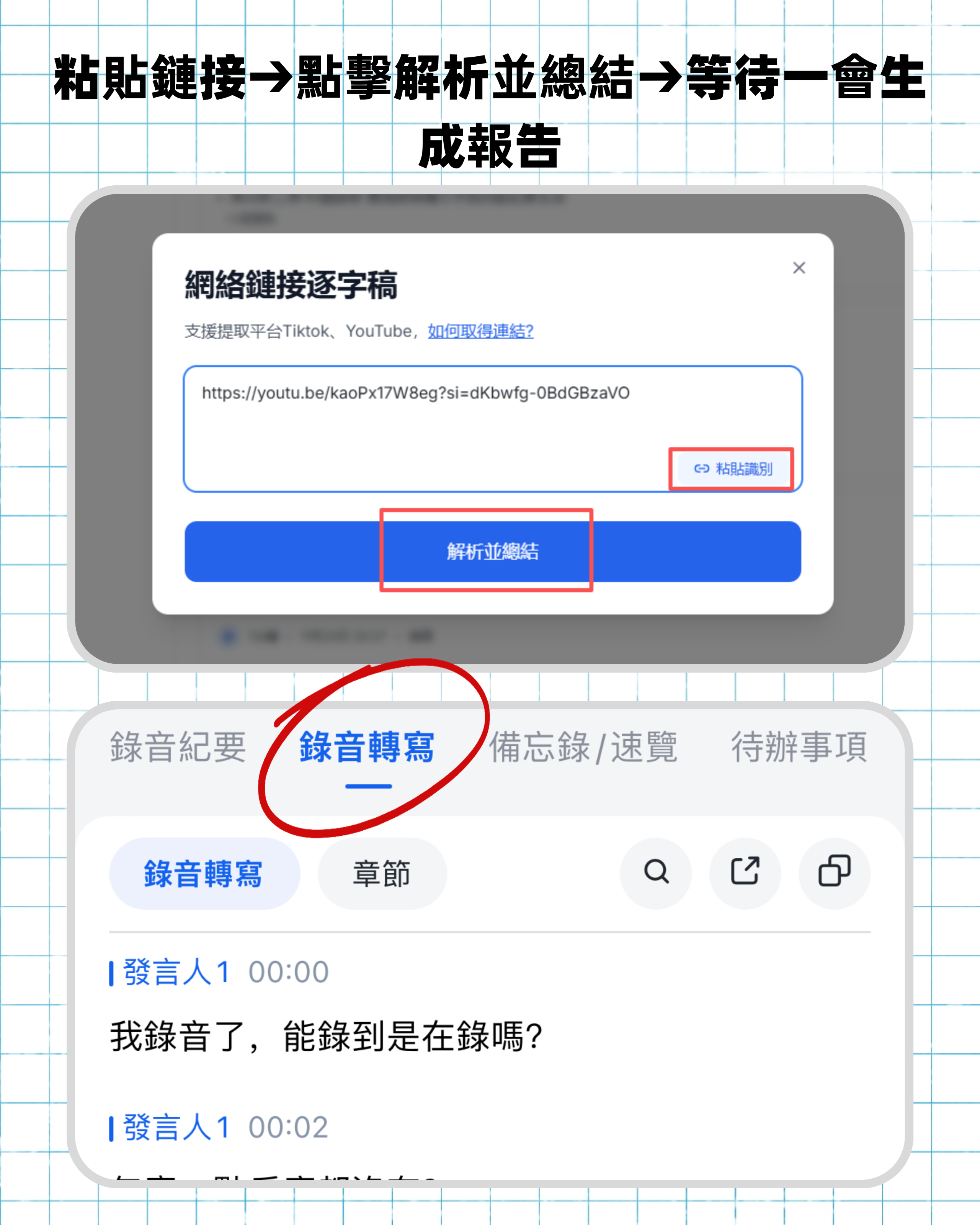
- Extract key points from shows and videos: Many Taiwanese YouTubers speak Hokkien. Paste the link into Tinrec, and it will produce a full transcript and summary, saving you from rewinding to find key quotes.
- A Hokkien learning powerhouse: Record your teacher's explanations, then use the AI Q&A feature to ask, "What grammatical points were mentioned in this section?" This can boost your study efficiency significantly.
How Does Tinrec Handle Hokkien Recordings?
Tinrec focuses on "voice-to-text + AI organization," and it works well for Hokkien content:
- Real-time transcription: As you record, Hokkien text appears with less than 1 second latency, allowing you to verify accuracy on the fly.
- AI summaries and chapters: Instead of just raw text, it automatically breaks down meeting topics, conclusions, action items, and even assigns responsibilities.
- AI conversational queries: After transcription, you can ask Tinrec, "Who mentioned the budget?" or "What was the client's feedback?" and it will answer based on semantic understanding.
- Online video parsing: Paste a YouTube or TikTok link, and it automatically extracts the audio track for transcription, even handling Hokkien dialogue from Taiwanese local dramas.
Stop organizing recordings by hand
Upload audio or video and automatically get a transcript, summary, and action items
Real-World Applications
Scenario 1: Meeting with Taiwanese clients, meeting notes in 5 minutes
After a two-hour Hokkien meeting, you used to spend another hour listening to the recording to take notes. With Tinrec, the moment the meeting ends, AI has already generated summaries, conclusions, and action items, clearly showing who is responsible for what.
Scenario 2: Hokkien class, recordings become notes
Whether you're taking a university Hokkien course or an outside class, record the entire lesson on your phone. Tinrec splits long recordings into chapters, highlights key vocabulary, and allows export to Word or Notion for revision.
Scenario 3: Watching Taiwanese dramas or listening to podcasts for material
Paste a YouTube link into Tinrec, and all Hokkien dialogue becomes text. Instantly search for any quote you want to use—perfect for content creation or learning idiomatic expressions.
4 Things to Consider When Choosing a Hokkien Speech Recognition App
Many voice-to-text tools exist, but not all are suitable for Hokkien users. Keep these points in mind:
- Language support: Many apps only support major languages. Tinrec covers 14 languages, including multiple Chinese variants. Our tests show basic Hokkien recognition works well, though heavy accents may affect accuracy. Try your own recordings for best results.
- Post-transcription organization: Raw transcription is just the first step. AI-powered digestion of content is crucial. Tinrec's summaries, to-dos, and Q&A features save you significant post-processing time.
- Cross-platform convenience: Can you view and edit recordings made on your phone from a computer? Tinrec offers iOS, Android, and web versions with cloud sync for seamless use at work, home, or on the go.
- Free quota: Testing is key. Tinrec's free plan provides 100 minutes of transcription per month, enough for a few meetings or long videos before committing to a paid plan.
Frequently Asked Questions
Q: How accurate is Tinrec for Hokkien?
A: Accuracy depends on recording quality and accent. In clear environments, most dialogue is transcribed. However, multiple speakers or background noise may reduce accuracy. Try the free version to see if it meets your needs.
Q: Can it translate Hokkien to Cantonese or Mandarin?
A: Tinrec focuses on transcription and organization, not real-time translation. You can copy the text to other translation tools or use AI Q&A to explain specific terms.
Q: Is there a time limit for recordings?
A: The free plan limits each recording to 30 minutes. You can split recordings or upgrade to Pro to remove the limit.
Q: Is my privacy protected?
A: Tinrec uses encrypted transmission and storage. Only you can access your recordings, and they are not used to train AI models.
Conclusion
If you frequently handle Hokkien recordings—whether for meetings, classes, or entertainment—using AI for transcription and organization can save you significant overtime. Tinrec's free plan offers 100 minutes per month, enough for several trials. It's free to try and worth a shot.
Turn every recording into actionable outcomes
Get 60 free transcription minutes when you sign in. No credit card required.
Related Reading
You might also like

2026 Speech-to-Text Tools Compared: Which One Handles Chinese Best According to Dcard 2024 Discussions?
Starting from Dcard discussions about speech-to-text, this article focuses on Tinrec and Notta, the two most frequently compared tools. It compares them on online meeting recording methods, Chinese and mixed Chinese-English recognition, post-meeting organization, team collaboration, free quotas, and pricing to help you decide which one to choose.

Tinrec vs Notta 2026: 5-Factor Comparison for Medical Consultation Recording Apps
Back-to-back clinic visits make it hard to remember what was said and even harder to look up later. This article compares Tinrec and Notta across five practical dimensions—Chinese consultation transcription, post-visit organization, and team sharing—and includes four common pitfalls of clinic recording plus selection advice.

5 AI Speech-to-Text Tools Tested for 2026: Which PTT-Favorite Actually Works for Meeting Minutes?
There's a lot of discussion on PTT about AI speech-to-text, but most reviews only cover transcription accuracy and skip how to use the output. This article starts from real meeting scenarios, outlines 4 key buying factors, and hands-on compares 5 popular tools including Tinrec, Otter.ai, Notta, and Granola. It also honestly lists free quotas and paid pricing to help you decide which one truly saves time on meeting notes.

2026 iPhone Meeting Transcription Showdown: Free Built-in vs. AI Tools—Which Saves More Time?
We tested four iPhone meeting transcription solutions in 2026, from the free built-in Voice Memos to Tinrec, Otter.ai, and Notta. Here's how to decide which one best fits your meeting needs for transcripts, AI summaries, action items, and team collaboration.

5 Gemini Meeting Transcription Options Tested for 2026: Is the Free Version Enough?
Many people upload meeting recordings to Gemini only to find that long recordings yield just a summary. This article reviews 5 Gemini meeting transcription options, from Gemini, Gemini Notebook, and Google AI Studio to Tinrec, with hands-on testing and pricing limits, helping you choose the right approach for short meetings or team knowledge retention.

2026 AI Meeting Notes Comparison: Beyond Notion AI Free — Who Is Tinrec For?
Starting from student use cases, this article debunks common misconceptions about 'Notion AI free meeting notes' and presents Tinrec as an alternative, comparing meeting capture, free quotas, post-meeting organization, and team collaboration, with practical examples for classes, group discussions, and internship interviews.

5 Transcription Tools Tested and Compared in 2026: Is Google Translate Transcription Good Enough? Which Saves the Most Time for Meeting Notes?
Google Translate's Transcribe feature can generate transcripts while recording audio, but it only supports Android and 8 languages, and cannot upload existing audio files. This article walks through its usage and limitations, then compares the scenarios where Tinrec, Otter.ai, Notta, and TurboScribe each fit best.

2026 Comparison of 3 Meeting Notes Methods: LINE vs ChatGPT vs Tinrec — Which Saves the Most Time?
After the meeting ends, the LINE group is still buzzing, but no one has organized the recording? This article compares three meeting notes approaches — LINE, ChatGPT, and Tinrec — covering bot-free recording, transcript organization, AI action items, and team data governance. It includes hands-on workflow tests and pitfalls to help you choose a meeting notes solution that truly saves time.

2026 Meeting Minutes Tools Buying Guide: 3 Hands-On Tests and Chinese Meaning of Meeting Minutes
The Chinese for 'meeting minutes' is '會議紀錄' (meeting record), not '會議幾分鐘' (how many minutes the meeting lasts). This article first explains the Chinese meaning of 'minutes', its plural usage, and common misunderstandings, then outlines the fields a meeting record should have and 4 key points for choosing a tool. It also compares Tinrec, Otter.ai, Notta, and Granola in hands-on tests, covering differences, quotas, and limitations, and finally provides a pitfall guide and selection advice.