

Turn recordings into transcripts and summaries in minutes
Upload audio or video for multilingual transcription, AI notes, and action items
Why Most Voice-to-Text Tools Don't Support Hokkien?
Many people have tried voice-to-text tools, only to find they can only recognize Mandarin or English, and Hokkien recordings often turn into a jumble of gibberish. This is frustrating for anyone who needs to transcribe Hokkien meetings, class recordings, or interviews. As an important language in Taiwan, Hokkien lacks good recognition tools, which is a real shame.
If you've run into this problem, Tinrec is worth a try. It not only supports Mandarin and English, but also has built-in Hokkien recognition, making it easy to convert Hokkien recordings into transcripts.
Tinrec vs. General Transcription Tools: What's Different in Hokkien Recognition?
General transcription tools usually focus on mainstream languages. Because Hokkien has complex tones and many connected-speech changes, its recognition difficulty is high, so many tools simply give up. Tinrec, however, has been specially optimized for Hokkien, allowing it to convert spoken Hokkien into readable text in meetings, interviews, or classroom settings.
- Language support range: General tools only support a few languages, while Tinrec offers recognition for 14 languages, including Hokkien, Mandarin, English, Japanese, etc., meeting the needs of mixed-language use.
- Recognition scenario adaptation: Even in slightly noisy environments, fast speech, or multi-speaker conversations, Tinrec's Hokkien recognition maintains decent accuracy – important for real-world use.
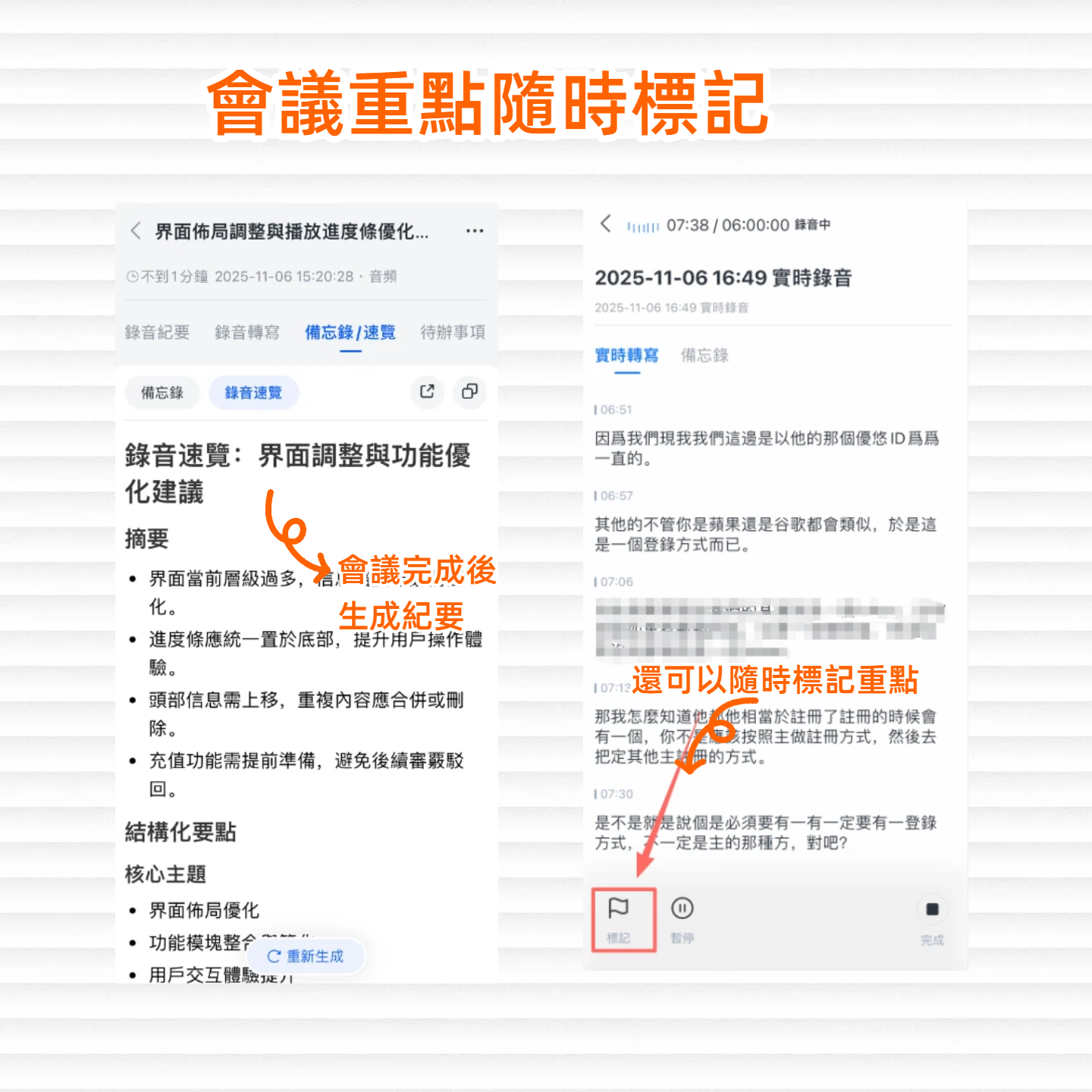
- More than just a transcript: After converting to text, Tinrec can also automatically generate summaries, chapters, and task lists. You can even use the AI Q&A feature to directly ask questions about the recording content – something general transcription tools can't do.
- Cross-platform use: Tinrec has iOS and Android apps, as well as a web version. Whether you record on your phone or upload files on your computer, you can access the same data with greater flexibility.
Core Features of Tinrec Hokkien Voice-to-Text
Tinrec isn't just about voice-to-text; it's more like your personal Hokkien content assistant. Here are some features especially useful for Hokkien speakers:
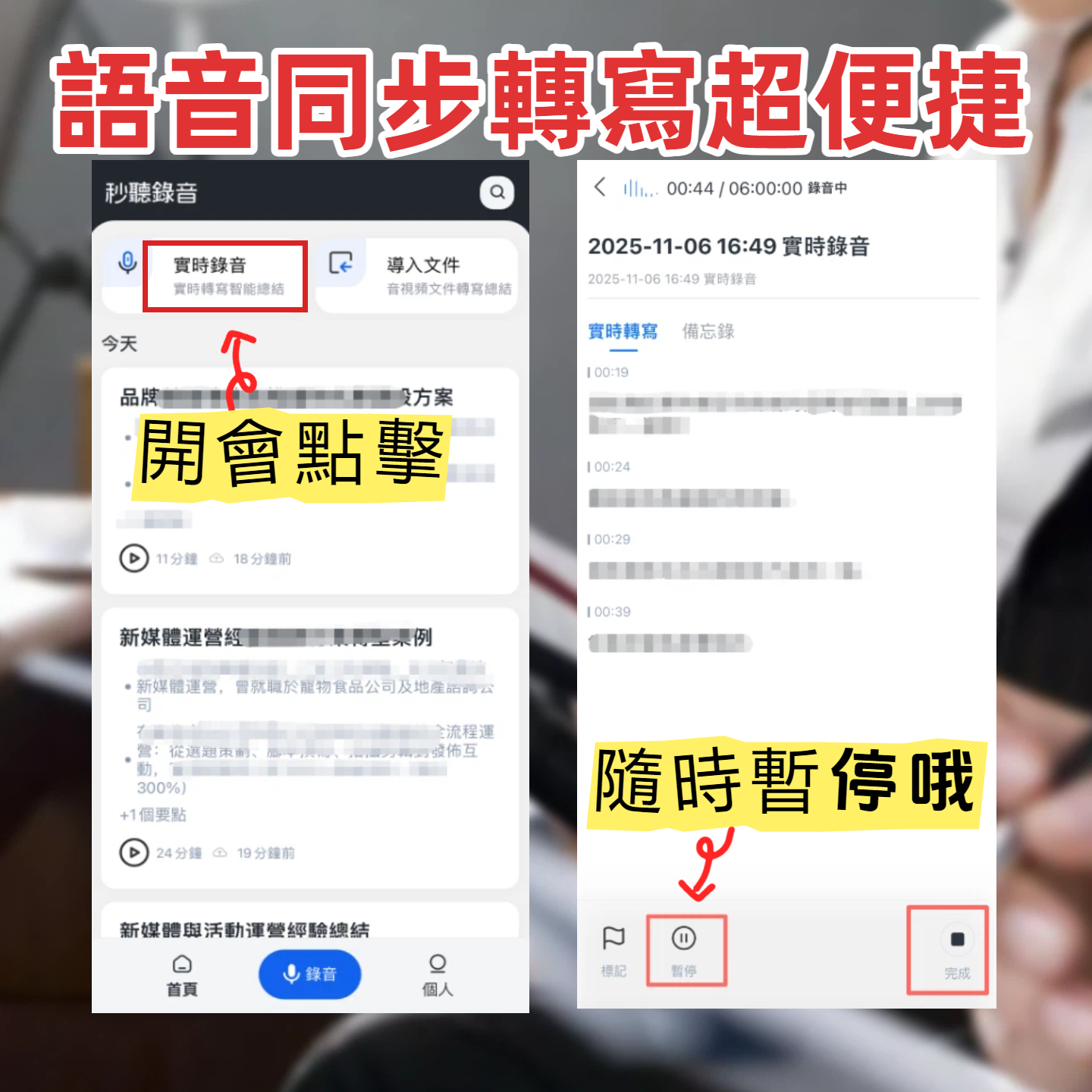
- Live recording to text: Open Tinrec and start recording; Hokkien conversation gets transcribed in real time with under a second delay. During meetings or classes, you can read along to make sure you didn't miss anything, and the transcript is ready afterward.
- Upload audio for transcription: If you already have Hokkien audio files, just upload them to Tinrec and get a transcript in minutes. Past interview recordings, meeting minutes, and family oral histories can be digitized.
- Online video to text: Paste a link to a Hokkien video on YouTube or other platforms; Tinrec extracts the audio track and transcribes it, along with a summary for quick browsing without watching the whole thing.
- AI Q&A: After recording a one-hour Hokkien meeting, simply ask Tinrec "What were the key points discussed?" or "Who is responsible for what?" It will give you answers based on semantic understanding – no need to manually flip through pages of transcript.
Stop organizing recordings by hand
Upload audio or video and automatically get a transcript, summary, and action items
Real-World Use Cases
Hokkien speakers can save a lot of time with Tinrec in these scenarios:
- Meeting minutes: For internal company meetings conducted in Hokkien, turn on Tinrec to record live, and get automatic transcripts, summaries, and action items afterward – no more relying on memory.
- Classroom learning: Students listening to lectures in Hokkien can record and transcribe simultaneously, then review organized notes and highlights, and use AI Q&A to clarify anything unclear.
- Interview transcription: When doing fieldwork or interviewing elders, Hokkien conversations are directly transcribed, making it easy to quote and analyze later without re-listening to recordings.
- Personal notes: When inspiration strikes or you want to jot down ideas, recording in Hokkien is convenient. Tinrec automatically converts to text that can be exported to Notion or Google Docs for further editing.
Key Considerations When Choosing a Hokkien Voice-to-Text Tool
When selecting a tool, evaluate these aspects – Tinrec performs well on all of them:
- Recognition accuracy: With good recording quality, Tinrec's Hokkien recognition can identify common words and sentences. However, background noise or strong accents may affect performance. Try the free version with your own recordings first.
- Post-transcription features: Getting a transcript is just the start. Automatic summarization, task extraction, and AI Q&A are what really save time. Tinrec's post-processing is comprehensive.
- Cross-platform and sync: It's important to see recordings on your computer after using your phone. Tinrec syncs data instantly, accessible from app or web.
- Free plan quota: Tinrec's free version provides a monthly base amount of transcription minutes, enough for light use. Consider a Pro plan if you need heavy transcription – no need to pay upfront.
Conclusion: Is Tinrec Worth Trying?
If you need to transcribe Hokkien recordings and want more than just a transcript – automatic summaries, tasks, and even AI-powered queries – Tinrec is one of the few tools on the market that meets all these needs. Its Hokkien recognition feature in particular ensures Hokkien speakers aren't ignored by general tools. I recommend downloading the free version and testing it with your own recordings – that's more direct than any review.
FAQ
What accent does Tinrec's Hokkien recognition support?
Currently it supports the dominant accent commonly heard in Taiwan. Both Quanzhou-leaning and Zhangzhou-leaning accents can be recognized, but if the accent is very distinct, accuracy may be affected.
How much Hokkien recording time does the free version allow?
The free version offers a certain number of transcription minutes per month. Exact limits are shown on the official pricing page – enough for occasional meeting or class recordings.
Are there format restrictions for uploaded Hokkien audio files?
Common formats like MP3, WAV, and M4A are supported. Files from your phone or voice recorder can be uploaded directly.
Can it handle mixed Hokkien and Mandarin speech?
Yes, Tinrec supports multilingual mixed recognition. Conversations mixing Hokkien and Mandarin will be automatically detected and transcribed accordingly.
Can the transcript be exported to other software?
Yes, it can be exported as TXT, Word, PDF, etc., and can also be shared directly to Notion, Google Docs, and other tools.
Does Hokkien transcription require an internet connection?
Yes, processing is done in the cloud, so you need a network connection when using it.
Turn every recording into actionable outcomes
Get 60 free transcription minutes when you sign in. No credit card required.
Related Reading
You might also like

2026 Hands-on Comparison of 3 Cantonese Subtitle Generators: This AI Recorder Saves the Most Time
Want to convert meeting recordings, YouTube videos, and interview recordings into Cantonese subtitles? We tested 3 tools to find the best one for Hong Kong workers. Tinrec not only transcribes accurately but also automatically generates to-do lists and AI Q&A, helping you finish work without overtime.

2026 Comparison of 3 Cantonese Meeting Recording Tools: Which AI Summary Really Saves Time?
We tested 3 Cantonese-compatible meeting recording tools on the market, comparing transcription accuracy, AI summary quality, and practicality to help you find the most time-saving solution. Whether for company meetings, client communication, or class recordings, this comparison helps you pick the right tool in one step.

2026 Real-World Test: 5 Cantonese Real-Time Translation Tools Compared—Which One Sounds Most Authentic?
Need to transcribe or translate Cantonese in real time during meetings, classes, or interviews? We tested 5 leading AI tools for live recording, online video translation, and AI-powered Q&A to find the best solution for Cantonese speakers.

2026 Comparison of 4 Cantonese Subtitle Generation Tools: Which Free Version Is Most Useful?
We compared several Cantonese subtitle generation apps, evaluating transcription accuracy, AI organizing features, and free plans to help you pick the best tool for daily use. How does Tinrec Instant Voice Memo perform?

Which Sichuan Dialect Speech-to-Text Tool is Best? 2026 Review of 3 Tools, This Free One is Most Practical
Sichuan dialect speakers often struggle with organizing recordings. This article reviews 3 tools and finds that Tinrec's free plan performs well for Sichuan dialect transcription, providing a complete guide and selection tips.

2026 Tinrec vs Plaud Note: Dialect Speech-to-Text Test – Which Is More Accurate for You?
2026 dialect speech-to-text tool comparison: real-world test of Tinrec vs Plaud Note on Cantonese recognition, cross-platform support, AI Q&A, and more, to help you choose the best AI solution for transcribing meetings, lectures, and interviews.

2026 Comparison of Two Speech-to-Text Tools: A Shanghai Dialect User's Perspective
Meeting minutes in Shanghai dialect always garbled? Hands-on test of Tinrec vs Otter.ai, comparing input sources, Chinese support, AI features, and pricing to help you choose the best tool for multi-source audio/video organization.

2026 Comparison of 5 Speech-to-Text Tools: Shanghai Dialect Recognition Solutions at a Glance
This article compares 5 Chinese-capable speech-to-text tools, including Tinrec, Notta, Otter.ai and others, and provides selection tips and practical techniques for Shanghai dialect recognition scenarios.

Top 5 Speech-to-Text Tools in 2026: Which One Excels at Recognizing the Northeastern Chinese Dialect?
Can you easily convert Northeastern Chinese dialect to text? This article compares several speech-to-text tools on the market for their performance in recognizing the Northeastern Chinese dialect, covering free and paid options, so you can quickly see which one suits you best.