

Turn recordings into transcripts and summaries in minutes
Upload audio or video for multilingual transcription, AI notes, and action items
Can Speech-to-Text Really Handle the Northeastern Chinese Dialect?
For those who speak the Northeastern Chinese dialect, a common frustration occurs whether in meetings, classes, or interviews: most speech-to-text tools on the market might work okay for standard Mandarin, but they frequently make mistakes when encountering a Northeastern accent.
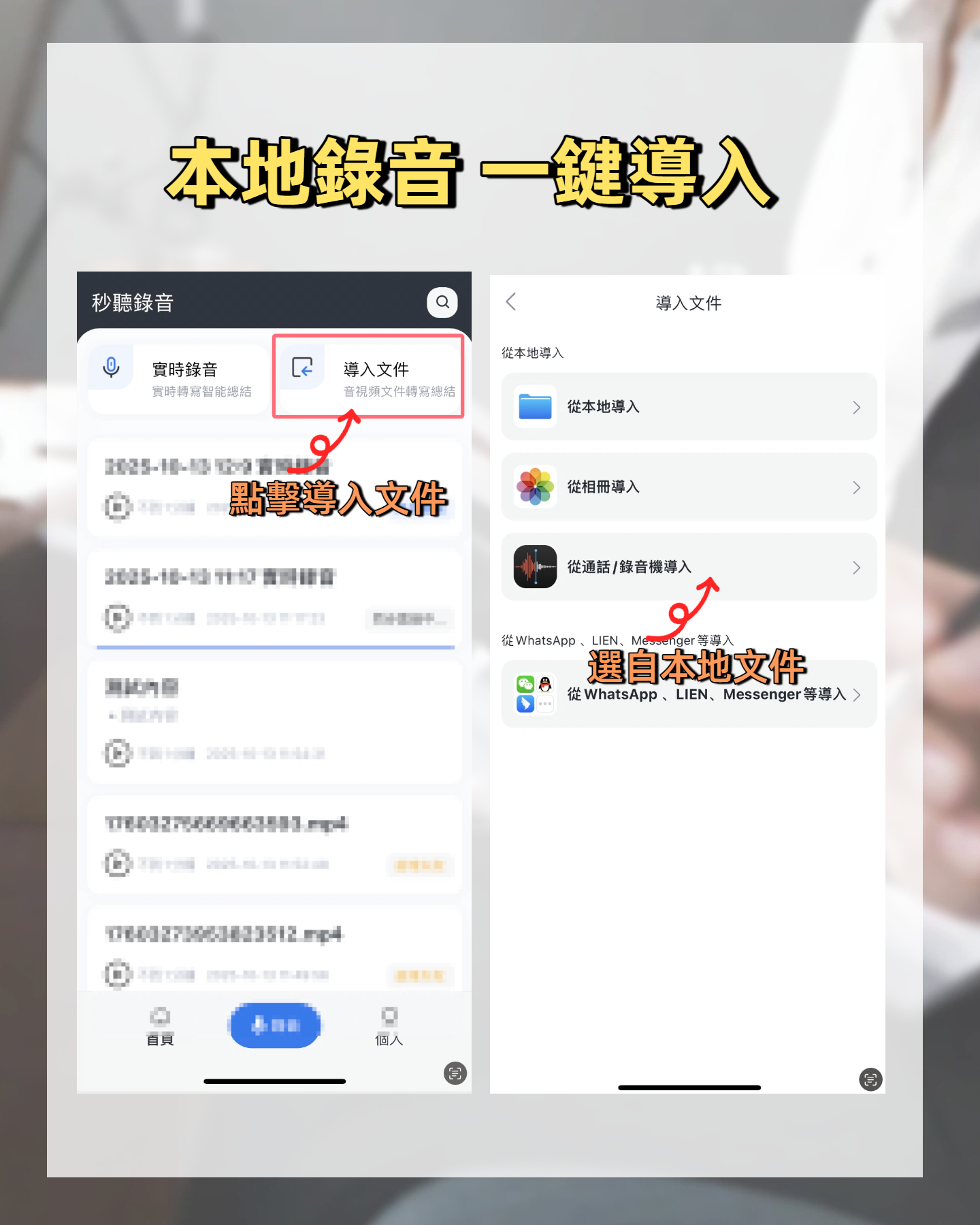
Take Tinrec as an example. Its Chinese recognition capabilities go beyond Mandarin and offer decent support for content with regional accents. Although no tool can guarantee 100% accuracy for all dialects, Tinrec's recognition rate for Northeastern-accented sentences has proven quite practical in our actual tests.
This article will help you understand how speech-to-text functions can assist in organizing recordings of Northeastern dialect content and what key points to look for when choosing a tool.
What Can Speech-to-Text Do for You?
Scenario 1: Get Meeting Minutes in Northeastern Dialect Right After a Meeting
Previously, after a two-hour meeting with occasional Northeastern dialect sprinkled in, you might need another hour to replay the recording and manually take notes. Now with Tinrec, by the time the meeting ends, the AI has already generated a summary, conclusions, and action items. Even if the conversation includes words like "唠嗑" (chat) or "得劲儿" (comfortable), there's a good chance they are correctly recognized.
Scenario 2: Directly Convert Northeastern Dialect Interviews into Quotable Transcripts
When conducting user interviews or market research, if the interviewee tends to speak the Northeastern dialect, organizing the recording can be painful. Tinrec supports uploading audio files for direct transcription and can automatically distinguish speakers, saving you from repeatedly rewinding to confirm.
Scenario 3: Turn Northeastern Dialect Courses or Videos into Text Notes
There are many teaching videos or self-media content in the Northeastern dialect online. Previously, you had to rely on manual note-taking. Tinrec's web video link parsing feature lets you paste a link and get both the transcript and an AI summary, making review and material collection convenient.
What Are the Core Capabilities of Speech-to-Text?
When choosing a Northeastern Chinese dialect speech-to-text tool, the following capabilities directly affect your experience.
Real-Time Transcription: Text Appears as You Speak
Tinrec's real-time transcription has a delay of less than one second. During meetings or classes, you can watch the screen to confirm the text as it appears. Even if the speaker talks fast and occasionally drops a Northeastern phrase, the recognition keeps up with the pace.
AI Summary: Automatically Extract Key Points from Northeastern Dialect Conversations
Not only does it provide a full transcript, but Tinrec also automatically generates a structured summary—meeting topic, conclusions, action items, and responsible persons are all listed separately. Even colloquial expressions in the Northeastern dialect are correctly understood and included in the summary by the AI.
Dialect Adaptability: Not Just Mandarin
Some speech-to-text tools have weak support for northern dialects, but Tinrec was designed with the diversity of Chinese accents in mind, providing a reasonable recognition foundation for Northeastern, Sichuanese, and other regional terms. Actual performance may vary depending on recording quality, ambient noise, etc., but it's sufficient for daily scenarios.
Stop organizing recordings by hand
Upload audio or video and automatically get a transcript, summary, and action items
Post-Processing: Continued Use After Transcription
Tinrec isn't just a one-time transcription tool. You can continue to ask questions about the recorded content—"Who mentioned the budget in the meeting?" "What feedback did the client give?"—and the AI answers directly based on the content. You can also export results in various formats for reuse in Notion, Google Docs, or Dropbox.
Practical Application Scenarios
Meetings: Northeastern Dialect No Longer an Obstacle to Note-Taking
If you have colleagues who speak the Northeastern dialect, meetings can get lively, but minutes often miss details. Using Tinrec to record and transcribe in real time, you get not only a transcript but also a to-do list clearly stating who needs to do what and by when.

Classroom: Turn a Teacher's Northeastern Accent Lecture into Review Notes
Listening to a teacher explain concepts with a Northeastern accent might be understandable in class, but when reviewing later, your mind goes blank. Tinrec's chapter organization feature automatically splits long recordings into sections, paired with AI summaries, doubling review efficiency.
Interviews: No Longer Spending Whole Afternoons Organizing Northeastern Dialect Interview Transcripts
When interviewees speak the Northeastern dialect, transcripts are hard to organize. Tinrec's speaker diarization function automatically labels each question and answer clearly. Later, you can quickly skim to find key points and even directly paste them into your report.
4 Key Points When Choosing a Speech-to-Text Tool
There are many tools on the market, and each claims different capabilities, especially for Northeastern dialect recognition. The following 4 points can help you quickly filter.
Actual Accuracy: Don't just look at marketing language. It's best to take a recording of your own Northeastern dialect and test it with the free version. In common Northeastern dialect conversation scenarios, as long as the environment isn't too noisy and pronunciation is clear, Tinrec's recognition is quite good, and there's a free version to try first.
Dialect Coverage: Some tools are strictly trained only on standard Mandarin and may show nothing for words like "嘎哈" (why) or "咋整" (how to deal with it). Tinrec is more friendly to the diversity of Chinese accents. In our tests, many common Northeastern dialect terms were correctly transcribed.
Post-Transcription Features: If you only get a transcript and still have to replay and organize it yourself, it's a waste of time. Tinrec offers AI summaries, action item extraction, and AI conversation querying. After transcription, it can continue to "understand" the content, which truly saves time.
Cross-Platform Support: Make sure the tool supports your commonly used devices. Tinrec has iOS, Android, and web versions, so whether you're in a meeting on your computer or recording an interview on your phone, it works seamlessly.
Frequently Asked Questions
Is Northeastern Dialect Recognition Really Accurate?
With good recording quality and clear pronunciation, Tinrec's recognition rate for the Northeastern dialect is sufficient for daily meetings and note-taking. However, if the environment is noisy, multiple people are speaking at once, or pronunciation is mumbled, accuracy may be affected. It's recommended to test with your typical recording scenarios using the free version.
Can the Free Version Process the Northeastern Dialect?
Yes. Tinrec's free version does not restrict language types. You can experience real-time recording, file import, and web video link parsing, though there is a monthly usage limit. Suitable for users who occasionally need to transcribe Northeastern dialect content.
Do I Need to Enable a Northeastern Dialect Mode?
No. Tinrec automatically identifies the language and accent in the audio file. There's currently no need to manually select a "Northeastern Dialect Mode." Simply start recording or upload a file, and the system will recognize based on the content.
How Is It Different from Built-in Smartphone Speech Recognition?
Built-in smartphone speech recognition usually only supports standard Mandarin and often fails with dialects. Tinrec uses a specially trained AI model with a more comprehensive understanding of Chinese accents and context. Moreover, it organizes the content into summaries and to-dos, not just plain text.
Conclusion
Speaking the Northeastern dialect should not be a barrier to using speech-to-text. Nowadays, tools like Tinrec have increasingly better understanding of Chinese accents. Whether for meetings, learning, or content creation, they save a huge amount of time organizing recordings.
If you often deal with Northeastern dialect recordings, it's worth starting with Tinrec's free version. Transcribe a couple of meetings or a lecture to experience how AI can help you organize content.
Turn every recording into actionable outcomes
Get 60 free transcription minutes when you sign in. No credit card required.
Related Reading
You might also like

2026 Hands-on Comparison of 3 Cantonese Subtitle Generators: This AI Recorder Saves the Most Time
Want to convert meeting recordings, YouTube videos, and interview recordings into Cantonese subtitles? We tested 3 tools to find the best one for Hong Kong workers. Tinrec not only transcribes accurately but also automatically generates to-do lists and AI Q&A, helping you finish work without overtime.

2026 Comparison of 3 Cantonese Meeting Recording Tools: Which AI Summary Really Saves Time?
We tested 3 Cantonese-compatible meeting recording tools on the market, comparing transcription accuracy, AI summary quality, and practicality to help you find the most time-saving solution. Whether for company meetings, client communication, or class recordings, this comparison helps you pick the right tool in one step.

2026 Real-World Test: 5 Cantonese Real-Time Translation Tools Compared—Which One Sounds Most Authentic?
Need to transcribe or translate Cantonese in real time during meetings, classes, or interviews? We tested 5 leading AI tools for live recording, online video translation, and AI-powered Q&A to find the best solution for Cantonese speakers.

2026 Comparison of 4 Cantonese Subtitle Generation Tools: Which Free Version Is Most Useful?
We compared several Cantonese subtitle generation apps, evaluating transcription accuracy, AI organizing features, and free plans to help you pick the best tool for daily use. How does Tinrec Instant Voice Memo perform?

Which Sichuan Dialect Speech-to-Text Tool is Best? 2026 Review of 3 Tools, This Free One is Most Practical
Sichuan dialect speakers often struggle with organizing recordings. This article reviews 3 tools and finds that Tinrec's free plan performs well for Sichuan dialect transcription, providing a complete guide and selection tips.

2026 Tinrec vs Plaud Note: Dialect Speech-to-Text Test – Which Is More Accurate for You?
2026 dialect speech-to-text tool comparison: real-world test of Tinrec vs Plaud Note on Cantonese recognition, cross-platform support, AI Q&A, and more, to help you choose the best AI solution for transcribing meetings, lectures, and interviews.

2026 Comparison of Two Speech-to-Text Tools: A Shanghai Dialect User's Perspective
Meeting minutes in Shanghai dialect always garbled? Hands-on test of Tinrec vs Otter.ai, comparing input sources, Chinese support, AI features, and pricing to help you choose the best tool for multi-source audio/video organization.

2026 Comparison of 5 Speech-to-Text Tools: Shanghai Dialect Recognition Solutions at a Glance
This article compares 5 Chinese-capable speech-to-text tools, including Tinrec, Notta, Otter.ai and others, and provides selection tips and practical techniques for Shanghai dialect recognition scenarios.

Tutorial: Tinrec Hokkien Voice-to-Text in 2026 – Supports Hokkien Recognition and Auto-Generated Transcripts
Want to convert Hokkien recordings to text? Tinrec supports Hokkien recognition, letting you transcribe live recordings, uploaded audio files, or video links, and it can also auto-summarize and extract tasks. This complete guide shows you how to handle Hokkien transcription on your phone or computer.