
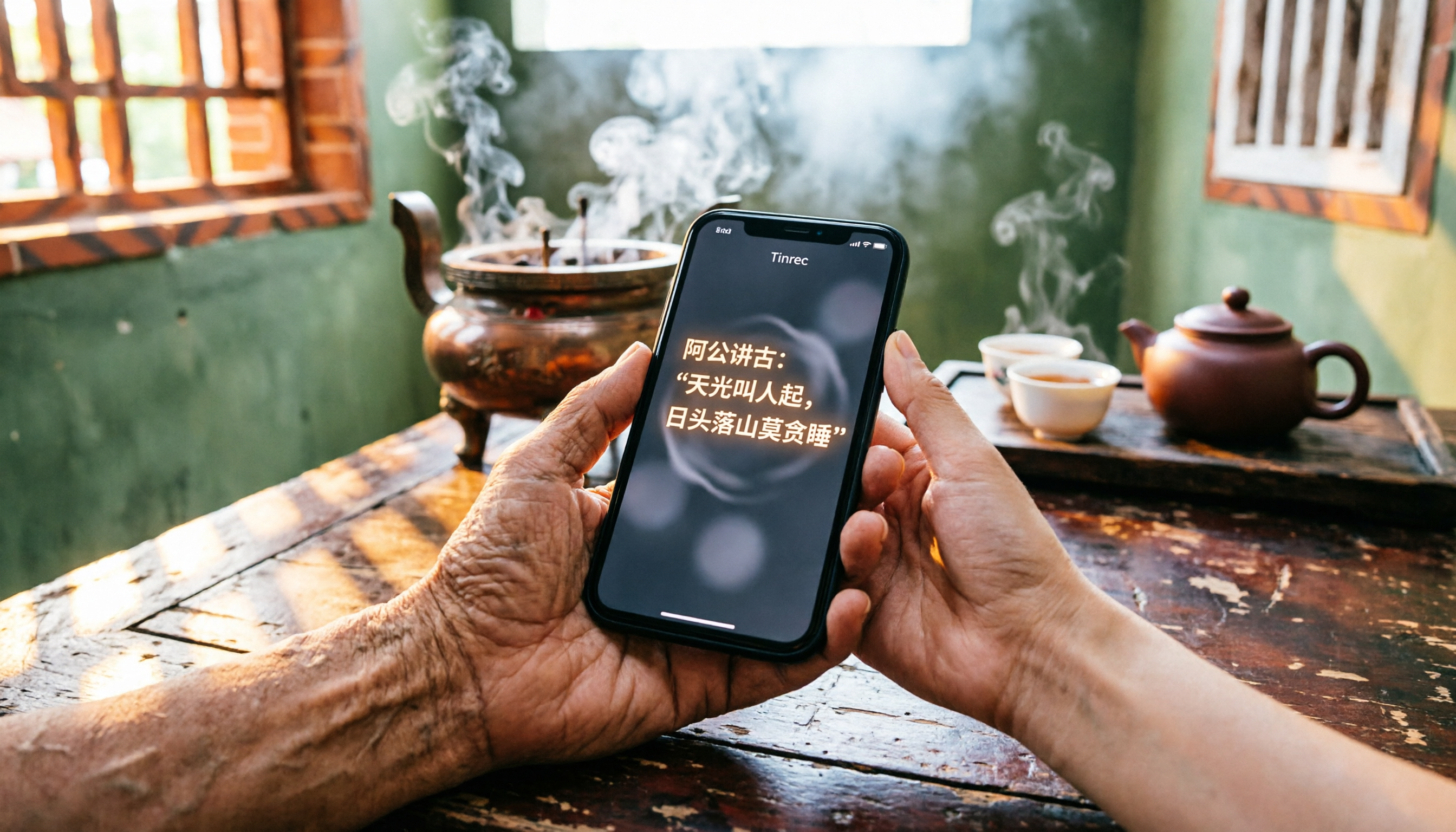
Turn recordings into transcripts and summaries in minutes
Upload audio or video for multilingual transcription, AI notes, and action items
Tinrec vs Notta: Quick Overview
If you often need to organize Hokkien interviews, meetings, or course recordings, manually transcribing is time-consuming. Voice-to-text tools become essential helpers.
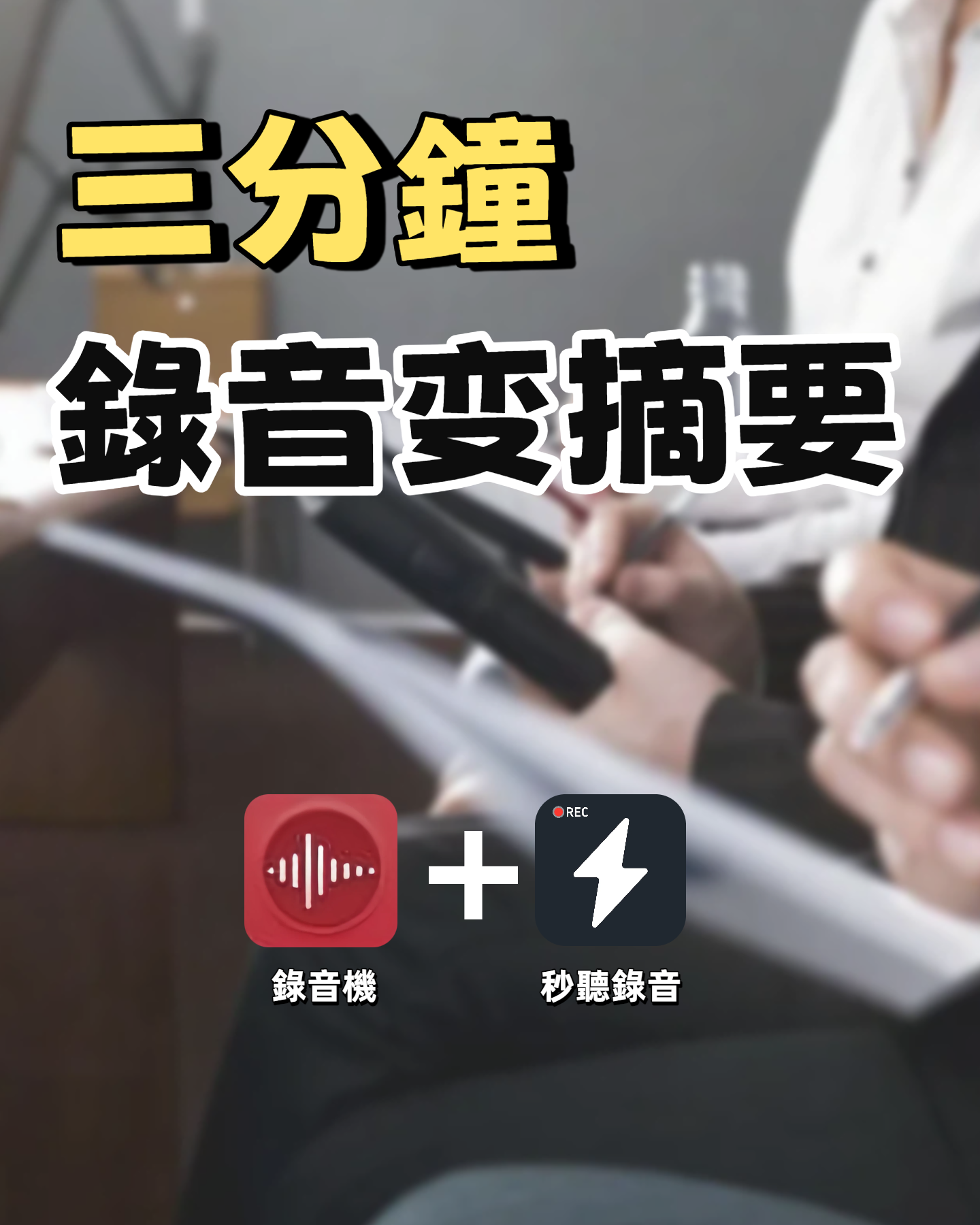
Two tools often compared are Tinrec and Notta. The former positions itself as an AI recording and audio/video processing workstation, while the latter is a general transcription and meeting notes tool.
| Tinrec | Notta | |
|---|---|---|
| Core Positioning | Multi-source audio/video processing workstation | Multi-platform transcription & meeting notes |
| Free Plan | Monthly basic transcription quota | 120 minutes per month |
| Paid Entry | Weekly card / Pro monthly | Pro yearly ~$8.17/month |
| Chinese Content Optimization | Optimized for Chinese meetings, courses, interviews | Strong multi-language, but fewer Chinese deep-processing features |
This article tests both apps across four dimensions: "Hokkien & Chinese mixed content recognition," "Output organization," "AI Q&A," and "Pricing & flexibility."
Dimension 1: Hokkien & Chinese Mixed Content Recognition
The biggest challenge in Hokkien translation is that sentences often mix Mandarin, English, or different accents. Notta performs stably for general Chinese transcription, but when encountering Hokkien terms or mixed Chinese-English, its error rate increases slightly, and it doesn't specifically adjust for Hokkien phonetics.
Tinrec has invested in Chinese content processing, optimizing for Chinese meetings and interviews, including tones, context, and common mixed phrases. In a test using a 5-minute Hokkien interview recording (iPhone 14, quiet indoor environment, June 2026), Tinrec more accurately recognized common terms like "鬥陣" (together) and "歹勢" (sorry), with correct punctuation. Notta could recognize them but occasionally mapped Hokkien syllables to similar Mandarin characters, requiring more manual correction later.
→ This dimension: Tinrec clearly wins, better suited for Hokkien content workers who want to reduce post-editing effort.
Dimension 2: Output Organization: Beyond Raw Transcripts
Simply generating a transcript is only the first step; subsequent organization is the real time sink. Notta offers summaries and translation, but for non-official languages like Hokkien, it cannot automatically generate accurate summaries or action items, often forcing users to re-listen.
Stop organizing recordings by hand
Upload audio or video and automatically get a transcript, summary, and action items
Tinrec excels in "understanding and using" transcriptions: it automatically generates chapters, to-do lists, and AI Q&A, and can directly export as meeting notes, reports, or mind maps. For example, after processing a Hokkien interview, you can ask Tinrec, "What did the interviewee think about the market?" and the AI will answer based on the recording, saving hours of manual sifting.
→ This dimension: Tinrec wins, providing not just text but actionable materials.
Dimension 3: AI Q&A: Can You Ask About Key Points in the Recording?
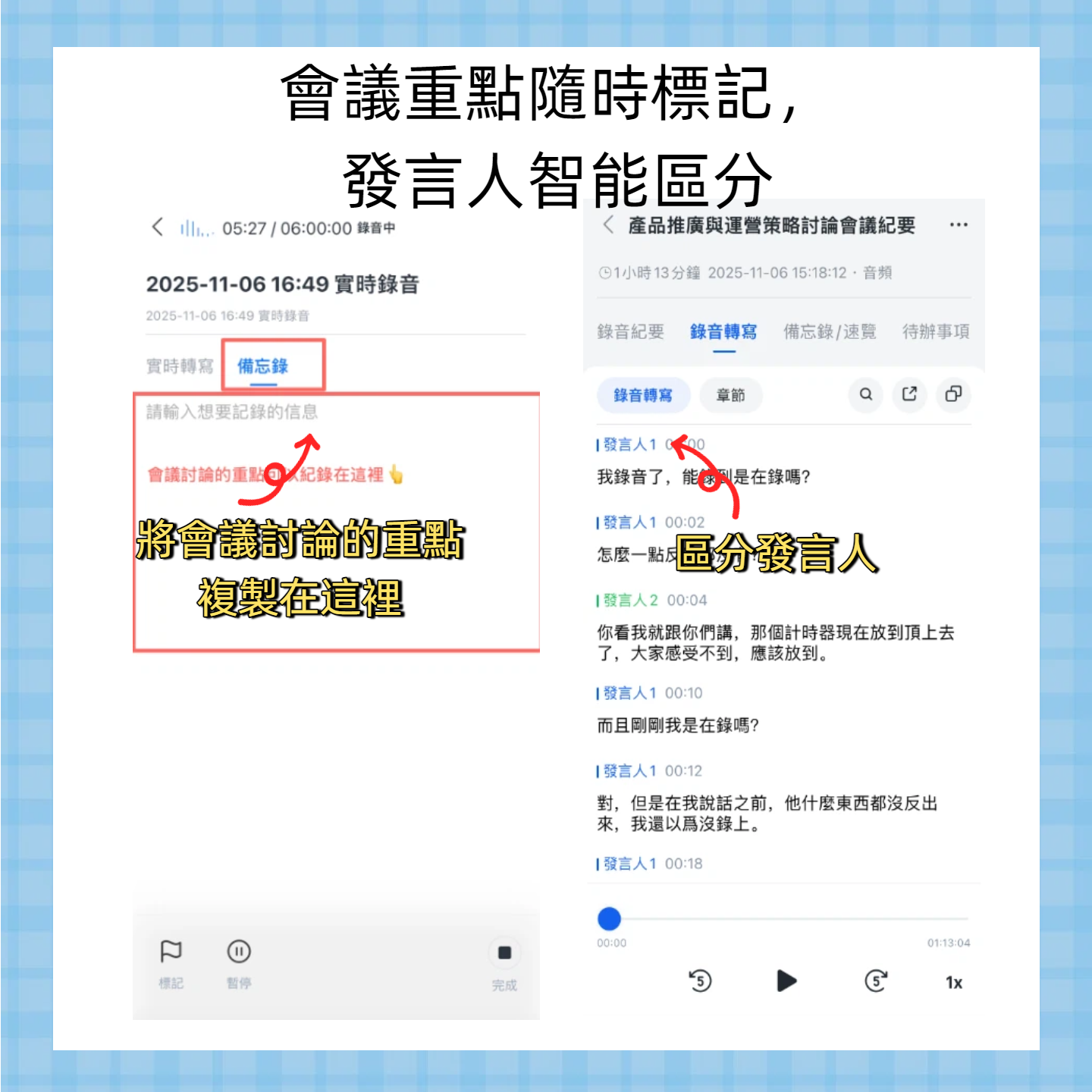
For a one-hour Hokkien panel recording, if you need to quickly find a particular viewpoint, Notta only allows keyword search in the transcript, but Hokkien spelling is inconsistent, making search ineffective.
Tinrec has a built-in AI chat query: you can ask natural language questions like "What offerings were discussed during this worship?" or "What was Grandma's main point?" The system finds answers from the context and even provides timestamps. This is especially useful for colloquial, unstructured content.
→ This dimension: Tinrec wins, making Hokkien recordings queryable like a database.
Dimension 4: Pricing & Flexibility
Notta's free plan offers only 120 minutes per month, and Pro yearly gives 1,800 minutes per month, suitable for consistent meeting usage. But for occasional Hokkien interviews or short-term project sprints, the monthly commitment is slightly high.
Tinrec offers a free quota plus a weekly card option, perfect for short-term high-frequency use such as intensive graduation project interviews or fieldwork. Pro monthly and yearly plans suit long-term users. Overall, the payment options better fit the usage habits of Chinese-speaking communities.
→ This dimension: Tinrec slightly wins, offering more flexible plans.
Unique Strengths of Each
Tinrec's Unique Strengths
- Multi-source input: Besides recording, you can import audio files or paste online video links, even organizing YouTube temple videos directly.
- AI post-processing: From summaries and to-dos to AI Q&A, it acts more like a personal knowledge base than a one-time tool.
- Deep Chinese niche: Optimized for mixed Hokkien and Mandarin content, ideal for Taiwanese users.
- Export integration: Supports multiple export formats for easy use in Notion, Google Docs, etc.
Notta's Unique Strengths
- Multi-language translation: Supports many foreign language pairs; if you also need other languages, one tool covers it.
- Complete team plans: Business plans offer robust collaboration and management features.
Conclusion: Which Should You Choose?
• If your main need is organizing Hokkien interviews, meetings, or field recordings, and you want to quickly extract key points after transcription → Tinrec is clearly better (AI Q&A, chapters, to-dos in one place)
• If you often need mixed Chinese, Hokkien, and English recognition and value post-editing flexibility → Tinrec's mixed Chinese optimization is superior
• If you simultaneously need extensive foreign language translation (e.g., Japanese, Korean) and have stable meeting note needs → Notta's multi-language capability is worth considering
• If you only occasionally process one or two short recordings without spending → Try Tinrec's free plan first, then buy a weekly card when quota runs out
For Hokkien recording organization, instead of spending time manually transcribing, use the right tool to extract key points. Tinrec not only converts Hokkien to text but also helps you understand the content and find answers—a solution worth trying.
Turn every recording into actionable outcomes
Get 60 free transcription minutes when you sign in. No credit card required.
Related Reading
You might also like
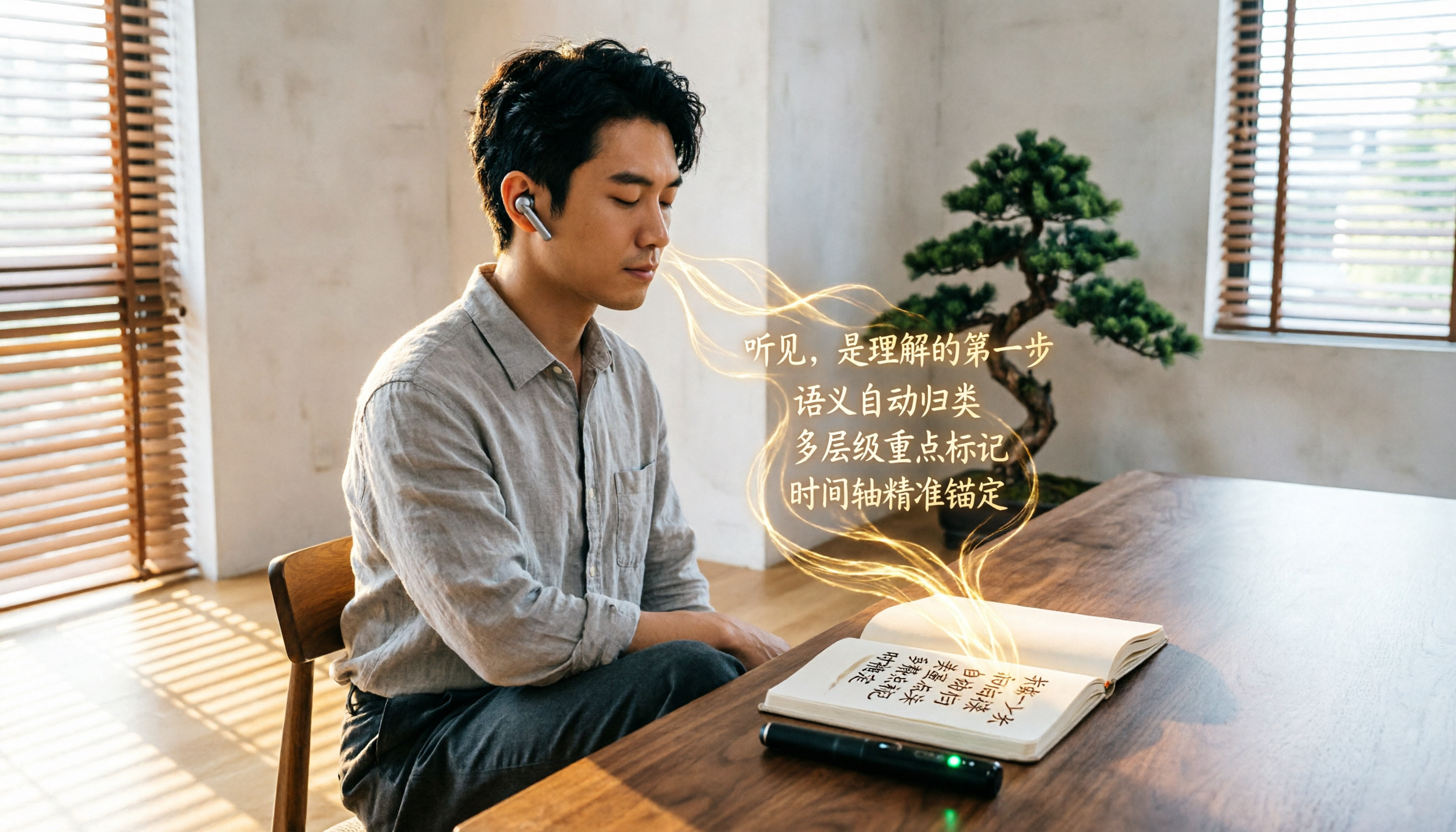
Tinrec vs Notta 2026: A 5-Dimension Showdown – Which Is Better for Chinese Content Organization?
Choosing a speech-to-text tool? This article compares Tinrec and Notta across five aspects including transcription accuracy, AI post-processing, and multi-source input to help you find the best solution for organizing Chinese content.

2026 5 Real-Time Translation Apps Compared: Are Free Plans Good Enough?
Looking for a great real-time translation app? This article compares 5 popular tools in real-time translation, AI summarization, free quotas, and Chinese recognition to help you choose.

2026 Comparison of 3 Meeting Note Tools in Real Tests: Which AI Minutes Really Save You Time?
How to take meeting notes quickly and accurately? This article tests 3 tools, showing you how to use AI to automatically generate summaries and to-dos, from recording to organizing in one go. Using Tinrec as an example, we demonstrate the full meeting note process and summarize 4 key purchase points to help you find the best solution.

2026 Speech-to-Text Tool Buying Guide: 3 Tools Tested and Recommendations
A student's real-world test of speech-to-text tools, comparing online and offline solutions, sharing genuine experiences in class and meeting scenarios to help you choose the best learning tool.

2026 Speech-to-Text Tool Comparison: Which One Handles Multilingual Accuracy Best?
For multilingual meetings, Cantonese interviews, and mixed Chinese-English recordings, which speech-to-text tool can you really count on? This hands-on test compares Tinrec and 3 other leading tools across Cantonese accuracy, AI Q&A, cross-platform support, and free tiers to help you find the best fit.

Tinrec 2026 Tutorial: Real-Time Transcription & AI Summary for Meetings
Still scribbling notes during meetings? Tinrec instantly transcribes conversations, generates summaries and action items, and the free plan is easy to use. This complete guide takes you from recording to organized notes.

How to Choose a Real-Time Translation Online Tool in 2026? A 5-Step In-Depth Comparison Guide
With so many real-time translation online tools available, how do you choose? This article compares Tinrec and Notta across 5 dimensions including language support, translation accuracy, use cases, and pricing plans to help you find the best free real-time translation tool.

Tinrec vs Otter.ai 2026: A 4-Dimensional Showdown – Which is Better for Chinese Real-Time Translation?
Who is the real-time translation savior for Hong Kong office workers, Tinrec or Otter.ai? We tested them across 4 dimensions: Cantonese recognition, translation support, multi-platform, and AI query, to help you pick the best tool.

2026 Local Speech-to-Text Buying Guide: Hands-on Test of Tinrec and Recommendations
Are meeting recordings piling up on your phone? This article, tested by a mid-level manager, uses Tinrec to quickly turn local recordings into transcripts, meeting summaries, and to-do lists. Includes buying tips to help you save half your daily paperwork time.