

Turn recordings into transcripts and summaries in minutes
Upload audio or video for multilingual transcription, AI notes, and action items
If you're looking for a Notta alternative, honestly, there are plenty of options now. But I usually look at the use case first—do you just need transcription, or do you want to use the text right after? This article compares two services I've actually used: Tinrec and Notta.
Tinrec vs Notta – Quick Overview
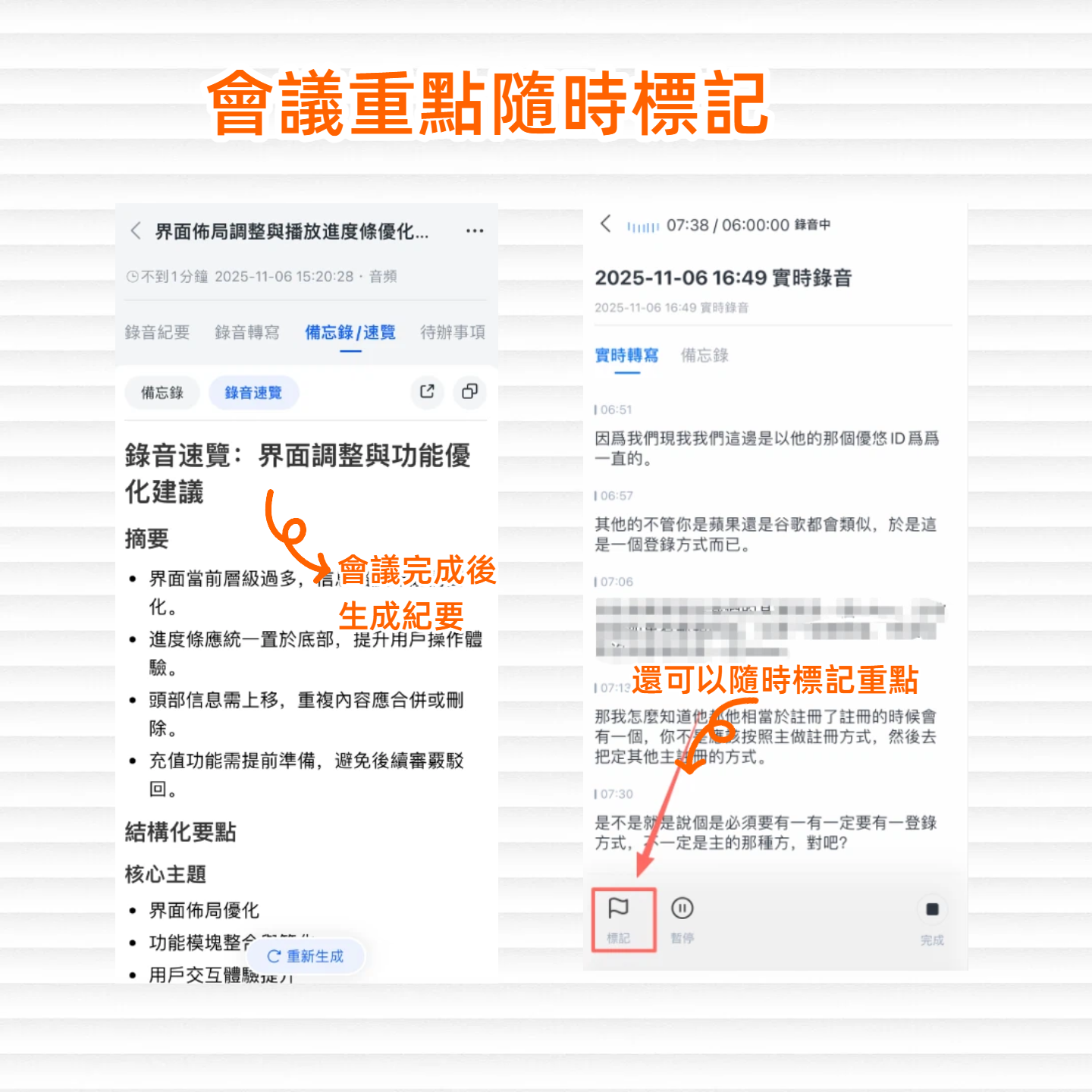
Tinrec is an AI recording and audio/video organization tool that goes beyond just converting speech to text, focusing on follow-up summaries, Q&A, export, and knowledge management. Notta is a multi-platform transcription and meeting notes tool, known for its mature transcription, subtitle, and translation features.
- Pricing: Both offer free plans. Tinrec provides basic transcription credits; Notta's free tier gives 120 minutes per month.
- Platforms: Tinrec supports iOS, Android, and web; Notta has iOS, Android, Web, and Chrome extension.
- Key difference: Tinrec covers more input sources (online videos, audio files, live recording) and allows Q&A and task extraction after transcription; Notta is more complete for team plans and batch subtitles.
Now let's compare across five key dimensions.
Dimension 1 – Chinese Transcription & Recognition
Notta does well with multilingual transcription, especially English and Mandarin, but offers less optimization for Cantonese, code-switching, or Taiwanese colloquialisms. Tinrec is clearly localized for Chinese content, supporting traditional Chinese and achieving better recognition for mixed Chinese-English and common colloquial speech, especially in practical scenarios like meetings and interviews.
→ Verdict: Tinrec is better for Chinese users.
Dimension 2 – Input Source Diversity
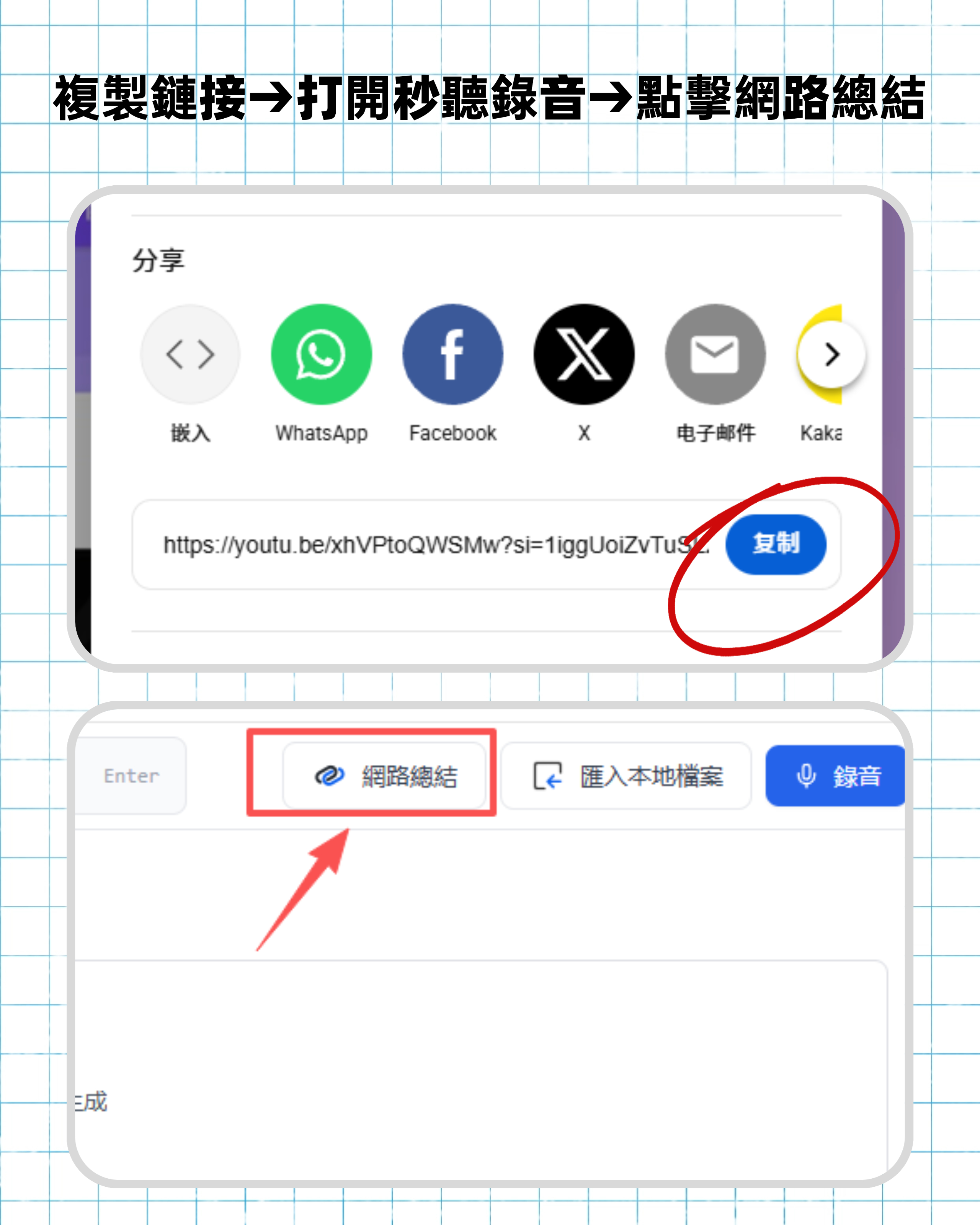
Notta primarily transcribes via live recording, file uploads, and some online meetings, with limited support for directly parsing YouTube or TikTok links. Tinrec not only records and uploads files but also allows pasting public video links to transcribe and summarize online content—especially useful for self-media creators and students.
→ Verdict: Tinrec covers more input sources.
Dimension 3 – Post-Transcription Organization & Usage
What can you do with the transcript? Notta provides summaries and subtitles and supports export to various tools, but if you want to ask follow-up questions or automatically extract tasks, it lacks. Tinrec excels here: in addition to auto-summaries, chapter splitting, to-do lists, it offers AI conversational queries, allowing you to ask questions repeatedly like querying a database, and even generate meeting minutes or reports.
→ Verdict: Tinrec makes transcripts more useful.
Stop organizing recordings by hand
Upload audio or video and automatically get a transcript, summary, and action items
Dimension 4 – Pricing & Value
Notta's free plan gives 120 minutes per month, Pro yearly is about $8.17/month for 1800 minutes, and Business is unlimited. Tinrec's free plan also provides basic credits, with paid options including weekly, monthly, and yearly cards—offering more flexibility if you only need it heavily for a short period; weekly cards are cheaper for short-term use, and yearly plans are competitive per month.
→ Verdict: Both have advantages, but Tinrec's short-term plans are more flexible.
Dimension 5 – Cross-Platform & Ease of Use
Both tools support iOS, Android, and web, making switching between phone and computer seamless. Notta adds a Chrome extension for easy in-browser access; Tinrec offers a consistent experience across mobile and web without needing extra installations.
→ Verdict: Tie—both meet multi-device needs.
What Are Their Unique Advantages?
Tinrec's unique advantages:
- One-click transcription of online videos, easily organizing YouTube and TikTok content
- AI Q&A turns historical recordings into a searchable database for reuse
- Task extraction and meeting minutes generation, directly producing deliverable documents
- Optimized for mixed Chinese-English and Cantonese recognition, catering to Taiwanese and Hong Kong usage habits
Notta's unique advantages:
- Team collaboration and management backend, ideal for enterprise unified purchasing and multi-user sharing
- Subtitle generation and multilingual translation, useful for international meetings or video post-production
Conclusion: Which One Should You Choose?
- If you are a Chinese user who often organizes meetings, lectures, or online videos → Tinrec (better recognition and more complete post-processing)
- If you want to continue asking questions about the content or extract tasks after transcription → Tinrec (AI conversational query is the key differentiator)
- If you use it occasionally and don't want to pay monthly → Tinrec (weekly card offers flexibility, no long-term commitment)
- If you need team management, large-scale subtitle generation, and translation → Notta is more suitable
In a nutshell: For most individual users, Tinrec is a more complete choice, especially for those who want to "make good use" of their recordings rather than just "transcribe and forget." I recommend downloading Tinrec's free version and testing it with your own recordings.
FAQ
Q: Is the free plan sufficient?
A: If you only occasionally transcribe a few meetings or lectures, the basic credits from the free plan should suffice. Tinrec's free plan doesn't specify the exact minutes, but core features are accessible; Notta's free plan offers 120 minutes per month, enough for light use.
Q: What audio formats are supported?
A: Both support common formats like MP3, M4A, WAV, and can also directly upload video files (e.g., MP4) for transcription.
Q: How accurate is the transcription?
A: With clear audio, both tools have high accuracy. However, background noise, multiple speakers, or special accents can affect accuracy. Tinrec shows better optimization for Chinese colloquial speech, while Notta is more mature for English.
Q: Is my recording data private?
A: Both services use encrypted transmission and state in their privacy policies that they do not misuse your recordings. If you handle sensitive content, please review each platform's privacy policy.
Q: Can I export to Word or PDF?
A: Yes. Both Tinrec and Notta support exporting transcripts or summaries to TXT, Word, PDF, and other common formats, and can sync to tools like Notion or Google Docs (depending on the plan).
Q: How do they compare to Otter.ai?
A: Otter.ai excels in English business meetings and team collaboration but has weaker support for Chinese content. If you need to process Chinese (especially Traditional Chinese or colloquial speech), Tinrec or Notta are more suitable.
Turn every recording into actionable outcomes
Get 60 free transcription minutes when you sign in. No credit card required.
Related Reading
You might also like

2026 Comparison of 5 Meeting Transcription Tools for Public Servants: Which One Actually Saves Overtime?
When choosing a meeting transcription tool, public servants should look beyond free minutes and consider Chinese recognition, whether online meetings can be recorded without a bot, post-meeting summaries and Q&A, data policies, and team handover. This article tests Tinrec, Otter.ai, Granola, TurboScribe, and Notta in typical government meeting scenarios, outlining selection criteria, pitfalls to avoid, and scenario-based recommendations to help you work less overtime.

The Complete 2026 Guide to Automating Google Meet Transcripts: From Recording to Summaries and Action Items
Many people assume that pressing record in Google Meet will automatically generate a transcript. In practice, the built-in transcript and Gemini notes don't support Chinese, so you still have to re-listen and organize after the meeting. This guide covers pain points, selection criteria, hands-on recommendations, and pitfalls to avoid, comparing Tinrec, Google Meet built-in, TurboScribe, and PLAUD Note to help you find the right automated workflow for Chinese meetings.

2026 Comparison of 6 Call Recording to Text Apps: Which AI Meeting Notes Really Save Time?
Just realized you missed key points after hanging up? This article reviews 6 call recording to text apps in 2026, comparing call recording transcription, AI summaries, action item extraction, and team collaboration, with free tiers and pricing to help you find a truly time-saving solution.

2026 Complete Guide to Hakka Speech-to-Text Apps: Sixian and Hailu Accent Transcript Workflow
Hakka speech-to-text isn't just pressing start. Based on a student's report pitfalls, this guide covers three key factors—accent, recording quality, and post-meeting organization—and demonstrates Tinrec's full workflow from recording to transcript, summary, to-dos, and team collaboration, with buying checkpoints and FAQs.

2026 Comparison of 4 Lecture Recording & Translation Tools for International Students: Understand Foreign Language Classes Without Re-listening
2026 comparison of lecture recording and translation tools for international students, starting from common pitfalls, comparing Tinrec, Otter.ai, Notta, and Google Translate to help you choose a classroom tool that records and transcribes simultaneously, offers bilingual viewing, and provides post-class summaries and Q&A.

Best Voice Note Apps in 2026: Hands-On Test of 4 Tools—This One Excels at AI Summaries and Post-Meeting Q&A
A mid-level manager who attends 15 meetings a week shares honest feedback after testing 4 voice note and AI organization tools. From 'what you get after transcription' and 'how meetings are recorded' to 'can you ask follow-up questions' and 'team governance,' we break down 4 key criteria for choosing a tool, and candidly explain who Tinrec, Granola, Otter.ai, and PLAUD are each suited for—and where the pitfalls lie.

2026 Comparison of 3 WhatsApp Audio-to-Text Solutions: Built-in Transcription vs. AI Organization
Transcribing WhatsApp voice messages and transcribing call recordings are two different things. This article starts with common misconceptions and compares WhatsApp's built-in transcription, Notta, TurboScribe, and Tinrec in terms of their actual differences in organizing call and meeting content, with cost and quota details, to help you choose the approach that truly saves time.

2026 Slack Meeting Recording AI Comparison: 4 Tools Tested — Which One Actually Turns Meetings into Usable Records?
Slack Huddles disappear as soon as they end — a common pain point for many teams. This article starts from real usage scenarios, breaks down 5 key buying criteria, and compares Tinrec, Slack's built-in AI recording, Notta, and Otter.ai on meeting capture methods, post-meeting outputs, cross-meeting Q&A, and team governance. It also includes a pitfalls guide and scenario-based selection advice.

How to Review Interview Recordings in 2026: 5 Steps to Summarize Key Points with AI Analysis Tools
Stop replaying entire interview recordings. Using Tinrec as an example, this article walks you through 5 steps to transcribe interview recordings, summarize key points, ask follow-up questions with AI, export and archive, and collaborate with your team—plus answers to common questions and tool selection advice.