

Turn recordings into transcripts and summaries in minutes
Upload audio or video for multilingual transcription, AI notes, and action items
Two hours in a meeting, another two hours organizing notes? You need smarter tools
"What was said in the meeting?" "What are the key points of that lecture?" "What is this video about?"
These questions are familiar to almost every office worker, student, and content creator. Recording is just the first step; the real hassle is turning recordings into usable material—transcripts, summaries, action items, even task lists.
Even more frustrating, many tools claim to support Chinese, but their actual performance varies widely. Cantonese, mixed Chinese-English, background noise—all can severely reduce transcription quality.
If you're also looking for a tool that can truly help you organize audio and video content, this real-world comparison is written for you.
Before choosing a recording-to-text tool, understand these 4 key points
Accuracy: Don't just trust official numbers
Many tools boast "98% accuracy," but that's measured in a quiet recording studio. In real scenarios with air conditioning, keyboard sounds, and overlapping speech, accuracy drops significantly. We recommend testing with your own recordings using free trials to gauge actual performance, rather than relying on ads.
AI features: Transcription is just the beginning
A transcript is only the first step. A truly useful tool should automatically summarize, break into chapters, extract action items, and even let you query the content like a database. If it only converts speech to text, you still have to spend significant time organizing.
Cross-platform: Works on phone and computer
You might record on an iPhone but need to organize on a computer, or record a meeting on your phone and edit later on the web. If a tool only supports one platform, it becomes a pain to use.
Free tier: How high is the trial barrier?
Some tools offer generous free tiers, while others are nearly useless. First assess your monthly recording volume, then decide whether to stick with the free version or go for a paid plan.
Tinrec (Miao Ting Lu Yin) — Our top pick after testing
Tinrec (Miao Ting Lu Yin) is an AI tool that supports multi-source audio and video organization, covering iOS, Android, and web. It doesn't just convert speech to text; it turns meetings, courses, interviews, and even online videos into searchable, organizable, reusable knowledge.
Core features in scenarios: More than just transcription
Record and transcribe in real time during meetings, AI auto-summarizes afterward
Start recording with Tinrec, and it displays live transcripts. When the meeting ends, AI has already organized summaries and action items—who is responsible for what, deadlines—all clear. No need to manually re-listen to two-hour recordings.
Paste a YouTube link, instantly extract video highlights
See a long tutorial or lecture and want to capture key points without watching the whole thing? Paste the link into Tinrec, and it will convert it to text, then generate summaries, chapters, and even let you ask questions about the video. This is especially useful for content creators and learners.
After recording, use "Conversation Query" to find answers
This feature impressed us the most. After recording a meeting or interview, you can ask Tinrec directly: "Who mentioned the budget in the last meeting?" It doesn't just return keyword search results—it understands your question and gives you the answer directly. Competitors at similar price points rarely have this capability.
Stop organizing recordings by hand
Upload audio or video and automatically get a transcript, summary, and action items
Test performance: Outstanding for Chinese scenarios
We tested with a real Chinese meeting recording (with slight background noise). Tinrec's transcription quality was reliable, especially in recognizing proper nouns and mixed Chinese-English content. While no tool is 100% perfect, Tinrec's overall fluency in organizing Chinese content was the most satisfying in this test.
Pros: More than one
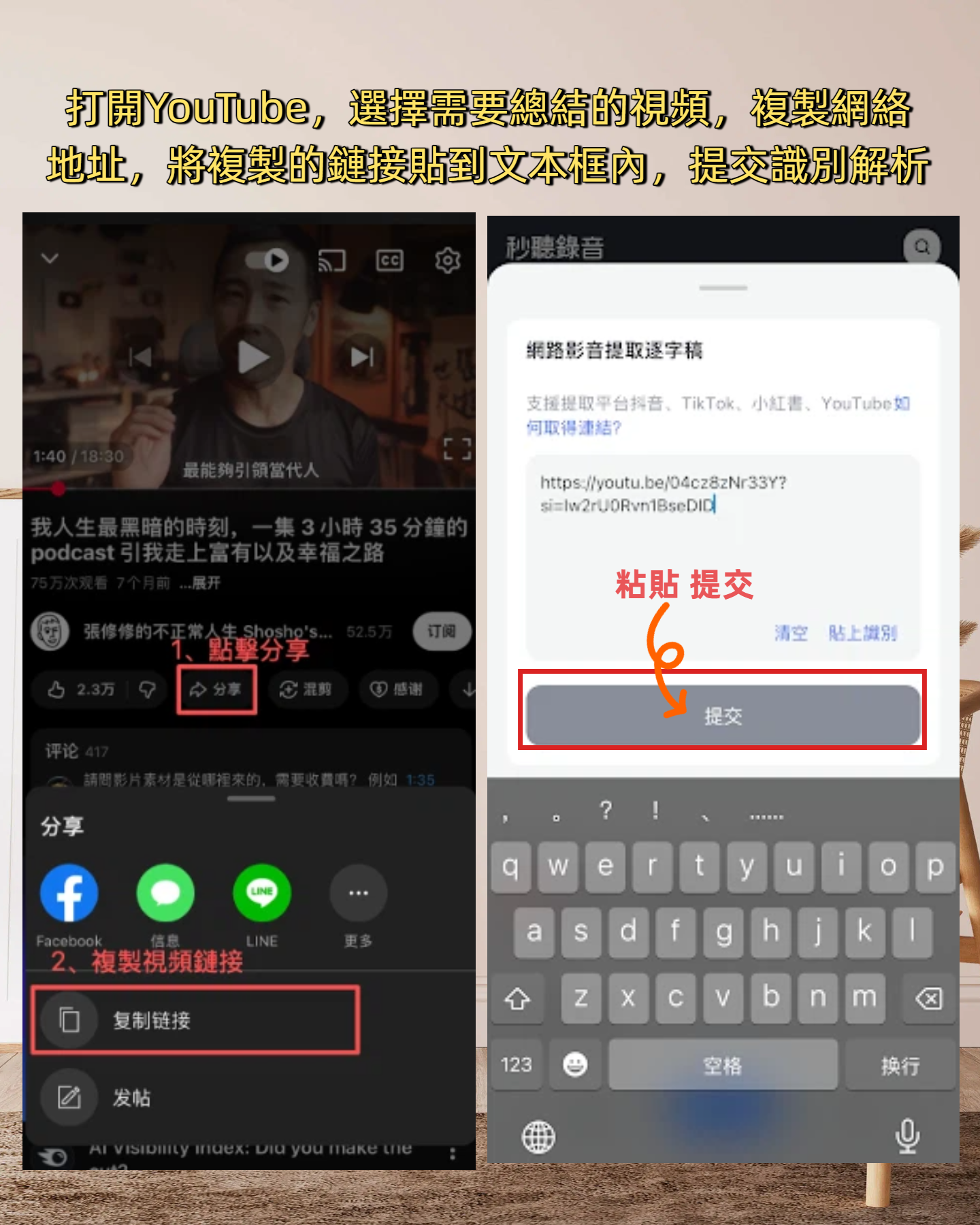
- Multi-source input: Supports live recording, file upload, and link pasting—unlike some tools limited to meetings or hardware.
- Powerful AI post-processing: Summaries, chapters, action items, Q&A—saves massive organization time.
- Cross-platform support: Works on phone and computer with data sync, great for multi-device users.
Limitations: To be honest
The free version offers basic transcription minutes, suitable for light use. If you have many meetings or courses weekly, a paid plan may be needed. But for most people with 2-3 meetings per week, the free version is a good starting point.
Who is it for?
If you need to organize Chinese meetings, quickly extract key points from online videos, or ask AI about recording content—Tinrec is currently the best choice.
Besides Tinrec, what other options are there?
Otter.ai: Best for English meetings
Otter.ai is a well-known AI meeting note tool. It automatically joins online meetings, provides real-time transcription, and offers a generous 300 free minutes per month. However, it doesn't support Cantonese, and its Chinese performance is not as good as English. If you primarily record in English, Otter is great value; if you need to organize Chinese or mixed Taiwanese meetings, Tinrec is more complete.
PLAUD Note: A portable recorder for hardware enthusiasts
PLAUD Note is a standalone AI recording hardware with a beautiful design and long battery life, ideal for those who want a dedicated device. However, it requires an additional purchase (around $179 USD), and its AI post-processing is less flexible than Tinrec's. If you don't want to carry an extra device, Tinrec on your phone offers similar recording and transcription capabilities, plus handles online videos and files for more source variety.
Notta: Strong in transcription and translation
Notta excels in transcription, subtitles, and translation. Its free version offers 120 minutes per month, and paid plans have generous limits. However, it leans towards "transcription and done," lacking Tinrec's AI conversation query—you can't ask questions about the content after recording. If you only need bulk transcription and subtitles, Notta is worth considering; if you want to query data, extract action items, or generate reports afterward, Tinrec fits better.
Pitfall guide: 3 most common mistakes when choosing a recording-to-text app
Pitfall 1: Only look at price, ignore AI features
Some tools appear generous with free tiers but only provide transcripts—no summaries, no Q&A. You still have to read everything yourself, saving no time. Tinrec's AI conversation query lets you directly ask for key points, which is the real time-saver.
Pitfall 2: Overlook cross-platform needs
Record on iPhone today, edit on computer tomorrow—if the tool doesn't support multiple platforms, it's a hassle. Make sure both mobile and desktop versions exist and sync data.
Pitfall 3: Think transcription is the end
The saddest use of a recording-to-text tool is only using it to convert speech to text. Make good use of AI summaries, action item extraction, and Q&A to turn data into action.
Conclusion: Which one should you choose?
Overall, if you need to process various Chinese audio and video content—meetings, courses, interviews, online videos—and want to ask about key points after recording, Tinrec is the most comprehensive choice.
Here's a direct match for scenarios:
- Need Chinese meeting, course, or video organization → Tinrec (most complete with multi-source input, AI query, and post-processing)
- Only record English meetings and need lots of free minutes → Otter.ai (300 free minutes, best for English)
- Want a hardware device for portable recording → PLAUD Note (but need to carry an extra device, and AI organization is weaker than Tinrec)
- Only need transcription and subtitles, don't mind lacking AI Q&A → Notta
We recommend downloading the Tinrec free version to try it out—its free minutes are enough for a few meetings or videos to experience the AI organization capabilities. If you find it useful, then consider a paid plan; no need to spend money upfront.
Turn every recording into actionable outcomes
Get 60 free transcription minutes when you sign in. No credit card required.
Related Reading
You might also like

2026 Hands-On Comparison of 4 Speech-to-Text Tools: Is Tinrec's AI Q&A Feature Really Useful?
A hands-on comparison of 4 mainstream speech-to-text tools, including Tinrec, Otter.ai, Notta, and Fireflies, analyzed from dimensions such as accuracy, AI features, and free plans to help you find the best meeting recording and audio transcription solution.

2026 Real-World Test: 2 Audio-to-Text Tools Compared – Which One Better Manages Your Audio & Video?
This article compares Tinrec and Plaud Note in a hands-on test across 5 key dimensions: input sources, AI depth, Chinese accuracy, cross-platform flexibility, and cost. Find out which tool fits your audio/video workflow best.

2026 Hands-on Comparison of 3 Speech-to-Text Tools: Why I Chose Tinrec Over Notta and Fireflies
I tested three speech-to-text tools—Notta, Fireflies, and Tinrec—comparing accuracy, AI summaries, cross-platform support, and Chinese content processing to help you choose the best one for knowledge workers.

2026 Comparison of 2 Top Transcription Tools: Tinrec vs Notta – Which Is Better for Chinese Users?
Looking for a Notta alternative? This article compares Tinrec and Notta across five dimensions: transcription accuracy, input sources, post-processing, pricing, and cross-platform support, to help you decide which is better for organizing Chinese meetings, lectures, and online videos.
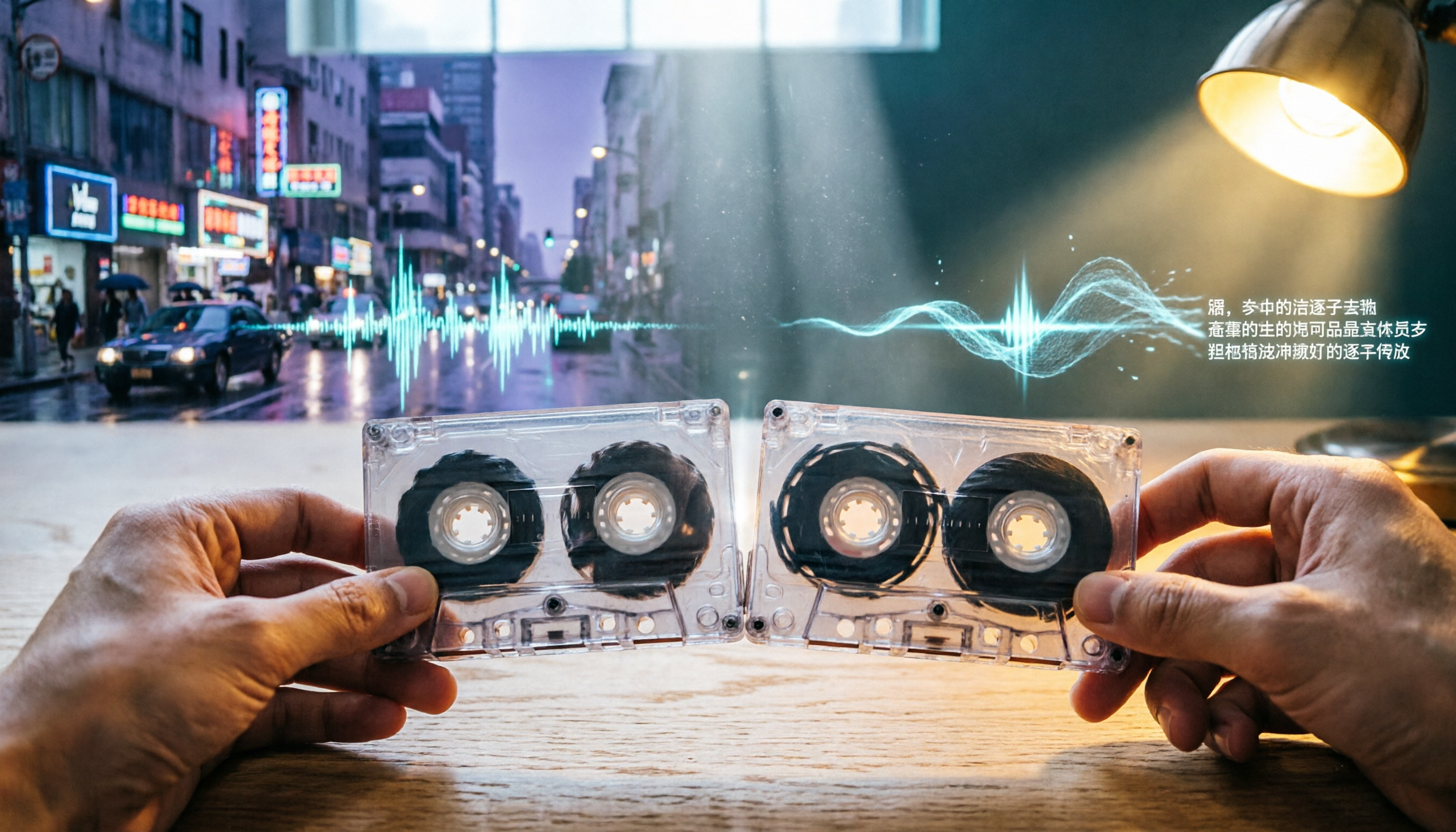
2026 Side-by-Side Test of Two Audio Recordings: Bad vs Good – How Much Does Tinrec's Transcription Accuracy Differ?
This article tests the impact of bad recordings (background noise, long distance, multiple people talking over each other) vs good recordings (quiet environment, close range, single speaker) on Tinrec's AI transcription tool, and shares practical tips to improve recording quality to help you get accurate transcripts in less time.

2026 In-Depth Comparison of 2 AI Meeting Note Tools: Fireflies vs Notta – Which Is the Better Deal?
Tired of endless meetings and manual note-taking? We put two popular AI meeting note tools, Fireflies and Notta, to the test—comparing transcription accuracy, AI summaries, team collaboration, and pricing—to help you find the time-saving solution that fits your needs.

2026 Real-World Test of 4 Audio-to-Text Tools: Which One Handles Chinese Best?
This article compares 4 leading audio-to-text tools: Tinrec, Notta, PLAUD, and Otter.ai. We evaluate them on Chinese transcription quality, AI summarization, cross-platform support, and free plans to help you choose the best assistant for meetings, learning, and content creation.

2026 Real-World Test of 5 Speech-to-Text Apps: Why Tinrec Is a Better Fit for Hong Kong Office Workers?
Tired of overtime due to meeting notes? We test 5 popular speech-to-text apps, comparing Cantonese recognition, AI summaries, cross-platform support, and free quotas. Find out why Tinrec is the top choice for Central office workers who want to avoid OT.

Best AI Transcription Tools 2026: Notta vs Otter vs Tinrec — Which One Is Right for You?
Stuck choosing between Notta, Otter, and Tinrec? This hands-on comparison covers real-world performance, Chinese language support, post-processing, and pricing, and explains why Tinrec might be the more complete alternative.