

Turn recordings into transcripts and summaries in minutes
Upload audio or video for multilingual transcription, AI notes, and action items
I attend about 15 meetings a week, and the one that gives me the biggest headache isn't the routine weekly sync—it's the quarterly all-hands meeting: a massive online gathering with 300 to 400 people, spanning time zones, and lasting two hours. In the past, what scared me most wasn't speaking up, but what came after. The CEO lays out next year's strategy, HR announces new benefits, each department reports progress—and once the meeting ends, my real work begins: I have to compile meeting notes, list action items, send them to the team, and report the highlights to my boss first thing the next morning.
I used to try typing while listening, but my typing speed couldn't keep up. I tried recording and playing it back, but listening to a two-hour recording over and over ate up an entire afternoon. Then a teammate recommended Tinrec, and I realized that organizing large meeting recordings could be this effortless.
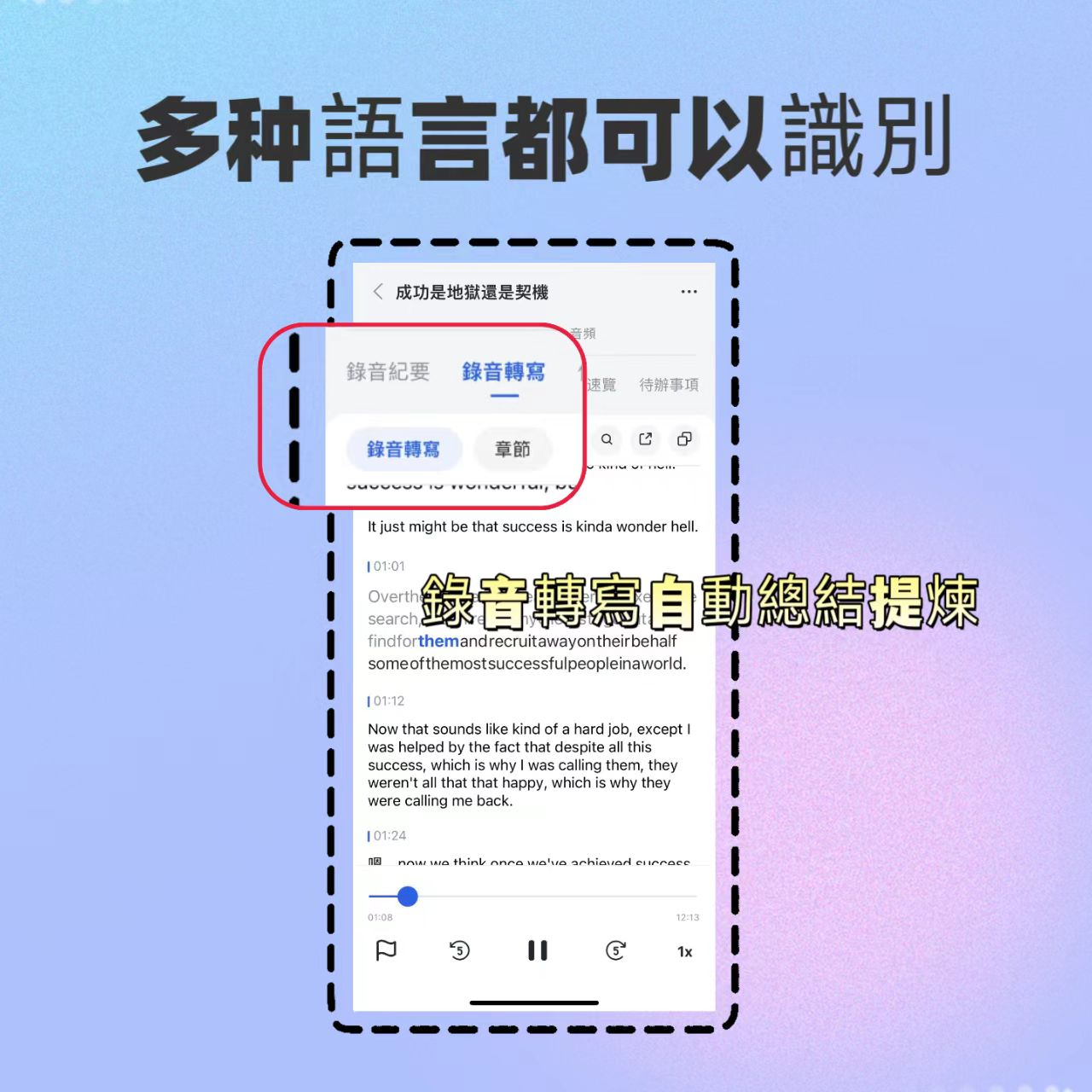
This article won't compare which Google Meet plan is the best value—you can find that info on their website. Instead, I want to share: if your company already uses Google Meet for large meetings (even up to 500 participants), as a mid-level manager, how can you use Tinrec to turn meeting content into truly usable assets, rather than recordings that just sit around gathering dust?
What Can Google Meet Large Meeting Recording Organization Do for You?
A 500-person Google Meet meeting typically includes executive talks, policy announcements, cross-department reports, and a Q&A session. These meetings have three pain points:
- Information overload: A two-hour meeting may cover a dozen topics and dozens of decisions—notes alone will inevitably miss something.
- Hard to identify multiple speakers: With multiple speakers taking turns, traditional recordings make it difficult to quickly locate who said what.
- Action items hard to follow up: After the meeting, who needs to do what and by when often gets lost in memory after being verbally assigned.
Based on my real experience with Tinrec, it can help tremendously in these scenarios:
Scenario 1: Meeting minutes ready 5 minutes after the meeting Before, after a two-hour all-hands meeting, I'd spend at least another hour organizing the notes. Now, I just record the Google Meet meeting simultaneously on my laptop (or use the Tinrec mobile app), and by the time the meeting ends, the AI has already generated a summary, conclusions, and action items—who is responsible for what and the deadlines, all clear at a glance.
Scenario 2: Quickly retrieve key decisions My boss suddenly asks, "At last month's meeting, what was the timeline for the new product launch?" Previously, I'd have to listen to the entire recording from scratch. Now I simply ask Tinrec's AI conversation query, "new product launch timeline," and it instantly answers based on the transcription, complete with timestamps. No more awkwardly flipping through notes.
Scenario 3: Automatic tracking of action items Tinrec automatically extracts action items mentioned in the meeting into a to-do list. I can directly export it to the team, or even one-click copy to Slack or Notion, ensuring everyone knows what they need to do.
What Are Tinrec's Core Recording Organization Capabilities?
There are many speech-to-text tools out there, but for someone like me who needs "organization" rather than just "recording," Tinrec has several key capabilities that stand out:
1. Real-time transcription It generates text while recording, with less than a second delay. During a Google Meet session, I can watch the live transcript to ensure I don't miss key points. It also supports speaker diarization (though in large meetings with multiple people talking at once, it still has challenges, but overall accuracy is good), so I know who said what.
Stop organizing recordings by hand
Upload audio or video and automatically get a transcript, summary, and action items
2. AI semantic summary It doesn't just condense the transcript into a paragraph; it structures the output: meeting topic, discussion conclusions, action items, responsible persons—all listed separately. This is especially handy for writing weekly reports or briefing the boss.
3. AI conversation queries After transcription, I can ask Tinrec questions like, "Who mentioned the budget adjustment in the meeting?" or "What was the customer's reaction?" It answers based on semantic understanding, so I don't have to Ctrl+F through notes like before.
4. Multi-format export Organized content can be exported as PDF, Word, TXT, or synced to Notion, Google Docs, OneNote. My team now collaborates directly in Notion, making meeting minutes seamlessly integrated.
5. Cross-platform support I use my laptop for Google Meet at work, listen to recordings on my phone on the go, and review on my tablet at home—Tinrec has iOS, Android, and web versions, with real-time syncing, no need to transfer files via cable.
Real-World Use Cases
Beyond all-hands meetings, I've used Tinrec for other large meeting scenarios:
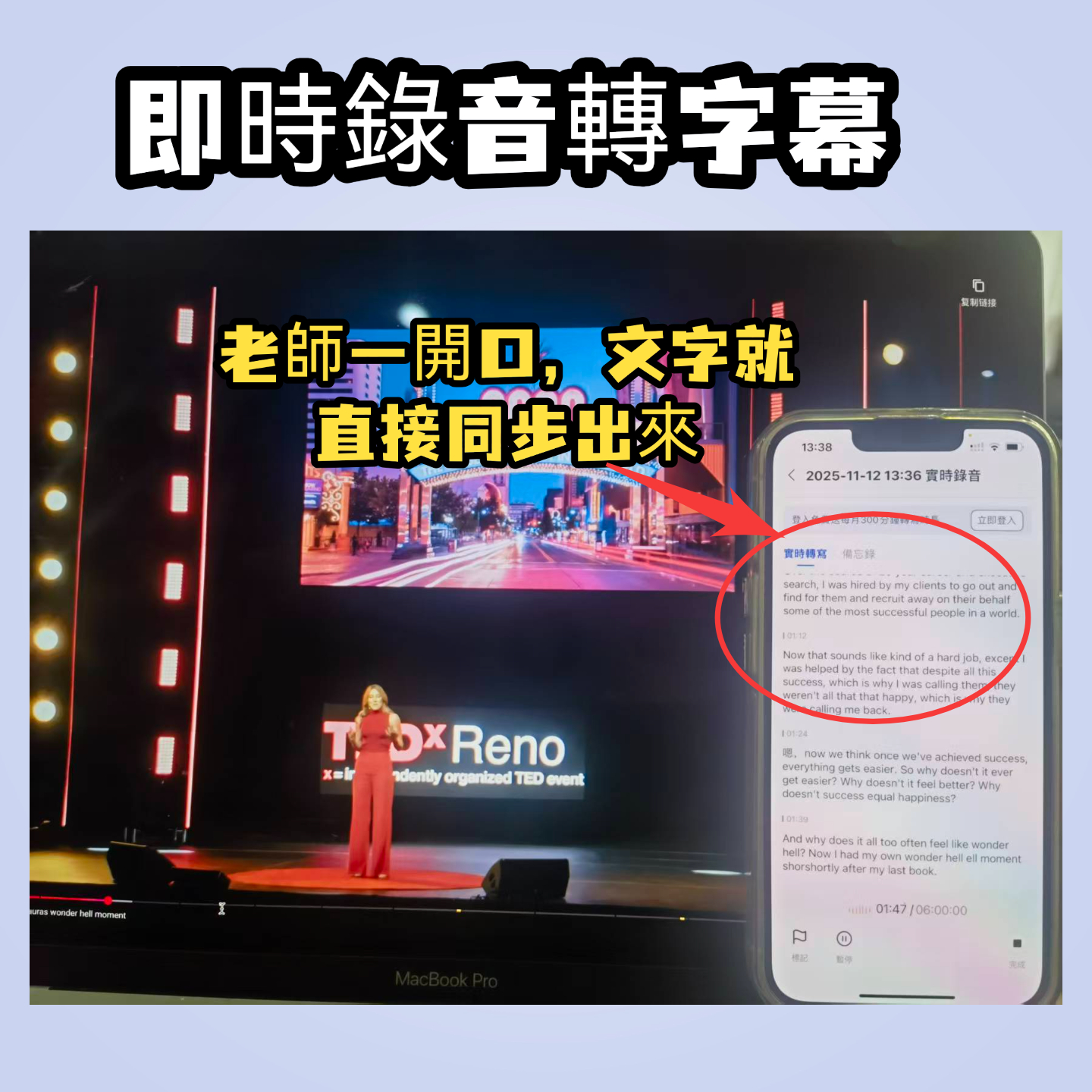
Cross-department project meetings Around 50-100 people, each unit takes turns reporting progress. Previously, I had to manually note each department's current blockers. Now, Tinrec automatically segments the content, highlights are clear, and I can use AI to ask, "What bottleneck is Department A facing?" to quickly generate follow-up emails.
Online webinars / training The company brings in external trainers for sessions with up to 200 attendees. I record the whole thing with Tinrec, getting not only the transcript but also AI-generated chapter breakdowns and mind maps. Sharing these with colleagues who couldn't attend, they said it felt like being there.
Investor meetings / board meetings These meetings usually have strict confidentiality requirements, so I avoid any bot that automatically joins the meeting. Tinrec's local recording feature lets me first record on my phone, then upload for transcription later, ensuring data security while still producing formal meeting minutes.
4 Things to Watch Out for When Choosing a Recording Organization Tool
If you're considering using a tool to organize Google Meet large meetings, here are the key points I've learned from trial and error:
Transcription accuracy: don't just trust official numbers I tested with colleagues who have different accents. Tinrec performs very well on Chinese (including Taiwanese terms), but errors still occur when multiple people talk over each other. I recommend trying it with your own recordings to confirm accuracy before paying.
Practicality of AI summaries Transcription is just the first step; the subsequent organization features are crucial. Some tools just give you a Word document and that's it. Tinrec's summaries, action item extraction, and conversation queries save me a ton of time.
Language support range If your meetings often mix Chinese and English, pay attention to the tool's language recognition. Tinrec supports 14 languages, including mixed Chinese-English meetings, which is important for me working in a multinational company.
Data security and privacy Company secrets must not leak. Make sure the tool offers a local recording option and clarify how data is stored. Tinrec lets me control when to upload recordings instead of forcing cloud processing, which saved me a lot of effort when discussing with IT.
Frequently Asked Questions
Q: Google Meet itself has recording and transcription features—why do I need Tinrec? A: Google Meet's built-in features are good for simple recording, but its transcription doesn't support Chinese summaries, can't extract action items, and can't search across meetings. Tinrec acts more like a post-meeting "meeting records hub," turning recordings into a structured, searchable knowledge base.
Q: How long does Tinrec take to transcribe a 500-person meeting recording? A: From my testing with a two-hour meeting, it takes about 10-15 minutes after upload to complete transcription and summary generation, which is acceptable. For real-time recording, the text appears almost as it's spoken.
Q: Can Tinrec automatically identify different speakers? A: Yes, it attempts to distinguish speakers. However, in large meetings where multiple people talk at once or audio quality is poor, accuracy decreases. I usually do some manual tweaking afterward, but overall it saves me 80% of the effort.
Q: Is the free version sufficient? A: The free version of Tinrec offers a basic monthly transcription allowance. If you only need to organize a meeting or two occasionally, you can try it first. For my case—at least three large meetings per week—I went straight to the Pro monthly plan; it's cheaper than a few bubble teas a month.
Q: Can it also transcribe online videos? A: Yes. Tinrec supports pasting links to public videos from YouTube, Bilibili, etc., and directly outputs text and summaries. I often use it to organize internal training videos—super convenient.
Summary
If you, like me, get a headache every time a large Google Meet meeting ends, instead of continuing to wrestle with recordings, let AI handle the most mechanical work. Tinrec doesn't just turn recordings into text; it transforms messy meeting content into clear summaries, action items, and a searchable database, so us mid-level managers can finally leave work on time.
I suggest starting with the free version, pick a non-confidential meeting recording to test, and experience the feeling of "getting meeting minutes 5 minutes after the meeting ends." Once you get used to it, you'll find you can never go back to manual note-taking.
Turn every recording into actionable outcomes
Get 60 free transcription minutes when you sign in. No credit card required.
Related Reading
You might also like

5 Google Meet Alternatives in 2026: Which One Has the Smartest Meeting Notes?
Think Google Meet's built-in recording isn't enough? This article rounds up 5 AI tools to replace or enhance Google Meet meeting notes, including Tinrec, Otter.ai, and more. From free to paid plans, find the best meeting assistant for you.
Can't Use Google Meet in 2026? 3 Steps to Use Tinrec to Record and Transcribe as a Workaround
When Google Meet video fails, the meeting can't stop. This article teaches you how to use Tinrec for real-time recording, transcription, and key point extraction, turning unexpected issues into a productive meeting with records and conclusions.

Which Google Meet Recording Tool is Best? 2026 Hands-on Test of 4 Tools, Free Version Saves the Most Time
Google Meet calls are free, but recording and organizing meeting notes requires third-party tools. We tested several popular AI meeting note apps to see which one works best for busy professionals, so you can finish work faster without overtime.
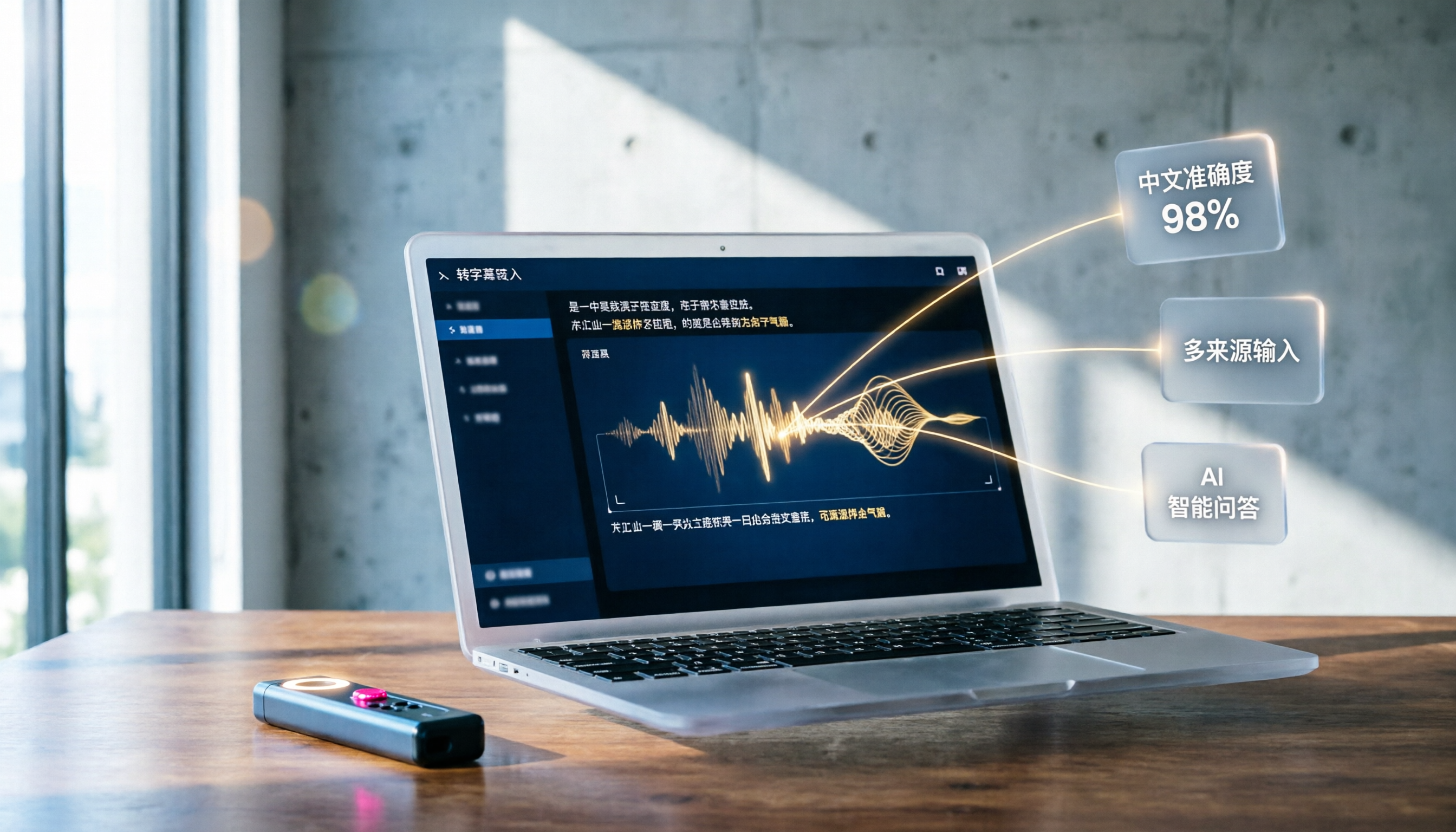
Which Audio-to-Text Tool is Best? We Tested 2 in 2026, and This One is the Most Comprehensive
A complete comparison of Tinrec vs Otter.ai across 5 key dimensions: Chinese accuracy, input sources, AI Q&A, pricing, and more — helping users who need audio-to-text transcription choose the right tool.

2026 Comparison of 3 Google Meet Meeting Note Solutions: Which One Offers the Most Complete Summary?
Is Google Meet's built-in transcription enough? This article compares 3 meeting note-taking methods, using Tinrec as an example to show you how to turn meeting recordings into complete, searchable resources with summaries and action items, so you never miss key points again.

5 Google Meet Audio-to-Text Tools Compared in 2026: From Free to AI, All You Need to Know
Google Meet's built-in recording not enough? This article compares 5 popular Google Meet audio-to-text tools, including Tinrec, Otter.ai, Fireflies.ai, and more, from free plans to AI summaries, helping you choose the best meeting note assistant.

2026 Google Meet Recording No Audio: Complete Guide to Causes, Solutions, and Tinrec Test
This article deeply analyzes the common causes of Google Meet recording having no audio, and provides a practical comparison between Google Meet's built-in transcription and Tinrec's smart recording tool. After reading, you'll understand why Tinrec is a better choice for long-term audio and video data management.

2026 Comparison of 3 Real-Time Understanding Check Tools: Which Helps Teachers Gauge Class Reactions Fastest?
How can teachers quickly check entire class understanding? This article tests 3 tools, from instant polls to AI classroom recording analysis, recommending the most comprehensive Tinrec solution to grasp learning difficulties within minutes after class.

2026 Comparison of 4 Google Meet Recording-to-Text Apps: Which Saves You the Most Time?
A must-read for Google Meet users! We tested 4 voice-to-text tools, and Tinrec stands out with AI chat queries, helping you quickly generate meeting minutes and save 50% of your organization time.