

Turn recordings into transcripts and summaries in minutes
Upload audio or video for multilingual transcription, AI notes, and action items
I attend about 15 meetings a week, more than half of which are online, and Google Meet is pretty much the standard. The most painful part used to be not the intense discussions during the meeting, but what came after—the boss asking about last meeting's conclusions, cross-department follow-ups, and my own to-do list. Just transcribing audio into readable meeting minutes ate up half my productive time.
Then I started trying AI recording tools and realized: what you really need for Google Meet meetings isn't just a stable internet connection, but a tool that turns the "meeting process" directly into "usable data." This isn't a Google Meet tutorial; it's a comparison from the perspective of a manager who's constantly chasing meetings, between Google Meet's built-in transcription and the tool I ultimately chose, Tinrec—focusing on the differences and who can rely solely on the built-in features.
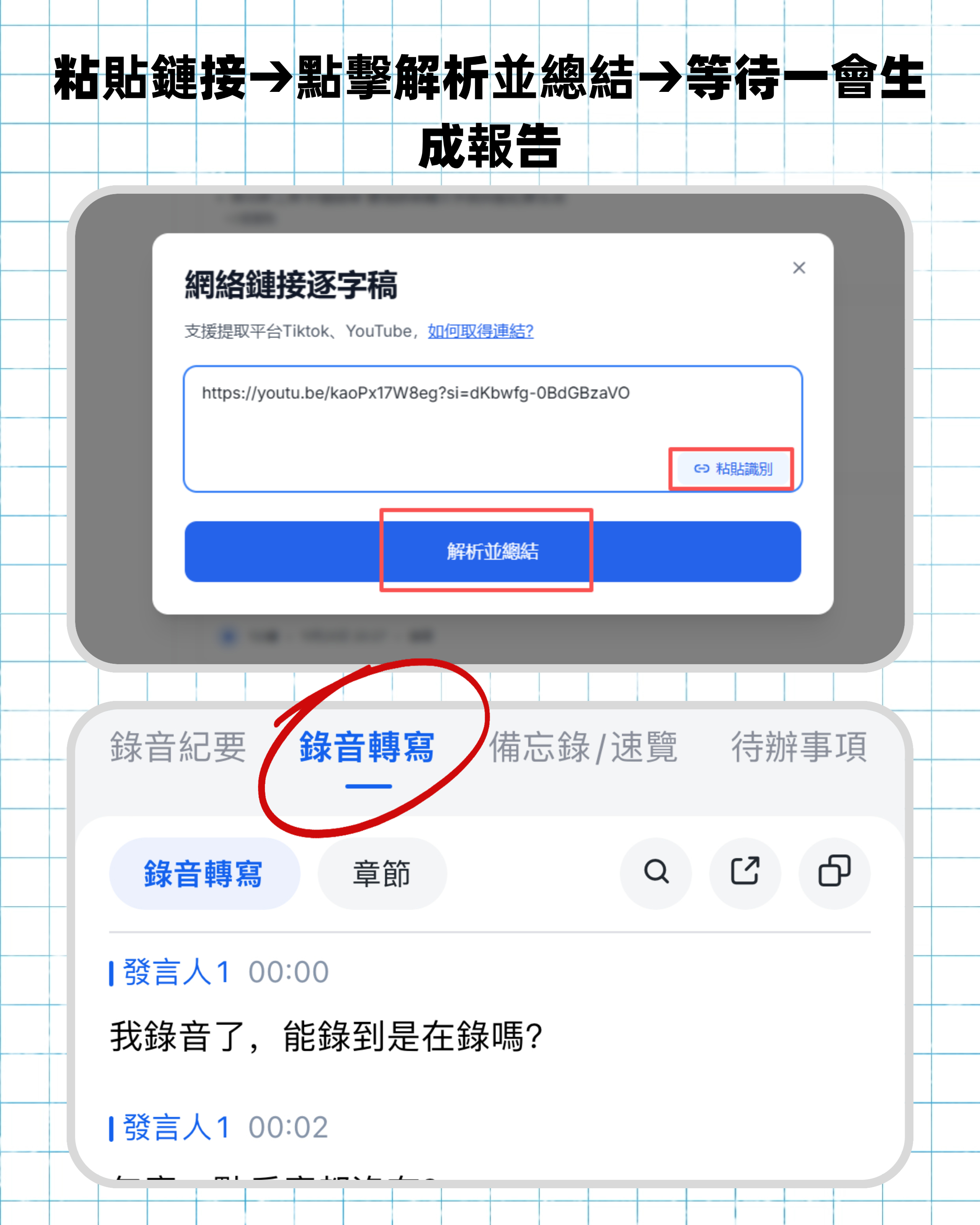
Google Meet Built-in Transcription vs. Tinrec: Quick Overview
If you only use Google Meet's built-in live captions or the enterprise transcription logs, you'll likely face two issues: first, it's really just "transcription"—you get a dialogue record without punctuation or paragraph breaks; second, after the meeting, it sits in a Google Doc, and you still have to dig through it for key points and to-do items yourself.
Tinrec (Miao Ting Lu Yin in Chinese) works on a completely different logic. It not only converts audio to text but also automatically generates summaries, splits into chapters, captures action items, and even lets you ask questions to retrieve answers directly from the meeting recording. For a manager with over a dozen meetings a week, the difference between "usable right after recording" and not is about an extra hour every day.
| Comparison Item | Google Meet Built-in Transcription | Tinrec |
|---|---|---|
| Core Purpose | Live captions & basic transcription | AI recording & audio/video data workspace |
| Available Plans | Enterprise or specific Google Workspace plans | Free tier available, Pro plan for full features |
| Post-Meeting Processing | Only provides verbatim transcript | AI summary, chapters, action items, Q&A, export |
Next, I'll compare these two approaches across five practical dimensions.
Dimension 1: Language Support & Transcription Quality
Google Meet's live captions perform well in English, but if, like me, your meetings mix Chinese and English, feature a Taiwanese accent, and occasionally include Cantonese vendors calling in, the built-in transcription often misses words or misinterprets entire sentences. Moreover, its support for Traditional Chinese is still limited, so the generated transcript often requires manual proofreading.
Tinrec, on the other hand, is clearly optimized for Chinese content. I tested the same 30-minute mixed Chinese-English product meeting recording: Google Meet's transcription had awkward sentence breaks and nearly all proper nouns were wrong; Tinrec not only had natural sentence boundaries but also correctly recognized terms like "OKR" and "Q3 roadmap," with an error rate subjectively below 5%. Not to mention it also supports Cantonese, Taiwanese Hokkien, and other languages—a completely different tool for teams dealing with diverse markets.
→ This dimension: Tinrec clearly wins, especially in Chinese and multilingual scenarios.
Dimension 2: Post-Transcription Organization & Application
The biggest problem with Google Meet's built-in transcription is that it stops after transcribing. You get a plain text file, and then you have to highlight key points, summarize conclusions, and write to-do items yourself. For someone with over ten meetings a week, that transcript ends up as just another Google Doc you never have time to open.
Stop organizing recordings by hand
Upload audio or video and automatically get a transcript, summary, and action items
Tinrec treats transcription as a starting point, not an endpoint. After recording, it automatically generates an AI summary (one sentence explaining what the meeting was about), chapter breaks (so you can jump straight to Q2 discussion), and action items (who, what, deadline). This information is structured within the app, eliminating the need to highlight on a transcript like before. Now, when reporting to my boss, I just open Tinrec's meeting record and can answer "What was the decision?" in 30 seconds—impossible before.
→ This dimension: Tinrec is far ahead, turning recordings into immediately usable data.
Dimension 3: Cross-Platform & Export Flexibility
Google Meet's transcription records stay within the Google ecosystem—you can open them in Google Docs, but to move them into Notion, OneNote, or your company's PM system? Sorry, you have to copy and paste manually. Also, if you record a face-to-face meeting on your phone, Google Meet can't help at all.
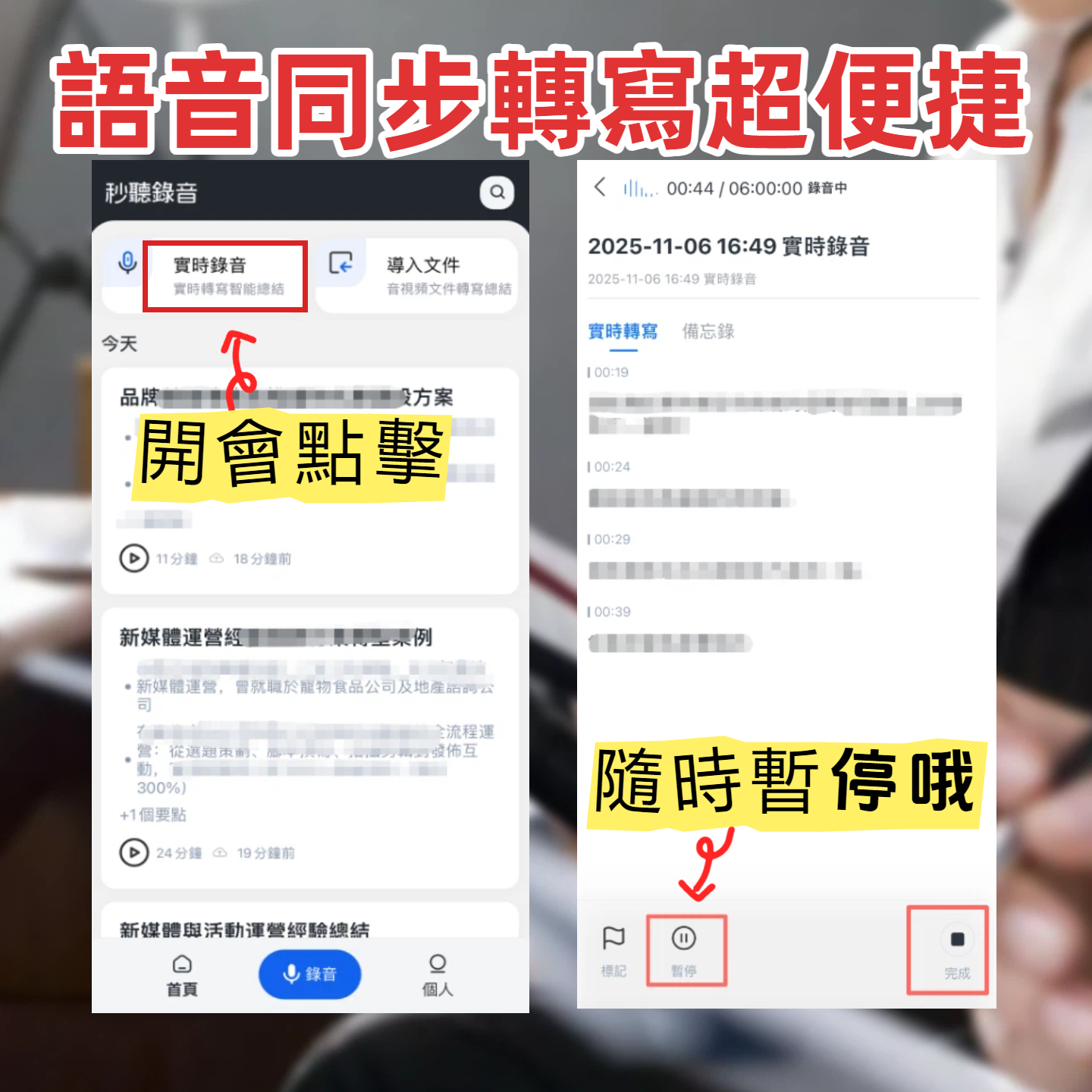
Tinrec is fully cross-platform: iOS, Android, and web. You can record in-person meetings on your phone, capture system audio from Google Meet meetings on your computer, or even paste a YouTube link to extract key points from public courses. After transcription, you can export to TXT, DOCX, SRT subtitles, or sync to Notion, Google Docs, Dropbox. For teams that need to distribute meeting data across different collaboration tools, this saves not just time but communication overhead.
→ This dimension: Tinrec completely outperforms the built-in solution in input sources and output flexibility.
Dimension 4: AI Conversation Search—Turning Recordings into a Database
Google Meet transcription is a static file. When you need to find "What was the budget figure the client mentioned last time?" or "What was the technical bottleneck the engineer mentioned?", you can only use Ctrl+F to search keywords—and you might not find them because spoken language doesn't always match keywords.
Tinrec has built-in AI conversation search, like chatting with your recording database. You can ask directly: "What Q3 budget did the marketing department propose in this meeting?" It will extract the relevant section and attach timestamps so you can listen back. Now before meetings, I ask Tinrec about the conclusions of the previous meeting in the same series, walking into the meeting with context—my boss thinks I'm more detail-oriented.
→ This dimension: Tinrec's unique Q&A feature turns past meetings from a black hole into a searchable resource.
Dimension 5: Cost & Plan Reasonableness
Google Meet's transcription requires Google Workspace Enterprise or specific add-ons, costing a non-trivial amount per user per month, and it only provides transcription. If you need just occasional live captions, it might suffice, but to get decent meeting minutes, you'll still spend extra time or manpower.
Tinrec offers a free tier with basic monthly credits. The Pro monthly or annual plan costs roughly the equivalent of two Starbucks drinks per month. It bundles not only transcription but also summaries, action items, Q&A, export, and other back-end capabilities. For a team manager's time cost, this investment pays for itself right after your first meeting.
→ This dimension: In terms of price, Google Meet's transcription is tied to a plan; Tinrec gives you a predictable cost for much richer output.
Unique Advantages of Each?
Tinrec's Unique Advantages
- Works with any audio/video, not just meetings: Besides online meetings, you can upload old recordings, paste links to online videos (YouTube, TikTok, Xiaohongshu), turning courses, interviews, and notes into text data.
- AI summaries and action items auto-generated: Eliminates manual organization; minutes can be sent to relevant people within five minutes after the meeting.
- AI conversation search: Turns historical recordings into a searchable knowledge base—no more relying on memory or digging through files.
- Multi-platform and export integrations: Works across phone, computer, and web; results can be synced to your existing note-taking or document tools.
Google Meet Built-in Transcription Advantages
- No extra installation: For users who live in the Google ecosystem and only need a simple transcript, the built-in feature is right there without leaving the meeting interface.
- Smooth live captions: In pure English environments with stable internet, it provides seamless in-meeting captions.
Conclusion: Which Should You Choose?
- If you only occasionally have meetings, just need live captions, and the entire meeting is in English → Google Meet's built-in transcription might be enough.
- If you need to turn meeting content into trackable action items and reportable summaries, or your meetings often mix languages and require cross-platform organization → Tinrec is the more complete choice.
- If you not only attend meetings but also process courses, interviews, and online videos, and want to build a personal audio/video database → Tinrec is one of the few all-in-one solutions on the market.
In a nutshell: Google Meet lets you "hear," Tinrec lets you "use." For most professionals responsible for meeting outcomes, the latter's value far exceeds the former. I recommend downloading Tinrec's free version, recording your next Google Meet meeting, and comparing the difference with built-in transcription—save your own time.
Turn every recording into actionable outcomes
Get 60 free transcription minutes when you sign in. No credit card required.
Related Reading
You might also like
2026 Tinrec Desktop Audio-to-Text: Chinese Optimized + Cross-Platform AI Organization
Want to convert audio to text on your computer and also need subsequent organization, summaries, or even Q&A? This article compares two desktop audio-to-text tools, Tinrec and Otter.ai, across 5 dimensions including Chinese recognition, supported sources, and AI features, helping you find the best choice for Traditional Chinese users.
![[Tutorial] 2026 Free Recording-to-Text Software: Organize Meeting Minutes with AI Auto-Summarization](https://record-img.tos-accelerate.volces.com/images/2026/07/26/1785076429989611602.png)
[Tutorial] 2026 Free Recording-to-Text Software: Organize Meeting Minutes with AI Auto-Summarization
A mid-level manager tests 5 free recording-to-text solutions, from AI conversational queries to purely free options, helping you choose the best meeting note tool and save 1 hour of paperwork daily.

Free iOS Speech-to-Text Apps in 2026: Two Options Compared
Looking for a speech-to-text app for iPhone without spending money? We tested two free iOS solutions: Tinrec and Otter.ai, comparing Cantonese recognition, AI summarization, and cross-platform support to see which one saves Hong Kong workers the most time.
2026 Free Speech-to-Text Transcription Tools: 4 Options Compared
Hands-on review of 4 free speech-to-text tools: Tinrec, Otter.ai, Notta, and Yating. Compare free plan limits, pros and cons, and find the best option for Chinese speakers.

How to Choose Real-Time Transcription Tools in 2026: A 5-Step Comparison Guide
Hands-on comparison of Tinrec and Otter.ai for real-time transcription, covering accuracy, input sources, AI post-processing, and pricing. 5 steps to help you pick the best solution for Chinese meetings and multi-scenario use.
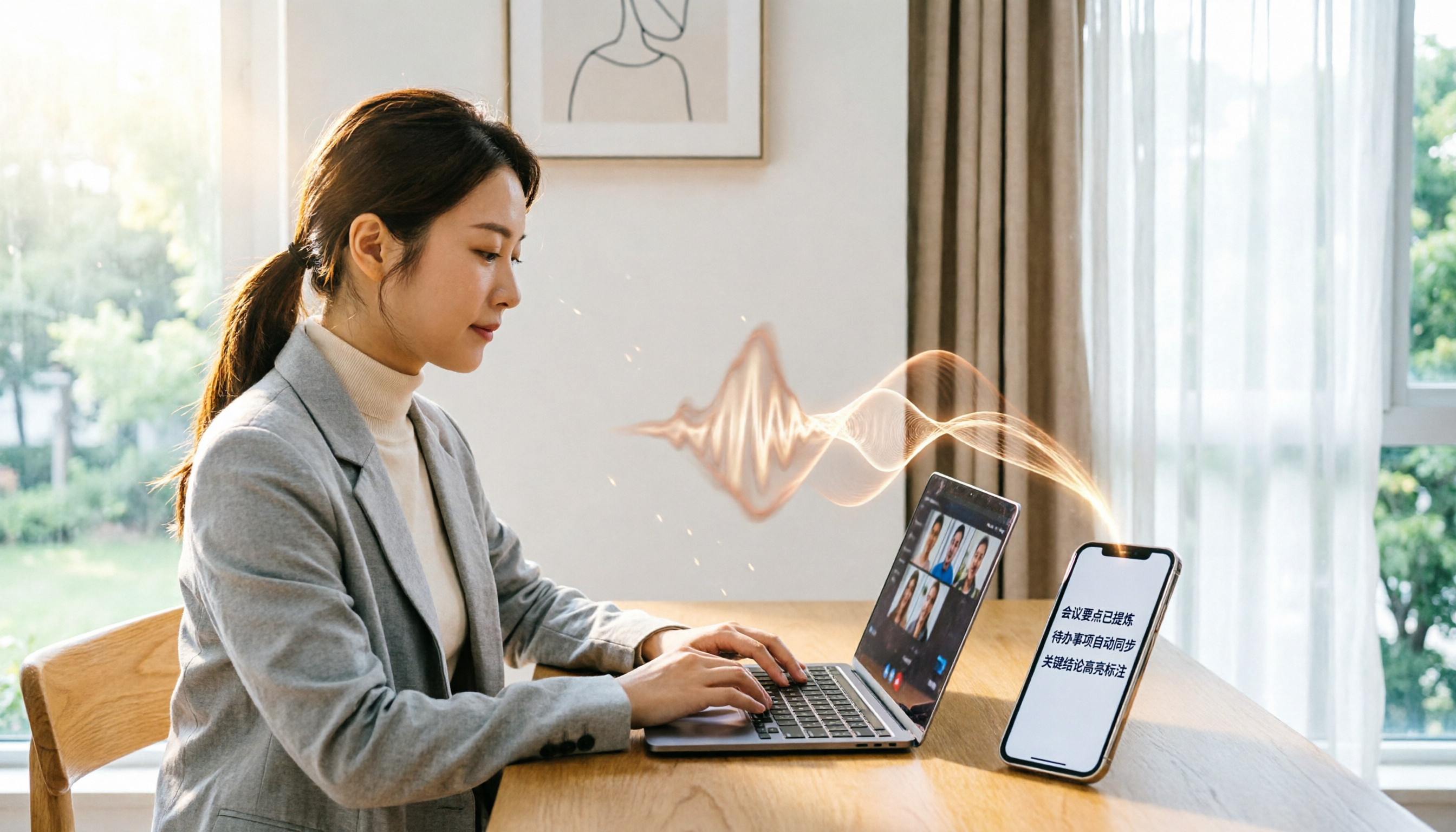
2026 Free Google Meet Transcription for Mac: 2 Options Compared
Need a more complete speech-to-text tool for Google Meet on Mac? This article compares Google Meet's built-in captions with the free version of Tinrec, analyzing differences in cross-platform support, AI summaries, and multi-source organization to help you find the best solution.

2026 Side-by-Side Comparison of 2 Google Meet Recording Tools: Auto-Generated Meeting Minutes, No More Overtime
Tired of manually writing meeting minutes after Google Meet? We put two AI recording and transcription tools—Tinrec and Otter.ai—to the test, comparing them across five key dimensions: Cantonese recognition, cross-platform support, AI Q&A, online video transcription, and pricing. Find the best time-saving solution for busy professionals.

2026 Hands-On Comparison of 3 Meeting Note Tools: Beyond Virtual Backgrounds, Meeting Organization Is Key
Google Meet has virtual backgrounds, but who helps you organize key points after the meeting? A mid-level manager's hands-on test, from built-in transcription to AI meeting notes, tells you why Tinrec is the more time-saving choice.

Best Google Meet Alternatives 2026: Turn Your Meeting Notes into Actionable Data with Tinrec
Still searching for a Google Meet APK? What you really need isn't just a meeting tool—it's a solution that turns meeting recordings and audio/video files into searchable highlights and to-dos. From a mid-level manager's perspective, this article tests how Tinrec can save you 50% of meeting recap time.