

Turn recordings into transcripts and summaries in minutes
Upload audio or video for multilingual transcription, AI notes, and action items
Tinrec is an AI-powered audio and video note-taking tool. Simply put, it helps you turn recordings and videos into searchable, organized, and usable text. It supports iOS, Android, and web versions, and the free plan offers a monthly basic transcription quota, making it ideal for professionals, students, creators, or anyone who needs to quickly convert audio files into text.
What Can Speech-to-Text Do for You?
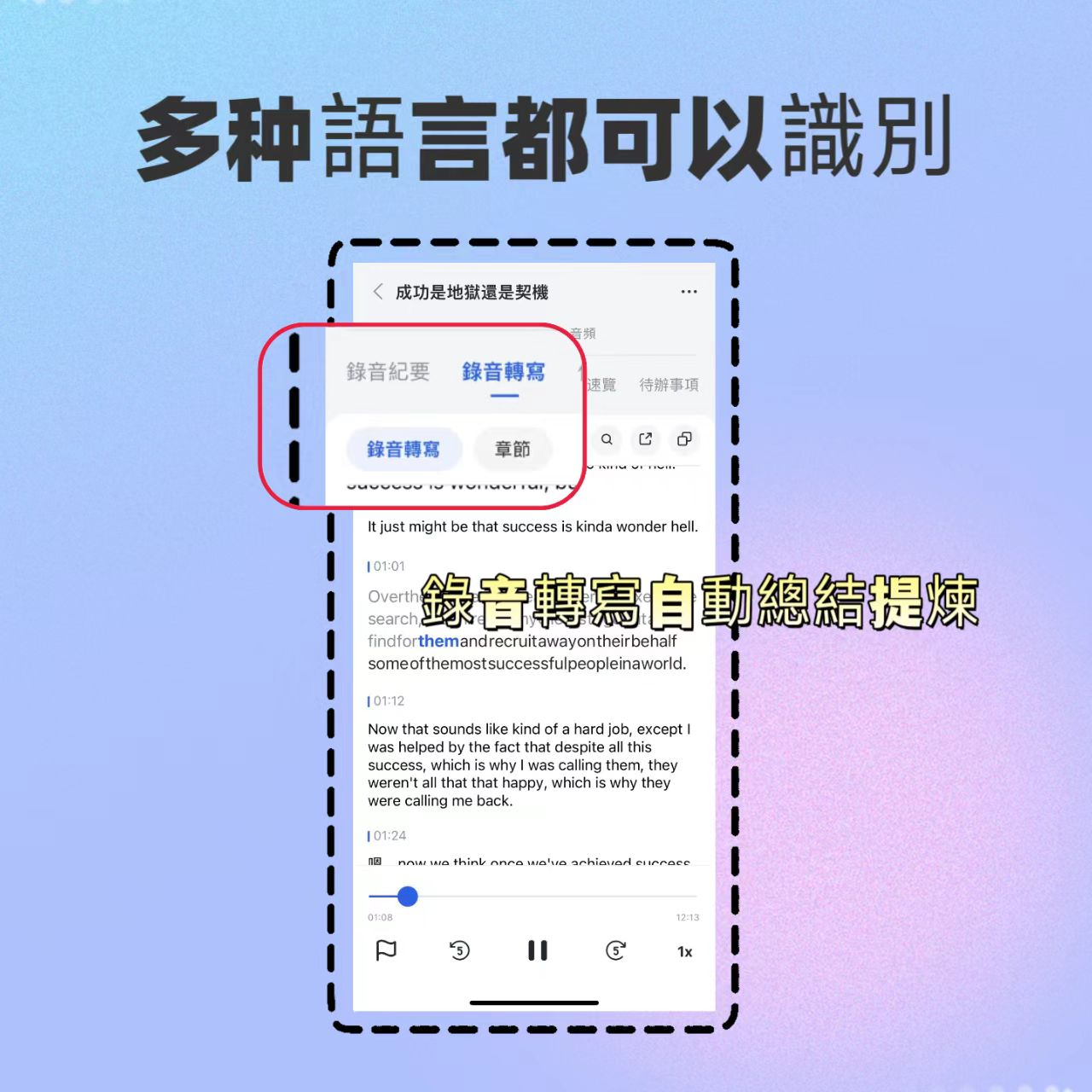
In the past, organizing meeting notes could take as long as the meeting itself; after a lecture, notes were often messy and hard to follow. Now, open platform tools like this directly convert audio files into text and even organize them automatically.
Using Tinrec as an example, here are a few practical scenarios:
Scenario 1: Get a to-do list right after the meeting During a meeting, open Tinrec for real-time recording. Before the meeting ends, the transcript appears simultaneously. Afterward, AI automatically extracts who said what, what conclusions were reached, and who needs to do what next, turning it into a to-do list.
Scenario 2: Class recordings automatically turned into notes During lectures or seminars, you often record a full session but don't want to listen again later. Tinrec not only transcribes the audio but also splits it into chapters, highlights key points, and even lets you ask, "What are the main takeaways from this class?" You can review in seconds.
Scenario 3: Effortless interview transcripts For interviews or research, you used to have to listen and transcribe manually—one hour of audio could take three hours. Now, just upload the file to Tinrec, and it transcribes in minutes. You can also use AI Q&A to quickly find key quotes from the interviewee.
What Core Capabilities Should Speech-to-Text Have?
There are many speech-to-text services on the market, but the core should be more than just generating a transcript. Tinrec's design philosophy is "transcription is just the first step"; subsequent organization and application are crucial.
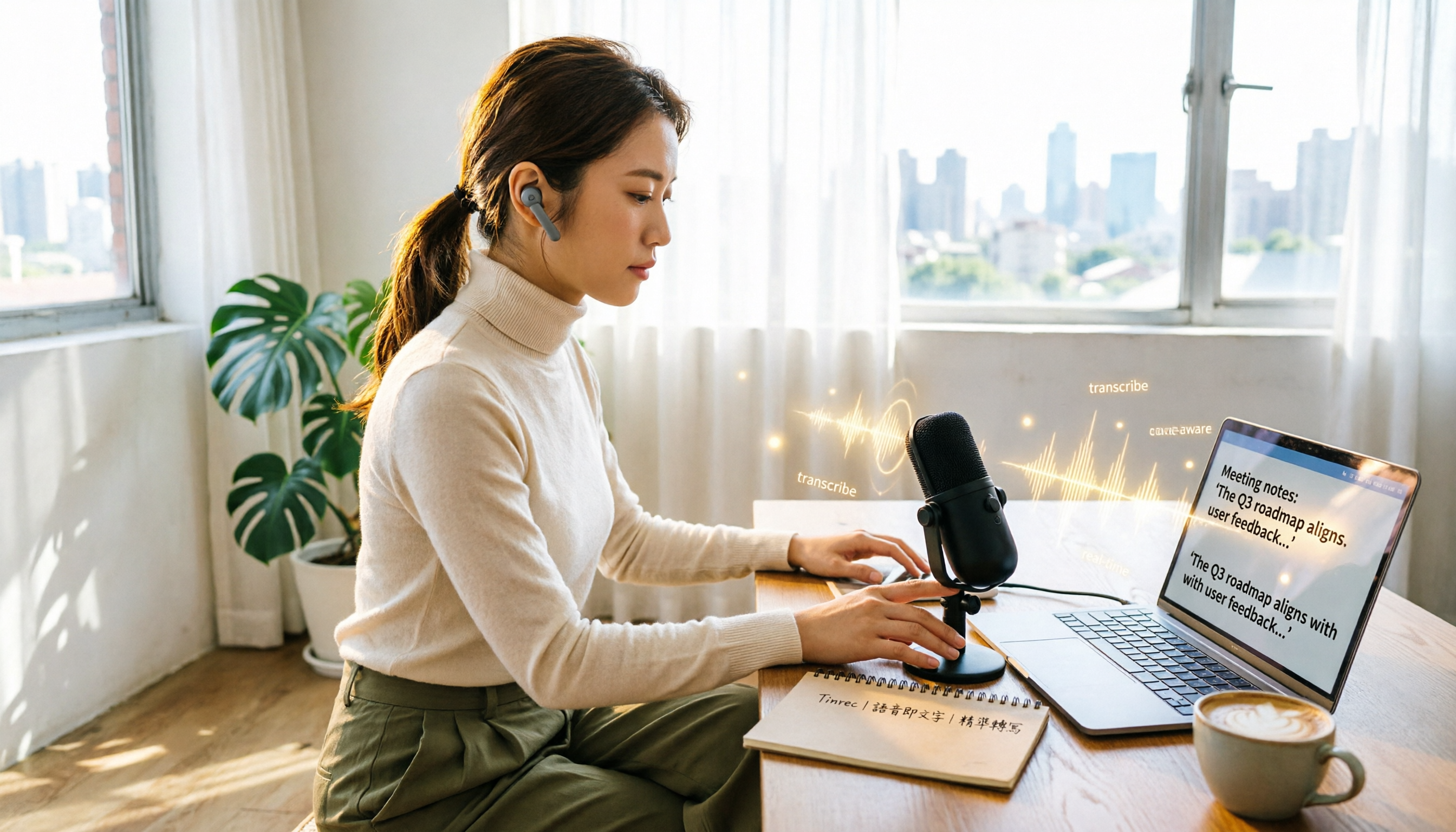
Real-time transcription: text as you speak Tinrec delivers low-latency transcription, not just post-recording processing. During meetings, you can watch the text on screen and confirm in real time, ensuring you never miss important remarks.
Multi-source input: not limited to recordings Besides real-time recording, you can upload existing audio files, video files, or even paste links from YouTube, TikTok, or Xiaohongshu to directly parse and transcribe content. This is especially convenient for creators who need to organize public online materials.
AI summaries and chapter organization For content lasting one to two hours, Tinrec automatically generates structured summaries and splits the content into meaningful chapters. You can quickly grasp the key points without listening from start to finish.
AI conversational query: ask your recordings like a database This is the most thoughtful feature in my opinion. After transcription, you can directly ask Tinrec, "Who mentioned the budget in the meeting?" or "What was the client's reaction to the new proposal?" It answers based on semantic understanding, even indicating timestamps.
Multi-format export: integrate into your workflow You can export transcripts, summaries, and to-do lists as text files, PDFs, or sync them directly to tools like Notion and Google Docs. You don't have to change your existing work habits; Tinrec simply saves you time on organization.
Stop organizing recordings by hand
Upload audio or video and automatically get a transcript, summary, and action items
Practical Application Scenarios
Different users have very different needs for speech-to-text. Below, we use Tinrec to demonstrate four common scenarios and how it works in practice.
Meeting notes and follow-ups If you have weekly meetings or project syncs, you know how easy it is to forget who promised what. Use Tinrec for real-time recording, and by the time the meeting ends, summaries and to-dos are already listed—ready to share to a group chat or save to a shared space.
Class learning and review For in-person or online classes, open Tinrec to record. It transcribes in real time and automatically splits into chapters. When reviewing, you don't need to listen from the beginning; just read the summary or ask AI, "What is the derivation of this formula?" saving a lot of time.
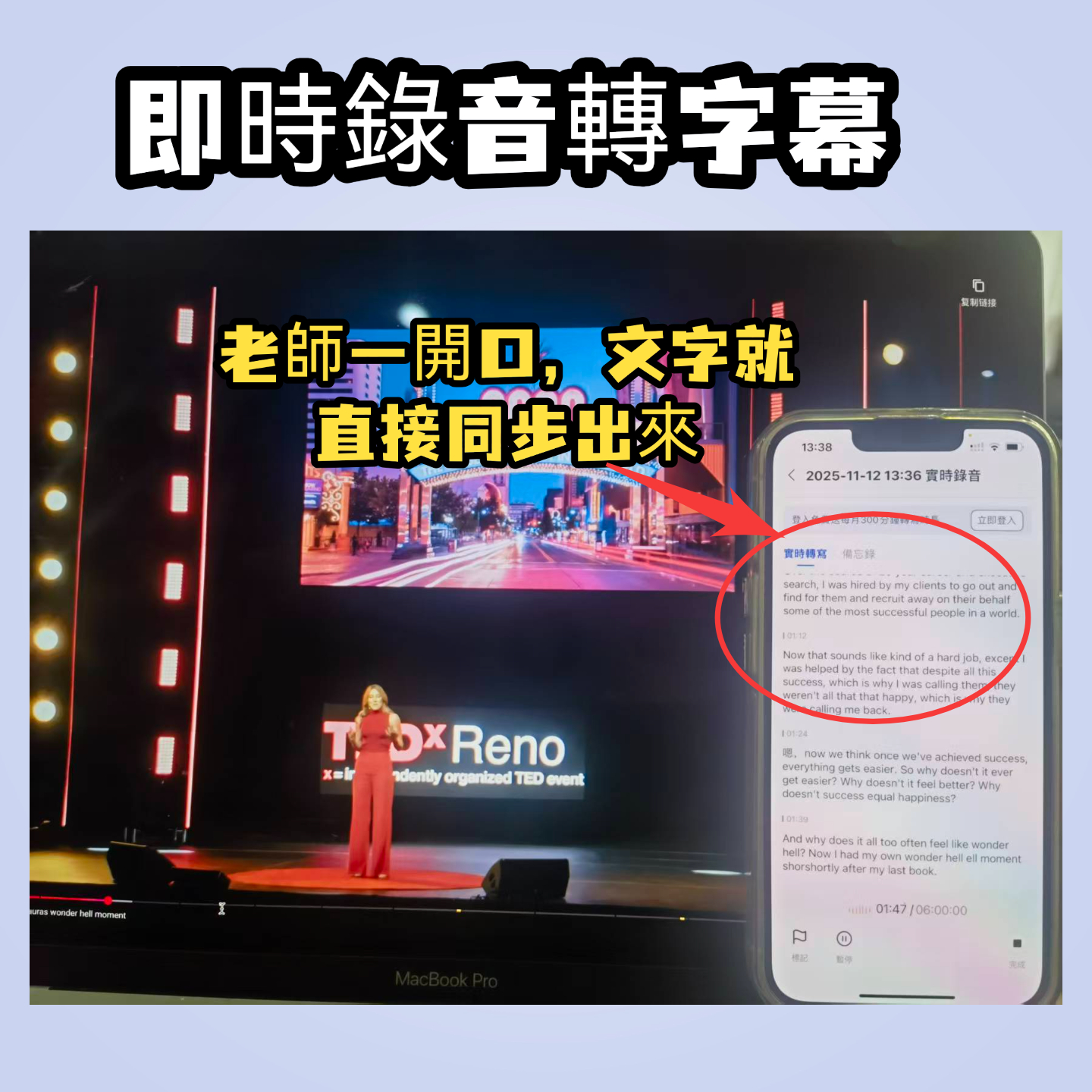
Interviews and qualitative research For those conducting interviews or user research, transcribing used to be the most painful part. Now, import audio files into Tinrec, and you get a text transcript in minutes. Then use the AI query feature to quickly identify key points and quotes from the interviewees.
Content creation and inspiration gathering Looking for inspiration from YouTube videos or podcasts? Paste the link into Tinrec, and it will generate a full transcript and summary, allowing you to quickly determine if the video contains valuable insights, turning others' ideas into your own raw material.
4 Key Points When Choosing a Speech-to-Text Tool
When selecting a tool, it's easy to be swayed by marketing hype. Here are four points based on my own experience, using Tinrec as a benchmark.
1. Accuracy should be tested in real use, not just claimed numbers Many tools tout high accuracy, but actual performance depends on audio quality, environment, and speaker accents. Tinrec performs well in typical meetings and clear audio, but I recommend testing it with your own use case first; the free version offers quotas to try.
2. How much post-transcription organization does the tool provide? Generating a transcript is basic; the real value lies in subsequent organization. Tinrec's AI summaries, to-do extraction, and conversational queries turn text into actionable data, not just a dense file left for you to handle.
3. How broad is the input source support? If you need more than just meetings—processing audio files, videos, or even public online content—confirm whether the tool supports these input methods. Tinrec covers real-time recording, local files, and web video links, making it a one-stop solution.
4. Cross-platform compatibility and export flexibility You record on your phone and organize on your computer, so the tool must work on both. Tinrec offers iOS, Android, and web versions, with multiple export formats and third-party sync options. This is very friendly for mobile users.
Frequently Asked Questions
Is the free speech-to-text plan sufficient? If you only occasionally transcribe a couple of meetings or classes, Tinrec's free monthly quota is enough to get started. If you use it more frequently, you can consider the weekly or Pro plans based on your needs—no upfront payment required.
Can I edit or modify the transcription? Yes. Tinrec's transcript can be directly edited in the app or web interface. You can listen to the recording while correcting the text to ensure complete accuracy.
What languages are supported? How does it handle Chinese? Tinrec is well-suited for Chinese content, including Traditional Chinese, for meetings, classes, and interviews. It also recognizes mixed Chinese-English content, but actual performance depends on the recording environment.
Are uploaded recordings private? The platform encrypts all user-uploaded content and does not use your recordings for other purposes. If you're still concerned, start with non-sensitive content for testing.
Can I export the transcribed text to other tools? Yes. Tinrec supports multiple export formats and can sync directly to Notion, Google Docs, and other services, making it easy to continue your workflow.
Summary
Speech-to-text open platforms are no longer just about turning sound into text—they are comprehensive audio and video organization solutions. If you have weekly meetings, classes, or need to process large amounts of audio material, a tool like Tinrec—which not only transcribes but also summarizes, extracts to-dos, and even answers questions—can truly save you a lot of redundant work.
We recommend starting with Tinrec's free version and experiencing it with real recordings. See how efficiently AI can organize your data before deciding on a paid plan.
Turn every recording into actionable outcomes
Get 60 free transcription minutes when you sign in. No credit card required.
Related Reading
You might also like
The Complete Guide to Speech-to-Text in 2026: Features, Use Cases, and How to Choose the Right Tool
Struggling to choose a speech-to-text tool? This article takes a practical approach, helping you understand the core features and application scenarios of speech-to-text. Using Tinrec (秒聽錄音) as an example, it teaches you how to select the best tool for your needs and easily turn recordings into usable data.
2026 Side-by-Side Comparison of 2 Speech-to-Text Tools: Which One Handles Chinese Recordings Better?
Tinrec and Notta are both excellent speech-to-text tools, but when it comes to organizing Chinese recordings, diverse input sources, and AI post-processing, Tinrec is better suited for users who need to turn meetings, lectures, and online videos into actionable knowledge. This article compares them in detail across input sources, AI features, plan flexibility, and cross-platform experience to help you quickly find the right choice.
2026 Comparison of 3 Free Online Speech-to-Text Tools: Which Free Plan Is Best for Taiwan Office Workers?
We tested 3 free speech-to-text tools, comparing accuracy, AI features, and free credits. Tinrec is the best fit for Taiwan users who need to transcribe meetings, lectures, and online videos.

2026 Comparison of 2 Speech-to-Text Tools: Why I Switched from Notta to Tinrec
A mid-level manager tests speech-to-text tools, comparing Notta and Tinrec. From meetings and Chinese recognition to AI post-processing, it analyzes which is better for professionals who need to manage both up and down.

How to Choose a Speech-to-Text Tool in 2026: A Complete 5-Step Guide
Accumulating recordings from meetings, classes, and interviews? Converting them to text is time-consuming and tedious. This guide walks you through 5 steps to find the best transcription solution for your needs, using Tinrec as an example to turn recordings into actionable knowledge.
2026 Speech-to-Text Tool Buying Guide: Tinrec vs Plaud Note Hands-On Review and Recommendations
A senior MIS student tested both apps for a semester, comparing Tinrec and Plaud Note on price, cross-platform support, AI features, and more to help you decide which is best for students.

A 2025 Comparison of 5 Speech-to-Text Tools: From Free to Paid
A curated selection of 5 major types of speech-to-text tools in 2025, from AI meeting bots to multi-source organization platforms, comparing features, pricing, and use cases. Using Tinrec as an example, this article provides a complete tutorial and FAQ.

2026 Comparison of 3 Speech-to-Text Input Methods: Real-time Transcription and Organization, This One Saves the Most Time
Looking for a speech-to-text input method? Our team tested 3 tools and found that Tinrec's instant transcription not only converts speech to text in real time but also automatically organizes key points and to-do items. It's great for meetings, classes, and interviews, offering excellent value.

2026 Speech-to-Text Tool Buying Guide: 3 Major Types Tested and Selection Tips
Wondering if speech-to-text tools are effective? This article tests 3 major types, uses Tinrec as an example, and shares buying tips, FAQs, and real-world use cases to help you find the best solution.