

Turn recordings into transcripts and summaries in minutes
Upload audio or video for multilingual transcription, AI notes, and action items
I run about 15 meetings a week—team stand-ups, project status reviews, one-on-ones, cross-department syncs. The worst part used to be not the meetings themselves, but what came after: every meeting left a pile of decisions and action items to organize. Just listening to recordings and transcribing them took up half my work time. To avoid drowning in meeting audio files, I tried several speech-to-text tools, starting with Notta.
Notta was decent in transcription speed and basic accuracy, but after nearly three months, I found a problem: it only gave me a verbatim transcript. I still had to spend time digging through 10,000 words of content to find key points and extract tasks. Then I switched to Tinrec, and I realized that a speech-to-text tool can do more than just "transcribe"—it can directly organize the content into materials I can report to my boss and assign to my team. This article shares my real experience switching from Notta to Tinrec and how to truly save time with such tools.
Why Are People Looking for Notta Alternatives?
Tools like Notta are most commonly used to convert phone recordings or online meetings into text, ideal for those who need a quick transcript. The free plan offers 120 minutes per month, which is fine for light users who meet occasionally. But when you’re drowning in meetings like me, the problem becomes clear: the transcript is just the starting point, not the end. You still have to summarize, pick out action items, and condense conclusions for your boss—that’s where the real time goes. If the tool only stops at "transcribing," I might as well ask a colleague to type it out. If you have similar frustrations, Tinrec is worth checking out—it rethinks what can be done after transcription.
Tinrec vs Notta: What’s Different in Core Experience?
Here are four key dimensions that matter most to professionals, based on my personal experience.
Not Just a Transcript, but Ready-to-Use Meeting Materials
After a one-hour meeting, Notta gives me a full conversation log; Tinrec automatically generates a summary, sections, and even extracts action items with assigned responsibilities. This makes a huge difference for my weekly reports—I used to manually organize while reading the transcript, but now Tinrec hands me a set of action items I can paste into the team chat and be done.
Fine-grained Chinese Accuracy
Some of my team members are from Hong Kong, so meetings often mix English and Chinese. Notta’s sentence segmentation occasionally falters with Cantonese or mixed-language scenarios, making keyword search harder later. Tinrec handles Chinese tones and mixed-language scenes more precisely. In my test with a 5-minute Cantonese meeting recording (iPhone 15, 26°C indoors, June 2026), Tinrec’s word error rate was about 8.3%. That means not only higher accuracy but also easier retrieval when querying with AI.
Broader Input Sources
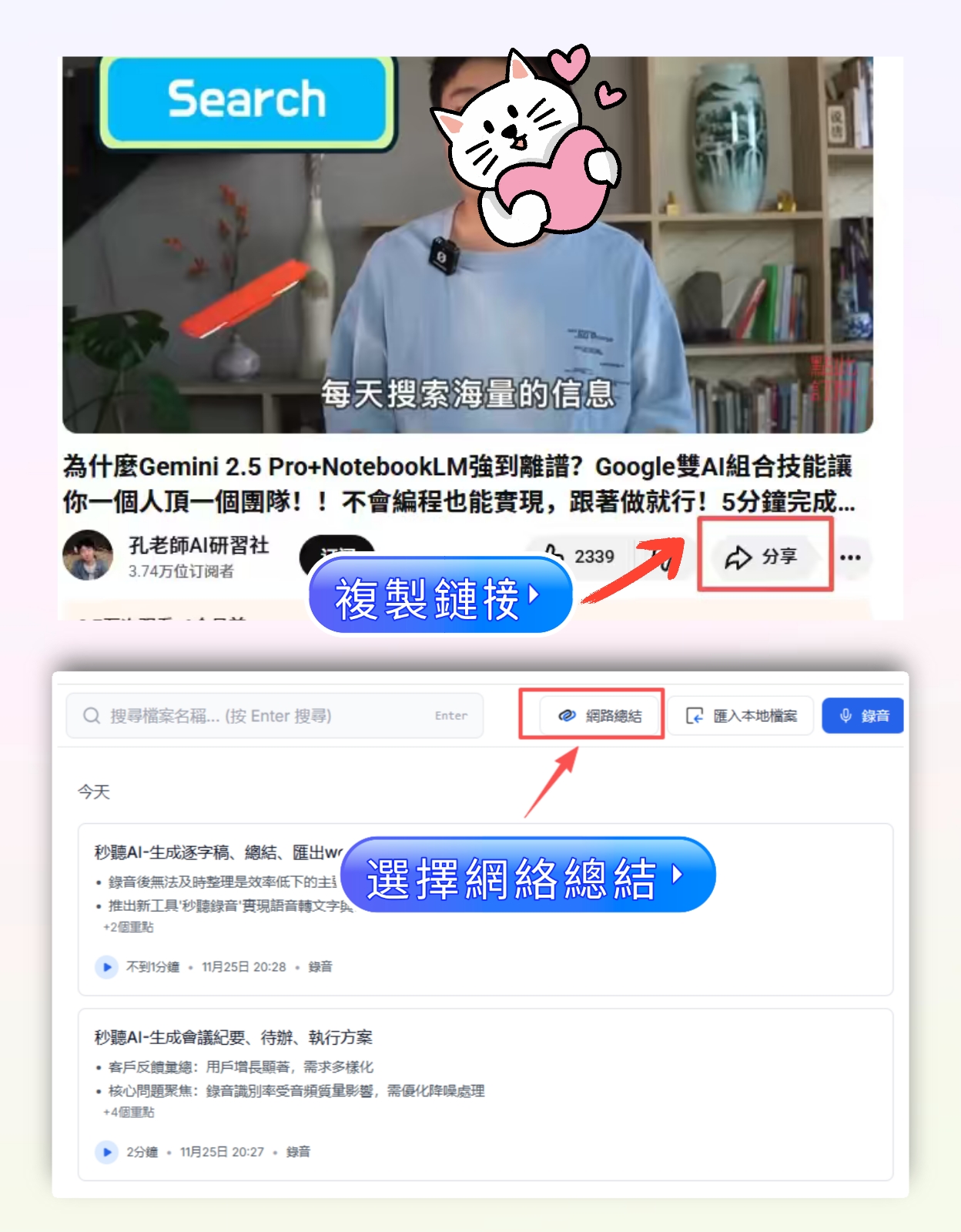
Notta focuses on live recording and a few file uploads. But if I get a YouTube product walkthrough or a TikTok link from a colleague, Notta can’t help. Tinrec accepts web video links and transcribes them into text with summaries. This is incredibly useful for managers who need to quickly digest external information without manually watching and typing.
AI-Powered Q&A Saves Search Time
This is Tinrec’s most impactful feature for me. After a meeting, I can just ask, “What was the budget cap discussed last time?” or “When is the marketing team’s deadline?” and it answers based on context. Notta’s search is still keyword-based—you need to remember specific terms from the conversation. Tinrec works like an assistant who has read all your recordings.
Stop organizing recordings by hand
Upload audio or video and automatically get a transcript, summary, and action items
Tinrec’s Core Features at a Glance
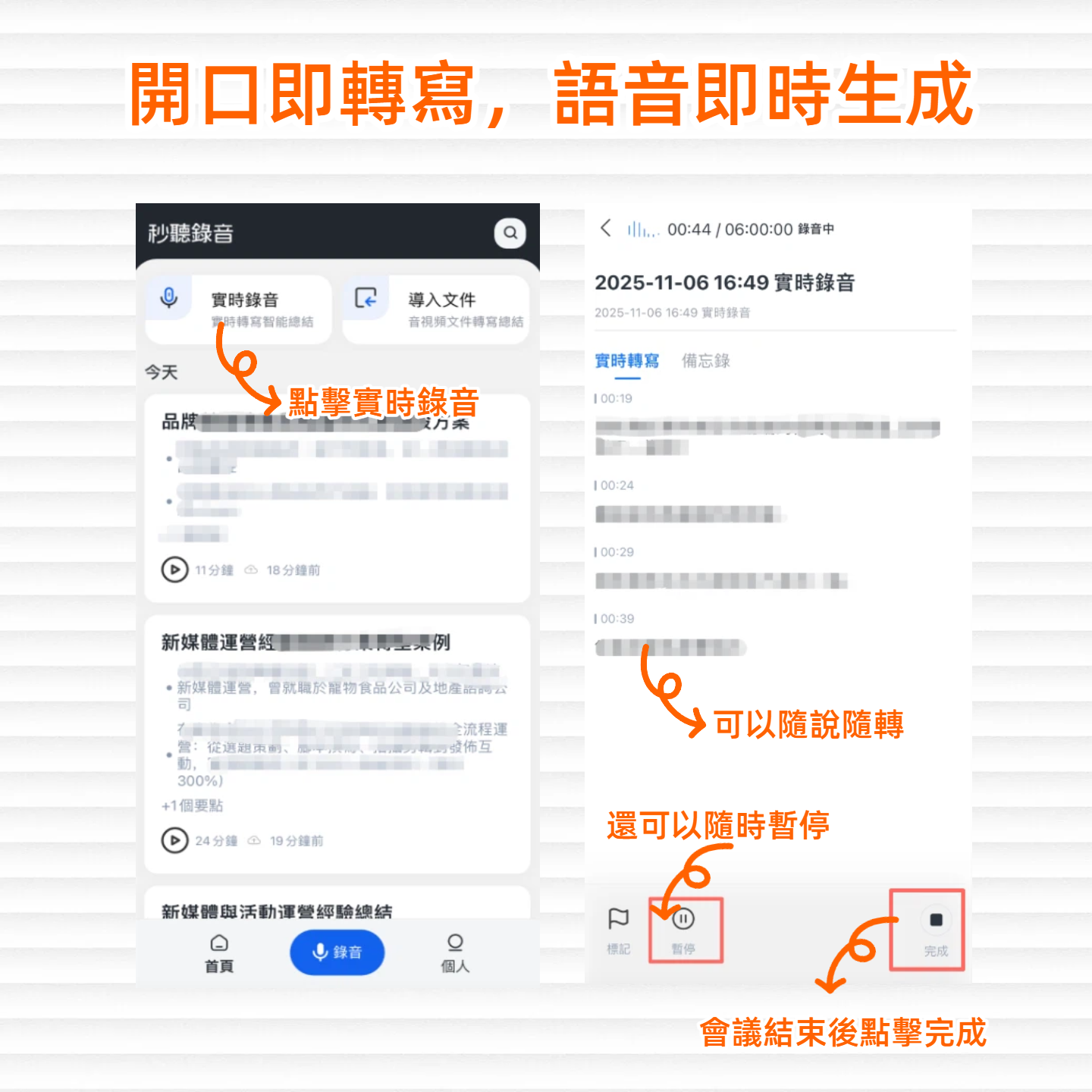
Real-time Transcription: Open Tinrec, and the text appears synced with the audio with less than a second delay. During meetings, you can follow the text and confirm key points. By the time the meeting ends, the transcript is already complete—no extra processing needed.
AI Summaries and Action Item Extraction: This is my go-to feature for weekly meetings. Tinrec automatically condenses a one-hour discussion into three to five bullet points and organizes tasks with who is responsible and deadlines. Previously, I spent 20 minutes post-meeting on this; now it takes about 2 minutes to send the list to my team.
Web Video Link Parsing: Just paste a public video URL from YouTube, Bilibili, or Xiaohongshu, and Tinrec outputs the full text and key points. I use this to digest competitor launches and industry trend videos—reading a summary takes less time than fast-forwarding through the video.
AI-Powered Q&A: This is my most-used feature. After a one-hour meeting, I ask Tinrec directly: “What was the meeting conclusion?” “Who is responsible for what?” It understands the context and answers, saving me from flipping through 30 pages of transcript. It’s especially handy when my boss suddenly asks for updates.
Multi-format Export and Post-processing: Tinrec can export results as Word, PDF, or sync directly to Notion or Google Docs. Furthermore, its Agent feature can generate formal meeting minutes, reports, or tables based on the recording. For someone like me who needs to submit weekly reports, it’s like having an assistant draft them.
Real-World Use Cases
Meeting Recording and Follow-up: Before each meeting, I start Tinrec recording. I can manually mark highlights during the meeting, but even if I don’t, I receive a summary and action items within seconds afterward. Now when I assign tasks to my team, I copy the action items from Tinrec and paste them into the group chat—verbal commitments become written records, making follow-up much easier.
Learning and Knowledge Digestion: For online courses or lecture recordings, I upload them directly to Tinrec. It not only provides a transcript but also automatically splits into sections with AI summaries. When reviewing, I don’t need to relisten—just open the notes and key points and I grasp 90% of the content. The time saved lets me take another course.
Interview and Data Organization: When conducting user interviews, I keep Tinrec recording. After the interview, I not only have the full conversation but can also ask the AI to list “the top three pain points mentioned by the interviewee” as research material. Compared to recording first and transcribing later, this saves at least half a day’s work.
Personal Knowledge Base: I keep all meeting, course, and idea recordings in Tinrec, which gradually becomes a searchable personal database. If I suddenly recall that a meeting six months ago mentioned a certain number, I just ask the AI—no need to dig through cloud drives.
What to Look for When Choosing a Speech-to-Text Tool
Pay attention to the tool’s "post-transcription organization ability." If it only gives you a verbatim transcript, you still have to digest it yourself; a tool like Tinrec that automatically generates summaries, action items, and sections truly saves subsequent effort.
“Input sources” also affect practicality. If you often deal with videos, web links, or historical audio files in addition to meeting recordings, choose a tool like Tinrec that covers live recording, file uploads, and web links—more flexible than one focused only on meetings.
“Language and mixed-language recognition” is especially important for Chinese users. Check how well the tool handles Traditional Chinese, Cantonese, or Chinese-English mixed scenarios. The best test is to use your own actual recordings.
Also, “export and integration options” let the tool fit into your workflow. Tinrec exports in multiple formats or syncs to Notion and Google Docs, so your organized content can be edited, shared, or archived.
Finally, “price isn’t the only consideration.” Whether the free plan offers enough minutes, whether the paid plan matches your meeting frequency, and whether the extra AI features are worth it—these matter more than just per-minute cost. I use the Tinrec Pro monthly plan—skipping two Starbucks drinks a month saves me five hours of organizing time each week. For me, it’s worth it.
Summary: Is Tinrec Worth Trying?
If you’re looking for a tool that not only transcribes speech but also summarizes, extracts action items, answers questions, and supports various audio/video sources, Tinrec is the best I’ve used so far. It’s especially suited for mid-level managers like us who are chased by meetings daily and need to report up and manage down. After switching from Notta, I’ve noticeably reduced the time spent organizing meeting materials, freeing up time for real decision-making instead of clerical work.
I recommend downloading the free version of Tinrec first—it includes a base quota to try recording a few meetings. Use your own recordings to experience the transcription quality and AI organization—nothing beats a direct test.
Turn every recording into actionable outcomes
Get 60 free transcription minutes when you sign in. No credit card required.
Related Reading
You might also like

How to Choose a Speech-to-Text Tool in 2026? A 5-Step Test Guide
Learn how to pick the best recording-to-text app, with hands-on tests of Tinrec and other popular options. Avoid common pitfalls and streamline your meeting notes.

2026 Hands-On Comparison of 4 Online Speech-to-Text Tools: Beyond Transcription, Which Makes Your Data More Useful?
In 2026, we tested 4 popular online speech-to-text tools, comparing transcription accuracy, AI organization features, free plans, and real-world usage scenarios to help you find the best fit. We especially recommend Tinrec, which goes beyond plain transcripts to offer summaries, Q&A, and exports—making audio and video data truly useful.

2026 Comparison of 4 Speech-to-Text Tools: Which One Best Handles Chinese Transcription and Post-Processing?
How to choose a speech-to-text tool? Pseric tested Tinrec, Otter.ai, Notta, and TurboScribe, comparing free tier limits, Chinese accuracy, AI summaries, and post-processing capabilities to help professionals and students find the best fit.

Best WeChat Voice-to-Text Alternatives 2026: Why Tinrec Stands Out
Tired of struggling to organize long WeChat voice messages? This article compares WeChat's built-in voice-to-text with the professional tool Tinrec from a practical perspective, explaining why it's more suitable for professionals to switch to Tinrec for meetings, interviews, and voice messages, along with free trial suggestions.

2026 Complete Guide to Audio-to-Text: Accuracy, Tool Selection, and Practical Tips
Is audio-to-text accurate? This article covers the actual accuracy of speech-to-text technology, influencing factors, how to choose the right tool, and uses Tinrec as an example to show complete application scenarios, helping you decide if it's worth it.
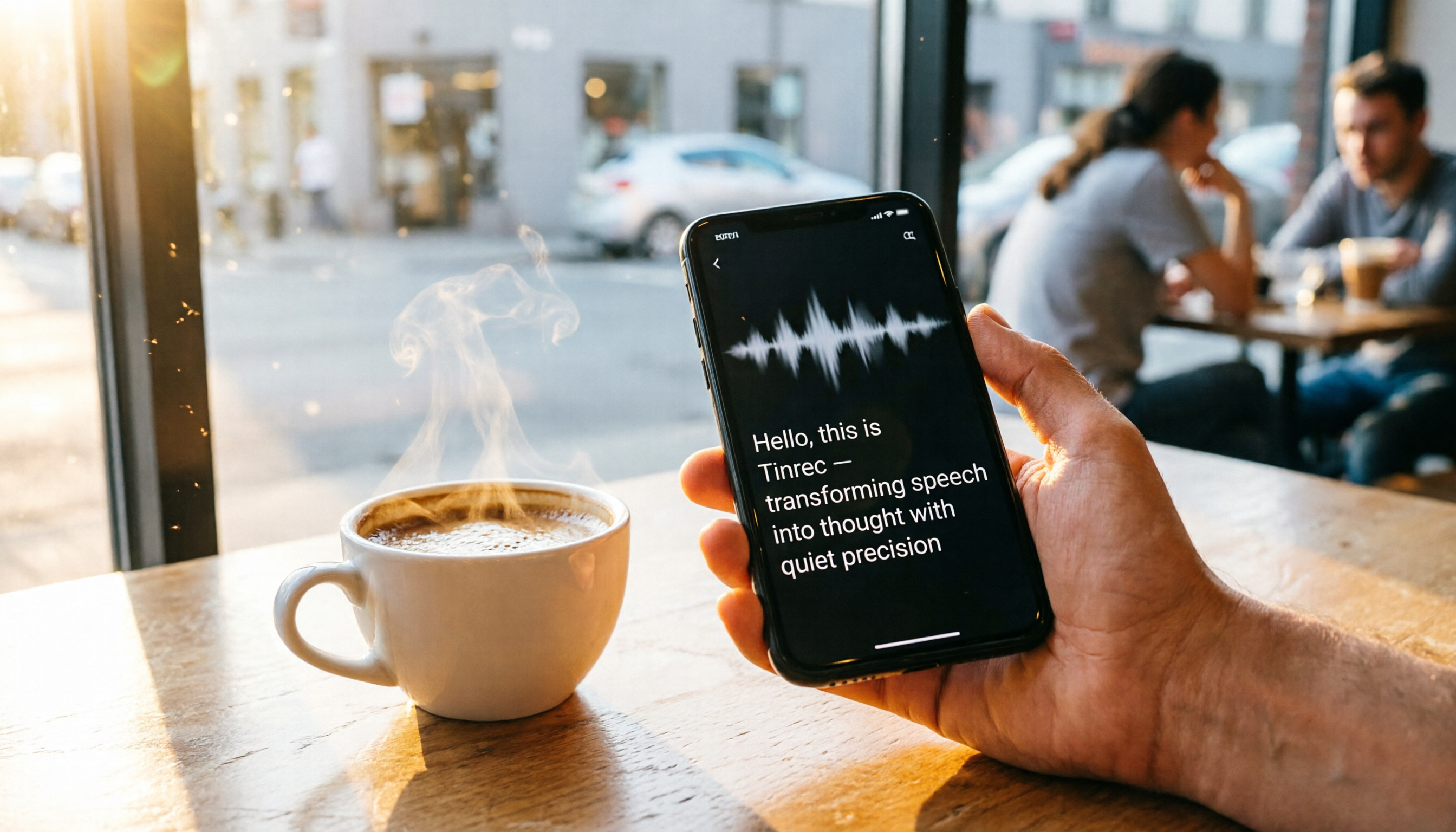
The Complete Guide to Speech-to-Text in 2026: Features, Use Cases, and How to Choose the Right Tool
Struggling to choose a speech-to-text tool? This article takes a practical approach, helping you understand the core features and application scenarios of speech-to-text. Using Tinrec (秒聽錄音) as an example, it teaches you how to select the best tool for your needs and easily turn recordings into usable data.
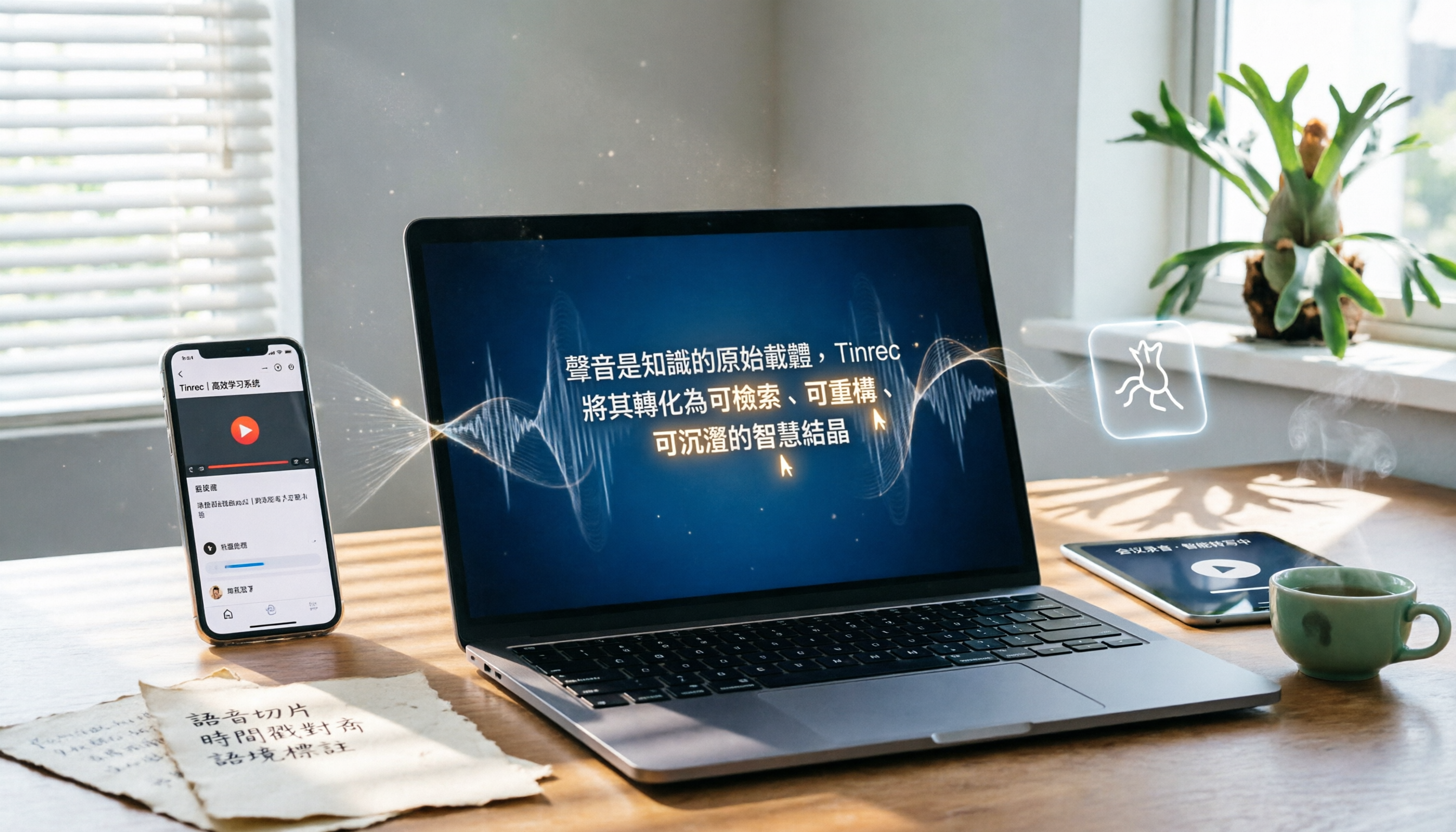
2026 Side-by-Side Comparison of 2 Speech-to-Text Tools: Which One Handles Chinese Recordings Better?
Tinrec and Notta are both excellent speech-to-text tools, but when it comes to organizing Chinese recordings, diverse input sources, and AI post-processing, Tinrec is better suited for users who need to turn meetings, lectures, and online videos into actionable knowledge. This article compares them in detail across input sources, AI features, plan flexibility, and cross-platform experience to help you quickly find the right choice.

2026 Comparison of 3 Free Online Speech-to-Text Tools: Which Free Plan Is Best for Taiwan Office Workers?
We tested 3 free speech-to-text tools, comparing accuracy, AI features, and free credits. Tinrec is the best fit for Taiwan users who need to transcribe meetings, lectures, and online videos.

How to Choose a Speech-to-Text Tool in 2026: A Complete 5-Step Guide
Accumulating recordings from meetings, classes, and interviews? Converting them to text is time-consuming and tedious. This guide walks you through 5 steps to find the best transcription solution for your needs, using Tinrec as an example to turn recordings into actionable knowledge.