

Turn recordings into transcripts and summaries in minutes
Upload audio or video for multilingual transcription, AI notes, and action items
What Can Audio-to-Text Do for You?
Scenario 1: Meeting Notes Made Easy
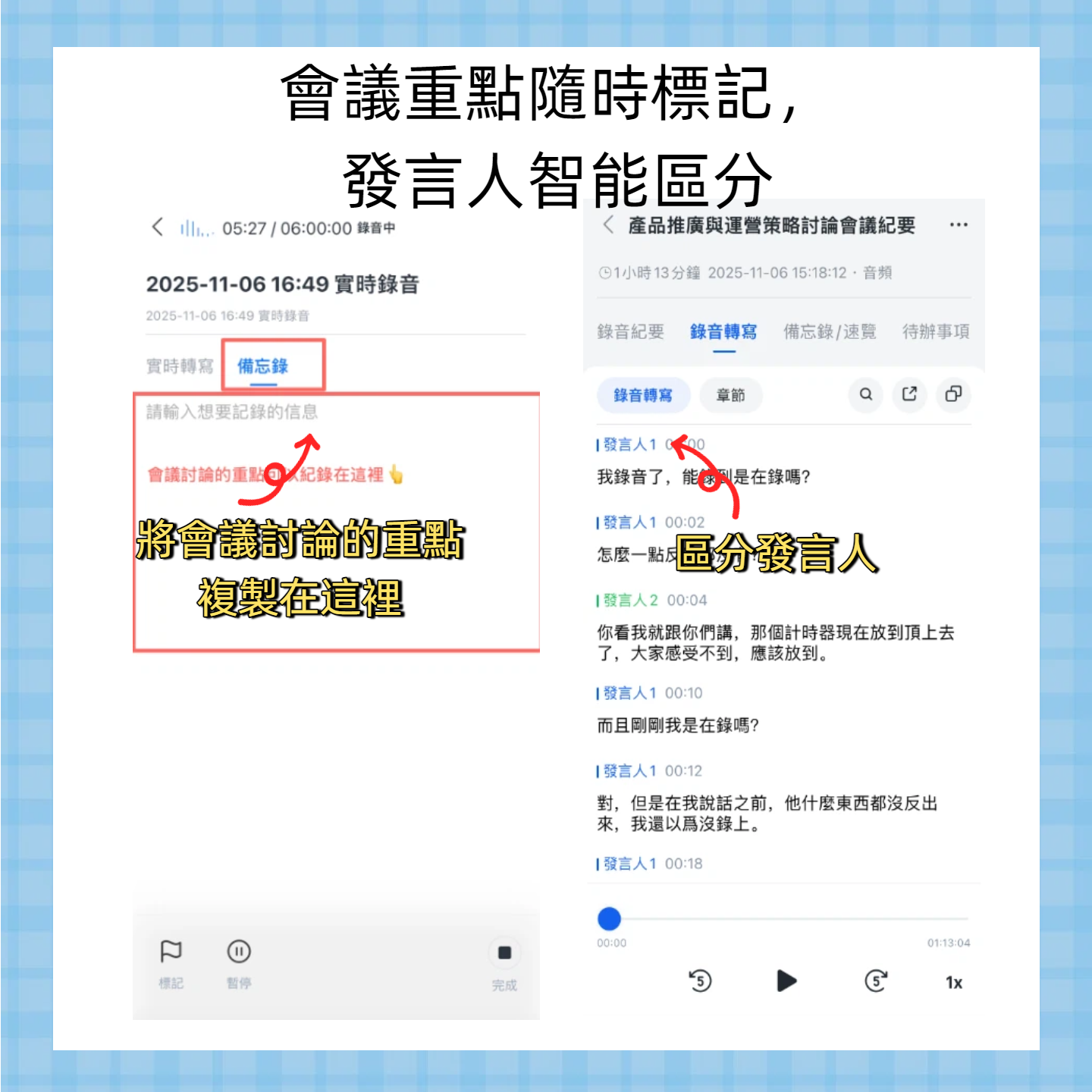
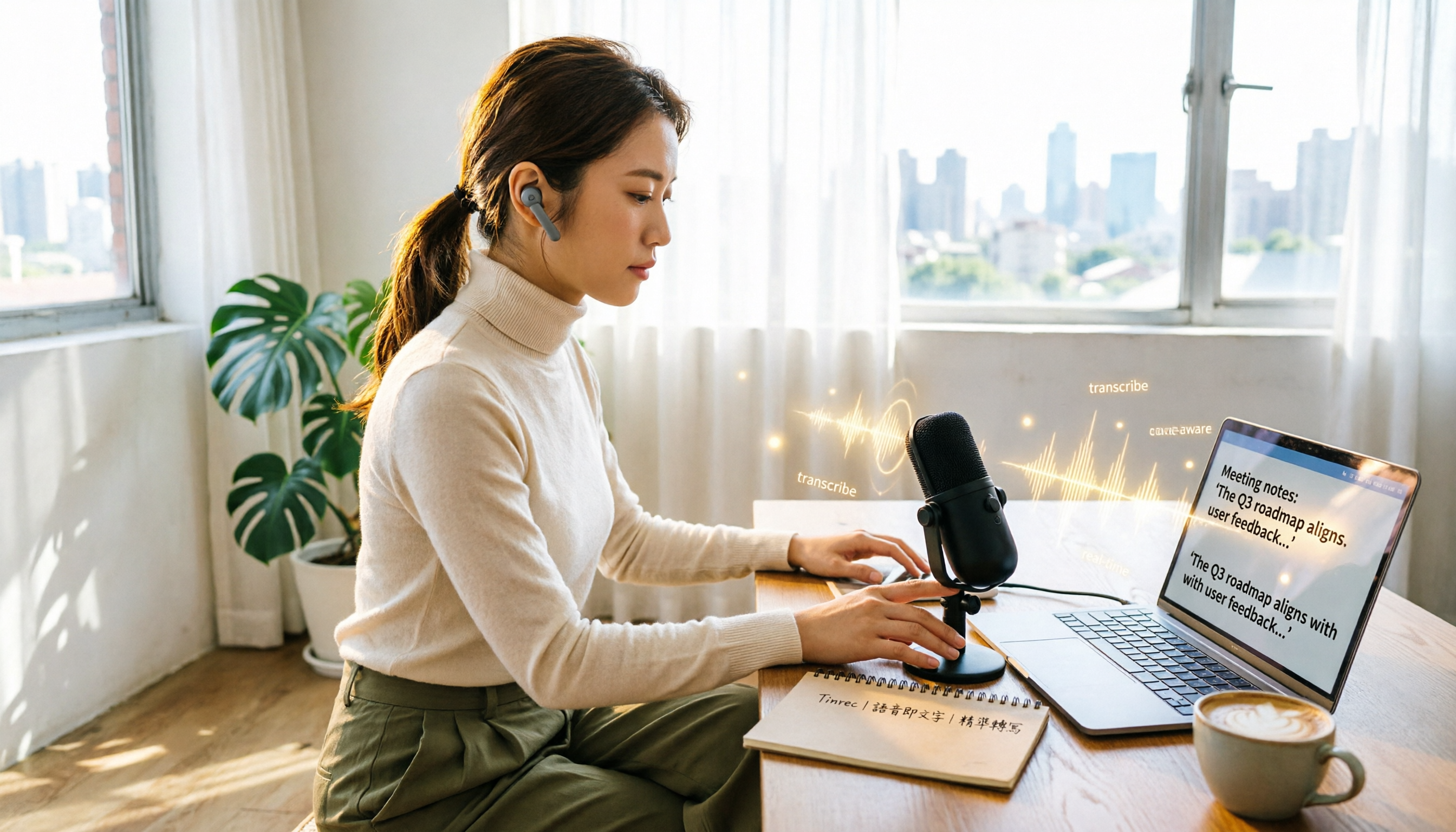
After a two-hour meeting, you might spend another hour organizing notes. Now, with an audio-to-text tool—take Tinrec as an example—as soon as the meeting ends, AI has already generated a transcript, summary, and action items. You can see at a glance who is responsible for what and the deadlines.
Scenario 2: One-Click Class Notes
In class or during a lecture, busy taking notes can make you miss key points. Use Tinrec to record the entire session, and AI will automatically convert it to text, split it into chapters, and extract highlights. When reviewing, you can search for keywords to find corresponding sections.
Scenario 3: Quick Interview Organization
For interviews or user research, recordings often run one or two hours. Tinrec's AI summary and Q&A features let you ask directly, "What did the interviewee say about pricing?" without listening to the entire recording.
Core Capabilities of Audio-to-Text
Real-Time Transcription
Text appears as you record, not after the recording ends. Tinrec's real-time transcription delay is less than 1 second, so during meetings you can visually confirm you haven't missed any key points.
AI Semantic Summarization
Not just condensing the transcript into a paragraph, but structured organization—meeting topic, conclusions, action items, responsible persons listed separately. Tinrec's summary helps you quickly grasp the key points of long recordings.
AI Conversational Query
After transcription, you can ask Tinrec questions like "Who mentioned the budget in the meeting?" or "What was the client's feedback?" It answers directly based on semantic understanding.
Chapter and Key Point Marking
Long recordings are automatically divided into chapters, and you can manually mark key sections for easy review.
Multi-Format Export
The organized content can be exported as TXT, Word, PDF, subtitle files, or synced to Notion, Google Docs, etc., seamlessly integrating into your workflow.
Practical Application Scenarios
Meeting Minutes
For weekly team meetings or client meetings, start real-time recording with Tinrec. AI will transcribe in real time and generate meeting minutes after the meeting, including conclusions and action items. You can also ask follow-up questions about decision points.
Classroom Learning
Record a full class or online lecture with Tinrec. The system automatically converts it to text and splits it into chapters. With AI Q&A, you can quickly find key points emphasized by the teacher and turn them into study notes.
Stop organizing recordings by hand
Upload audio or video and automatically get a transcript, summary, and action items
Interviews and Research
Upload interview recordings to Tinrec, get the transcript instantly, then use AI summary to extract key insights. Through conversational query, you can search the database-like interface for all relevant points the interviewee made.
Content Creation
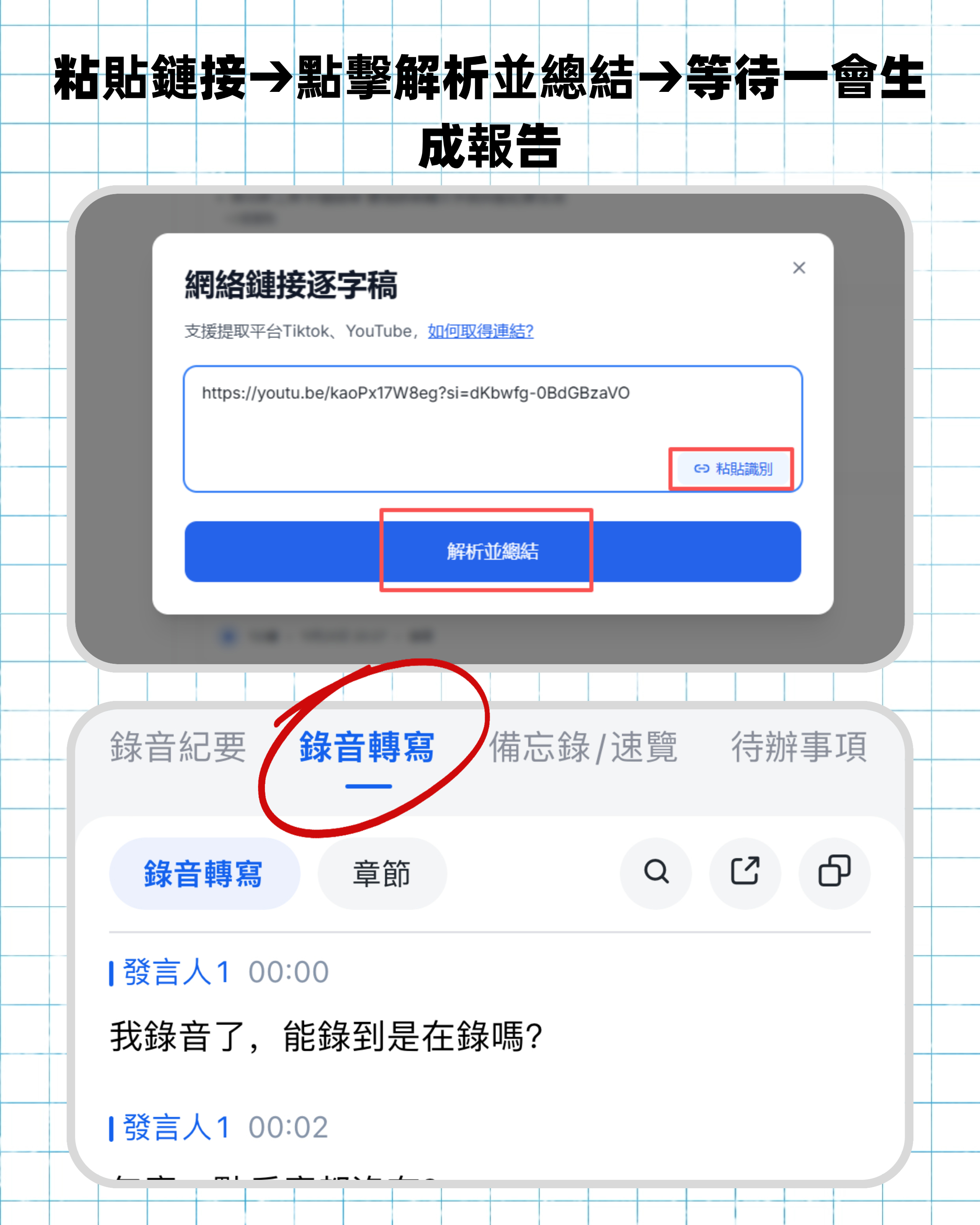
Want to turn YouTube, TikTok videos, or podcasts into text material? Just paste the link, and Tinrec will parse and convert it to text, and also generate summaries and subtitles, making it easy to repurpose into articles or social media posts.
4 Points to Consider When Choosing an Audio-to-Text Tool
Accuracy Is Not Absolute: Every tool's claimed accuracy is measured under ideal conditions. In practice, background noise, multiple speakers, accents, and technical terms all affect results. The best way is to test with your own recordings. Tinrec delivers high-quality transcription in typical meeting and classroom settings, but in noisy environments or with overlapping speech, you may still need to verify against the original.
Transcription Is Just the First Step; Organization Is Key: Some tools only provide a transcript, but you need summaries, action items, and highlights. Tinrec includes built-in AI summarization, chapter splitting, and Q&A, turning recordings into immediately usable material rather than another file to process.
Supported Input Sources: Do you usually record with your phone, computer, or collect material from online videos? Tinrec supports real-time recording, uploading audio/video files, pasting public video links (e.g., YouTube, TikTok), and computer meeting recording, covering almost all common audio and video sources.
Language and Regional Support: If you need to handle Cantonese, mixed Chinese-English, or other languages, make sure the tool supports them. Tinrec has excellent recognition for Chinese (Traditional) and supports multiple languages, suitable for Chinese content organization.
Frequently Asked Questions
Q1: Is audio-to-text really accurate?
A1: With current AI technology, in clear recording environments, mainstream tools achieve practical accuracy, but none are 100%. Factors affecting accuracy include background noise, speaking speed, accents, and overlapping speech. We recommend testing with your actual recordings rather than relying on specs. Tinrec performs well in most meeting and classroom scenarios, but important content should still be checked against the original.
Q2: How long can I use the free version of Tinrec?
A2: The free version provides a monthly basic transcription quota, suitable for light users to try real-time recording, file transcription, and online video parsing. If you only need transcription occasionally, the free version is sufficient.
Q3: Can it distinguish between different speakers?
A3: Yes, Tinrec supports speaker diarization, automatically labeling different speakers, which is very helpful for meeting minutes and interview organization.
Q4: Are recordings private?
A4: Tinrec uses encrypted transmission and storage. You can delete recordings and text at any time after transcription. When handling sensitive content, be sure to review the platform's privacy policy and use it cautiously.
Q5: Besides Chinese, what other languages are supported?
A5: Tinrec supports 14 languages, including English, Japanese, Korean, etc., suitable for multilingual content organization. Actual transcription quality varies by language; we recommend testing first.
Conclusion
Audio-to-text technology is quite mature. As long as audio quality is decent, it can save you significant manual transcription time. If you have weekly meetings, classes, or interviews to organize, instead of continuing with manual methods, let AI handle it with Tinrec. Start with the free version to see how much time AI can save you in organizing recordings.
Turn every recording into actionable outcomes
Get 60 free transcription minutes when you sign in. No credit card required.
Related Reading
You might also like

How to Choose a Speech-to-Text Tool in 2026? A 5-Step Test Guide
Learn how to pick the best recording-to-text app, with hands-on tests of Tinrec and other popular options. Avoid common pitfalls and streamline your meeting notes.

2026 Hands-On Comparison of 4 Online Speech-to-Text Tools: Beyond Transcription, Which Makes Your Data More Useful?
In 2026, we tested 4 popular online speech-to-text tools, comparing transcription accuracy, AI organization features, free plans, and real-world usage scenarios to help you find the best fit. We especially recommend Tinrec, which goes beyond plain transcripts to offer summaries, Q&A, and exports—making audio and video data truly useful.

2026 Comparison of 4 Speech-to-Text Tools: Which One Best Handles Chinese Transcription and Post-Processing?
How to choose a speech-to-text tool? Pseric tested Tinrec, Otter.ai, Notta, and TurboScribe, comparing free tier limits, Chinese accuracy, AI summaries, and post-processing capabilities to help professionals and students find the best fit.

Best WeChat Voice-to-Text Alternatives 2026: Why Tinrec Stands Out
Tired of struggling to organize long WeChat voice messages? This article compares WeChat's built-in voice-to-text with the professional tool Tinrec from a practical perspective, explaining why it's more suitable for professionals to switch to Tinrec for meetings, interviews, and voice messages, along with free trial suggestions.
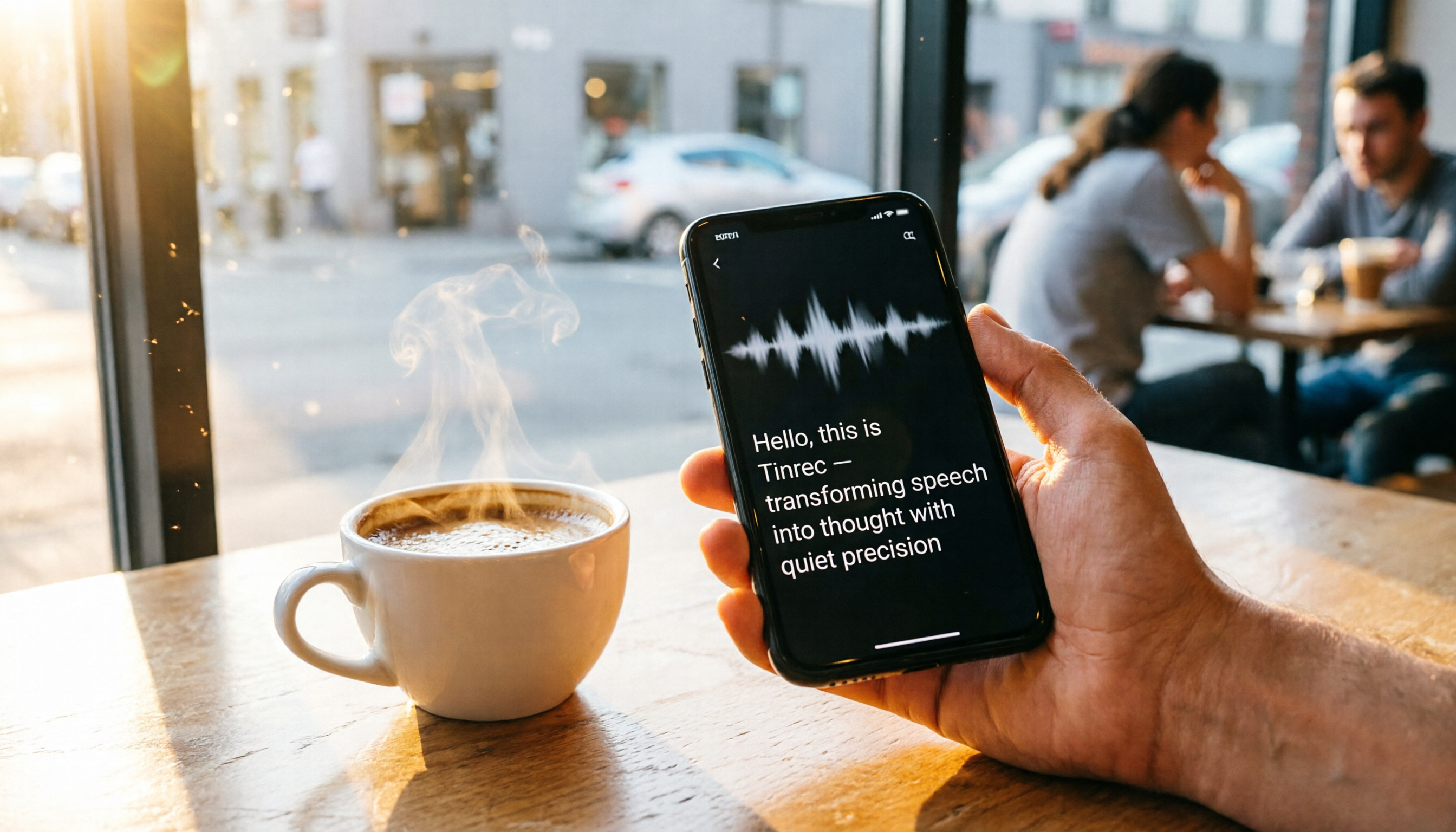
The Complete Guide to Speech-to-Text in 2026: Features, Use Cases, and How to Choose the Right Tool
Struggling to choose a speech-to-text tool? This article takes a practical approach, helping you understand the core features and application scenarios of speech-to-text. Using Tinrec (秒聽錄音) as an example, it teaches you how to select the best tool for your needs and easily turn recordings into usable data.
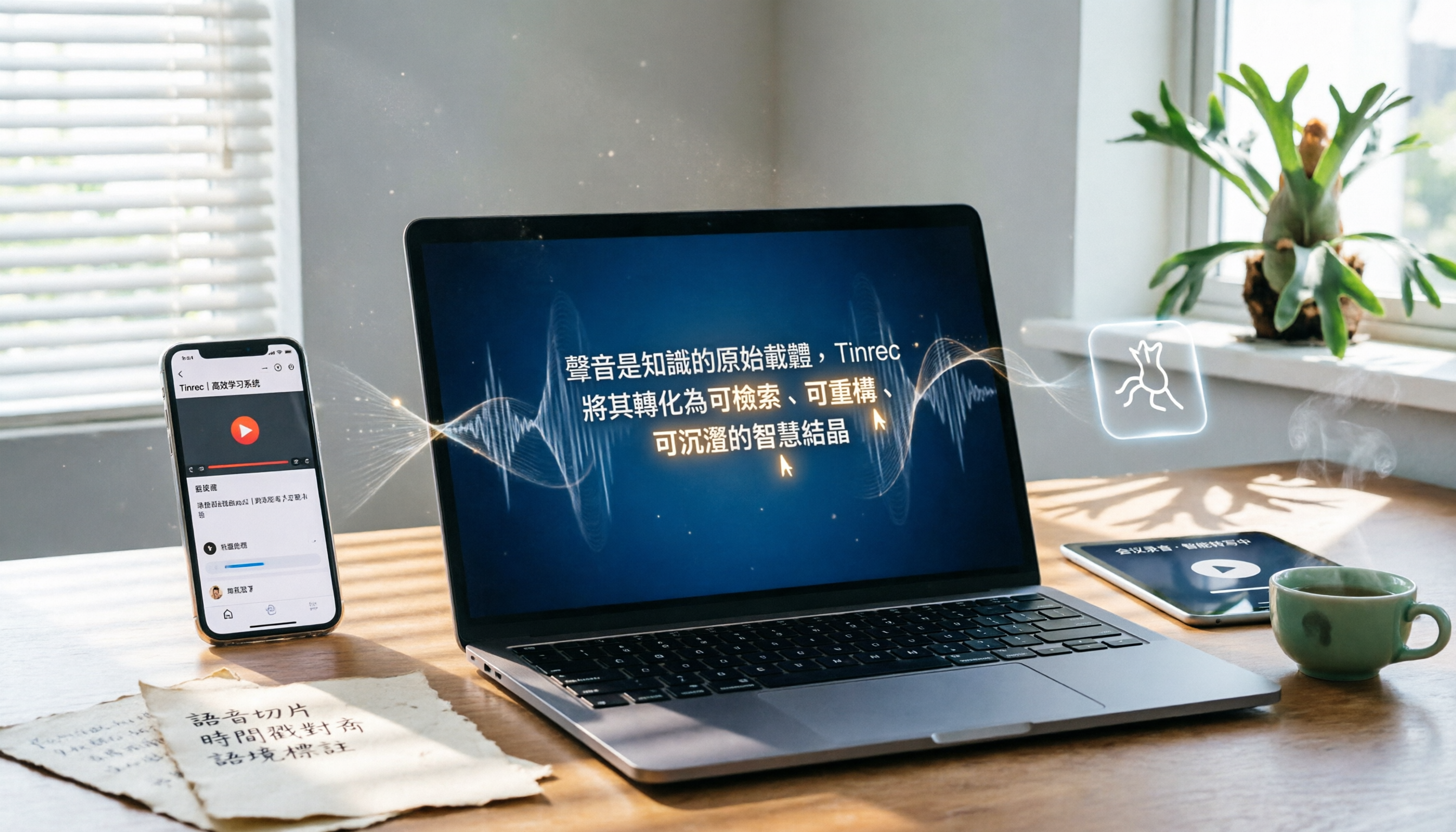
2026 Side-by-Side Comparison of 2 Speech-to-Text Tools: Which One Handles Chinese Recordings Better?
Tinrec and Notta are both excellent speech-to-text tools, but when it comes to organizing Chinese recordings, diverse input sources, and AI post-processing, Tinrec is better suited for users who need to turn meetings, lectures, and online videos into actionable knowledge. This article compares them in detail across input sources, AI features, plan flexibility, and cross-platform experience to help you quickly find the right choice.
2026 Comparison of 3 Free Online Speech-to-Text Tools: Which Free Plan Is Best for Taiwan Office Workers?
We tested 3 free speech-to-text tools, comparing accuracy, AI features, and free credits. Tinrec is the best fit for Taiwan users who need to transcribe meetings, lectures, and online videos.

2026 Comparison of 2 Speech-to-Text Tools: Why I Switched from Notta to Tinrec
A mid-level manager tests speech-to-text tools, comparing Notta and Tinrec. From meetings and Chinese recognition to AI post-processing, it analyzes which is better for professionals who need to manage both up and down.

How to Choose a Speech-to-Text Tool in 2026: A Complete 5-Step Guide
Accumulating recordings from meetings, classes, and interviews? Converting them to text is time-consuming and tedious. This guide walks you through 5 steps to find the best transcription solution for your needs, using Tinrec as an example to turn recordings into actionable knowledge.