

Turn recordings into transcripts and summaries in minutes
Upload audio or video for multilingual transcription, AI notes, and action items
2026 Speech-to-Text Complete Guide: 3 Methods for One-Click Conversion, Hands-On Test & Recommendation
What Can Speech-to-Text Do for You?
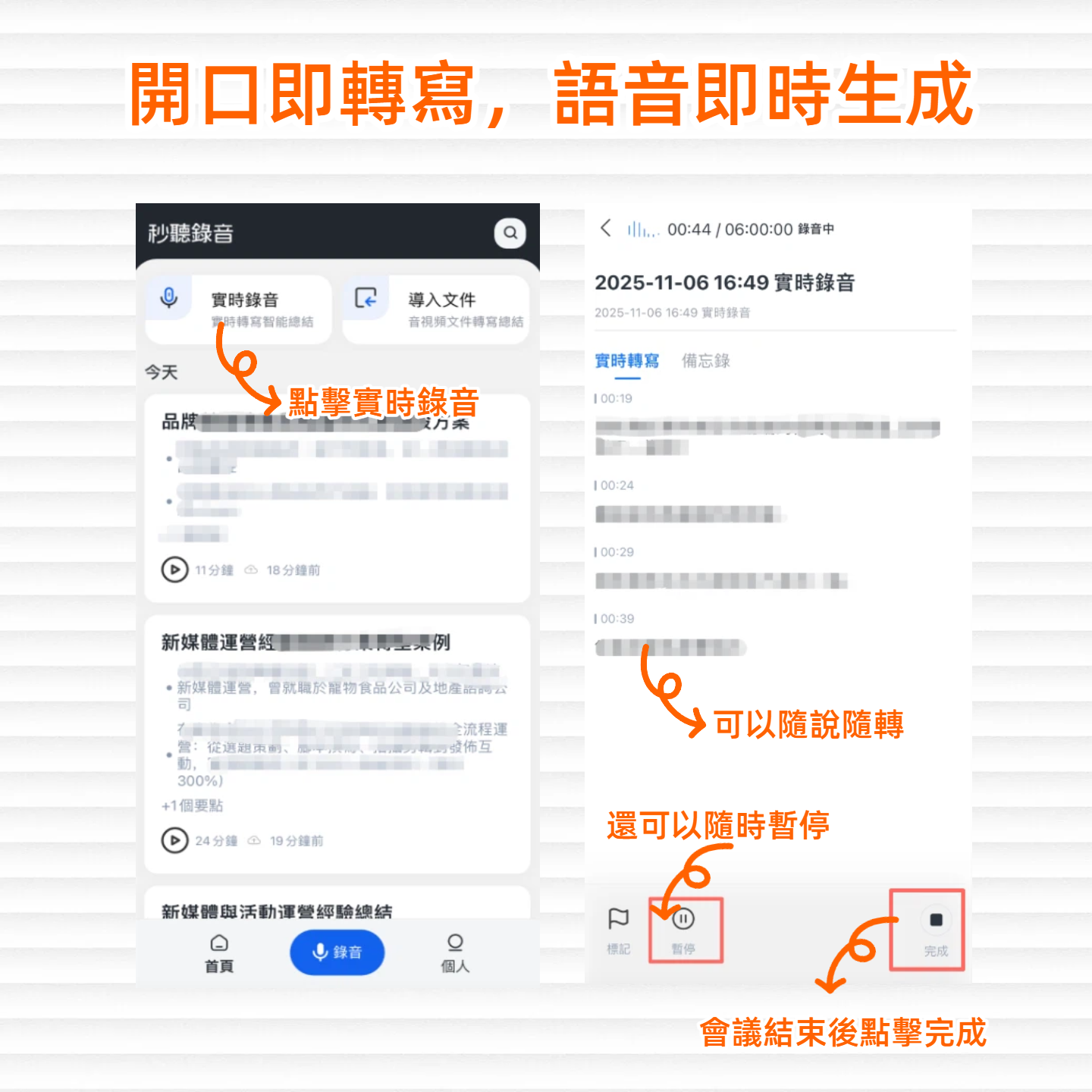
As a middle manager attending 15 meetings a week, what I dreaded most wasn't the meetings themselves—it was what came after: staying up late writing meeting minutes. That changed when I started using an AI speech-to-text tool. Now I can generate meeting minutes within 5 minutes after a meeting. Speech-to-text isn't just about turning audio into text; it's about turning content you'd otherwise forget (meetings, lectures, interviews) into searchable, organizable, trackable data.
Scenario 1: Meeting minutes in 5 minutes after the meeting
In the past, after a two-hour meeting, you might spend another hour organizing notes. With Tinrec, for example, as soon as the meeting ends, AI has already generated a summary, conclusions, and action items—who is responsible for what and deadlines are all clear.
Scenario 2: Lecture recordings become review notes instantly
Students or lifelong learners often fear missing key points. Tinrec's real-time transcription shows text as you record, and it can break long lectures into chapters with AI summaries—perfect for exam prep with organized notes.
Scenario 3: Interview recordings automatically turned into quotable material
When conducting user interviews or journalist interviews, transcribing manually is time-consuming. Tinrec not only transcribes but also extracts key points, tasks, and even lets you query via AI chat: "What did the customer say about pricing?" and jumps to the relevant segment.
Core Capabilities of Speech-to-Text
Many people think speech-to-text just converts audio to text. But a truly useful tool also helps you understand and use that text. Taking Tinrec as an example, here are its key capabilities:
Real-time transcription: text appears as you speak
It doesn't wait until the recording ends; text appears with less than a second delay. During a meeting, you can see the text in real time and confirm nothing is missed, without relying on memory.
AI semantic summarization: structured key points
Instead of just condensing a transcript into one paragraph, it breaks down the meeting topic, conclusions, action items, and assignees. After the meeting, copy the summary and send it to your boss—saving you report-writing time.
AI chat query: ask your recording like a database
After transcription, you can ask Tinrec: "Who mentioned the budget in the meeting?" or "What was the client's feedback?" It answers based on semantic understanding, without re-listening to the entire recording.
Multi-source support: not just phone recording, but also files and online videos
Tinrec supports real-time recording, uploading audio/video files, and even pasting public video links from YouTube, TikTok, or Xiaohongshu (Little Red Book) to directly generate text and summaries. This is incredibly useful for content creators or anyone who needs to organize online material.
Export and post-processing: integrate results into your workflow
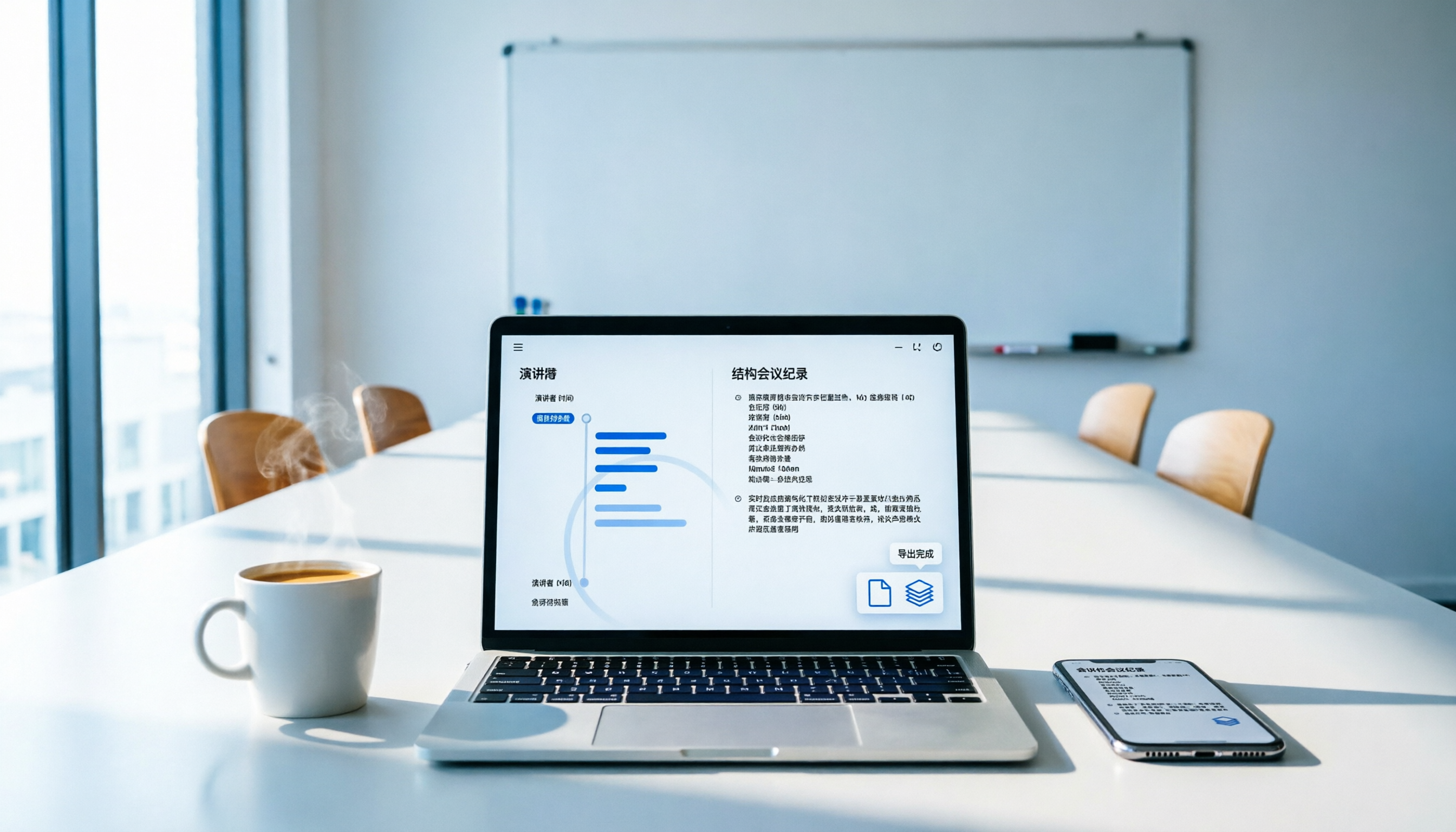
Transcription is not the endpoint. Tinrec allows export as text files, PDFs, and even syncs to tools like Notion and Google Docs. You can further have AI generate meeting minutes, reports, or tables, ready as work deliverables.
Real-World Use Cases
Meeting minutes: from recording to action items in one flow
Now I record meetings with Tinrec, and within 5 minutes after the meeting I get a summary and action items. The best part: no more manual transcription, no chasing colleagues for minutes—AI produces them directly, and I just send them to attendees for confirmation.
Stop organizing recordings by hand
Upload audio or video and automatically get a transcript, summary, and action items
Lectures and seminars: turn audio into review notes
Before, after a class, the recording sat untouched. Now I upload lecture recordings to Tinrec, get a transcript, use AI summaries to highlight key points, and with chapter segmentation, I review organized content directly—doubling efficiency.
Interviews and research: quickly generate quotable material
When conducting user interviews, I record the entire session. In the past, I had to ask an assistant to transcribe, which took a week. Now with Tinrec, I get the text the same day, and I can ask AI: "What did users say about the new feature?" to jump directly to the relevant part and hear the original recording.
Content creation: turn podcasts/videos into article material
If you run a podcast or YouTube channel, feed your episode recordings or video links to Tinrec. It transcribes, summarizes, and extracts key points—turning content into a material generator for writing "key takeaways" articles or social posts.
4 Things to Consider When Choosing a Speech-to-Text Tool
There are many speech-to-text tools on the market, but people often just look at price and miss the really important aspects. Based on my hands-on test with Tinrec, here are 4 things to check:
1. Accuracy: Don't just trust official numbers—test with your own recording
Many tools claim high accuracy, but in practice, background noise, accents, and overlapping speech affect performance. In our team's tests, Tinrec performed well in typical meeting scenarios, but errors occurred in noisy environments. I recommend trying it with your typical recording conditions before deciding.
2. AI organization capability: Transcription is just the first step; how much time the tool saves you afterward is key
Turning audio into text is easy; the real challenge is organizing it into useful information. Tinrec's automatic summaries, action item extraction, and AI Q&A are the main reasons I haven't switched to another tool. Some tools just dump text and leave you to do the rest.
3. Input sources: Do you only record meetings, or do you also need to handle files and online videos?
If, like me, you often need to process lecture recordings, interview files, or even online videos, a tool limited to "meeting recording" won't cut it. Tinrec supports recording, file uploads, and web links, covering multiple scenarios in one app—no need to install several tools.
4. Cross-platform and export: Make sure your devices and downstream tools work together
I use an iPhone and a Windows PC, and I often switch between them during meetings. Tinrec has iOS, Android, and web versions, with data synced seamlessly across platforms. Also, check if it can export to Notion or Google Docs, because eventually you'll want to integrate into your own system.
FAQ
Q1: Does speech-to-text require an internet connection?
For Tinrec, real-time transcription needs an internet connection for AI processing. However, if you just record and upload later, you can record offline and then process when connected.
Q2: Is the free version's transcription quota enough?
Tinrec's free version offers a basic monthly transcription quota. If you attend 3 or fewer meetings a week, it's usually enough. But if you have meetings daily or often transcribe long recordings like I do, consider the Pro version—its monthly fee costs less than two cups of coffee.
Q3: Can it distinguish between different speakers in a multi-person meeting?
Yes. Tinrec tries to differentiate speakers during transcription, labeling them as "Speaker 1", "Speaker 2", etc. It's not 100% accurate, but it's very convenient for organizing multi-party discussions—at least you know who said what.
Q4: Can it generate meeting minutes directly after transcription?
Yes. Tinrec's Agent post-processing feature can further generate structured meeting minutes, reports, or tables from the transcription—just tweak a bit and send to your boss or client.
Q5: How well does it handle accents or mixed Chinese-English speech?
Tinrec is optimized for Chinese (both simplified and traditional) and mixed-language speech, but accuracy drops with heavy accents or loud background noise. In typical office environments, Taiwanese Mandarin is recognized without issues, and mixed Chinese-English is generally correct.
Conclusion
Speech-to-text isn't new, but AI tools in 2026 have made it both effective and affordable. If you attend at least 3 meetings a week, or often need to organize lecture or interview recordings, I strongly recommend finding a suitable tool—stop manual transcription. Tinrec not only transcribes but also summarizes, extracts tasks, and lets you query key points. It's the best solution I've found for managers, students, and content creators.
The free version already offers core features. Download it and try recording a meeting—you'll see that the answer to "Can speech-to-text really work?" is not just "yes" but "it can save you a ton of time."
Turn every recording into actionable outcomes
Get 60 free transcription minutes when you sign in. No credit card required.
Related Reading
You might also like
2026 Tinrec vs Notta: 4-Dimensional Comparison – Which Is Better for Meeting Notes?
How to choose a meeting note-taking tool? This article compares Tinrec and Notta across four dimensions: language support, depth of organization, cross-source coverage, and post-processing applications, helping you decide which one turns meeting recordings into truly usable knowledge.

5 Best Transcription AI Tools of 2026: Free vs Paid – Which One Saves You the Most Time at Work?
Tired of overtime transcribing meeting notes? We tested 5 popular AI speech-to-text tools: Tinrec, Otter.ai, Fireflies.ai, Notta, and TurboScribe. Find the best transcription tool for your needs, with insights on Cantonese accuracy, free plans, and selection tips to save you from late-night typing.

2026 Comparison of 3 Speech-to-Text Tools: A Student's Real Test and Switch from Notta to Tinrec for Transcription
A senior student tests Tinrec, Notta, and Otter for lecture recording, group discussions, and finals prep, sharing which tool works best for budget-conscious students needing accurate transcripts.

Best Free Meeting Minutes Solutions for Word in 2026: 3 Options Compared
Tired of typing meeting minutes overtime? Tinrec instantly transcribes meetings, lectures, and interviews into text, auto-generates summaries, action items, and key points, and exports to Word. This article compares three free options: manual typing, mobile dictation, and Tinrec’s free plan.
Which Meeting Note Export App Is Best? 2026 Review of 3 Apps, This One Has the Most Complete Cross-Platform Export
How to choose a meeting note export tool? We tested Tinrec, Otter.ai, and Notta, comparing transcription accuracy, AI summaries, export formats, and pricing. If you need to convert meeting recordings into tasks and minutes and export to Notion or Google Docs, this article helps you decide in 3 minutes.

2026 Test Report: 5 Interview Recording-to-Text Tools Compared – Fast Transcripts & Key Insights
As a mid-level manager, transcribing interviews is the most time-consuming task. This article tests Tinrec, Otter.ai, Notta, TurboScribe, and built-in phone recorders, comparing transcription accuracy, AI summaries, multi-source support, and pricing to help you find the most efficient interview processing solution.

2026 Comparison of 5 Free Speech-to-Text Tools: Free Credits, AI Features, and Best Use Cases
There are many free speech-to-text tools, but which one is best for you? This article tests 5 mainstream free options, covering transcription credits, AI summaries, multilingual support, and export limitations, to help you find the best value tool.

2026 Hands-on Comparison of 4 Types of Transcription Tools: How Students Can Get Transcripts on a Budget
Lecture recordings, group discussions, interview transcripts—students need transcription tools the most. I tested 4 types of tools on the market, from meeting bots to hardware recorders. Only one truly fits campus life: enough free quota, high value, and it helped me organize all key points for finals.

2026 Real-World Test of 5 Speech-to-Text Tools: Which AI Meeting Notes App Helps Most?
Tired of overtime after endless meetings? We tested 5 speech-to-text apps, including Tinrec, Otter.ai, and Notta, to find the best time-saving solution for busy professionals.