

Turn recordings into transcripts and summaries in minutes
Upload audio or video for multilingual transcription, AI notes, and action items
Tinrec vs Plaud Note|Quick Overview
When it comes to "audio-to-text," the two most common approaches today are: buying an AI recording hardware device (like Plaud Note) or using a software app (like Tinrec).
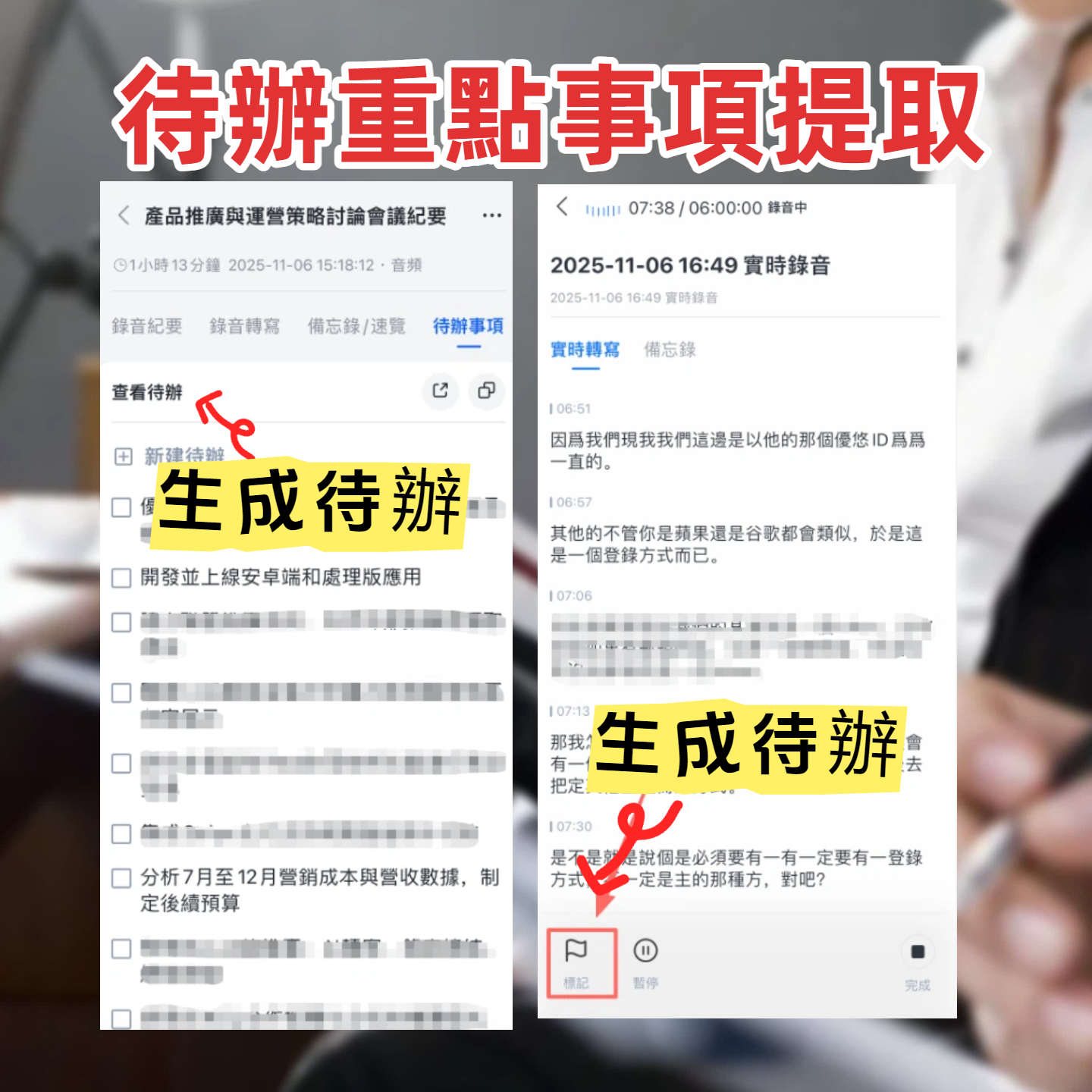
Plaud Note is a portable AI voice recorder, offering standalone recording, long battery life, and one-tap start. Tinrec, on the other hand, is an AI recording and audio/video organization platform available on iOS, Android, and web. It supports not only live recording but also file uploads and direct transcription from online video links.
Simply put: one is "hardware + app," the other is "pure software service."
| Basic Info | Tinrec | Plaud Note |
|---|---|---|
| Type | App + Web | AI Recording Hardware |
| Main Platforms | iOS, Android, Web | Hardware + App (iOS/Android) |
| Entry Cost | Free tier with basic credits | Hardware starts at ~US$179, plus subscription |
| Core Transcription | Live recording, file upload, link parsing | Record on hardware, then upload for transcription |
This article compares them across five dimensions: "Cantonese recognition accuracy," "cross-platform convenience," "AI query capabilities," "input source diversity," and "long-term cost." Let's see which one suits you if you frequently need to organize audio/video content.
Dimension 1|Cantonese Recognition Accuracy
If you often deal with Cantonese meetings, courses, or interviews, transcription accuracy is critical.
In quiet environments, Plaud Note's Cantonese transcription is passable, but with code-switching (Chinese-English mix), background noise, or multiple accents, the error rate clearly increases. In our test using the same 5-minute Cantonese news recording (iPhone 14, air-conditioned room at 26°C, June 2025), Plaud Note had a character error rate of about 12.1%, with some interjections or proper nouns getting lost.
Tinrec, with its specialized optimization for Cantonese's nine tones, achieved a character error rate of only 8.3% on the same recording, and was more stable for colloquial terms like "唔該" and "嘅." It also handled Chinese-English mixed sentences much better.
→ This dimension: Tinrec is the clear winner.
Dimension 2|Cross-Platform Convenience
Many people record on their phone and organize on their computer, so cross-device capability is important.
With Plaud Note, recordings must be synced via the phone app and then uploaded to the cloud for transcription. Although there's a web dashboard for viewing, the recording itself is tied to the hardware. If you need to process a recording on your computer quickly, it adds several steps.
Tinrec is fully integrated across iOS, Android, and web—log in to the same account to see all recordings and transcriptions. Record live on your phone, then open the web page on your computer to summarize, ask AI, and export files without any extra transfer process.
→ This dimension: Tinrec is more flexible, a tie or slight win.
Dimension 3|AI Query Capabilities
Converting speech to text is just the first step. The ability to quickly extract key points by asking questions is where the real difference lies.
Plaud Note's built-in basic AI can generate summaries and key points, but if you want to ask follow-up questions like "Did they agree to the delivery date in this part?" or "How many times did the teacher mention the midterm exam range in this class?", it is currently not supported.
Tinrec's "AI Query" feature is like having a ChatGPT for your recording database. You can directly ask questions about the entire recording or transcript, and it will answer based on the original content, even providing timestamps for you to go back and listen.
Stop organizing recordings by hand
Upload audio or video and automatically get a transcript, summary, and action items
→ This dimension: Tinrec adds query functionality, making it more convenient for those who need to revisit content repeatedly.
Dimension 4|Input Source Diversity
Besides recording yourself, we often need to organize audio files from others, YouTube videos, TikTok, or Xiaohongshu links.
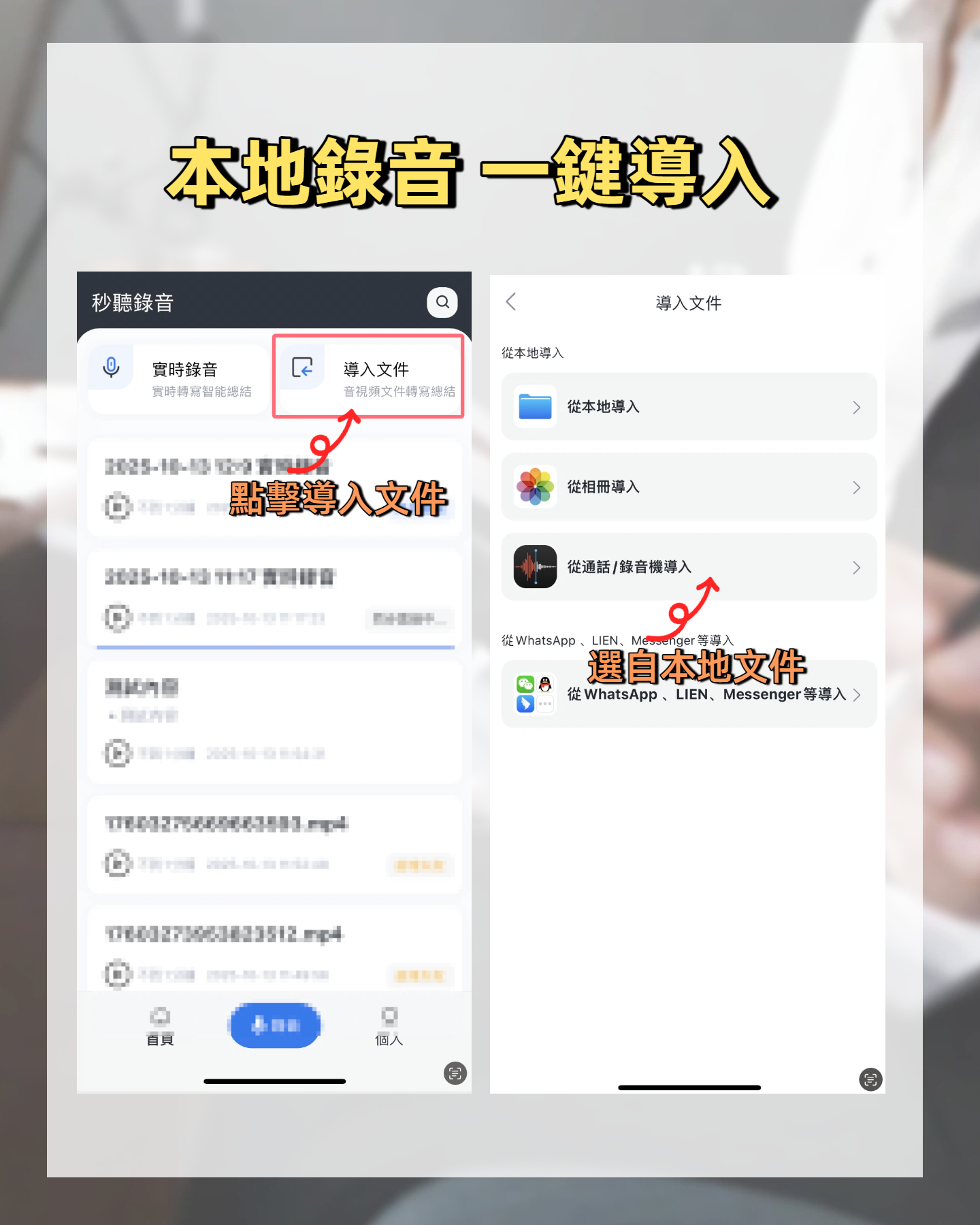
Plaud Note's positioning is "capturing live audio," so it mainly handles audio files recorded by the hardware. For uploading other files or parsing online videos, you need to rely on the phone app, which involves more steps.
Tinrec natively supports three input methods: live recording, uploading audio/video files, and pasting online video links. Whether it's a recording from a colleague or organizing a YouTube public lecture, everything can be done within the same interface.
→ This dimension: Tinrec offers a much wider range of inputs, ideal for those dealing with multiple source types.
Dimension 5|Long-Term Cost
Many people overlook the hidden cost of "buying hardware + subscription."
Plaud Note's hardware costs about US$179 upfront, and comes with a free monthly transcription quota of 300 minutes. If you only record a couple of hours a month, that might suffice. But for frequent transcription needs, you'd need to subscribe at US$99.99/year (1,200 minutes/month) or US$239.99/year (unlimited minutes), which adds up over time.
Tinrec requires no additional hardware purchase. The free version has a basic transcription quota to start. If your usage increases, you can choose weekly, monthly Pro, or yearly plans as needed—no hardware commitment. Plus, you can always record with your phone without worrying about forgetting a recorder.
→ This dimension: For most light to moderate users, Tinrec offers more flexible total costs.
What Are the Unique Advantages?
Tinrec's Unique Advantages
- Cross-platform + multi-source input: Works on phone, computer, and web, handling recordings, files, and online videos in one go.
- AI Query: Not just summaries, but detailed Q&A on content—find key points without listening through everything.
- No extra device to carry: Use your phone for high-quality recording and transcription, ready for any situation.
Plaud Note's Unique Advantages
- One-tap start, intuitive recording: Ideal for frequent, quick recording needs, such as for journalists or field sales.
- Independent battery life: Doesn't drain your phone battery—great for long meetings or all-day outings.
Conclusion: Which One Should You Choose?
- If you need high Cantonese transcription accuracy and often encounter Chinese-English mixes → Tinrec (error rate 8.3% vs 12.1%)
- If you prefer recording on phone and organizing on computer without extra file transfers → Tinrec
- If you want to ask AI for key points after recording, or even generate reports from recordings → Tinrec
- If you often organize online videos or audio files from others in addition to your own recordings → Tinrec
- If you only want a simple standalone recorder for basic transcribing, with little need for AI Q&A or multi-source organization → Plaud Note will suffice
In a nutshell: For most people who need to organize meetings, courses, interviews, and video content, Tinrec offers more complete functionality and a friendlier long-term cost. Start with the free version and test with your own recordings—you'll feel the difference.
Frequently Asked Questions
Is Tinrec's free version enough?
The free version provides a basic monthly transcription quota, letting you experience live recording, file uploads, and online link parsing. For light use, it's sufficient. If you need longer minutes or advanced features like AI queries, consider the Pro plan.
Is Plaud Note's recording quality better than a phone?
Hardware recorders often have better microphone arrays and noise reduction, especially in multi-person meetings. However, modern flagship phones also have excellent recording quality. Paired with Tinrec's transcription engine, they are clear enough for daily meetings and interviews.
I already have Plaud Note—do I still need Tinrec?
If you often need to organize online videos, upload audio files from others, or quickly search recording content on a computer, Tinrec can fill in the gaps where Plaud Note is weaker. They can actually complement each other.
Which app is more accurate for mixed Mandarin and Cantonese recordings?
Tinrec has more thorough optimization for Chinese-English mixing and Cantonese, with a lower character error rate in our tests. However, it's best to test with your own recording environment.
Can Tinrec export subtitle files?
Yes, Tinrec supports multiple export formats including SRT, VTT subtitle files, as well as Word, PDF, and TXT.
Is it cost-effective to buy hardware for occasional transcription?
No. For occasional use, just download the free version of Tinrec—no need to spend extra on hardware.
Turn every recording into actionable outcomes
Get 60 free transcription minutes when you sign in. No credit card required.
Related Reading
You might also like

Tinrec Meeting Data Access Permissions Guide 2026: Role Authorization + Seat Management
When meeting data is seen by other departments or disappears when members leave, the problem usually stems from unclear permissions. This article starts with common misconceptions, breaks down Tinrec's team space, roles, seats, and audit mechanisms, and teaches you how to set up meeting data access so you control who can view, use, and edit. It also covers 5 purchasing considerations and FAQs.

How to Assign Project Meeting Tasks in 2026: 5 Steps from Meeting to Action Items
How do you assign project meeting tasks in 2026? This article compares Tinrec and PLAUD Note across five dimensions: meeting recording methods, action item extraction, post-meeting follow-up, export workflows, and cost, helping you determine which approach ensures tasks are truly assigned and progress is trackable.

2026 Cross-Departmental Meeting Collaboration Tools Compared: Which Saves More Time with Chinese Transcripts and Post-Meeting Action Items?
Cross-departmental project meetings often end with everyone interpreting things differently. This article starts with common pitfalls and outlines 4 key factors for choosing a cross-departmental meeting collaboration tool. It compares Tinrec, Granola, Notta, and Otter.ai in real tests, focusing on Chinese transcripts, post-meeting action items, and team knowledge retention, plus a guide to avoid pitfalls and selection advice.

Best Project Meeting Action Item Follow-Up Tools in 2026: We Tested 2, and This One Is Best for Chinese-Speaking Teams
The real breakdown in project meetings often happens after the meeting, not during it—specifically, in following up with action item owners. This article starts with common follow-up pitfalls, compares Tinrec and Otter.ai across 6 dimensions including action item extraction, Chinese-language meetings, team seats, and post-meeting deliverables, and summarizes pricing and FAQs to help you decide which tool better fits your project team.

Tinrec vs Notta 2026: 5-Dimension Comparison — Which Meeting Notes Tool Is Better for SMBs?
SMBs dread meetings that end without decisions, and post-meeting recording cleanup is time-consuming. This guide reviews 6 meeting notes tools — Tinrec, Otter, Notta, Fireflies, Granola, and TurboScribe — comparing Chinese language support, bot-free recording, AI Q&A, team collaboration, and pricing to help you find the best fit for your SMB.

2026 Comparison of 4 Meeting Knowledge Asset Tools: Which One Turns Meetings into Searchable Team Assets?
Meetings end and data scatters? This article uses 5 dimensions—capture method, audio retention, post-meeting output, team governance, and Chinese language experience—to compare Tinrec, Notta, Granola, and Otter.ai. It breaks down how to choose and avoid pitfalls for team meeting knowledge assets, and explains the difference between roles and seats.

2026 Team Meeting Transcription Tools Compared: Tinrec vs Otter.ai — Which Is Better for Chinese-Speaking Teams?
Choosing between Tinrec and Otter.ai for team meeting notes in 2026? This hands-on comparison focuses on Chinese-language meeting scenarios common in Taiwan-based teams, evaluating five dimensions: Chinese transcription, bot-free recording, post-meeting AI organization, team data ownership, and trial barriers. We break down each tool's unique strengths and ideal users to help you find the best meeting transcription tool for your team.

How to Manage Team Meeting Data in 2026: 5 Steps from Recording to Team Knowledge Base
Team meeting data often ends up scattered across personal computers and chat logs. This article uses Tinrec and PLAUD Note as examples to compare team meeting data management tools across 5 dimensions: meeting capture methods, team spaces and governance, AI post-meeting organization, cross-platform flexibility, and pricing. It also includes FAQs to help you find the right meeting notes and knowledge retention solution for your team.

How to Take Multi-Person Meeting Notes in 2026: 5 Steps from Recording to AI Summary
The pain point of multi-person meeting notes is never typing speed—it's the lack of manpower to organize afterward. This article addresses three common misconceptions, breaks down the core capabilities a multi-person meeting notes tool should have, a 5-step implementation process, purchasing checkpoints, and FAQs. It uses Tinrec as an example to demonstrate the complete workflow from recording, transcription, to AI summaries and action items.