
Turn recordings into transcripts and summaries in minutes
Upload audio or video for multilingual transcription, AI notes, and action items
Facing lengthy YouTube educational videos or interviews that can last tens of minutes, do you often feel "it takes too long to watch everything" but fear missing key points? Or do you want to turn video content into an article but dread manually typing out a transcript?
Don't worry—this article will break down the most mainstream solutions for converting YouTube URLs directly into text. We'll compare them across dimensions like "feature completeness," "ease of use," and "language support," and provide detailed step-by-step tutorials.
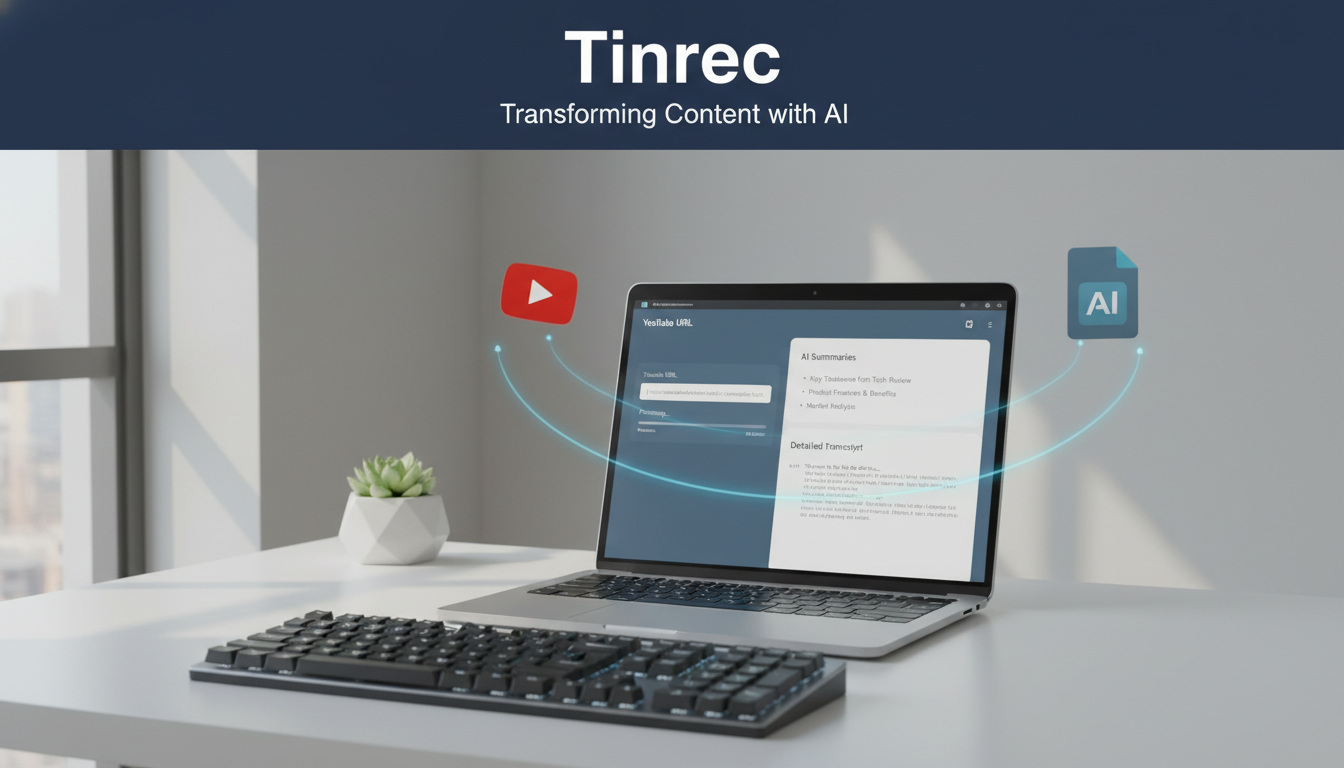
Quick Conclusion:
- If you only need plain subtitle text: Use a free web-based tool (e.g., YouTube Transcript).
- If you need AI summaries, conversational queries, or cross-platform syncing: Go with an integrated AI recording notes tool (e.g., Tinrec Instant Recording).
Next, we'll dive into a comparison of these tools and show you how to turn videos into notes as fast as possible.
1. Why Do You Need a "Video URL to Text" Tool?
In the age of information overload, videos are vivid but often have lower "information density" than text. Converting a YouTube video link directly into a transcript addresses three major pain points:
- Save time: No need to spend an hour watching—scanning the text in 5 minutes gives you the core content.
- Easier search and citation: You can't Ctrl+F video content, but text makes learning notes or work references much more precise.
- Overcome language barriers: For English or other foreign-language videos without Chinese subtitles, transcribing and translating through tools significantly lowers the comprehension threshold.
2. Tool Comparison: Free Web Tools vs. Professional AI Note Software
Current solutions mainly fall into "combo free tools" and "all-in-one AI software." We compare the common method of using "YouTube Transcript + ChatGPT" with the professional tool "Tinrec":
| Dimension | YouTube Transcript + ChatGPT (Combo) | Tinrec (Instant Recording) |
|---|---|---|
| Main Features | Extract existing captions + manually paste into AI to organize | URL parsing, transcription, AI summary, action item extraction |
| Workflow | Cumbersome (copy link -> grab captions -> copy text -> open AI -> paste -> give commands) | Simple (copy link -> paste -> automatic completion) |
| Videos Without Captions | Not usable (depends on built-in captions) | Usable (has ASR speech recognition to directly hear and transcribe) |
| Language Support | Depends on the video's original captions | Auto-detects 10 languages including Chinese, English, Japanese, Korean, etc. |
| AI Interaction | Must manually switch to ChatGPT window | Built-in AI conversational query—can ask questions directly about the content |
| Mobile Experience | Inconvenient on phone | Supports iOS/Android apps and web sync |
| Use Cases | Occasional use, budget-limited students | Professionals and creators who frequently organize information |
Stop organizing recordings by hand
Upload audio or video and automatically get a transcript, summary, and action items
3. In-Depth Analysis: Tinrec's Advantages in Video-to-Text
Among many tools, Tinrec (Instant Recording) stands out as a candidate solution because its core advantage is integrating "transcription" and "comprehension" into a single workflow. It not only converts audio to text but also focuses on subsequent applications.
1. Supports Videos Without Captions and Multiple Languages
Many free tools can only grab YouTube's built-in CC captions; if the creator hasn't uploaded captions, they're unusable. Tinrec uses speech recognition technology to "hear" the content and transcribe it even if the video has no captions at all. It supports 10 languages including Chinese, English, and Japanese, making it suitable for overseas tech tutorials or interviews.
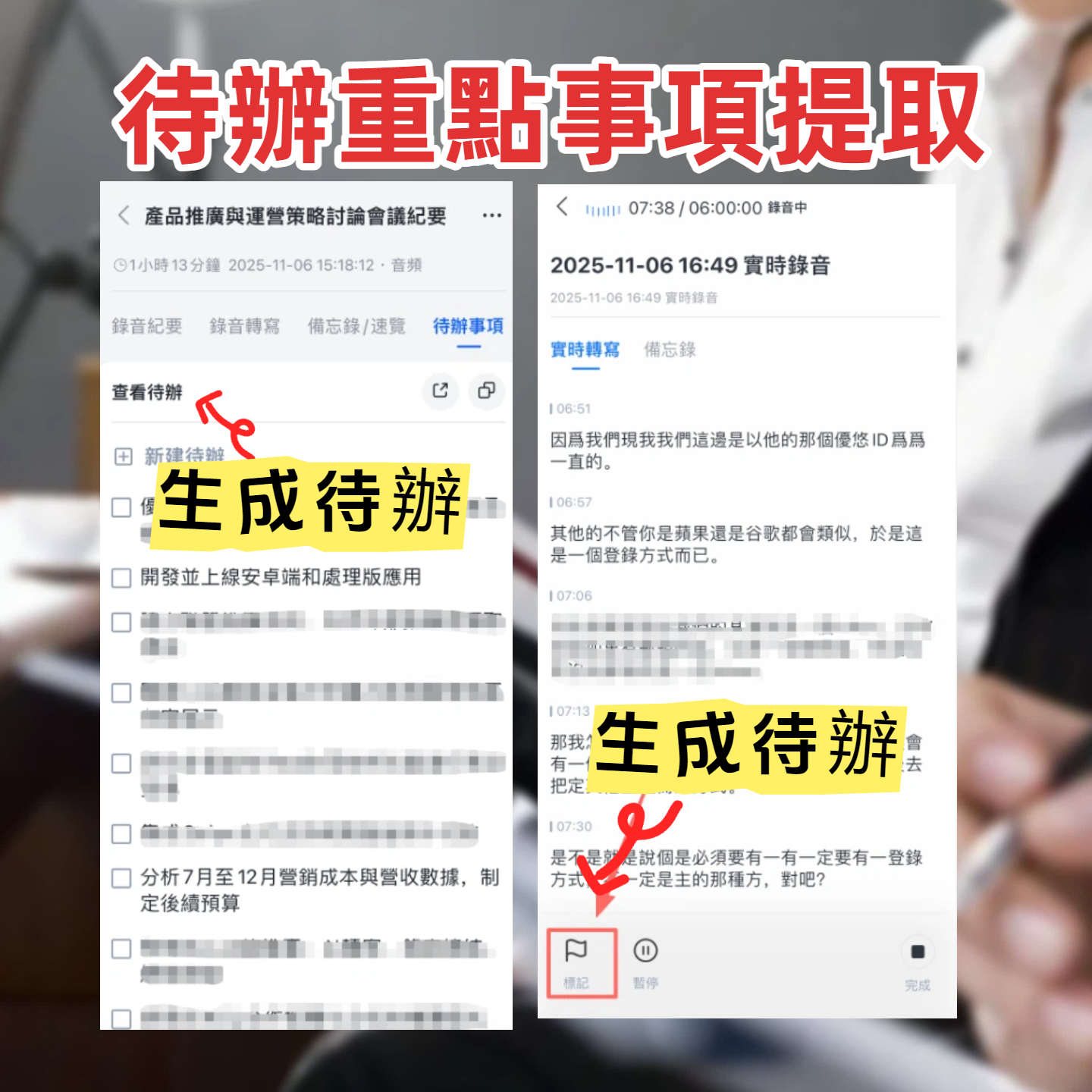
2. Complete Structure from Summary to Action
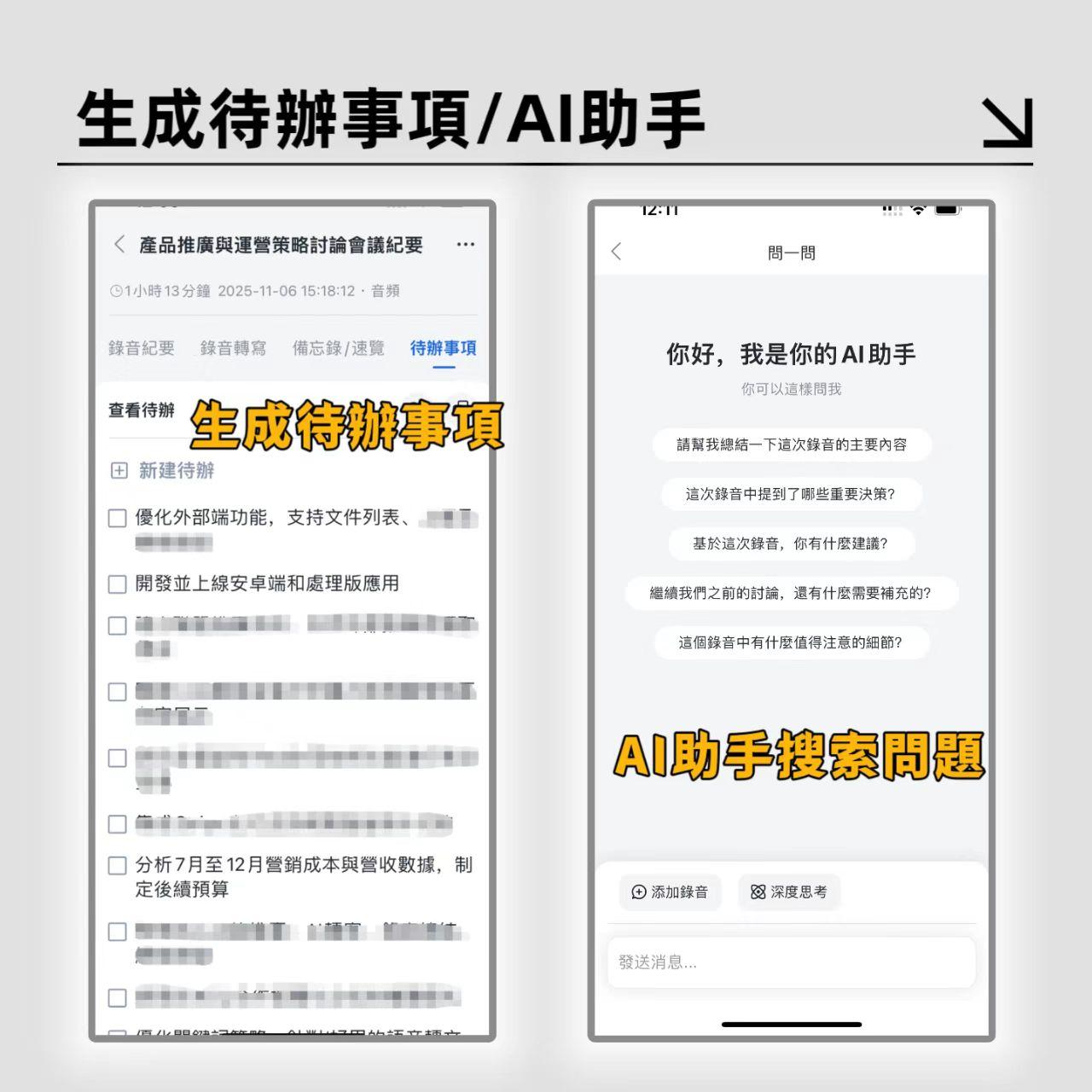
Raw transcripts are often too long and hard to read. Tinrec automatically generates a "smart summary," "chapter sections," and "to-do action items," letting users get conclusions directly.
3. AI Conversational Query: Treat the Video Like an Encyclopedia
This is the biggest differentiator from traditional tools. You can ask questions about the video content as if talking to someone. For example, "What are the three marketing strategies mentioned in this video?" Tinrec will give precise answers based on the audio content, saving manual searching.
4. Practical Tutorial: How to Turn YouTube Videos into High-Quality Notes
Here are two implementation paths for different needs—choose based on frequency and depth.
Method 1: Free Combo (For Occasional Students)
If you don't want to register and the video already has captions, follow these steps:
- Open the YouTube Transcript website.
- Paste the YouTube video URL and click to generate captions.
- Copy the generated full caption text.
- Open ChatGPT or another AI tool, paste the text, and enter the command: "Please translate the following into Chinese and organize the key points into a bullet list."
Note: This method only works for videos with existing captions, and it involves many steps.

Method 2: One-Click Generation with Tinrec (For Frequent Users)
If you need to handle videos without captions or want synced management across phone and computer, follow Tinrec's process:
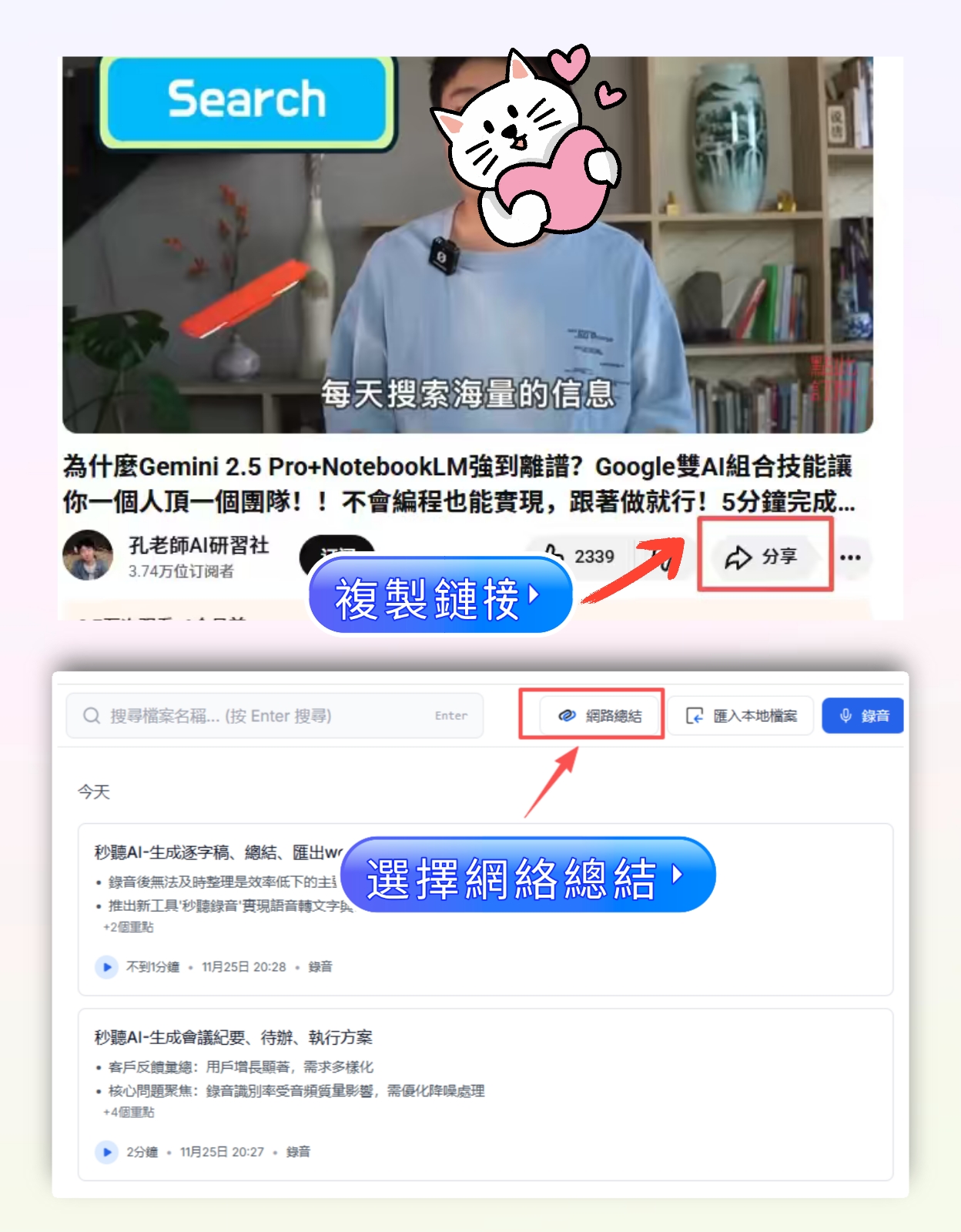
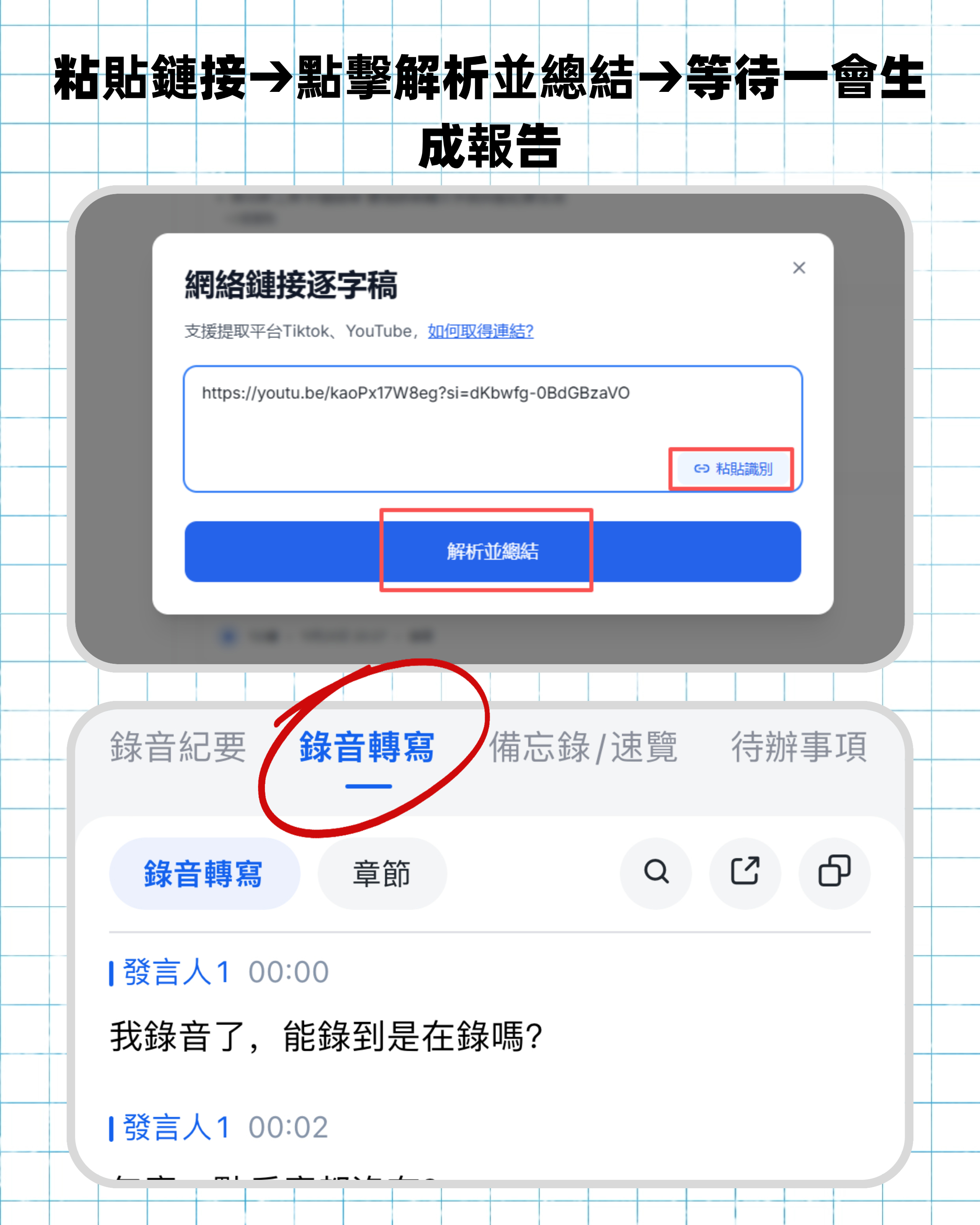
- Copy Link: On YouTube, copy the URL of the video you want to organize.
- Paste Link:
- Log into Tinrec's web version or app.
- Select the "Podcast/Online Video to Text" feature.
- Paste the URL into the input box.
- Wait for Parsing: The system automatically downloads the audio and performs speech recognition transcription.
- View and Interact:
- Get the complete transcript (with speaker differentiation).
- Read the auto-generated AI summary and mind map.
- Use the AI chatbox on the right to ask questions and quickly find information.
5. FAQ
Q1: Can these tools work if the YouTube video has no captions (CC)? If you're using a site like YouTube Transcript that grabs captions, it won't work. But if you use a tool with ASR (speech recognition) technology like Tinrec, it directly recognizes the audio, so it can transcribe even without captions.
Q2: Can I operate on my phone? Yes. Most web-based tools are inconvenient on mobile browsers (copy-paste is tricky). It's recommended to use a multi-platform app (like Tinrec's iOS/Android versions), where you can share the link directly from the YouTube app, providing a much smoother experience.
Q3: Can the generated transcript be exported? It depends on the tool's features. Professional tools usually support exporting as TXT, Word, or PDF for easy editing into articles or reports.
Q4: How accurate is the recognition for videos mixing Chinese and English? For pure caption-grabbing tools, accuracy depends on the uploader. AI recognition tools like Tinrec support multilingual recognition and usually achieve good accuracy for common workplace Chinese-English mixes, though a quick manual proofread after transcription is recommended.
Q5: Does video-to-text take a long time? It depends on video length. Typically, AI tools process at about 1/5 to 1/10 of the video duration (e.g., a 10-minute video takes about 1–2 minutes).
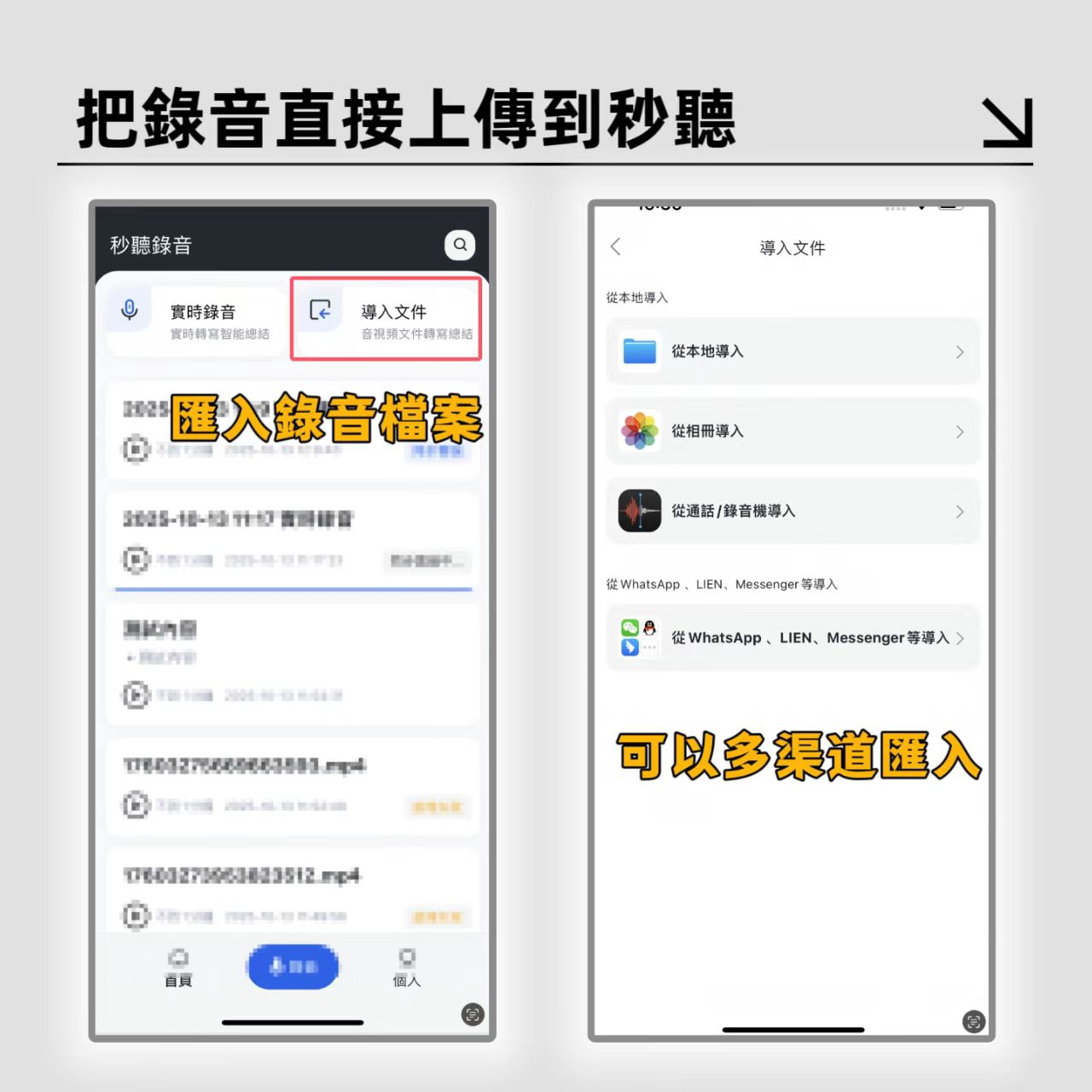
Q6: Besides YouTube, does it support other platforms? Some tools like Tinrec also support podcast links or uploading local audio/video files (mp3, mp4, etc.), which is very convenient for organizing interview recordings or online course files.
Turn every recording into actionable outcomes
Get 60 free transcription minutes when you sign in. No credit card required.
Related Reading
You might also like
5 Best Speech-to-Text Tools in 2026: From Free to Team Collaboration, Tinrec Is the Top Pick
How do you choose a speech-to-text tool? This article compares 5 tools including Tinrec, Otter.ai, and Notta, covering free quotas, bot-free meeting recording, AI summaries and Q&A, and team spaces, to help you find the best meeting notes and transcription solution.

Tinrec vs Notta in 2026: A 5-Dimension Comparison to Help You Choose
How to choose an online audio-to-text tool? This article compares Tinrec and Notta across 5 key dimensions, from meeting capture, post-processing, team management to Chinese language experience, helping you find the best AI transcription solution.

Tinrec vs Notta 2026: 4-Dimension Comparison for Online Meeting Transcription
A middle manager's hands-on test: How to choose an online meeting transcription tool? From bot-free recording, AI summaries, Chinese accuracy to team collaboration, real meeting scenarios show why Tinrec is better suited for professionals.

2026 Free Speech-to-Text Solutions: 5 Tools Compared
This article tests 5 free speech-to-text tools, from Tinrec to MyEdit and NotebookLM, comparing free quotas, transcription quality, and post-processing features to help you find the truly worthwhile option.

2026 Free AI Speech-to-Text Tools Compared: Why Tinrec Is the Best Fit for You?
After testing several free AI speech-to-text tools, we found that not all free versions are sufficient. This article focuses on Tinrec, examining its free tier limits, features, and real-world experience to help you choose the most time-saving solution.

5 Best Recording-to-Text Software in 2026: Is the Free Version Enough? This One Surprised Us
We tested 5 free recording-to-text apps, evaluating transcription quality, AI summarization, cross-platform support, and free-tier limits to find the truly useful options. Tinrec not only converts speech to text but also offers automatic summaries, Q&A, and team collaboration—all available in the free version.

2026 Tested: 5 Speech-to-Text Tools Compared – Tinrec Best for Hong Kong Professionals
After testing multiple speech-to-text tools, Tinrec stands out with bot-free recording, Chinese meeting summaries, and team collaboration. See why it's the best time-saver for Hong Kong professionals.

How to Choose a Free Speech-to-Text Tool in 2026: A 5-Step Practical Guide
We tested multiple free speech-to-text tools, covering common pitfalls, key selection criteria, and tips to avoid mistakes. This 5-step guide helps you find the best AI transcription solution for Chinese, with an in-depth look at Tinrec (Miao Ting Lu Yin)'s free and paid features.

4 iPhone Voice-to-Text Apps Tested in 2026: Is Apple's Free Built-in Enough?
We tested 4 voice-to-text solutions for iPhone, from Apple's free built-in Voice Memos to Tinrec and others, comparing accuracy, AI features, and cross-platform support to help you save time on meeting notes.