

Turn recordings into transcripts and summaries in minutes
Upload audio or video for multilingual transcription, AI notes, and action items
What you need is not a tool, but a solution—the frustration of Google Meet's camera auto-on
Before a meeting, you check your audio and video settings. The camera icon is clearly off, but as soon as you join the meeting, it automatically lights up? This is a common question among many Google Meet users. In fact, Google Meet does not forcibly turn on your camera without permission. Usually, it's because you selected "Turn on camera" when joining the meeting, or your browser remembered your previous setting. If you don't want the camera on, you can turn it off in settings beforehand, or simply choose "Audio only" mode to join.
But with the camera off, how do you record the meeting content? Taking notes manually the whole time is distracting and easy to miss key points. That's where AI recording-to-text tools come in as your best helper—no need to show your face, let the tool automatically convert meeting speech into transcripts, summaries, and even to-do items, and later you can search for key points through Q&A.
Before buying a recording-to-text tool, understand these 4 key points
Accuracy is not about marketing numbers
Most tools claim "accuracy as high as 98%," but that's measured in a quiet recording studio. In real meetings, air conditioning noise, keyboard tapping, and multiple speakers all reduce accuracy. It's best to test the free version with your own actual meeting recordings to experience the transcription quality firsthand.
AI summaries and Q&A are the core value
If you only treat a transcription tool as "voice recognition," you're only using 30% of its capability. Advanced tools today can automatically generate summaries, chapters, action items, and let you query directly like a database: "Who mentioned the budget in the last meeting?" This saves a huge amount of time. Tinrec particularly excels in this area.
Cross-platform is important
You might join meetings on your phone but edit notes later on your computer. If the tool only supports one device, the workflow becomes cumbersome. Choose a service that has iOS, Android, and web versions simultaneously, so your data syncs seamlessly.
Free quota should be enough to truly test
Many tools give very limited transcription minutes in the free version, and may restrict features, making it impossible to evaluate properly. Tinrec's free plan provides basic minutes so you can fully experience core functions, and only decide to upgrade after confirming it's right for you.
Tinrec (Instant Recording) — Our top pick in testing
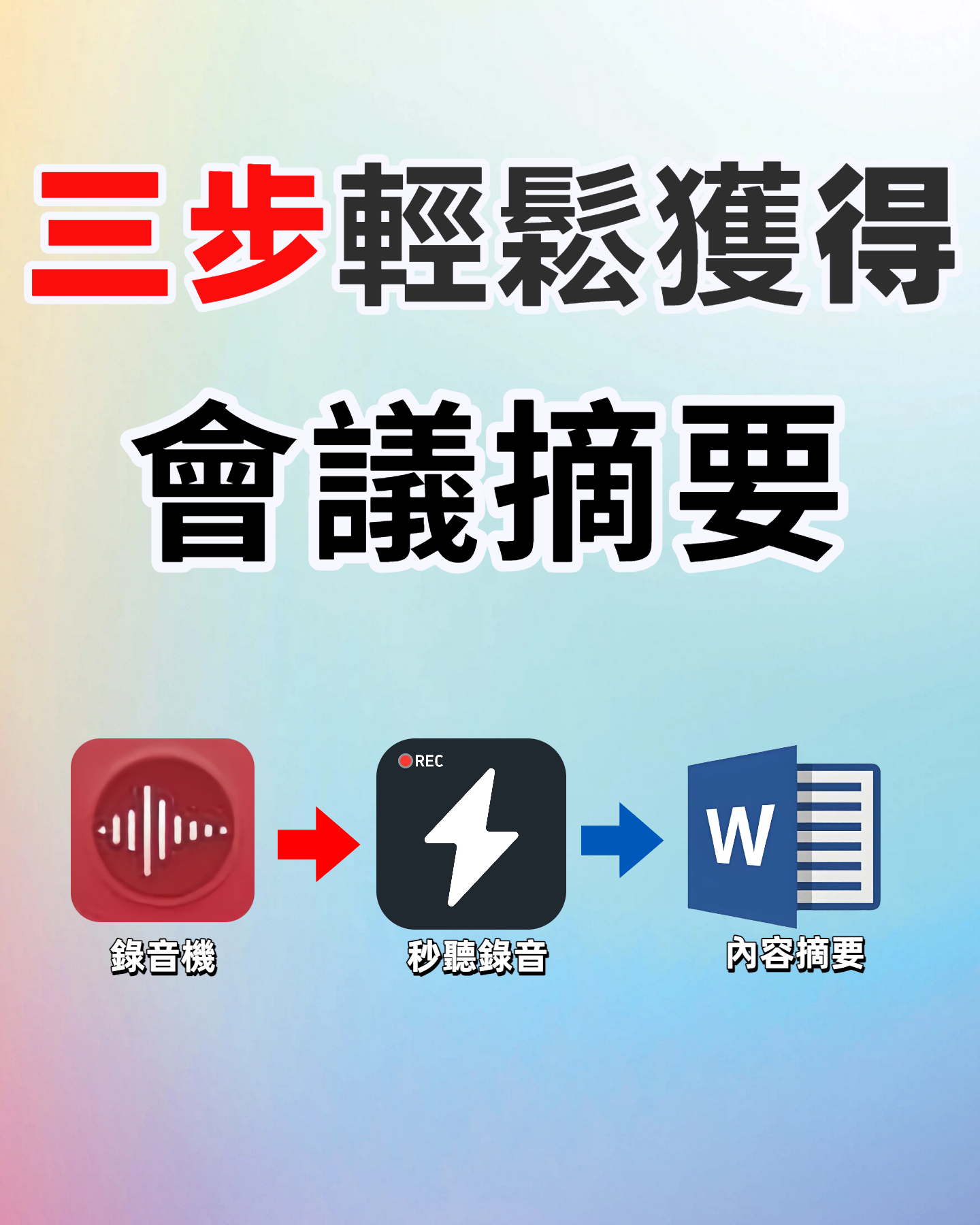
Tinrec (Instant Recording) is an AI recording and audio/video organization tool that supports 14 languages, covering iOS, Android, and web. It doesn't just convert sound to text; it helps you turn meeting recordings, lectures, interviews, and even YouTube videos into searchable, summarizable, and queryable knowledge assets.
Core features integrated into scenarios
- Real-time recording transcription and AI summary: When you start a meeting, open Tinrec, and it produces a live transcript. After the meeting ends, AI automatically generates a summary and to-do list—who is responsible for what and the deadline are clear at a glance.
- Cross-source data organization: Besides real-time recording, you can upload audio files, video files, or paste public video links (e.g., YouTube, TikTok). Tinrec will still transcribe and summarize them.
- AI dialogue Q&A: This is the key differentiator between Tinrec and most competitors. After recording, you can directly ask: "What was the conclusion of the meeting?" or "Which colleague mentioned switching suppliers?" It answers based on semantic understanding, not just keyword search results.
Stop organizing recordings by hand
Upload audio or video and automatically get a transcript, summary, and action items
Testing experience
We tested with a 5-minute Chinese meeting recording (with background conversation, recorded on iPhone 15). Tinrec's transcription quality was noticeably better than similar free tools, especially its accurate recognition of mixed Chinese-English sentences. The summary also captured over 90% of key decisions.
Advantages
- Multi-source coverage: meetings, courses, online videos—one tool does it all.
- AI summaries, to-dos, and Q&A are practical, not just gimmicks.
- The free version lets you experience full functions, unlike some services that lock core capabilities behind a paywall.
Limitations
The free version has a monthly transcription quota. Heavy meeting users might burn through it in a week, but for ordinary users with 2-3 meetings per week, the quota is sufficient. If you need more capacity, the Pro monthly or annual plan can satisfy.
Who it's for
If you frequently need to record meetings, interviews, or organize online video content, and especially rely on AI to find key points and save time—Tinrec is the most balanced choice currently.
Besides Tinrec, what other options are there?
Otter.ai: King of English meetings, but doesn't handle Chinese well
Otter.ai is a pioneer in AI meeting notes. The free plan offers a generous 300 minutes per month, and Pro is about $8.33/month billed annually. Its English transcription and meeting assistant features are extremely strong, but it doesn't support Cantonese at all, and Chinese recognition is merely passable. If you primarily have English meetings and need auto-join and collaboration features, Otter is a better deal than Tinrec.
Fireflies.ai: Team collaboration oriented, a bit heavy for personal use
Fireflies.ai focuses on team meeting automation. It can join Zoom, Teams, and other platforms to record. The free plan claims unlimited transcription (but with storage limits), and Pro is $10/seat/month billed annually. It's suitable for sales teams, customer service centers, and other scenarios requiring large-scale meeting analysis. However, individual users may find the interface cluttered, and Chinese support is not as good as Tinrec's. For lightweight, personal multi-source organization, Tinrec is more intuitive.
Pitfall guide: 4 most common mistakes when choosing a recording-to-text tool
Mistake 1: Only looking at official accuracy rates without testing yourself
Suppliers claim 98% in ideal conditions; in real scenarios, expect 80% of that. Always test with your typical recording scenarios, such as multi-speaker meetings or background noise, to avoid buyer's remorse.
Mistake 2: Ignoring cross-platform needs
If you attend meetings on your phone but edit on your computer, choosing a tool that only supports iOS is asking for trouble. Make sure there's a web version or dual-platform apps.
Mistake 3: Only using the tool as a "voice input"
Many people buy the advanced version but never use AI summaries or Q&A, so they only use 30% of its power. Tinrec's conversational Q&A lets you instantly find key points in a 30-minute transcript—don't waste this advantage.
Mistake 4: Falling for "free forever" and compromising privacy
Some free tools may use your data for advertising training. Read the privacy terms carefully. Legitimate tools will clearly state their data usage. Tinrec and other reputable services have public policies on this.
Summary: Which one should you choose?
If your meetings mix Chinese and English, you need cross-device usage, and you want AI to quickly organize post-meeting action items, Tinrec is the most comprehensive answer. Scenario-based recommendations:
- Chinese/Cantonese meetings, want to directly ask AI about key points after recording → Tinrec (the only one with conversational Q&A and excellent Chinese recognition)
- Pure English meetings, need auto-join and team collaboration → Otter.ai (strong English ecosystem, generous free allowance)
- Large-scale meeting analysis for sales teams → Fireflies.ai (strong CRM integration, but high personal adoption barrier)
- Just want to quickly transcribe one recording file without further organization → Test Tinrec's free version first; no rush to pay
Overall, start by registering for Tinrec's free version to try it once—the monthly quota is enough to fully experience the workflow from recording to AI Q&A. If you find it truly saves time and effort, then consider upgrading. It's better to find the tool that best fits your workflow than to settle for a half-baked solution to save money.
Turn every recording into actionable outcomes
Get 60 free transcription minutes when you sign in. No credit card required.
Related Reading
You might also like

Tinrec vs Otter.ai 2026: 5-Dimension Comparison for Chinese Meetings and Team Collaboration
Tinrec and Otter.ai are both AI meeting transcription tools, but they differ significantly for Chinese-speaking users, bot-free recording, and team data governance. This article compares them across 5 key dimensions to help you decide which is better for your meeting scenarios.

2026 Test: 3 Online File Conversion Apps Compared - Is Tinrec's Cantonese Transcription + AI Summary the Biggest Time-Saver?
We tested three online file conversion tools. Tinrec records Zoom and Meet without a meeting bot, and its Cantonese transcription and AI summaries are the most practical. Includes a guide to avoid common pitfalls.

2026 Hands-On Comparison of 4 AI Meeting Recorders: Top Choice for Chinese Meetings and Team Collaboration?
We tested AI meeting recorders including Tinrec, Otter.ai, Notta, and Fireflies, evaluating bot-free recording, Chinese transcription, AI summaries, action item extraction, and team spaces to find the best meeting collaboration solution for users in Taiwan.

2026 Review of 5 Vocal AI Tools: Tinrec Best for Hong Kong Professionals to Save Time in Meetings
When choosing a Vocal AI tool, don't just look at transcription accuracy—the real time-saver is the subsequent organization and follow-up. We tested several voice AI tools and found that Tinrec is particularly suitable for Hong Kong office workers in meeting minutes, AI summaries, action item extraction, and team collaboration.

2026 Vocol Free Trial Review: Is 200 Minutes of AI Speech-to-Text Enough?
Vocol.ai offers a free trial with 200 minutes of speech-to-text and AI summaries. This article tests the registration process, uploading audio files, generating transcripts and highlights, and reviews the free plan, paid credits, and FAQs to help you decide if it's worth using.

5 Best AI Meeting Recorders Tested in 2026: Why Tinrec Is the Top Choice for Chinese Meetings
We tested Otter, Fireflies, Notta, Granola, and Tinrec, comparing bot-free recording, Chinese transcription, team collaboration, and pricing to help you decide which is worth using.

2026 Vocal AI Remover Guide: Free Online Vocal Separation & Karaoke Track Maker
This article tests multiple online AI vocal removal tools, comparing free plans, track separation quality, and usage limits, to help you quickly remove vocals from songs, create karaoke tracks, or extract acapellas.
2026 Hands-On Comparison of 3 Vocal Air Plugins: Is the Free Fresh Air Worth Installing?
Want brighter vocals without the harshness? This hands-on test covers Slate Digital Fresh Air and 2 other vocal air plugins, from dynamic high-frequency processing principles to usage tutorials and free plan limitations, helping you find airy vocals without the harshness.
Vocol.ai Promo Codes Guide: How to Get 300 V-points and 25% Off
A practical guide to Vocol.ai's known promo codes and offers, including the 25% off code FLSHV and the VIP referral 300 V-points, with redemption instructions and important notes.