

Turn recordings into transcripts and summaries in minutes
Upload audio or video for multilingual transcription, AI notes, and action items
Last semester, I took a class where the professor required meeting minutes for every weekly group discussion. We used Google Meet for our meetings, thinking we'd just use the built-in recording and transcription features. But one day, it suddenly glitched and the entire transcript vanished. That week's minutes were gone, and everyone in the group was devastated. From that day on, I started looking for a more reliable backup solution. Eventually, I discovered Tinrec—it's not just a backup; it boosted my meeting organization efficiency several notches.
Why Are People Looking for Alternatives to Google Meet's Built-in Recording?
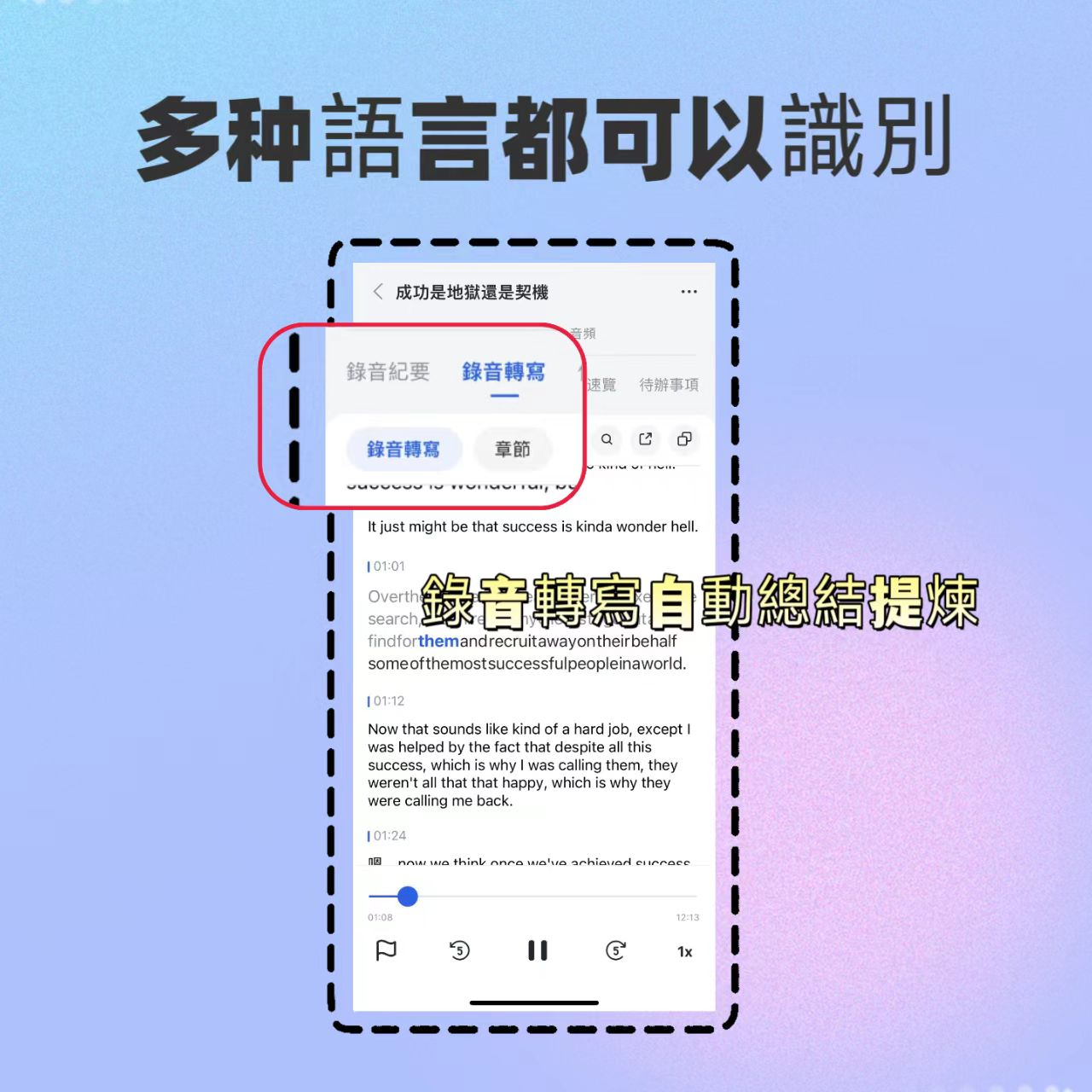
Google Meet's built-in recording and auto-captioning are convenient and a go-to for many students. However, in practice, you might run into a few annoyances: recordings require extra storage, captions only work well for English or a few languages, and there's no summary or action items generated after the meeting—you have to re-listen and rewrite everything. Not to mention occasional service hiccups that wipe out entire recordings—just like what happened to my group meeting. If you also find Google Meet's recording unreliable or wish you could get organized notes right after a meeting, Tinrec is worth checking out.
Tinrec vs Google Meet Built-in Recording: What's the Core Difference?
Language Support and Accuracy
Class discussions often mix Chinese and English. Google Meet's captions sometimes struggle with Chinese, and technical terms are often completely off. Tinrec's recognition of Chinese and mixed-language speech is noticeably more reliable. I tested the same discussion, and Tinrec's transcript required almost no editing—it even caught terms like "machine learning" and "regression analysis."
Depth of Organization
After a meeting, Google Meet only gives you a recording file and a rough transcript. You then have to listen, type, and extract key points yourself. Tinrec, on the other hand, generates a summary, chapters, and action items directly after recording. Now I only need three minutes to review after a meeting, and the conclusions and task assignments are all clear—weekly reports are basically copy-paste.
Cross-Platform and Searchability
Google Meet's recording is tied to that single meeting, making it a pain to find a specific quote later. Tinrec stores all recordings in one account, and I can use AI-powered Q&A to search past meetings. For example, "Who said they'd handle the survey last time?"—the answer pops up in a second. It also works on phone, computer, and web, so I can organize notes on the subway using my phone.
Stop organizing recordings by hand
Upload audio or video and automatically get a transcript, summary, and action items
Free Plan Flexibility
Google Meet is free, but advanced transcription features require upgrading to a Workspace plan. Tinrec's free version offers a monthly base allowance. For my two weekly discussions and one tutoring recording, it's just enough. If I need more, they have a weekly pass—which I bought during project crunch time, and it was much cheaper than upgrading my school account.
Key Features of Tinrec
Real-time Speech-to-Text: Open Tinrec, and text appears as you speak with less than a second delay. During class or meetings, I can confirm key points in real-time without having to type frantically.
AI Q&A Search: This is my favorite feature. After recording a one-hour meeting, I can simply ask "What's the conclusion?" or "Who needs to do what?" and it pulls answers from the transcript. When organizing group project discussion records at the end of the semester, this saved me at least five hours.
Online Video Analysis: Paste a YouTube or Bilibili link, and Tinrec instantly generates a transcript and summary. For documentary assignments in my general education class, I used it to extract key points and wrote my reflection papers super fast.
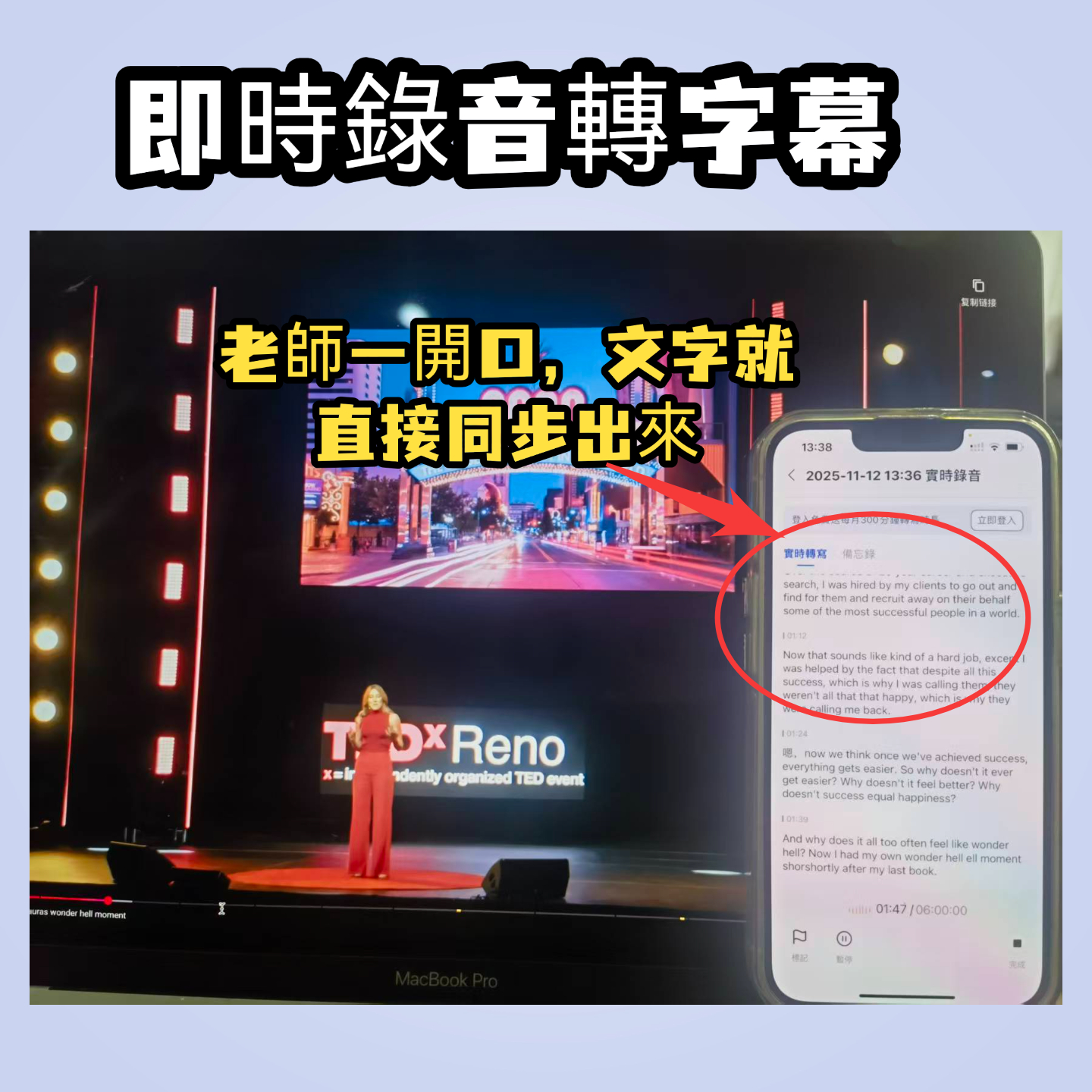
File-to-Text: Drop in recording files or interview audio shared by classmates, and it converts them to text with automatic chapter breaks. For my graduation project interviews, organizing recordings became a breeze.
Real-World Use Cases
Group Discussion Meetings: We meet weekly on Google Meet while running Tinrec to record. After the meeting, we receive a summary and action items, so everyone knows exactly what they need to do—no more "I thought you were handling that."
Class Recording and Notes: Can't keep up with a fast-talking professor? I record lectures with Tinrec, get condensed notes after class, and use AI Q&A to review confusing parts. Midterms and finals? I aced them using these notes.
Interview Research: For my project, I needed to interview industry professionals. Previously, I'd spend hours re-listening and transcribing. Now Tinrec converts interviews to text, and I use AI to extract key insights—the efficiency gain is massive for qualitative analysis.
Personal Learning Database: I save all my meetings, classes, and even educational videos from YouTube into Tinrec, creating a searchable database. Before exams, searching for "p-value" brings up all relevant clips for review.
What to Look for When Choosing a Speech-to-Text Tool
- Language Recognition: When choosing a tool, check its Chinese and mixed-language accuracy. I found Tinrec performs very well in Chinese contexts, especially with accents or technical terms—far better than typical meeting software's built-in features.
- Organization Features: Transcription is just the first step. Auto-summarization, action items, chapters, and Q&A are crucial. Tinrec delivers a complete package—after recording, I get a full set of usable materials.
- Cross-Platform and Cloud Storage: One device isn't enough. Tinrec works on phone, computer, and web, with all recordings stored in the cloud—perfect for students who need access everywhere.
- Free Plan Adequacy: Most students have limited budgets. Start with the free tier to test it out, and consider the weekly pass if you need more. Tinrec's free version handles regular classes and discussions well, and the weekly pass costs about as much as a drink.
Final Verdict: Is Tinrec Worth Trying?
If you've been burned by a Google Meet glitch like I have, or if you simply want meetings and class recordings automatically turned into useful notes and action items, Tinrec is a noticeable upgrade. Its Chinese recognition is accurate, organization features save time, and it works across platforms. I started using it after that recording disaster and now rely on it for all my group discussions and class notes. I recommend downloading the free version of Tinrec—it comes with a monthly base allowance—and testing it with your own recordings. That's more convincing than any review.
Turn every recording into actionable outcomes
Get 60 free transcription minutes when you sign in. No credit card required.
Related Reading
You might also like

Tinrec vs Otter.ai 2026: 5-Dimension Comparison for Chinese Meetings and Team Collaboration
Tinrec and Otter.ai are both AI meeting transcription tools, but they differ significantly for Chinese-speaking users, bot-free recording, and team data governance. This article compares them across 5 key dimensions to help you decide which is better for your meeting scenarios.

2026 Test: 3 Online File Conversion Apps Compared - Is Tinrec's Cantonese Transcription + AI Summary the Biggest Time-Saver?
We tested three online file conversion tools. Tinrec records Zoom and Meet without a meeting bot, and its Cantonese transcription and AI summaries are the most practical. Includes a guide to avoid common pitfalls.

2026 Hands-On Comparison of 4 AI Meeting Recorders: Top Choice for Chinese Meetings and Team Collaboration?
We tested AI meeting recorders including Tinrec, Otter.ai, Notta, and Fireflies, evaluating bot-free recording, Chinese transcription, AI summaries, action item extraction, and team spaces to find the best meeting collaboration solution for users in Taiwan.

2026 Review of 5 Vocal AI Tools: Tinrec Best for Hong Kong Professionals to Save Time in Meetings
When choosing a Vocal AI tool, don't just look at transcription accuracy—the real time-saver is the subsequent organization and follow-up. We tested several voice AI tools and found that Tinrec is particularly suitable for Hong Kong office workers in meeting minutes, AI summaries, action item extraction, and team collaboration.

2026 Vocol Free Trial Review: Is 200 Minutes of AI Speech-to-Text Enough?
Vocol.ai offers a free trial with 200 minutes of speech-to-text and AI summaries. This article tests the registration process, uploading audio files, generating transcripts and highlights, and reviews the free plan, paid credits, and FAQs to help you decide if it's worth using.

5 Best AI Meeting Recorders Tested in 2026: Why Tinrec Is the Top Choice for Chinese Meetings
We tested Otter, Fireflies, Notta, Granola, and Tinrec, comparing bot-free recording, Chinese transcription, team collaboration, and pricing to help you decide which is worth using.

2026 Vocal AI Remover Guide: Free Online Vocal Separation & Karaoke Track Maker
This article tests multiple online AI vocal removal tools, comparing free plans, track separation quality, and usage limits, to help you quickly remove vocals from songs, create karaoke tracks, or extract acapellas.
2026 Hands-On Comparison of 3 Vocal Air Plugins: Is the Free Fresh Air Worth Installing?
Want brighter vocals without the harshness? This hands-on test covers Slate Digital Fresh Air and 2 other vocal air plugins, from dynamic high-frequency processing principles to usage tutorials and free plan limitations, helping you find airy vocals without the harshness.
Vocol.ai Promo Codes Guide: How to Get 300 V-points and 25% Off
A practical guide to Vocol.ai's known promo codes and offers, including the 25% off code FLSHV and the VIP referral 300 V-points, with redemption instructions and important notes.