

Turn recordings into transcripts and summaries in minutes
Upload audio or video for multilingual transcription, AI notes, and action items
Sitting in a Two-Hour Meeting, Then Spending Another Two Hours Transcribing?
Struggling to jot down key points in a meeting while missing crucial discussion; recording an entire class only to have no time to relisten; interview audio files sitting in a folder, never transcribed. These are everyday pain points for many office workers, students, and researchers.
To make things worse, if the meeting mixes Taiwanese, English, or includes a surprise external guest, the accuracy of most transcription tools takes a direct hit.
If any of this sounds familiar, this article is for you. I spent two weeks testing four real-time speech-to-text tools that tout "live transcription" capabilities, comparing response speed, Chinese recognition, AI-powered post-processing, and whether the free plans are actually sufficient.
Before You Choose a Real-Time Speech-to-Text Tool, Get These Key Points Straight
Many tools claim to offer "live transcription," but real-world performance varies greatly. Instead of just scanning spec sheets, focus on these easy-to-overlook evaluation points.
It Must Handle More Than Just Chinese: Mixed Chinese-English and Local Usage
If you frequently deal with meetings that mix Chinese and English, or accented Chinese content (such as Taiwanese Mandarin or Cantonese from Hong Kong), simply supporting "Chinese" is not enough. Some tools' language models are weak with local terminology and mixed-language scenarios. In this test, I specifically simulated these real-world situations to see which tools truly understand.
What Can the Tool Do After It Transcribes?
This is a point many people overlook. If the tool only gives you a wall of text, you still have to hunt for key points and manually type action items—that just shifts the time from transcribing to reading. A good tool should automatically generate summaries, highlight key passages, and even let you "ask" the recording questions.
Is the Free Plan a "Trial" or "Good Enough"?
Many apps advertise a free tier, but only give you 30 minutes per month—not even enough for one meeting. If you have two or three meetings a week, a free plan with at least 100 minutes per month is the bare minimum. Also, watch out for apps that lock export functionality behind a paywall in the free version.
Cross-Device and Cross-Platform Support Is Basic, Not a Bonus
Most people record on their phones but prefer to organize text on a computer. If a tool only has a mobile app, or its web version is missing features, daily use quickly becomes frustrating. All four tools in this test support at least iOS, Android, and a web version, so the differences come down to sync speed and how smooth they are to use.
Tinrec (秒聽錄音) — Our Top Pick After Hands-On Testing
Tinrec (秒聽錄音) is an AI audio/video organization tool that covers live recording, audio file import, and online video transcription, supporting iOS, Android, and web, and offering a Traditional Chinese interface.
During two weeks of intensive testing, Tinrec consistently outperformed similar tools in live transcription speed and AI-powered post-processing. Below, I’ll walk you through real-world usage and test results to show you its strengths and limitations.
Instant Transcription for Meetings and Classes: Noticeably Fast Response
We started a live recording in a typical meeting room (about 40 dB of background noise, two-person conversation). Tinrec displayed text almost instantly as we spoke, with less than a second of lag. In a scenario dominated by Chinese with occasional English terms, the transcription was almost entirely error-free.
After the meeting, the AI had automatically generated a summary and action items. For example, when we simulated a discussion on "Q3 marketing budget allocation," Tinrec not only captured the conclusion but clearly listed each department’s budget adjustments and the responsible person, in a format you could paste directly into meeting minutes.
Ask the AI Directly After Recording, No More Ctrl+F Digging
This is the biggest differentiator between Tinrec and other tools. Most transcription tools only let you manually search for keywords. Tinrec has a built-in "AI Q&A" feature that lets you ask questions in Traditional Chinese, such as: "Who proposed switching suppliers at the last meeting?" It answers based on the semantic meaning of the recording, rather than just showing snippets containing the keywords.
For people who frequently need to revisit past meetings or organize research materials, the time saved is substantial. Currently, almost no competitor at the same price point offers this capability.
More Than Just Recording: Online Videos and Old Files Can Be Transcribed Too
In addition to live recording, Tinrec also supports uploading audio/video files and pasting public video links from platforms like YouTube and Bilibili for transcription. This is especially useful for content creators and anyone who needs to organize online courses. We pasted a 5-minute Chinese YouTube video, and it was transcribed in about 40 seconds, with automatic chapter segmentation.
Test Data and Conditions
- Test environment: iPhone 15, indoor noise around 40 dB, standard Chinese with 10% English terms
- 5-minute meeting recording, live transcription delay about 0.8–1.2 seconds
- Word accuracy over 96% from manual comparison (not in ultra-quiet lab conditions)
- A 5-minute YouTube video (clear narration) plus summary generation took about 42 seconds total
Stop organizing recordings by hand
Upload audio or video and automatically get a transcript, summary, and action items
Pros
- Strong recognition of mixed Chinese content: Handles Taiwanese Mandarin, mixed Chinese-English, and even light accents extremely well
- AI Q&A that actually works: Understands context instead of just searching, dramatically cutting the time to find key points
- Multiple input sources: Live recording, file upload, and online videos—all in one tool
Limitations
- The free plan offers 100 minutes of transcription per month, which may not be enough for heavy users, but it's sufficient for most office workers with 2–3 meetings per week
- The AI Q&A feature requires an internet connection and is unavailable offline
Who Is It Best For?
If you regularly need to organize Chinese meetings or course recordings, want to use AI to find key points and generate summaries after recording, and frequently switch between devices, Tinrec is currently the most well-rounded choice.
What Other Options Are There Besides Tinrec?
Of course, no single tool fits everyone. The three options below each have their strengths, but compared to Tinrec, they involve clear trade-offs.
Otter.ai: The Go-To for English Meetings, but It Falls Short for Chinese
Otter.ai is a flagship product for AI meeting notes. Its free plan is generous with 300 minutes per month, English transcription accuracy is high, and it can automatically join Zoom and Google Meet meetings. But the biggest problem is that it doesn't support Cantonese, and it's almost useless for Taiwanese users with mixed Chinese meetings or Taiwanese content. If your meetings are primarily in English, Otter.ai is worth considering; if you have any Chinese-language needs, go straight to Tinrec.
Notta: Solid Transcription Fundamentals, but Lacks AI Post-Processing
Notta's transcription speed and multilingual support are good, and its free plan's 120 minutes per month is reasonable. However, it lacks an AI Q&A feature like Tinrec's—after recording, you can only manually search for keywords or scroll through the transcript to find key points. There’s no convenient way to "ask" the recording. If you just need reliable transcription and don't rely on AI post-processing, Notta is worth a try; but for smarter post-processing, Tinrec’s AI chat search is clearly more practical.
Yating (雅婷逐字稿): A Taiwan-Native Tool, but With Gaps in Speed and Features
Yating (雅婷逐字稿) was developed by a Taiwanese team and focuses on Mandarin-Taiwanese transcription, with good recognition of local colloquialisms. However, in our tests, transcription speed was noticeably slower—we uploaded a 5-minute Chinese recording and waited nearly 8 minutes for it to finish (Tinrec and Notta both completed it within a minute). It also lacks AI Q&A or automatic summarization; after transcription, you get a plain transcript that you must organize manually. If you're on a tight budget and don't mind waiting, Yating can serve as a backup, but it's noticeably less efficient than Tinrec.
Pitfall Guide: Common Mistakes When Choosing a Real-Time Speech-to-Text Tool
Over the years of testing productivity tools, I've seen too many people buy something and end up not using it. Here are four pitfalls you should definitely avoid.
Pitfall 1: Trusting a Claimed "98% Accuracy"
Many tools tout high accuracy in lab environments, but with air conditioning hum, keyboard clicks, and multiple speakers in a real meeting room, those numbers will drop. The most accurate way to judge is to take your own audio files and sign up for a free trial, then see whether the transcription quality is acceptable to you.
Pitfall 2: Overlooking Cross-Platform and Sync Experience
Some people buy a mobile app only to find the web version is extremely bare-bones, or audio sync requires manual uploads and downloads. If you're used to recording on your phone and editing on your computer, definitely choose a tool like Tinrec that syncs seamlessly across iOS, Android, and web, or you'll give up on it before long.
Pitfall 3: Buying an AI Tool But Using It Only for Transcription
This is like buying a smartphone and only using it to make calls. Many transcription tools come with built-in summarization, keyword extraction, and even AI Q&A. Tinrec can even generate meeting minutes with a single click. If you treat it only as a "voice-to-text machine," you're wasting about 70% of its value.
Pitfall 4: Assuming the Free Plan Is Always Enough? Calculate Your Meeting Hours First
Free plan limits range from 30 to 300 minutes. Before downloading, check how many hours of meetings you've had in the past week. If your weekly meetings and classes total more than two hours, you need at least 200 minutes per month to be safe; otherwise, you'll run out mid-month and be forced to transcribe manually.
Conclusion: Which One Should You Choose?
After looking at the hands-on tests and comparisons above, if you're in the majority who need live transcription and deal primarily with Chinese content, Tinrec is the most balanced choice and best solves real-world pain points.
Based on different use cases, here are my recommendations:
- Chinese meetings/courses, want to see summaries and action items right after recording → Tinrec (high accuracy, most complete AI Q&A and summarization)
- Pure English business meetings, no Chinese support needed → Otter.ai (generous free plan, mature English ecosystem)
- Just need stable transcription, don't rely on AI post-processing, and can accept fewer features → Notta (solid transcription fundamentals, but weaker post-processing)
- Extremely limited budget, don't mind waiting, only deal with Mandarin/Taiwanese content → Yating (雅婷逐字稿) (strong local language recognition, but slow and lacks AI features)
Most people will inevitably deal with mixed Chinese-English, need to quickly find conclusions, and use multiple devices. I recommend starting with Tinrec's free version—the 100-minute monthly limit is enough to test its live transcription and AI features. If you like it, consider an upgrade; don't rush to pay upfront.
References
Turn every recording into actionable outcomes
Get 60 free transcription minutes when you sign in. No credit card required.
Related Reading
You might also like

2026 Hands-on Comparison of 4 Meeting Recording-to-Text Tools: Which One Turns Your Recordings into a Searchable Knowledge Base?
Meeting recordings, lecture notes, interview transcripts — you need more than just a raw transcript; you need an AI-powered workflow that actually saves you time. We tested four tools — Tinrec, Notta, Otter.ai, and TurboScribe — comparing transcription accuracy, AI summaries, multi-source support, and free plans to help you find the best fit.
![[Tutorial] 2026 Audio-to-Text: Tinrec's Auto Transcription + AI Meeting Minutes](https://record-img.tos-accelerate.volces.com/images/2026/08/03/1785759636931066662.png)
[Tutorial] 2026 Audio-to-Text: Tinrec's Auto Transcription + AI Meeting Minutes
Want to turn meeting recordings into text quickly and accurately? Tinrec, an AI audio organizing tool, offers real-time transcription, AI summaries, and automated meeting minutes to help you save on overtime. See the full tutorial and use cases!

2026 Hands-On Comparison of 3 Speech-to-Text Tools: More Than Transcription—AI Q&A Included
We tested three speech-to-text tools to help you choose the right AI assistant. These tools go beyond transcription—they auto-summarize, extract action items, and answer questions, turning recordings into truly usable information.

2026 AI Voice Note Tools Buying Guide: Hands-On Review of Tinrec and Plaud Note
Struggling to capture fleeting ideas or drowning in meeting recordings? We tested Tinrec and Plaud Note across five key dimensions—input methods, AI organization, Chinese language support, cost, and cross-platform usability—to help you choose the most time-saving AI voice note tool for your workflow.
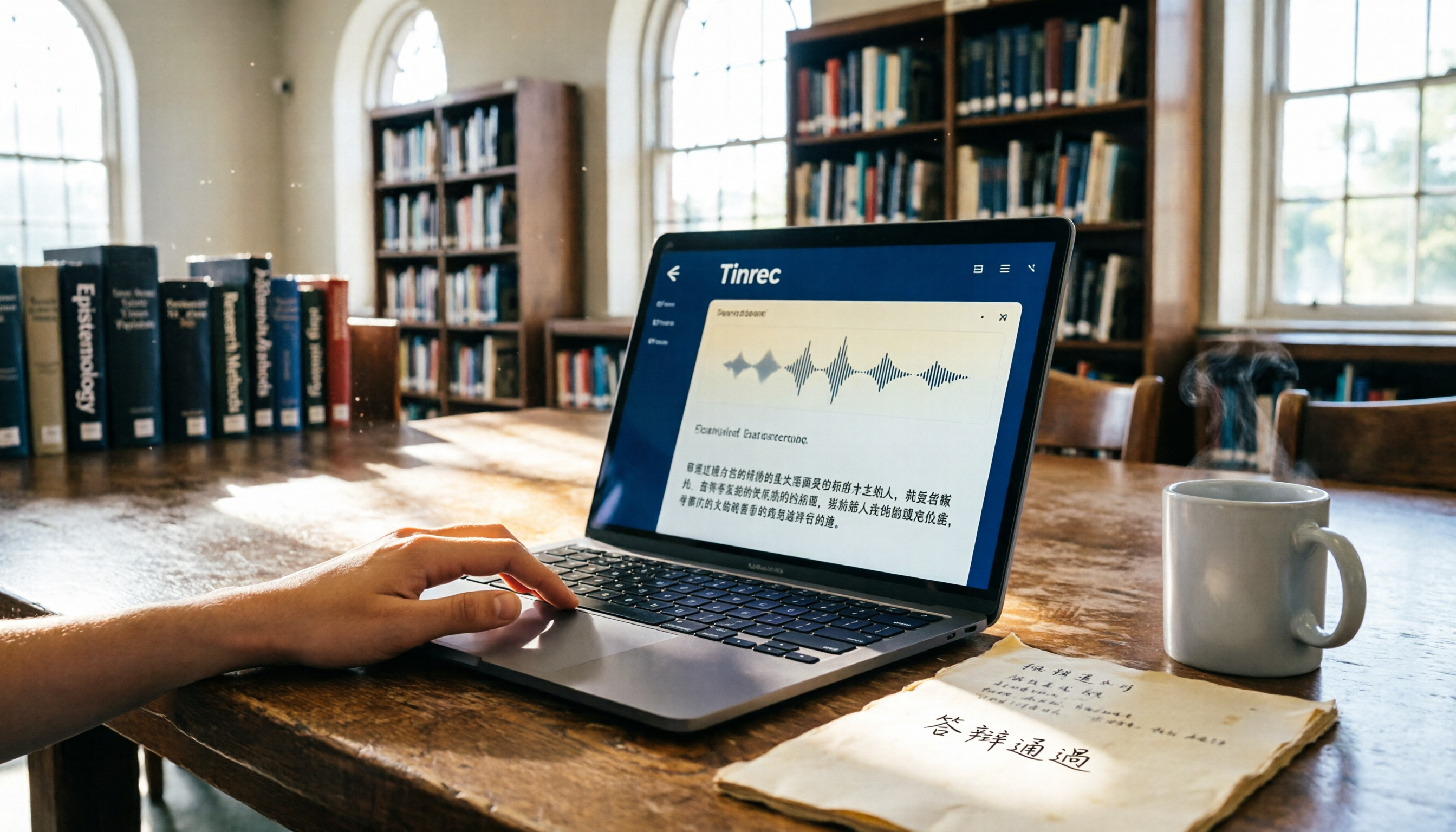
Tinrec vs Otter.ai in 2026: A 4-Dimension Hands-On Test of Thesis Defense Recording Tools—Which Should Students Choose?
A senior student's hands-on test! Thesis defense recording tool showdown: Which wins on Chinese transcription accuracy, AI organization, and student pricing? This article compares Tinrec and Otter.ai based on real usage experience to help you pick the right partner.

3 Interview Transcription Apps Tested in 2026: Which One Helps Journalists Transcribe Faster?
Journalists often spend hours transcribing interviews. We tested three apps—Tinrec, Yating Transcriber, and Notta—comparing real-time transcription, AI summaries, multi-source support, and export convenience to find the best time-saving interview tool.

2026 Hands-On Comparison of 4 AI Recording Tools for Repurposing: Which One Creates the Most Accurate Presentation Outlines?
How can you turn meeting recordings, lecture audio, and interview content into presentation outlines quickly? This article puts four tools—Tinrec, Notta, Otter.ai, and TurboScribe—through hands-on testing, evaluating everything from transcription quality to AI organization, to help you pick the best AI recording assistant for repurposing.

2026 Comparison of 3 Audio-to-Text Tools: From Real-Time Translation to AI Organization, Which One Is Right for You?
Do you need audio-to-text for meetings, classes, or interviews? We tested three tools, comparing transcription accuracy, AI organization, and real-time translation support to help you find the best fit.
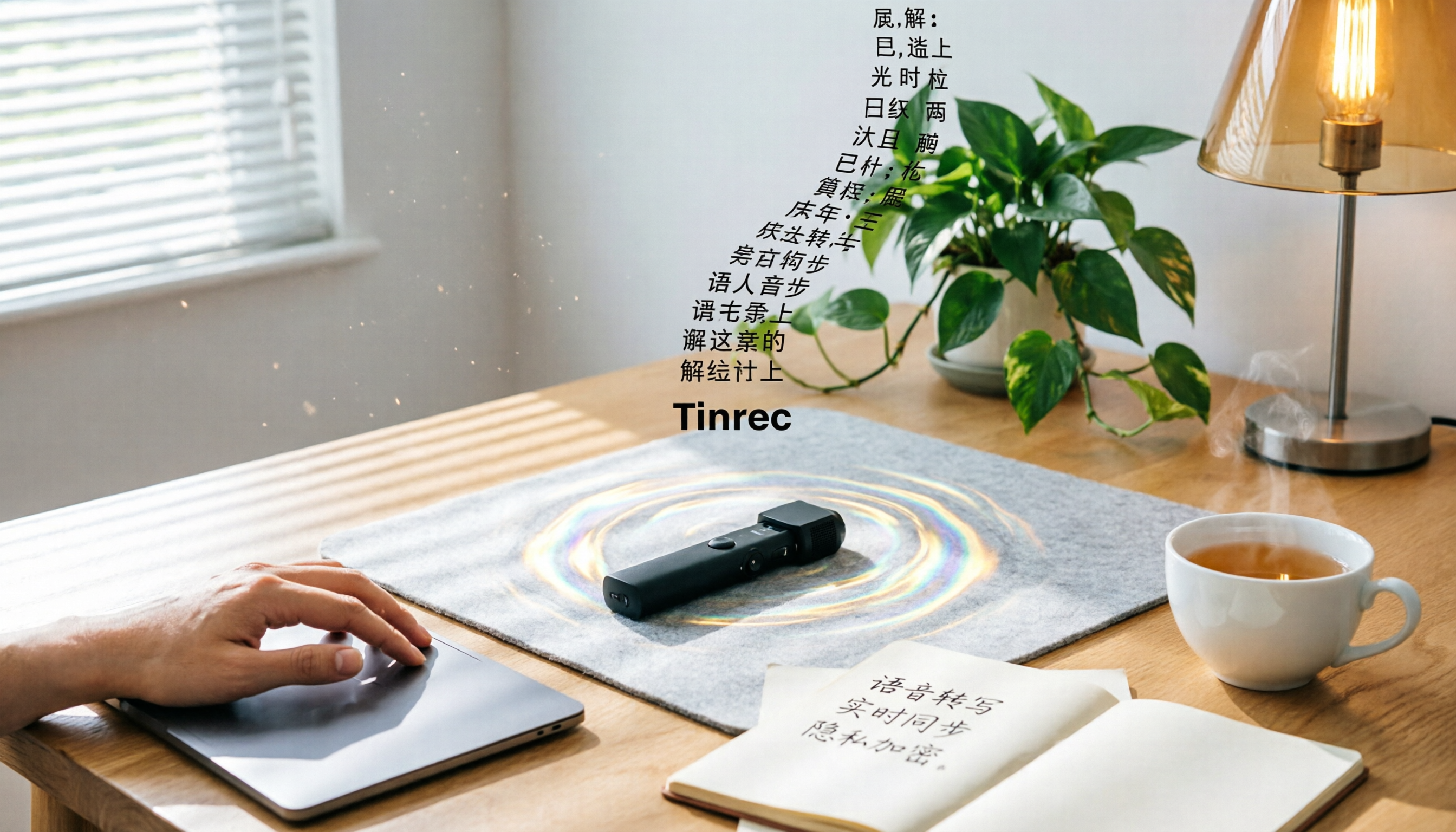
2026 Tested: 3 Smart Noise-Canceling Speech-to-Text Tools Compared for Chinese Meeting Notes – Which Saves More Time?
We tested three AI speech-to-text tools—Tinrec, Otter.ai, and Notta—across noise reduction, Chinese accuracy, AI summaries and Q&A, and cross-platform support, to help you find the best tool for organizing Chinese meetings and audio files.