
Turn recordings into transcripts and summaries in minutes
Upload audio or video for multilingual transcription, AI notes, and action items
Two-Hour Meeting, Even Longer to Write Up Notes?—You Don't Need Just a Tool, You Need a Solution
You're busy taking notes during the meeting and miss key discussions; your class recording sits there gathering dust because you never have time to relisten; you spend an entire afternoon manually typing up an interview recording—these scenarios probably sound familiar. If a tool only turns audio into text, you still have to read through everything yourself; what you really need is an assistant that helps you organize, summarize, and even let you ask questions to get straight to the point. This article reviews 5 speech-to-text tools, from free allowances to real features, to help you find a solution that truly saves time.
Before Choosing a Speech-to-Text Tool, Understand These 3 Key Points
1. Is the Free Allowance Enough? Don't Just Look at the Surface Numbers
Many tools advertise "300 free minutes per month," but when you read the fine print, you find: each recording is limited to 3 minutes, uploading files costs credits, and cross-platform sync costs extra. What you should really check is: can the free plan handle the full length of one meeting or class? Can you use it repeatedly? Will you be forced to upgrade later?
2. After Transcription, Can You "Do Something" with the Text?
Getting just a raw transcript isn't enough. After a meeting you need a to-do list; after a class you need a summary of key points; after an interview you need quotable passages. If the tool offers AI summaries, chapter segmentation, action-item extraction, or even lets you query the recording in a conversational way, it can really take you from "recording" to "understanding."
3. Cross-Platform and Input Sources Determine Where You Can Use It
You'll record on your phone, join meetings on your computer, and also want to process public videos online. If a tool is limited to a mobile app, or only supports live recording without file uploads, you'll run into roadblocks often. Choose a tool that supports multiple platforms and input sources so your audio and video materials can actually flow.
Tinrec (Instant Voice Recorder)—Our Top Pick After Testing
More Than Transcription—It's an Audio/Video Organization Workspace
Tinrec is an AI-powered recording and audio/video organization tool built for meetings, learning, interviews, and content creation. It supports iOS, Android, and web, covering live transcription, audio/video file transcription, and online video link parsing (e.g., YouTube, TikTok). But for us, its real value is that transcription is just the first step—the subsequent organization, summarization, Q&A, and export are what turn recordings into "usable knowledge."
Core Features Built for Real-Life Scenarios
- Record during meetings with live transcription, then get auto-generated action items afterward: Start recording in Tinrec and the transcript appears in real time. As soon as the meeting ends, the AI automatically generates a summary and to-do list—who is responsible for what, and the deadlines, all clearly laid out. You no longer have to frantically take notes while participating.
- Ask the AI after recording: Who mentioned the budget in the last meeting?: This is the biggest difference between Tinrec and other tools. You can ask questions about the recording like you're chatting, and it gives you answers based on semantic understanding, rather than just throwing back keyword search results. This feature is incredibly convenient for reviewing past meetings and capturing key statements from interviews.
- Turn online videos and old recordings into notes: Paste a YouTube link and Tinrec generates a transcript and summary; upload a course recording from six months ago and it will organize it into chapter highlights. It's not just a meeting tool—it works well as a personal audio/video knowledge base.
Hands-On Experience and Advantages
We tested it with a 5-minute meeting recording (two people talking, with some background noise). Tinrec's transcription speed was fast, and Chinese recognition was almost flawless in clear dialogue. Even more impressive was the accuracy of the AI summary and action-item extraction—the meeting conclusions and action items were correctly captured. Advantages summarized:
- Multiple input sources: Supports live recording, file upload, online links, and computer meeting recordings—one tool for all your audio/video organization needs.
- Powerful post-transcription processing: Not just transcripts, but also summaries, chapters, action items, mind maps, and even direct export to tools like Notion and Google Docs, seamlessly integrating with your workflow.
- AI conversational query: Rarely found in products at this price point, it means historical recordings are no longer a black hole.
Stop organizing recordings by hand
Upload audio or video and automatically get a transcript, summary, and action items
Limitations and Who It's For
The free plan provides a basic monthly transcription allowance; heavy users may need to upgrade to the Pro plan, but for most people who attend 2–3 meetings per week, this allowance is sufficient. If you regularly need to organize meetings, classes, interviews, or want to turn your audio and video files into a searchable, reusable knowledge base, Tinrec is currently the most complete choice.
Beyond Tinrec, What Other Options Are There?
Yating: Established Local Option with Strong Multi-Speaker Recognition, but No AI Query
Developed by Taiwan AI Labs, optimized for Taiwanese accents, supports Taiwanese Hokkien and mixed Chinese-English, and the live recording feature is completely free. New users get 300 minutes of upload transcription credit (must be used within one month). Multi-speaker recognition is decent, but transcription speed is slower, and there are no AI summaries or conversational query features—you'll have to manually search for keywords after recording. This is somewhat lacking for users who want to quickly extract key points.
Notta: Strong Multilingual Transcription, but Weaker Chinese Experience and Post-Processing
Supports 58 languages; the free plan gives 120 minutes per month (each recording capped at 3 minutes), with paid plans offering more minutes. The downside is that Chinese recognition was weaker in our tests, and AI summary credits are limited (only 10 on the free plan). Although transcription is fast, it lacks Tinrec's conversational AI query and report-generation features, making it more suitable as a pure transcription and subtitle tool.
Otter.ai: The King of English Meetings, but No Cantonese or Chinese Support
The free plan gives 300 minutes per month and is very strong for English meeting records, with speaker identification, automatic summaries, and team collaboration. However, it doesn't support Cantonese, and Chinese recognition is almost nonexistent. If you mainly handle English meetings, Otter.ai is a more cost-effective choice than Tinrec—this is the only scenario in this article where we recommend a competitor.
Pitfall Guide: 4 Common Mistakes When Choosing a Speech-to-Text Tool
Pitfall 1: Only Looking at the Advertised Free Minutes
Many tools claim "300 minutes per month," but the actual usage restrictions are numerous: single recordings capped at 3 minutes, uploading files consumes a lot of credits, or the free plan doesn't allow export. We recommend trying it with your own real recordings to see how much allowance is actually consumed when processing a full meeting, and whether that allowance meets your monthly needs.
Pitfall 2: Ignoring Post-Transcription "Organization Capability"
If the tool only gives you a plain-text transcript, you'll still have to spend time rereading, highlighting, and writing your own summary. Meetings are supposed to be for decisions, but the after-work ends up taking longer than the meeting itself. Be sure to choose a tool with AI summaries, action-item extraction, and chapter segmentation, so recordings become actionable to-do lists directly.
Pitfall 3: Paying for a Tool but Only Using It for Transcription—Wasting AI Features
Many people treat transcription tools merely as "recording to text," overlooking the AI Q&A capability. Tinrec's conversational query, for instance, lets you ask naturally, "What was the conclusion of last meeting?" or "Who mentioned the budget overrun?"—ten times faster than manually scanning a 30-minute transcript. Don't use only a third of the features and waste your subscription.
Pitfall 4: Assuming Your Phone's Built-In Recording Is Enough
The iPhone Voice Memos app can indeed generate transcripts, but it can't upload external files, doesn't support online videos, and has no AI-based post-processing. If you only need to occasionally jot down an idea, the built-in tool can suffice; but if you want to build a personal knowledge base and systematically organize meeting and class notes, a professional tool will actually save you time.
Summary: Which One Should You Choose?
Overall, if you need a tool that can handle meetings, classes, interviews, and online videos all in one, and lets you use AI to dig deeper after transcription, Tinrec is our top pick. Its multiple input sources, conversational AI query, and complete export flow keep your recordings from becoming just digital clutter. Here are our recommendations by scenario:
- Need Cantonese or mixed Chinese-English transcription + AI organization → Tinrec (the only option with conversational AI query, and great recognition quality)
- Primarily English meetings on a zero budget → Otter.ai (300 free minutes per month, best English collaboration features)
- Just want simple real-time transcription of Taiwanese-accented Mandarin → Yating (unlimited free live transcription, but no post-processing)
- Need lots of multilingual transcription and subtitles → Notta (low per-minute cost, but weaker Chinese and post-processing)
Our final advice: no matter which one you're considering, use the free plan to test the scenarios you encounter most—for example, record a meeting or upload an interview. Run through the full workflow once and see whether the organization results genuinely save you time before making a decision. Don't rush to pay right away; try it first, and if you like it, upgrading later won't be too late.
References
- 2026 Recommended 6 Speech-to-Text Tools: Free Online Transcripts from Audio Files!
- [AI Voice Notes] 5 Highly Recommended AI Speech-to-Text Tools! Generate Transcripts and Meeting Summaries: Free vs. Subscription, Pros & Cons | 104 Career Matters
- No Time Limit! 3 Free AI Transcript Tools, Highly Recommended! AI Voice Notes for Meeting Records, Slides, and Mind Maps | 104 Career Matters
- 2026 Comprehensive Review of Free Transcription Platforms: 15 Free Speech-to-Text Tools Tested and Recommended
- Online AI Speech, Video, Audio File to Text - Free Trial - cSubtitle
Turn every recording into actionable outcomes
Get 60 free transcription minutes when you sign in. No credit card required.
Related Reading
You might also like

2026 Tinrec vs 訊飛聽見 Hands-on Comparison: Which AI Recording Tool Is the Better Choice for Taiwan Users?
Can't register for 訊飛聽見 in Taiwan? This hands-on comparison evaluates Tinrec (秒听錄音) against 訊飛聽見 across five key dimensions—Taiwan-user availability, input sources, AI post-processing, privacy, and pricing—to reveal which speech-to-text solution is a better fit for Taiwan scenarios.

2026 Horizontal Comparison of 2 Tibetan Audio-to-Text Tools: Tinrec vs Tibetan Translator – From Recording to AI Organization, Which Is Better?
How to choose a Tibetan audio-to-text tool? This article compares Tinrec and Tibetan Translator side by side, covering 5 dimensions including speech recognition, AI summarization, multilingual support, and export capabilities, to help you find the most suitable Tibetan audio organization solution.
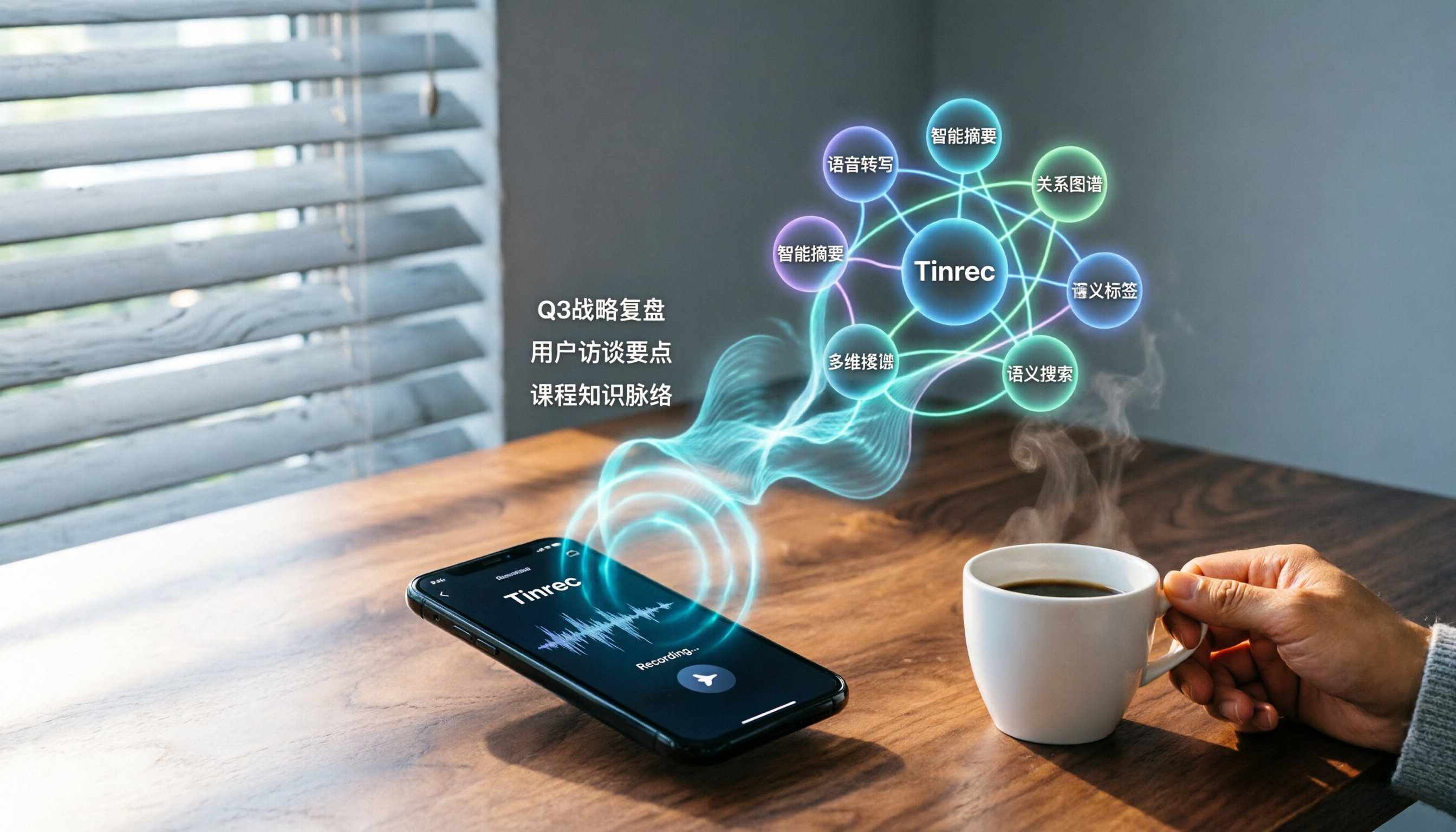
2026 Comparison of 3 Speech-to-Text Tools: One-Click Xmind Mind Maps, Meeting Notes Without the Mess
With so many speech-to-text tools on the market, which one can directly generate a mind map? We tested Tinrec, Otter.ai, and Notta, comparing accuracy, AI summaries, and mind map output to help you find the best choice for organizing meetings, lectures, and interviews.

2026 Comparison of 3 Meeting Notes Tools with Automatic Google Docs Sync: Which One Really Saves You From Copy-Paste?
Tired of manually moving meeting notes into Google Docs? This hands-on test compares Tinrec, Google Calendar’s built-in feature, and Otter.ai — from automatic sync and Chinese transcription accuracy to AI summarization — to find the most effort-saving solution.
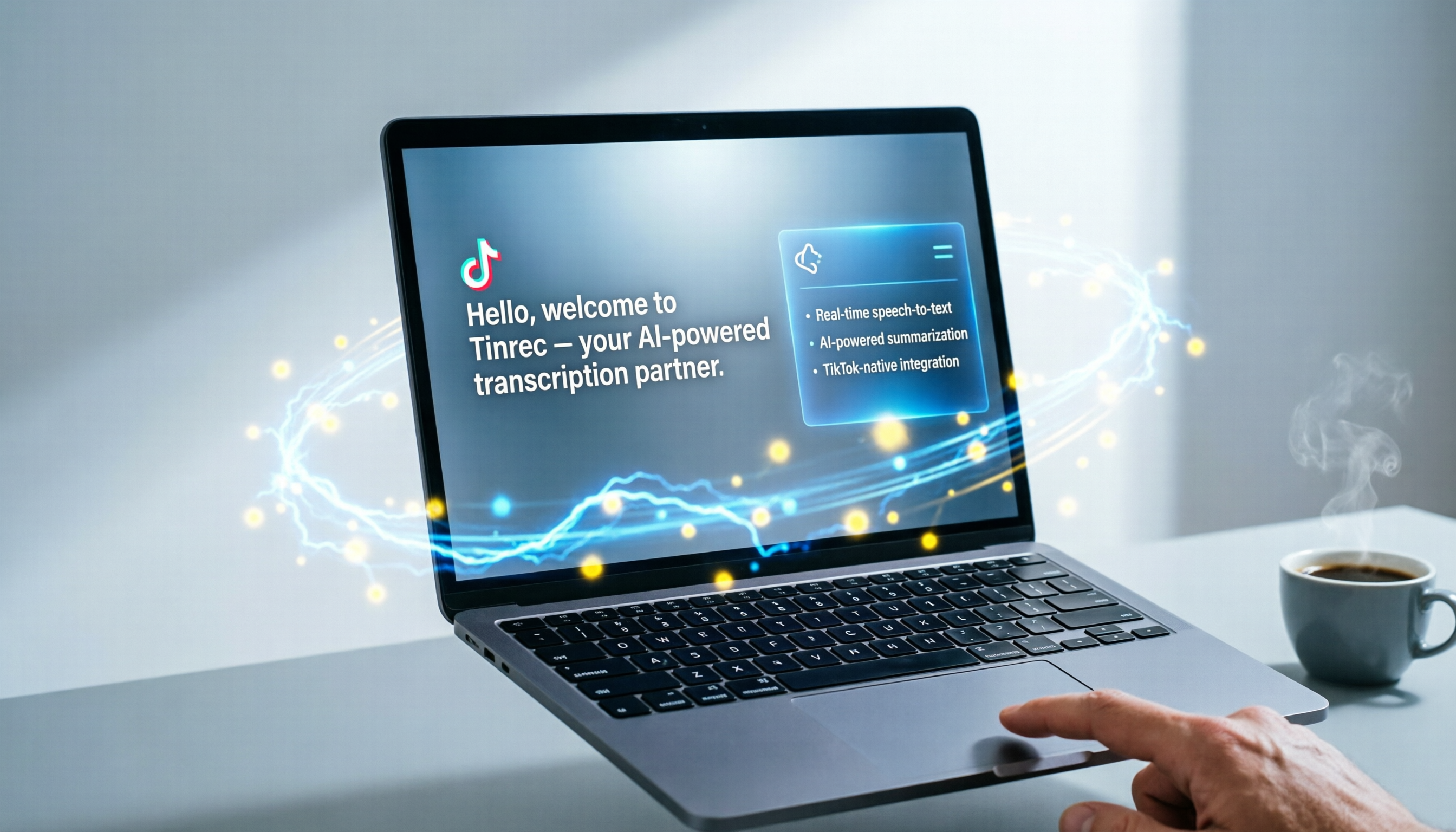
Tutorial: Convert TikTok Videos to Text with Tinrec in 2026 – No Download, AI One-Click Transcripts & Summaries
Want to turn TikTok videos into searchable, editable transcripts? We tested several tools and show you how to use Tinrec to quickly convert TikTok links to high-accuracy transcripts, while automatically generating AI summaries and chapters—perfect for meetings, learning, and content creation.

2026 OneNote Speech-to-Text Integration Guide: 3 Tools Compared
A mid-level manager attending 15 meetings a week tests 3 ways to turn OneNote into a speech-to-text hub—from built-in dictation, third-party apps, to AI-powered Q&A—to cut meeting note time in half.

2026 Real-World Comparison of 4 Recording-to-Text Tools: Which Is the Best for Chinese Knowledge Management?
This article hands-on tests Otter.ai, Notta, Yating, and Tinrec for turning recordings into transcripts. It breaks down transcription quality, AI post-processing, supported sources, and pricing to help you find the best fit for Chinese-language meetings, courses, and interviews.

2026 Podcast-to-Text Tool Face-Off: 4 Tools Tested, Which AI Summary Saves You the Most Time?
Want to turn your podcast into a transcript but don't know where to start? This hands-on comparison tests 4 tools, including Tinrec, MyEdit, Otter.ai, and Apple Podcasts transcripts. We break down transcription accuracy, AI summarization capabilities, and pricing plans to help you find the best podcast-to-text solution.

2026 Hands-On Review of 3 AI Meeting Note Tools: Why I Finally Chose Tinrec
Audio files too large and don't know how to pull out the key points? Stop wasting time compressing files—AI recording summarization tools can directly convert them into text, summaries, and to-dos. Written from the perspective of a mid-level manager, this article compares different tools and explains why Tinrec is the more time-saving choice that truly turns recordings into action plans.