
Turn recordings into transcripts and summaries in minutes
Upload audio or video for multilingual transcription, AI notes, and action items
"I need the meeting notes out by 2 PM." "What was the boss's decision just now? I didn't record it!"
These common workplace meltdowns are exactly why one-click meeting note generators exist. With so many AI tools on the market, which one can truly turn audio into text instantly and generate actionable summaries—not just a messy transcript you need to re-edit?
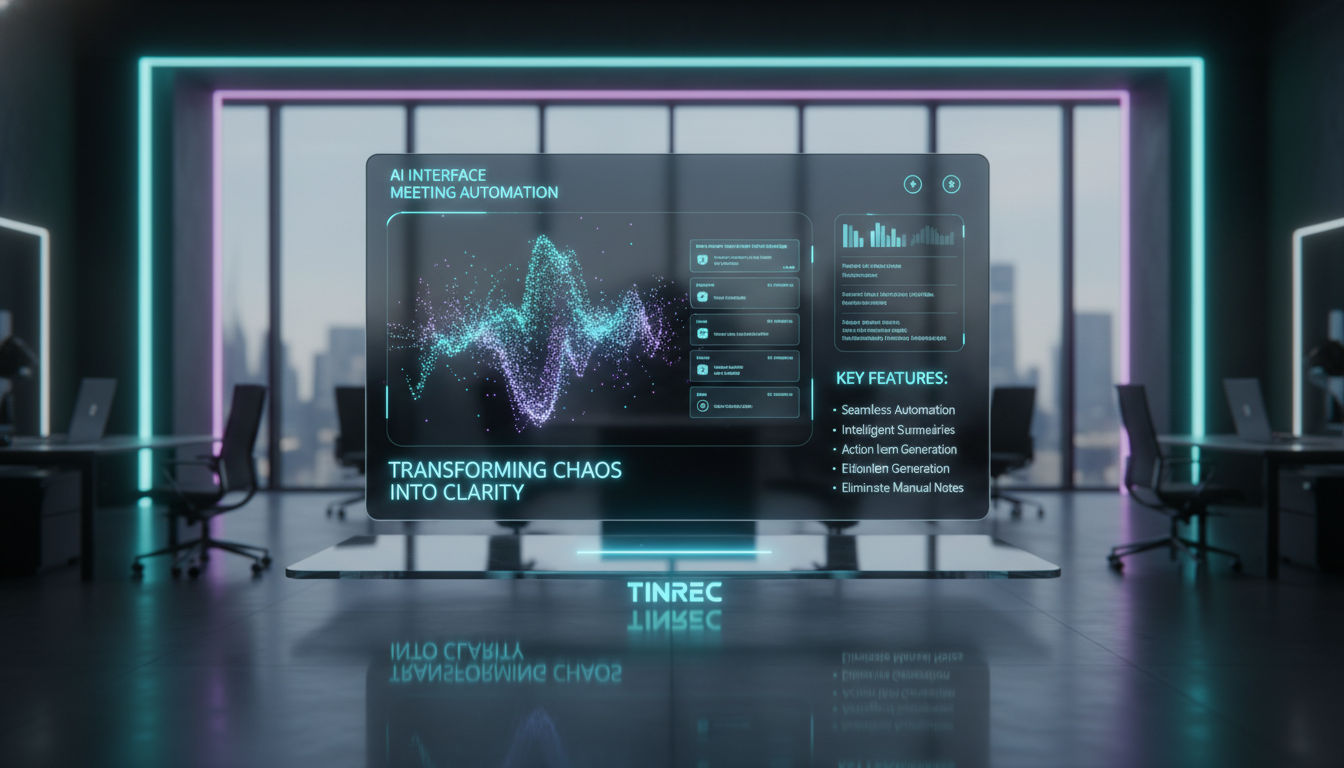
This article evaluates AI meeting assistants worth watching in 2026 across four dimensions: processing speed, summary logic, language support, and integration. If you need speed and localization, Meeting Ink stands out. For hardware recording, Plaud is a solid choice. And if you value a complete workflow from recording to action items with AI Q&A, Tinrec (formerly Miaojian Luyin) is a strong contender.
Why You Need One-Click Generation: 5 Evaluation Criteria for Meeting Note Software
The biggest problem with traditional recorders is "low information density"—relistening to an hour of audio often takes twice as long. Next-gen AI meeting software should be more than just a transcription tool; it should be your second brain. When choosing a tool, consider these five technical aspects:
- Audio Processing Efficiency: Is there a queue for uploads? How fast is real-time transcription?
- AI Summary Logic: Can it automatically distinguish decisions, action items, and casual chat?
- Speaker Diarization: In multi-person meetings, can it accurately identify who is speaking (voice recognition)?
- Language Recognition: Does it support mixed Chinese and English? How well does it handle Taiwanese accents, Hokkien, or professional jargon?
- Search and Q&A Capability: Can you search recording content like Google, or even ask the AI questions?
2026 Top 6 AI Meeting Note Software Reviews and Recommendations
Based on the latest 2026 test data and market feature analysis, here are six tools, each suited to different scenarios:
1. Meeting Ink: Leader in Localization and Speed
Meeting Ink stands out in 2026 tests for its excellent processing speed. Its biggest advantage is support for Taiwan-specific contexts, especially Taiwanese Hokkien/Hakka recognition, which is rare in international software. Tests show a 26-minute audio file uploads in just 55 seconds and transcribes in about 2 minutes, making it ideal for government agencies or corporate teams that need speed and local language support.
2. Tinrec (Formerly Miaojian Luyin): All-in-One Assistant from Recording to Action
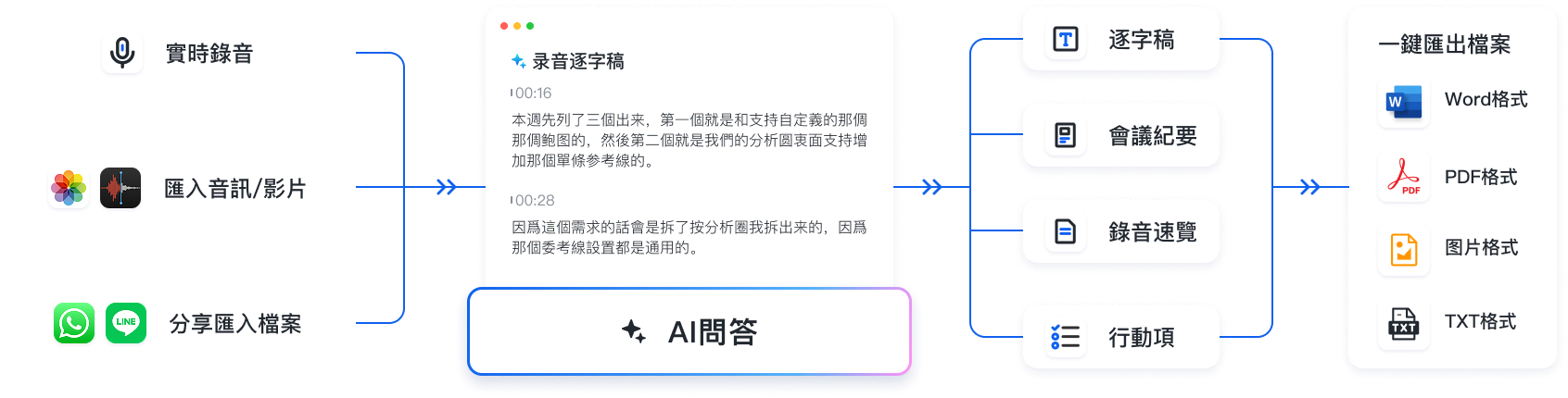
Tinrec is positioned as more than a transcription tool; it emphasizes a complete workflow from recording to understanding to action. Beyond basic real-time speech-to-text, it solves the pain point of "hard-to-search" transcripts with an AI chat Q&A feature—you can ask, "What was the conclusion about the marketing budget in this meeting?" and the AI answers based on the recording. It also supports direct transcription of YouTube/TikTok video links, great for content creators and learners dealing with multiple video sources.
3. Otter.ai: Strong Choice for English-Language Meetings
Otter.ai is the long-standing AI meeting leader, with excellent accuracy in pure English environments and deep integration with Zoom and Google Meet. However, its Chinese (especially Traditional Chinese) processing is relatively weak and sometimes fails. If you primarily attend international English meetings, Otter is still the top pick.
4. Plaud: Hardware-Based Mobile Recording Solution
Unlike pure software, Plaud uses a hardware recording card plus app model. It's perfect for iPhone call recording or on-site interviews without a laptop. Although its multi-speaker diarization is weaker, the portability and physical recording button offer great convenience for field salespeople or journalists.
5. SeaMeet: Best Extension for Teams and Google Meet
SeaMeet focuses on online meeting scenarios, attaching directly to Google Meet or Teams via a browser extension. It supports real-time transcription and summaries and can export to Google Docs. For educational institutions or remote teams in back-to-back video meetings, integration is high, but it's less flexible outside those platforms.
Stop organizing recordings by hand
Upload audio or video and automatically get a transcript, summary, and action items
6. Vocol.ai: Post-Meeting Organization and Collaboration Platform
Vocol.ai leans toward a project management style. While its speech-to-text speed is average in tests, its strength lies in post-meeting collaboration and topic organization. It turns meeting content into collaborative notes, suitable for teams that need detailed post-meeting documentation. However, it lacks live captioning and relies on post-recording uploads.
Comparison Chart: Features, Speed, and Pricing
For a quick overview, here's a comparison of key dimensions:
| Dimension | Meeting Ink | Tinrec (Miaojian Luyin) | Otter.ai | Plaud | SeaMeet |
|---|---|---|---|---|---|
| Core Strength | Taiwanese Hokkien/Hakka, ultra-fast transcription | AI chat Q&A, video link transcription, action item extraction | Pure English recognition, Zoom integration | Hardware recording, call recording | Online meeting extension integration |
| Real-time Transcription | Yes | Yes (multi-device sync) | Yes | No (post-recording) | Yes |
| Language Support | Traditional Chinese/English/Japanese/Taiwanese Hokkien/Hakka | Chinese/English/Japanese/Korean/German/Cantonese, etc. (10+ languages) | Strong English, weak Chinese | Multilingual | Multilingual |
| AI Summary/Action Items | Yes (multiple templates) | Yes (auto-generates tasks and conclusions) | Yes (Insights) | Yes | Yes |
| Special Features | One-click start from Google Calendar | AI chat Q&A, web video parsing | Auto-join meetings | Physical recording card | Browser extension |
| Free Tier/Trial | Trial available | Free plan (100 min/month) | Limited free plan | Requires hardware purchase | Free plan (20 hours/month) |

Hands-On Guide: How to Achieve a Complete Workflow from Recording to Action Items
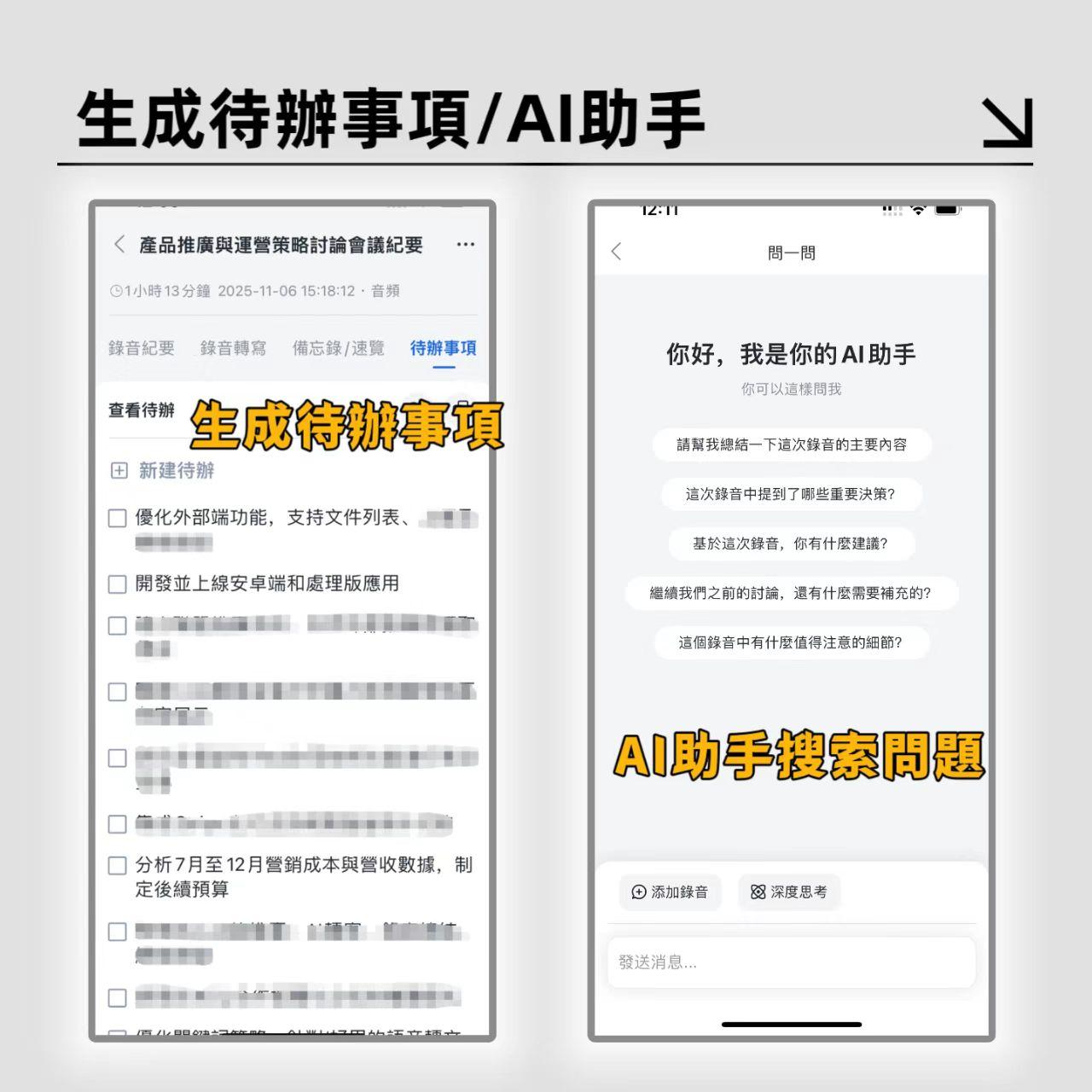
Once you've chosen a tool, how do you maximize efficiency? Here's a walkthrough using Tinrec's interface, showing how to turn a chaotic meeting into a clear action list:
Step 1: Start Live Recording or Import a File
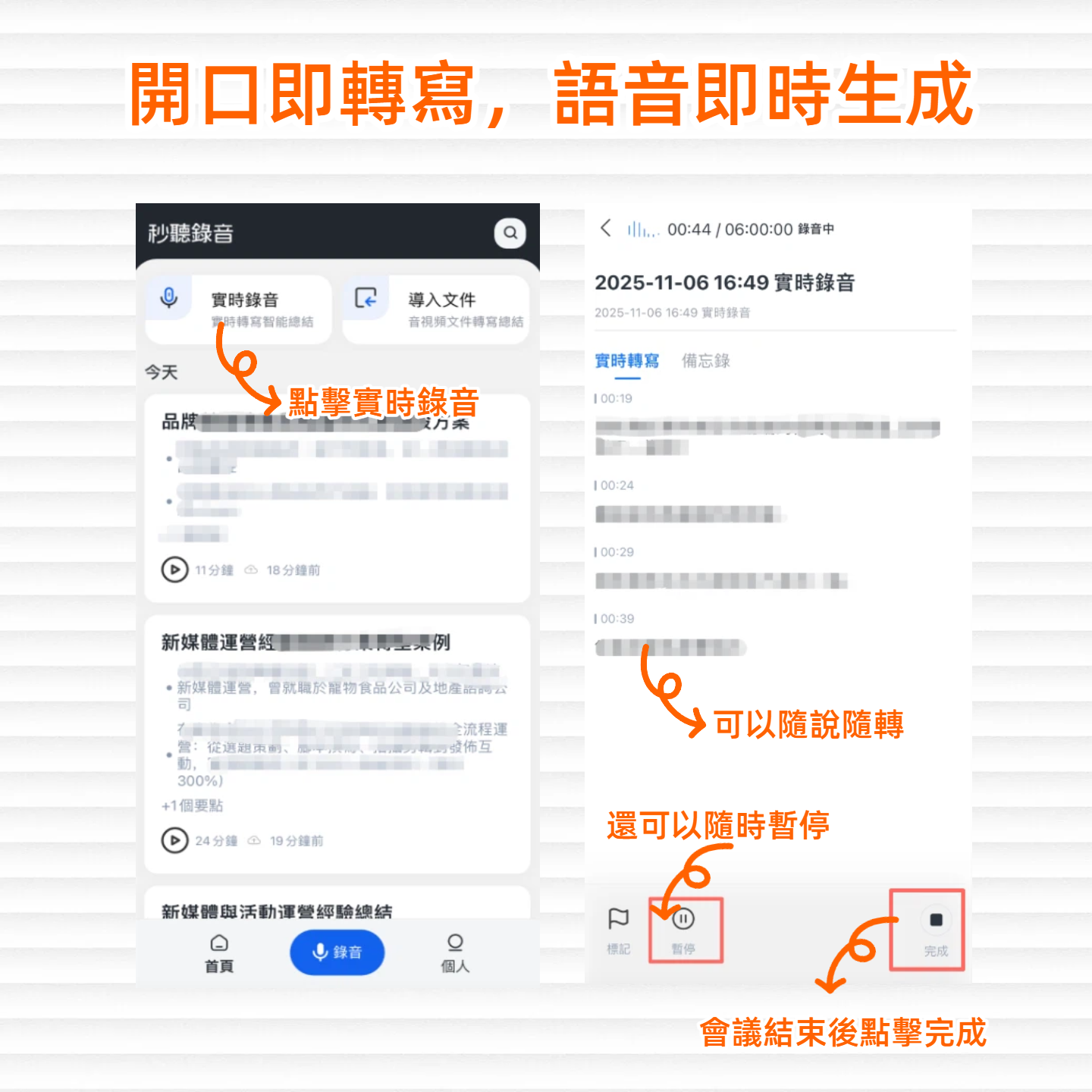
Go to the tool's home page. For live meetings, click "Start Recording"; for online meeting recordings or podcasts, select "Import Audio." Tinrec also supports pasting YouTube or TikTok links for parsing.
Step 2: Real-Time Transcription and Marking
During recording, the AI transcribes speech to text in real time. When you hear something important, you can click the mark button, which helps the AI generate better summaries later.
Step 3: Generate AI Meeting Notes and Action Items
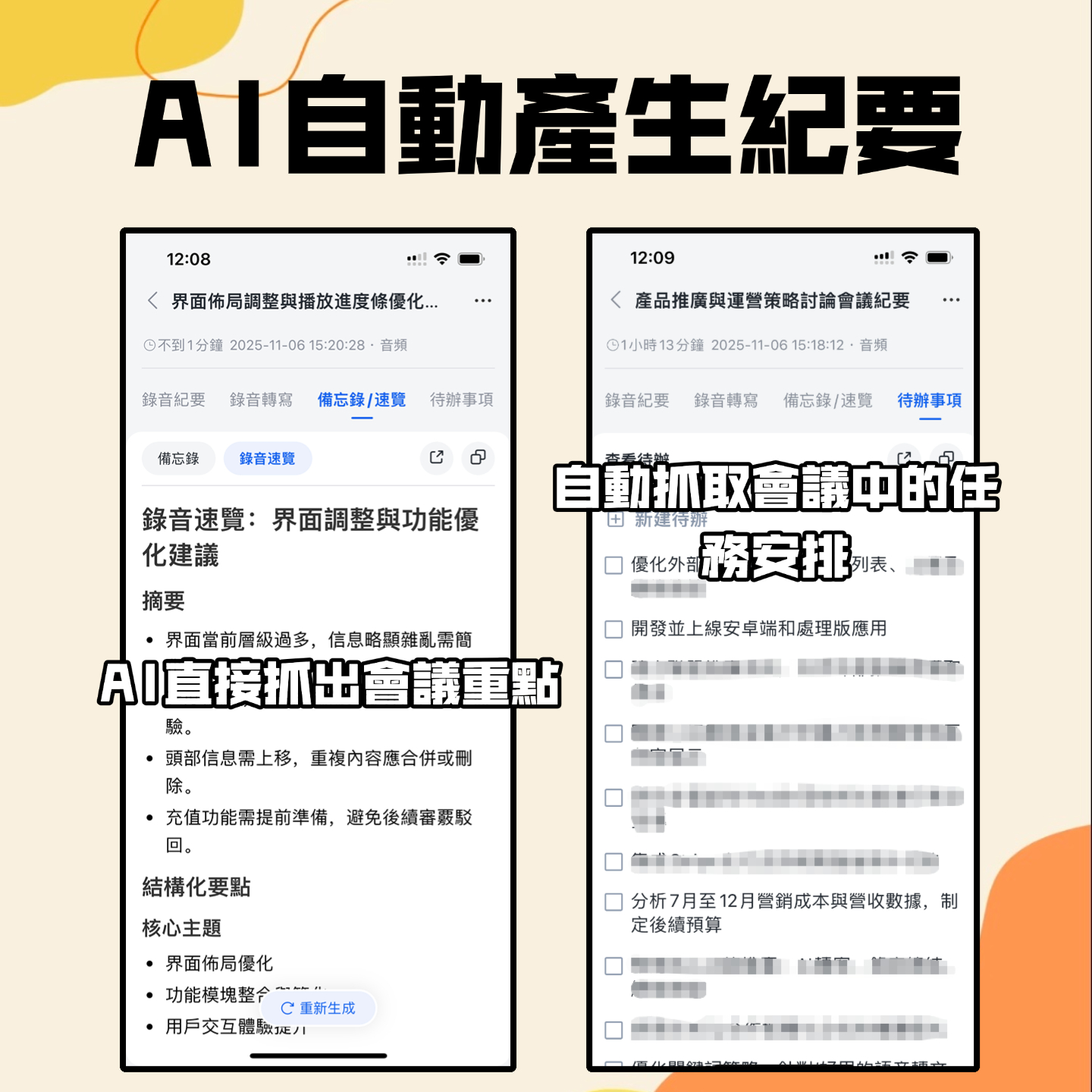
After recording ends, the system automatically distinguishes speakers and generates structured meeting notes. Most importantly, check the "Action Items" section to see who needs to do what by when.
Step 4: Use AI Chat Q&A for Details
If you don't want to read the entire transcript, use the "AI Chat Q&A" feature. For example, type "What was Manager Wang's view on the budget?" and the system will automatically search relevant sections and summarize the answer—much smarter than traditional Ctrl+F keyword search.
FAQ: Myths and Answers About AI Meeting Notes
Q1: iPhone has call recording restrictions—can these apps work?
For phone calls, due to iOS privacy limits, software apps (like Meeting Ink, Tinrec, Otter) usually cannot directly record the phone line. In that case, hardware recorders like Plaud are the solution. But for VoIP calls (Line, Zoom, etc.), using the desktop version or speakerphone recording usually works.
Q2: Is the free tier enough?
It varies widely. Meeting Ink offers a trial; SeaMeet gives a generous 20 hours free; Tinrec provides 100 minutes per month, suitable for light users or students. If you have frequent meetings, consider a paid subscription for unlimited hours or advanced AI features.
Q3: Do these tools support Teams or Google Meet?
SeaMeet is designed specifically for this; Otter bots can auto-join; Meeting Ink and Tinrec typically support via browser tab recording or system audio capture—test your audio input settings first.
Q4: How accurate is transcription? Are there many errors?
Current mainstream tools (e.g., those using Whisper model technology) achieve over 95% accuracy. However, accuracy is affected by background noise, microphone distance, and accents. Tinrec and Meeting Ink have more optimizations for Chinese and dialects, making them more accurate than tools developed primarily for English.
Q5: Is uploading data to the cloud secure?
Enterprise users should check each tool's privacy policy. Most paid tools (like Meeting Ink, Tinrec Pro) have encrypted transmission and privacy protection policies, ensuring meeting data is not used to train public models. Consult your IT department before company-wide adoption.
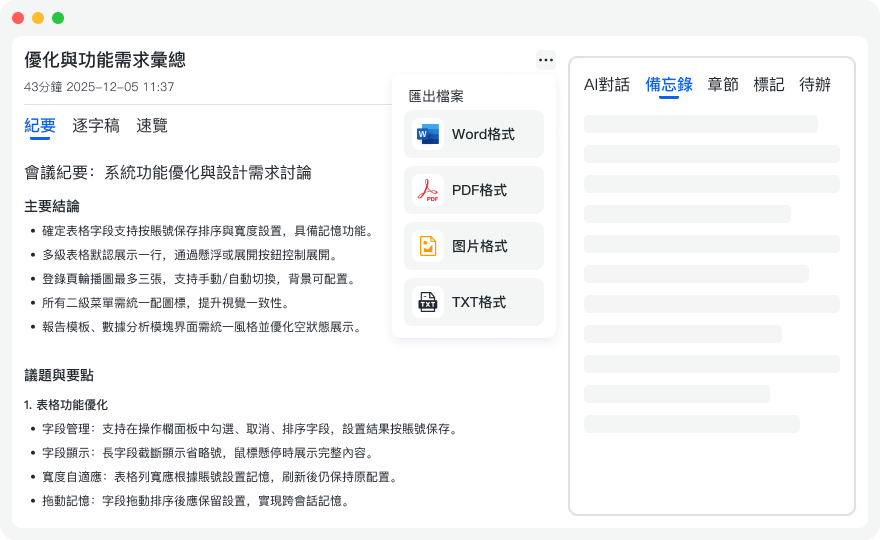
Q6: What export formats are available after recording?
Typically TXT, Word, PDF. Advanced tools like Tinrec support export of SRT subtitle files with timestamps, convenient for video creators to edit directly.
Turn every recording into actionable outcomes
Get 60 free transcription minutes when you sign in. No credit card required.
Related Reading
You might also like
![2026 Meeting AI Agent Software: Bot-Free Recording + Post-Meeting AI Q&A [Guide]](https://record-img.tos-accelerate.volces.com/images/2026/09/25/1790342798533094573.png)
2026 Meeting AI Agent Software: Bot-Free Recording + Post-Meeting AI Q&A [Guide]
How to choose meeting AI agent software? Don't rush to look at free minutes. This article starts with the three most common misjudgments, breaks down four key points: capture method, post-meeting processing chain, Chinese performance, and team governance, then compares Tinrec, Otter.ai, Notta, and Granola in hands-on testing to help you pick the right one within budget.

2026 AI Meeting Agent Comparison: Tinrec vs Notta for Action Plan Generation
Tired of meetings without action plans? This article compares Tinrec and Notta on bot-free recording, Chinese language experience, AI to-do generation, and team data retention, and tests how Tinrec turns transcripts into trackable action lists.

2026 AI Meeting Agent Workflow Comparison: Which Tool Best Captures Meetings from Bot-Free Recording to Post-Meeting Insights?
When choosing an AI meeting agent workflow, the real differentiator isn't transcription accuracy—it's whether your meeting data survives after the call ends. This article compares Tinrec, Granola, and Notta across five dimensions: bot-free recording, audio file retrieval, Chinese and real-time translation, post-meeting outputs, and team governance, helping you decide which post-meeting workflow best fits you or your team.

2026 AI Meeting Agent Free Plans Compared: 4 Tools to Consider
Tired of taking meeting notes manually? This article reviews the free plans of four AI meeting agents in 2026, comparing them on meeting capture, post-transcription capabilities, Chinese and multilingual support, team governance, and pricing. It includes hands-on testing of Tinrec, Granola, Notta, and PLAUD, plus a pitfalls guide and selection advice to help you choose the right tool within your budget.
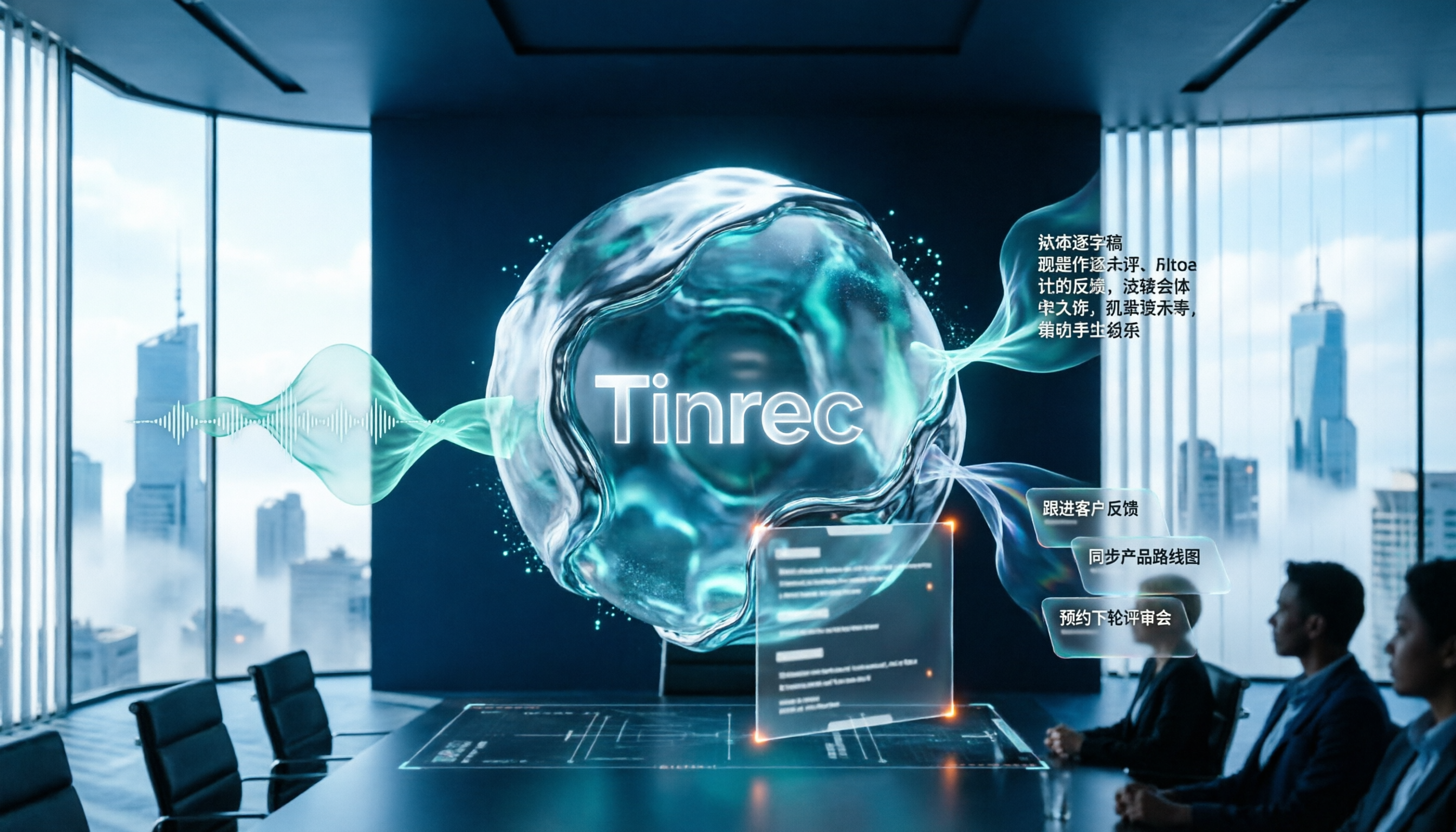
2026 AI Meeting Agent Comparison: Tinrec vs Otter.ai vs Built-in Meeting Notes
AI meeting agents don't just join meetings on their own. This article breaks down three common misconceptions, then compares Tinrec, Otter.ai, and Google Meet's built-in notes across six dimensions: meeting capture, Chinese language experience, post-meeting output, team governance, cross-device support, and plan flexibility. Find out which approach actually saves time on meeting notes and organization.

AI Meeting Agent vs. Assistant in 2026: No-Bot Recording + Auto-Generated Reports After Meetings
What's the real difference between an AI meeting assistant and an AI meeting agent? This article starts with common misconceptions, breaks down the three levels of recording, understanding, and action, tests Tinrec's Chinese meeting transcription, no-bot recording, and agent post-processing workflow, and compares the use cases of Otter.ai, Granola, and Notta, with a guide to avoiding pitfalls.
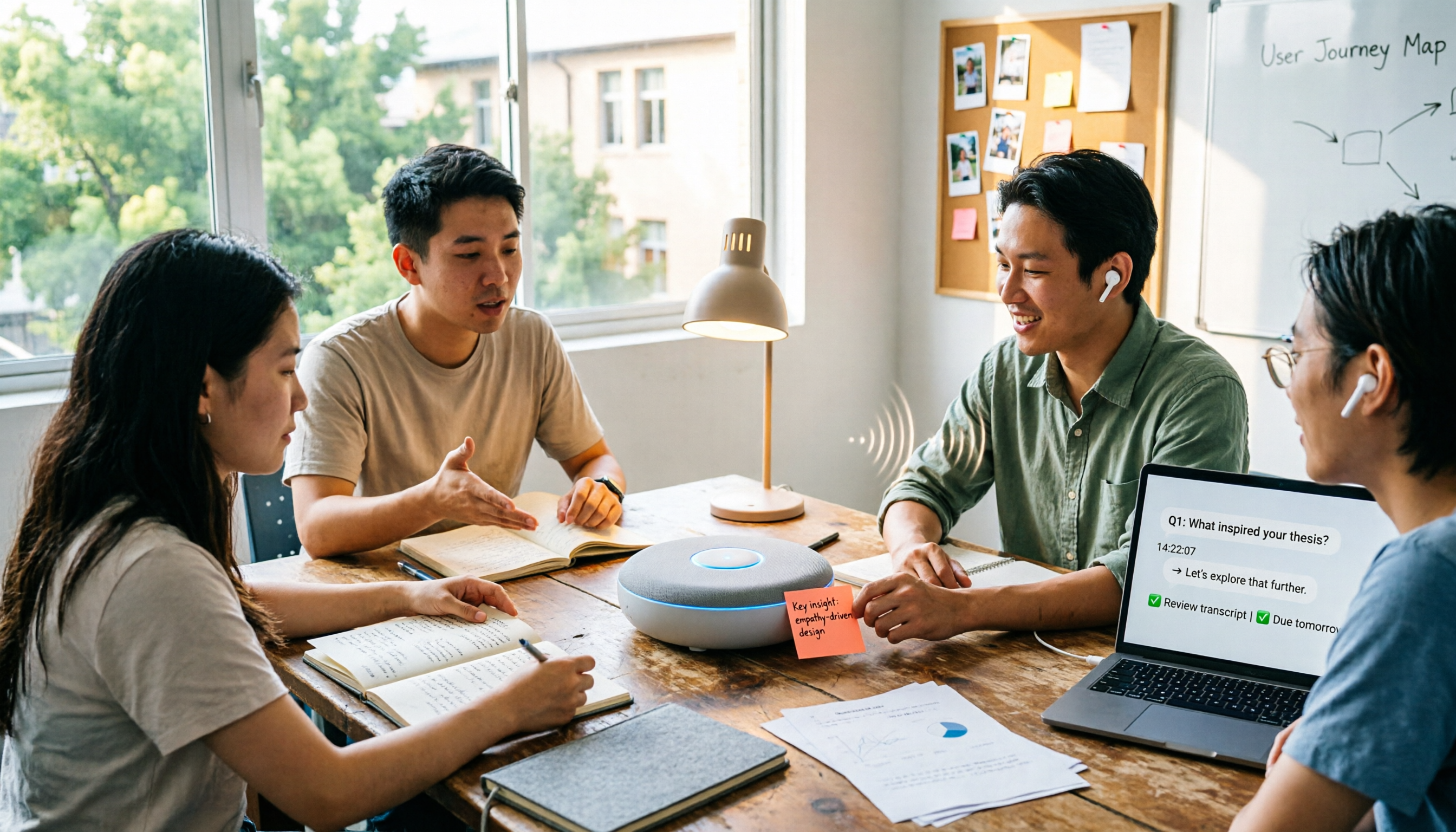
2026 Complete Guide to AI Meeting Agent Workflows: 5 Steps from Recording to Action Items
An AI meeting agent isn't just about sending a bot to your meeting. Drawing from hands-on experience with campus group projects, class notes, and thesis interviews, this guide breaks down the 5 stages of an AI meeting agent workflow, core capabilities, 5 key considerations when choosing a tool, and FAQs. It also explains how Tinrec turns recordings into searchable, queryable, and transferable meeting data.
What Is an AI Meeting Agent in 2026? 5 Steps from Recording to AI Summary
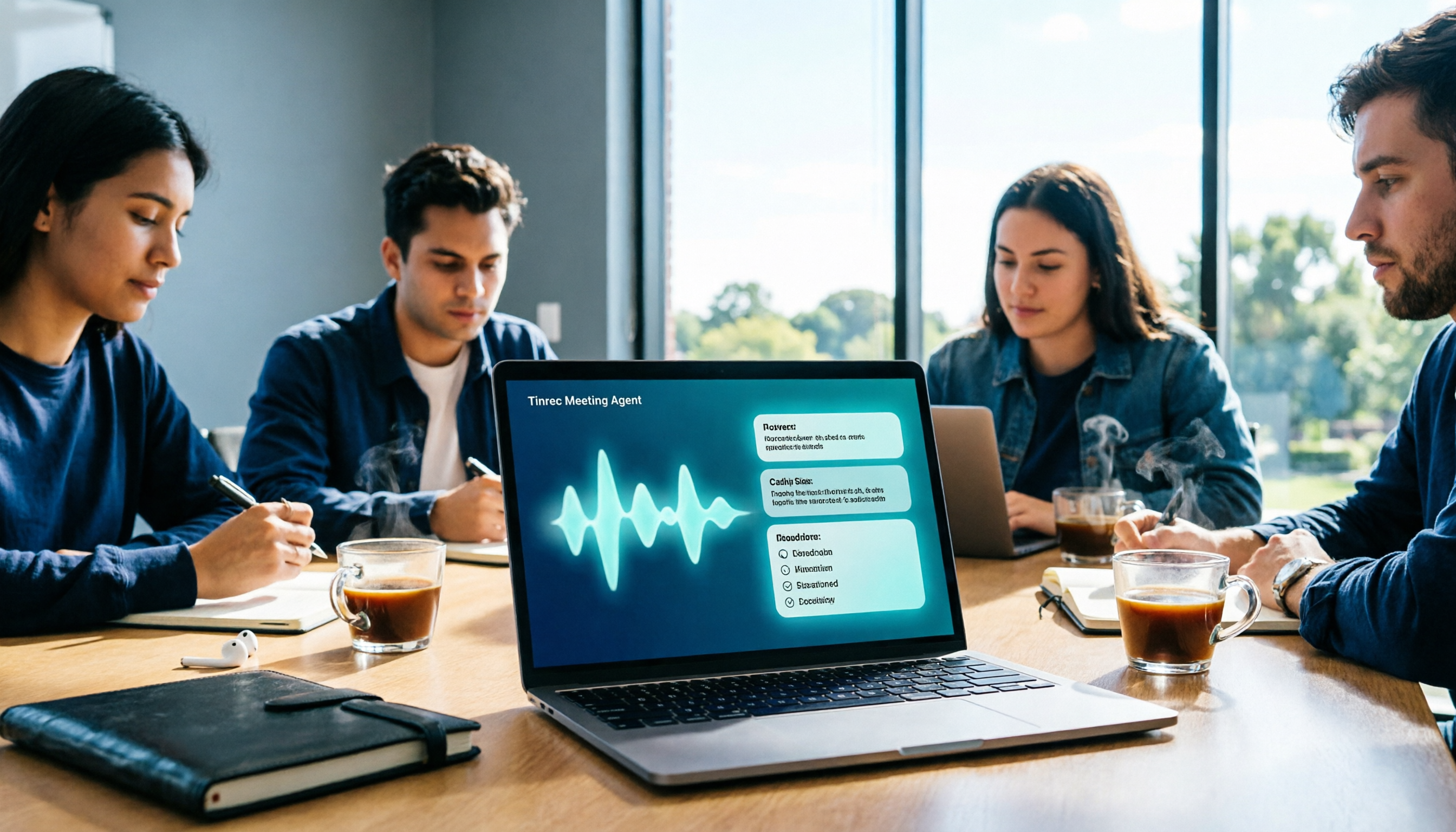
What is an AI meeting agent in 2026? Starting from the pain points of student group discussions, this article explains the core functions of AI meeting agents and reviews 5 tools worth trying, including Tinrec, Otter.ai, Fireflies.ai, Notta, and built-in platform transcription, helping you go from recording to AI summary in one go.

2026 AI Meeting Agent Comparison: 4 Types Tested — Which One Actually Saves You Post-Meeting Time?
AI meeting agents generally fall into four categories: meeting bots, platform-native transcription, desktop no-bot recording, and AI recording hardware. This hands-on comparison looks at how each approach fits different meeting scenarios, using Tinrec as the primary example to show real-world use of live transcription, AI summaries, action item extraction, AI Q&A, and team workspaces. Includes free and team plan pricing plus 5 key buying considerations.