
Turn recordings into transcripts and summaries in minutes
Upload audio or video for multilingual transcription, AI notes, and action items
Facing hours of meeting recordings or interview files, especially those with heavy Taiwanese Hokkien or Chinese-English-Taiwanese mixed content, manual transcription is time-consuming and labor-intensive. On average, 1 hour of audio takes 3 to 5 hours to transcribe. Fortunately, with breakthroughs in AI speech recognition, several tools now effectively address this pain point.
This article compares the leading speech-to-text tools on the market in 2026, including local powerhouse Yating, international favorite GoodTape, high-value LexiTranscript, and action-oriented Tinrec. Whether you need precise dialect recognition or high efficiency that generates to-dos right after a meeting, this article provides specific recommendations and practical tutorials.
Quick Navigation Conclusions:
- Prioritize pure Taiwanese Hokkien recognition and data security: Go with Yating.
- Seek high value and unlimited recording length: Recommend LexiTranscript.
- Need meeting summaries, AI chat, and multi-device sync: Try Tinrec.
- International interviews and multilingual needs: GoodTape fits best.
In-Depth Review of Popular Speech-to-Text Tools in 2026
For Taiwanese Hokkien speech-to-text and mixed language scenarios, we selected four representative tools for analysis.
1. Yating: Taiwan's Local Dialect Expert
For Taiwanese users, Yating is almost synonymous with "Taiwanese Hokkien recognition." Developed by Taiwan AI Labs, it boasts being "100% Made in Taiwan," giving it an innate advantage in understanding Taiwan's unique accents, Chinese-English code-switching (Jingjing style), and Taiwanese Hokkien.
- Pros: Data stays in Taiwan for better security; top-tier recognition of Taiwanese accents and Hokkien; provides real-time captioning for the hearing impaired.
- Cons: Pay-per-time pricing (NT$100/hour) can be costly for heavy use; conversion is relatively slow (1 minute of audio takes about 10 minutes); users report occasional failures of the summary feature.
2. Tinrec: From Transcription to AI Decision Assistant
Tinrec is more than a transcription tool; it's an AI assistant emphasizing workflow. Besides supporting 10 languages including Taiwanese Hokkien, Chinese, and English, its standout feature solves "what to do after transcription." Tinrec automatically generates meeting minutes, action items, and even allows AI chat to query recording content—ideal for professionals who need high efficiency.
- Key Features: Real-time speech-to-text recording, automatic speaker diarization, smart generation of meeting conclusions and to-do lists.
- Best Suited For: Enterprises and teams needing to quickly turn Taiwanese Hokkien or mixed-language meetings into formal reports or action plans.
3. GoodTape: International Choice for Journalists and Media Pros
GoodTape, from Denmark, uses OpenAI's Whisper technology and was originally designed for journalists. Although not built specifically for Taiwanese Hokkien, its powerful underlying model handles multiple languages reasonably well.
- Pros: Extremely clean interface, fast processing (2-hour audio in about 20 minutes), compliant with EU GDPR.
- Cons: Free plan is restrictive (3 files per month); paid plan is priced in euros (approx. NT$480/month) with a 20-hour monthly cap, making it less accessible for Taiwanese users.
4. LexiTranscript: High Value Economic Option
LexiTranscript targets price-sensitive users with a "cheap and generous" offering, solving the problem of expensive international services and limited free credits.
- Pros: Competitive promotional membership (NT$260 for unlimited use), no file length limit, and promises data is not stored or used for AI training.
- Cons: As a newer service, some advanced features are still being optimized, and promotional pricing may change.
Stop organizing recordings by hand
Upload audio or video and automatically get a transcript, summary, and action items
Tool Specifications and Feature Comparison
For a quick decision, here is a core comparison:
| Dimension | Yating | GoodTape | LexiTranscript | Tinrec |
|---|---|---|---|---|
| Taiwanese Hokkien/Dialect Support | Specially optimized (excellent) | Supported (depends on model) | Supported | Supported |
| Core Advantage | Accurate local accent, data security | Fast, minimalist UI | Cheap, unlimited length | Meeting notes, action items, AI chat query |
| Free Credits | 20 minutes + free real-time recording | 3 files/month (30 min each) | Daily free credits | 100 minutes free per month |
| Paid Model | Credit-based (~NT$100/hour) | Subscription (~NT$480/month) | Subscription (promo NT$260/month) | Subscription (Basic $4.9/month) |
| AI Value-Added | Summary (occasionally fails) | Summary (paid) | Summary, AI editing | Meeting conclusions, to-dos, conversational search |
| Platform Support | Web, App | Web | Web | Web, iOS, Android |
Practical Tutorial: Using AI Tools for Mixed-Language Meetings
Once you choose the right tool, how do you operate for maximum efficiency? Using Tinrec as an example, here's how to quickly turn a meeting with Taiwanese Hokkien discussions into executable task lists.
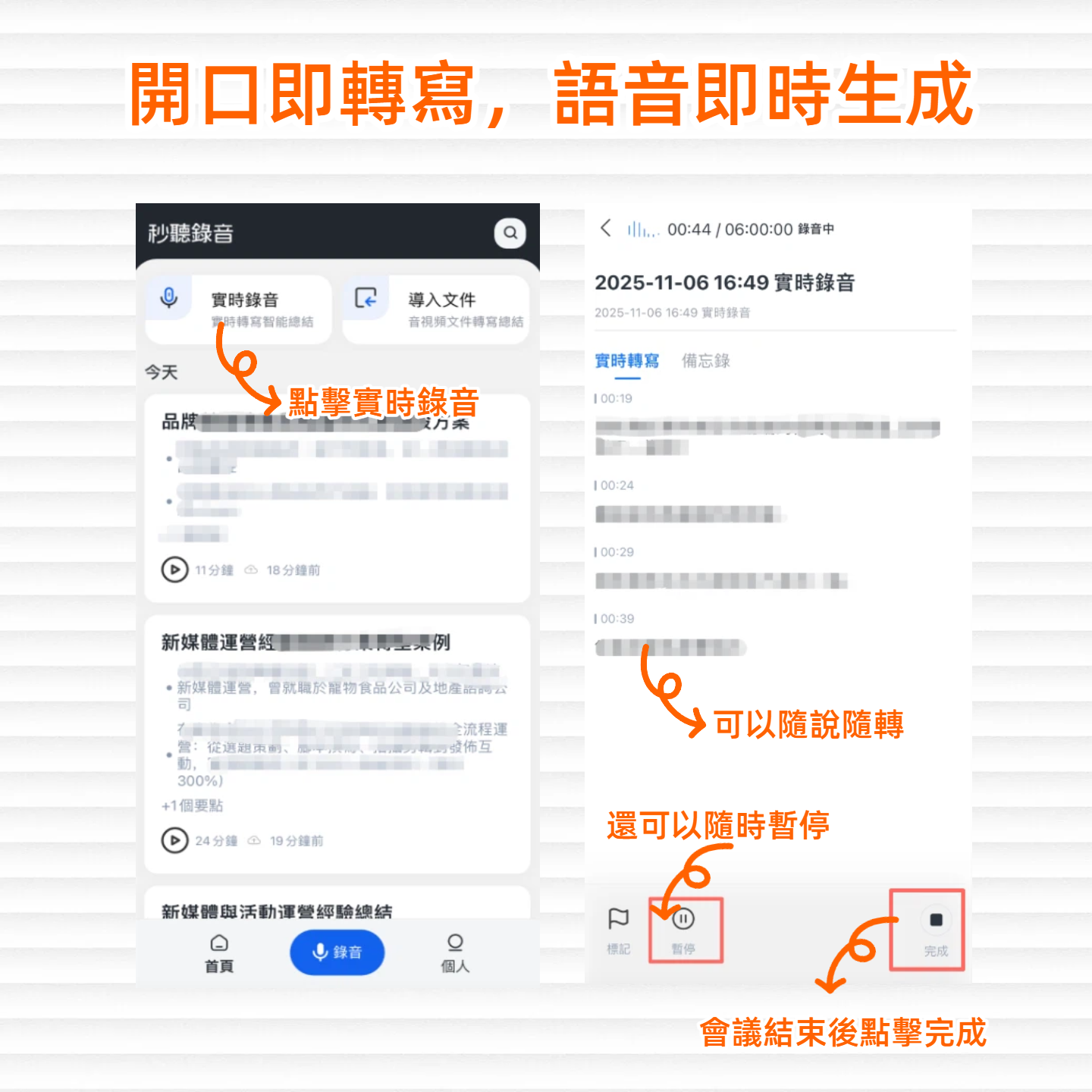
Step 1: Record or Import File
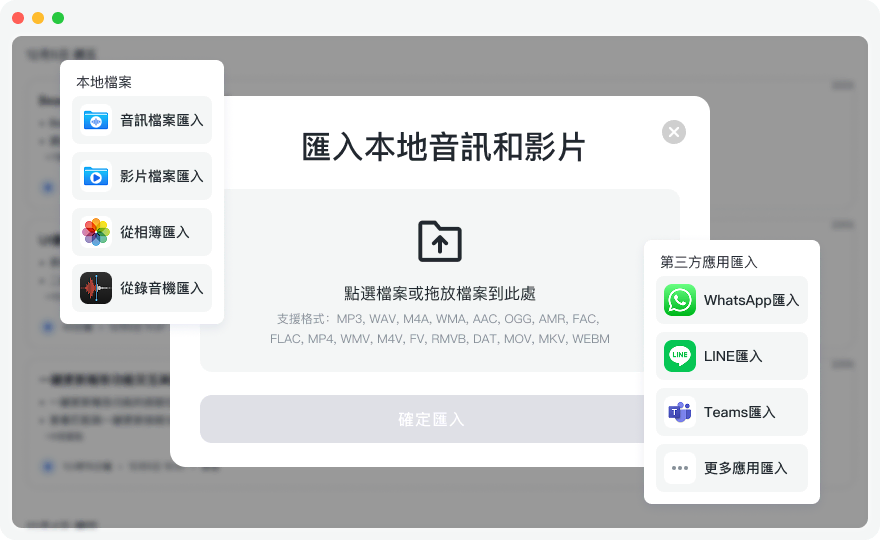
Open the app on your phone or computer to "Record & Real-time Transcribe" for live meetings or classes. If you have pre-recorded MP3 or M4A files, use the "Audio File to Text" feature to upload.
Step 2: Select Language and Transcribe
Before uploading or recording, confirm the language settings. For mixed-language scenarios, the AI can transcribe speech into text. Tinrec processes in the cloud quickly—even a 1-hour recording is transcribed in minutes.
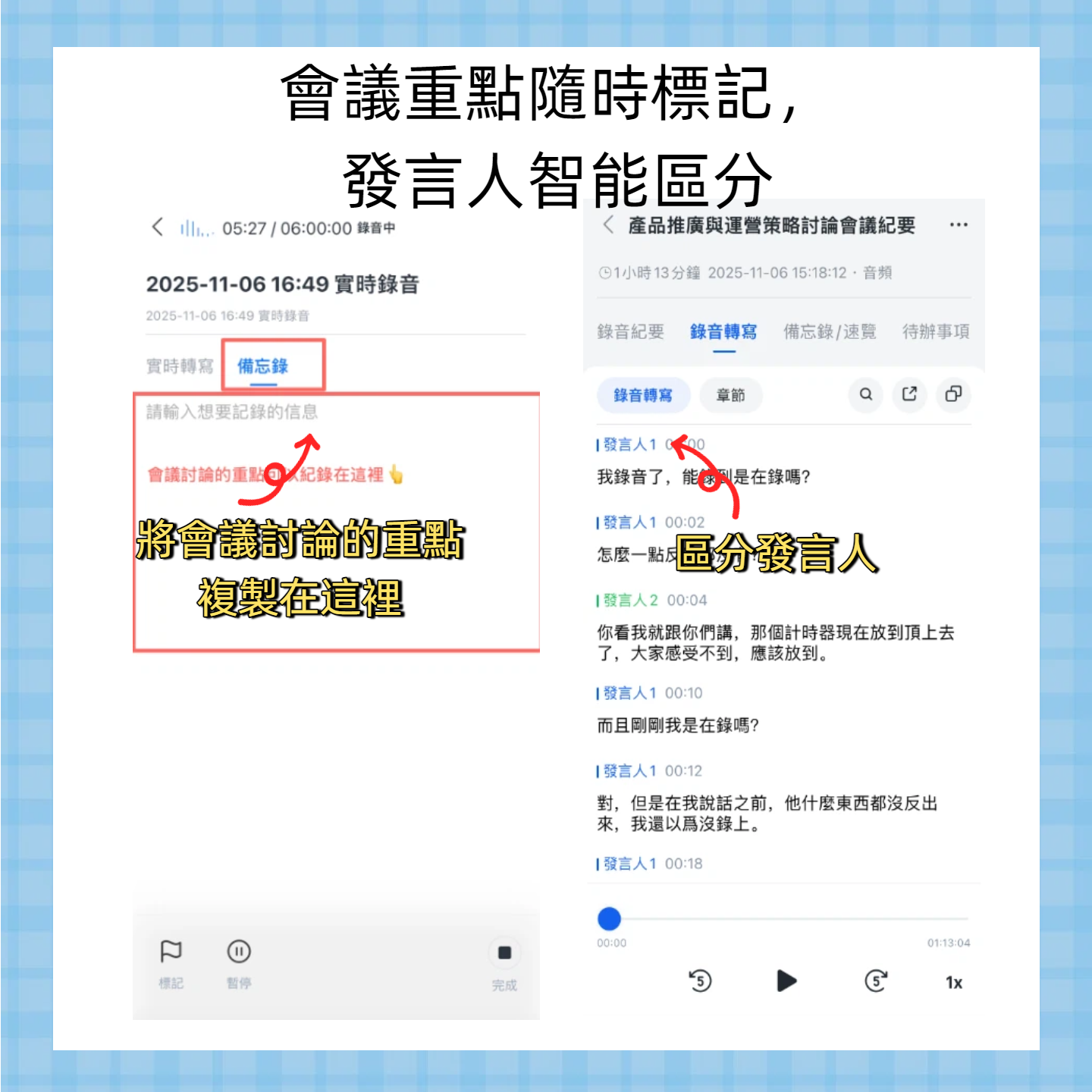
Step 3: Speaker Diarization and Proofreading
The system automatically labels different speakers (Speaker A, Speaker B). You can listen while quickly reviewing the transcript. Since Taiwanese Hokkien transcription may have homophone errors, use the "timeline marker" feature to click on text and jump to playback for quick correction of key terms.
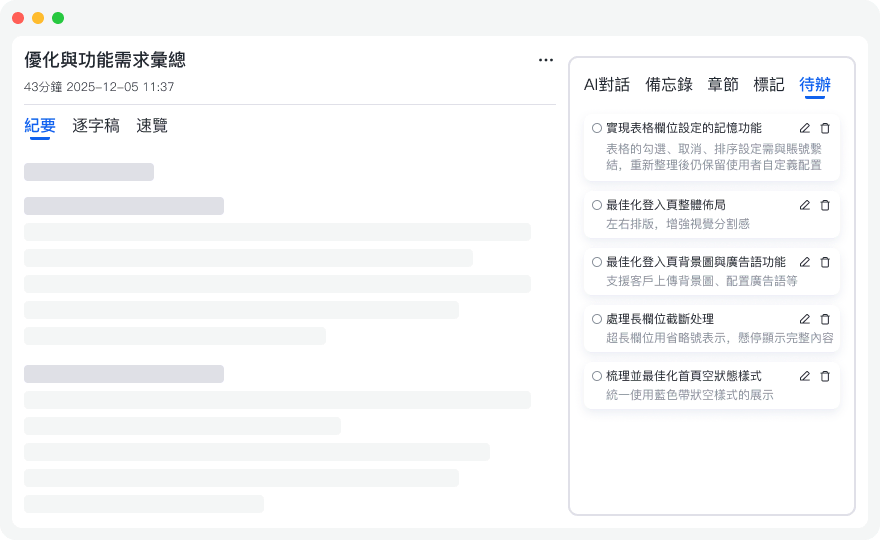
Step 4: AI-Generated Action Items
This is the critical step. Traditional transcripts leave you wondering what to do. Use Tinrec's AI summary feature to extract "Meeting Conclusions" and "To-Do Items" with one click.

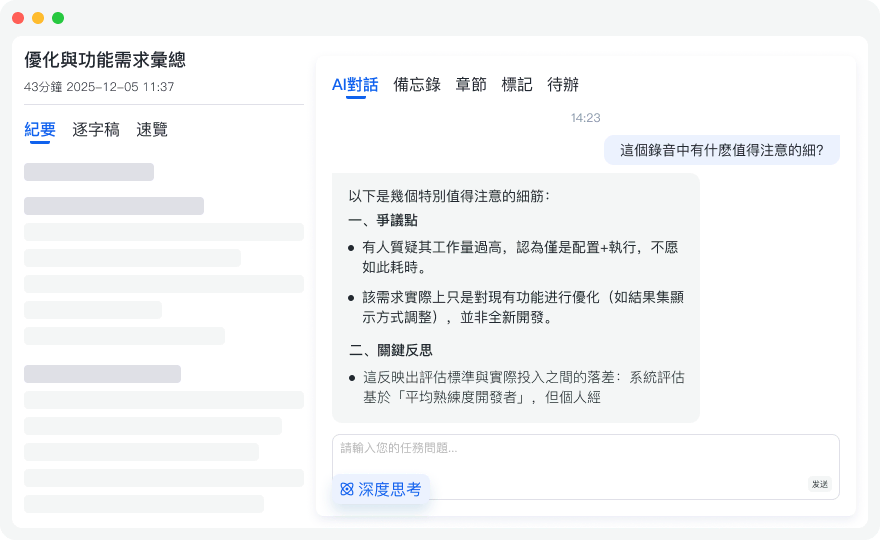
Step 5: AI Chat for Details
If a manager spoke in Taiwanese Hokkien about budget numbers and you forgot specifics, no need to re-listen the entire recording. Just type in the chat box: "What did Manager Chen say about the budget?" The AI will answer based on the understood content.
FAQ
Q1: Can these software really understand Taiwanese Hokkien?
AI's recognition of Taiwanese Hokkien has greatly improved. Yating performs best in pure Hokkien scenarios; Tinrec and other tools using large language models can handle common Hokkien conversations, but obscure slang may still need manual tweaks.
Q2: Can I transcribe iPhone voice memos?
Yes. iPhone's built-in Voice Memos are usually in M4A format, supported by GoodTape, LexiTranscript, and Tinrec. Tinrec also offers an iOS app for recording and transcribing directly on your phone.
Q3: Do I need to pay for speech-to-text?
Most tools offer free trials. For example, LexiTranscript provides daily free credits, Tinrec gives 100 free minutes per month, and Yating offers free real-time recording. For heavy users, paid subscriptions are usually more cost-effective.
Q4: Is my meeting data secure?
If you care about data staying in-country, Yating (data stored in Taiwan) is the top choice. GoodTape complies with EU GDPR. Tinrec and LexiTranscript emphasize not using user audio for model training and offer deletion options.
Q5: Can it handle Zoom, Google Meet, or Teams meetings?
Yes. Use Tinrec's web version to record system audio in real time, or export meeting videos and upload them for transcription.
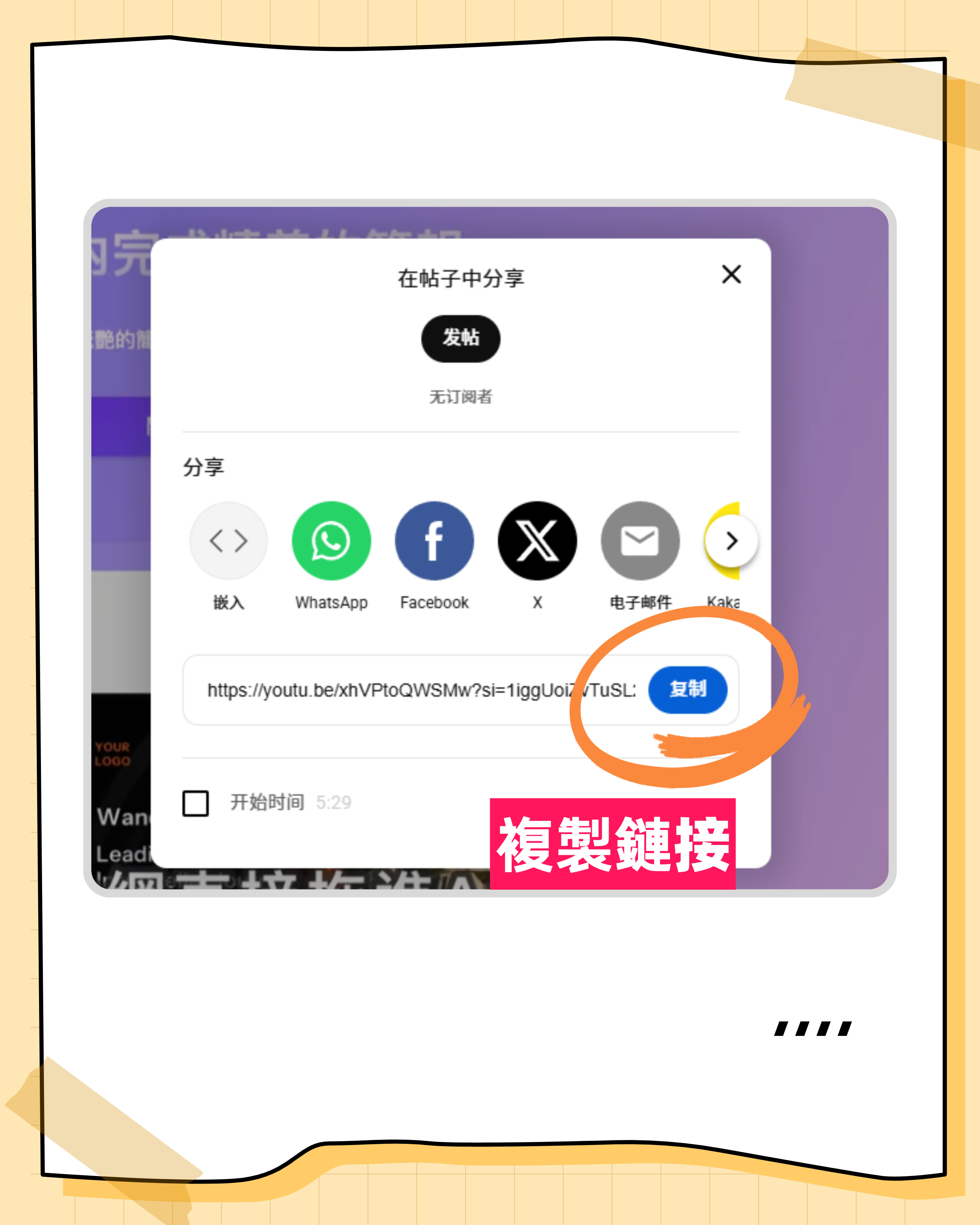
Q6: Can video links be directly transcribed?
Some tools support this. Tinrec accepts YouTube or TikTok links, directly parsing and generating transcripts and summaries, saving the hassle of downloading video files.
Conclusion: How to Choose the Right Tool for You?
When choosing Taiwanese Hokkien speech-to-text software, base your decision on core scenarios:
- For academic research or in-depth interviews requiring high Hokkien accuracy, Yating remains the top choice.
- For daily work meetings where post-meeting efficiency and action item tracking matter most, Tinrec's AI chat and summary features save significant time.
- For budget-conscious long-term users, LexiTranscript's unlimited plan offers the best value.
No tool is inherently better; it's about fit. We recommend trying each free tier with a 5-minute test to personally evaluate recognition accuracy before deciding.
Turn every recording into actionable outcomes
Get 60 free transcription minutes when you sign in. No credit card required.
Related Reading
You might also like

How to Choose the Best Recording-to-Text Tool in 2025: From Transcripts to Actionable Meeting Minutes
Meeting recording-to-text tools are no longer just about transcription. This article compares Tinrec, Otter, Fireflies, Notta, Granola, and other mainstream tools in terms of capture methods, Chinese language support, and post-meeting outputs, and explains how to generate action items from transcripts and build team knowledge, helping you choose the right tool for your meeting scenarios.

2026 Free Speech-to-Text Solutions: 5 Tools Compared
PTT hotly discusses speech-to-text apps. We tested Tinrec and 4 other tools, comparing free quotas, Cantonese accuracy, and AI features to help you save time on meeting notes.

4 Best Recording-to-Text Tools in 2026: How to Choose Based on Free Credits and AI Features
We tested the latest 4 recording-to-text tools in 2026, from free credits to AI Q&A and bot-free recording, to help you find the most time-saving option.

Tinrec vs Otter.ai in 2026: A 5-Dimension Comparison for Chinese Users
We tested Tinrec and Otter.ai for Chinese meetings, bot-free recording, AI Q&A, cross-platform support, and team collaboration to help you choose the right transcription tool and save overtime hours.

5 Best Recording-to-Text Tools in 2026 Compared: Tinrec vs MyEdit, Yating, and More
After testing multiple free recording-to-text tools, here's why Tinrec became my go-to for meeting notes from a mid-level manager's perspective—and whether the free plan is enough.

4 Best Speech-to-Text Tools in 2026: Free vs Paid Compared for US Users
We tested the most talked-about speech-to-text tools on Dcard and PTT, from free to paid, comparing Tinrec, Yating, Otter.ai, and Notta on features, pricing, and use cases to help you find the time-saving choice.

5 Best Speech-to-Text Tools Tested in 2025: AI Transcripts & Meeting Notes Compared
With countless speech-to-text tools available, this article tests Tinrec, MyEdit, SoundType AI, iPhone Voice Memos, and OpenAI Whisper across three dimensions—Traditional Chinese recognition, recording sources, and post-processing—to help you choose the right one for your needs.

2026 Hands-On Comparison of 4 Speech-to-Text Tools: Why Tinrec Is the Best Alternative for Notta Users?
This article compares speech-to-text tools like Tinrec and Notta, focusing on online meeting recording, AI summarization, and team collaboration, to help you decide which one suits American professionals best.

2026 Hands-On Comparison of 4 Recording-to-Text Apps: The Most Time-Saving Option for Chinese Meeting Notes
After testing multiple recording-to-text apps, Tinrec not only transcribes verbatim but also turns meetings into searchable, collaborative, trackable data. This article covers key buying considerations, hands-on insights, and tips to avoid common pitfalls.