

Turn recordings into transcripts and summaries in minutes
Upload audio or video for multilingual transcription, AI notes, and action items
Last semester, I took an "Information Management Project" course. The professor talked faster than the slides changed, and my handwritten notes couldn't keep up. Before the midterm, I opened my textbook and audio recordings, but after three days of rewinding through two hours of audio, I still couldn't find the key points. That's when I started seriously looking for speech-to-text tools, trying everything from free online sites to paid AI recording apps. I finally narrowed it down to two tools that are most discussed among students: Tinrec and Otter.ai. I've now used both for over three months this semester, so this article is a real-world campus test to show you which one has the smoothest interface and which free plan can get you through an entire semester.
Tinrec vs Otter.ai | Quick Overview
Otter.ai is a popular AI meeting transcription tool in the U.S., often used by YouTubers for English meeting notes, with a free plan offering 300 minutes of transcription per month. Tinrec, on the other hand, is an AI recording and audio/video organization platform that not only transcribes but also automatically generates summaries, chapters, and to-do lists, and can even turn a YouTube link into notes. For students, both tools meet the basic need of "recording to text," but their design philosophies and strengths are quite different. Below, I compare them across five dimensions: Chinese accuracy, interface fluidity, input sources, AI Q&A, and student plans.
Dimension 1 | Chinese Transcription Accuracy
Although Otter.ai has Chinese recognition, its core training data is primarily English. I tested both with the same Chinese lecture recording from my department professor (about 8 minutes, recorded from the back of the classroom with some echo). Otter's transcript had about 20% errors, such as turning "資料探勘" (data mining) into "資料太看" (nonsense), and mixed Chinese-English content was a disaster. Tinrec performed much more consistently: it not only captured technical terms accurately but also correctly labeled English terms like Python and API. I suspect Tinrec has been specifically optimized for Chinese meetings and course content. If you, like me, need to process a lot of Chinese materials, this makes a real difference.
→ This dimension: Tinrec clearly wins.
Dimension 2 | Interface Design and Ease of Use
Otter's interface is minimalist, with a main screen showing a list of meetings and a large record button, which is intuitive for those who just want to record. However, when I wanted to organize lecture recordings into key points, I found the features scattered: summaries and transcripts are in separate tabs, and exporting to Word requires several clicks. Tinrec's interface integrates recording, transcription, and organization into a single workspace: a list of recordings on the left, content area on the right, and a toolbar at the top for generating summaries, chapters, to-dos, and even mind maps with one click. I got the hang of it in about five minutes, and during finals week, that fluidity felt like having an AI teaching assistant organizing my notes.
→ This dimension: Tinrec wins, with a more integrated interface and a shorter learning curve.
Dimension 3 | Input Source Variety
Otter.ai's strength is online meetings and phone recording; you can connect Zoom or Google Meet directly. But students don't just attend classes; I often need to convert online tutorial videos or podcast interviews into text. Here, Otter is limited—it only supports recording and uploading audio files, not pasting a YouTube URL to start transcription. Tinrec, however, supports "online video to text" directly: I just paste a public YouTube or Bilibili link, and it automatically extracts the audio, transcribes it, and even divides it into chapters. Last month, while working on a social media analysis report, I used this feature to process five industry interview videos, saving at least ten hours of manual note-taking.
Stop organizing recordings by hand
Upload audio or video and automatically get a transcript, summary, and action items
→ This dimension: Tinrec wins, covering more video sources commonly used by students.
Dimension 4 | AI Q&A and Post-Processing
Otter has "Otter AI Chat" that lets you ask questions about meeting content, like "What were the action items?" It works well for English conversations, but Chinese Q&A is weaker, and it's limited to a single meeting—you can't ask questions across recordings. Tinrec's AI Q&A is more like a personal database: I can ask not only "What were the key points of this lecture?" but also "How many times did the professor mention 'machine learning' across all my courses this semester?" It searches through all the recordings I've uploaded. Additionally, Tinrec can generate meeting minutes, report outlines, and even tables, which is super helpful for group discussions and final reports—no need to open other tools after transcription.
→ This dimension: Tinrec wins, with AI features better suited to students' organizational needs.
Dimension 5 | Student Friendliness: Free Allowance and Paid Plans
Otter.ai's free plan offers 300 minutes per month, which is generally sufficient for students; if you only record key subjects, you might use about half. However, its paid plans are less flexible: the Pro version costs over NT$200 per month and is only available on an annual basis. Tinrec's free plan also provides a basic monthly transcription allowance (in my test, it handled about three to four lectures), but it offers a more flexible "weekly card" plan: during the two weeks before finals, you can buy seven days of unlimited transcription for about the price of a Starbucks coffee, which is great for students who need to process a lot of content in a short time. For long-term use, the Pro monthly card works out to less than NT$10 per day, and sharing an account with classmates makes it even more cost-effective.
→ This dimension: Tinrec wins, with payment flexibility that better matches students' budget cycles.
What Are Their Unique Strengths?
Tinrec's Unique Strengths
- Direct video transcription: Just paste a link, and it's done—a lifesaver for research and reports.
- AI database Q&A: Turns all your recordings into a searchable knowledge base, making final review super efficient.
- Multi-format export: One-click export to Word, mind maps, or even Notion pages, making team collaboration easier.
- Optimized for Traditional Chinese and mixed Chinese-English: Better recognition of Taiwanese accents and code-switching than international tools.
Otter.ai's Unique Strengths
- English meeting collaboration: If you plan to study abroad or work for a multinational company, its team meeting features will be useful.
- Speaker identification: Automatically labels different speakers in multi-person meetings, which is currently more mature than Tinrec.
Summary: Which One Should You Choose?
- If you need to process a lot of Chinese courses, online videos, or want a workspace to organize all your audio data long-term → Tinrec is the best choice.
- If your learning is primarily in English, or you're already used to Otter for online meetings and don't need Chinese support → Otter.ai is still a solid option.
- If you're on a tight budget and want more flexibility after transcription → Tinrec's weekly and monthly plans are more student-friendly.
In a nutshell: For most students in Taiwan, especially those who need to organize Chinese materials and online resources, Tinrec is the smoother and more cost-effective choice. I recommend downloading the free version of Tinrec and trying it with next week's lecture recording—the interface and organization speed will make you feel like you should have switched tools sooner.
References
- 2026 Recommended 6 Speech-to-Text Tools: Free Online Audio to Text!
- AI Speech-to-Text Tool Recommendations: 8 Comparisons, Which Is Best for Meeting Minutes, Transcripts, and Voice Input? — Leading Era
- Speech-to-Text: AI Voice Input and Transcription | Google Cloud
- SoundType AI: Ultra-Precise Transcripts, Speech-to-Text, AI Dictation - Google Play App
- Online AI Speech, Video, Audio Auto-Transcription - Free Trial - cSubtitle
Turn every recording into actionable outcomes
Get 60 free transcription minutes when you sign in. No credit card required.
Related Reading
You might also like

Best Voice-to-Text Apps in 2026: 5 Tested, Top Pick for Multilingual Transcription
Tired of transcribing meeting, class, or interview recordings? We tested 5 voice-to-text apps, comparing Cantonese accuracy, multilingual support, AI features, and free tiers to help you choose the right one and skip overtime.

2026 Speech-to-Text Showdown: API vs. Off-the-Shelf Tools – Which Saves More Time?
Want to convert speech to text but unsure whether to build with a cloud API or use a ready-made tool? We tested both approaches for time, cost, and post-processing capabilities, using real data to show which suits SMBs and content creators best.

Tinrec vs Plaud Note 2026: 5-Dimension Comparison - Which Is Best for Hong Kong Professionals?
We compare Tinrec's software solution and Plaud Note's hardware for speech-to-text transcription. Our in-depth analysis covers 5 key dimensions: Cantonese recognition, cross-platform support, AI Q&A, pricing, and use cases, helping you find the most time-saving and convenient option.

2026 Tinrec Instant Recording: AI-Generated Meeting Minutes and To-Do Lists Made Easy
Use Tinrec instant recording to automatically transcribe meeting recordings and generate meeting minutes and to-do lists, eliminating manual OT work.

2026 Test: Tinrec vs Notta for Meeting Notes—Which One Handles Chinese Better?
Looking for a truly hassle-free meeting notes tool? This hands-on comparison of Tinrec and Notta covers Chinese speech recognition, multi-scenario organization, and free plans to help you pick the best AI voice-to-text tool for users in Taiwan.

How to Export Meeting Minutes in 2026? 4 Steps from Recording to AI Summary - Complete Guide
After recording a meeting, how do you quickly turn it into meeting minutes and export them? This article tests multiple tools and teaches you how to use Tinrec in 4 steps to handle meeting recording, transcription, AI summaries, and export, with free plans and a buying guide.

Best Meeting Minutes Tool? 2026 Test: This AI Has the Answer
Tired of staying late to write meeting minutes? This article tests Tinrec, an AI tool that transcribes recordings in real time, auto-generates summaries and to-dos, saving you two hours so you can leave the office on time.
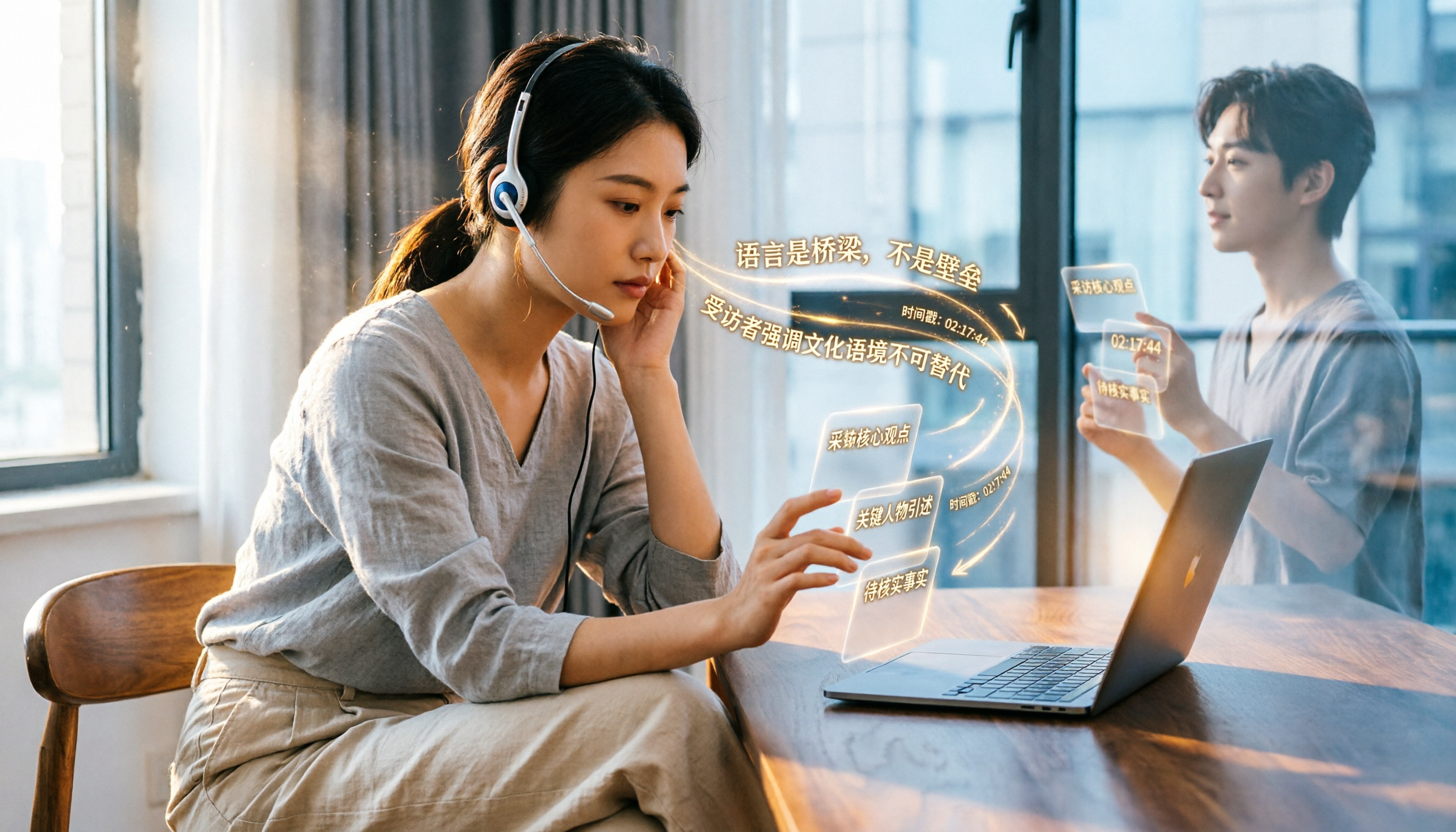
6 Best Speech-to-Text Tools of 2026: Which Offers the Most Comprehensive Chinese Processing and Post-Processing?
This article tests six popular AI speech-to-text tools of 2026, from meetings and lectures to online videos, evaluating their Chinese recognition and follow-up organization capabilities to help you choose the best option.

How to Convert WeChat Voice Messages to Text in 2026: A 5-Step Hands-On Guide
Tired of long voice messages you can't listen to? This article tests multiple voice-to-text tools, from WeChat's built-in feature to professional AI tools, helping you choose the best option and sharing practical tips to improve transcription accuracy.